Reviewed · TOURS IN KAGOSHIMA
Discover the Wonders of Sakurajima Half Day Tour in Kagoshima
Sakurajima is not a distant mountain viewed through a train window. It is an active volcano that erupts regularly, sends ash across the island, and shapes daily life in Kagoshima. This tour gets you close without asking you to solve the ferry, bus, and sightseeing puzzle yourself. I especially like the volcanic-ash art session and the chance to soak your feet in a natural hot spring after learning how the volcano behaves. The main caution is simple: parts of the outing use public buses and involve walking, and those buses can be crowded.
I also like the way the four-and-a-half-hour schedule mixes scenery with context. The ferry ride, shrine, Visitor Center, footbath, pottery studio, and Yunohira Lookout give you a useful first look at Sakurajima rather than just one photo stop. Guides including Yuki, Naomi, Yukiko, and Kuni have been singled out for clear English and patient explanations, but guide quality can vary, so this is best booked with reasonable expectations.
Key points to know before booking
- The ferry is part of the experience: You cross from Kagoshima to Sakurajima by boat, with the ticket included.
- You see the volcano from its highest public lookout: Yunohira Lookout sits 373 meters above sea level on the North Peak.
- The ash artwork is the tour’s most distinctive souvenir: At Ougaku Togei, you create a picture with colored Sakurajima ash.
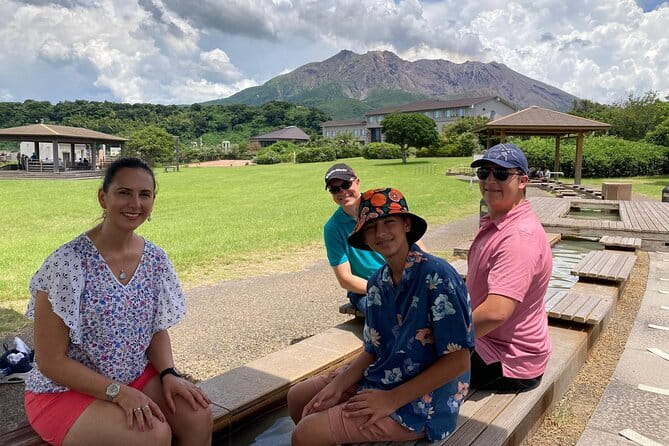
- The footbath is long and genuinely relaxing: Nagisa Foot Bath Park has a 100-meter bath fed by hot water from about 1,000 meters underground.
- This is a public-transport tour: You ride the Sakurajima Island View Bus and walk between some stops, rather than traveling in a private vehicle.
- Weather matters: Fog or rain can hide the volcano, and poor weather may lead to a rescheduled tour or full refund.
Why Sakurajima is worth half a day
Sakurajima is one of Japan’s most active volcanoes and a defining sight of Kagoshima. The appeal is not only the cone itself. It is the odd, practical fact that people live, work, pray, farm, ride buses, and visit hot springs beside a mountain that can send ash into the air.
A half-day gives you enough time to understand that relationship. You will not hike into remote volcanic country or spend hours at one museum. Instead, you get several short experiences that work well together: a sea crossing, local history, volcanic geology, hot-spring culture, handmade art, and a high viewpoint.
The tour costs $95.54 per person. That is more than arranging the basic ferry and local bus on your own, especially since the ferry is inexpensive and the island bus is public. You are paying for an English-speaking guide, help with transfers, the ash-art fee, and a planned route that fits several stops into limited time. For a cruise stop or a first visit to Kagoshima, I think the price can make sense. Independent visitors who enjoy reading timetables and making their own way may find the added cost harder to justify.
The group can reach 30 people, and the minimum is two. Some departures may feel small and personal, while others can feel more like a regular group excursion. A private booking is handled differently, with one person selected when booking the private option.
Other experiences people book in Japan:
- Mt Fuji and Hakone 1-Day Bus Tour Return by Bullet Train
★ 5.0 · 26,383 reviews - 1-Day Tokyo Bus Tour
★ 5.0 · 14,250 reviews - PERFECT KYOTO 1-Day Bus Tour
★ 5.0 · 13,518 reviews
Starting at the Kagoshima ferry terminal
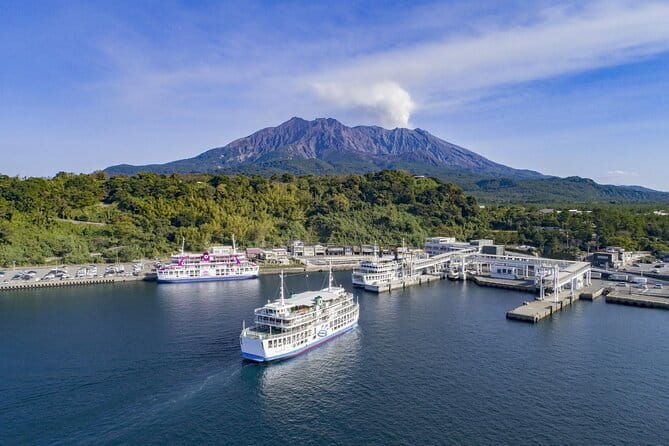
The meeting point is the Sakurajima Ferry Kagoshima Terminal in Honkoshinmachi. Arrive at least 10 minutes early. The tour does not promise a refund if you miss the meeting time, so do not cut this close, especially if you are coming from a cruise ship.
The ferry crossing takes about 20 minutes according to the planned schedule. Some independent visitors make the crossing in roughly 15 minutes, but your useful point here is not the stopwatch. The boat gives you an immediate change of scene, with Kagoshima behind you and the volcano ahead. It also makes Sakurajima feel like an island destination rather than a regular city suburb.
The return ferry is included as well. The guide leads the group through the transport steps, which is helpful if you are trying to fit the tour into a cruise call. Several bookings have involved cruise passengers, and the tour has been used successfully as a shore outing. Still, allow enough time to get from your ship to the terminal and back again.
Tsukuyomi Shrine and a quiet start
Near Sakurajima Port, Tsukuyomi Shrine offers a calmer first stop. The shrine is said to have a history of about 1,300 years, and its setting among trees gives you a pause before the more explanatory stops begin.
You get around 30 minutes here. That is enough for a look at the grounds and an introduction to local religious tradition, but not enough for a long, unhurried visit. I like its place in the schedule. The shrine reminds you that Sakurajima is not only a geological attraction. It is also a lived-in place with old customs and sacred spaces.
This stop requires some walking, and the tour as a whole is not a ride-only excursion. Wear shoes that are comfortable for standing and short walks. The pace has been described as manageable, with places to sit along the way, but you should still be ready to move between bus stops and sights.
Sakurajima Visitor Center explains the volcano
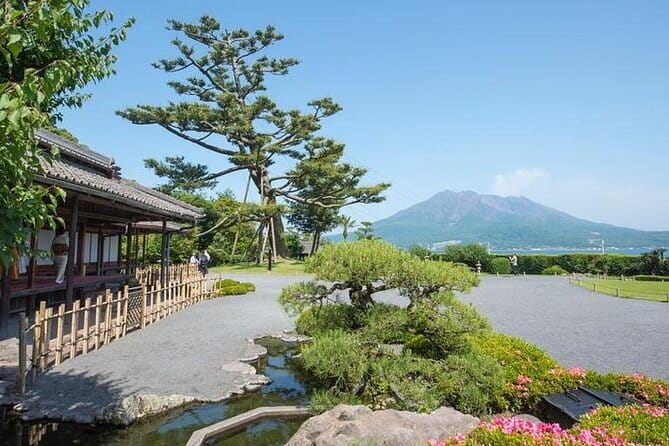
The Sakurajima Visitor Center is the most useful stop for making sense of what you see outside. Displays cover past eruptions, the volcano’s formation, plant life, tourism, and disaster preparation. This is where the mountain changes from a dramatic backdrop into a force with a long record and real consequences.
You have about 45 minutes here. That is a good length for an overview, especially if you are new to volcanic science. You can learn why ash matters, how eruptions have shaped the island, and how residents prepare for activity.
The timing is also smart. The Visitor Center comes before the lookout, so you will have some context by the time you reach the higher viewpoint. If the weather later hides the summit, this stop becomes even more important because it still gives you a solid understanding of Sakurajima.
Same base, a different sort of day:
- Tokyo: TOKYO SKYTREE® Admission ticket
★ 4.5 · 11,192 reviews - Tokyo: teamLab Planets TOKYO Digital Art Museum Entry Ticket
★ 4.6 · 9,779 reviews - Mt Fuji & Hakone Cruise, Drum Show Bullet Train 1 Day from Tokyo
★ 4.0 · 7,413 reviews - Tokyo: Sumo Show Experience with Chicken Hot Pot and a Photo
★ 4.8 · 6,678 reviews
Nagisa Foot Bath Park turns geology into a practical pleasure
At Nagisa Foot Bath Park, you can sit with your feet in a 100-meter-long natural hot-spring bath. It is fed by water from about 1,000 meters underground, and the iron-rich water has a terra-cotta color.
You get about 30 minutes here. That is enough for a pleasant soak, though not a full spa visit. Bring your own towel. The tour does not list towels as included, and wet feet are not much fun for the rest of the afternoon.
This is one of the tour’s best examples of how Sakurajima’s volcanic activity affects ordinary life. The heat beneath the ground is not only something to observe at a museum. It becomes a place to rest your legs while looking out toward the bay.
Rain does not ruin the footbath, but it can affect the wider experience. Some outings have taken place in heavy rain or fog, with the guide working to keep the day moving. Your feet may be warm while the volcano remains hidden, so keep your expectations tied to the weather.
Ougaku Togei gives you a souvenir made from the island
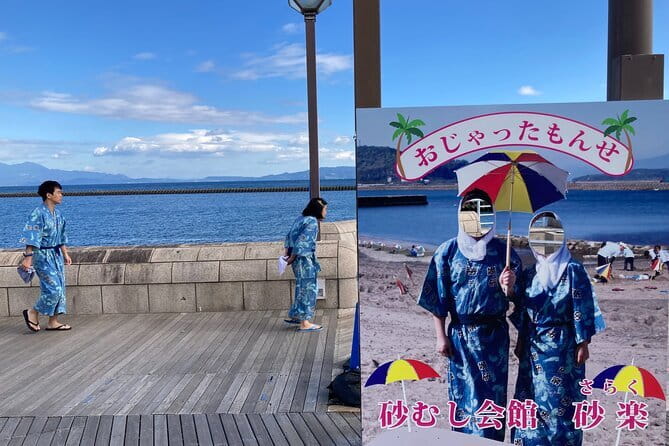
At Ougaku Togei, Sakurajima’s volcanic ash becomes part of a small art project. The studio uses natural volcanic ash in its pottery, and the activity lets you make a picture with colored ash. The hands-on session takes at least 20 minutes, while the planned stop lasts about an hour and 15 minutes.
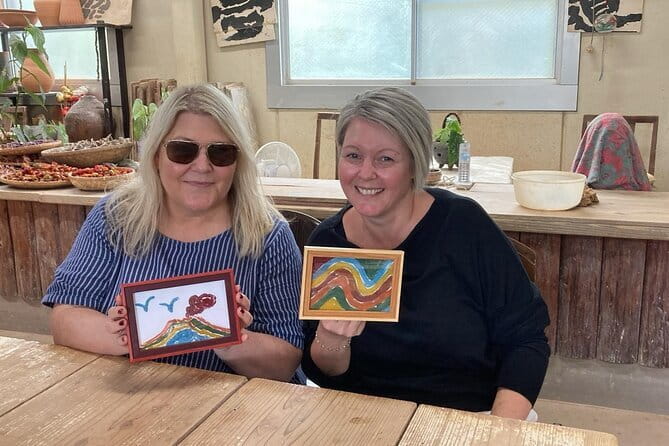
This is the tour’s most unusual feature. You are not simply buying a postcard or taking another photograph. You make something connected directly to the island, and the activity works for people who do not think of themselves as artists. Guides can help you choose a design or work through the process, so you do not need special skill.
The finished artwork can be framed for you to take home, according to the experience details shared by past participants. The pottery studio also sells handmade pieces, including work made by the local mother-and-daughter team. If you like useful or personal souvenirs, plan to leave a little room in your luggage.
The stop also gives the schedule a welcome change of pace. After the museum and footbath, you use your hands and spend time with local makers. One drawback is that the workshop uses a large portion of the half-day. If your only goal is a quick volcano photograph, you may prefer an independent bus loop. If you want a memory you can carry home, this stop earns its time.
Yunohira Lookout offers the day’s big view
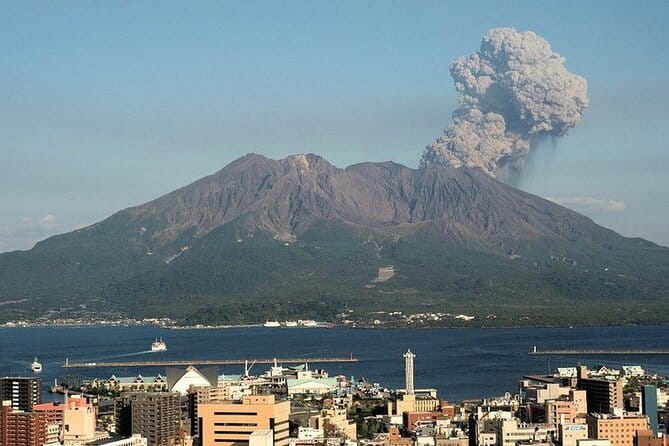
Yunohira Lookout sits at the fourth station on the North Peak, 373 meters above sea level. It is the highest point on Sakurajima that the public can reach, and you have about 50 minutes there.
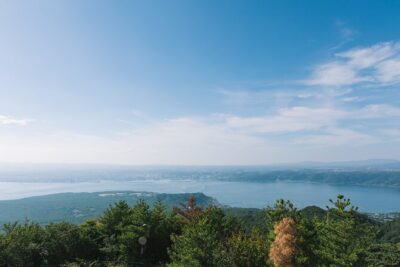
The view reaches across the volcano and Kagoshima Bay. On a clear day, this is the tour’s grand payoff. You may see the shape of the active mountain close at hand, with the water and city spread below. At times, the volcano has erupted during the visit, making the moment especially memorable.
Do not assume the view is guaranteed. Rain, low cloud, and fog can cover the summit. Several outings have had poor weather, and guides have had to rely more heavily on the Visitor Center, shrine, footbath, and ash art. The tour provider says poor weather can lead to a different date or a full refund, but ordinary cloud cover on the day may simply mean a less dramatic lookout.
The guide adds value here by explaining what you are seeing and how residents deal with repeated eruptions and ash. A local guide can also answer the practical questions that a signboard cannot, such as what it means to live near an active volcano.
Public buses, walking, and the pace of the day
The route uses the Sakurajima Island View Bus and other public transport rather than a private coach. That gives you a more local feel, but it also brings trade-offs. Buses can be crowded, and getting the group aboard may take some organization. Yuki has been praised for making sure everyone got onto busy island buses, which is exactly the kind of small help that matters on a short tour.
You should expect walking between transport points and sights. The route has been described as an easy walking tour with sitting opportunities, but one outing felt more demanding because the walking and crowded buses were not made clear enough in advance. Read the tour as active but not strenuous, and choose supportive shoes.
The maximum group size is 30. A small group will feel more personal, while a full departure may require patience at bus stops and during the ash-art session. The guide’s role matters greatly here. Yuki, Yukiko, Naomi, and Kuni have been praised for clear English, warm manners, and useful explanations. One departure had difficulty because the guide’s English was limited, and another had some trouble communicating after a last-minute guide change. This is a fair reason to keep expectations flexible, even though the overall rating is 4.8 from 34 ratings and 97 percent of customers recommend it.
Who will get the most from this tour
I would choose this tour if you are visiting Kagoshima for the first time, arriving by cruise ship, or want a structured introduction without spending a full day on Sakurajima. It is also a good fit for families and couples who like mixing sightseeing with a simple craft activity.
You will get the most value if you care about explanation, local context, and smooth movement between several stops. The guide can help with the ferry, public buses, timing, and questions about volcano life. That support is especially useful when your time in Kagoshima is limited.
I would think twice if you prefer total independence, dislike public transport, or want a long hike. The ferry and bus route can be done on your own, and the tour’s $95.54 price reflects service and structure rather than expensive admission tickets. You should also be comfortable with a group setting and the possibility of a guide whose English is less polished than expected.
Bring comfortable walking shoes, a towel for the footbath, water, and rain protection. The outing includes transport and the ash-art fee, but lunch is not included. Plan to eat before or after the tour rather than expecting a meal stop.
Cancellation and practical booking notes
You can cancel up to 24 hours before the start time for a full refund. Changes or cancellations inside that 24-hour window are not accepted for a refund, based on local time.
The provider may cancel for poor weather or if the minimum number of participants is not reached. In those cases, you are offered another date or experience, or a full refund. Confirmation is sent at booking, and most people can participate, but the walking and public-bus portions are worth considering before you reserve.
Should you book the Sakurajima half-day tour?
Book it if you want a well-packed introduction to Sakurajima with a guide handling the ferry and island transport. The strongest reasons are the excellent mix of stops, the volcanic-ash artwork, the hot-spring footbath, and the chance to understand how people live beside an active volcano.
Skip it if you are comfortable arranging the island yourself and want to spend more time at one lookout or follow your own schedule. You can save money independently, but you will give up the guide’s explanations and the organized ash-art session.
For most first-time visitors, cruise passengers, and anyone short on time, I think the tour offers fair value. Just arrive early, carry a towel, prepare for walking and crowded buses, and remember that Sakurajima controls the weather more than any itinerary does.
FAQ
Where does the Sakurajima tour start?
It starts at the Sakurajima Ferry Kagoshima Terminal in Honkoshinmachi, Kagoshima.
How long does the tour last?
The experience lasts approximately 4 hours and 30 minutes.
Is the ferry ticket included?
Yes. The ferry ticket to Sakurajima is included, and the return ferry is part of the planned route.
Is lunch included?
No. Lunch is not included in the tour price.
Do I need to bring a towel?
Yes. You are encouraged to bring your own towel for the footbath at Nagisa Foot Bath Park.
Does the tour involve walking and public buses?
Yes. You travel on the Sakurajima Island View Bus and walk between some stops. Public buses may be crowded.
What is included in the ash-art activity?
The volcanic-ash art experience fee is included. At Ougaku Togei, you create a picture using colored ash from Sakurajima.
What happens if the weather is poor?
If the tour is canceled because of poor weather, you are offered a different date or a full refund. Weather during an operating tour may still affect visibility at Yunohira Lookout.
Just added in Japan
- 1 Day Tour: Snow Monkeys & Snow Fun in Shiga Kogen★ 5.0 · 52 reviews
- From Matsumoto/Nagano: Nakasendo Trail Walking Tour★ 4.9 · 33 reviews
- Private Fukuoka Tour with a Local, Highlights & Hidden Gems 100% Personalised★ 5.0 · 143 reviews
- Nagasaki Half-Day Private Tour with Government-Licensed Guide★ 5.0 · 53 reviews
- Best of Himeji Castle: 3hr Tour with Licensed Guide★ 5.0 · 186 reviews
- Hakone 8 hour Private Tour with Government-Licensed Guide★ 5.0 · 63 reviews
- [Otaru & Yoichi] Let’s go to Otaru Canal, Sakaimachi Street, Music Box Hall, and Yoichi Nikka Whiskey by private car (arriving and departing from Sapporo)★ 5.0 · 21 reviews
- Daikoku & Tokyo Private JDM Tour by 700HP R34 GT-R★ 4.9 · 101 reviews
Tours in Kagoshima, compared.
Sakurajima Century Lava Climb Journey with E-bike
Read our review →