
Reviewed · TOURS IN KAGOSHIMA
Kagoshima Nature and Food Culture Private Tour
Kagoshima’s food culture begins with a volcano, and this tour lets you follow that story from Sakurajima’s ash-fed fields to a working shochu distillery and a Satsuma pottery shop. I like the farm visit for its local conversations, tea, sweets, and look at circular agriculture. I also like that you make your own shochu blend and take home a 720 ml bottle.
The tradeoff is the long day on the road. The stops add up to only about three and a half hours, with the rest spent traveling, and lunch is on your own at Tarumizu Roadside Station. Still, the private vehicle, licensed English guide, transport, and hands-on activities make the $534.77 price easier to justify for a small group.
Key points at a glance
- Sakurajima farming: See crops grown in volcanic soil at the foot of an active volcano.
- Local farm hospitality: Expect tea, sweets, bread, and conversation about cultivation and daily life.
- Shochu blending: Learn how Kagoshima’s famous spirit is made and create a bottle to take home.
- Tarumizu lunch stop: Choose and pay for your own meal at a roadside station with local products.
- Satsuma ware: Browse pottery made for serving the very food culture you have been exploring.
- Private transport: Your group rides together, but individual activities may include other customers.
Why this Kagoshima day feels different
Many Kagoshima excursions focus on views of Sakurajima. This one uses the volcano as the starting point for a food story. Volcanic ash from Sakurajima and the Kirishima Mountains helps create well-drained soil, while Kinko Bay and Kagoshima’s old sea routes brought ingredients, techniques, and customs into the region.
That idea gives the day a clear thread. You are not simply moving from a farm to a distillery to a pottery shop. You are seeing how soil, water, trade, farming, alcohol, and tableware connect.
I especially like the human scale of the farm visit. The experience is built around talking with local people rather than only looking at crops from behind a fence. Tea, snacks, and bread may be served as you sit near the fields, and the conversation can range from radish cultivation to the work and frustrations of farming.
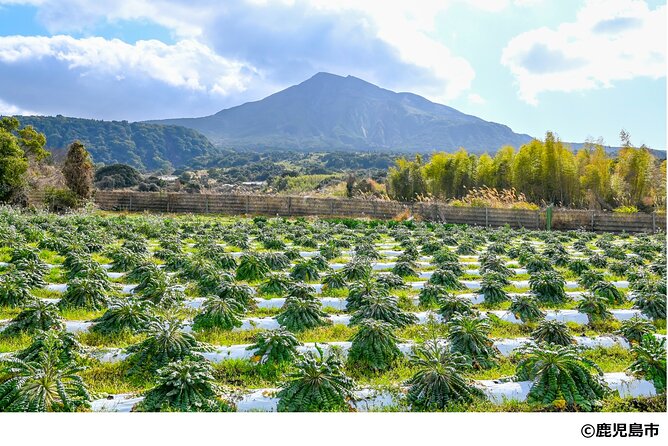
The agricultural focus is also more specific than a standard countryside stop. Sakurajima is known for its enormous daikon radish, and the farm grows several crops through a regional circular farming method. That means the natural conditions of the area are part of the production system, rather than just a pretty backdrop.
Other experiences people book in Kagoshima:
- Sakurajima Century Lava Climb Journey with E-bike
★ 5.0 · 54 reviews - Discover the Wonders of Sakurajima Half Day Tour in Kagoshima
★ 5.0 · 34 reviews - Kagoshima Private & Custom Tour with Licensed Guide and Vehicle
★ 5.0 · 29 reviews
Crossing to Sakurajima from Kagoshima Chuo Station
The tour begins at 8:50 am at the Tourist Information Center in the east station square of Kagoshima Chuo Station. This is a practical meeting point if you are staying near the station or arriving by train, but give yourself enough time to find the east exit and the center at 37-1 Chūōchō.
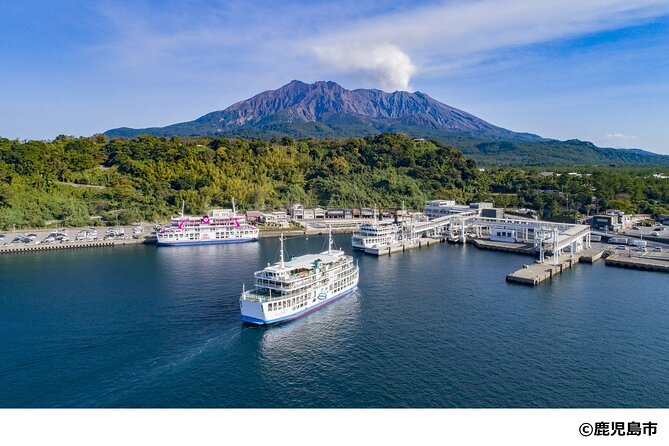
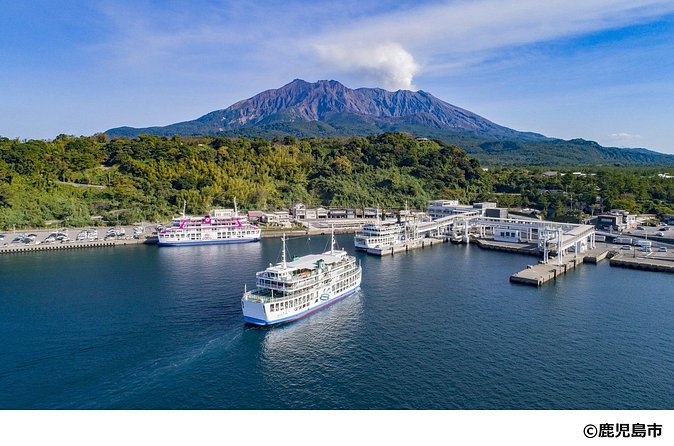
From there, you head to the Sakurajima Ferry Terminal and board the ferry. The ferry ride is included, and it provides the first strong change of pace from central Kagoshima. You get out onto the water and see the connection between the city, the bay, and the volcano that shapes so much of the region.
The ferry crossing is part of the experience, not just a transfer. You are beginning to understand why Kagoshima developed as a maritime trading center and why the bay has mattered to local food and commerce.
The exact order and arrival times can change with traffic, road conditions, and congestion. Keep your morning flexible rather than planning another fixed activity immediately after the tour.
Sakurajima Daikon fields and a slower farm visit
The first major stop is Farmland Sakurajima, a farm at the foot of an active volcano. That setting gives the visit a little edge. Farming here depends on nature, but it also requires people to adapt to it.
The farm uses a regional circular approach and grows a variety of crops. You may learn how the volcanic ground drains water, how crops are cultivated, and how radishes and other vegetables are used in food products. The visit is especially useful if you care about where food comes from but do not want a formal museum lecture.
Set aside about an hour. The pace is likely to feel conversational rather than rushed. You may sit by the fields with warm tea and sweets, and the farm café can offer bread and other food made with local ingredients. Some of the most memorable details here come from ordinary exchanges about farming, family work, and the challenges of keeping a farm going.
The farm setting also helps explain why Kagoshima’s food traditions are not just about recipes. Soil and weather affect what can be grown. Farming decisions affect what appears in local shops and kitchens. The tour gives you a chance to see that chain at ground level.
In poor weather, the farm activity may move indoors to the café. That protects the experience from rain, but it can reduce your time outside among the fields. If seeing the crops is your main reason for booking, check the forecast and bring suitable clothing and shoes.
Tarumizu Roadside Station for lunch and local products
Next comes Tarumizu Yuttarikan Roadside Station, with about 45 minutes set aside. The area became connected to Sakurajima after a major eruption, and its setting includes the natural scenery of Kagoshima.
This is the practical pause in the middle of the day. Lunch is not included, so you can choose what to eat and pay directly. The stop also gives you a chance to look at regional food products and pick up something small if you have room in your luggage.
Do not expect a long restaurant meal here. Forty-five minutes passes quickly, especially if you want to eat and browse. If you have dietary needs, the tour information does not promise a particular menu, so plan to ask on site and keep your choices flexible.
I see this stop as useful rather than grand. It breaks up the driving, gives you control over lunch, and lets you see how local produce is sold beyond the farm itself. It is also the one part of the day where you need to budget extra money.
Same base, a different sort of day:
- Sakurajima Century Lava Climb Journey with E-bike
★ 4.9 · 27 reviews - Discover the Wonder of Sakurajima Half Day Tour in Kagoshima
★ 4.8 · 24 reviews - Port Pick-Up: Kagoshima Private Tour Licensed Guide & Vehicle
★ 4.5 · 22 reviews - Kagoshima Full-Day Private Tour with Government-Licensed Guide
★ 5.0 · 21 reviews
Wakashio Shuzō and the art of shochu
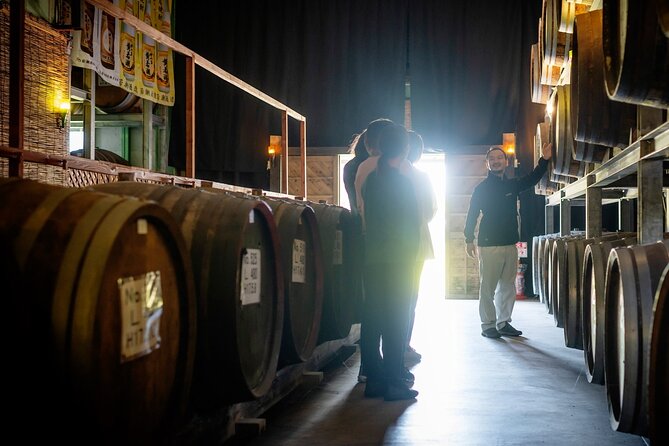
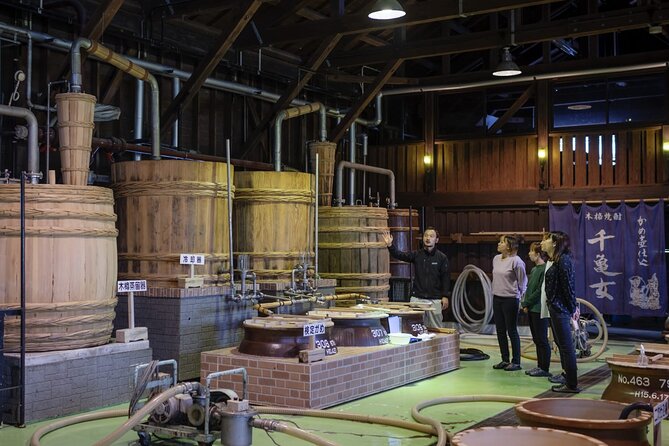
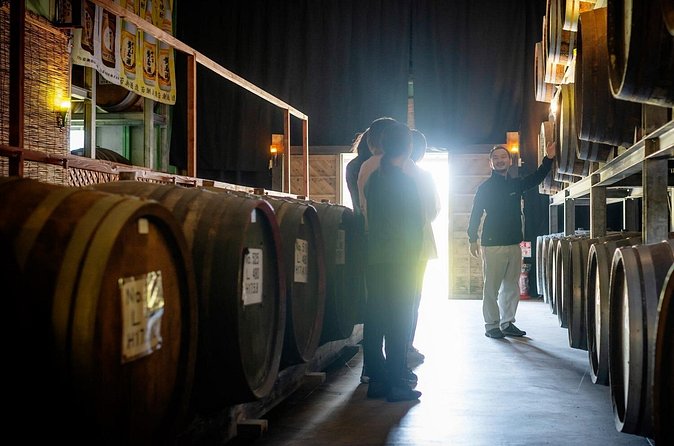
Kagoshima is known as a shochu center, with more than 100 breweries and over 2,000 brands across the prefecture. At Wakashio Shuzō, you get a look at how this local spirit is produced and learn why the region has such a strong connection to it.
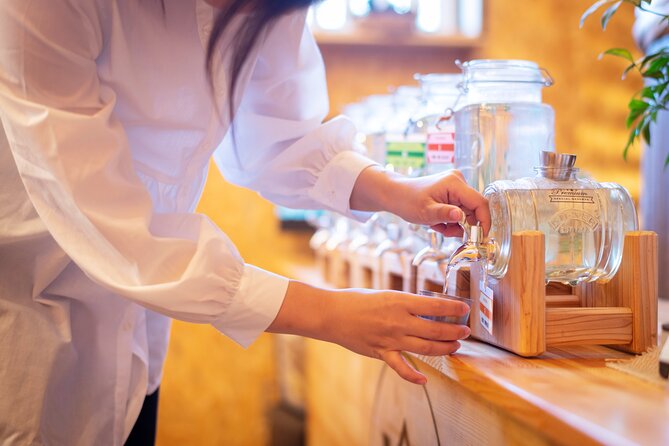
The visit lasts about an hour and includes a blending experience. Instead of only tasting finished bottles, you create your own shochu blend. Your finished drink can be taken home in a 720 ml bottle per person, subject to the alcohol rules of your destination.
This is one of the strongest parts of the day for anyone interested in food and drink. You learn about the way alcohol is preserved and produced, then take part in a process that gives the visit a personal result. It also makes a better souvenir than a bottle selected at random, because you know how your blend came together.
The activity may be shared with other customers even though your group uses a private vehicle. That distinction matters. Private transport gives your group its own ride, but it does not guarantee a private distillery session or private pottery visit.
If you plan to fly internationally with your bottle, check the rules before departure. Alcohol limits and packing requirements vary by country, and the tour operator cannot change those regulations for you.
Satsuma ware at Ryumonjiyaki Pottery
The final stop is Ryumonjiyaki Pottery, a direct sales shop beside a pottery studio. You have about 20 minutes to look at Satsuma ware and tableware made to work with food.
This is a short visit, so treat it as a focused browse rather than a full pottery class. The shop gives you a chance to connect the day’s final theme, serving dishes, with everything you have just seen at the farm and distillery.
Kagoshima is known for two broad types of Satsuma ware, and the shop offers a place to see the local tradition in a working studio setting. The appeal is not only decorative. A small plate, cup, or serving piece can carry the memory of the farm, the bay, and the shochu experience into your own kitchen.
Because time is limited, decide in advance if you are mainly looking for a souvenir or simply want to see the work. Large purchases may be awkward if you are traveling with limited luggage, and suitcases cannot be brought along during the tour. Leave them at your hotel or in a station locker.
What the nine-hour schedule really means
The tour lasts about nine hours, but the listed stops total roughly three hours and 30 minutes. The remaining time is travel between Kagoshima, the ferry, Sakurajima, Tarumizu, the distillery, and the pottery shop.
That is not a flaw, but you should understand the format before booking. This is a full-day regional outing, not a compact walking tour. The private vehicle makes the long distances more comfortable for your own group, and it avoids the effort of arranging several separate connections.
The schedule can change during the day. Traffic, ferry timing, road conditions, and congestion at the stops may affect the order and arrival times. I would not pair this experience with a tightly timed evening reservation unless you leave a generous cushion.
The tour ends back at the original meeting point near Kagoshima Chuo Station. That makes it easier to return to a hotel in central Kagoshima or continue by train after the day is over.
Is $534.77 per person a fair price?
At $534.77 per person, this is a costly day, particularly for one person or a couple. The price includes a National Government Licensed English Guide Interpreter, transport, ferry admission, the farm experience, the shochu activity, and other stated entrance and experience fees.
The value improves if you are traveling as a small private group and would otherwise need to organize a vehicle, ferry logistics, translation, a farm contact, a distillery visit, and a pottery stop on your own. The guide also helps connect the separate stops into one story instead of leaving you to interpret each place independently.
Lunch is extra, and the price does not cover unspecified purchases at the roadside station, pottery shop, or elsewhere. Keep a separate budget for food, souvenirs, and any alcohol-related costs beyond the included activity.
If your main goal is a cheap scenic ride around Sakurajima, this is not the best match. You are paying for access, interpretation, hands-on food and drink activities, and the ease of private transportation. The tour makes the most sense for people who value those details.
Who will get the most from this experience?
I would recommend this day to you if you enjoy meeting local people and learning through small activities. The farm conversations, tea, snacks, cultivation discussion, shochu blending, and pottery browsing offer more contact with daily life than a basic sightseeing loop.
It also suits food-focused visitors who want to understand production rather than only eat at restaurants. You see the growing side, the alcohol-making side, and the serving side of Kagoshima’s food culture.
Families can participate, but note the age rules. Children up to five can join free, but they do not receive vehicle seats or experience activities unless booked at the child rate. Anyone under 18 needs written parental permission, and anyone under 15 or not yet in middle school must be accompanied by a parent or guardian.
Most people can take part, but you should be ready for a long day with driving and several transitions. Comfortable clothing and shoes make sense for the farm, and leave large suitcases behind.
Booking details worth knowing
Confirmation is sent within 48 hours of booking, subject to availability. You cannot join partway through the day, and you must board at the specified meeting point.
The tour offers free cancellation if you cancel at least 24 hours before the local start time. Cancellations or changes made inside that window are not accepted for a refund.
The English guide is included, but the tour does not promise that every individual activity will be private. Your group has private vehicle transportation, while the farm, distillery, or pottery experiences may include other customers.
Should you book the Kagoshima Nature and Food Culture Private Tour?
Book it if you want a full day that explains Kagoshima through its food producers, not just its famous volcano. The best reasons are the farm conversation, the chance to make your own shochu, and the unusual link between volcanic soil, local produce, alcohol, and Satsuma ware.
Think twice if you want a fast sightseeing tour, a low-cost group outing, or a day with lunch included. The schedule involves substantial travel, the final pottery stop is brief, and the price is high.
For a couple, family, or small group that values a licensed English guide and private transport, this is a thoughtful way to see the area beyond the usual viewpoints. Bring an appetite, leave your suitcase behind, and leave room for the shochu bottle and perhaps a piece of pottery.
FAQ
Where does the tour start?
It starts at 8:50 am at the Tourist Information Center in the east station square of Kagoshima Chuo Station, located at 37-1 Chūōchō, Kagoshima, 890-0053, Japan.
Where does the tour end?
The tour ends back at the original meeting point near Kagoshima Chuo Station.
Is transportation included?
Yes. Transportation costs and other stated admission or experience fees are included. Your group uses a private vehicle, although some activities may be shared with other customers.
Is lunch included?
No. You have time to eat at Tarumizu Yuttarikan Roadside Station, but you pay for your own lunch.
Can I take home the shochu I make?
Yes. The shochu made during the blending activity may be taken home in a 720 ml bottle per person. Alcohol import and transport rules vary by country.
Can children join the tour?
Children up to five years old may join free, but vehicle seats and experience activities are not provided unless you book the child rate. Written parental permission is required for participants under 18, and anyone under 15 or not yet in middle school must be accompanied by a parent or guardian.
What happens if the weather is bad?
The farm activity may move indoors to the café because of bad weather. The order of activities and arrival times may also change because of road conditions or congestion.
Just added in Kagoshima
- Kayaking in Anbo River★ 5.0 · 19 reviews
- Port Pick-Up: Kagoshima Private Tour Licensed Guide & Vehicle★ 4.5 · 22 reviews
- Kagoshima Highlights Private Tour, Sakurajima Volcano and more★ 5.0 · 20 reviews
- Kagoshima Full-Day Private Tour with Government-Licensed Guide★ 5.0 · 21 reviews
- Kagoshima-city Sightseeing spot Private Tour★ 5.0 · 16 reviews
- Kagoshima: Ibusuki City and Mount Kaimon Dake Tour★ 5.0 · 14 reviews
- Experience the blessings of volcanoes in Kagoshima, Kyushu★ 4.9 · 13 reviews
- Discover the Wonder of Sakurajima Half Day Tour in Kagoshima★ 4.8 · 24 reviews
Tours in Kagoshima, compared.
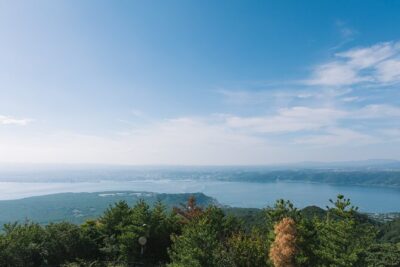
Sakurajima Century Lava Climb Journey with E-bike
Read our review →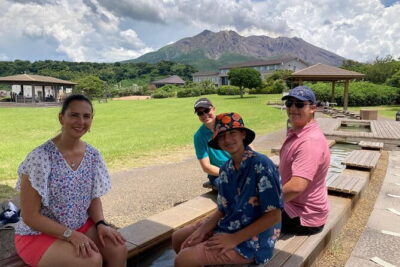
Discover the Wonders of Sakurajima Half Day Tour in Kagoshima
Read our review →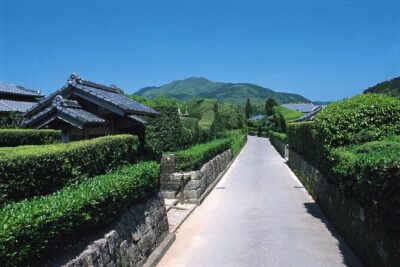
Kagoshima Private & Custom Tour with Licensed Guide and Vehicle
Read our review →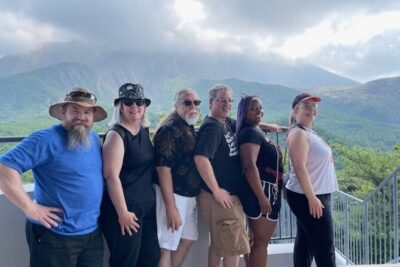
Port Pick-Up: Kagoshima Private Tour Licensed Guide & Vehicle
Read our review →
Kagoshima Full-Day Private Tour with Government-Licensed Guide
Read our review →
Kagoshima Highlights Private Tour, Sakurajima Volcano and more
Read our review →
Browse the lists this tour appears in