
Reviewed · MOUNT FUJI DAY TRIPS
Full Day Tour to Mount Fuji in Spanish
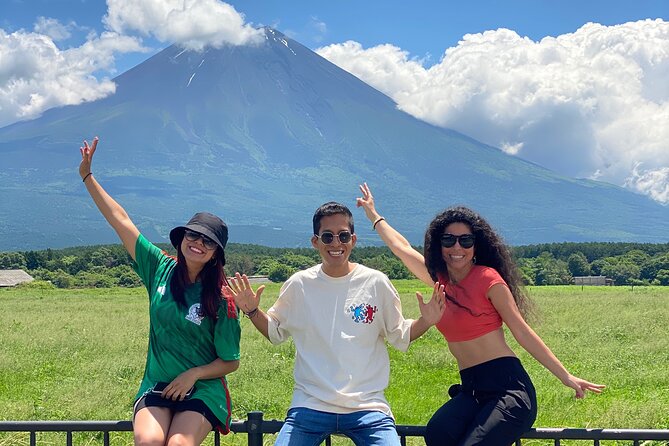
Mount Fuji is only part of this full-day outing. The real treat is the sweep of places around it: five lakes, a lava cave, a rebuilt mountain village, shrines, and waterfalls, all tied together by Spanish-speaking guides who explain what you are seeing.
I like two things in particular. First, the small maximum of nine people gives the guides room to answer questions and adjust the route. Second, Dario and his team treat the day as a search for the best view of Fuji, not a rigid checklist. The main consideration is time: 10 to 11 hours is a long day, and clear views are never guaranteed.
Key points at a glance
- Spanish guidance with cultural context: Dario, Tito, Riomy, and Min explain Japanese culture and religion in Spanish, not just the names of photo stops.
- An unusually broad Fuji route: You visit Shiraito Falls, four lakes, a traditional village, Aokigahara Forest, two shrines, a cave, and Chureito Pagoda.
- Weather-based planning: The route can change with the weather and daylight, giving the group a better chance of finding clear Fuji views.
- Small-group format: The tour accepts a maximum of nine people, a useful size for questions, photos, and quick adjustments.
- Good practical value: At $96.17 per person, the price includes transport for the day, entrance fees listed as included, snacks, drinks, and taxes. Lunch costs extra.
- A full day from Mishima: The 8:00 am start at the Tokai Bus Mishima Information Office leads to a return at the same meeting point.
Why this Spanish-language Fuji tour feels different
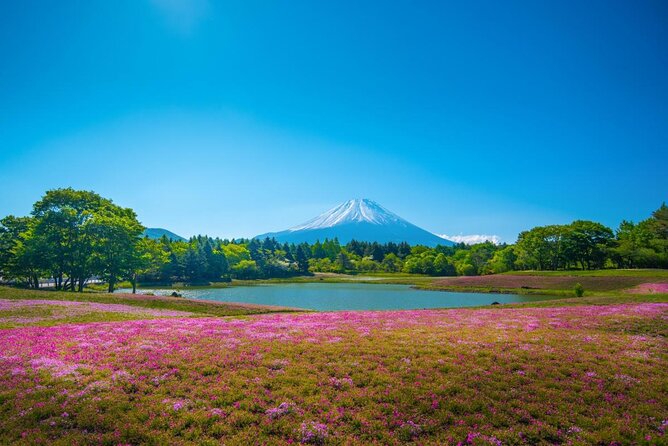
Many Mount Fuji outings focus on one famous viewpoint and a quick photo stop. This one gives you a much fuller picture of the region. You move from water shaped by volcanic eruptions to religious sites, old village life, forest stories, and the quiet edges of the Fuji Five Lakes.
That range matters. If clouds cover the mountain, you still have waterfalls, shrines, village buildings, caves, and local food culture to enjoy. If Fuji appears clearly, the whole day becomes a string of possible views from different directions.
The Spanish element is also more than translation. Dario is described as having first-hand knowledge of Japanese culture, while the guides include Japanese-Peruvian team members who explain religion and local customs in Spanish. That makes this a good fit if you want cultural background without switching between English, Japanese, and signs.
You should also expect a flexible rhythm. The guides may change the order or select different stops according to cloud cover and daylight. That is sensible around Fuji, where visibility can shift quickly, though it means you should not treat every stop as an absolute promise in a fixed order.
Other days out to the mountain from Japan:
- Mt Fuji and Hakone 1-Day Bus Tour Return by Bullet Train
★ 5.0 · 26,383 reviews - Mt Fuji & Hakone Cruise, Drum Show Bullet Train 1 Day from Tokyo
★ 4.0 · 7,413 reviews - Tokyo Mt Fuji 5th St & Hakone Cruise Bus Tour w/Bullet Train
★ 4.4 · 5,024 reviews
Shiraito Falls and the volcanic beginnings
The first stop is Shiraito Falls, where clear water pours over a broad rock wall shaped by past eruptions of Mount Fuji. The water comes from Fuji and the surrounding mountains, giving the falls a direct link to the volcanic ground beneath the region.
You get about 30 minutes here, with no separate admission charge listed. That is enough for photographs and a short look, but not a long walk or extended visit. I like this as an opening stop because it introduces Fuji through geology rather than postcard views.
The water is the main attraction. It is easy to admire the falls as scenery, but the volcanic story gives the stop more weight. The mountain is not just a distant cone. Its old eruptions helped shape the streams, caves, lakes, and soil you encounter all day.
Motosuko and Saiko, two different sides of Fuji
Lake Motosu is famous in Japan for appearing on the back of the ¥1,000 bill. You have about 30 minutes at the lake, with admission listed as free. This is one of the stops where a guide adds useful context, since the banknote connection explains why the view has such a familiar place in Japanese daily life.
The next major visit is Saiko Iyashi no Sato Nemba, a reconstructed ancestral village between the mountains. The original settlement was destroyed and rebuilt decades later, creating a place where you can see how older rural architecture and village life are presented today.
An hour here gives you more breathing room than the shorter photo stops. Admission is included. I would use this time to look beyond the buildings and ask the guide about the village, its destruction, and the rebuilding process. The stop adds human history to a day that could otherwise become a series of lakeside viewpoints.
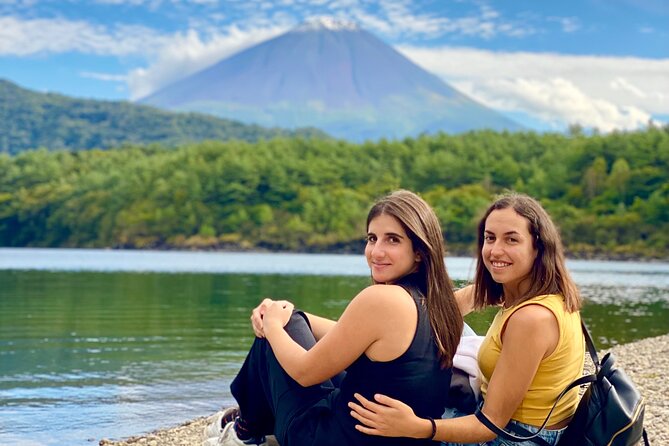
Lake Saiko follows, with about 30 minutes. It lies beside the Aokigahara Forest and has been used as a setting for films. The connection to the forest gives the lake a more atmospheric character, but the visit remains brief, so expect a short look rather than a long lakeside walk.
Kawaguchiko and the value of local route knowledge
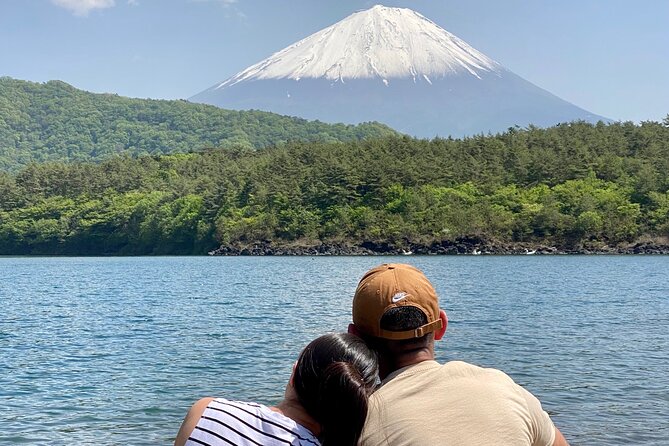
Lake Kawaguchiko receives about 50 minutes, and the tour uses two less obvious viewing areas that the guide began exploring before introducing them to participants. The exact spots can change, particularly because the day is adjusted for weather and daylight.
This is one of the tour’s stronger features. Around a heavily visited lake, the difference between a standard stop and a carefully chosen viewpoint can be significant. You get a better chance to pause, frame a photograph, and see Fuji from a different angle instead of simply stepping off a vehicle at the most obvious roadside point.
The guide’s local familiarity is especially useful here. Dario is praised for helping with photography, and that can matter when Fuji appears only briefly between clouds. You should still keep expectations realistic: the tour improves your chances of a good view, but it cannot control the weather.
Same base, a different sort of day:
- 1-Day Tokyo Bus Tour
★ 5.0 · 14,250 reviews - PERFECT KYOTO 1-Day Bus Tour
★ 5.0 · 13,518 reviews - Tokyo: TOKYO SKYTREE® Admission ticket
★ 4.5 · 11,192 reviews - Tokyo: teamLab Planets TOKYO Digital Art Museum Entry Ticket
★ 4.6 · 9,779 reviews
Oshino Hakkai and the taste of an old village
Oshino Hakkai is described as an ancestral town where you can find a range of traditional Japanese foods. The visit lasts about 45 minutes, and there is no separate admission charge listed.
This is a practical food stop as well as a cultural one. Lunch is not included in the tour price, so you should plan to pay for your own meal. The supplied details do not specify a restaurant or menu, but the village’s traditional food stalls and local character make it a natural place to consider regional snacks or a meal, depending on the group schedule.
The short visit means you may need to choose between eating, browsing, and taking photographs. I would ask the guide early about the timing so you can make a sensible choice. Snacks and drinks are included during the tour, but they do not replace lunch.
Aokigahara Forest, handled with care
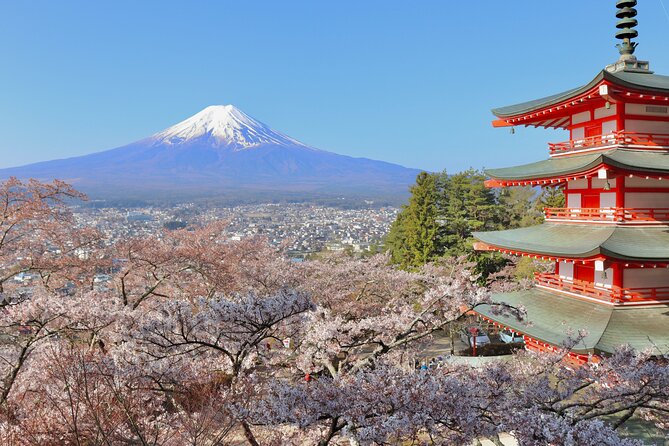
Aokigahara is often given a grim nickname because of its association with suicide. The tour description acknowledges those sad stories but also makes an important point: it is still a forest.
That distinction is worth keeping in mind. You should expect an explanation of the area’s difficult reputation, but the stop is not presented as a spectacle. The visit lasts about 45 minutes and has no separate admission fee listed.
This may be the most emotionally serious part of the day. If you prefer a tour that avoids difficult subjects, take that into account before booking. If you are comfortable with a respectful explanation of the forest’s stories, the stop adds a more honest layer to the region than a simple scenic drive would.
Chureito Pagoda, the classic Fuji photograph
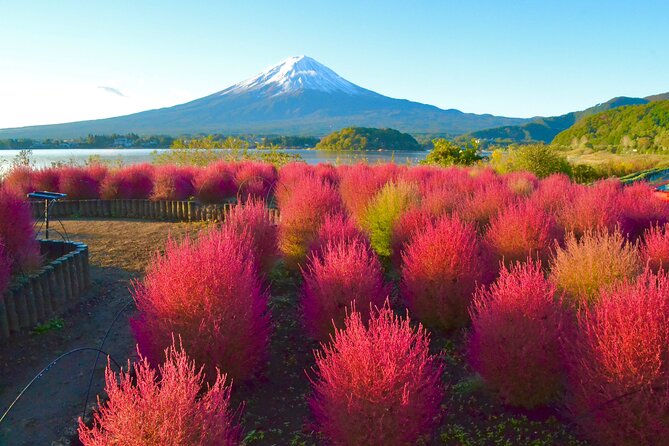
Chureito Pagoda is the view most often associated with Mount Fuji in Japanese travel images. It is also a symbol of Fujiyoshida, the city connected with the pagoda. The stop lasts about 45 minutes and admission is listed as free.
The appeal is clear: the pagoda, surrounding scenery, and Fuji can form one of Japan’s most recognizable compositions. The catch is that the famous view depends on visibility, and the site can feel very different under clouds.
There may also be steps or walking involved, but the supplied information does not give a precise route or accessibility details. If you have mobility concerns, ask the operator before booking. With limited time, you should be ready to move at a steady pace rather than linger for a long photo session.
Kitaguchi Hongu Fuji Sengen Jinja and Fuji climbing traditions
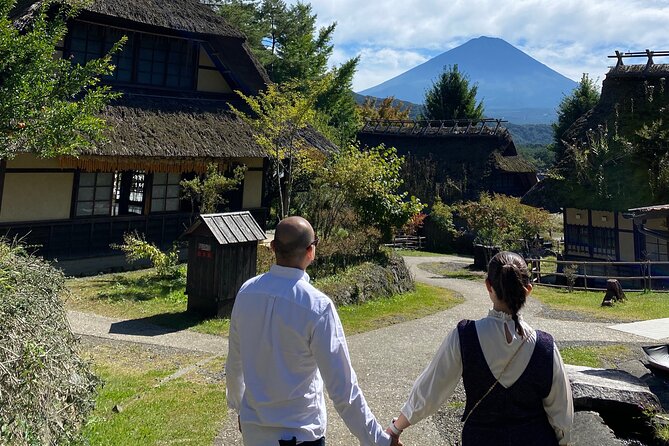
Kitaguchi Hongu Fuji Sengen Jinja is a shrine dedicated to Mount Fuji and its climbers. It is also described as a starting point for the climb toward Fuji, giving the site a direct connection to pilgrimage and mountain worship.
You get about 30 minutes here, with no admission charge listed. That is short, but the shrine provides an important counterpoint to the sightseeing stops. Fuji has long been more than a pretty mountain. It has religious meaning, and this visit helps explain why people approached it with ceremony and respect.
The stop is best for travelers who want cultural explanation rather than another broad viewpoint. Ask the guide about the shrine’s connection to climbers and the role of Fuji in Japanese religion. The Spanish explanations are one of the main reasons this tour is more than a transport service.
Yamanakako and the final lake views
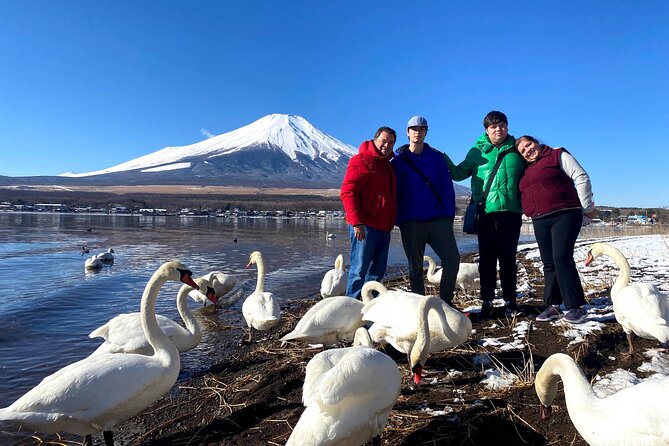
Yamanakako is the largest of the five lakes around Mount Fuji. The tour allows about 30 minutes to see the water, where swans, koi, and other birds may be present. You can feed them, though the details do not specify whether food is provided or sold on site.
This is a lighter stop after the more serious subject of Aokigahara and the religious setting of the shrine. It gives you a chance to enjoy the water and wildlife before the final attraction.
Because the stop is short, do not expect a full circuit of the lake. Think of it as a close look at one corner, with time for photographs and a quick break. The lake also gives you another possible angle on Fuji if the mountain is visible.
Fugaku Wind Cave and the final volcanic chapter
The Fugaku Wind Cave is a natural underground formation created by ancient Mount Fuji eruptions. It still contains remains of volcanic lava, making it a fitting final stop after a day spent seeing the mountain’s effects above ground.
Admission is included, and the visit lasts about 30 minutes. A cave can be a welcome change after many outdoor stops, but you should be prepared for an underground setting and possibly uneven conditions. The information provided does not specify temperature, stairs, or accessibility, so ask the operator if any of those details matter to you.
I like the way this stop completes the geological story. Shiraito Falls shows water shaped by volcanic ground, the lakes show the wider setting, and the wind cave lets you look directly at what eruptions left behind.
Timing, group size, and what the $96.17 price covers
The tour starts at 8:00 am from the Tokai Bus Mishima Information Office at 17-1 Ichibanchō, Mishima, Shizuoka 411-0036. It returns to the same meeting point after roughly 10 to 11 hours.
That long schedule allows the tour to cover a remarkable amount of ground, but it also means you should arrive ready for a full day. Wear comfortable clothing and shoes suitable for short walks and varied outdoor stops. The exact walking demands are not specified, so anyone with mobility concerns should confirm details before booking.
The maximum group size is nine. That is small enough for direct questions and easier coordination than a large coach trip. It also makes the guides’ weather-based decisions more useful, since a small group can adjust more easily.
At $96.17 per person, the value is strong if you want many sites in one day. The price includes snacks, drinks, all fees and taxes, and the listed admission charges for Saiko Iyashi no Sato Nemba and Fugaku Wind Cave. Lunch is not included, so budget separately for it.
A mobile ticket and confirmation at booking keep the process simple. Public transportation is nearby, and most people can participate. Free cancellation is available up to 24 hours before the start time. Inside that window, the payment is not refunded. If bad weather or an insufficient number of bookings cancels the tour, you are offered another date or a full refund.
Who should book this Mount Fuji outing
I would choose this tour if you want to see much more than one Fuji viewpoint and prefer Spanish explanations throughout the day. It is especially useful for Spanish-speaking visitors who want help with Japanese religion, food traditions, village life, and local stories.
It also suits photographers who are willing to accept changing plans. Dario’s attention to photo spots and the weather-based route can help you make the most of a partly cloudy day, though no guide can promise a clear mountain.
I would think twice if you want a slow, relaxed visit to only one lake or if a 10 to 11-hour schedule feels tiring. The day covers 11 stops, and several visits last only 30 minutes. That pace is the price of seeing so much.
Should you book it?
Book this tour if your goal is a broad, well-explained day around Mount Fuji rather than a quick photograph of the mountain. The mix of waterfalls, lakes, a rebuilt village, forest, shrines, food culture, and a lava cave gives you plenty to see even when Fuji hides.
The best reason to choose it is the combination of Spanish-speaking cultural guidance and weather-aware planning. Just keep lunch money ready, accept a long day, and remember that the mountain itself is never guaranteed. If those conditions suit you, $96.17 buys a lot of ground and a much fuller understanding of the Fuji region.
FAQ
Where does the Mount Fuji tour start?
The tour starts at 8:00 am at the Tokai Bus Mishima Information Office, 17-1 Ichibanchō, Mishima, Shizuoka 411-0036, Japan.
Where does the tour end?
The activity ends back at the meeting point in Mishima.
How long does the tour last?
The tour lasts approximately 10 to 11 hours.
Is lunch included?
No. Lunch is not included, although snacks and drinks are provided.
How many people can join the tour?
The tour has a maximum of nine participants.
What happens if the weather is too poor for the tour?
If poor weather causes a cancellation, you are offered a different date or a full refund. If you cancel yourself, you can receive a full refund when you cancel at least 24 hours before the start time.
Just added in Japan
- 1 Day Tour: Snow Monkeys & Snow Fun in Shiga Kogen★ 5.0 · 52 reviews
- Osaka Temple Cool Foot Bath & Matcha Experience〈45min〉★ 4.9 · 82 reviews
- Kobe 4hr Private Tour with Government-Licensed Guide★ 5.0 · 59 reviews
- Small-Group Wagyu Beef and 7 Japanese Dishes Tokyo Cooking Class★ 5.0 · 190 reviews
- Osaka: Mind & Spirit Balance Temple Reiki Healing★ 5.0 · 41 reviews
- Kobe Highlights & Hidden Gems: Private & Custom Tour with a Guide★ 4.5 · 70 reviews
- Sakurajima Century Lava Climb Journey with E-bike★ 4.9 · 27 reviews
- KOBE Sake Tasting Tour at Breweries (tasting fee included)★ 5.0 · 154 reviews
Mount Fuji Day Trips, compared.
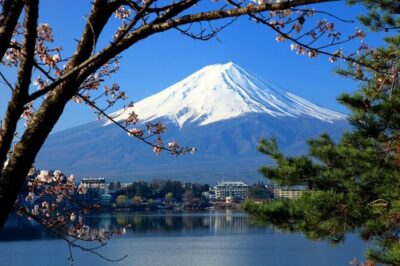
Mt Fuji and Hakone 1-Day Bus Tour Return by Bullet Train
Read our review →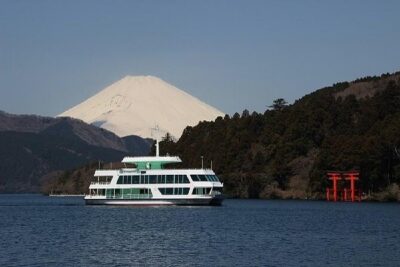
Mt Fuji & Hakone Cruise, Drum Show Bullet Train 1 Day from Tokyo
Read our review →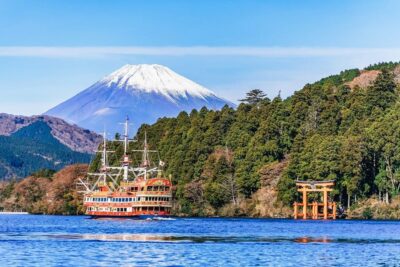
Tokyo Mt Fuji 5th St & Hakone Cruise Bus Tour w/Bullet Train
Read our review →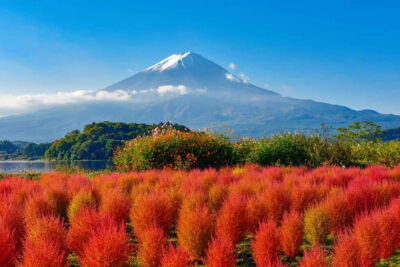

Mt.Fuji,Kawaguchiko Oishi Park,Arakurayama Sengen Park
Read our review →
Mt Fuji Top 5 Spots Day Tour: Arakurayama Park,Oshino Hakkai
Read our review →
Private Tour to Mt. Fuji and Hakone (Fully Licenced Operator)
Read our review →
Mount Fuji Full-Day Private Tour from Tokyo (Customizable)
Read our review →Browse the lists this tour appears in