
Reviewed · MOUNT FUJI DAY TRIPS
Tokyo:Mt.Fuji,Kawaguchiko Oishi Park,Arakurayama Sengen Park
The main reason to book this day trip is simple: you get several different looks at Mount Fuji instead of betting the whole day on one viewpoint. The route combines the famous Chureito Pagoda view with lakeside scenery, flower gardens, a craft center, and an old-style thatched-roof village.
I like the mix of iconic photographs and ordinary local places, especially the chance to stroll beside Lake Kawaguchi and explore Saiko Iyashi-no-Sato Nenba. I also like the practical value: at $54 per person, air-conditioned transport, a guide, and the village entry fee are included. The drawback is the pace. Ten hours sounds generous, but traffic and the number of stops mean you may wish for another 15 minutes at the lake or village.
Key points to know before booking
- Mount Fuji from four angles: See the mountain from Arakurayama, Lake Kawaguchi, Oishi Park, and Saiko.
- 398 steps to the classic view: Chureito Pagoda requires a climb, though a sloped route is available.
- Seasonal scenery changes the day: Cherry blossoms, lavender, autumn leaves, and snow each offer a different reason to go.
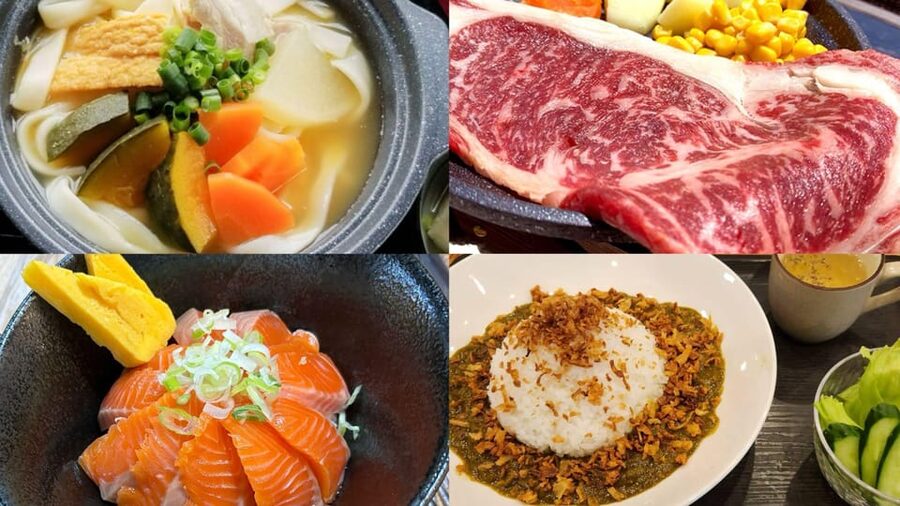
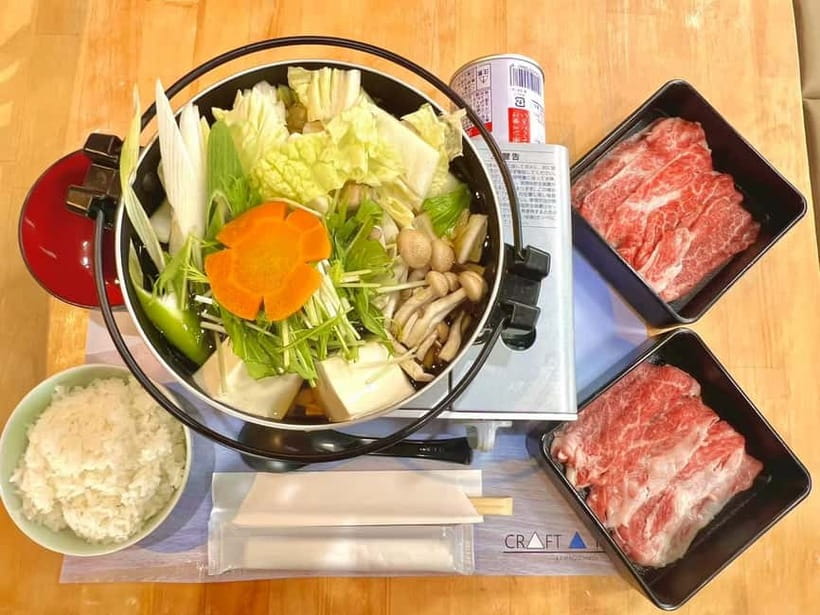
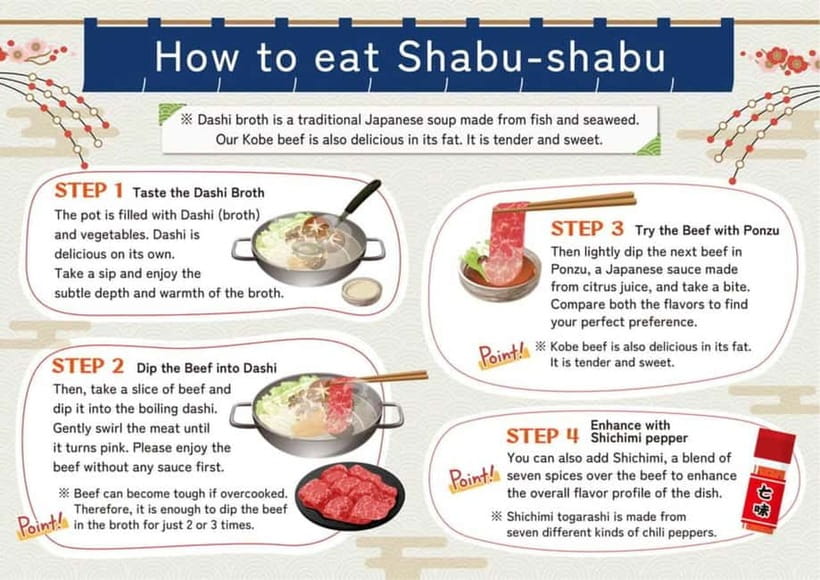
- Lunch is optional: Choose Houtou noodles, Kobe beef shabu-shabu, Koshu wine beef, or another available meal option.
- A full day outside Tokyo: The 10-hour schedule includes transport from Tokyo and a return to Shinjuku.
- Clear, friendly guiding: Guides including Omar, Koji, George, Eric, and Sumi have been praised for humor, directions, and care.
Why this Mount Fuji day trip works
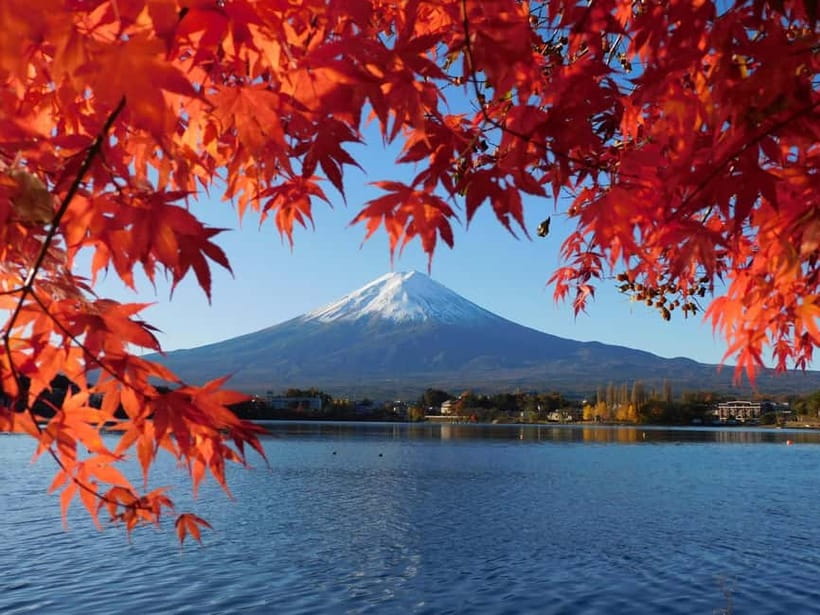
Mount Fuji is famously shy. Clouds can cover it even when the forecast looks promising, so a tour that moves between several viewing areas gives you more chances than a single-stop outing. That does not guarantee a clear mountain, but it makes the day worthwhile even when Fuji disappears.
The route also avoids making the whole experience about a shopping center. You spend time in parks, by the water, at a shrine, and in a restored village. That gives you a better sense of the Fuji Five Lakes area than a quick photograph from a coach window.
The company has operated this tour for more than 10 years, and the service is built around a simple format: ride together, receive an explanation, then get free time to walk and take photographs. Guides such as Koji and Omar have been singled out for keeping the mood light while giving clear meeting times. George and Eric have also been praised for calm, friendly guidance.
Expect a long day. Traffic leaving Tokyo or returning in the evening can change the timing, and the tour may shorten a stop if the roads are slow. Still, the air-conditioned vehicle saves you from planning several train and bus connections, which is the main reason this price makes sense.
Other days out to the mountain from Tokyo:
- Mt Fuji and Hakone 1-Day Bus Tour Return by Bullet Train
★ 5.0 · 26,383 reviews - Mt Fuji & Hakone Cruise, Drum Show Bullet Train 1 Day from Tokyo
★ 4.0 · 7,413 reviews - Tokyo Mt Fuji 5th St & Hakone Cruise Bus Tour w/Bullet Train
★ 4.4 · 5,024 reviews
Arakurayama Sengen Park and the 398-step climb
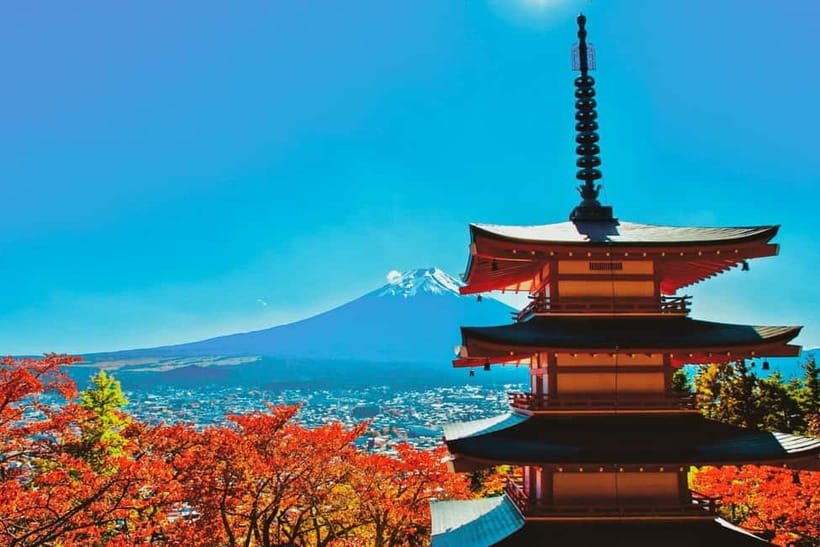
Arakurayama Sengen Park gives you the image most people have in mind when they think of Mount Fuji in Japan: the mountain behind a red five-story pagoda, with trees framing the scene. The famous observation point sits above the park, so you need to climb 398 stone steps from the entrance.
That climb is not a small detail. It takes effort, particularly if you are carrying a camera or visiting on a warm day. A sloped route is available, which helps if stairs are difficult, but you should still expect plenty of walking at other stops.
The reward is one of Japan’s strongest photo compositions. In late March and mid-April, roughly 650 cherry trees add pale blossoms around the pagoda. In autumn, red and gold leaves replace the spring flowers. On a clear winter day, snow on Fuji gives the mountain a clean, dramatic outline.
The park can be crowded during blossom season, so this is not a quiet viewpoint. Your free time is also limited by the group schedule. Bring water, wear shoes with a good grip, and take your photos before wandering too far from the meeting point.
Hikawa Clock Shop and Arakura Fuji Sengen Shrine
The streets near Hikawa Clock Shop offer a different kind of Fuji photograph. Here, the mountain appears beyond a Japanese town street, producing a more lived-in view than the elevated pagoda scene.
This stop is useful because it shows how Mount Fuji fits into daily life around Fujiyoshida. The street is also a popular photo location, so you need to remain aware of traffic and other people while framing the mountain.
The nearby Arakura Fuji Sengen Shrine adds a quieter cultural stop. You can look around the shrine grounds, take photographs, and hear about the spiritual importance of the area from the guide. It is not a long museum visit or formal religious lesson. Think of it as a short introduction to the sacred places around Fuji.
The shrine and clock-shop area are close to the famous pagoda, but they do not feel identical. The park gives you height and panorama. The street gives you a town view. The shrine gives you context.
Chureito Pagoda: the photograph everyone wants
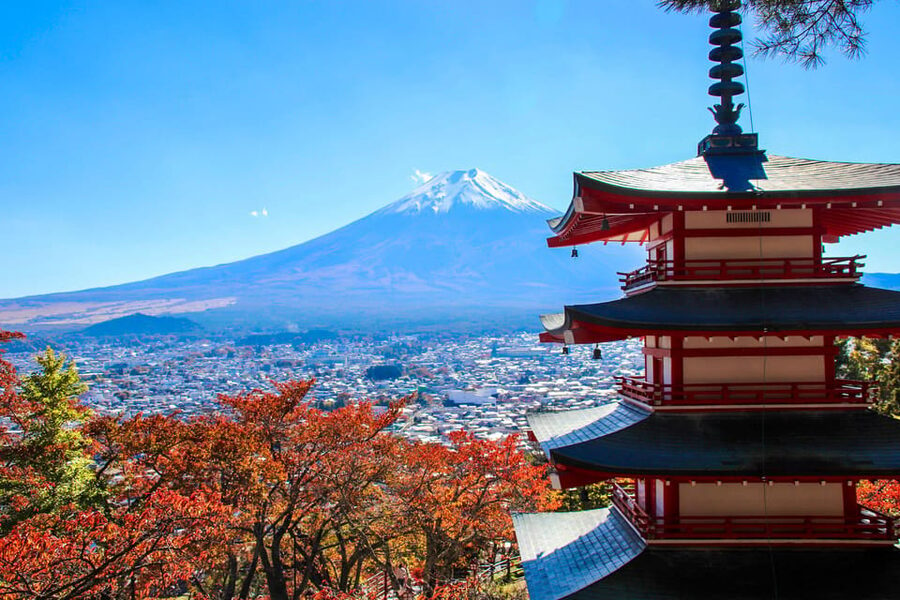
Chureito Pagoda is part of Arakurayama Sengen Park, but it deserves separate attention because it is the tour’s most recognizable viewpoint. The five-story vermilion pagoda sits below the broad cone of Mount Fuji, and the contrast makes the photograph instantly recognizable.
Your guide will explain where to go and when to return to the vehicle, but the actual time at the viewpoint is yours. This is a good place to take several versions of the same image: one with the pagoda, one with the wider valley, and one focused on Fuji if the air is clear.
Some people find the stop too short, especially if they want to wait for clouds to move away. That is a fair concern. The tour gives you access to the view, not unlimited time to watch the mountain appear. If photography is your main purpose, stay focused and take the key shots first.
Same base, a different sort of day:
- 1-Day Tokyo Bus Tour
★ 5.0 · 14,250 reviews - Tokyo: TOKYO SKYTREE® Admission ticket
★ 4.5 · 11,192 reviews - Tokyo: teamLab Planets TOKYO Digital Art Museum Entry Ticket
★ 4.6 · 9,779 reviews - Tokyo: Sumo Show Experience with Chicken Hot Pot and a Photo
★ 4.8 · 6,678 reviews
Lake Kawaguchi, Maple Corridor, and lunch
Lake Kawaguchi is where the day begins to slow down. The shoreline gives you a broad view of Fuji, and on a calm day the mountain may reflect in the water. You can walk, take photographs, browse local food stalls, or simply enjoy a break from the coach.
The lake stop is scheduled for about two hours, though the exact rhythm depends on traffic and the day’s arrangements. This is one of the places where an extra 15 minutes would be welcome. There is plenty to see, and lunch can take a meaningful part of the available time.
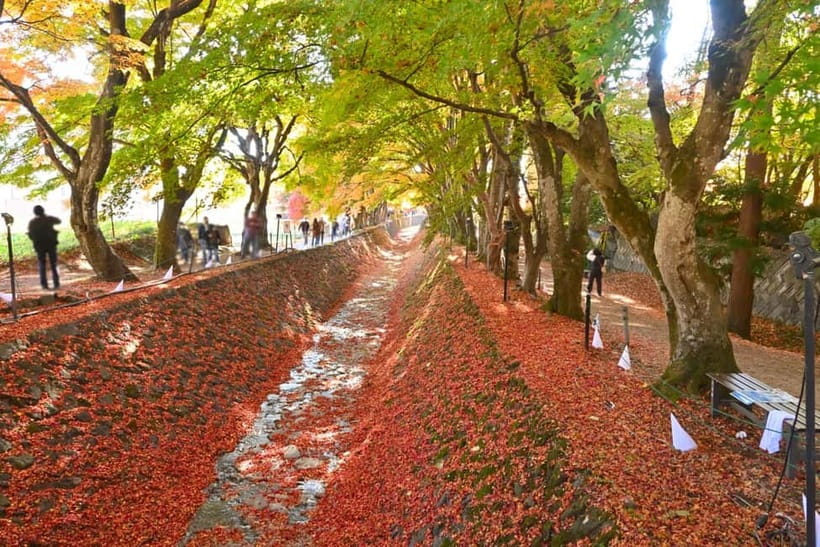
The nearby Maple Corridor is best known for autumn color. In spring, the lakeside paths bring cherry blossoms. The seasonal timing matters here: there is no single best month for every kind of scenery.
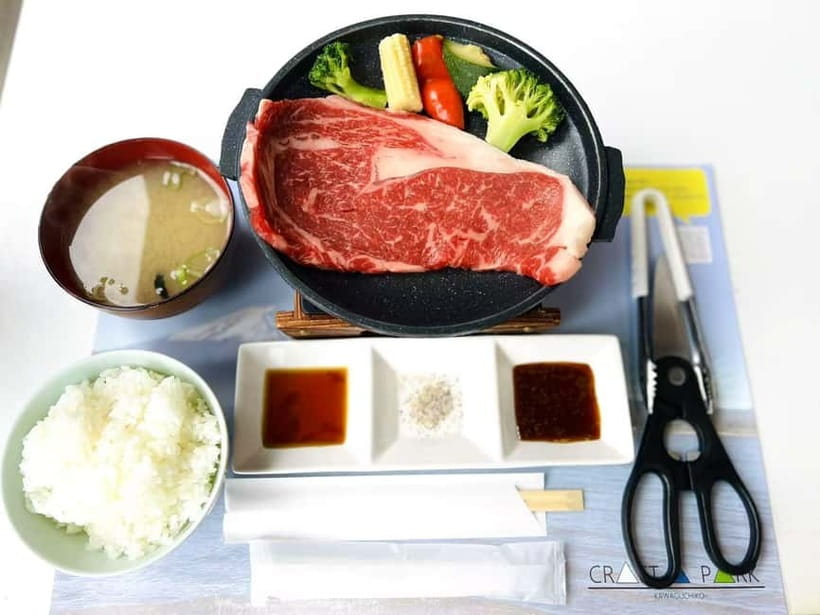
Lunch is available at Kawaguchiko Craft Park, with choices that may include:
- Houtou noodles, a thick local noodle dish served in miso broth with vegetables and chicken
- Kobe beef shabu-shabu, made with A5-grade Japanese black Wagyu
- Koshu wine beef steak, using Wagyu raised in Yamanashi
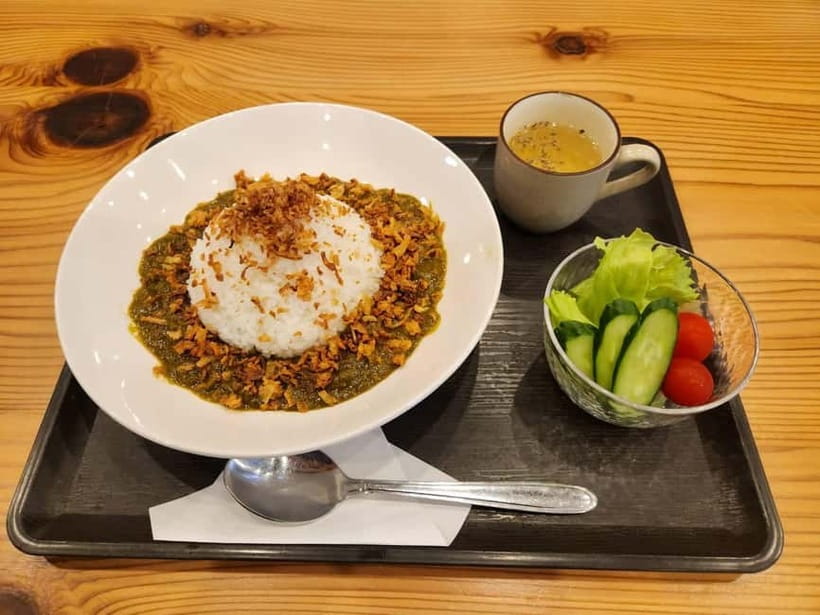
- Other food choices available at the facility
Houtou is the most regional choice. It is hearty and filling, which helps on a day with so much walking. The meat options are more of a treat and may appeal to you if lunch is part of the reason you booked. A vegan option has also been available, but if you have a strict allergy or dietary need, ask the guide early rather than relying on last-minute arrangements.
Kawaguchiko Craft Park is more than a restaurant. It has open-air seating, craft activities, shops, local specialties, and limited-edition souvenirs. A short walk leads toward the lake, so you can combine food and shopping with a few quiet minutes by the water.
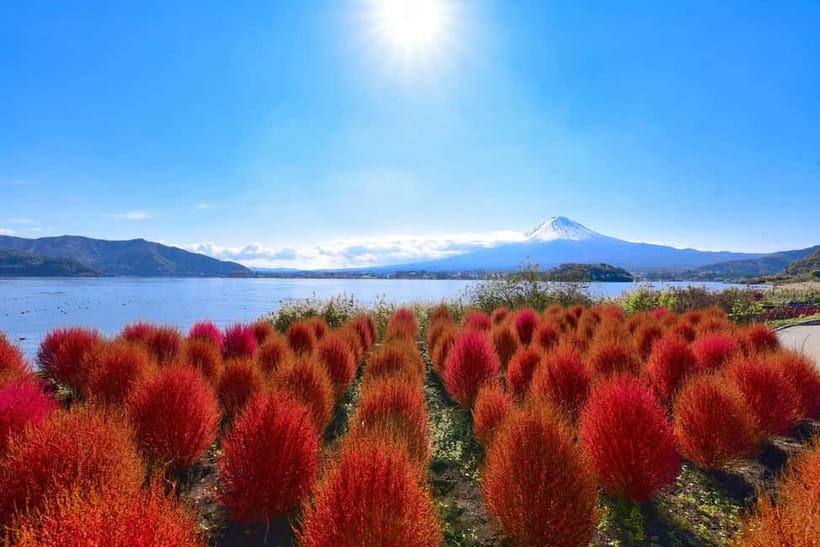
Oishi Park and the Flower Road
Oishi Park is one of the best stops for a wide Fuji view. It sits along Lake Kawaguchi and includes a 350-meter Flower Road, where the display changes through the year.
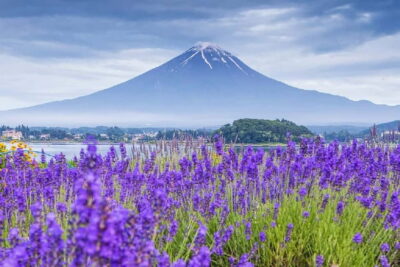
Spring brings tulips. Summer is known for lavender, especially during the Kawaguchiko Herb Festival from late June to mid-July. Autumn brings kochia, with its low rounded plants changing color. These flowers give you a foreground for Fuji, so the photograph changes with the season.
The stop is about 30 minutes, which is enough for a quick walk and photos but not a long garden visit. If the mountain is clear, use your time at the main lake-facing area first. If clouds cover Fuji, the flowers and water still give you something pleasant to see.
Oishi Park is also a good reminder that Mount Fuji is not the only attraction here. The region’s appeal comes from the combination of mountain, lake, seasonal plants, local food, and small towns.
Saiko Iyashi-no-Sato Nenba and its thatched roofs
Saiko Iyashi-no-Sato Nenba is the most distinct cultural stop on the route. This restored village has about 20 thatched-roof houses modeled on the traditional style associated with Shirakawa-go. The buildings now hold craft studios, souvenir shops, and small places to eat.
The village feels different from the photo stops around Kawaguchi. You can move from house to house, look at handmade items, and see how traditional building styles are presented for visitors. The mountain may appear behind the roofs, adding another Fuji photograph without repeating the pagoda scene.
One of the popular activities is dressing in a kimono or ninja outfit and taking photographs. This is especially appealing for families or anyone who wants a playful image rather than another standard mountain panorama.
Season changes the mood:
- Spring brings cherry blossoms and carp streamers.
- Summer brings green hills and warmer weather.
- Autumn brings colored leaves.
- Winter can bring snow around the thatched roofs.
The scheduled visit is about 50 minutes. That is enough to walk through the main area, but it can feel short if you want to enter several houses, shop, dress up, and take photographs. Keep an eye on the meeting time. Missing the bus would create a serious problem on a group day trip.
Transport, guiding, and the pace of the day
The tour begins at one of two Tokyo meeting locations, including the Robert Indiana LOVE sculpture near the KOKUYO Tokyo Shinagawa office, depending on the option you select. It finishes at Shinjuku Station.
Arrive 10 minutes early. The vehicle leaves on time, and the meeting point can vary by booking. The bus is air-conditioned, and one useful detail is that seats may be numbered, making it easier to find your place. Clear speakers matter on a day when the guide is explaining several locations from the front of the vehicle.
The tour is offered in English and Chinese. On some dates, people booked in different languages may share the same vehicle, so the format can vary. The vehicle size may also change according to the number of people and conditions on the day.
The guides are a major part of the experience. Omar has been praised for his humor and friendly help. Koji is known for giving clear instructions and handling the day smoothly. George has helped with food questions and explained the sights in a relaxed way. Eric has been praised for giving useful information during both the drives and the stops.
That does not mean every guide will have the same style. The important thing is that this tour depends on good timekeeping. You receive free time, but you also need to return when instructed. Guides have dealt calmly with late arrivals and traffic delays, yet no guide can remove the risk of a slow return to Tokyo.
Price, value, and who should book
At $54 per person, this is strong value if you want several Fuji-area locations in one day. You get transport, a live guide, admission to Saiko Iyashi-no-Sato Nenba, and lunch if you choose the lunch option. Organizing the same route by public transport would require more planning, more transfers, and careful attention to bus schedules.
The price is less attractive if you want a slow, private day. This is a group tour with a fixed route and fixed meeting times. You may spend less time at your favorite place than you would on an independent visit.
I would recommend it to:
- First-time visitors staying in Tokyo
- Families who want transport handled for them
- Photographers who want several Fuji viewpoints
- People interested in gardens, local food, and traditional buildings
- Solo visitors who prefer a planned day with a guide
I would hesitate if you dislike early starts, long coach rides, stairs, or changing schedules. I would also avoid booking it immediately before a flight. Traffic on the return to Tokyo can be heavy, even when the guide and driver manage the day well.
Weather is the one thing no tour operator can control. Clear days can produce Fuji views from every stop, while rain and cloud may hide the mountain. The parks, village, lake, food, and shrine still give the day structure, but you should book this as a Fuji-area day trip, not as a guaranteed mountain photograph.
Should you book this Mount Fuji tour?
Book it if you want maximum variety for a modest price and you are willing to accept a full, active day. The strongest part is the combination of Chureito Pagoda, Lake Kawaguchi, Oishi Park, and Saiko Iyashi-no-Sato, each offering a different view and mood.
Skip it if you want to linger at one location or travel at your own pace. For most first-time visitors, though, the route is well chosen, the included transport removes a lot of hassle, and the mix of scenery and food makes the $54 cost easy to justify.
FAQ
How long is the Mount Fuji tour from Tokyo?
The tour lasts about 10 hours and finishes at Shinjuku Station.
What languages are available?
Live guiding is available in English and Chinese. People booked in different languages may sometimes share the same vehicle.
Where does the tour start?
There are two possible starting locations, depending on the option booked. One listed location is the Robert Indiana LOVE sculpture near the KOKUYO Tokyo Shinagawa office.
Where does the tour finish?
The tour finishes at Shinjuku Station.
Is lunch included?
Lunch is included only if you select the lunch option. Choices may include Kobe beef shabu-shabu, Koshu wine beef steak, and local Houtou noodles.
How many steps are there to the Chureito Pagoda viewpoint?
The viewpoint requires climbing 398 stone steps from the park entrance. A sloped route is also available.
Is the Saiko Iyashi-no-Sato Nenba entrance fee included?
Yes. Entry to Saiko Iyashi-no-Sato Nenba is included.
What happens if traffic delays the tour?
If traffic or another unexpected problem causes a delay, the time at individual stops may be adjusted. The vehicle departs on time at the scheduled meeting points, so arrive at least 10 minutes early.
Just added in Tokyo
- Luxury Tokyo Sake, Cocktail, Whisky and Pairing Tour★ 5.0 · 18 reviews
- Wagyu & Sake Pairing in Shinjuku – Steak, Shabu-Shabu & More★ 5.0 · 112 reviews
- Small-Group Wagyu Beef and 7 Japanese Dishes Tokyo Cooking Class★ 5.0 · 190 reviews
- Nikko: Edo Wonderland Edomura Cultural Theme Park Ticket★ 4.3 · 205 reviews
- 《MEMBERS-ONLY-BAR-HOPPING》Discover Your Special Whiskey in Tokyo!★ 5.0 · 29 reviews
- Japanese Whisky Hunting《HIGH-QUALITY-ONLY》Rare Tasting Class★ 5.0 · 20 reviews
- From Tokyo: Private Tour to Fuji/Hakone – Onsen, Art, Nature★ 5.0 · 116 reviews
- Tokyo: KABUKI Show at Kabukiza Theatre Admission Ticket★ 4.8 · 152 reviews
Mount Fuji Day Trips, compared.
Mt Fuji and Hakone 1-Day Bus Tour Return by Bullet Train
Read our review →
Mt Fuji & Hakone Cruise, Drum Show Bullet Train 1 Day from Tokyo
Read our review →
Tokyo Mt Fuji 5th St & Hakone Cruise Bus Tour w/Bullet Train
Read our review →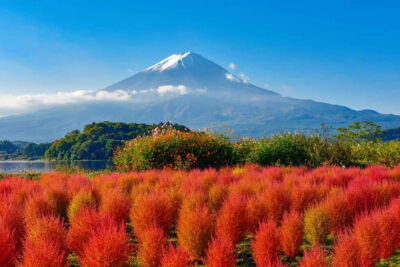
Mt Fuji Top 5 Spots Day Tour: Arakurayama Park,Oshino Hakkai
Read our review →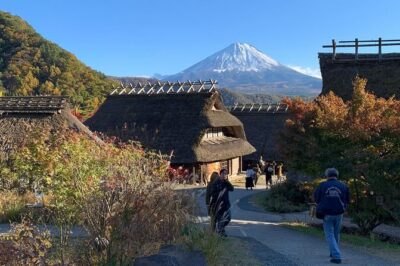
Private Tour to Mt. Fuji and Hakone (Fully Licenced Operator)
Read our review →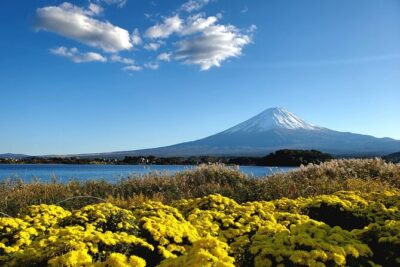
Mount Fuji Full-Day Private Tour from Tokyo (Customizable)
Read our review →
Mt Fuji & Hakone Cruise, Drum Show Bus 1 Day from Tokyo
Read our review →Browse the lists this tour appears in