
Reviewed · MOUNT FUJI DAY TRIPS
Explore Mt. Fuji Ice Cave in Aokigahara Forest
The best part of this experience comes when the forest trail gives way to a 0°C lava cave formed by Mt. Fuji’s eruption about 1,200 years ago. You walk in with a headlamp, helmet, gloves, and coveralls, then see ice shaped by snowmelt and volcanic rock. It is not a polished attraction. It feels like a real outing.
I like the small-group format, capped at 12 people, and the fact that special entry permission is included. I also like the guides’ personal touch. Tada, Takasi, Toshi, and Tadasuke are praised for their English, humor, and deep knowledge of the forest. The main drawback is physical: you need moderate fitness, firm footwear, and comfort with bending and scrambling over uneven rock.
Key points
- A real lava-formed ice cave: Enter a cold volcanic cavern created by Mt. Fuji’s ancient eruption and later filled with ice from melted snow.
- Aokigahara on foot: The tour includes about 40 minutes of forest walking before the cave and another 40 minutes afterward.
- Special access included: The operator arranges the entry permit needed for this less-commercial cave experience.
- Strong local guides: Tada, Takasi, Toshi, and Tadasuke are known for clear English, humor, and explanations of geology, plants, wildlife, and local history.
- Practical transport: Pickup and drop-off are offered at Kawaguchiko Station and hotels around Lake Kawaguchiko.
- Bring the right attitude: Expect cold, darkness, wet weather risks, and some maneuvering around rocks rather than an easy paved walk.
Why this Mt. Fuji cave feels different
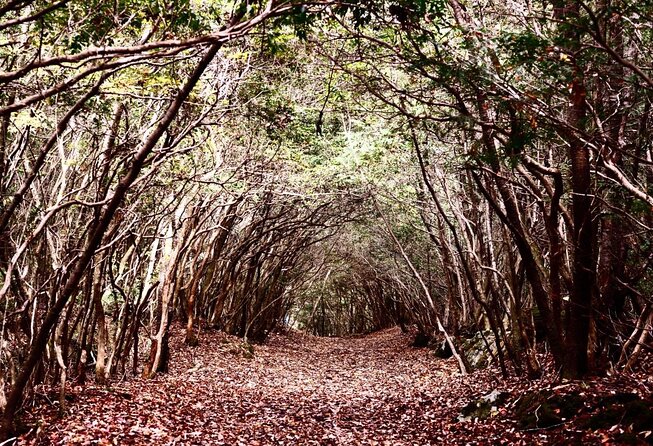
Many Mt. Fuji excursions are built around viewpoints, ropeways, boats, or busy sightseeing stops. This one asks you to walk into the woods and then underground. The reward is not a grand building or a long list of attractions. It is the feeling of finding a natural place that still seems raw and quiet.
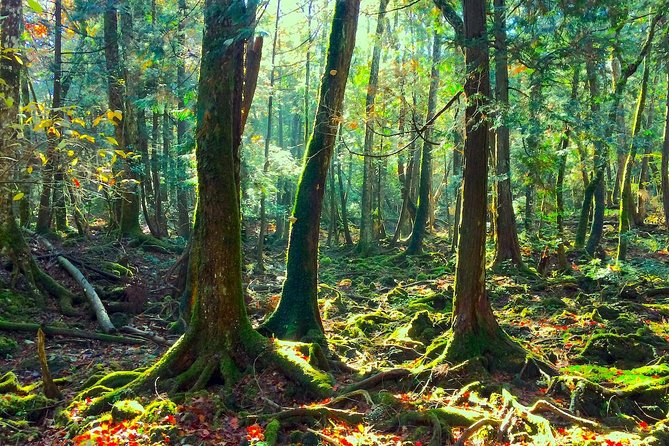
Aokigahara is often called the Sea of Trees. The forest grew over lava from Mt. Fuji, creating a dark, porous ground and a dense stand of trees. Your guide helps you read the setting instead of simply walking through it. You may learn how the volcanic soil shaped the forest, how ice formed below ground, and how the caves were used over time.
The cave is the centerpiece, but the forest walk gives the outing its character. The route takes about 40 minutes each way, with roughly an hour inside the cave. That balance matters. You are not being driven to a quick photo stop, and you are not spending the whole day on a hard hike.
Other days out to the mountain from Japan:
- Mt Fuji and Hakone 1-Day Bus Tour Return by Bullet Train
★ 5.0 · 26,383 reviews - Mt Fuji & Hakone Cruise, Drum Show Bullet Train 1 Day from Tokyo
★ 4.0 · 7,413 reviews - Tokyo Mt Fuji 5th St & Hakone Cruise Bus Tour w/Bullet Train
★ 4.4 · 5,024 reviews
What happens before you enter the forest
You meet at the arranged point, often Kawaguchiko Station or a hotel around Lake Kawaguchiko if pickup is selected. The tour includes an air-conditioned vehicle, private transport, and a local English-speaking guide. Some groups have also stopped for Mt. Fuji views during the drive, depending on conditions and timing.
Allow extra care with the meeting time. The advertised start time and the actual reception time may not always feel identical, so read the confirmation closely and arrive early. One poor experience came from a late arrival after a changed meeting time. That is an avoidable problem in a region where transport connections can take time.
At the preparation point, you receive a helmet, headlamp, gloves, and protective coveralls. You may also have a place to use the toilet and change clothes before setting off. The equipment is included in the price, which saves you from renting basic cave gear or carrying a helmet across Japan.
Wear long sleeves, long trousers, and outdoor shoes with good grip. A winter jacket is recommended, even if the day around Lake Kawaguchiko feels mild. The cave is kept at about 0°C, and wet weather can make both the forest and rock more demanding.
Walking through Aokigahara’s Sea of Trees
The first forest walk takes about 40 minutes. This is not a simple paved path to a viewing platform. You follow your guide through volcanic ground and dense woodland, with attention on the trees, plants, rocks, and traces of the area’s past.
Aokigahara has an unfair reputation in popular culture, often reduced to one disturbing subject. A good guide handles that topic with respect and gives you a wider picture. The forest is also a place of unusual geology, plant life, quiet trails, and striking natural beauty. Tada and the other guides are praised for explaining the area without turning it into a cheap thrill.
I would pay attention to the pace here. This part gives you time to settle into the outing and understand the ground beneath your feet. The forest can feel calm and damp, with moss and volcanic rock creating a very different setting from the open views around Lake Kawaguchiko.
The route may feel more difficult after rain. Mud, slick roots, and uneven rocks can slow the group. The tour is suitable for children accompanied by an adult, and one guide was especially patient with a six-year-old, but that does not make it a stroller-friendly or effortless walk.
Entering the 1,200-year-old ice cave
The cave began with a large eruption at the base of Mt. Fuji about 1,200 years ago. Lava flowed and hardened, leaving hollow spaces and tubes. Later, melted snow moved into the cold interior and froze, creating the ice formations that give the cave its name.
The entry is equipped and guided. Your headlamp provides the main light, while your helmet protects you in the low passages and around rock. The cold arrives quickly. At about 0°C, the cave is not simply cool after a warm walk. It is a proper change in climate.
You spend about 60 minutes exploring the cave. Expect to maneuver around and over rocks, bend through sections, and use care on surfaces that may be slippery. The cave is described as spacious enough that people concerned about claustrophobia may still feel comfortable, but it is not a flat museum corridor.
This is where proper shoes matter most. One bad pair of soles can turn an exciting hour into a cautious shuffle. Hiking shoes are a smart choice, especially in wet weather. Wear light layers under the coveralls so you can adjust your comfort before entering.
The ice itself is the reason to make the effort. It is natural ice art, shaped by the meeting of volcanic rock, darkness, cold air, and mountain snowmelt. Photos may record the shapes, but a camera cannot show the chill, the silence, or the strange sensation of walking below a forest that looks ordinary from above.
Same base, a different sort of day:
- 1-Day Tokyo Bus Tour
★ 5.0 · 14,250 reviews - PERFECT KYOTO 1-Day Bus Tour
★ 5.0 · 13,518 reviews - Tokyo: TOKYO SKYTREE® Admission ticket
★ 4.5 · 11,192 reviews - Tokyo: teamLab Planets TOKYO Digital Art Museum Entry Ticket
★ 4.6 · 9,779 reviews
The guide makes or breaks the outing
This is a guide-led experience in the truest sense. You need the special entry permit, the route is not aimed at independent access, and the forest and cave both reward explanation. The best part of the tour is not simply being shown where to walk. It is understanding what you are seeing.
Tada is repeatedly praised for humor, clear English, and an easy way with mixed groups. Tadasuke has led bilingual groups in both Japanese and English, explaining the forest’s geology, plants, animals, and past uses. Takasi is noted for his patience with children and for his friendly explanations of Mt. Fuji. Toshi is described as especially passionate about the cave and forest.
Guide assignments may vary, so you should not book expecting one particular person unless the operator confirms it. The useful point is the style of guiding: local, conversational, and active rather than a memorized speech delivered beside a sign.
The small-group limit of 12 helps. Some departures have ended up as private tours when other people cancelled, giving couples or solo participants more time for questions and photographs. That private feel is a pleasant possibility, not something the advertised price guarantees.
How hard is the cave tour?
The operator asks for a moderate fitness level, and that is a fair description. You are walking for about 80 minutes in the forest, then spending about an hour inside a lava cave. The cave includes rock surfaces and some climbing or scrambling.
You do not need to be an experienced mountaineer based on the information provided, but you should be steady on your feet and comfortable with uneven ground. The outing is a poor match for people with serious mobility limits, and it may not be safe during pregnancy or after drinking.
Children must be accompanied by an adult. A family group ranging from age six to 65 completed the outing, even in heavy rain, but family suitability depends on the child’s confidence, footwear, and ability to follow instructions.
Listen carefully to the guide. The operator may stop the activity if someone ignores safety directions or disrupts the group. That rule is sensible in a cave, where one careless move can affect everyone.
Is $53.06 a fair price?
At $53.06 per person, this is a good value if you want access to a place that is difficult to arrange independently. The fee includes a local driver-guide, English guidance, private transport, pickup and drop-off around Lake Kawaguchiko, helmets, coveralls, gloves, headlamps, taxes, and the special entry permit.
That package is more useful than the raw price suggests. You are not paying only for a walk. You are paying for transport to the departure area, protective equipment, route finding, safety oversight, and interpretation of the forest and cave.
Food and drinks are not included, and accommodation or transport to the Kawaguchiko area is also your responsibility. If you are coming from Tokyo, plan that part carefully. An express bus from Shibuya has been used successfully for an early outing, but you need to arrive at the meeting point on time and allow for traffic.
The tour is about three hours, though the schedule can shift with weather and progress. That makes it easy to fit beside another Kawaguchiko activity, but do not pack the day too tightly. Delays, changing clothes, forest conditions, or a slower group can affect the end time.
Weather, clothing, and practical limits
The experience requires good weather. If poor weather causes cancellation, you are offered another date or a full refund. Rain does not always end the outing, and one family continued during heavy rain, but conditions can change the feel and difficulty of the walk.
Bring or wear:
- Long sleeves and long trousers
- A warm layer or winter jacket
- Shoes with firm grip
- Light clothes under the coveralls
- Clothes that can handle a damp forest setting
The cave equipment is provided, but your personal clothing still matters. You will be warm enough in the forest only if you dress for the day, and you will be comfortable underground only if you have sensible layers.
Free cancellation is available up to 24 hours before the start time for a full refund. Changes or cancellations inside that window are not accepted for a refund. Cutoff times follow local Japanese time, so check the confirmation rather than relying on your home time zone.
Who will enjoy this most?
I would choose this tour if you want a nature experience with a bit of adventure and a clear sense of place. It suits people who enjoy geology, forests, unusual weather, and hands-on exploration more than polished attractions.
It is especially good for:
- Couples looking for an unusual half-day activity
- Families with older children who follow instructions well
- Solo visitors who want local guidance and arranged transport
- Nature lovers interested in plants, wildlife, and volcanic formations
- People who have already seen the main Mt. Fuji viewpoints and want something different
I would think twice if you dislike cold, darkness, enclosed spaces, mud, or uneven rock. I would also skip it if a mobility restriction makes climbing and scrambling unsafe. The cave is not a passive sightseeing stop, and the forest walk is part of the experience, not filler between two vehicle rides.
Should you book the Mt. Fuji Ice Cave tour?
Yes, if you have three hours in the Kawaguchiko area and want something more memorable than another viewpoint. The combination of Aokigahara, volcanic geology, natural ice, equipment, transport, and a strong English-speaking guide gives you real value for the price.
Book it with realistic expectations. You are not getting a warm, easy attraction with a guaranteed clear view of Mt. Fuji. You are getting a cold cave, a forest walk, uneven rock, and a guide who helps you understand why this unusual place exists.
Choose sturdy shoes, arrive early, dress in layers, and leave room in your schedule. If that sounds appealing, this is one of the better ways to experience the Fuji area from below ground rather than from another observation deck.
FAQ
How long does the Mt. Fuji Ice Cave tour last?
The tour lasts about three hours, although the schedule can change depending on weather and how the activity progresses.
Where does pickup take place?
Pickup and drop-off are offered at Kawaguchiko Station and hotels around Lake Kawaguchiko.
Is an English-speaking guide included?
Yes. The tour includes a local professional guide who speaks English. Guides may include Tada, Takasi, Toshi, or Tadasuke, depending on the departure.
What equipment is provided?
The tour provides a helmet, headlamp, gloves, and coveralls. Taxes, fees, private transportation, and the special cave entry permit are also included.
How cold is the cave?
The cave is described as a natural environment of about 0°C, so warm layers are important even if the weather outside is mild.
Do I need hiking shoes?
You should wear outdoor shoes with good grip. The cave includes uneven rocks and some maneuvering, and smooth soles may make the route difficult.
Can children join the tour?
Children can join if accompanied by an adult. The operator recommends a moderate level of physical fitness, and all participants must follow the guide’s safety instructions.
What happens if bad weather cancels the tour?
If poor weather causes cancellation, you are offered a different date or a full refund. You can also cancel for a full refund up to 24 hours before the experience starts.
Just added in Japan
- 1 Day Tour: Snow Monkeys & Snow Fun in Shiga Kogen★ 5.0 · 52 reviews
- Sakurajima Century Lava Climb Journey with E-bike★ 4.9 · 27 reviews
- KOBE Sake Tasting Tour at Breweries (tasting fee included)★ 5.0 · 154 reviews
- Tokyo: Best Price Daikoku Parking Area JDM Car Meet★ 4.9 · 192 reviews
- Matsumoto Discovery – Half Day Walking Tour★ 5.0 · 43 reviews
- Fukuoka Your Way: 100% Customisable Private Tour with Local Guide★ 5.0 · 83 reviews
- Nagasaki Full-Day Private Tour with Government-Licensed Guide★ 5.0 · 66 reviews
- From Matsumoto/Nagano: Nakasendo Trail Walking Tour★ 4.9 · 33 reviews
Mount Fuji Day Trips, compared.
Mt Fuji and Hakone 1-Day Bus Tour Return by Bullet Train
Read our review →
Mt Fuji & Hakone Cruise, Drum Show Bullet Train 1 Day from Tokyo
Read our review →
Tokyo Mt Fuji 5th St & Hakone Cruise Bus Tour w/Bullet Train
Read our review →

Mt.Fuji,Kawaguchiko Oishi Park,Arakurayama Sengen Park
Read our review →
Mt Fuji Top 5 Spots Day Tour: Arakurayama Park,Oshino Hakkai
Read our review →
Private Tour to Mt. Fuji and Hakone (Fully Licenced Operator)
Read our review →
Mount Fuji Full-Day Private Tour from Tokyo (Customizable)
Read our review →Browse the lists this tour appears in