
Reviewed · TOURS IN NAGASAKI
Nagasaki Like a Local: Private & Custom Experience (2-3 hrs)
Nagasaki makes sense when you connect its old port, foreign trade, faith, food, and wartime past. This private walking tour links those pieces through Chinatown, Dejima, Meganebashi Bridge, Fukusai-ji, Oura Cathedral, and Dutch Slope, with a local host deciding how to shape the route around you.
I like the personal planning and the freedom to change course during the walk. I also like the practical help: guides such as Moe have met cruise passengers at the port, while Miki adjusted a route for a guest with a foot injury. That is useful in a hilly city where a fixed group tour can quickly become hard work.
The main drawback is that the experience is only two or three hours, and the exact route is not fixed. One guide, Yuki, received praise for kindness but had limited English for detailed historical explanation, so your experience may depend heavily on the host you are matched with.
Key points to know before you book
- A private route, not a fixed sightseeing circuit: Your host uses a questionnaire about your interests and personality to suggest a plan.
- Nagasaki’s best-known old-town sights fit the theme: Chinatown, Meganebashi Bridge, Fukusai-ji, Oura Cathedral, Dutch Slope, and Dejima may all feature.
- Useful for cruise passengers: Moe met visitors at the cruise port, and the tour can be arranged around a central meeting point or, on request, a central hotel.
- Walking comes first: Public transport may be used, but transportation, attraction tickets, food, and drinks cost extra.
- Strong overall rating, with one language warning: The experience is rated 4.9 from 14 reviews, with 93 percent recommending it, but guide communication can vary.
- Good cancellation terms: You receive a full refund if you cancel at least 24 hours before the start time.
A private introduction to Nagasaki’s many layers
Nagasaki is not a city you understand by checking off one landmark. Its story is spread across a port, old merchant streets, temples, churches, slopes, gardens, and memorial sites. A local host can help you connect those places instead of treating them as unrelated stops.
This experience is run by City Unscripted and costs $64.07 per person. For two or three hours of private guiding, that is a reasonable price if you want help making sense of the city or have limited time in port. It is less attractive if you already know exactly where you want to go and are happy using a map and public transport.
The route is planned after booking. Within 24 hours, you receive a short questionnaire about your interests and personality. Your answers are used to match you with a host and suggest a route. You then communicate directly with that host to settle the meeting time and place.
That setup matters. If you care most about food, you can lean toward Chinatown. If you want churches and foreign trade, you can ask for Oura Cathedral, Dutch Slope, and Dejima. If you want local neighborhoods instead of major sights, the route may move away from the usual circuit.
The experience is private, so only your group takes part. That makes it easier to ask questions, stop for a break, or change plans. Armand, for example, took a group to a park with more than 400 cherry trees after they asked to see blossoms. Senyo also adjusted a route for a group of eight when one person had trouble with stairs.
Other experiences people book in Japan:
- Mt Fuji and Hakone 1-Day Bus Tour Return by Bullet Train
★ 5.0 · 26,383 reviews - 1-Day Tokyo Bus Tour
★ 5.0 · 14,250 reviews - PERFECT KYOTO 1-Day Bus Tour
★ 5.0 · 13,518 reviews
Chinatown and the port story
Nagasaki Chinatown is a natural place to begin. It is described as the oldest Chinatown in Japan, and the narrow lanes offer a quick introduction to the city’s long connection with overseas trade. You can sample street food here, although food and drinks are not included in the tour price.
I would use this stop to ask your host what makes Nagasaki’s food different from what you might find elsewhere in Japan. The point is not simply to eat something from a stall. It is to see how the port brought outside influences into daily life.
Chinatown can also be busy, and the lanes are not ideal for a slow, formal lecture. A good host should keep the history tied to what you are seeing: shop signs, food counters, street layout, and the movement of people through the area.
If street food is important to you, say so in the questionnaire and again when you meet. Since your host chooses the final route, Chinatown may be shortened or replaced by another neighborhood if your interests point elsewhere.
Dejima and the old foreign quarter
The tour summary also points toward Higashiyamato and Dejima, both connected to Nagasaki’s port story. Dejima is especially useful for understanding how the city became a link between Japan and the outside world.
The value here is context. After seeing Chinatown, you can move toward the places tied to foreign merchants and international contact. That gives the walk a clear thread instead of a random string of sights.
The exact treatment of Dejima is not guaranteed, and admission tickets are not included. If you want to spend serious time inside paid attractions, ask your host how much of the two or three hours should be given to them. A short private tour works best when you decide early if you prefer entering sites or seeing more of the city streets.
Meganebashi Bridge and the riverfront pause
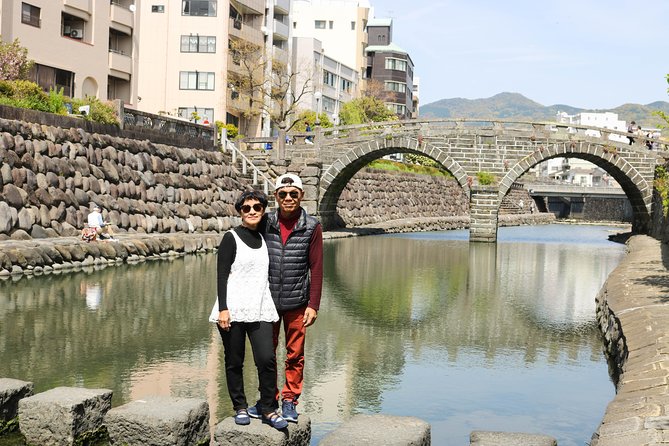
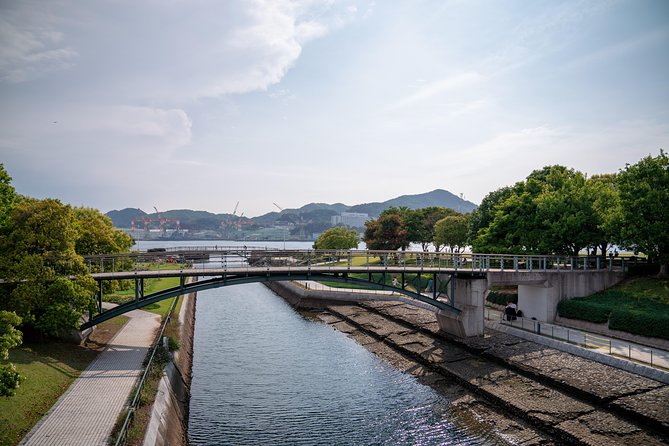
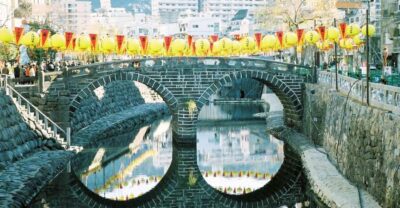
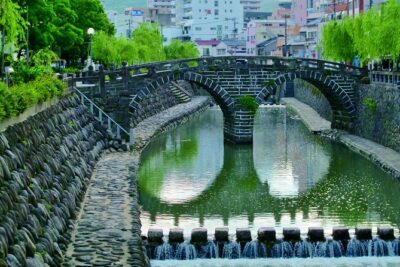
Meganebashi, or Spectacles Bridge, is described as about 400 years old. Its name comes from the shape created by the bridge and its reflection in the water. It is one of the city’s most recognizable sights and a useful place to pause during a walking route.
This is the sort of stop that benefits from a local guide even though it is easy to reach. Your host can explain how the bridge fits into the older part of Nagasaki and point out details that might otherwise get lost during a quick photo stop.
Do not expect a long visit here. Meganebashi works best as one piece of a larger route. If you want photographs, allow a few minutes without rushing, then use the bridge as a transition toward temples, Chinatown, or other central sights.
Same base, a different sort of day:
- Tokyo: TOKYO SKYTREE® Admission ticket
★ 4.5 · 11,192 reviews - Tokyo: teamLab Planets TOKYO Digital Art Museum Entry Ticket
★ 4.6 · 9,779 reviews - Mt Fuji & Hakone Cruise, Drum Show Bullet Train 1 Day from Tokyo
★ 4.0 · 7,413 reviews - Tokyo: Sumo Show Experience with Chicken Hot Pot and a Photo
★ 4.8 · 6,678 reviews
Fukusai-ji and the weight of memory
Fukusai-ji is one of the more unusual stops. Its present form was rebuilt after World War II as a mausoleum for fallen Japanese soldiers. The temple’s curious shape gives it visual interest, but its memorial purpose is the more important reason to visit.
This is a place where the guide’s ability to explain local history matters. You may want to ask how the temple’s religious role, rebuilding, and memorial function fit together. The subject can be serious, and a private setting gives you room to discuss it at your own pace.
Fukusai-ji also shows why this tour is more than a sightseeing stroll. Nagasaki’s past includes international trade, religious change, war, and rebuilding. A route that includes the temple can help you see those subjects as part of one city rather than separate textbook chapters.
The temple may involve steps or uneven walking, so tell your host about any mobility concern. Senyo made a point of helping a group member who had difficulty with stairs, and Miki modified a route for a foot injury. That flexibility is one of the clearest practical advantages of booking privately.
Oura Cathedral and Dutch Slope
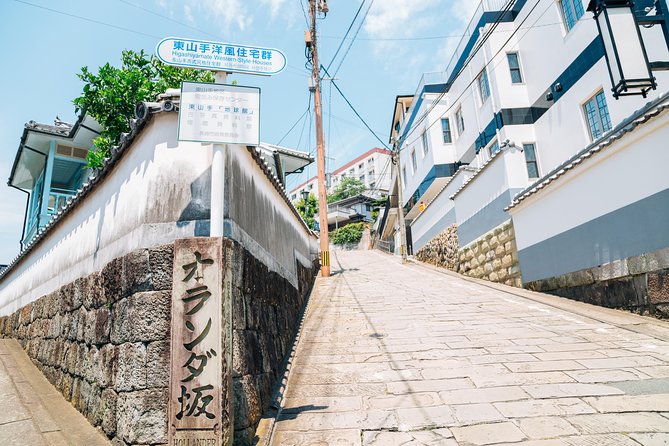
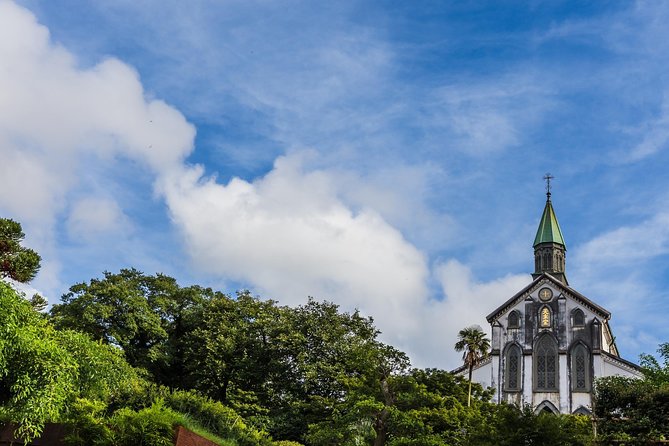
Oura Cathedral brings a different side of Nagasaki into view. It is an European-style church connected with the foreign presence in the city. Dutch Slope, a stone-paved street lined with former Western-style residences of foreign traders, continues that story outdoors.
Together, these stops create one of the strongest sections of the walk. You see architecture, trade, religion, and the physical shape of the old foreign quarter. The stone paving and hillside setting also make this part feel different from the flat streets around Chinatown.
The catch is Nagasaki’s hills. The tour is primarily on foot, and the route may include slopes and stairs. If you want Oura Cathedral and Dutch Slope but need a gentler pace, tell your host before the day begins. A private guide can usually adjust the order or reduce the number of stops, but the available information does not promise a step-free route.
Attractions may charge admission, and tickets are not included. If entering Oura Cathedral is important to you, confirm the plan and budget for the ticket separately. The tour price covers the host and walking experience, not every site along the way.
A tour that can move beyond the famous sights
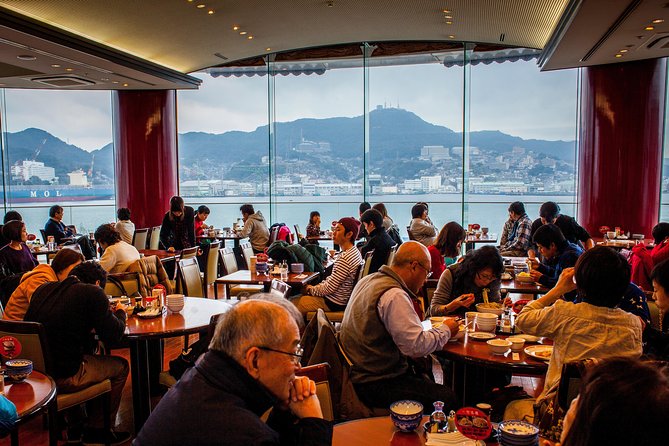
The most appealing part of this experience may be what is not printed on the route. Hosts have taken people through neighborhoods they would not have found alone, parks with cherry trees, quiet areas with few crowds, and a Zen Buddhist temple for matcha tea.
Those examples show how the questionnaire can affect the day. You are not simply promised the same five stops in the same order. One person may get a history-heavy walk. Another may spend more time in neighborhoods, parks, cafés, or places connected to a personal request.
Senyo’s route included trolley rides, hillside residences, crepes, and several city sights. A Dutch host living in Nagasaki with his Japanese wife focused on historical stories and matcha tea in a Zen Buddhist temple. These details suggest that the best result comes when you tell your host what kind of day you want.
There is also room to change your mind during the experience. That is helpful, but keep your expectations sensible. Two or three hours is enough for a clear introduction, not a full tour of every district. You may need to choose between more landmarks and a slower, more conversational walk.
What the guide match means
The guide match is both the tour’s strength and its main variable. Hosts named in the available comments include Moe, Miki, Armand, Macchi, Senyo, Ceci, and Yuki. Several were praised for adapting routes, explaining the city, and finding quieter places.
Moe met cruise passengers despite poor weather and arranged a lunch stop. Macchi was praised for clear English and small surprises along the way. Senyo was repeatedly singled out for being fun, flexible, and well informed about Nagasaki. Ceci provided a bespoke route for a cruise passenger looking for an alternative to a ship excursion.
But guide quality is not identical across every booking. Yuki was described as kind and eager to help, yet not proficient enough in English for detailed historical discussion. If history explanation is your main reason for booking, make that clear in the questionnaire and ask about language ability when you first communicate with the host.
The high rating of 4.9 from 14 reviews and the 93 percent recommendation figure are encouraging, but the small sample means I would not treat them as a guarantee. This is a people-dependent experience. The right host can make it feel like a local friend showing you around. A weaker language match can make the history harder to follow.
Cost, timing, and what you pay extra for
At $64.07 per person, the tour costs more than exploring Nagasaki independently. You are paying for private planning, a local host, and the ability to shape the walk around your interests. For a couple, family, or small group with limited time, that can be good value.
Group discounts are available, though the exact discount is not provided. Since the tour is private, larger groups may find the per-person price easier to justify, especially if they want one route rather than several separate guides.
The price does not include food, drinks, public transportation, attraction tickets, or gratuities. You should carry money for a snack in Chinatown, any admission charges, and possible tram or other public transport fares. The tour is mainly a walking experience, so comfortable shoes matter.
The stated meeting point is the Nagasaki City Tourist Information Center at 1-60 Onouemachi. The activity ends back at the meeting point. A central hotel meet-up may be available on request, and the cruise-port comments show that port arrangements have been possible, but you should settle the details directly with the host before the day.
Free cancellation is available up to 24 hours before the start time. Changes or cancellations inside that window are not accepted and are not refunded.
Who will get the most from this walk
I would choose this experience if you want an introduction rather than a rigid checklist. It suits first-time visitors, cruise passengers, couples, families, and anyone who wants help choosing between Nagasaki’s many historical areas.
It is also a smart option if someone in your group has a temporary injury or dislikes stairs. You still need to explain the limitation in advance, but private guiding gives you a better chance of changing the route than a large group excursion would.
History fans should ask for a host who can give detailed explanations in their preferred language. Food lovers should request Chinatown and local eating suggestions. People who have already seen the major sights can ask for quiet neighborhoods, parks, or a tea stop instead.
I would be less inclined to book it if you want a fixed, guaranteed list of every attraction. The route may change, tickets are extra, and two or three hours passes quickly. Independent visitors who are comfortable with maps and public transport may prefer to spend the $64.07 on admissions and meals instead.
Should you book the Nagasaki local experience?
Book it if you want a flexible private walk that connects Chinatown, the old port, temples, churches, and foreign residences with personal conversation. The ability to adjust the route for weather, mobility, cruise timing, or a special request is the strongest reason to choose it.
Before booking, be clear about three things: the sights you care about, how much walking and climbing you can manage, and how much historical explanation you expect. Ask your host to confirm the meeting place, language comfort, and likely route.
This is not a guaranteed master tour of Nagasaki. It is a useful, human introduction to a complicated city, with enough structure to get your bearings and enough freedom to make the afternoon your own.
FAQ
How long does the Nagasaki private tour last?
The walking experience lasts approximately two or three hours. The final length should be confirmed when you arrange the details with your host.
Where does the tour begin and end?
The listed meeting point is the Nagasaki City Tourist Information Center at 1-60 Onouemachi, Nagasaki. The activity ends back at the meeting point.
Can the host meet me at my hotel or cruise port?
A hotel meet-up may be available on request for central locations. The experience has also been arranged around cruise-port arrivals, but you should confirm the exact meeting place directly with your host.
Are food, drinks, transportation, and attraction tickets included?
No. Food, drinks, transportation, and tickets to attractions are not included. The experience is mainly a walking tour, though public transport may be used.
Is this a private tour?
Yes. Only your group participates. The route and meeting details are arranged with your host.
What is the cancellation policy?
You can cancel for a full refund up to 24 hours before the experience start time. Cancellations or changes made less than 24 hours before the start are not accepted and are not refunded.
Just added in Japan
- Nagasaki Private Customizable Half Day Tour★ 5.0 · 16 reviews
- Nagasaki Full Day Tour with Licensed Guide and Vehicle★ 5.0 · 27 reviews
- Nagasaki Private Tour with a Local – Highlights & Hidden Gems★ 5.0 · 24 reviews
- Nagasaki WW2 History and Culture Tour★ 5.0 · 19 reviews
- Snow Monkeys, Hokusai & Sake: A Perfect Day in Nagano★ 5.0 · 19 reviews
- Wasabi Farm Walking Tour & Lunch★ 4.5 · 20 reviews
- Nagasaki Street Food Adventure: Private Walking Tour with a Local★ 5.0 · 26 reviews
- 1-Day Tateyama-Kurobe Tour: Walking on the ‘Roof of Japan’★ 5.0 · 20 reviews
Tours in Nagasaki, compared.
Nagasaki Full-Day Private Tour with Government-Licensed Guide
Read our review →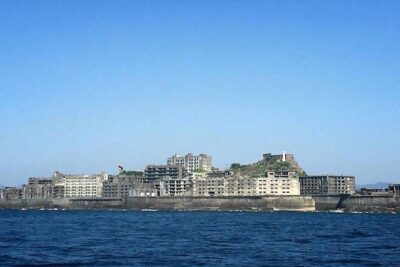
Visit Gunkanjima Island (Battleship Island) in Nagasaki
Read our review →

Nagasaki Street Food Adventure: Private Walking Tour with a Local
Read our review →
Nagasaki Private Tour with a Local – Highlights & Hidden Gems
Read our review →
Browse the lists this tour appears in