
Reviewed · SUMO EXPERIENCES
Tokyo: Sumo Show Experience with Chicken Hot Pot and a Photo
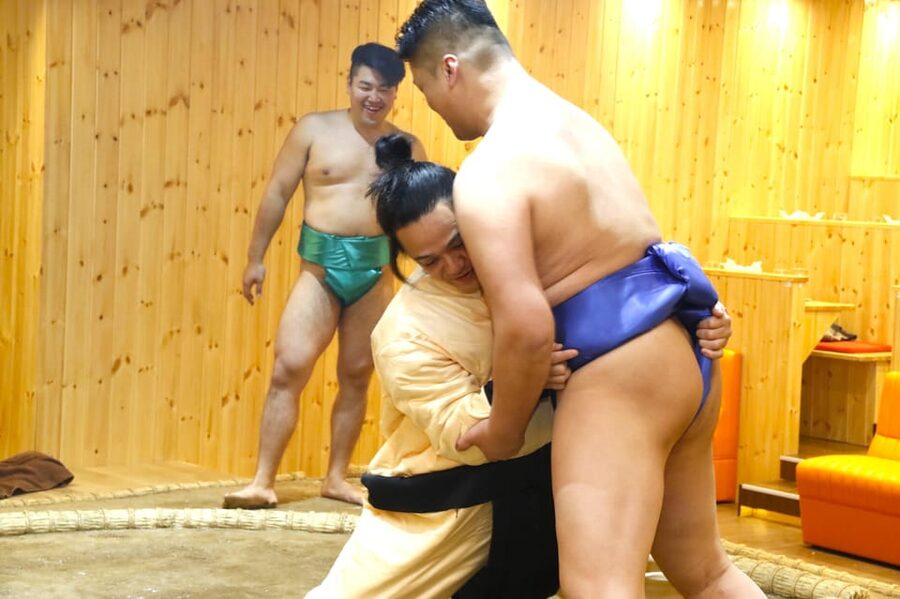
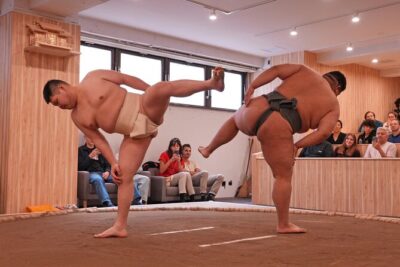
The best part of this Tokyo experience is the mix of real sumo customs and good-natured theater. You sit around a genuine dohyo, learn how the sport works, watch retired wrestlers demonstrate their moves, and may even enter the ring for a challenge. It is made for fun, not for a serious training session or official tournament.
I like the clear English and Japanese commentary, especially when host Lala explains the rituals and rules without turning the evening into a lecture. I also like the practical value: all-you-can-eat chicken hot pot, one drink, a photo, and a souvenir bag are included. The main consideration is that this is an entertainment show with retired wrestlers, so anyone hoping to watch active rikishi training should choose a different Tokyo sumo experience.
Key points to know before booking
- A real dohyo sits at the center of the restaurant, giving every seat a direct view of the action.
- The two-hour program combines education and comedy, with history, morning exercises, sumo techniques, and a best-of-three match.
- The audience can enter the ring, though challenger places are limited and may be assigned by lottery.
- Chicken chanko-nabe and Japanese dishes are all-you-can-eat, with vegetarian and vegan meals available if requested at least two days ahead.
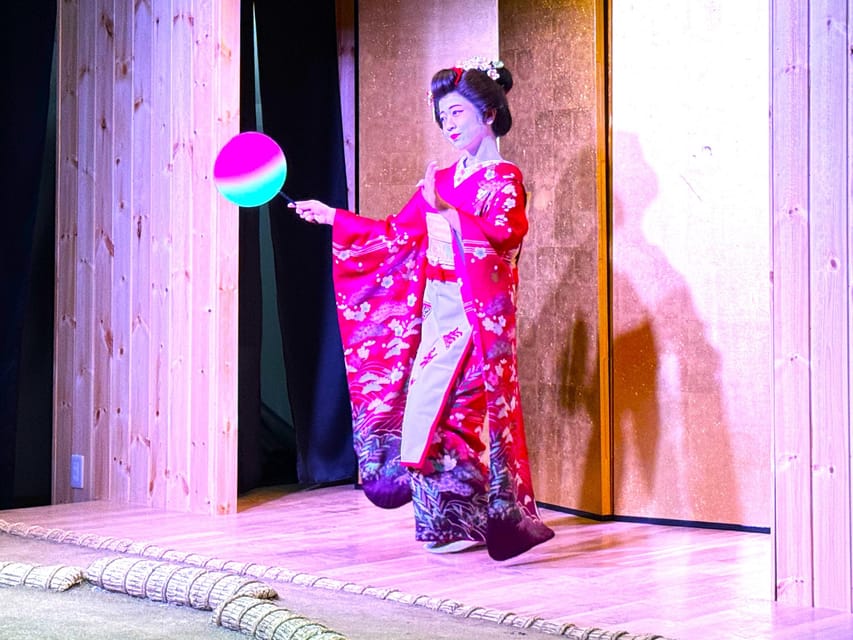
- A geisha dance opens the show, adding a second traditional Japanese performance to the evening.
- VIP and VVIP seats put you closest to the dohyo, while standard seating still offers a clear view.
A sumo show built for participation
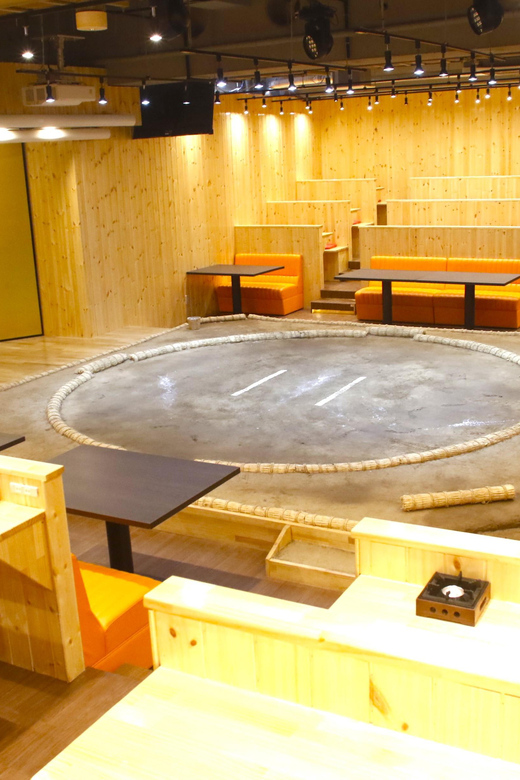
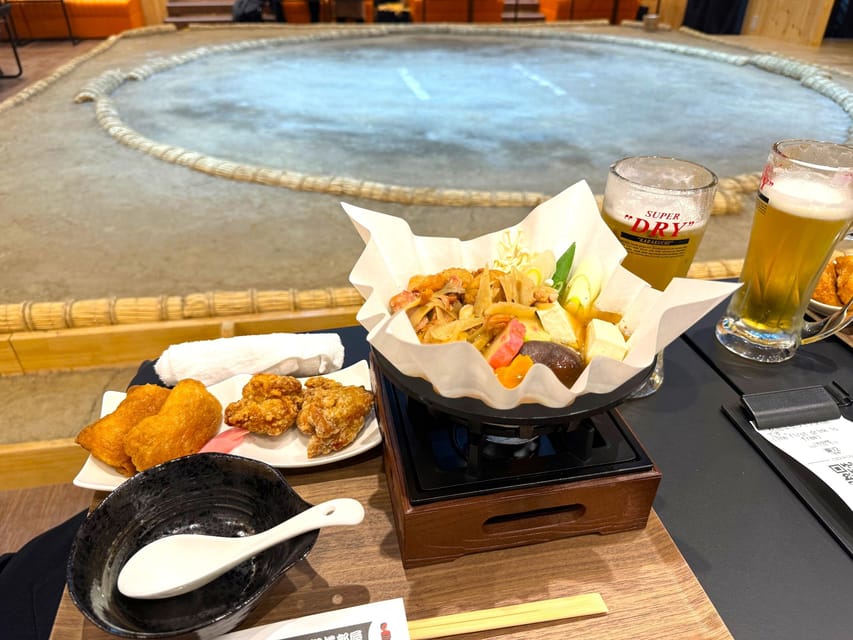
At Asakusa Sumo Club, sumo is presented as a lively cultural evening rather than a silent sports demonstration. The ring is the focus of the room, and the seating is arranged so you can follow the action while eating.
The tone is friendly and playful. The wrestlers interact with the audience, the host keeps the pace moving, and the program explains enough of the sport to help you understand what you are seeing. You will hear about sumo rituals, rules, classic techniques, and the proper do’s and don’ts around the ring.
That balance matters. Sumo can seem mysterious if you only see a few seconds of a match on television. Here, the commentary gives you useful context before the physical demonstrations begin. You learn why wrestlers perform certain movements and how a bout is decided.
The show is also deliberately family-friendly. Children can follow the action, adults get a cultural lesson and a meal, and the humor keeps the two-hour program from feeling formal or stiff.
Other ways to see sumo in Tokyo:
- Tokyo: Sumo Show and Dining Experience
★ 4.8 · 2,742 reviews - the SUMO show
★ 5.0 · 1,960 reviews - Tokyo Shinjuku Sumo Show & Experience with Photo
★ 5.0 · 1,750 reviews
The opening geisha dance sets the tone
Before the wrestling begins, a geisha performs a traditional Japanese dance in an elegant kimono. It is a short but distinctive part of the program, particularly useful for families who want more than one type of cultural performance in the same evening.
The dance also creates a calm opening before the louder, more physical sumo demonstrations. You will want to keep your attention on the stage area during this part, since it provides a different view of Japanese performance tradition than the wrestling that follows.
This is not presented as a full geisha arts lesson, so you should treat it as an introduction rather than the main event. Still, it adds variety and makes the evening feel broader than a simple exhibition match.
Learning the moves before the match
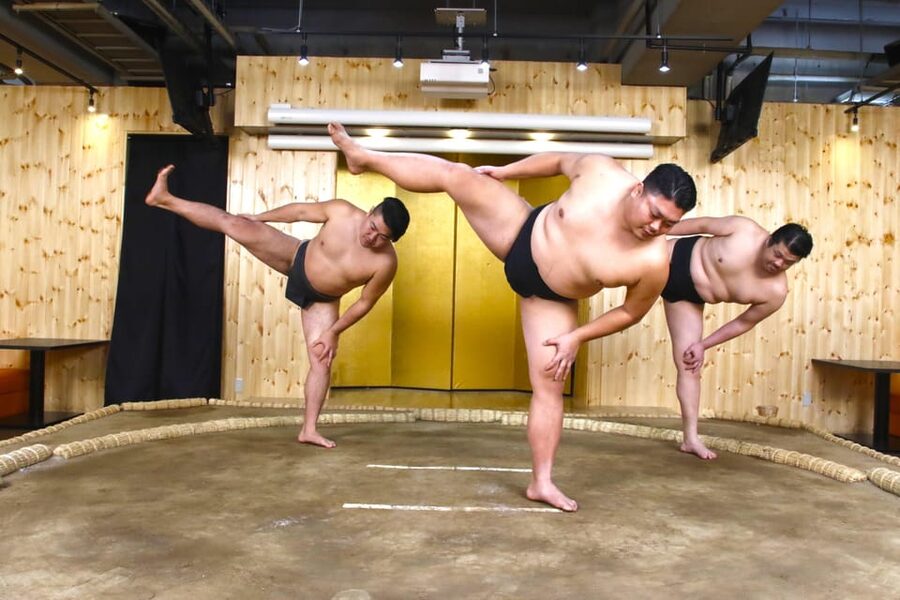
The sumo demonstrations begin with morning exercises and basic techniques. The retired wrestlers show how strength, balance, footwork, and timing work together. The host explains what you are seeing in English and Japanese, which makes the demonstrations accessible even if you know nothing about sumo.
I find this section especially helpful because it gives the later match a purpose. Instead of watching two large men push and collide without context, you can spot the techniques and rituals that have just been explained.
The program also covers the etiquette around the dohyo. That small detail gives the event a stronger cultural sense. Sumo is not only about force. Its movements, preparation, and ring behavior follow long-established customs.
The commentary is part of the entertainment, too. Lala is identified as one of the hosts, and the presentation uses jokes and audience interaction to keep the explanations lively. Benjamin is also praised in connection with the show team. The exact host may depend on the session, but you can expect bilingual guidance rather than a purely visual performance.
The best-of-three match is entertainment, not competition
The main wrestling segment features retired professional sumo wrestlers in a best-of-three match. This is the closest part of the evening to a formal bout, but it remains a staged entertainment performance rather than an active tournament contest.
That distinction is important when you decide what to expect for your $103 ticket. You are paying for access to a compact cultural show with food and interaction, not for a seat at an official grand tournament or an active stable practice.
The retired wrestlers are experienced performers, and their personalities are a major part of the appeal. They play to the room, react to the audience, and make the scale and force of sumo easy to appreciate. Several of the performers are known for comic timing as well as wrestling skill.
You will likely enjoy this more if you approach it as a live cultural show. The matches are designed to entertain, explain, and involve the room. They are not meant to settle a serious sporting question.
Same base, a different sort of day:
- Mt Fuji and Hakone 1-Day Bus Tour Return by Bullet Train
★ 5.0 · 26,383 reviews - 1-Day Tokyo Bus Tour
★ 5.0 · 14,250 reviews - Tokyo: TOKYO SKYTREE® Admission ticket
★ 4.5 · 11,192 reviews - Tokyo: teamLab Planets TOKYO Digital Art Museum Entry Ticket
★ 4.6 · 9,779 reviews
Your chance to challenge a sumo wrestler
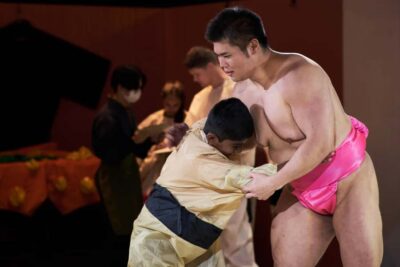
The audience challenge is the evening’s most memorable feature for many people. A few participants are invited into the dohyo to take on one of the wrestlers. It is a playful contest, but stepping into the ring gives you a physical sense of the size and strength involved.
Places are limited. If too many people want to participate, the challengers are selected by lottery, so you should not book this experience assuming you will wrestle. Children and adults may both enjoy watching the challenge, even if they do not get selected.
If you are chosen, follow the staff’s instructions and treat it as light entertainment. The point is not to win. It is to feel the scale of the sport, make the audience laugh, and become part of the show for a few moments.
For families, this can be the moment children remember most. For adults, it offers a chance to stop being a spectator and join the action. I would still regard the challenge as a bonus, not a guaranteed inclusion for each ticket holder.
Chicken chanko-nabe and Japanese dishes
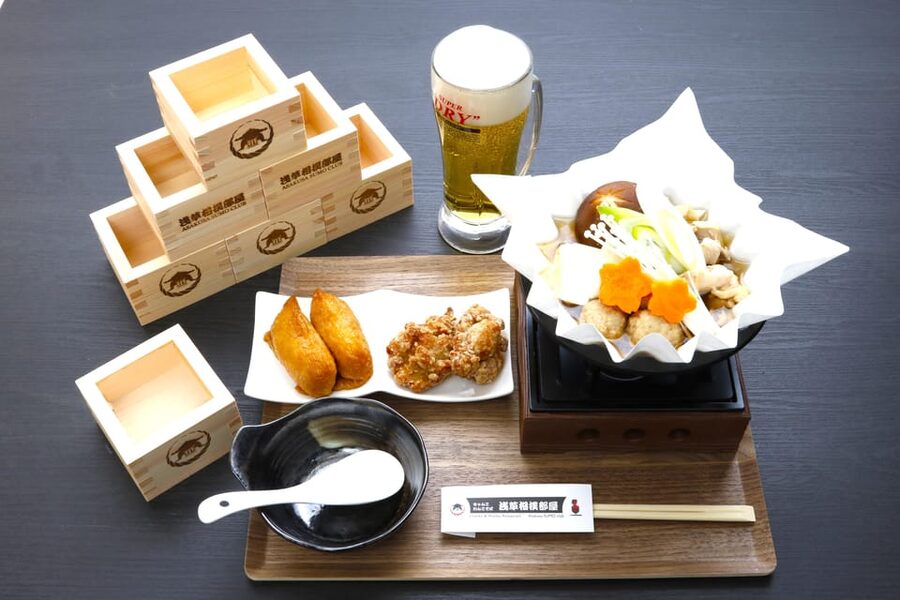
The meal centers on chicken chanko-nabe, the traditional hot pot associated with sumo wrestlers. You eat while the show takes place, so the food is part of the evening rather than a separate restaurant stop afterward.
Chanko-nabe is a sensible choice for this setting. It is warm, filling, and served in a communal hot pot style that suits a group meal. Additional servings can be ordered using a QR code, making it easy to get more without interrupting the program.
Other dishes served with the meal may include edamame, inari sushi, and sweet rolls. The exact selection can vary, and some people may find the food portion more limited than expected despite the all-you-can-eat arrangement. The hot pot is the main attraction, so do not expect a long formal tasting menu.
One drink is included. Beer and other drinks are available to buy, and the extra drinks are described as reasonably priced. If you want a more substantial meal, use the all-you-can-eat option rather than treating the food as a small side dish.
Vegetarian and vegan meals can be arranged, but you must request them at least two days before the experience. Gluten-free and halal meals are not available. You may bring your own food for those dietary needs, which is useful but worth planning ahead.
One practical detail deserves attention: the hot pot uses a flame beneath the cooking vessel. Some diners may feel nervous about the setup, particularly if children are at the table. Keep hands and loose clothing away from the heat and follow the staff’s directions.
Standard, VIP, and VVIP seating
All seats offer a view of the dohyo, but the distance changes the feel of the show. Standard seating is the sensible choice if you want the basic experience at the lowest listed price. You should still be able to follow the demonstrations and matches clearly.
VIP seating places you in the front row. That matters during the audience interaction, when the wrestlers move close to the seating area and invite people into the show. You will also have a stronger view of the wrestlers’ footwork and expressions.
VVIP seating provides the most central and unobstructed position. It is the option for anyone who wants the closest possible view and does not mind paying extra for location rather than additional program content.
The show itself is the same across the seating categories. Upgrading does not add a different meal or a longer performance. It buys proximity, so I would choose VIP or VVIP for a special occasion, a serious sumo fan, or a family member who benefits from being close to the ring.
You may be seated with other groups. That is normal for this type of small-group restaurant show, and the shared setting often helps the audience energy. If you need wheelchair seating, request it when booking because accessible places are limited.
What the two-hour schedule feels like
The entire experience lasts about two hours. It is long enough to include the meal, dance, explanations, demonstrations, match, audience challenge, and photo opportunity without requiring a full day.
The program generally moves through these parts:
- Arrival and seating around the central dohyo
- Traditional geisha dance
- Explanations of sumo history, rules, rituals, and techniques
- Morning exercise demonstrations
- A best-of-three match between retired wrestlers
- Audience challenges, subject to availability and lottery selection
- Photo and souvenir distribution
The order and timing may vary, but the format gives you several changes of pace. You are not sitting through two hours of continuous wrestling. The commentary, dance, food, and audience participation break up the action.
That makes this a useful choice after a day of sightseeing in Asakusa. It is structured, indoors, and does not require you to follow a tournament schedule. You should check the meeting point for your selected seating option, since it may vary.
What the $103 price includes
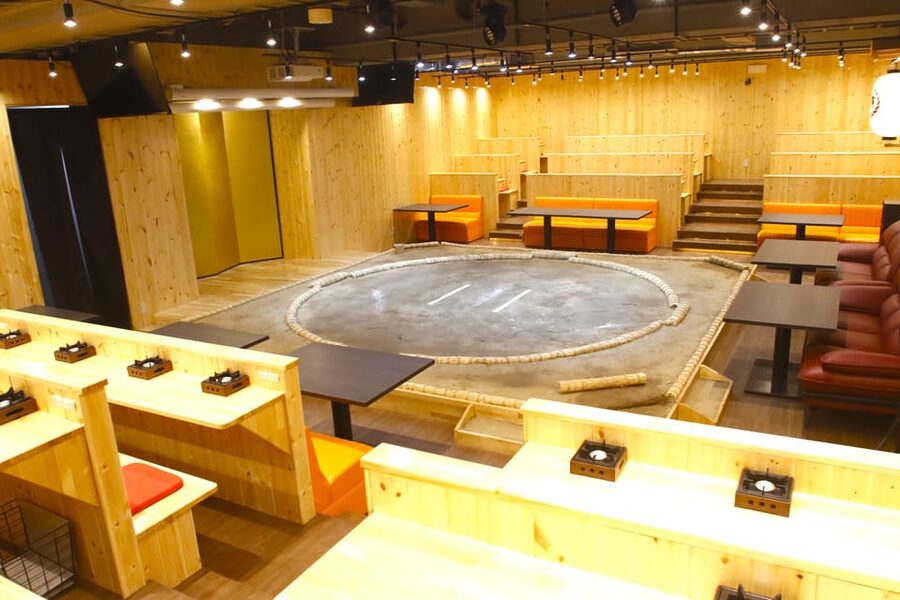
At $103 per person, this is not a budget meal with a free performance attached. It is better judged as a two-hour cultural package with food, live entertainment, bilingual hosting, and keepsakes.
The ticket includes:
- The sumo show with retired professional wrestlers
- English and Japanese commentary
- A geisha dance
- All-you-can-eat chicken hot pot and Japanese dishes
- One complimentary drink
- A printed photo with the sumo wrestlers
- A souvenir set
- The chance to apply for the audience challenge
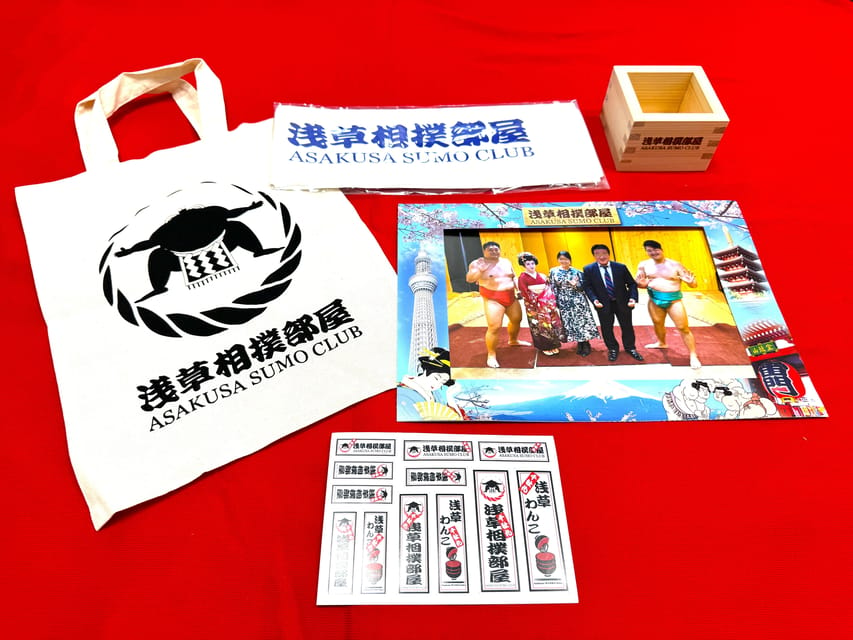
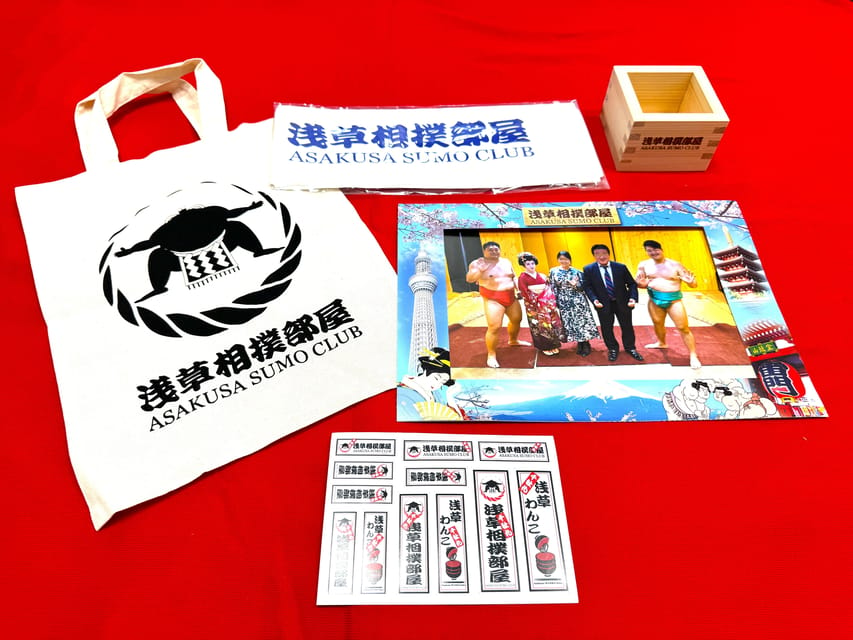
The printed photo and souvenir bag add real value for families. You leave with something physical rather than only phone pictures. Contents can change with the season, so do not expect a fixed souvenir item every time.
The strongest value comes from the combination of food and interaction. If you only wanted a serious sumo match, this would not be the right purchase. If you want an easy-to-book evening that combines a meal, culture, comedy, and a keepsake, the price is easier to justify.
Who should book the Asakusa Sumo Club show
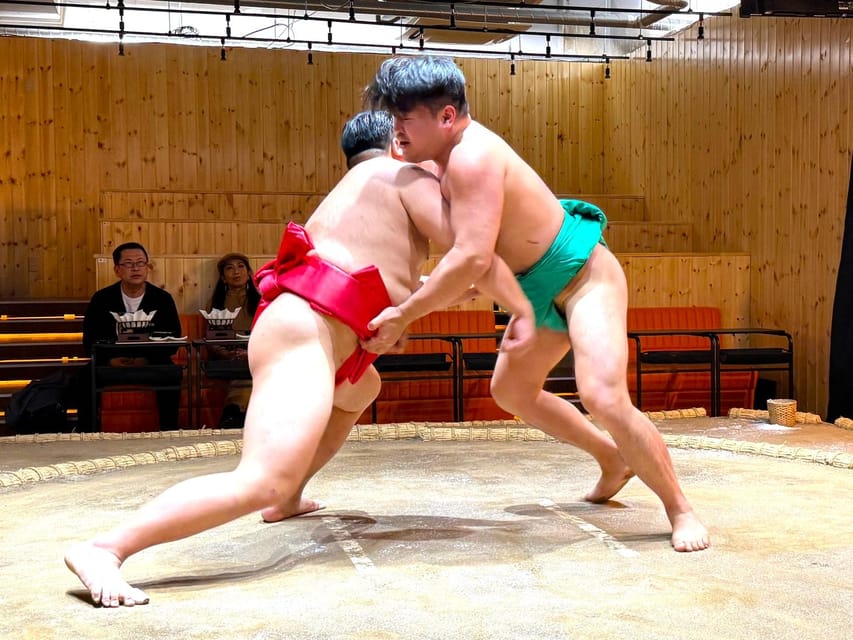
I would recommend this for families, first-time visitors to Japan, and anyone curious about sumo but unsure how to approach the sport. The clear explanations remove much of the confusion, while the humor keeps the evening relaxed.
It also works well for mixed-age groups. Young children can enjoy the costumes, physical comedy, and wrestler challenge. Older relatives can appreciate the cultural explanations and seated format. Several generations can share the same activity without anyone needing to be a serious sports fan.
Choose another experience if your main goal is to watch an active stable at morning practice. This show does not offer a behind-the-scenes look at current wrestlers’ daily training. It is a polished presentation by retired wrestlers for an audience.
I would also think carefully about dietary restrictions. Vegetarian and vegan meals are possible with advance notice, but gluten-free and halal meals are not provided. Bringing suitable food is allowed, yet that may reduce the value of an all-you-can-eat meal ticket.
Should you book this sumo experience?
Book it if you want an entertaining introduction to sumo, a warm Japanese meal, and a chance to join the action. The bilingual commentary, geisha dance, wrestler challenge, photo, and souvenir set give the evening more substance than a basic dinner show.
Skip it if you are looking for an official competition, active stable training, or a quiet high-end meal. For everyone else, especially families and first-time visitors, the two-hour format makes this a practical Tokyo night out. I would choose VIP seating for the closest view, reserve dietary requests early, and treat the audience challenge as a lucky extra rather than a promise.
FAQ
How long does the Tokyo Sumo Show Experience last?
The experience lasts two hours.
Where does the sumo show take place?
It takes place at the Asakusa Sumo Club in Tokyo, on Honshu. The exact meeting point may vary according to the seating option booked.
Is the sumo show suitable for children?
Yes. The program is designed as family-friendly entertainment for adults and children. Babies under one year old are not suitable for the activity.
Are the wrestlers active professional sumo wrestlers?
No. The show is performed by retired professional sumo wrestlers.
Will I learn about sumo rules and techniques?
Yes. A moderator provides live English and Japanese commentary covering sumo rules, rituals, history, techniques, and etiquette.
Can I challenge a sumo wrestler?
You can apply to enter the dohyo and challenge a wrestler. Challenger places are limited, and participants may be selected by lottery if there are too many applicants.
Is food included in the ticket?
Yes. The ticket includes all-you-can-eat chicken chanko-nabe and Japanese dishes, plus one complimentary drink.
Can vegetarian or vegan meals be arranged?
Yes. Vegetarian and vegan meals are available if requested at least two days before the show.
Are gluten-free or halal meals available?
No. Gluten-free and halal meals cannot be provided. You may bring your own food to meet those dietary needs.
What souvenirs are included?
You receive a printed photo with the sumo wrestlers and geisha, along with a souvenir set. The contents of the souvenir set may vary by season.
Just added in Tokyo
- Small-Group Wagyu Beef and 7 Japanese Dishes Tokyo Cooking Class★ 5.0 · 190 reviews
- Nikko: Edo Wonderland Edomura Cultural Theme Park Ticket★ 4.3 · 205 reviews
- 《MEMBERS-ONLY-BAR-HOPPING》Discover Your Special Whiskey in Tokyo!★ 5.0 · 29 reviews
- Japanese Whisky Hunting《HIGH-QUALITY-ONLY》Rare Tasting Class★ 5.0 · 20 reviews
- Luxury Tokyo Sake, Cocktail, Whisky and Pairing Tour★ 5.0 · 18 reviews
- Wagyu & Sake Pairing in Shinjuku – Steak, Shabu-Shabu & More★ 5.0 · 112 reviews
- From Tokyo: Private Tour to Fuji/Hakone – Onsen, Art, Nature★ 5.0 · 116 reviews
- Tokyo: KABUKI Show at Kabukiza Theatre Admission Ticket★ 4.8 · 152 reviews
Sumo Experiences, compared.
Tokyo Shinjuku Sumo Show & Experience with Photo
Read our review →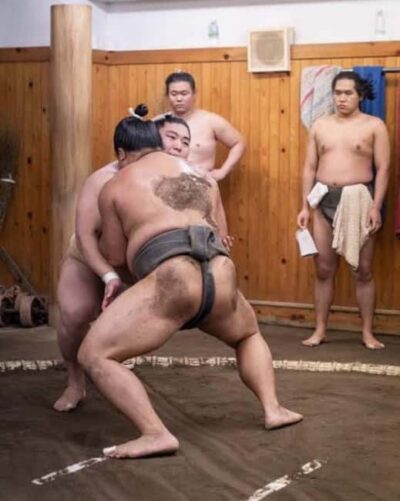
Sumo Show & Experience w/ Optional Kimono & Hot Pot
Read our review →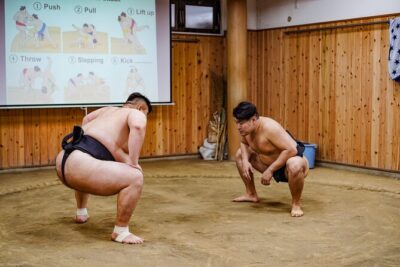
Authentic Sumo Experience in Tokyo: Enter the Sanctuary
Read our review →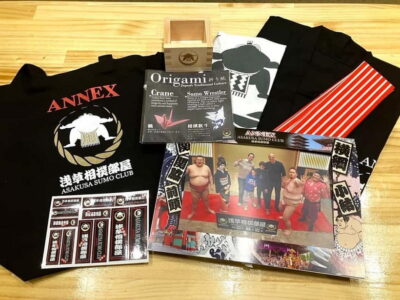
Luxury Sumo Show Experience & Japanese cuisine & Drink
Read our review →Browse the lists this tour appears in