Reviewed · TOURS IN NAGASAKI
Visit Gunkanjima Island (Battleship Island) in Nagasaki
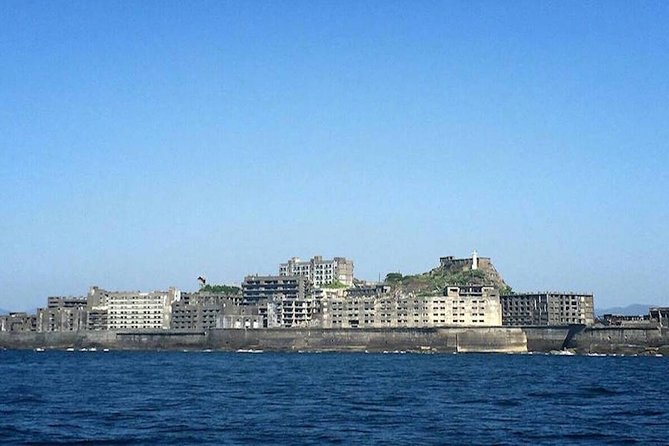
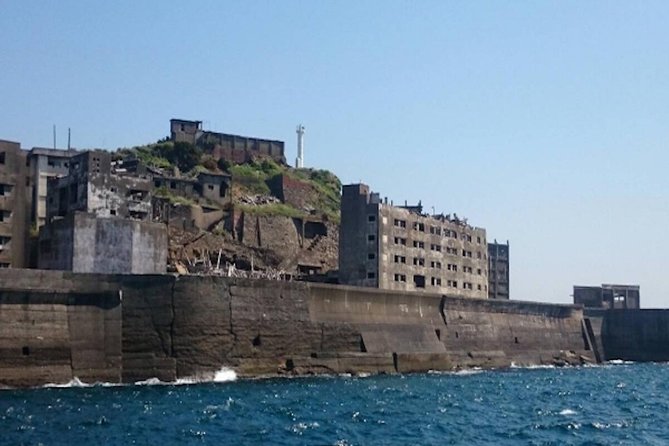
Gunkanjima is one of Japan’s strangest day trips: a tiny concrete island that once held more than 5,000 people and now sits empty offshore from Nagasaki. The island’s walls, apartment blocks, and industrial remains make the boat approach feel almost unreal, especially when you see how little land supported such a crowded community.
I like that the boat fare and island admission are included, and I especially like having the Digital Museum at the meeting point. It gives you useful background before you see the ruins. The short cruise also saves you from arranging a separate transfer to an island that can only be reached by boat.
The main drawback is the limited English support. Some departures provide an English radio guide or printed material, but several experiences have operated mainly in Japanese. You also need calm seas to land, and the island visit can become a boat-only cruise if conditions are poor.
Key points to know before booking
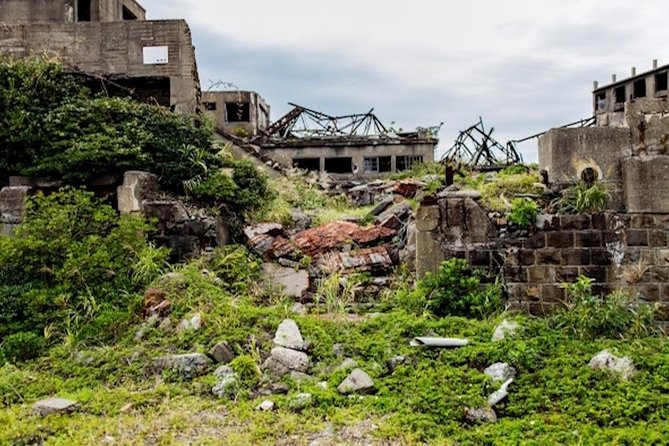
- Hashima once held over 5,000 residents: The island is only about 480 meters long and 150 meters wide, yet it had schools, housing, a gym, and a swimming pool.
- The Digital Museum is part of the experience: Allow about an hour before boarding to see models, images, and virtual material about the island.
- Landing is never guaranteed: High waves can prevent shore access, even after the boat leaves Nagasaki.
- English commentary varies: Do not assume a live English-speaking guide will be present. An audio guide may be available to rent locally.
- Seating is first come, first served: Arrive near the ship around 1 p.m. for the 1:20 boarding if you want a better chance of choosing your seat.
- Bring flat shoes and rain protection: Heels, umbrellas, and parasols are not allowed. Raincoats can be bought for 200 yen.
Why Gunkanjima feels so different from other Nagasaki sights
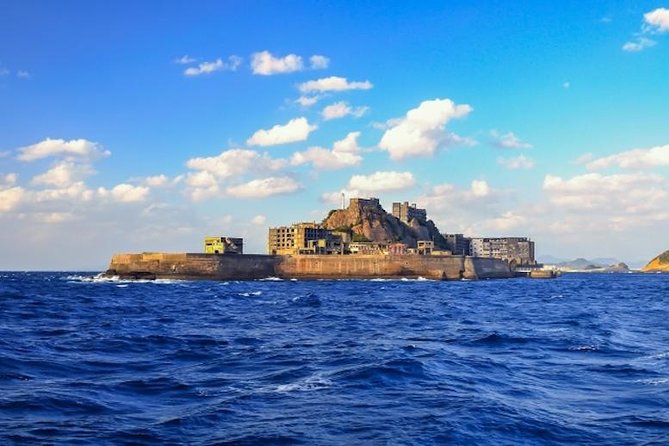
Nagasaki has plenty of major historical sights, but Gunkanjima offers something harder to find: a complete former community left behind. Hashima Island was a coal-mining center until 1974. When mining ended, the population disappeared, leaving behind dense concrete buildings and industrial ruins exposed to wind, salt, and rain.
The nickname Battleship Island comes from the island’s profile. Seen from the water, its long concrete walls and blocky structures can resemble a warship. The sight is striking, but the story matters more than the photograph. You are looking at the remains of a place where people lived ordinary lives in an extraordinary setting.
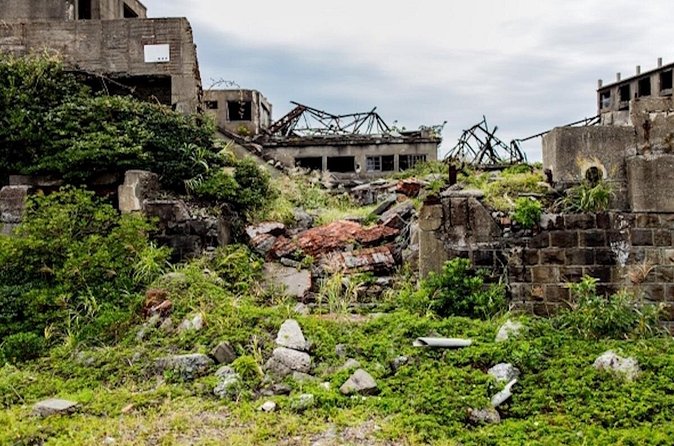
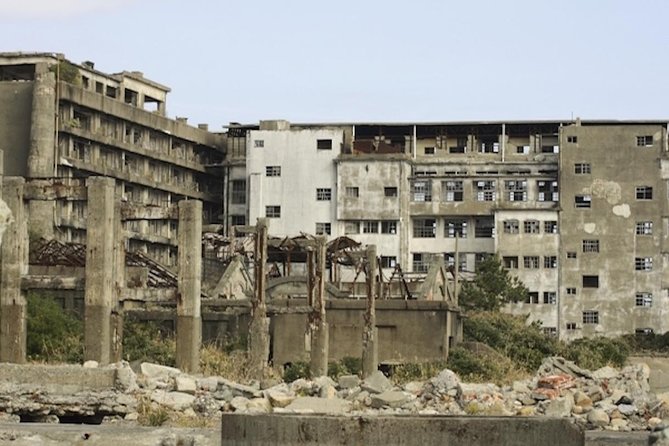
The island was not simply a mine with workers’ quarters. It had the basic parts of a town. The available material and guided commentary cover schools, housing, a gym, and a pool. That detail changes the way you see the ruins. Behind the broken windows and weathered walls were families, children, shops, routines, and a tightly packed neighborhood.
The island has also become familiar to film fans. It is promoted in connection with the James Bond film Skyfall, which adds a pop-culture hook, but the stronger reason to visit is the real coal-mining story and the unusual remains of daily life.
Other experiences people book in Japan:
- Mt Fuji and Hakone 1-Day Bus Tour Return by Bullet Train
★ 5.0 · 26,383 reviews - 1-Day Tokyo Bus Tour
★ 5.0 · 14,250 reviews - PERFECT KYOTO 1-Day Bus Tour
★ 5.0 · 13,518 reviews
Starting at the Gunkanjima Digital Museum
The tour begins at the Gunkanjima Digital Museum, at 5-6 Matsugaemachi near Nagasaki Port. This is not just a check-in desk. The museum is an important part of the visit, and you should plan to spend about an hour there before the boat.
The museum explains the island’s mining work, population, buildings, and eventual closure. Digital displays and virtual material help you picture areas you cannot enter in person. Since only a small section of the island is open to the public, this preparation is valuable. It gives you a better sense of the full community instead of reducing Gunkanjima to a row of ruins viewed from a walkway.
Admission to the museum is included, and you can visit it again once after returning from the island. Each person receives a visit pass. The operating instructions indicate that the museum portion is around noon to 1 p.m., with boarding beginning at 1:20 p.m., though you should follow the exact schedule given for your departure.
This timing matters. If you arrive only shortly before the boat, you may miss much of the museum. I would treat the museum as the first half of the experience, not as an optional extra. It also helps if the sea is rough or landing is canceled, since the museum offers more material than a boat-only view.
The boat ride from Nagasaki Port
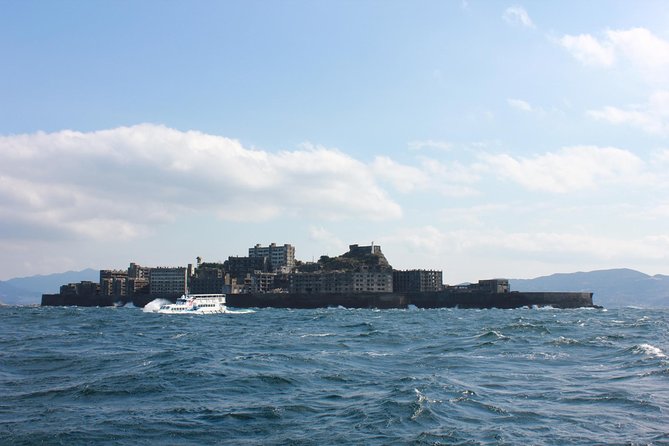
The cruise is included in the price, and the island lies about 20 kilometers from Nagasaki Port. The ride gives you your first views of Gunkanjima from the water, which is the best way to understand its isolated position.
Seats are assigned on a first-come basis, so timing can affect your comfort and view. The instructions recommend getting to the ship around 1 p.m. for the 1:20 boarding. One account describes a comfortable modern boat and staff who helped arrange a good position for an English-speaking passenger using a radio guide. Other accounts describe less appealing seats, including a position facing a toilet door with little outside view.
That uneven seating experience is worth keeping in mind. The boat is part of the attraction, but you may not control your exact seat. If you want a clear view, arrive early and ask staff where you should wait. As the island approaches, staff may direct you toward an outdoor or rear viewing area for photographs.
The ride can be rough. Bring motion-sickness medicine if you need it, and keep your camera ready for the approach. The boat circles or passes around the island so you can see its walls and buildings from different angles. Even if landing is canceled, the cruise can still give you a close look at the island from the sea, although it will not replace walking on shore.
Seeing the island from the three viewing areas
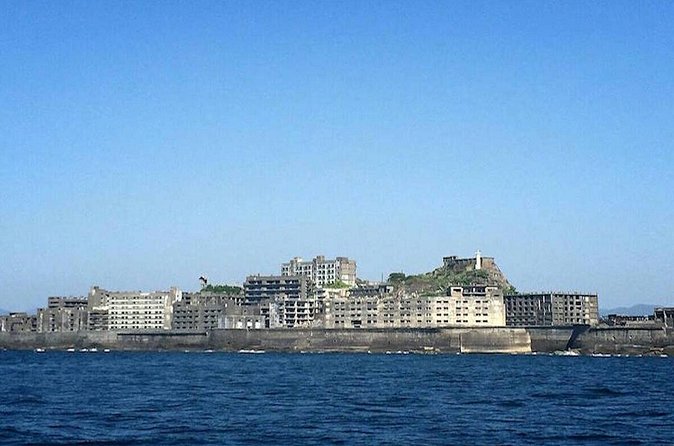
If the sea is calm enough, you will land at Hashima and follow a controlled route along designated viewing areas. The island is unstable, and access is restricted for safety. You will not wander through the abandoned buildings or enter every structure you can see.
That limitation is both a strength and a weakness. It protects you from unsafe ruins, but it can make the visit feel brief and tightly managed. The route takes you to three viewing points, and the group moves together. You should expect a structured visit rather than free exploration.
From the platforms, you can study the apartment blocks and industrial remains at close range. Look for the contrast between the dense construction and the small size of the island. The most revealing question is not simply how the buildings fell apart, but how all those people managed to live there before the mine closed.
The commentary can add a great deal, especially when it connects Gunkanjima to Nagasaki’s industrial growth, shipbuilding, and the role of Mitsubishi. Japanese-language guides have sometimes given detailed explanations of the island and its place in the city’s economic development. For English speakers, the experience depends on the materials supplied that day.
Some departures provide a booklet of roughly 20 pages, printed explanations, or an English radio guide. Other departures have offered only printed information with no live English-speaking guide. An audio guide may be rented locally for an additional charge, but it is not included in this package. If the subject matters to you, ask at reception about the audio option before boarding.
Same base, a different sort of day:
- Tokyo: TOKYO SKYTREE® Admission ticket
★ 4.5 · 11,192 reviews - Tokyo: teamLab Planets TOKYO Digital Art Museum Entry Ticket
★ 4.6 · 9,779 reviews - Mt Fuji & Hakone Cruise, Drum Show Bullet Train 1 Day from Tokyo
★ 4.0 · 7,413 reviews - Tokyo: Sumo Show Experience with Chicken Hot Pot and a Photo
★ 4.8 · 6,678 reviews
What the English-language setup means
This is the most important point for international visitors. The experience is not reliably an English-language guided tour. The operator has sometimes adjusted its onboard arrangements, and one account describes staff making special efforts to place an English speaker where a radio signal worked well. That kind of help may be available, but you should not book on the assumption that it will happen every time.
You may receive written English material, and some boats use a radio or audio system. Still, several parts of the commentary can be in Japanese. If you want detailed explanations of the mining operation, island life, and Nagasaki’s industrial development, rent the audio guide if available and read the museum material carefully.
The museum is especially helpful here. Its visual displays and virtual tours communicate more than a short printed handout can. I would arrive early, read the English material at the museum, and take a few notes before boarding. That preparation makes the island’s buildings easier to interpret even if you do not understand every announcement on the boat.
Price, fees, and what you receive
At about $71.85 per person, the price is reasonable if you successfully land on Gunkanjima. It covers the cruise, island admission, the Digital Museum, and local assistance. You are paying for a hard-to-arrange boat connection, a protected landing operation, and access to the museum as well as the island.
There is one extra charge to plan for. You must sign the boarding pledge and pay the Nagasaki City landing fee, listed as 310 yen per adult or 150 yen for youth and children. Food, drinks, hotel pickup, and hotel drop-off are not included.
The value is strongest when you use the museum properly and reach the island. If rough seas turn the trip into a boat ride, the included museum and the possibility of a substitute gift soften the disappointment, but the experience is still different from what you booked. This is not a good choice if you need a guaranteed shore visit.
The maximum group size is listed as 10 people, although one account describes a larger group joining a departure. Because the operating setup can vary, ask for the current group arrangement if a small group is important to you.
Practical clothing and weather advice
Wear flat, secure shoes. Heels are not allowed on shore, and the walkways require sensible footwear. The island has little protection from sun or rain, so bring sunscreen, a hat, and a light raincoat.
Umbrellas and parasols are not allowed on the boat. Raincoats can be purchased for 200 yen at reception or onboard, but bringing your own is easier. A hat and sunscreen are useful in bright weather, since you may spend time outside while viewing the island.
The sea controls the schedule. If waves exceed the safety limit, the boat may circle the island without landing, or the whole trip may be canceled. You will be contacted by email if the weather changes the plan, so provide an email address when booking and check it before departure.
The advertised duration is about three hours, but the complete visit can involve the museum, boarding, the cruise, the island route, and a museum re-entry. The instructions also say the tour must be completed by 5 p.m. Keep the rest of your day flexible rather than scheduling a tight connection afterward.
Who should book this Gunkanjima trip
I would choose this experience if you are interested in industrial history, abandoned places, film locations, or the way a whole community can disappear after a mine closes. It also suits anyone who wants the simplest way to reach Gunkanjima from Nagasaki without arranging a boat independently.
You should be comfortable with three uncertainties: the sea may cancel the landing, the boat may be crowded or have an awkward seat, and English commentary may be limited. Those are not minor details. They shape the experience.
The tour works best for independent visitors who can learn from a museum display and printed material, then make sense of the island through observation. It is less suitable if you require a live English guide, guaranteed shore access, or unrestricted exploration.
The cancellation terms are strict. Cancel at least six full days before the start time for a full refund. Cancellations two to six days before receive a 50 percent refund, while cancellations less than two full days before are not refunded. If the operator cancels because of poor weather, you can receive a different date or a full refund.
Should you book it?
Book it if Gunkanjima is high on your Nagasaki list and you accept that nature controls the landing. The museum, cruise, island admission, and local assistance make the $71.85 fare fair, especially when the boat reaches shore.
Before paying, confirm the English arrangements and ask about the audio guide. Arrive early for the museum and boarding, wear flat shoes, bring a raincoat, and keep your afternoon open until 5 p.m. With those expectations, this is a memorable look at a vanished mining town, not just a quick photo stop.
FAQ
Where does the Gunkanjima tour begin?
The tour begins at the Gunkanjima Digital Museum, located at 5-6 Matsugaemachi, Nagasaki, 850-0921, Japan.
Does the tour return to the same location?
Yes. The activity ends back at the meeting point.
Is the cruise fare included?
Yes. The package includes the cruise fare, island admission, the Digital Museum admission, and local assistance.
Is the Gunkanjima Digital Museum included?
Yes. The museum entrance fee is included, and the museum can be visited again once after you return from the island.
Is an English-speaking guide included?
No English-speaking guide is guaranteed. Some departures provide English printed information or a radio guide, and an audio guide may be available to rent locally for an extra fee.
Can bad weather prevent landing on Gunkanjima?
Yes. If waves are too high or conditions are unsafe, the boat may circle the island without landing, or the tour may be canceled.
Is there an extra landing fee?
Yes. You must sign the boarding pledge and pay an additional 310 yen per adult or 150 yen for youth and children.
What should I wear?
Wear flat shoes, since heels are not allowed ashore. Bring sun protection and a raincoat. Umbrellas and parasols are not allowed on the boat.
How far in advance can I cancel?
You can receive a full refund if you cancel at least six full days before the experience. A cancellation two to six days before receives a 50 percent refund, while cancellations less than two full days before are not refunded.
Just added in Japan
- 1 Day Tour: Snow Monkeys & Snow Fun in Shiga Kogen★ 5.0 · 52 reviews
- Nagasaki: Private Walking Tour with a Local★ 4.7 · 79 reviews
- From Tokyo: Kamakura & Enoshima 1-Day Bus Tour★ 4.5 · 189 reviews
- Small-Group Wagyu Beef and 7 Japanese Dishes Tokyo Cooking Class★ 5.0 · 190 reviews
- Osaka Temple Cool Foot Bath & Matcha Experience〈45min〉★ 4.9 · 82 reviews
- Kobe 4hr Private Tour with Government-Licensed Guide★ 5.0 · 59 reviews
- Osaka: Mind & Spirit Balance Temple Reiki Healing★ 5.0 · 41 reviews
- Kobe Highlights & Hidden Gems: Private & Custom Tour with a Guide★ 4.5 · 70 reviews
Tours in Nagasaki, compared.