
Reviewed · TOURS IN KANAZAWA
Day Tour from Kanazawa OR Toyama: Snow Wall and Mysterious Valley
The star of this day is the Tateyama snow corridor, where walls of packed snow can rise 20 meters above the road. You also get a small but memorable piece of mountain religion at Ashikuraji, where Mt. Tateyama was once seen as a route toward both heaven and hell.
I like the simple bus arrangement and the generous 1.5 to 2 hours at Murodo. I also like the human touch: guide Mike is described as responsive, pleasant, and attentive to the group. The main drawback is the long day and a shrine stop that may feel less exciting than a closer view of Shomyo Falls.
Key points to know before booking
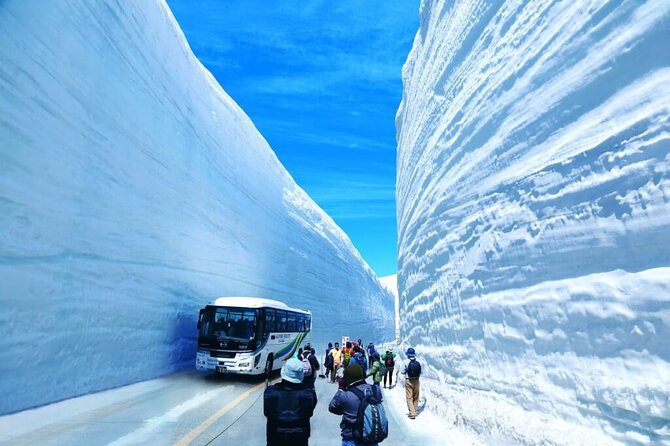
- Snow walls reach up to 20 meters: Murodo delivers the dramatic sight this tour is built around.
- Ashikuraji adds cultural context: See Oyama Shrine, Enma-do, and a bridge linked to the boundary between life and death.
- Choose one departure city: The tour begins from Kanazawa or Toyama on a given day, not both.
- Your walking time is limited but useful: Plan on about 1.5 to 2 hours around Murodo, including the museum and nearby area.
- Transport is the main convenience: An English-speaking guide and tour bus handle the mountain journey.
- Lunch is your responsibility: Bring food or plan to find something during the day, though no lunch is included.
Why the Tateyama snow wall is worth a full day
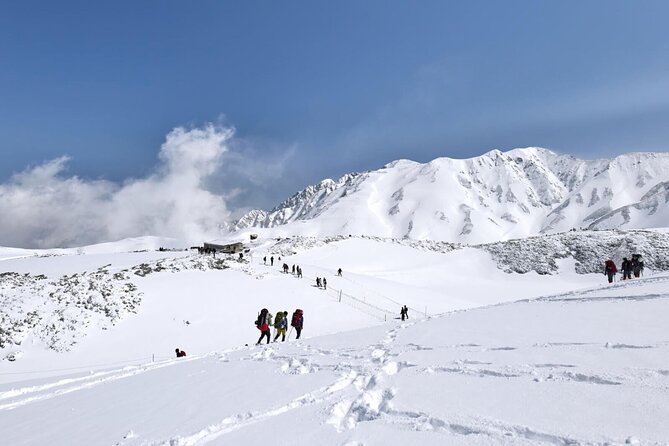
Japan’s Northern Alps offer a sharp change from the cities of Kanazawa and Toyama. Instead of temple roofs, seafood markets, and old streets, you head into a high mountain world shaped by enormous winter snowfall.
The Tateyama-Kurobe Alpine Route crosses the Tateyama range through gorges, lakes, and high elevations. On this particular experience, you are taken by tour bus to Murodo, the high point where the road through the snow is cleared each spring. The result is the famous snow corridor: a narrow route cut through layers of winter snow, with walls that can tower above you and even dwarf buses.
That scale is the reason to book. You are not simply looking at a snowy mountain from a distant viewpoint. You walk beside the snow itself. The corridor gives you a direct sense of how much snow this part of Japan receives, and the white walls create the sort of powerful, easy-to-understand sight that works for first-time visitors and seasoned Japan fans alike.
Still, keep your expectations practical. This is not a long alpine hike. You get roughly 1.5 to 2 hours at Murodo, depending on the group’s pace. That time includes the snow corridor, the museum, and the surrounding area, so you will need to choose how you spend it.
Other experiences people book in Kanazawa:
- World Heritage Shirakawa-go and Experience Tours from Kanazawa
★ 5.0 · 4,049 reviews - Kanazawa: Kenrokuen Tea Ceremony Experience
★ 4.8 · 1,139 reviews - Kanazawa Half Day Tour (Private Guide)
★ 5.0 · 361 reviews
Leaving Kanazawa or Toyama for the mountains
The tour lasts about 10 hours, with travel time already included. That makes it a serious day trip, not a quick outing squeezed between city attractions.
The departure point matters. The tour starts from Kanazawa or Toyama, and it does not start from both cities on the same day. Check your exact meeting point carefully when booking, especially if your Japan itinerary includes nights in both places.
The bus is a major part of the value. Reaching the Tateyama area on your own involves planning around transport connections and mountain access. Here, you ride with a guide and a small group, with a maximum of 20 people. That is large enough to keep the cost from becoming extreme, but small enough to feel more manageable than a full-size coach outing.
A day this long can become tiring if the transport is poorly organized. That is why the reported smooth pickup and drop-off matter. Mike, one of the guides associated with the experience, is described as responsive and attentive to the group’s needs. Those qualities are especially useful on a mountain day, where timing and coordination affect how much time you have at the top.
The bus also gives you a chance to rest between stops. You will not need to drive, navigate, or worry about finding the right mountain access point. For many people, that convenience is worth more than saving a little money with independent planning.
Ashikuraji: where Mt. Tateyama meant heaven and hell
After roughly an hour and a half, the first planned stop is Ashikuraji, at the base of Mt. Tateyama. This area was a traditional starting point for people climbing and worshipping the mountain.
Ashikuraji is not included as a filler stop. It explains why Tateyama has mattered for centuries. The mountain was viewed through a religious idea of heaven and hell, and the town preserves places tied to that belief.
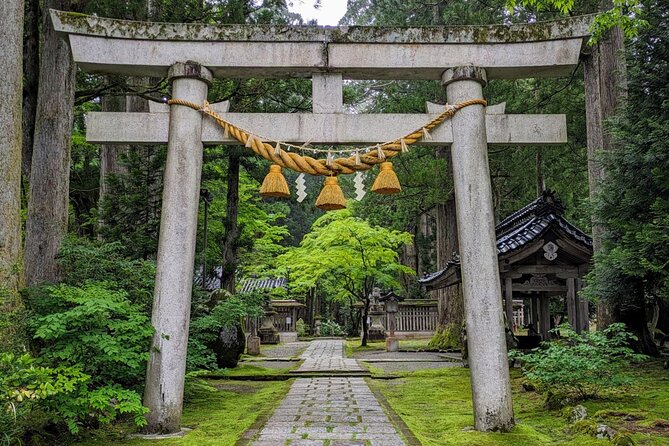
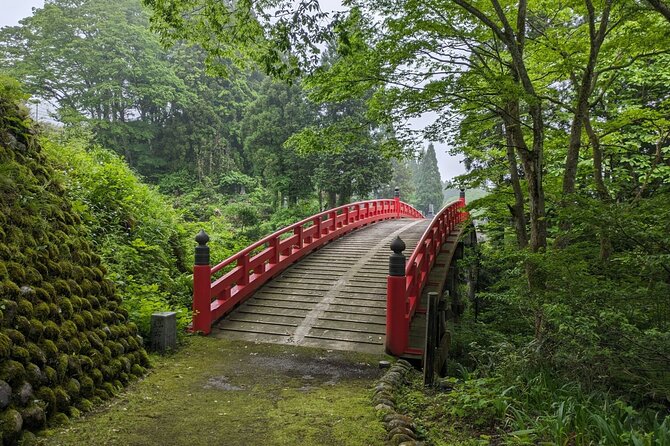
At Oyama Shrine, you see the area where pilgrims and climbers began their ascent. Enma-do is especially unusual. It is dedicated to Enma, the figure who decides who goes to heaven and who goes to hell. A short walk down the ravine brings you to a bridge representing the division between the world of the living and the world of the dead.
You should allow about an hour for this stop. It is a compact visit, but it gives the snow corridor a stronger sense of place. Without it, Murodo can feel like a spectacular natural attraction with little connection to the people who came here before modern tourism.
The limitation is that Ashikuraji may not be the highlight for everyone. If you are mainly interested in dramatic scenery, you may find the shrine and religious symbolism quieter than expected. One practical suggestion is worth noting: the tour currently includes a view of Shomyo Falls from a distance, and some people would prefer a closer stop there instead of the shrine visit.
That is not a flaw for everyone. If you like Japanese religious history, Ashikuraji is a welcome change from a day spent only looking at snow. If waterfalls and scenery are your priority, the stop may feel less satisfying.
Murodo and the 20-meter snow corridor
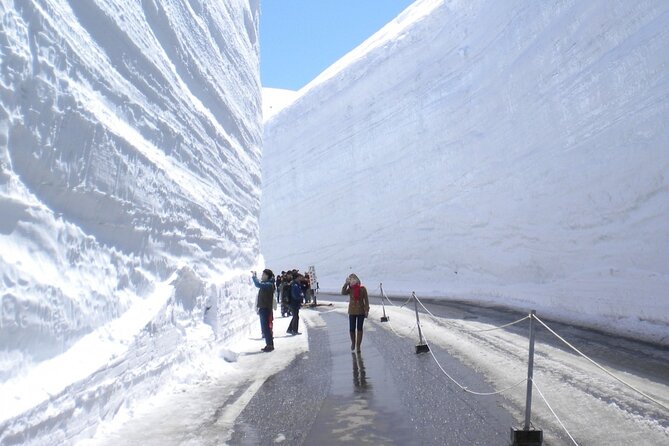
The main portion of the day takes place at Murodo Station, high on the Tateyama-Kurobe Alpine Route. This is where you get your close look at the famed snow walls and the open snow fields known as the Roof of Japan.
The corridor is formed after crews clear a route through the winter accumulation. Snow can rise as high as 20 meters, although the exact height depends on the season and conditions. Even at lower heights, the walls are likely to feel imposing because you walk right beside them.
Take your time at the start. Look up, notice the layers, and compare your height with the wall. It is easy to rush through for photographs, but the scale is best understood when you pause and let the scene work on you.
Your guide allows about 1.5 to 2 hours at Murodo. That is enough for a walk along the snow corridor and some time around the station, museum, and nearby snow fields. It is not enough for every possible activity in the area, so do not expect an open-ended mountain visit.
The snow can also make the experience more demanding than the photographs suggest. The supplied details do not specify trail conditions or what footwear is required, so you should prepare for a cold, snowy setting and follow the guide’s instructions. Most people can participate, but anyone concerned about walking on snow should consider that the main attraction requires time outdoors on a high mountain.
The museum is a useful option if you need a break from the cold or want more context about the route. You can also use part of the free time to look around the station area rather than spending every minute in the corridor.
Same base, a different sort of day:
- Kanazawa Full Day Tour (Private Guide)
★ 5.0 · 323 reviews - [One-day bus tour departing from Kanazawa Station] Shirakawa-go and Gokayama – Two World Heritage Villages Enjoyable Bus Tour
★ 5.0 · 253 reviews - 1 Day Private Charter Tour to Shirakawa-go & Takayama
★ 4.5 · 253 reviews - World Heritage Shirakawa-go Perfect Guided Tour from Kanazawa
★ 5.0 · 220 reviews
What the bus and guide add to the experience
This is not a fully independent visit. You follow a planned schedule and remain with a group, which brings both advantages and limits.
The advantage is clarity. Your English-speaking guide introduces the history at Ashikuraji, helps keep the day moving, and handles the group’s transport. You can concentrate on the scenery instead of constantly checking directions and connections.
The maximum group size is 20 people. That is worth considering when you compare this tour with a private guide or a large organized excursion. You still have company and a set timetable, but the group should be easier to manage than a packed bus party.
The downside is reduced freedom. You cannot decide to spend three hours at Murodo, linger at Ashikuraji, or replace one stop with another on the day. The group returns according to the planned schedule, with the itinerary noting a return movement at 15:30.
The transport details also deserve a careful check. The tour information refers to bus service from Murodo back to Kanazawa or Toyama, and to transport from Tateyama back to Kanazawa. Since the experience starts from one city rather than both, confirm your exact departure and return arrangement before setting up evening plans.
A smooth pickup and drop-off can make a major difference here. With a 10-hour outing, a late or confusing transfer would quickly spoil the mood. The positive note about Mike being attentive is encouraging, but you should still leave your evening open enough to allow for mountain travel.
Is $252.90 a fair price?
At $252.90 per person, this is not a cheap sightseeing bus. The real question is what you are paying to avoid.
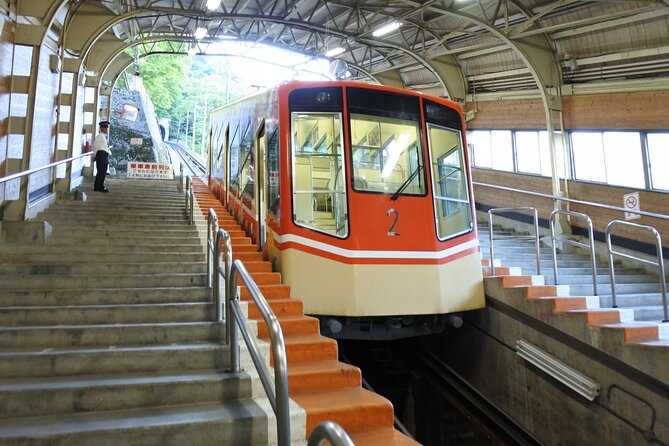
You are paying for a full-day mountain transfer, an English-speaking guide, transport to and from the Tateyama area, and a route that is less simple to arrange than a standard city excursion. The bus also removes much of the stress from reaching Murodo and returning to your base.
The value is strongest if you are staying in Kanazawa or Toyama and want to see the snow walls without building a separate transport plan. It is also useful if you prefer having the cultural background explained rather than visiting Ashikuraji with no context.
The value is weaker if you already have a confident plan for the Alpine Route or if you dislike fixed schedules. Lunch is not included, so allow for that extra cost and planning. The listing does not specify a meal stop, so do not assume that food is built into the day.
You should also judge the price against your priorities. If the snow corridor is one of your main Japan goals, paying for a direct, guided day can be sensible. If you are only mildly curious about snow walls, the cost and 10-hour commitment may be harder to justify.
Who will enjoy this mountain day most?
I would recommend this experience to you if you want a major natural sight without managing the route yourself. It suits first-time visitors to the Tateyama area, people staying in Kanazawa or Toyama, and anyone who likes a mix of scenery and local religious history.
It is also a good choice for photographers and families who want a clear focal point. The towering walls are easy to appreciate, and you do not need to complete a strenuous mountain trek to see them.
You may want to think twice if you prefer a slow, independent day. The schedule is fixed, the free time at Murodo is limited, and Ashikuraji may not satisfy you if your only goal is waterfalls or panoramic views.
The tour also demands patience with weather and mountain conditions. The provided information confirms that the area is snowy and that access depends on seasonal conditions, but it does not promise a particular wall height or exact visibility. You are booking the chance to experience the route, not a guarantee of perfect photographs.
Smart ways to prepare
A few simple choices will make the day easier.
- Bring lunch or money for food, since lunch is not included.
- Wear clothing suitable for a cold, snowy mountain setting.
- Keep your schedule open after the tour, since the day lasts about 10 hours and mountain transport can take time.
- Confirm whether your booking begins in Kanazawa or Toyama.
- Use the Murodo time carefully. Set aside time for the snow corridor, then decide if you prefer the museum or nearby snow fields.
- If you are hoping for Shomyo Falls, check exactly how it will be viewed. The experience includes a distant view, not a stated close stop.
The mobile ticket is convenient, particularly when you are moving between city and mountain locations. Confirmation is provided at booking, and the tour is near public transportation. Most people can participate, but the snowy setting remains an important practical consideration.
Cancellation is flexible if your plans change. You can cancel at least 24 hours before the start for a full refund. Changes or cancellations made less than 24 hours before the start are not accepted for a refund, and the cut-off follows local time.
Should you book the Snow Wall and Mysterious Valley tour?
Book it if you want the famous Tateyama snow walls and prefer a guided, organized day from Kanazawa or Toyama. The strongest reasons are the dramatic 20-meter corridor, the useful history at Ashikuraji, and the convenience of having bus transport arranged.
I would be more cautious if you want a close waterfall visit, a long independent hike, or a flexible schedule. The shrine stop may not replace a proper Shomyo Falls visit, and Murodo time is limited.
For the right person, the $252.90 price buys more than a view. It buys access to a difficult-to-plan mountain day, a guide who can connect the scenery to local belief, and a practical way to experience one of Japan’s most unusual spring sights.
FAQ
Does the tour start from both Kanazawa and Toyama?
No. The tour starts from either Kanazawa or Toyama, not both on the same day.
How long does the tour last?
The tour lasts approximately 10 hours, including travel time.
How high can the snow walls at Murodo reach?
The snow walls can rise as high as 20 meters, or about 60 feet.
How much time do I get at Murodo?
You get approximately 1.5 to 2 hours at Murodo, depending on the group’s pace.
Is lunch included?
No. Lunch is not included in the tour price.
Is an English-speaking guide included?
Yes. An English-speaking guide is included.
How many people can join the tour?
The tour has a maximum group size of 20 people.
Can I cancel for a full refund?
Yes. You can cancel at least 24 hours before the experience start time for a full refund. Cancellations or changes made less than 24 hours before the start are not accepted for a refund.
Just added in Kanazawa
- Kanazawa: Sushi & Japanese Cooking Class at a Historic School★ 5.0 · 66 reviews
- Taste of Kanazawa (Food tasting in Omicho Market & Higashi Chaya)★ 5.0 · 58 reviews
- Takayama and Shirakawago/Photoshoot by professional photographer★ 5.0 · 67 reviews
- Kanazawa private 1 day/Photoshoot by professional photographer★ 5.0 · 33 reviews
- Private Tour of Shirakawago and Gokayama from Kanazawa★ 5.0 · 50 reviews
- Shirakawago & Kanazawa from Kanazawa★ 5.0 · 51 reviews
- Photoshoot session by professional photographer in Kanazawa★ 5.0 · 42 reviews
- Private Ring Craft Experience in Kanazawa★ 5.0 · 22 reviews
Tours in Kanazawa, compared.
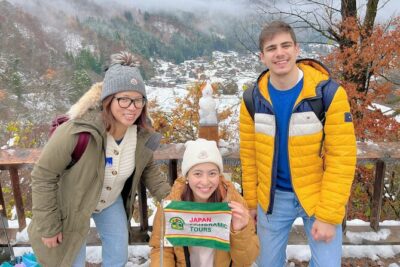
World Heritage Shirakawa-go and Experience Tours from Kanazawa
Read our review →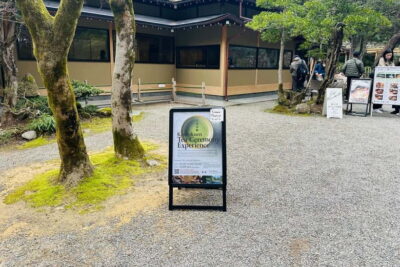


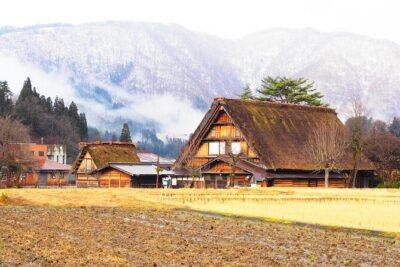
[One-day bus tour departing from Kanazawa Station] Shirakawa-go and Gokayama – Two World Heritage Villages Enjoyable Bus Tour
Read our review →
World Heritage Shirakawa-go Perfect Guided Tour from Kanazawa
Read our review →
Browse the lists this tour appears in