
Reviewed · COOKING CLASSES
Kanazawa: Sushi & Japanese Cooking Class at a Historic School
Kanazawa’s best food lesson may be the one where you make the meal yourself. At Nakata Cooking School, chef Seiji Nakata guides you through sushi, dashi, fluffy rolled omelet, miso soup, and jibuni, a Kanazawa chicken dish with samurai-era roots. You are not watching from the sidelines. You handle the knife, shape the sushi, and eat what you prepare.
I like the three-minute walk from Kanazawa Station, which makes this a smart choice when your sightseeing time is tight. I also like the warm, funny teaching style and the large-screen AI translation, which keeps the class moving even when Japanese and English do not line up perfectly. The main drawback is dietary: vegan cooking and fish-free dashi are not possible here.
Key points to know before booking
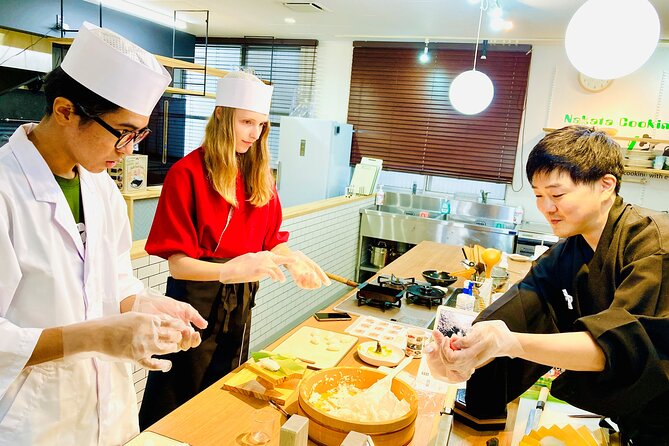
- A true hands-on class: You prepare each dish rather than watching a chef do all the work.
- Kanazawa flavor: Jibuni gives the lesson a local focus beyond standard sushi.
- Five or so cooking projects: Expect sushi, dashi, tamagoyaki, miso soup, and a seasonal side dish.
- Small class size: The maximum is eight people, allowing for personal help.
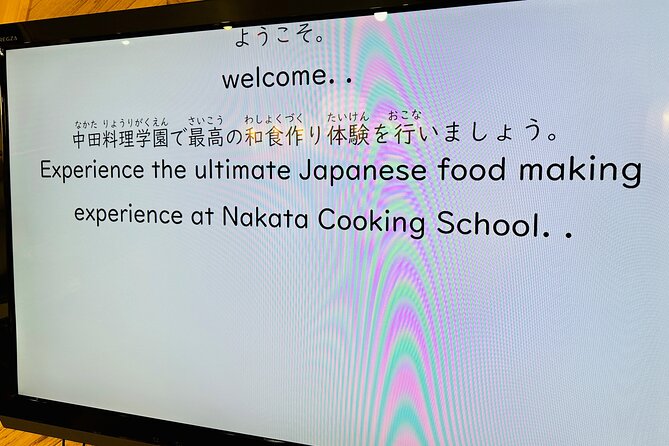
- Useful language support: Live voice and text translation appear on a large screen.
- A practical souvenir: You receive English recipes by email, photos from the class, and a Japanese completion certificate.
Starting near Kanazawa Station in a historic cooking school
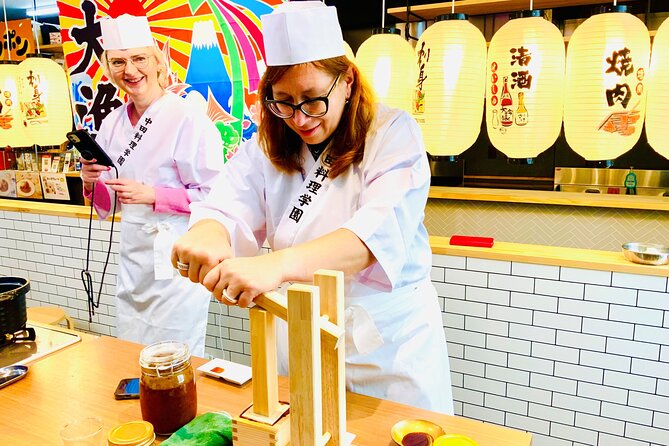
The class takes place at Nakata Cooking School and Knife Shop on the second floor of a building near Kanazawa Station. The school has been operating for 56 years, giving the lesson a sense of place that a hotel cooking studio would not provide.
The location matters. Kanazawa Station is a major base for exploring the city, and this class begins only about three minutes away. You can fit it into a morning before visiting Omicho Market, schedule it after arriving by train, or use it as an indoor plan on a rainy day.
This is an appointment-only activity, so you need to arrive at the stated meeting point rather than simply dropping in. The class ends at the same place. Transportation is not included, but none is needed for the short walk from the station.
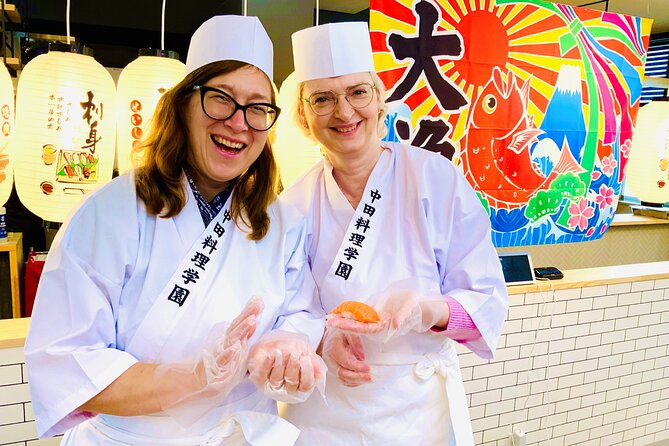
On arrival, you change into a sushi chef-style uniform or apron. That small ritual helps set the tone. You are not just sitting down for a meal. You are taking part in a working lesson, with tools and ingredients arranged for you.
More cooking in Kanazawa:
- Ramen Cooking Class at Ramen Factory in Kyoto
★ 5.0 · 1,937 reviews - Ramen & Gyoza Cooking Class in Tokyo with Local Supermarket Visit
★ 5.0 · 823 reviews - Kyoto: Ramen Cooking Class at a Ramen Factory with Souvenir
★ 4.9 · 532 reviews
How the live translation changes the class
The instructor uses real-time AI translation with both voice and text on a large screen. This is useful for cooking because small instructions matter: how much rice to use, when to stop heating the dashi, or how firmly to roll the omelet.
The translation system also becomes part of the entertainment. It can produce amusing results, and the class has a relaxed tone rather than the stiffness of a formal school lecture. Chef Seiji Nakata speaks some English and uses humor to bridge the gaps, while the screen helps with more technical explanations.
Do not expect every sentence to sound polished. The benefit is that you can follow the method, ask questions, and understand the cultural notes without needing advanced Japanese. The setup has also worked well for families and mixed-age groups.
The class maximum is eight people. That is small enough for the instructor to watch your knife work, correct your sushi shaping, and help if your tamagoyaki starts to fold in the wrong direction. A private class is not promised, but the size gives it a personal feel.
First lessons: knives, ingredients, and Japanese food culture
The class includes use of premium Japanese kitchen knives. You receive instruction before using them, which is important even if you already cook regularly. Japanese knives can feel different from the tools in your home kitchen, and careful cutting is part of the lesson rather than a quick prelude.
The school also operates a knife shop. Participants have an option to buy selected Japanese knives, and the in-house Knife Museum is scheduled to open in July 2025 with a 10 percent discount for class participants. The museum detail is worth checking when you book, since opening dates can change.
The ingredient lesson helps explain why Japanese cooking can look simple but still demand care. A mushroom may be cut for appearance as well as flavor. Sushi rice must be portioned properly so the fish and rice feel balanced in the mouth. These details give you something useful to remember at home, rather than just a list of recipes.
The seafood comes from Omicho Market, Kanazawa’s well-known food market and a source trusted by local restaurants. The class uses fresh, seasonal ingredients, including wild fish for the nigiri sushi. That local sourcing adds value because the seafood is not an afterthought brought in for a generic tourist menu.
Making nigiri sushi with fish from Omicho Market
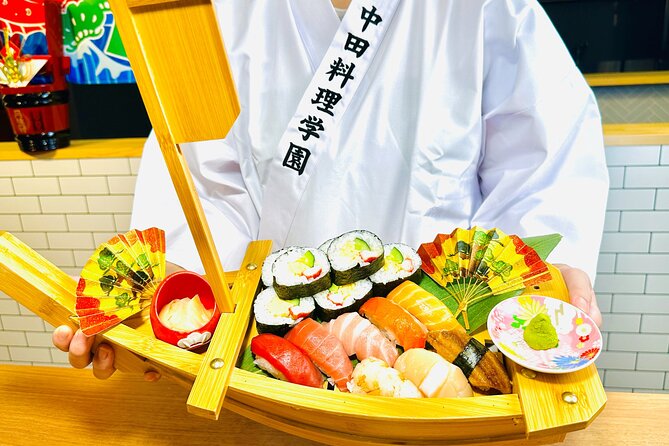
Nigiri is one of the class highlights, but it is also more exacting than it looks. You learn to handle the rice, place the fish, and shape the piece without crushing it. The right amount of rice matters. Too much rice overwhelms the fish, while too little leaves the piece unbalanced.
You will work with wild fish from Omicho Market. The precise selection can change with the season, so you should not book expecting one particular species. That changing menu is part of the appeal, but it also means the class is tied to what is available.
This is a good lesson for anyone who has made sushi at home and found that it looks easier on television than it is in the kitchen. You get a practical sense of pressure, portion, and presentation. The goal is not to turn you into a sushi chef in 150 minutes. It is to give you a method you can repeat with sensible ingredients at home.
The sushi also gives the class a festive center. You make it, photograph it, and then eat it as part of the meal. Since all dishes are prepared during the session, you are not waiting for a restaurant course to arrive.
Same base, a different sort of day:
- World Heritage Shirakawa-go and Experience Tours from Kanazawa
★ 5.0 · 4,049 reviews - Kanazawa: Kenrokuen Tea Ceremony Experience
★ 4.8 · 1,139 reviews - Kanazawa Half Day Tour (Private Guide)
★ 5.0 · 361 reviews - Kanazawa Full Day Tour (Private Guide)
★ 5.0 · 323 reviews
Dashi, miso soup, and the foundation of Japanese cooking
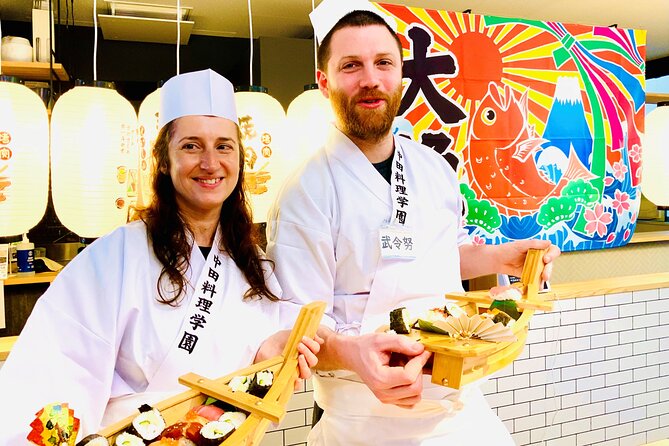
Dashi is the quiet foundation behind much Japanese food. Here you learn to make a traditional broth from bonito and kelp. This is valuable because dashi appears in more than one part of the meal, including the miso soup and the tamagoyaki.
The lesson is about balance rather than heavy seasoning. You learn how a few ingredients can create a broth with depth, then use that base in other dishes. The method is practical enough to take home, provided you can find bonito and kelp.
The class does not suit anyone avoiding fish-based dashi. This is not a minor substitution issue. Dashi is central to the menu, so vegan diets and guests who cannot eat fish-based stock cannot be accommodated. Other dietary restrictions must be shared at booking because same-day changes are not accepted.
The miso soup and seasonal side dish round out the meal. They may seem less dramatic than sushi, but they show how a Japanese meal is built from several small, balanced elements rather than one main plate.
Jibuni brings Kanazawa to the cooking table
Jibuni is the dish that makes this more than a standard sushi lesson. It is a Kanazawa specialty, traditionally associated with the city’s samurai-era food culture. The class prepares it as a chicken stew, giving you a local dish that you might not encounter in a basic Japanese cooking course.
Jibuni is especially useful for your home kitchen because it is a cooked dish, not a presentation exercise. You learn another side of Japanese food, one based on broth, texture, and careful preparation. It also provides a welcome contrast to the cool rice and seafood of the sushi.
The cultural background is part of the instruction. Chef Nakata explains the place of each dish, so you understand why it appears on the table and how it fits into Kanazawa’s food traditions. The history is presented alongside the cooking rather than as a separate lecture.
Tamagoyaki is simple to describe, tricky to make
Dashi-maki tamago is a soft rolled omelet made with dashi. The ingredients are familiar, but the technique takes attention. You must cook the egg in layers, keep it tender, and roll it into a neat shape before it becomes dry.
The recipe used here has a Michelin-style pedigree, but the real benefit is watching how the technique works in a practical kitchen. You get to try it yourself, make mistakes, and adjust. The class is friendly rather than severe, so a lopsided first attempt is part of the fun.
This is one of the best dishes to take home as a skill. Sushi can require special fish and careful rice, while tamagoyaki needs equipment and ingredients that are easier to find. The dashi gives it more flavor than an ordinary omelet, and the rolling method adds a new kitchen trick.
Eating your work with a Kanazawa aperitif
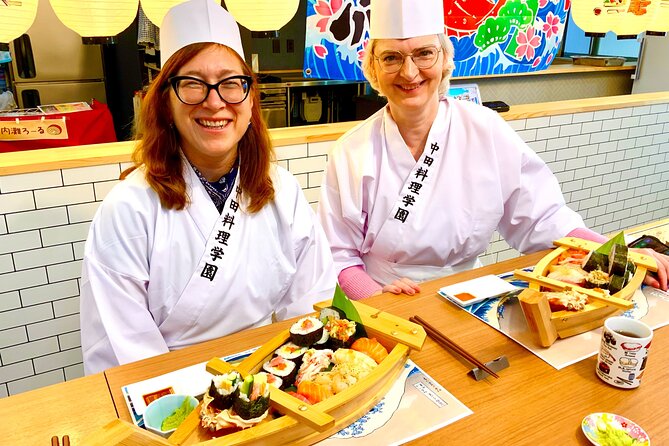
After the cooking, you sit down to eat the dishes you made. The menu includes the sushi, jibuni, tamagoyaki, dashi-based soup, and seasonal side dish. You also receive one small aperitif, either Kanazawa plum wine or local sake.
Additional drinks, including sake, beer, and soft drinks, are available for purchase. Tips are not required. The aperitif is a modest inclusion, but it suits the meal and gives the class a clear finish without turning it into a long drinking session.
The food portion is a real part of the value. You are not paying only for a demonstration and a printed recipe. You get instruction, ingredients, the meal itself, and a short cultural lesson in one sitting.
Photos, recipes, and the completion certificate
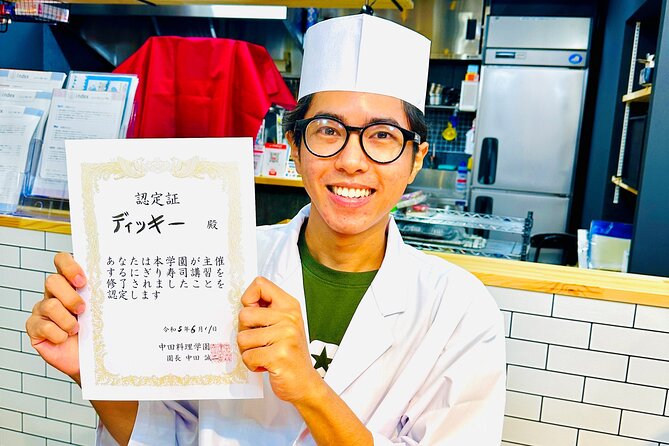
Photos are taken during the class, so you can concentrate on cooking instead of asking someone in your group to document every step. The experience includes a Japanese certificate of completion with your name, and photos are shared after the class.
The certificate is playful rather than essential, but it makes a nice keepsake, especially for children and teenagers. The photos are more useful. Cooking classes can leave you with a vague memory of flour, knives, and a crowded table. Here, you have a record of the process and the finished dishes.
An English recipe is sent by email the day before the class. This gives you a chance to read through the menu and raise any dietary questions before arrival. It also means you can try the recipes again after returning home.
Price, timing, and who gets good value
The price is about $99.10 per person for roughly two and a half hours. That is not a cheap meal, but it compares favorably with a premium restaurant tasting if you value instruction and participation as much as eating.
You receive fresh seafood, a full meal, an aperitif, apron rental, knife use, live translation, recipes, photos, and a certificate. The class also uses premium ingredients from Omicho Market, not just a generic supermarket selection. For someone who loves cooking, the price is easier to justify because you take home several techniques.
The value is weaker if you only want to eat sushi. You could spend less at a casual restaurant and avoid the work. This class asks you to spend part of the meal standing, chopping, shaping, and listening.
It suits couples, families, solo visitors, and small groups. The energetic teaching style works particularly well for teenagers, and the translation screen helps mixed-language groups. You do not need to be an experienced cook. The recipes are presented as approachable, and the focus is on having you take part.
Book with more caution if you have strict dietary needs. Vegan diets and fish-free dashi are not accepted, and other restrictions must be reported when booking. The class also requires a minimum number of participants. If the provider cancels because that minimum is not met, you are offered another date or experience, or a full refund.
Free cancellation is available up to 24 hours before the start time. Within 24 hours, no refund is given, and changes are not accepted.
Is the Nakata cooking class worth booking?
I would book this if you want more than a meal and have room for a two-and-a-half-hour activity near Kanazawa Station. The combination of local jibuni, Omicho Market seafood, dashi instruction, and hands-on sushi makes the class feel tied to Kanazawa rather than interchangeable with a cooking lesson in Tokyo or Kyoto.
The strongest reasons to choose it are personal guidance in a small group and skills you can repeat at home. Chef Seiji Nakata’s humor, his wife Ikumi’s welcoming presence when assisting, and the live translation make the language gap manageable.
Skip it if you are vegan, cannot have fish-based dashi, or would rather spend your limited time eating than cooking. For everyone else, especially families and home cooks, this is a practical and good-natured way to put Kanazawa on your plate.
FAQ
How long does the cooking class last?
The class lasts approximately two hours and 30 minutes.
Where does the class meet?
It meets at Nakata Cooking School and Knife Shop, on the second floor at 4-13-2 Konohanamachi, Kanazawa, Ishikawa 920-0852. The school is about three minutes from Kanazawa Station.
What dishes will I prepare?
The class includes nigiri sushi, Kanazawa-style jibuni chicken stew, dashi-maki tamago, bonito and kelp dashi broth, miso soup, and a seasonal side dish.
Is the class taught in English?
Real-time AI translation with voice and text is shown on a large screen. Chef Seiji Nakata also speaks some English.
Can vegans join the class?
No. Vegan diets and guests avoiding fish-based dashi cannot be accommodated.
Can I report other dietary restrictions?
Yes. You must report other dietary restrictions when booking because same-day changes are not possible.
What is included in the price?
The price includes the hands-on class, ingredients, use of premium Japanese knives, chef-style apron rental, tasting of the dishes you prepare, one plum wine or sake aperitif, live translation, photos, a Japanese certificate of completion, and an English recipe sent by email the day before.
Can I cancel for a full refund?
Yes, if you cancel at least 24 hours before the experience start time. Cancellations or changes made within 24 hours are not accepted and are not refunded.
Just added in Kanazawa
- Taste of Kanazawa (Food tasting in Omicho Market & Higashi Chaya)★ 5.0 · 58 reviews
- Takayama and Shirakawago/Photoshoot by professional photographer★ 5.0 · 67 reviews
- Kanazawa private 1 day/Photoshoot by professional photographer★ 5.0 · 33 reviews
- Photoshoot session by professional photographer in Kanazawa★ 5.0 · 42 reviews
- Private Tour of Shirakawago and Gokayama from Kanazawa★ 5.0 · 50 reviews
- Shirakawago & Kanazawa from Kanazawa★ 5.0 · 51 reviews
- Private Ring Craft Experience in Kanazawa★ 5.0 · 22 reviews
- Private Tour of Shirakawago from Kanazawa (Half Day)★ 5.0 · 24 reviews
Cooking Classes, compared.
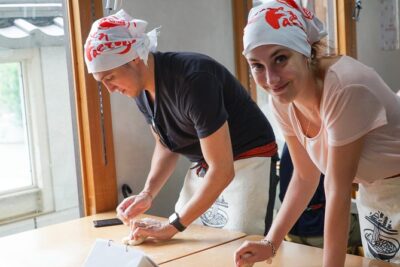
Ramen Cooking Class at Ramen Factory in Kyoto
Read our review →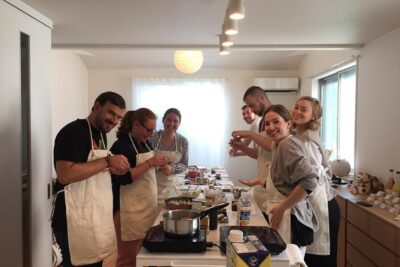
Ramen & Gyoza Cooking Class in Tokyo with Local Supermarket Visit
Read our review →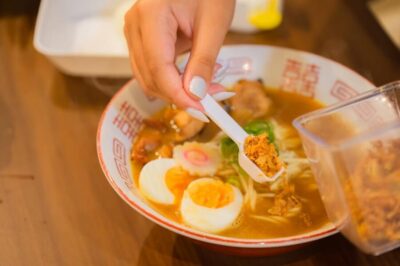
Ramen Cooking Class at a Ramen Factory with Souvenir
Read our review →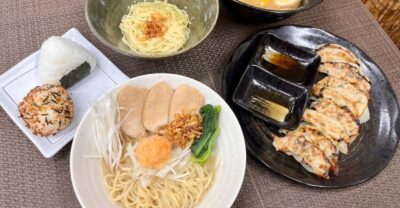
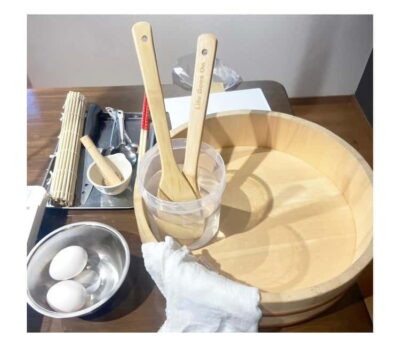
Japanese Washoku Bento Small Group Cooking Class
Read our review →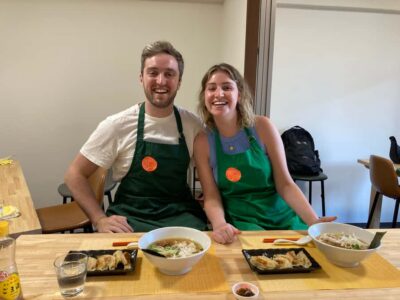
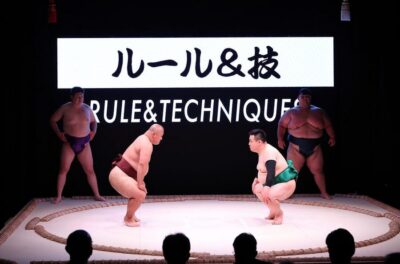
Sumo Stage Show with Bento or Snack + Fight & Photo
Read our review →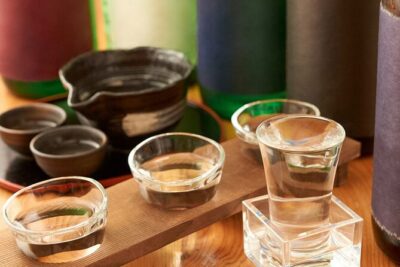
Ramen and Sushi Cooking Class with Sake Pairing Set in Tokyo
Read our review →Browse the lists this tour appears in