
Reviewed · CASTLE TOURS
From Nagoya: Inuyama Castle, Ena Gorge, Magome, Tsumago Tour
The best thing about this tour is the variety packed into one day. You move from a hilltop samurai castle to a dam-made gorge, then into two preserved post towns on the old Nakasendo road. Inuyama Castle gives you real old timber and steep stairs, while Magome and Tsumago offer a slower walk through Japan’s Edo-period past.
I like the roundtrip bus service from Nagoya Station, since these four places are awkward to combine by public transport in one day. I also like the generous free time at each stop, especially in Magome, where you can choose lunch and local snacks instead of being tied to one restaurant. The main drawback is the pace: ten hours sounds long, but the transfers take a large share of the day.
Key points to know
- Inuyama Castle is one of Japan’s twelve surviving ancient castle towers, with an unusually old interior and steep, narrow stairs.
- Ena Gorge changes with the seasons, from spring cherry blossoms to autumn color and winter birdlife.
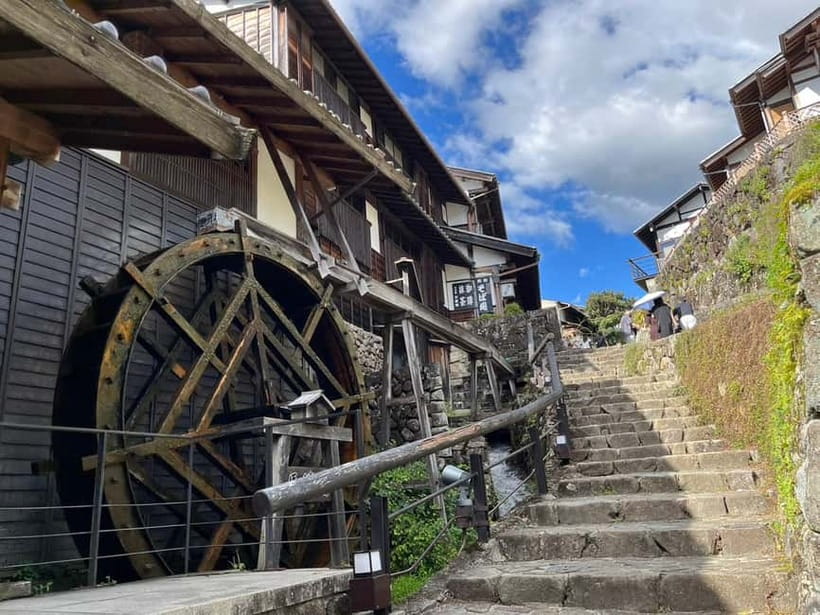
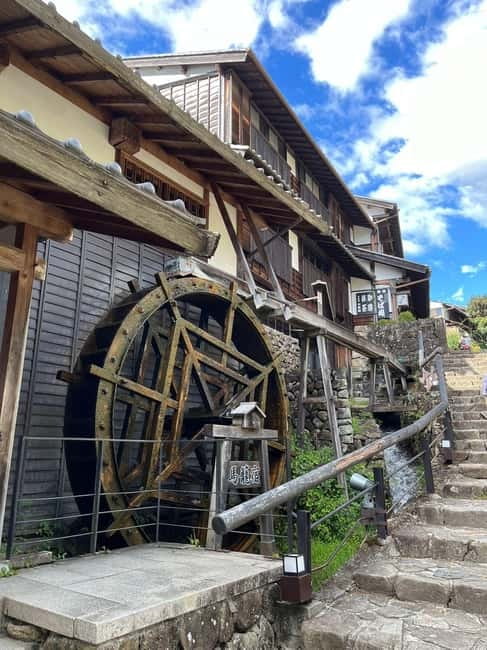
- Magome-juku is the best stop for lunch and browsing, with tea shops, small eateries, waterwheels, and traditional wooden buildings.
- Tsumago-juku is smaller and quieter, making it a pleasant final walk after Magome.
- The bus removes a difficult transport problem, linking four separate sights from Nagoya Station.
- English support may rely on translation tools or recorded explanations, while the listed operating languages are Japanese and Chinese.
Four very different stops in one long day
This is not a relaxed countryside outing with hours at each place. It is a sightseeing sweep through central Japan, designed for people who want to cover several important places without changing trains and buses on their own.
The route works because each stop has a different character. Inuyama is about power, defense, and castle architecture. Ena Gorge is about water, rock, and seasonal scenery. Magome and Tsumago are about the old road network, wooden buildings, food, and walking.
You leave from the area behind the BIC CAMERA at Nagoya Station West Exit. Look for the Ministop convenience store. Arrive at least ten minutes early, since a busy station area is no place to cut things close.
The day begins with roughly an hour on the bus to Inuyama. Later transfers take about one and a half hours to Ena Gorge, 45 minutes to Magome, 30 minutes to Tsumago, and about two hours back to Nagoya. Those numbers matter. You are paying for convenience, but you are also accepting a fair amount of road time.
Other castles reached from Nagoya:
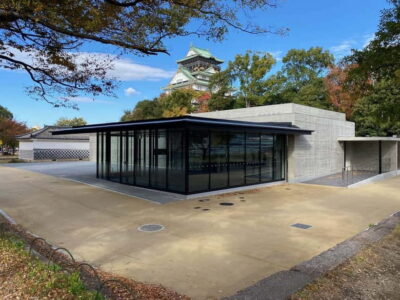
- Osaka Castle: Museum and Tower Entry Ticket
★ 4.5 · 2,380 reviews - Tokyo Castle & Imperial PalaceーShogun Walking Tour
★ 4.7 · 1,068 reviews - Kyoto: Nijo-jo Castle and Ninomaru Palace Guided Tour
★ 4.7 · 1,020 reviews
Inuyama Castle and its steep old stairs
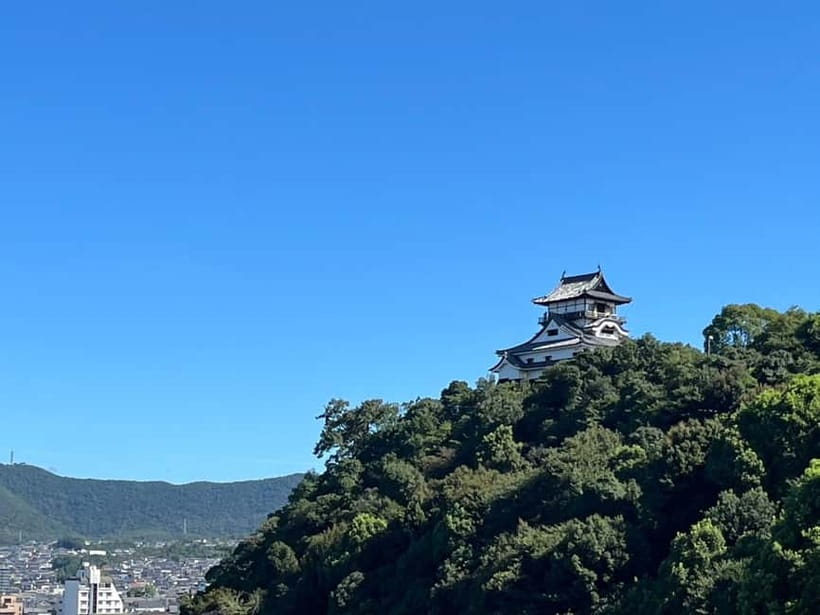
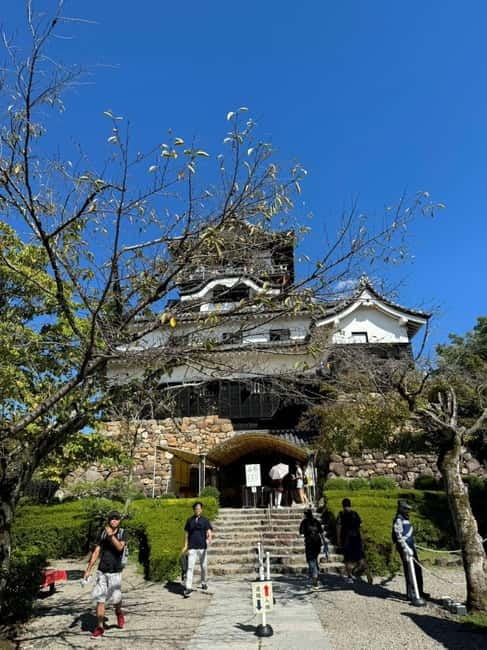
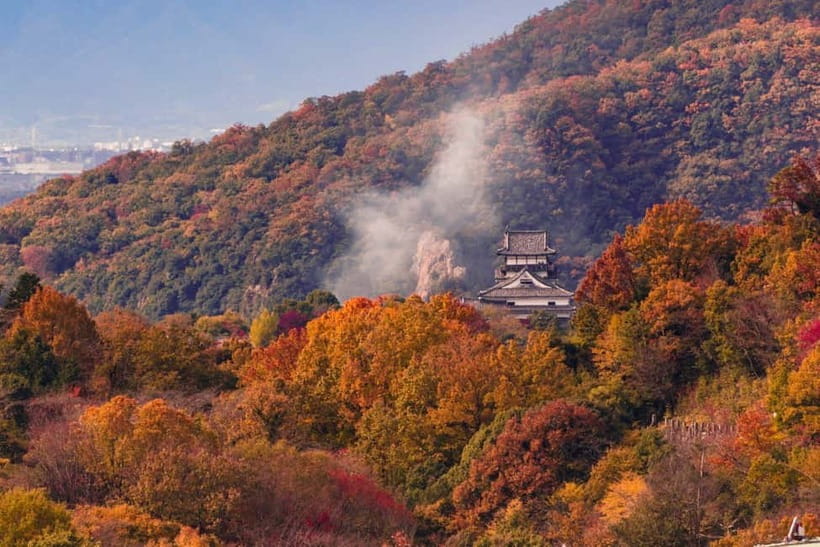
Inuyama Castle is the historical heavyweight of the tour. Built during the Muromachi Shogunate period, it sits on a hill beside the Kiso River. The setting gives you a useful sense of why castles were placed where they were, with height, river access, and a commanding view over the surrounding area.
It is one of Japan’s twelve surviving ancient castle towers. It is also grouped with Himeji, Matsumoto, and Hikone as one of Japan’s four national treasure castles. The castle is sometimes called Baidi Castle, a name linked to the Chinese poem Early Departure from Baidi Castle by Li Bai.
The structure is small by modern palace standards, but that is part of its appeal. It has three floors on the outside, four floors inside, and two underground levels. The arrangement is unusual, and the interior feels far removed from the broad corridors and polished displays found in some reconstructed castles.
The climb is a real part of the visit. You should wear shoes with a good grip and be ready for narrow, steep stairs. The reward is a closer look at old wooden construction and views from the upper level. The Inuyama Castle admission is included, which improves the value of the $60 tour considerably.
You receive about an hour for the castle visit, including the guided sightseeing and walking. That is enough for a focused visit, but not for a slow museum study. If you want to examine every display or linger over the river view, you may need to manage your time carefully.
Ena Gorge, a dam-made setting with natural rock
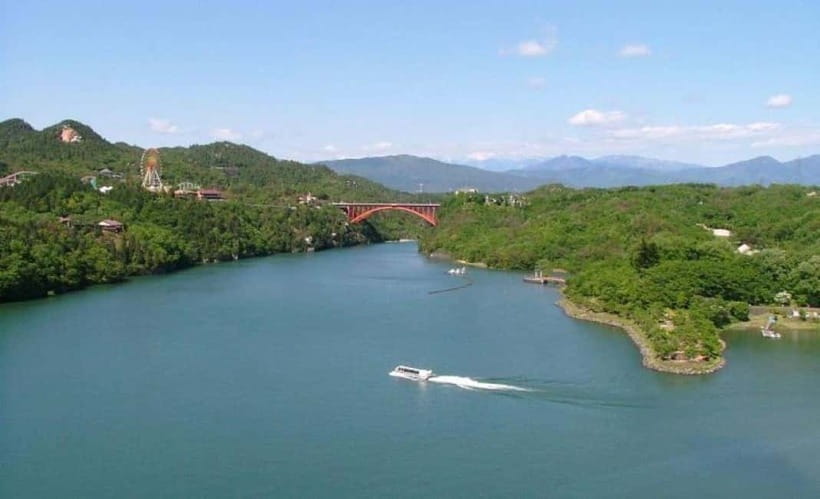
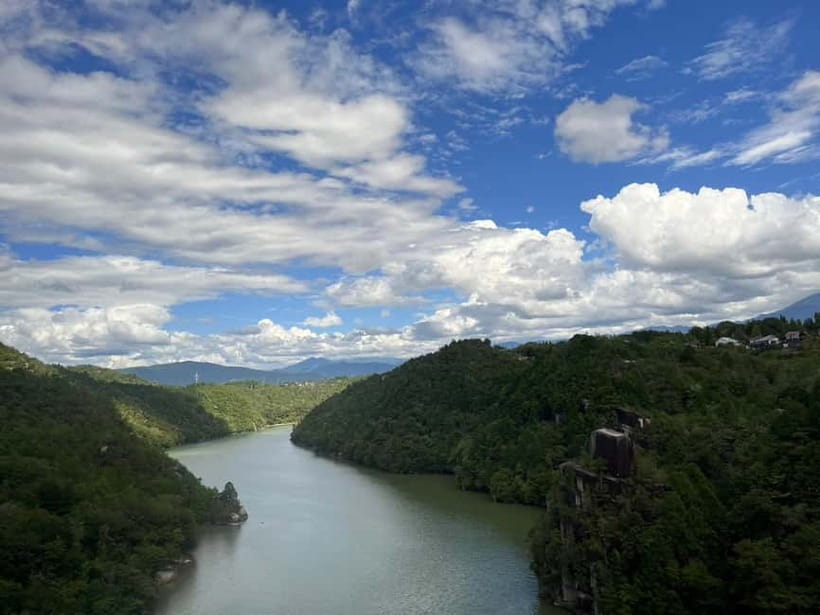
Ena Gorge is an interesting contrast to the castle. The waterway is not an untouched river valley. It is a man-made lake formed when the Kiso River was stopped by the Oi Dam about 80 years ago.
The area was given the name Ena Gorge by geographer Shige Subaru in 1920. From the lake near the dam, the gorge continues upstream toward the Nakatsu River. Natural erosion has shaped the rocks along the water, giving the shore unusual forms.
Umbrella Rock is the best-known example. It rises from the ground in a shape that resembles an umbrella or a piercing point. It is protected as a natural site by the Japanese government. Another notable feature is a red rock covered in brown moss.
The gorge’s appearance depends strongly on the season. Around spring, roughly 200 cherry trees bloom in Ren Park, with azaleas adding more color. In summer, the red Einakyo Bridge contrasts with the green trees. Autumn brings red leaves and maple color to the water’s edge. In winter, mandarin ducks and starlings may be seen, making the area useful for bird observation.
The stop is short, about 30 minutes. That is enough for a walk and photographs, but not a long hike or a detailed nature visit. I would treat Ena Gorge as a scenic pause between the main cultural stops, not the central reason to book the tour.
Magome-juku, the best place to eat and wander
Magome-juku is the most substantial walking stop, with about 90 minutes for lunch, local food, guided sightseeing, and free time. It was the 43rd of the 69 post stations along the Nakasendo road, the inland route linking Edo, now Tokyo, with western Japan.
The old road was about 540 kilometers long. Magome is roughly 332 kilometers from Nihonbashi in Edo, the route’s starting point. After Tokugawa Ieyasu unified Japan, roads were repaired and organized to support movement across the country. The Nakasendo became an important route for merchants and other travelers.
Magome’s steep street is paved with stone, and traditional wooden buildings line both sides. Many now serve as tea shops, small restaurants, art shops, and inns. Wells and waterwheels remain in place, and flowers outside the houses soften the hard lines of the old road.
This is where you should plan to spend your food budget. Dining is not included, but the stop is set up for choice. You can buy local snacks, sit down for a regional meal, or use the free time to browse before eating. Bring cash, since the tour information warns that some places do not accept credit cards.
Magome is also the point where comfortable shoes matter most. The stone paving and steep route can be tiring, especially after the castle stairs. You do not need hiking equipment for the scheduled visit, but sandals or smooth-soled shoes would be a poor choice.
The stop gives you enough time to sample the atmosphere without turning the day into a formal hike. If you want to walk every corner, shop at length, and eat slowly, 90 minutes may feel tight. If your goal is a good look, a snack, and a few photographs, the timing is sensible.
Same base, a different sort of day:
- From Nagoya: Gujo, Hida Takayama, and Shirakawa-go Day Tour
★ 4.4 · 398 reviews - Ghibli Park 1-Day Bus Tour from Nagoya
★ 4.5 · 277 reviews - From Nagoya: Hida Takayama & Shirakawa-go Tour w/Opt. Lunch
★ 4.5 · 256 reviews - Hiking the Historic Nakasendo Trail [1 Day Tour from Nagoya]
★ 5.0 · 104 reviews
Tsumago-juku and the quiet end of the route
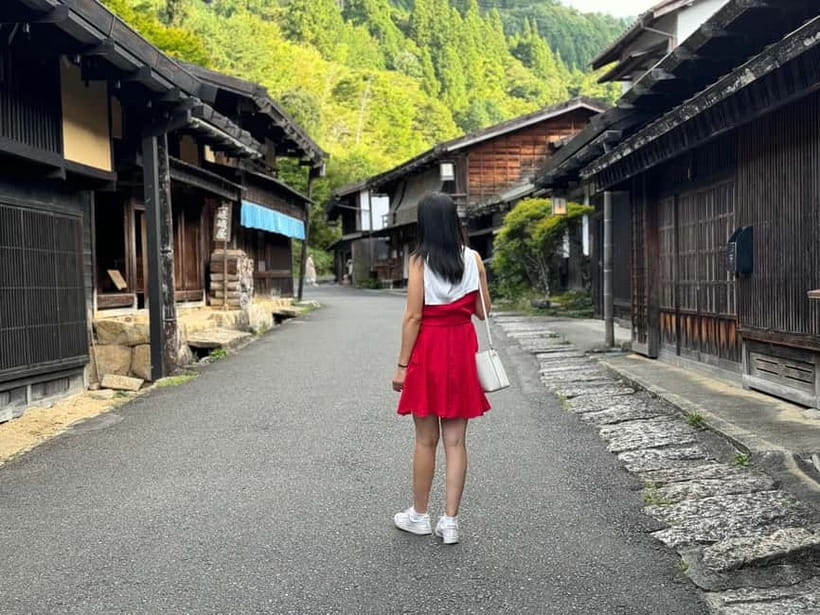
Tsumago-juku is smaller than Magome and has a simpler rhythm. The old post town is known for preserved buildings and a carefully maintained traditional appearance. You get about an hour for guided sightseeing and free time.
The old road between Magome and Tsumago is now a popular hiking route. It has also received one star in the Michelin Green Guide. This tour does not provide a full hike between the two towns. Instead, the bus takes you to Tsumago after your Magome visit, allowing you to see both places without committing to the longer walk.
That arrangement suits many people. You get the visual character of both post towns while avoiding a demanding full-day trek. It also means you should not book this tour expecting a long Nakasendo hike. The emphasis is on short walks, preserved streets, and historic scenery.
Tsumago works well as the final stop because it is compact. After the larger castle and the longer Magome visit, you can slow down, inspect the wooden facades, and enjoy a quieter hour before the two-hour return to Nagoya.
What the bus service is really worth
At $60 per person, the tour offers solid value if you want all four stops. The price includes roundtrip bus transportation, a live guide, and the Inuyama Castle First Avenue admission ticket. You still pay for lunch, snacks, and personal purchases.
The bus is the biggest practical benefit. Inuyama, Ena Gorge, Magome, and Tsumago are not a simple chain of stations in the way central Nagoya sightseeing is. Combining them independently would require careful planning, multiple connections, and close attention to departure times.
The tradeoff is that you follow the group’s schedule. You cannot stay longer at Inuyama and skip part of Ena Gorge, for example. The day includes fixed transfer times and roughly 10 hours from departure to return.
Seat assignments may not be made in advance. If choosing your seat is important, check the current booking details before paying. The vehicle also becomes your base between stops, so arrive back at the meeting point on time.
The guide and driver service is listed in Japanese and Chinese. English support may be handled through translation tools or prepared audio. Italian-speaking passengers specifically found the explanations clear when audio and translation were used, and one passenger described the English support as organized around routes and times. You should not book this as a fully English-speaking tour unless the current operator confirms that arrangement.
The walking, weather, and cash checklist
Pack for movement, not just sightseeing. Comfortable shoes are essential for the castle stairs, Magome’s stone street, and the walking in Tsumago. Bring water, a camera, cash, and clothing suited to the forecast.
Weather will affect the day more than it affects a city tour. Ena Gorge is outdoors, and the post towns are open-air visits. Rain will not erase the historic streets, but it can make stone surfaces slippery and reduce the pleasure of walking.
Cash is useful for food and personal expenses. The tour does not include dining, and some businesses may not accept cards. Buying a drink before leaving Nagoya is a sensible move, especially since the first transfer lasts about an hour.
The tour provides little time for a full sit-down meal at leisure. A quick regional lunch or local snack in Magome fits the schedule better than a long restaurant visit. If food is a major part of your Japan trip, keep expectations focused on sampling rather than a carefully planned culinary experience.
Who will get the most from this tour
I would recommend this outing to first-time visitors based in Nagoya who want to see beyond the city without arranging rural transport. It is also a good match for anyone interested in Japanese castles, Edo-period roads, and traditional wooden towns in the same day.
Families and older visitors may appreciate the bus, but the walking and stairs still require reasonable mobility. The tour is not designed as a fully passive sightseeing ride. You will be getting off, walking on uneven surfaces, and keeping to a timetable.
Photographers should like the range of subjects. The castle, river setting, unusual rocks, red bridge, seasonal trees, stone streets, wooden houses, wells, and waterwheels give you plenty to frame. The best seasonal choice depends on what you want: cherry blossoms in spring, green scenery in summer, autumn leaves, or winter birds.
This is less suitable if you want a slow visit to one place, a complete Magome to Tsumago hike, or a fully English-guided experience. It is also not ideal if you dislike long bus transfers or prefer to decide your schedule as you go.
Should you book the Nagoya countryside tour?
Book it if you want maximum variety with minimum transport planning. The $60 price is fair because it covers the bus, guide, and Inuyama Castle admission, while giving you four distinct stops in one day.
Skip it if you want deep time at each location. The itinerary is efficient, not leisurely. The strongest plan is to treat Inuyama as the main historic sight, Magome as the main food and walking stop, Tsumago as a compact traditional town, and Ena Gorge as a brief scenic break.
Arrive early at the Ministop behind BIC CAMERA, wear proper shoes, carry cash, and confirm the language support before booking. With those points clear, this is a practical way to trade some freedom for a full day of castles, old roads, river scenery, and preserved post towns.
FAQ
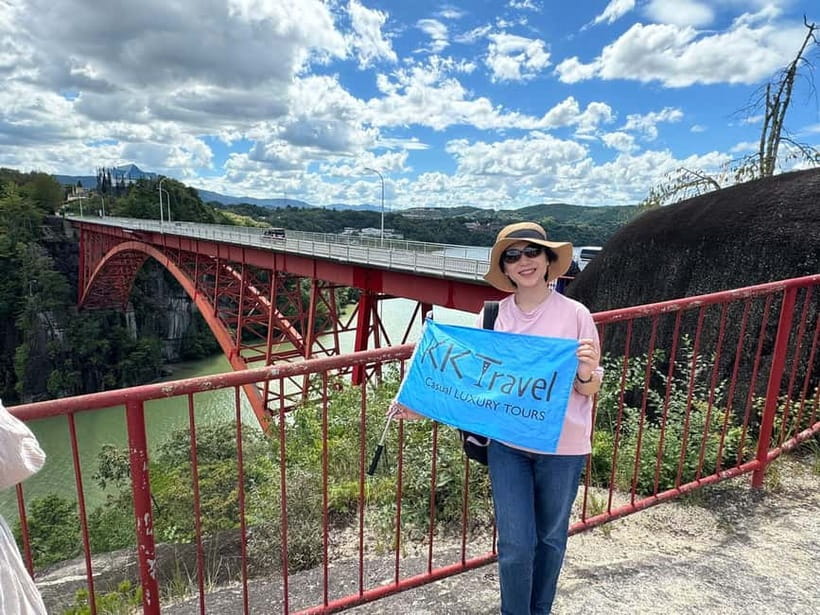
Where does the tour meet in Nagoya?
Meet at the Ministop convenience store behind the BIC CAMERA at Nagoya Station West Exit.
How early should I arrive?
Arrive at the meeting point 10 minutes before departure.
How long is the tour?
The experience lasts about 10 hours, including transportation and visits to all four locations.
Is transportation included?
Yes. Roundtrip bus transportation from Nagoya Station is included.
Is Inuyama Castle admission included?
Yes. The Inuyama Castle First Avenue admission ticket is included.
Are meals included?
No. Dining expenses are not included, so bring money for lunch, drinks, and snacks.
What languages are available?
The listed languages are Japanese and Chinese. Translation tools or recorded audio may be used to support some English-speaking passengers.
Do I need comfortable shoes?
Yes. The day includes walking at the castle, Ena Gorge, Magome-juku, and Tsumago-juku. Magome has steep stone-paved streets, and Inuyama Castle has steep stairs.
Can I cancel the booking?
You can cancel up to 24 hours in advance for a full refund. A reserve-now, pay-later option is also available.
Just added in Nagoya
- Kimono Rental and Tea Ceremony Experience in Inuyama★ 5.0 · 15 reviews
- Nagoya Full-day Private Custom Tour with National Licensed Guide★ 5.0 · 61 reviews
- Nagoya Half-day Private Custom Tour with National Licensed Guide★ 5.0 · 40 reviews
- Nagoya: Traditional Japanese Sweets-Making Workshop★ 4.6 · 14 reviews
- Nagoya: Toyota Commemorative Museum Guided Tour★ 4.7 · 22 reviews
- Nagoya Private Custom Tour with Local Guide★ 5.0 · 15 reviews
- Nagoya: Japanese Traditional Sweets making and Tea Ceremony★ 4.9 · 76 reviews
- Nagoya: Grand Sumo Tournament Tour★ 4.8 · 44 reviews
Castle Tours, compared.
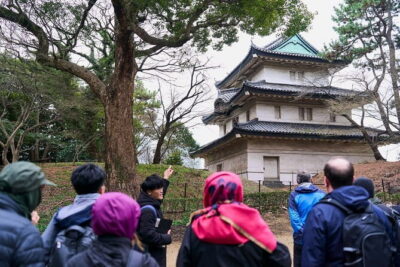
Tokyo Castle & Imperial PalaceーShogun Walking Tour
Read our review →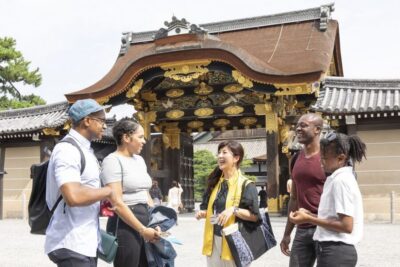
Nijo-jo Castle and Ninomaru Palace Guided Tour
Read our review →
Ultimate Osaka Walking Tour: Castle, Dotonbori & Hidden Gems
Read our review →
Nijo Castle, Kiyomizu & Fushimi Inari Guided Tour
Read our review →
Nijo, Kinkaku-ji, Arashiyama, Kiyomizu & Fushimi Inari
Read our review →
Osaka Castle Walking Tour and Castle Tower Admission
Read our review →
Imperial Palace East Garden and Edo Castle Walking Tour in Tokyo
Read our review →Browse the lists this tour appears in