
Reviewed · TEA CEREMONY EXPERIENCES
Nagoya: Japanese Traditional Sweets making and Tea Ceremony
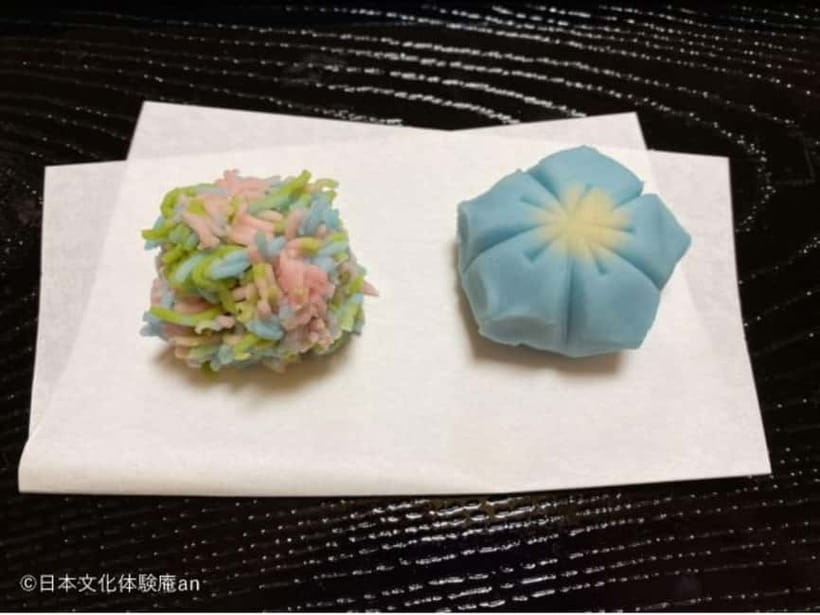
The most appealing part of this Nagoya experience is that you do not simply watch Japanese sweets being made. You shape and color your own nerikiri, a refined wagashi sweet formed like a seasonal flower, leaf, or fruit, then prepare matcha to enjoy with it. The work is gentle and creative, but not so formal that you need prior experience.
I like the use of bean paste from long-established Kyoto shops, and I like that the sweets change with the season. The $18 price also covers two activities in 95 minutes, which is a fair deal in a city where many cultural experiences cost much more. The main consideration is that this is an introduction to tea ceremony, not a full, highly formal ceremony, and English support should be requested ahead of time.
Key points at a glance
- Make two seasonal nerikiri sweets: Create a flower-shaped sweet and a kinton-style nerikiri using prepared white and red bean paste.
- Use Kyoto-made bean paste: The ingredients come from long-established Kyoto shops, giving the activity a strong connection to traditional wagashi craft.
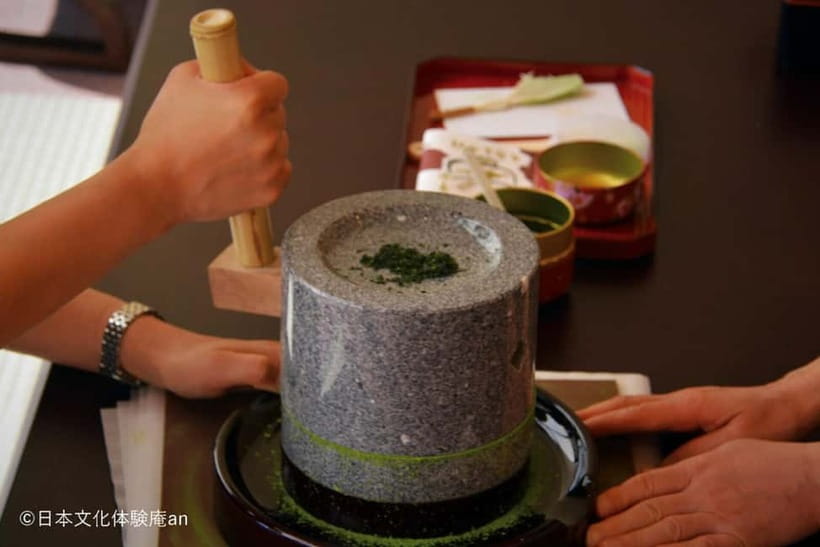
- Prepare Uji matcha yourself: Watch a grinding demonstration, then make your own tea to drink with the sweets.
- Plan for 95 minutes: The schedule includes sweet making, a short break, tea instruction, a picture opportunity, and time to eat and drink.
- Expect a friendly introduction, not a full formal ceremony: The tea portion teaches the process and proper way to enjoy matcha without requiring strict ceremonial knowledge.
- Arrive at Kokusai Center Station: The venue is one minute from Exit 3, or about 13 minutes on foot from the Sakura-dori side of Nagoya Station.
Why making nerikiri is the heart of the experience
Nerikiri is not an everyday snack. It is a high-grade Japanese sweet made from colored white bean paste, often shaped to suggest something from the season. The design may resemble a flower, a ginkgo leaf, a chestnut, or another familiar symbol.
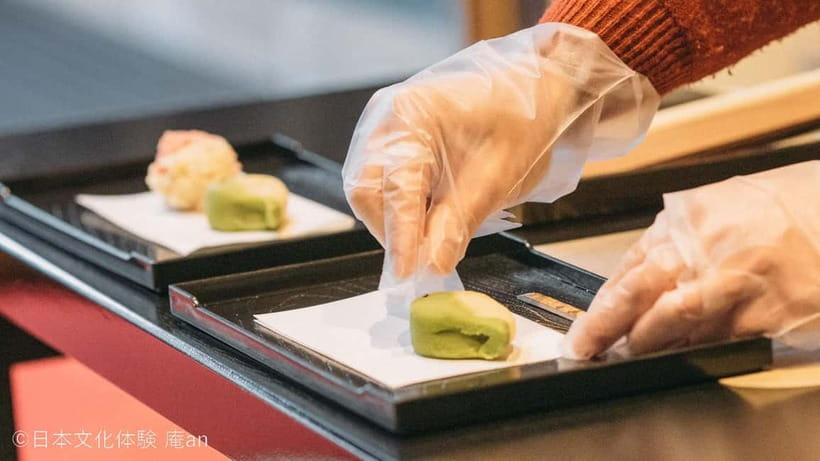
You begin by coloring the bean paste. That first step matters because the shade sets the mood of the finished sweet. From there, you form the paste and use simple techniques to create the shape. The instructor demonstrates the process, then gives you time to try it yourself.
This is hands-on work, but it is not a cooking class in the usual sense. There is no long list of ingredients to measure, no hot stove, and no complicated equipment. The challenge is in handling the soft paste carefully and giving the sweet a neat shape. That makes it a good activity for people who want to make something with their hands but do not want a demanding lesson.
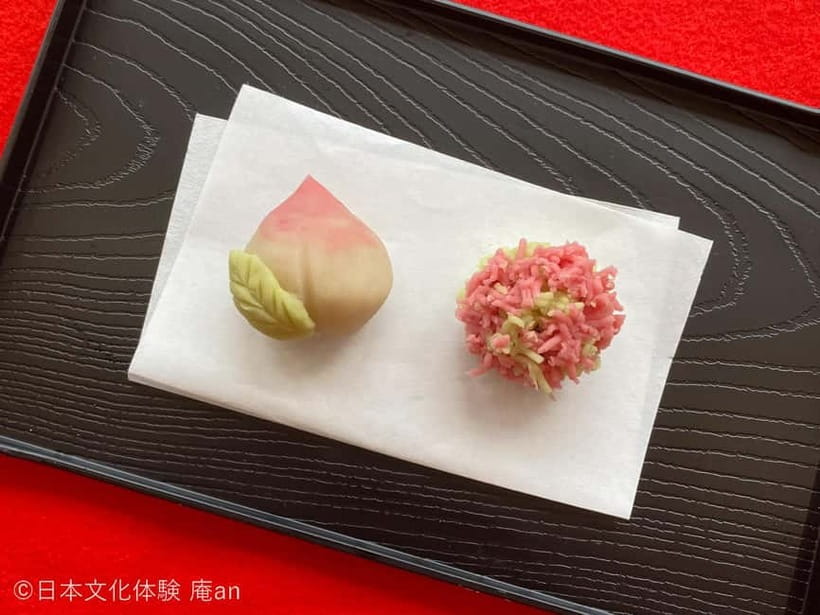
You will make two sweets with different designs. One is a flower-shaped nerikiri. The other is a kinton nerikiri, a style with a more textured finish. The seasonal designs make the class feel tied to the time of year rather than like a fixed demonstration repeated unchanged.
I especially like this format for families. A child can take part in the shaping, and the finished result does not need to look perfect to be enjoyable. The activity has enough structure to keep everyone on track, but enough room for the results to look individual.
Other tea rooms and ceremonies in Nagoya:
- Kimono Rental and Tea Ceremony Experience in Inuyama
★ 5.0 · 15 reviews - Kyoto: Tea Ceremony in a Traditional Tea House in Kiyomizu
★ 4.9 · 3,519 reviews - Kyoto: Tea Ceremony Ju-An at Jotokuji Temple
★ 4.9 · 3,207 reviews
Kyoto bean paste makes a difference
The class uses white and red bean paste produced by long-established Kyoto shops. That detail is worth noting because the paste is not just a filling hidden inside a pastry. It is the main material you handle and eat.
High-quality white bean paste has a smooth, fine texture and a clean sweetness. Red bean paste brings a deeper bean flavor. Both work well with matcha, whose taste can be grassy, earthy, and slightly bitter. The pairing is a central part of the experience, not an afterthought at the end.
You will not be asked to make the paste from raw beans during this short session. That would require far more time. Instead, you get to focus on the skilled finishing work: coloring, shaping, and presentation. For a 95-minute class, that is the sensible choice.
The premium ingredients also help explain why this is more than a simple craft session. You are learning how traditional sweets look, feel, and taste. The instructor can also explain the ingredients and the place of these sweets in Japanese tea culture.
A calm schedule with room to learn
The experience begins with an explanation of Japanese traditional sweets. This introduction gives you the basic idea behind nerikiri before you handle the paste. It also helps you understand why seasonal forms matter in wagashi.
The first making session focuses on the flower-shaped nerikiri. You start with the coloring process, then work toward the final shape. Clear instruction is important here, and the class has received particularly strong feedback for patient demonstrations and easy-to-follow guidance. Instructors named Mariko and Saki have led sessions, and English instruction has been described as very clear when available.
Next comes the kinton nerikiri. The second sweet gives you a different shape and texture to work with, so the class does not feel like making the same item twice. It also gives you a second chance to improve your technique after seeing how the first attempt comes together.
A short break follows at about the 55-minute mark. This pause divides the creative portion from the tea portion and gives you a moment to look at your finished sweets before preparing the drink.
Preparing Uji matcha after the sweets
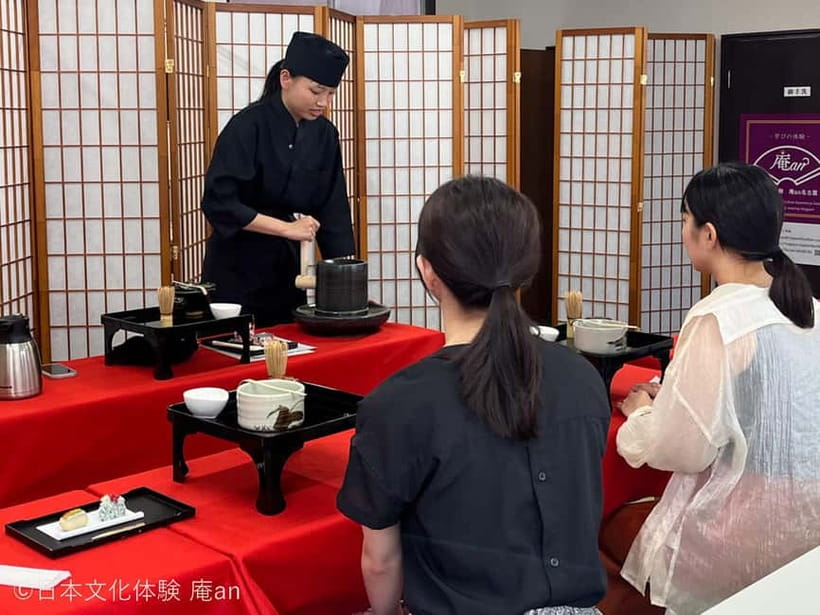
Around the 65-minute mark, the focus shifts to tea. You receive an explanation of the tea process and watch a demonstration of matcha grinding. The experience uses single-origin Uji matcha, a specific detail that will appeal to anyone who wants more than a generic green tea tasting.
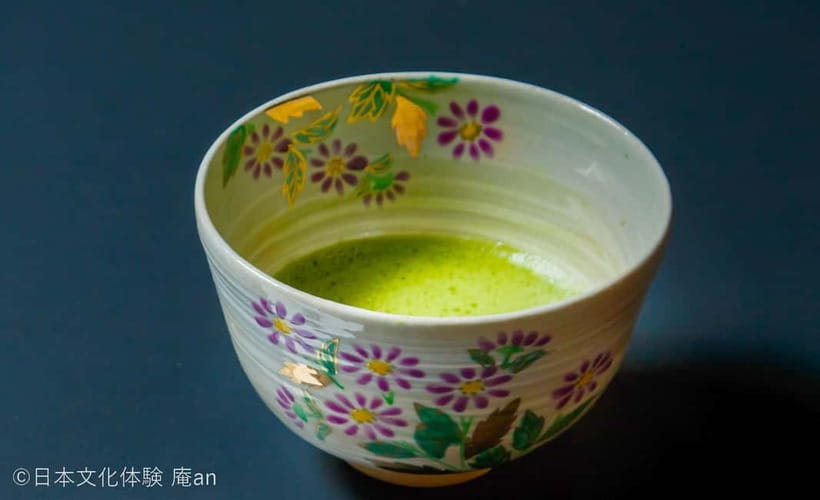
You then prepare your own matcha. This gives you a better sense of the work involved before the tea reaches the bowl. The preparation is part of the lesson, not just a drink served alongside dessert.
The tea portion also covers how to drink matcha properly. You learn the basic etiquette and the relationship between the tea and the sweet. The sweetness of the bean paste balances the sharp, vegetal character of the matcha, so eating the nerikiri with the tea is the intended finish.
It is useful to set your expectations correctly. One participant described the activity as not being a full traditional tea ceremony. That is fair. You should book this for a guided introduction to tea preparation, matcha, and basic ceremony customs, rather than for a lengthy formal performance with every traditional step.
That lighter format is also why the experience works well for first-time visitors. You can learn the meaning behind the actions without worrying about making a mistake in a highly formal setting.
A few more things to do in Nagoya worth a look
- Nagoya: Traditional Japanese Sweets-Making Workshop
★ 4.6 · 14 reviews - Matcha Making Class in Tokyo with Authentic Japanese Sweets Set
★ 5.0 · 744 reviews - Matcha Making Class in Osaka with Authentic Japanese Sweets Set
★ 5.0 · 509 reviews - Tokyo: Matcha Making Experience with Mochi Sweets in Asakusa
★ 4.9 · 388 reviews
The final tasting and picture time
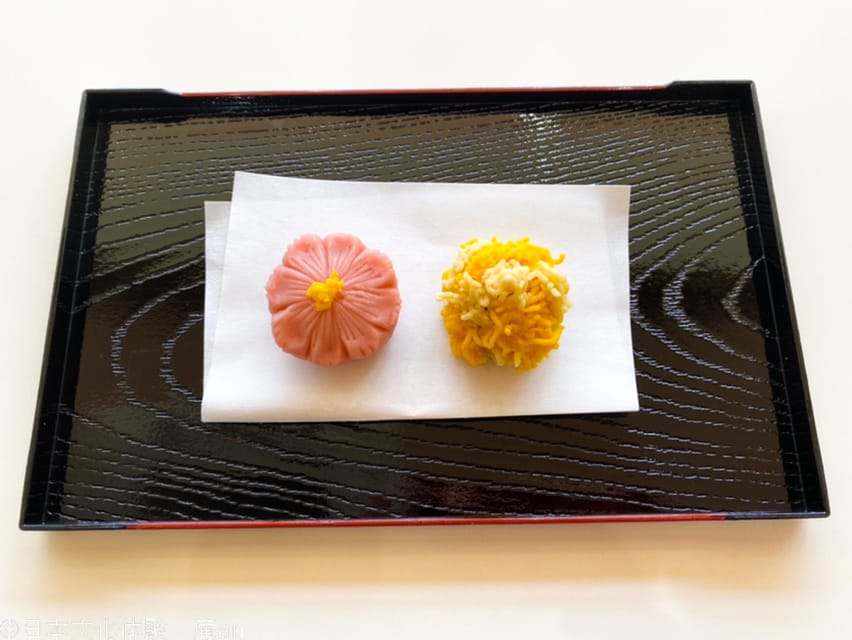
After the tea instruction, you have a picture opportunity and then time to eat the sweets and drink your matcha. This final part is simple, but it gives the activity a proper ending. You have made the food, prepared the tea, and can now enjoy the combination.
The picture time is useful if you want a record of the finished sweets before they disappear. Nerikiri is delicate, so it is worth photographing the shapes while they are still at their best.
The full session ends at about 85 minutes, followed by eating and drinking time. You leave at the 95-minute mark. The timing makes this easy to fit between sightseeing stops in central Nagoya, especially if you are trying to add a cultural activity to a short visit.
If you want to take the sweets with you, a box costs 100 yen. That is a small extra charge, but the sweets are intended to be enjoyed with the matcha during the experience, so do not assume takeout packaging is included.
Why the $18 price works
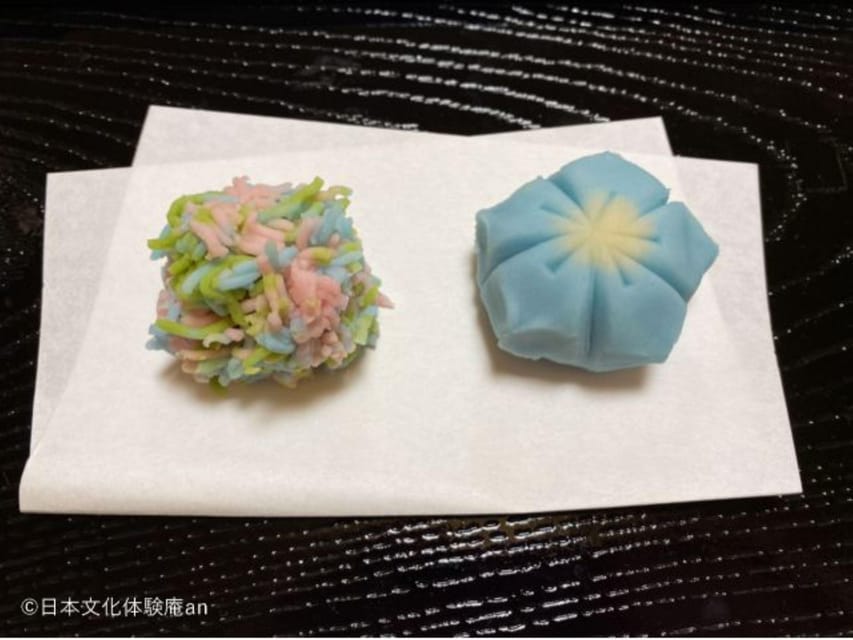
At $18 per person, the experience offers good value because it combines two hands-on sweets with a matcha lesson. You are not paying only for a tasting or a short demonstration. You receive materials, instruction, two making activities, tea preparation, and time to consume what you create.
The price is especially reasonable for families and couples who want a shared activity. Everyone works on the same basic designs, but each person gets a chance to shape the paste. That creates an easy group rhythm, with enough room for laughs when the finished sweets do not look quite like the instructor’s example.
You should allow a little extra money if you want a takeout box or a completion certificate. The box costs 100 yen, and the certificate costs 300 yen. A nominative certificate requires your names in advance. Otherwise, the name area is left blank.
The activity is also a useful choice for a rainy day or for a slower day in Nagoya. It gives you a quiet break from stations, shopping streets, and major sights without taking half a day.
Getting there from Nagoya Station
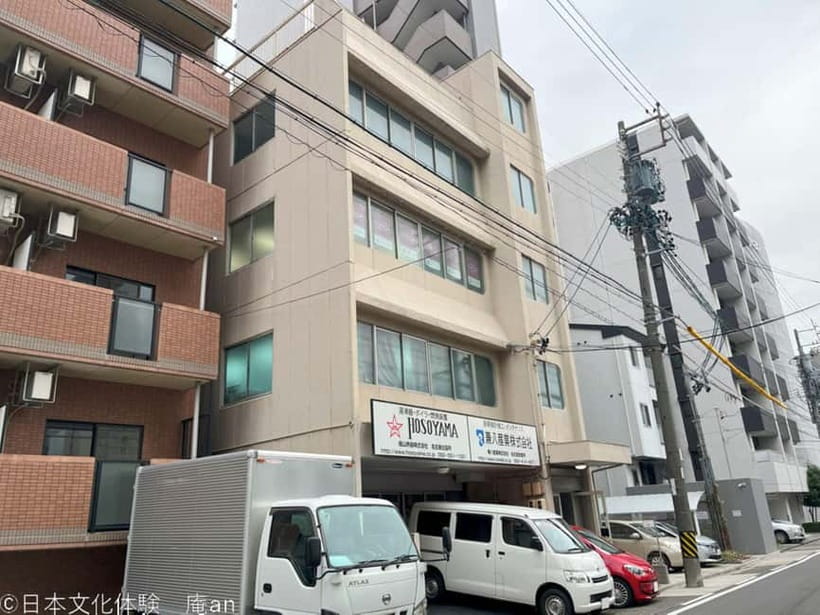
The venue is one minute from Exit 3 of Kokusai Center Station on the Subway Sakura-dori Line. From the Sakura-dori side of Nagoya Station, it is about a 13-minute walk.
That location is convenient, but you should not cut the timing close. The experience cannot be held for late arrivals, regardless of the reason. If you are coming from Nagoya Station, allow enough time to find the correct exit and reach the building.
The class is on the third floor, and there is no elevator. You need to use the stairs, so this is an important practical point for anyone with mobility concerns or heavy luggage.
The operating hours are 10:00 to 17:00. Reservations received after 17:00 are processed the next day. The listed duration is 95 minutes, with starting times depending on availability.
English support can be provided as much as possible, but the official language is Japanese. If you need English guidance, contact the provider before booking. Several sessions have had excellent English delivery, but it is better to arrange language support rather than assume every time slot will be identical.
Who will enjoy this most
I would recommend this activity to you if you want a cultural experience that is creative, edible, and easy to fit into a Nagoya itinerary. It suits couples, families, solo visitors, and small groups.
Families should find the format particularly workable. A six-year-old has taken part successfully with adult support, and children who sit on a parent’s lap are free if they are under two years old. Children who participate in the activity need a paid place.
It is also a good choice for anyone interested in Japanese food beyond sushi and ramen. Nerikiri shows a more delicate side of Japanese food culture, where shape, color, season, and texture all matter.
You may want to choose something else if you are seeking a long, formal tea ceremony in a traditional temple or tea house setting. This experience is more practical and participatory. You make the sweets, learn the basic tea process, and enjoy the result.
A few things to know before booking
The venue does not allow people who are not participating to enter. That means every member of your group should be included in the reservation, apart from eligible children under two sitting on a parent’s lap.
Cancellation is free up to 24 hours before the start time. After that point, a fee applies, and changing the date or time after a fee has been incurred can bring another specified charge. The provider does not compensate you for travel costs if you cancel, so keep the location and timing in mind before committing.
The experience provider is B.B.Advisors Inc. AN NAGOYA. You can reserve now and pay later, which is useful if your Nagoya schedule is still moving around.
Should you book this Nagoya sweets and matcha experience?
Book it if you want a short, hands-on look at Japanese culture with something delicious at the end. The seasonal nerikiri designs, Kyoto bean paste, and single-origin Uji matcha give the session more substance than a basic confectionery workshop.
I would be most likely to recommend it to first-time visitors, families, and anyone with only one day in Nagoya who wants a calm activity between major sights. The price is modest, the station access is strong, and the 95-minute format is easy to manage.
Skip it if you want a fully formal tea ceremony or if stairs and Japanese-led instruction would be a problem. For everyone else, this is a well-priced way to make two traditional sweets, learn how matcha is prepared, and leave with a better feel for the quiet craft behind Japanese tea culture.
FAQ
How much does the experience cost?
The price is $18 per person.
How long does the experience last?
The full experience lasts 95 minutes.
Where is the meeting point?
The venue is a one-minute walk from Exit 3 of Kokusai Center Station on the Subway Sakura-dori Line. It is about a 13-minute walk from the Sakura-dori side of Nagoya Station.
What sweets will I make?
You will make two seasonal Japanese sweets called nerikiri. The planned activities include a flower-shaped nerikiri and a kinton nerikiri.
What ingredients are used?
The sweets use white and red bean paste produced by long-established shops in Kyoto. The tea uses single-origin Uji matcha.
Is English available?
The official language is Japanese, but English translation can be provided as much as possible. Contact the provider in advance if you would like English support.
Is this a full traditional tea ceremony?
No. It is a guided tea experience that includes an explanation of tea, a matcha grinding demonstration, matcha preparation, and instruction on enjoying the tea.
Can I take the sweets home?
Yes. A sweets takeout box is available for 100 yen.
Is a completion certificate available?
Yes. A completion certificate costs 300 yen. For a certificate with your name, you need to provide your names in advance.
Can I cancel for free?
You can cancel up to 24 hours in advance for a full refund. Cancellation fees apply after that point.
Just added in Nagoya
- Kimono Rental and Tea Ceremony Experience in Inuyama★ 5.0 · 15 reviews
- Nagoya Full-day Private Custom Tour with National Licensed Guide★ 5.0 · 61 reviews
- Nagoya Half-day Private Custom Tour with National Licensed Guide★ 5.0 · 40 reviews
- Nagoya: Traditional Japanese Sweets-Making Workshop★ 4.6 · 14 reviews
- Nagoya: Toyota Commemorative Museum Guided Tour★ 4.7 · 22 reviews
- Nagoya Private Custom Tour with Local Guide★ 5.0 · 15 reviews
- Nagoya: Grand Sumo Tournament Tour★ 4.8 · 44 reviews
- Nagoya: Customized Private Tour★ 4.6 · 15 reviews
Tea Ceremony Experiences, compared.
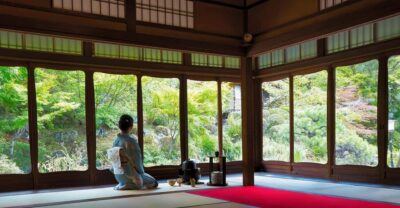
Tea Ceremony in a Traditional Tea House in Kiyomizu
Read our review →
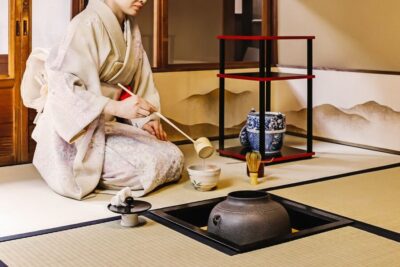
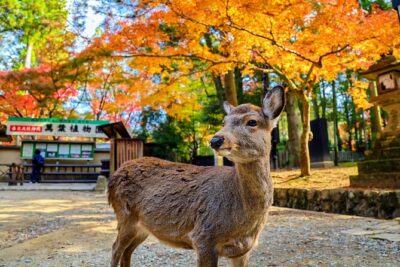
World Heritage Kyoto & Nara Uji Authentic Matcha Experience
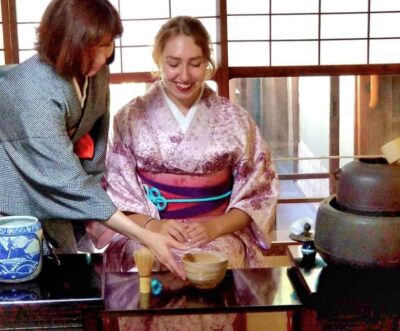
Read our review →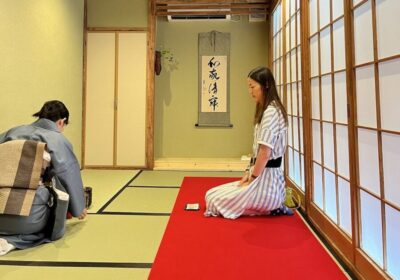
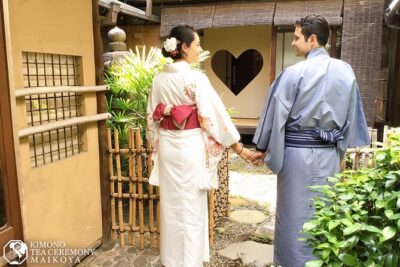

Arashiyama Bamboo Forest, Monkeys, Matcha & Temple Tour
Read our review →Browse the lists this tour appears in