
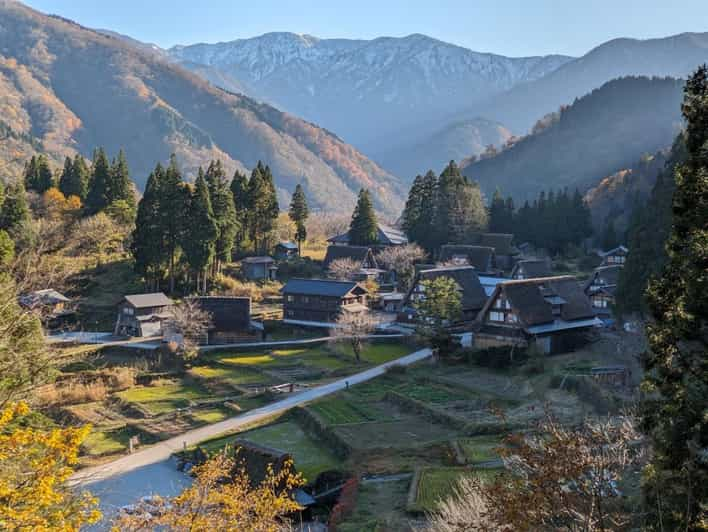
Reviewed · SHIRAKAWA-GO & GOKAYAMA TOURS
From Kanazawa: Shirakawa-go, Gokayama and Wood Carving Art
The best surprise on this full-day mountain tour is that Shirakawa-go is not the whole story. You also visit Inami, a quiet town of master woodcarvers, and Gokayama’s Ainokura village, where making Japanese paper gives you something to do with your hands, not just something to photograph.
I like the mix of guided history and free time, and I like the small-group feel. Guides such as Daniel, Mike, and Garrett have been praised for clear storytelling, local insight, and a friendly way of answering questions. The main caution is the long day and the possibility of a crowded van, especially if your group is larger.
Key points at a glance
- Inami’s carved streets: Look for more than 30 carved cats tucked around the town, along with remarkable work above shopfronts.
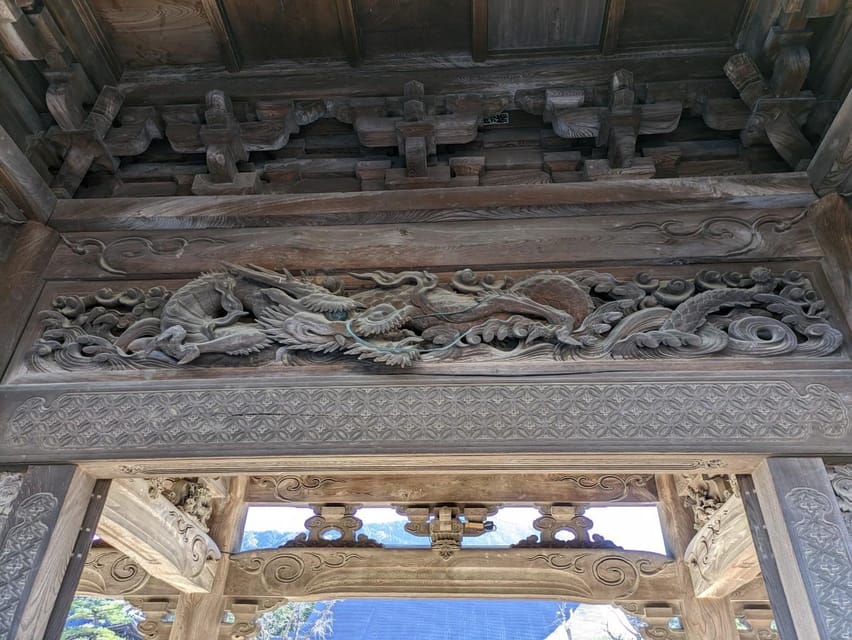
- Zuisenji Temple: A large temple rebuilt after an 18th-century fire, filled with dragons, lions, elephants, and detailed wooden gates.
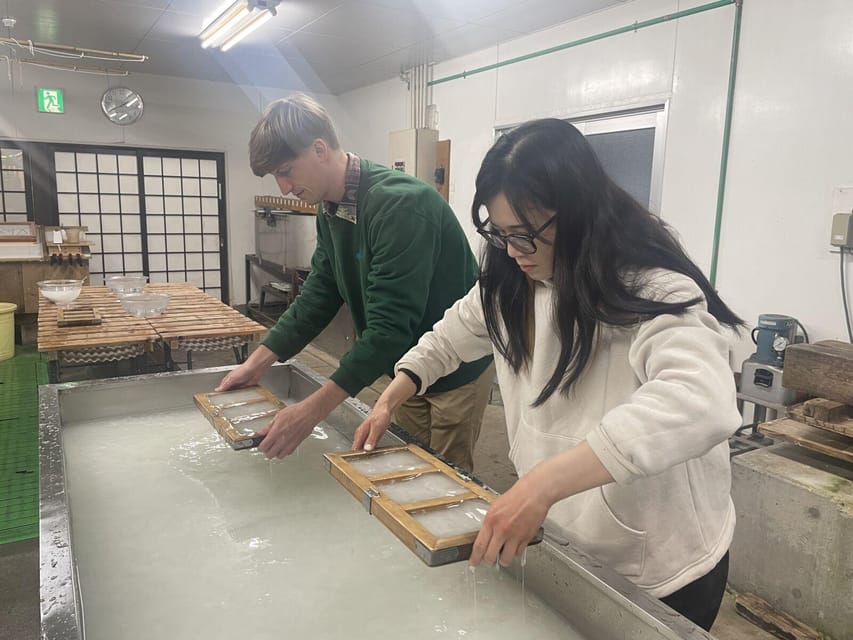
- Ainokura paper making: Make your own washi paper using traditional methods in one of Gokayama’s best-preserved villages.
- Shirakawa-go in context: See the famous gassho-style farmhouses after visiting quieter rural communities nearby.
- Small-group guiding: Groups can be as small as four or five, though vehicle space depends on the day.
- Flexible route planning: The tour begins in Kanazawa and may offer drop-off at either Kanazawa Station or Takayama Station.
Why this route works better than a Shirakawa-go-only trip
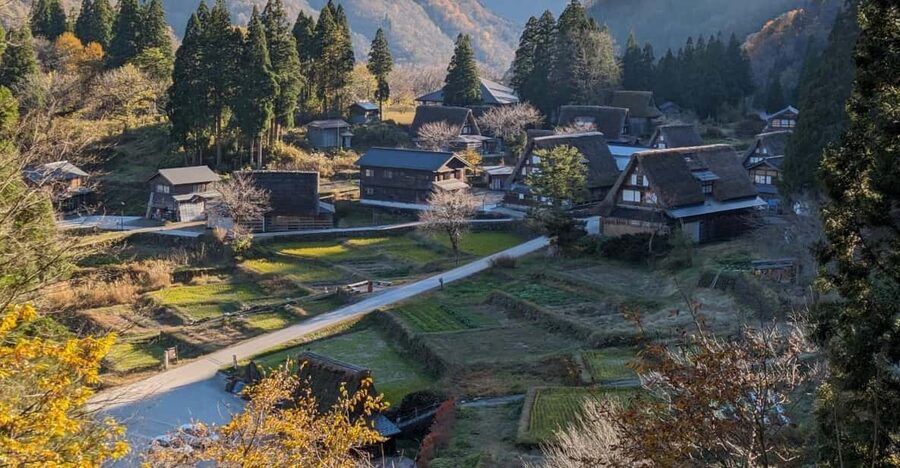
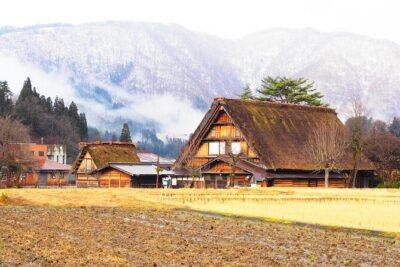
Shirakawa-go is the name most people know. Its steeply pitched thatched farmhouses are beautiful, and the village deserves its UNESCO status. But it can also feel busy, especially on clear days when buses arrive from several directions.
This tour gives you two quieter stops before Shirakawa-go. That changes the rhythm of the day. You begin with craft and temple art in Inami, then move to Gokayama for village life and paper making. By the time you reach Shirakawa-go, you have a better sense of how the mountain communities fit together.
I especially like this order because the three places feel different. Inami is a working craft town. Ainokura is a small mountain settlement with preserved thatched homes. Shirakawa-go is the most famous and developed of the three, with more shops, food stops, and people.
You are not simply collecting three similar photo stops. Each place gives you a different reason to get out of the vehicle.
Other village days out of Kanazawa:
The morning ride from Kanazawa into the Hokuriku mountains
Meet your English-speaking guide near the Information Center by the Shinkansen ticket gates at Kanazawa Station. The bus leaves from the Kanazawa Port side of the station. The standard start is 9:00 a.m., changing to 8:30 a.m. from June 1.
The first ride lasts about an hour. You pass through the mountains and plains of the Hokuriku region, and the drive is part of the appeal. It takes you away from Kanazawa’s polished streets and toward smaller communities that are difficult to reach efficiently without a vehicle.
The transport is included for the full route, and the return ride to Kanazawa takes a little over an hour. Several guides, including Mike and Daniel, have been praised for using the driving time well, answering questions about Japan and pointing out details along the way.
The vehicle has generally been described as comfortable and warm, which matters in winter. Still, one important practical point is vehicle space. A very small group can feel almost private, but one person specifically found a fuller van claustrophobic. If you dislike close quarters, ask about expected group size before booking.
Inami: a town where the buildings do the talking
After about an hour, you arrive in Inami, a small town near the mountains known for traditional wood carving. More than 100 professional woodcarvers work in the area, and the craft is part of the town’s identity rather than a display created only for visitors.
The main street leads toward Zuisenji Temple. As you walk, look above the shopfronts and around the entrances. Carved panels and figures appear in places you might otherwise miss. The details can include animals, religious symbols, and elaborate patterns.
The cat hunt adds a light touch. The town association identifies 32 carved cats, but individual shops have added more. Your guide can help you spot them, and it gives children and adults a simple reason to slow down and inspect the street carefully.
The woodwork is serious business, though. You may see the work of highly respected carvers, including a living national treasure. One practical limitation is that not every shop is open, and the smaller tourist-friendly carvings can be limited. If you hope to buy a piece, do not assume you will find a large selection of inexpensive souvenirs.
That scarcity is also part of what makes Inami feel genuine. This is not a market street built around mass tourism. The quality of the carving can be exceptional, but you may need to appreciate the craft without a purchase.
Zuisenji Temple and its remarkable wooden animals
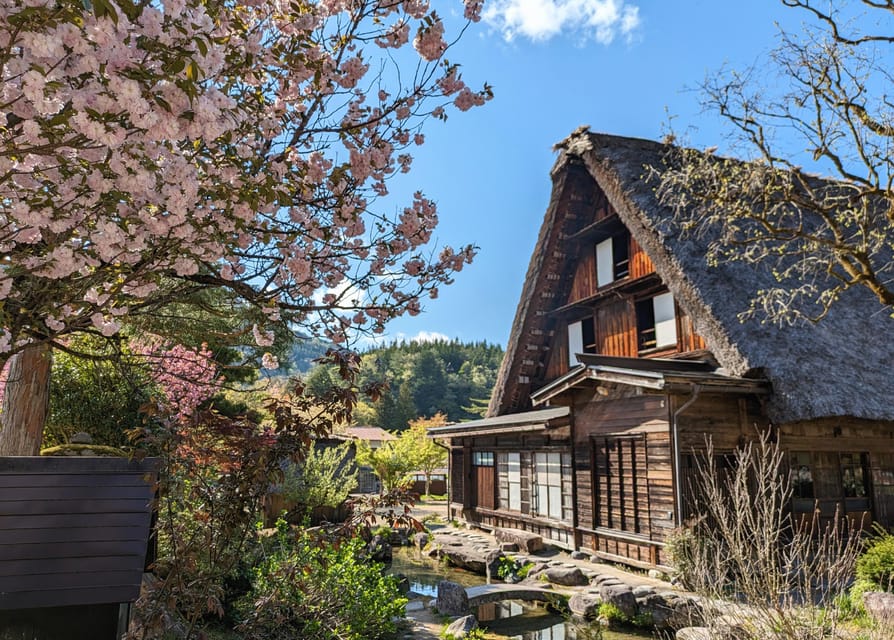
Zuisenji is the visual anchor of Inami. Its large walls can make the approach feel more like a castle entrance than a small-town temple.
The temple was originally built in the 1300s and burned in 1735. During the rebuilding, a famous woodcarver from Kyoto was brought in, and the result is a concentration of carved detail. Look for dragons, lions, elephants, and other animals spread across the gates and temple grounds.
The entry fee is included, so you do not have to weigh an extra admission cost during the visit. The temple also gives the tour a useful historical center. Inami’s craft tradition is not an isolated folk activity. You can see how skilled carving became part of architecture, worship, and public identity.
Allow yourself time to look up. The most impressive details are often above eye level. A guide such as Garrett or Daniel can point out figures and explain what you are seeing, but you also get time to wander and inspect the surfaces at your own pace.
Same base, a different sort of day:
- Kanazawa: Kenrokuen Tea Ceremony Experience
★ 4.8 · 1,139 reviews - Kanazawa Half Day Tour (Private Guide)
★ 5.0 · 361 reviews - Kanazawa Full Day Tour (Private Guide)
★ 5.0 · 323 reviews - World Heritage Shirakawa-go Perfect Guided Tour from Kanazawa
★ 5.0 · 220 reviews
Gokayama and Ainokura: the quieter UNESCO stop
From Inami, the vehicle takes about 35 to 40 minutes to reach Gokayama. The usual stop is Ainokura, one of the best-preserved villages within the UNESCO World Heritage area.
Ainokura feels smaller and calmer than Shirakawa-go. The mountain setting, thatched farmhouses, and narrow village paths create a slower experience. Several people have preferred this stop to Shirakawa-go because it offers more quiet time and a stronger sense of a lived-in rural community.
The village’s isolation once helped local industries develop. Farming and sake production mattered, but so did paper making and the production of gunpowder. That background helps explain why the village was economically important even though it was far from Japan’s major cities.
The tour usually gives you time for lunch here, though lunch may sometimes happen back in Inami depending on the day. Food choices are limited compared with Kanazawa, so I would bring a packed meal or snacks if you have strict dietary needs or simply do not want to lose time looking for food.
Making washi paper with your own hands
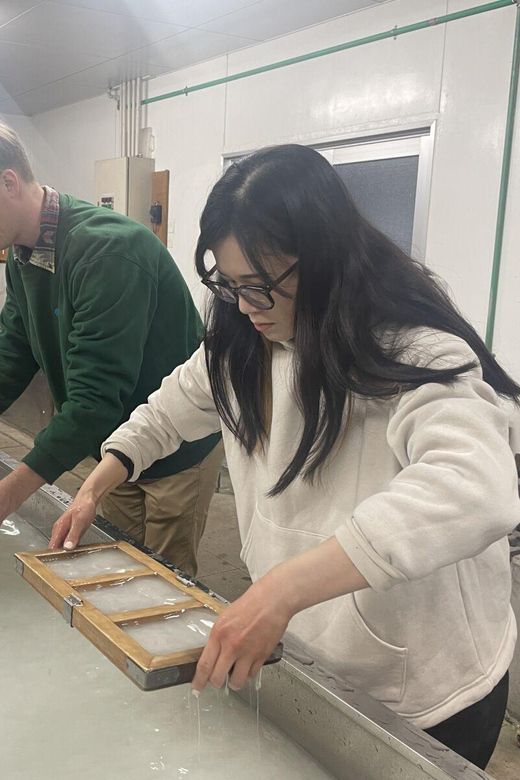
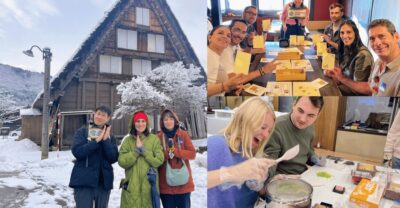
The paper-making workshop is one of the strongest parts of the day. You use traditional Japanese methods and leave with a handmade item that connects directly to the place you visited.
This is more memorable than watching a demonstration from behind a rope. You handle the materials, follow the process, and see how a local craft becomes a personal souvenir. Families and curious adults should enjoy it, and it gives the middle of the day a welcome change of pace.
The workshop normally takes part of the 75-minute Gokayama visit, alongside the village walk and guiding. That means your time is limited. If you want photographs, lunch, a viewpoint walk, and a careful look at the houses, you will need to keep moving.
There is no paper-making experience from December 27 through January 3. Availability can also change, so confirm what will operate on your date if the workshop is a major reason for booking.
Shirakawa-go: beautiful, famous, and busier
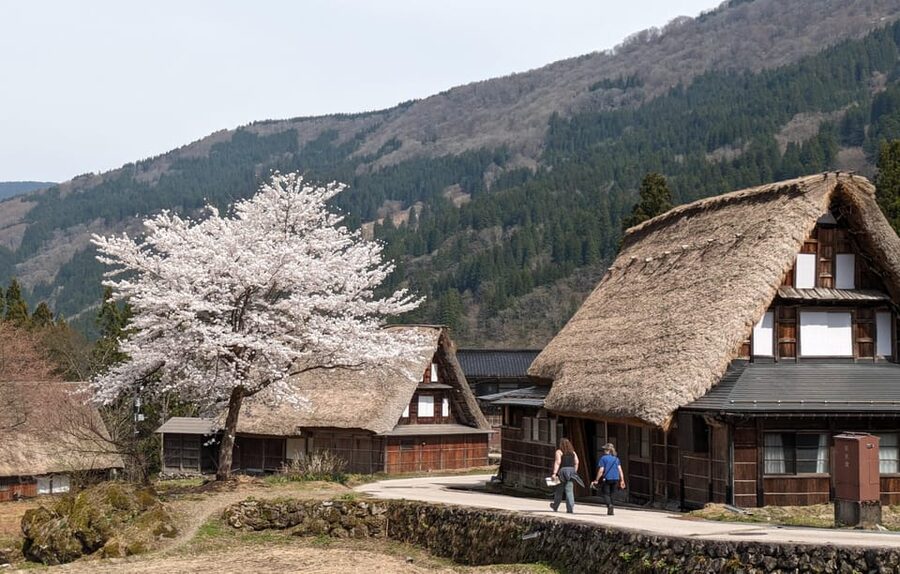
The next drive takes about 40 minutes. Shirakawa-go is the grand finale, and you begin near the main street with a guided walk through the historic village.
The gassho-style farmhouses are the main attraction. Their steep thatched roofs were designed for heavy winter conditions, and the broad village views are especially striking when snow covers the roofs and surrounding mountains. Spring, summer, autumn, and winter each give the houses a different character.
You enter one of the thatched homes, which helps you understand the buildings beyond their postcard appearance. The visit is not just about photographing roofs. It shows how the houses functioned as homes and workspaces in a demanding mountain environment.
You get about two hours here, split between guided orientation and time to explore on your own. That balance works well. The guide can help you understand the village layout and history, then you can choose your own pace for photographs, food, small shops, or a walk toward a viewpoint.
The trade-off is crowds. Shirakawa-go is more touristed than Inami and Ainokura, and some days can feel busy. The quieter earlier stops make the contrast clear. I would not book this tour expecting solitude at Shirakawa-go itself.
The matcha stop and a note about changing activities
The experience description also includes a matcha visit at Shima, a heritage site with classic architecture. This is an appealing addition because it offers a calm cultural pause and another look at traditional Japanese interiors.
However, the detailed route provided for this experience focuses on Inami, Gokayama, and Shirakawa-go, and the operator notes that activities depend on availability. Ask for confirmation of the matcha experience before you book if it is essential to your plans.
That same caution applies to other listed activities. The route may need adjustment if a partner venue cannot accept the group on a particular date. The operator says it will contact you about alternatives when needed.
Guides, group size, and the value of the day
The guide can make a large difference on this route. Daniel has been praised for thoughtful explanations and careful help when people misplaced phones or bags. Mike is known for a friendly, conversational style and useful advice about Japanese culture and Kanazawa. Garrett has been singled out for history-based storytelling and for making less famous places easy to understand.
Names are not guaranteed, so book the route rather than a particular person. Still, the pattern is clear: the guide is expected to explain the places, answer questions, and leave room for your own exploring. That mix is better than a nonstop lecture.
The group may be very small, sometimes four to eight people. A small group makes it easier to talk with the guide, keep the schedule moving, and get help with practical problems. It also means the vehicle can feel tight if the group is full.
At $180 per person, this is not a bargain bus ride. It can be good value if you want to combine three distant areas in one day without arranging several regional buses, temple admission, a guide, and the paper workshop separately. The return transport alone removes a fair amount of planning.
The price is less attractive if you mainly want Shirakawa-go and do not care about craft, temples, or rural history. You would then be paying for two extra stops that are the reason this experience is different.
Timing, weather, and what to bring
This is a long day, running from the morning meeting in Kanazawa until roughly 6:00 to 6:30 p.m. Traffic can change the return time. The route includes several walks, village streets, temple grounds, and outdoor viewpoints, so practical clothing matters more than city style.
Bring:
- Comfortable shoes for uneven village streets
- A packed lunch or snacks
- Warm layers in winter
- Rain protection in wet weather
- Space for your handmade paper and any craft purchase
Winter can be cold, but the warm vehicle is a real benefit between stops. Snow can make Ainokura especially beautiful, while rain does not erase the appeal of the old houses and temple. It does, however, make photography and walking less comfortable.
You should also keep your phone, passport, and bags close. Guides have helped with lost items, but prevention is still easier than recovery in remote mountain towns.
Is this Kanazawa day trip worth booking?
Book it if you want more than the standard Shirakawa-go photograph. The combination of Inami’s wood carving, Zuisenji’s temple art, Ainokura’s quiet thatched village, hands-on paper making, and Shirakawa-go’s famous houses gives you a fuller picture of rural Hokuriku.
It is particularly well suited to couples, families, solo visitors, and anyone who enjoys craft and local culture. It is also useful if regular transport to Shirakawa-go is sold out, or if you want to finish in Takayama instead of returning to Kanazawa, when that option is available.
Think twice if you dislike full-day schedules, packed vehicles, or limited lunch choices. If you prefer to linger in one village for hours, this route moves too quickly. But if you want a well-organized day with strong guiding, varied scenery, and three very different stops, the $180 price is reasonable for the amount of transport and access involved.
Free cancellation is available up to 24 hours before departure, and you can reserve now and pay later. Those terms help, but the main decision is simpler: choose this tour for the less famous places as much as for Shirakawa-go.
FAQ
Where does the tour start?
It starts at Kanazawa Station. Meet the guide near the Information Center by the Shinkansen ticket gates, then board at the bus terminal on the Kanazawa Port side.
What time does the tour start?
The usual start time is 9:00 a.m. From June 1, the start time changes to 8:30 a.m.
How long does the tour last?
It is a full-day experience. You should return to Kanazawa between about 6:00 and 6:30 p.m., depending on traffic.
Is lunch included?
No. Lunch is not included. Lunch is usually possible in Ainokura, but it may take place in Inami depending on conditions. Bring your own food if you have specific preferences.
Is transportation included?
Yes. Transportation between Kanazawa, Inami, Gokayama, Shirakawa-go, and the return point is included.
Is the tour conducted in English?
Yes. The tour includes a live English-speaking guide.
Is the paper-making workshop always available?
No. Activities depend on availability, and the paper-making experience is not offered from December 27 through January 3.
Can I finish in Takayama instead of Kanazawa?
The listed drop-off options include Kanazawa Station and Takayama Station. Check the available option when booking because the meeting and drop-off points can vary.
Just added in Kanazawa
- Kanazawa: Sushi & Japanese Cooking Class at a Historic School★ 5.0 · 66 reviews
- Taste of Kanazawa (Food tasting in Omicho Market & Higashi Chaya)★ 5.0 · 58 reviews
- Takayama and Shirakawago/Photoshoot by professional photographer★ 5.0 · 67 reviews
- Kanazawa private 1 day/Photoshoot by professional photographer★ 5.0 · 33 reviews
- Photoshoot session by professional photographer in Kanazawa★ 5.0 · 42 reviews
- Private Tour of Shirakawago and Gokayama from Kanazawa★ 5.0 · 50 reviews
- Shirakawago & Kanazawa from Kanazawa★ 5.0 · 51 reviews
- Private Tour of Shirakawago from Kanazawa (Half Day)★ 5.0 · 24 reviews
Shirakawa-go & Gokayama Tours, compared.
World Heritage Shirakawa-go and Experience Tours from Kanazawa
Read our review →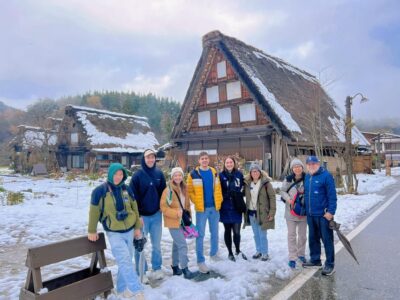
World Heritage Shirakawa-go Morning Guided Tour
Read our review →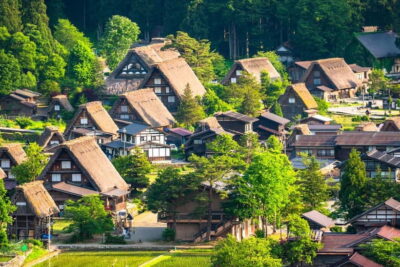
World Heritage Shirakawa-go & Two Local Experience
Read our review →
[One-day bus tour departing from Kanazawa Station] Shirakawa-go and Gokayama – Two World Heritage Villages Enjoyable Bus Tour
Read our review →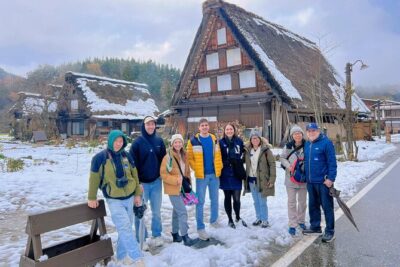
World Heritage Shirakawa-go Perfect Guided Tour from Kanazawa
Read our review →Browse the lists this tour appears in