
Reviewed · TOURS IN TAKAYAMA
Explore Kiso Valley : Magome – Tsumago Mountain Trail Walk
The best part of this experience is that you walk between two beautifully preserved post towns on the old Nakasendo Trail, rather than simply stopping in one village for photos. The 9-kilometer route leads through woods, past waterfalls, over mountain paths, and into Magome and Tsumago, two of the Kiso Valley’s most appealing historic settlements.
I like the private format, which lets your guide adjust the pace and answer your questions without a large group slowing things down. I also like the practical planning: the bus from Nakatsugawa to Magome is included, and your guide helps you arrange the train ticket at Nagiso Station at the end.
The main drawback is physical. This is a real mountain walk, not a gentle village stroll, and the tour asks for good fitness. At $171.31 per person, it is also a serious spend, though the private guiding, transport, admissions, and full-day schedule help explain the price.
Key points at a glance
- Walk 5.5 miles through the Kiso Valley: The route links Magome and Tsumago by forest paths and old highway sections.
- Meet at Nakatsugawa Station at 9:00 a.m.: Your guide handles the bus connection to Magome.
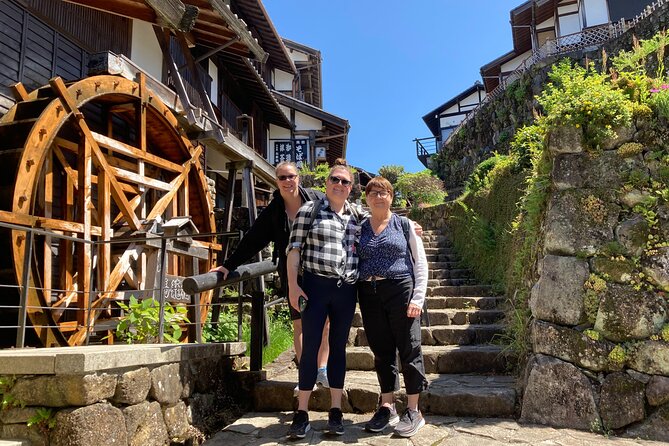
- See two preserved Nakasendo post towns: Magome and Tsumago offer timber buildings, old inns, shops, and quiet lanes.
- Stop at the Odaki and Medaki Waterfalls: These paired falls provide a cool, scenic break along the route.
- Visit historic interiors in Tsumago: The Nagisomachi Museum and Wakihonjin Okuya are included.
- Finish at Nagiso Station around 3:45 p.m.: Your guide helps you buy the onward train ticket, though that fare is not included.
Why this old highway walk is worth your day
The Nakasendo was one of the routes linking Kyoto and Tokyo during Japan’s premodern era. It crossed the mountains inland, avoiding the more coastal paths, and used a chain of post towns where people could eat, sleep, change horses, and continue their journey.
Today, the Magome to Tsumago section offers a pleasant way to experience that old road without committing to a long-distance trek. You get several hours on foot, but the route is organized around a clear start and finish. The guide keeps you on the right path, explains what you are seeing, and takes care of the bus at the beginning.
I find this a better choice than visiting Magome and Tsumago separately by public transportation. Walking between them gives the valley a proper sense of place. You see how the towns connect to the woods and mountains, and you understand why this route mattered.
The tour is private, so only your own group participates. That matters here. You can stop for photos, ask about local customs, or request a slower pace without worrying about strangers. The route can also be adjusted to suit your needs, although you should still expect the standard walk to cover about 9 kilometers.
Other experiences people book in Takayama:
- Kanazawa: World Heritage Shirakawa-go Morning Guided Tour
★ 4.9 · 988 reviews - Kanazawa: World Heritage Shirakawa-go & Two Local Experience
★ 4.9 · 274 reviews - Kanazawa/Takayama: Shirakawago & Takayama Private Day Tour
★ 4.8 · 172 reviews
Starting at Nakatsugawa and reaching Magome
You meet your English-speaking guide at the ticket gate inside Nakatsugawa Station at 9:00 a.m. Nakatsugawa is in Gifu Prefecture and serves as the practical gateway to Magome.
From the station, you take a local bus to Magome-juku. The bus ticket is included, which removes one small but useful task from your morning. You are not left to work out the right stop or connection on your own.
Magome is one of the best-known post towns on this section of the Nakasendo. Its main street climbs a slope and is lined with restored wooden buildings, traditional shops, and former inns. The steep setting gives the town more character than a flat open-air museum. You can feel the old route rising into the mountains.
You spend about 40 minutes in Magome before setting out. That is enough time to get a first look at the town and hear how the post-town system worked. It is not an enormous amount of time, so do not expect to browse every shop or linger over a long meal at this stage.
Magome Observatory and the first climb
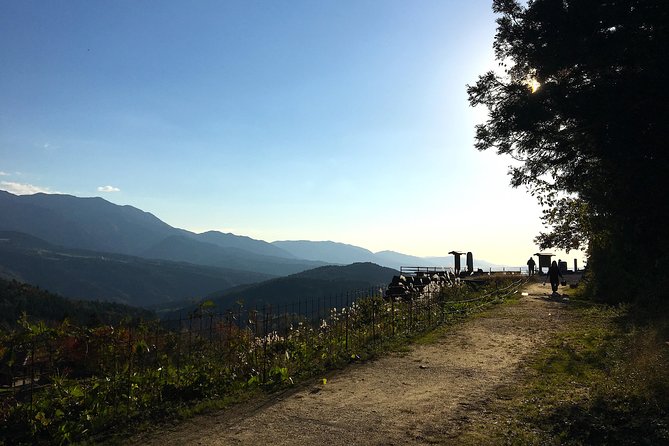
The Magome Observatory sits above the post town at an altitude of about 801 meters. It takes roughly 15 minutes, and the reward is a broad view over Magome and the surrounding Kiso mountains.
This is one of the useful moments to pause and understand the route ahead. The walk is not flat. You gain elevation around Magome, and the observatory sits at the highest point of the Magome to Tsumago hiking course.
I recommend taking the view seriously before continuing. The scenery is not just decoration here. It shows the mountain setting that shaped the Nakasendo, and it gives you a better idea of why travelers once needed established post towns along this road.
If you are concerned about the physical demands, tell your guide early. Since the outing is private, the pace can be adjusted to suit your group. Still, the tour requires a strong level of fitness, so it is not a sensible pick if you are looking for an easy sightseeing day.
Forest paths and the Odaki-Medaki Waterfalls
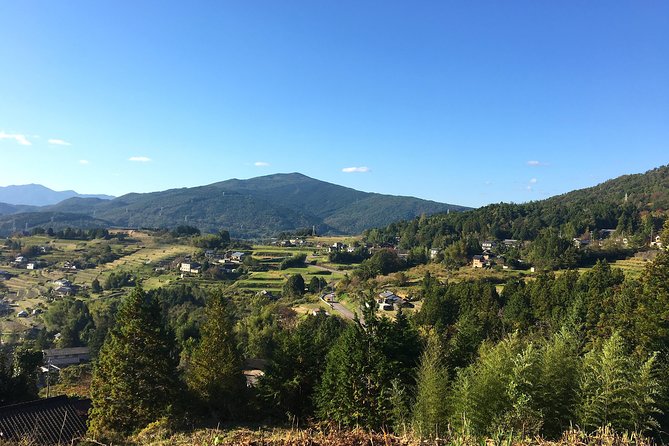
Once you leave the built-up part of Magome, the route turns toward forested paths and quieter sections of the old highway. This is the part of the day that makes the experience feel like a walk through the Kiso Valley rather than a town-to-town transfer.
The trail includes a stop at the Odaki-Medaki Waterfalls, reached after about 10 minutes of the planned itinerary. Odaki means man waterfall, while Medaki means woman waterfall. The paired falls sit on opposite sides and have long served as a place for people on the highway to refresh themselves.
The stop is brief, but it breaks up the walking nicely. You can hear and see moving water, cool off in the shade, and regain your focus before continuing. Do not expect a long swimming or picnic stop. The value is in the setting and in the old connection between the road and its natural rest points.
The forest sections are also where a local guide earns the fee. Guides such as Ryo, Harumoto, and Kazuo have been praised for explaining the route, local customs, and regional culture in a personal way. Ryo grew up near the Nakasendo, and that kind of local connection can give the trail a sense of life that a printed map cannot provide.
Same base, a different sort of day:
- From Takayama: Guided Day Trip to Takayama and Shirakawa-go
★ 4.9 · 113 reviews - Private Afternoon Cycling Tour in Hida-Furukawa
★ 5.0 · 109 reviews - Private-group Morning Cycling Tour in Hida-Furukawa
★ 5.0 · 105 reviews - Takayama: Onigiri and miso soup making at a buddhist temple
★ 4.9 · 93 reviews
Otsumago and the approach to Tsumago
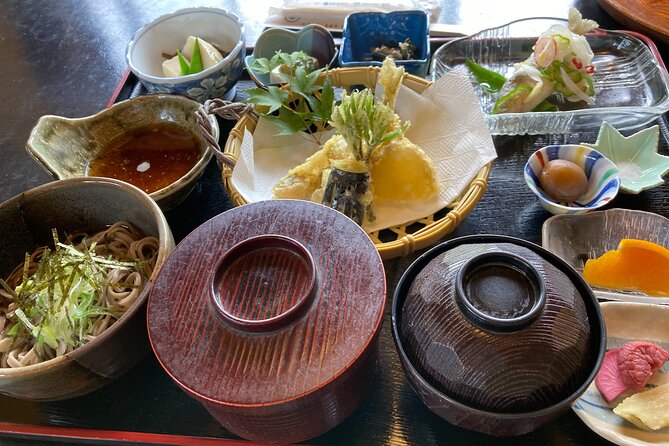
Otsumago is a district within the Tsumago-juku preservation area. It is quieter than the main post town and is known for houses built in Hon-Udatsu and Dashibari Zukuri styles.
You spend about 20 minutes here. This is a useful stop if you care about architecture and ordinary village life. The buildings are not simply isolated displays. They line the streets in a pattern that shows how the old settlements functioned as communities.
The area has become more popular with visitors, but the route still gives you a sense of a lived-in district rather than a single photo stop. Your guide can point out features that are easy to miss, especially if you do not know what the traditional building styles look like.
By this point, you will have walked a good portion of the route. The transition into Tsumago feels earned because you have approached it through the same mountain corridor that shaped its original purpose.
Tsumago-juku, one of Japan’s best preserved post towns
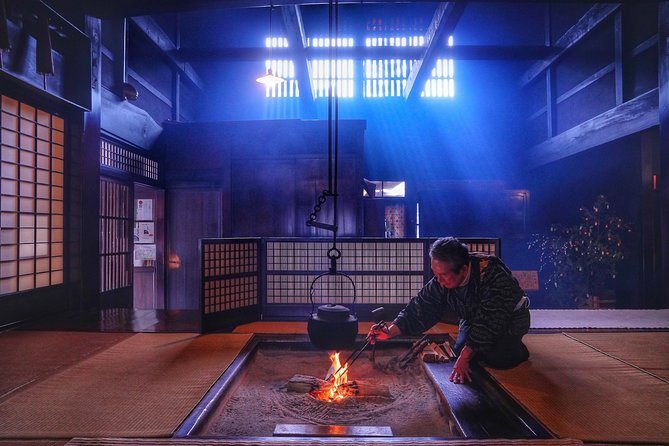
Tsumago is the major destination at the end of the walk. During the Nakasendo period, it had one Honjin inn for high-ranking travelers, one Waki-Honjin inn, and 31 Hatago inns for ordinary people using the highway.
You have about 70 minutes here, which is the longest town stop of the day. That gives you time to walk the old street, look at the preserved buildings, and pause before the museum visits. Tsumago is more than a pretty row of wooden façades. Its layout reflects the practical system that supported people crossing the mountains.
I like the contrast between Magome and Tsumago. Magome climbs a slope and feels more compact. Tsumago spreads along the old highway and gives you a calmer sense of a preserved settlement. Seeing both in one day lets you compare them instead of treating either town as a stand-alone attraction.
Your guide can also point out food and local treats along the way. One outing included a meal and special regional snacks introduced by the guide. Food and drink are not included in the tour price, so plan to pay separately if you want to eat or sample something.
Inside the Nagisomachi Museum
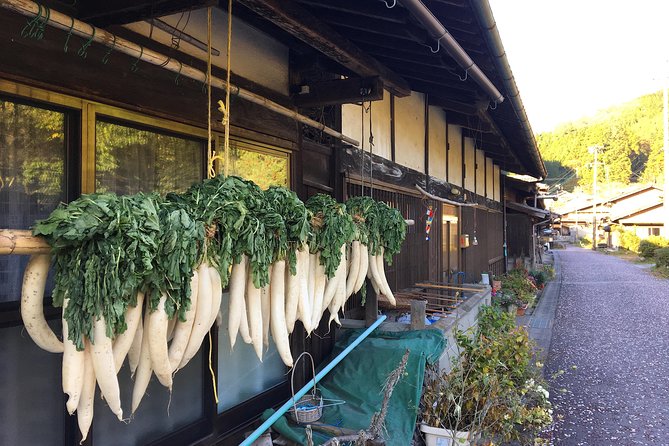
The Nagisomachi Museum occupies a former Waki-Honjin Okuya residence known as the Hayashiya House. The building is a designated Important Cultural Property, and it has been restored using plans from the late Edo period.
You spend about 25 minutes here, and admission is included. That makes this more than a quick look at the street outside. You enter a historic house and see how a former lodging and official residence was arranged.
The museum helps explain the difference between the main Honjin, the Waki-Honjin, and the inns used by ordinary people. That social structure is important to understanding the Nakasendo. The road carried people of different ranks, and the post towns had buildings and services to match.
The stop is relatively short, so you should not expect a full museum afternoon. Instead, think of it as a focused interior visit that adds context to the outdoor walk.
The timber of Wakihonjin Okuya
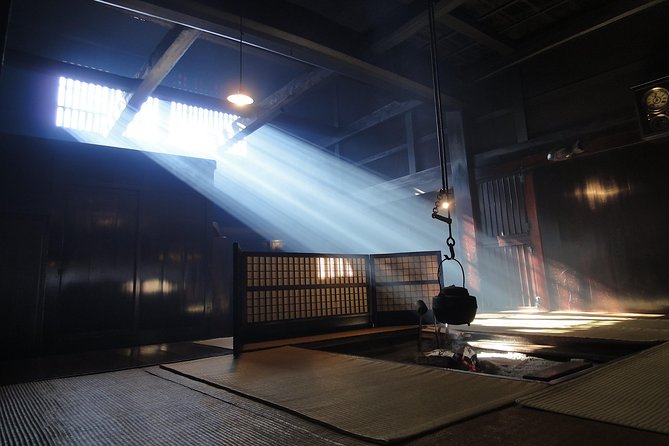
The final listed stop is Wakihonjin Okuya, another 25-minute visit with admission included. This residence served as a Waki-Honjin and provision store for generations.
The building dates from 1877 and is made from fragrant Japanese cypress. At the time of construction, the use of this material had only recently become legal. That detail gives the house a useful connection to changing building rules and local resources, rather than leaving it as a collection of old rooms.
Because the tour visits both the museum and Wakihonjin Okuya, you get two different ways to understand Tsumago. One stop presents the house as a museum and cultural property. The other helps you consider its working role as a lodging place and store.
These interior visits also provide a welcome change after the trail. If the weather is warm or the walk has taken more energy than expected, the chance to move indoors is practical as well as educational.
Timing, cost, and what the price covers
The experience lasts about seven hours. You begin at 9:00 a.m. and reach Nagiso Station at roughly 3:45 p.m. The listed price is $171.31 per person.
That price is not cheap for a day of walking, but it includes an English guide, the bus from Nakatsugawa to Magome, and the entrance fees for the Tsumago sites. It also buys you a private experience and help with the route, rather than just admission to a town.
You still pay for your own food and drinks. Private transportation by taxi, private car, or bus is not included beyond the specified bus ticket, and the train fare after reaching Nagiso is also separate. Your guide assists with buying that ticket, which is helpful, but you should budget for it.
For a couple or family that values personal guiding, the cost can be reasonable. For a solo visitor focused only on seeing the two towns, it may feel high. Group discounts are available, so the per-person value may improve when more people join your private booking.
The experience is often booked well ahead, with an average lead time of about 66 days. That suggests you should plan early if your Japan schedule is fixed.
Who should book this walk?
I would choose this tour if you want a full day in the countryside and prefer having the route, bus connection, and cultural explanation handled for you. It suits active couples, families with older children, and small private groups that want flexibility.
It is especially good for a first visit to the Kiso Valley. You do not need to study trail maps or work out how Magome connects with Tsumago. You simply meet at Nakatsugawa Station and follow the guide.
I would skip it if your priority is a slow shopping day in the post towns, since much of the day is spent walking. I would also think twice if hills and a 9-kilometer route sound tiring. The tour is designed for people with good physical fitness, and the private format cannot remove the basic effort required by the terrain.
Wear proper walking shoes and bring enough water for the day. The supplied information does not specify a required equipment list, but the distance and mountain setting make sensible footwear important.
Should you book the Magome to Tsumago walk?
Book it if you want the Nakasendo as a complete experience: old towns, forest paths, mountain views, waterfalls, architecture, and a guide who can connect the pieces. The most praised guides have included Ryo, Harumoto, and Kazuo, each bringing local stories and a considerate approach to the day.
The strongest reason to choose this outing is convenience with substance. You get the practical help of a private guide without giving up the exercise and quiet scenery that make the route special.
At $171.31, it asks more than a self-guided walk, but the included bus, admissions, route support, and private attention give the price a clear purpose. If you have the fitness and want one memorable day away from Japan’s big cities, this is a solid choice.
FAQ
Where does the tour begin?
The tour begins at the ticket gate of Nakatsugawa Station in Gifu Prefecture at 9:00 a.m.
Where does the tour end?
The walk ends at Nagiso Station in Nagano Prefecture at around 3:45 p.m. Your guide will assist you in buying the train ticket back to your accommodation.
How far do you walk?
The route covers about 5.5 miles, or 9 kilometers, between Magome and Tsumago.
Is the tour private?
Yes. Only your group participates in the private activity, and the walk can be adjusted to suit your needs.
What is included in the price?
The price includes an English-speaking guide, the bus ticket, and entrance fees for the included sites.
Are food and drinks included?
No. Food and drinks are not included and must be paid for separately.
Is this tour suitable for people with limited fitness?
The tour requires a strong level of physical fitness. It includes about 9 kilometers of walking on a mountain route, so it is not intended as an easy sightseeing stroll.
Can I cancel for a full refund?
Yes, if you cancel at least 24 hours before the local start time. Cancellations made less than 24 hours before the start are not refunded. If poor weather causes the tour to be canceled, you will be offered another date or a full refund.
Just added in Takayama
- Gifu Samurai Sword Town;Japanese Damascus Knife Making Experience★ 5.0 · 27 reviews
- Private Afternoon Cycling Tour in Hida-Furukawa★ 5.0 · 109 reviews
- Private-group Morning Cycling Tour in Hida-Furukawa★ 5.0 · 105 reviews
- Short Morning Cycling Tour in Hida★ 5.0 · 17 reviews
- Magome & Tsumago Nakasendo Trail Day Hike with Government-Licensed Guide★ 5.0 · 38 reviews
- Frozen fall trekking★ 5.0 · 21 reviews
- Magome & Tsumago Nakasendo Full-Day Private Trip with Government-Licensed Guide★ 5.0 · 20 reviews
- Takayama Private Custom Tour with Local Guide★ 5.0 · 31 reviews
Tours in Takayama, compared.
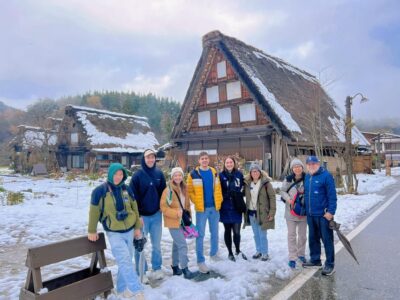
World Heritage Shirakawa-go Morning Guided Tour
Read our review →
World Heritage Shirakawa-go & Two Local Experience
Read our review →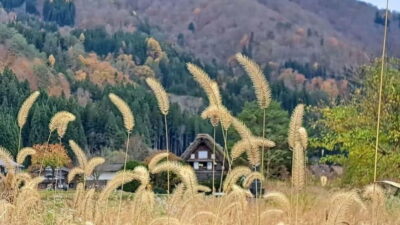
Kanazawa/Takayama: Shirakawago & Takayama Private Day Tour
Read our review →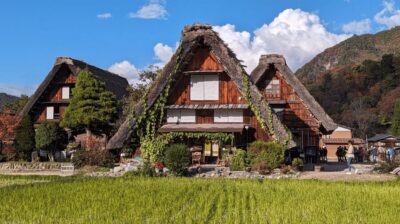
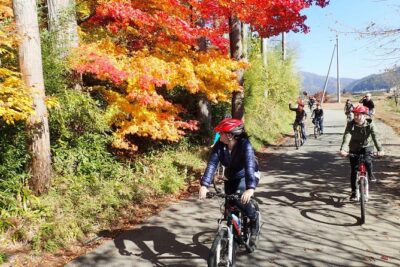
Private Afternoon Cycling Tour in Hida-Furukawa
Read our review →
Private-group Morning Cycling Tour in Hida-Furukawa
Read our review →
Onigiri and miso soup making at a buddhist temple
Read our review →
Browse the lists this tour appears in