
Reviewed · SHIRAKAWA-GO & GOKAYAMA TOURS
From Takayama: Guided Day Trip to Takayama and Shirakawa-go
Takayama Jinya is the star of this day trip: a 300-year-old government office where you walk through tatami rooms, storage spaces, tools, books, and working areas rather than viewing history behind glass. You then trade town streets for the wooden farmhouses of Shirakawa-go, one of Japan’s most memorable rural sights.
I like the smart pairing of guided context and free time. You get help understanding what you see, then time to taste Hida food, shop, take photographs, or return to a place that caught your eye. The main consideration is price: at $158 per person, it costs more than arranging local buses and entrance fees yourself, though the reserved transport and full-day guidance make the difference worthwhile for many visitors.
Key points to know
- Takayama Jinya brings Edo-period government to life: Explore the rooms and objects inside a preserved local governor’s office.
- Sanmachi is best enjoyed slowly: Your guide shows you the main lanes, then you have 90 minutes for markets, shops, sake, and Hida food.
- Shirakawa-go begins with the best view: The tour goes first to a lookout before walking down into the village.
- Guides add real value: Hemi, Yoshi, Yuko, Joyce, and others have been praised for history, food advice, photographs, and patient answers.
- Transport saves planning time: The trip includes round-trip bus or minibus transportation from Takayama, with about 50 minutes to Shirakawa-go.
- This is a full day on foot: Wear comfortable shoes and expect steps, village roads, and outdoor walking in changing weather.
Why this Takayama and Shirakawa-go pairing works
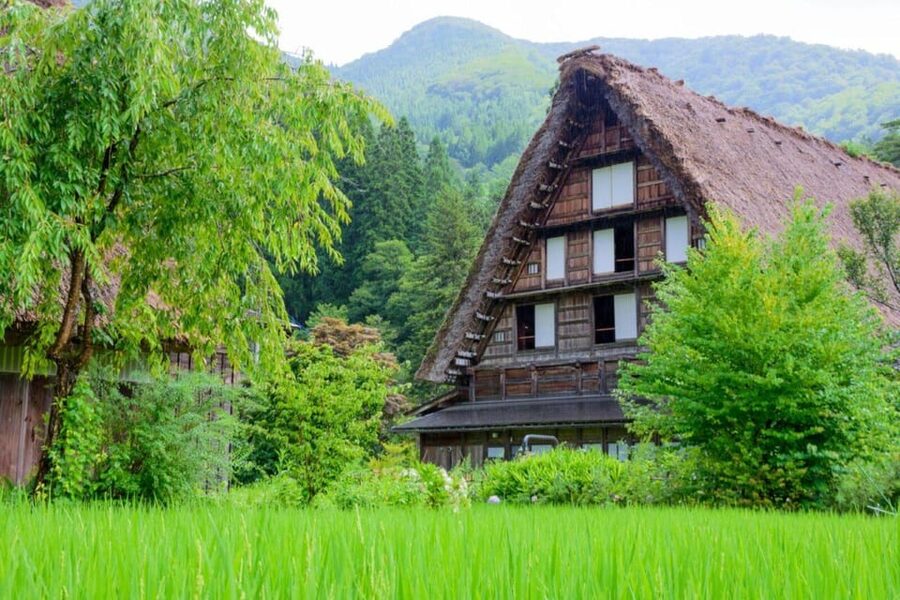
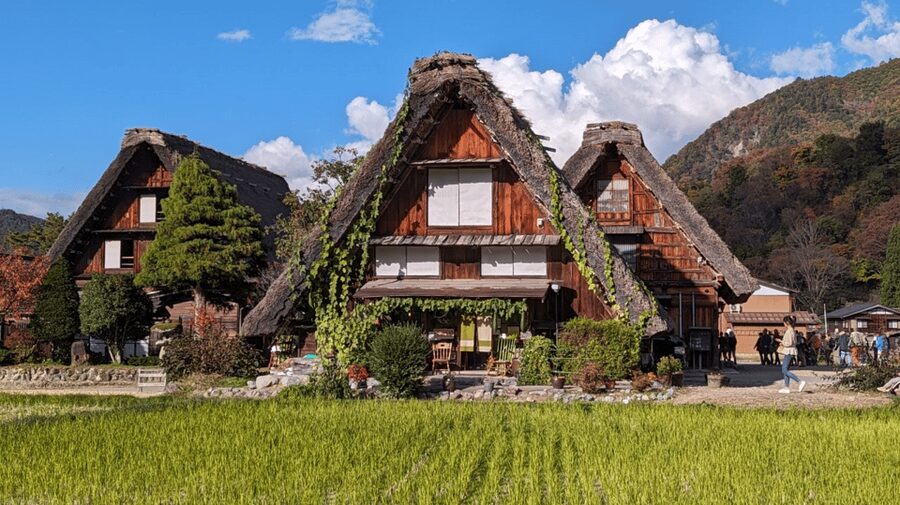
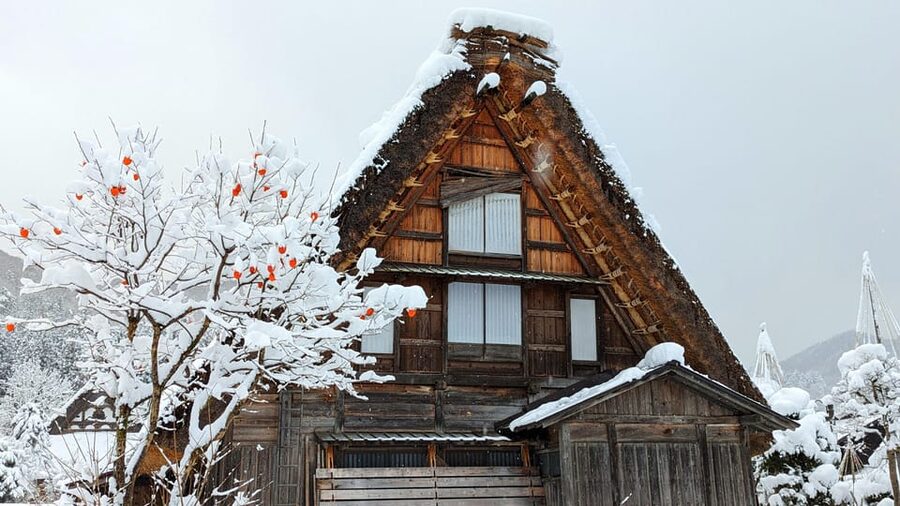
Takayama and Shirakawa-go show two different sides of the Hida region. Takayama gives you a preserved town center, merchant houses, food shops, and a former government office. Shirakawa-go offers mountain village life, rice paddies, narrow roads, and steeply pitched gassho-zukuri houses built to handle heavy snow.
You could visit both places independently, but the logistics take some thought. This tour places the two destinations in one day and handles the road connection between them. That matters most during busy periods, when regular buses can sell out and arranging the right departure times becomes a nuisance.
The format is also sensible. You are not marched from one sight to the next for eight straight hours. The guide leads the important walks, then leaves room for lunch, shopping, photographs, and your own wandering. That balance makes the day feel less like a checklist.
Other village days out of Takayama:
- Kanazawa: World Heritage Shirakawa-go Morning Guided Tour
★ 4.9 · 988 reviews - Kanazawa: World Heritage Shirakawa-go & Two Local Experience
★ 4.9 · 274 reviews - Kanazawa/Takayama: Shirakawago & Takayama Private Day Tour
★ 4.8 · 172 reviews
Starting at Takayama Station
The meeting point is outside the ticket gates at JR Takayama Station. After leaving the gates, look left for a walkway and an ornate wagon carving. The guide wears a Snow Monkey Resorts tour tag.
The meeting time is 9:00 AM, and you should be outside at the meeting point then, even if you arrive early and wait on the nearby benches. Do not remain in the waiting room until the last minute. Station meetings are easy when you know exactly what you are looking for, but less so when a group is gathering around several entrances.
From the station, the group walks about 10 minutes to Takayama Jinya. That short walk helps you get oriented in the center of town before the first major visit.
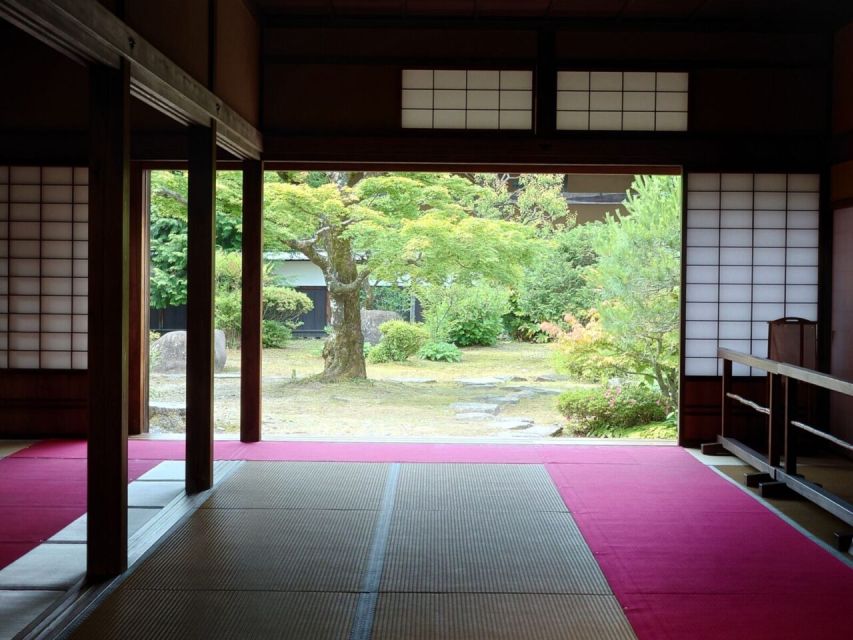
Inside Takayama Jinya, a working building rather than a museum
Takayama Jinya was a local government outpost during the Edo period and is more than 300 years old. The visit takes about an hour, with the guide explaining how the building functioned and how Takayama fit into the wider political system of old Japan.
The setting is the point. You walk through an actual historic structure, moving among rooms, tatami floors, wooden corridors, storage areas, and official spaces. Art, books, tools, and other objects from the 17th through 19th centuries help explain daily work, administration, and local life.
I find this more satisfying than a quick museum stop because the building gives the objects a physical setting. A tool or document means more when you are standing in the rooms where officials once worked. Guides such as Yoshi and Yuko have been especially praised for explaining the purpose of each room patiently and clearly.
This part requires attention to traditional floors and indoor movement. It is not a dramatic attraction in the theme-park sense. Its appeal is quieter: architecture, order, and the feeling of walking through a real administrative building from Japan’s feudal era.
Sanmachi’s wooden streets and merchant houses
The next walk covers Sanmachi, Takayama’s historic preserved district. Your guide points out the main sights and explains the wooden merchant houses lining the narrow streets.
The buildings date from the Edo period, when Takayama was an important town in the Hida region. Their dark timber fronts, low doorways, shop displays, and careful proportions create the samurai-era atmosphere promised by the tour description. You do not need to know every architectural term to enjoy the scene, but a guide helps you notice details that are easy to pass without context.
The guided portion lasts about 30 minutes and ends near the entrance to the Miyagawa Morning Market. That is enough time to understand the district without using up all your free time. If you have already spent a day in Takayama, this introduction may feel familiar. One person found the free time less useful after exploring the town independently the previous day, so the tour works best when you want guidance and a convenient route to Shirakawa-go, not just a first look at Takayama.
Same base, a different sort of day:
- Private Afternoon Cycling Tour in Hida-Furukawa
★ 5.0 · 109 reviews - Private-group Morning Cycling Tour in Hida-Furukawa
★ 5.0 · 105 reviews - Takayama: Onigiri and miso soup making at a buddhist temple
★ 4.9 · 93 reviews - Ninja Experience in Takayama – Basic Course
★ 5.0 · 62 reviews
Ninety minutes for Hida food and local shopping
After the walking tour, you receive about 1 hour and 30 minutes of free time in Takayama. You can explore the morning market, return to Sanmachi, shop, or sit down for lunch.
Lunch is not included, which is a good arrangement here because food is part of the appeal. You can choose a local restaurant rather than accept a fixed meal. The Hida region is known for Hida beef, and the tour information specifically points to sushi made with wagyu beef from local ranches. You might also look for regional sweets, small snacks, or a sake tasting.
Several guides, including Hemi and Yoshi, have been praised for restaurant and snack suggestions. That kind of advice is useful during a short stop because you do not want to spend the entire break comparing menus. Ask your guide what fits your timing and appetite.
Ninety minutes is generous enough for a meal and a little shopping, but not enough for a slow, elaborate lunch followed by a long return to every side street. Keep an eye on the meeting time. The next leg to Shirakawa-go takes about 50 minutes, and the group cannot wait for late shoppers.
The bus ride to Shirakawa-go
The journey to Shirakawa-go is by bus, coach, minibus, or private van depending on the departure arrangement. The transport is included, and the ride takes about 50 minutes each way.
This is one of the tour’s strongest practical points. Regular public buses can be heavily booked, particularly during popular seasons. A private or small-group vehicle also removes the need to work out the connection after spending the morning on foot.
Comfort can vary by vehicle. Most of the available feedback describes clean, comfortable transport and smooth driving, including in snowy conditions. A few practical complaints are worth noting: some vehicles may not have power outlets for phones, and you may need to keep your bags with you during the early walking portions. Bring a charged phone and a small day bag rather than relying on onboard charging.
Use the ride to rest and watch the scenery. The road connection is not simply dead time, since it takes you from a compact historic town into a rural settlement shaped by snow, farming, and mountain conditions.
Shirakawa-go begins at the lookout
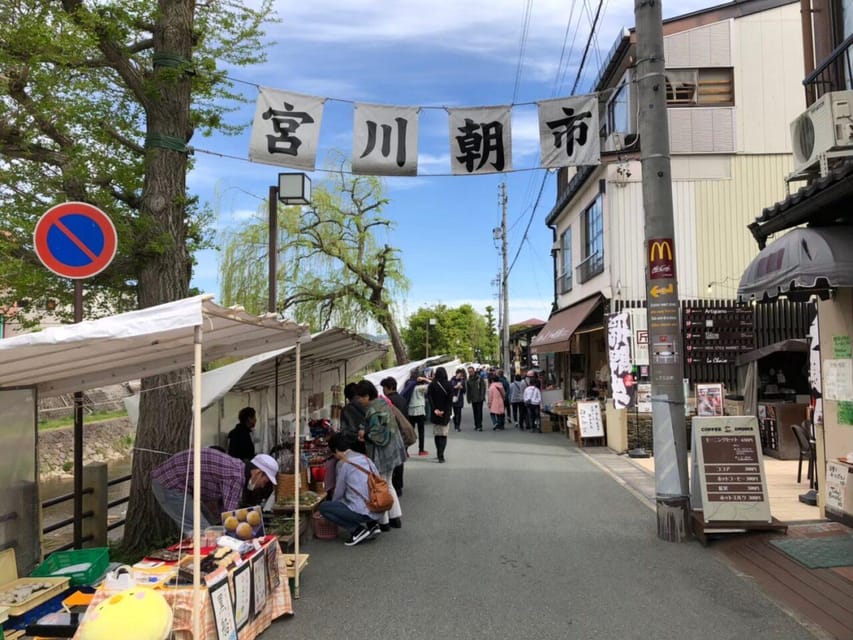
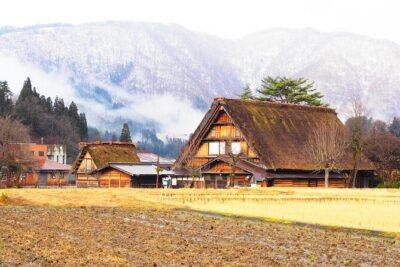
The Shirakawa-go visit starts at a famous lookout point. From above, you can see the village spread through the valley, with its fields, roads, waterways, and steep thatched roofs.
Starting high gives you the right sense of place. On the ground, the houses are impressive but separated by lanes and gardens. From the lookout, you understand how the settlement fits together. This is also the best moment for a broad photograph, although weather can change the view. Snow, cloud, rain, or bright sun each give the village a different mood.
After the lookout, the guide leads you downhill toward the rice paddies and village streets. The route puts the scenery in a useful order: wide view first, close details second.
Gassho-zukuri houses, museums, and village details
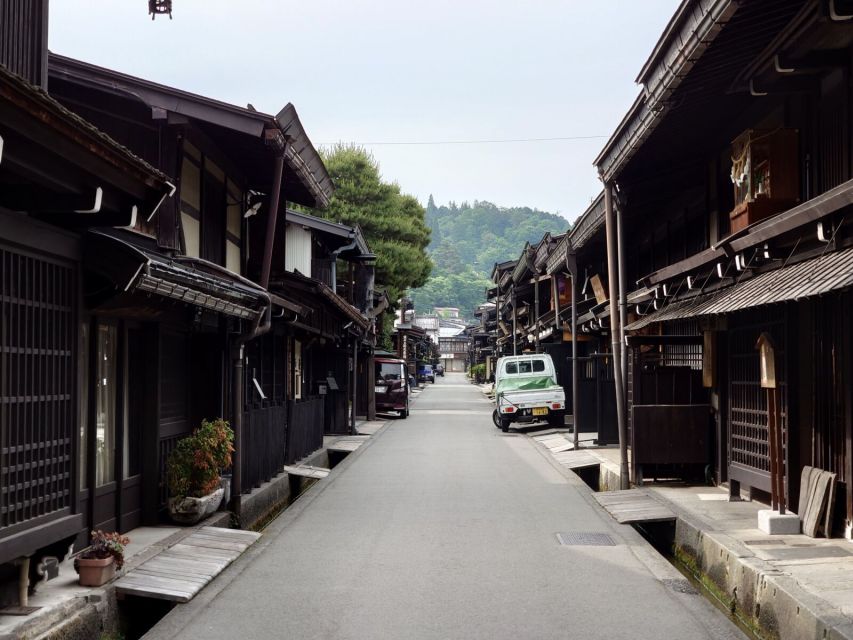
Shirakawa-go is known for its large collection of gassho-zukuri houses. Their sharply angled roofs were designed for heavy snowfall, and the upper levels traditionally supported household work connected with silkworm raising.
The walking tour introduces the main parts of the village and explains how local life developed around farming and mountain conditions. You are not just photographing old roofs. You are seeing a settlement shaped by weather, distance, and practical building choices.
The visit includes photo stops and guided visits connected with Myozenji Museum and Kanda House. These places give you a closer look at traditional construction and domestic life. The exact balance of walking and indoor visits can depend on the day, crowd levels, weather, and local availability, so treat the listed stops as the planned framework rather than a guarantee that every element will run identically.
The main village route includes some roads and walking through open areas. In winter, snow and cold can make the surfaces slippery. In warmer months, sun protection and water are sensible. The tour is not described as physically extreme, but it is not a vehicle-only sightseeing trip either.
One hour to explore Shirakawa-go your way
After the guided introduction, you have about an hour for independent time. You can revisit a house, browse the main street, take photographs, buy souvenirs, or try snacks.
You might also visit a traditional mountain farmhouse if one is open and available. The three-house photo stop offers another quick chance to capture the familiar village style before the return journey.
The hour goes quickly. If you want a sit-down meal in Shirakawa-go, ask your guide about timing before separating from the group. Otherwise, use this break for the things a guided walk cannot provide: stopping whenever you want, choosing a snack, or taking a second look at a house that interested you.
The village is a living community, not only a photo set. Keep your pace respectful around homes, follow local signs, and avoid blocking narrow roads while taking pictures.
Guide quality is a major part of the value
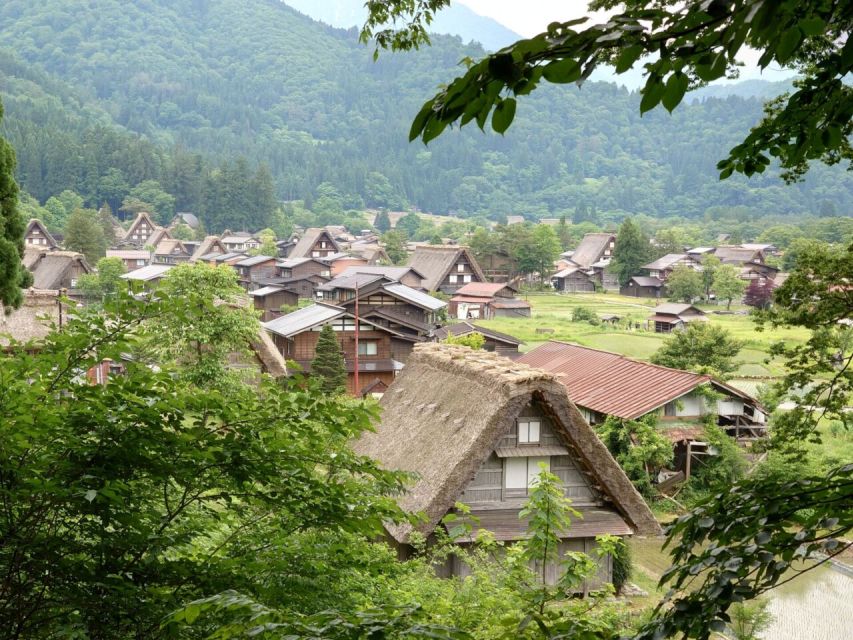
The guide can make or break a history-focused day, and this experience has a strong record in that area. Guides named Hemi, Yoshi, Yuko, Joyce, Hime, Yogi, Timmy, Kevin, Devon, and others have been praised for clear explanations, humor, patience, and local suggestions.
That range of names also tells you something important: you are booking the format and operator, not a guaranteed individual guide. The guide assigned to your date may differ. The consistent expectation is an English-speaking guide who leads the walks, explains the historical sites, answers questions, and helps you use your free time well.
Some guides have taken photographs at good viewpoints, adapted time around group interests, and offered advice about dinner and sweets in Takayama. One guide was described as less energetic, so the experience can vary in personality. Still, the strongest pattern is careful organization and solid knowledge of both destinations.
Small groups can make the day feel personal. On some departures, couples have found themselves in very small groups and received more flexibility. You should not assume that will happen every time, but the design works with either a small party or a larger group.
Is $158 a fair price?
At $158 per person, this is not the cheapest way to see Takayama and Shirakawa-go. You pay for the English-speaking guide, Takayama Jinya admission, guided walks, and round-trip transport. Lunch and personal purchases are extra.
The value depends on what you would otherwise arrange. If you are comfortable booking public buses, checking schedules, finding the right entrance, and learning about the sites on your own, independent travel may cost less. The tour earns its price by saving planning time and putting a guide beside you during the places where context matters most.
It is particularly useful if Shirakawa-go is a priority and you are staying in Takayama. The shorter road connection from Takayama means less wasted time than a day trip from a distant city. One person specifically felt the Takayama-based option offered more time at the sights compared with trips starting farther away.
The price feels less attractive if you have already explored Takayama thoroughly and only want transport to Shirakawa-go. In that case, compare the cost of a direct bus and entrance fees. If you want the historical explanation, food advice, and a planned day, the package is easier to justify.
Who should book this day trip?
I would choose this for a first visit to Takayama and Shirakawa-go, especially if you have only one day for both. It suits people who want history explained in English but still want time to choose their own lunch and shops.
It is also a good fit for couples, families, and solo visitors who do not want to solve regional transport on their own. The full day has a steady rhythm: station meeting, historic building, old town, free time, scenic drive, village tour, free time, and return.
You may prefer independent travel if you dislike fixed meeting times, already know Takayama well, or want several hours in Shirakawa-go without a group schedule. This tour gives you freedom in measured blocks, not complete control over the day.
Book with comfortable shoes, a charged phone, and room in your plan for changing weather. Cancellation is allowed up to 24 hours before departure for a full refund, and you can reserve now and pay later. Availability can change, so the exact date and route should be confirmed when booking.
Should you book it?
Book this tour if you want one well-organized day that joins Takayama’s old town with Shirakawa-go and gives both places a clear story. The guide, transport, and sensible mix of walking and free time remove much of the friction.
Skip it if you only want a cheap transfer or have already spent plenty of time in Takayama. At $158, the tour is a convenience and interpretation purchase, not a bargain-basement bus ticket. For a first visit, that convenience is likely the point.
FAQ
Where does the tour start?
Meet outside the ticket gates at JR Takayama Station. After leaving the gates, look left for a walkway and an ornate wagon carving. The guide wears a Snow Monkey Resorts tour tag.
What time should I meet the guide?
You should be at the meeting point at 9:00 AM. A nearby waiting room has benches, but you need to leave it and stand at the meeting point by the stated time.
Is lunch included?
No. Lunch is not included, but you have about 1 hour and 30 minutes of free time in Takayama and additional free time in Shirakawa-go to choose food yourself.
What language is the tour conducted in?
The tour has a live English-speaking guide.
What is included in the price?
The price includes round-trip transportation from Takayama, the guide, entry to Takayama Jinya, a 1.5-hour walking tour of Takayama, and a guided walking tour of Shirakawa-go.
How long is the ride from Takayama to Shirakawa-go?
The bus or coach ride from Takayama to Shirakawa-go takes about 50 minutes. The return ride takes about one hour according to the listed schedule.
Can I cancel the booking?
Yes. You can cancel up to 24 hours in advance for a full refund. You can also reserve now and pay later.
Just added in Takayama
- Gifu Samurai Sword Town;Japanese Damascus Knife Making Experience★ 5.0 · 27 reviews
- Private Afternoon Cycling Tour in Hida-Furukawa★ 5.0 · 109 reviews
- Private-group Morning Cycling Tour in Hida-Furukawa★ 5.0 · 105 reviews
- Short Morning Cycling Tour in Hida★ 5.0 · 17 reviews
- Explore Kiso Valley : Magome – Tsumago Mountain Trail Walk★ 5.0 · 33 reviews
- Magome & Tsumago Nakasendo Trail Day Hike with Government-Licensed Guide★ 5.0 · 38 reviews
- Frozen fall trekking★ 5.0 · 21 reviews
- Magome & Tsumago Nakasendo Full-Day Private Trip with Government-Licensed Guide★ 5.0 · 20 reviews
Shirakawa-go & Gokayama Tours, compared.
World Heritage Shirakawa-go and Experience Tours from Kanazawa
Read our review →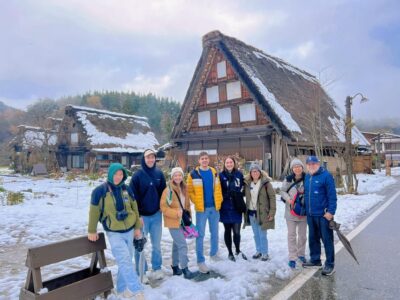
World Heritage Shirakawa-go Morning Guided Tour
Read our review →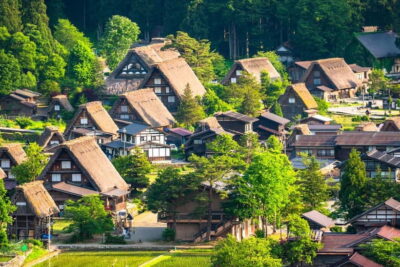
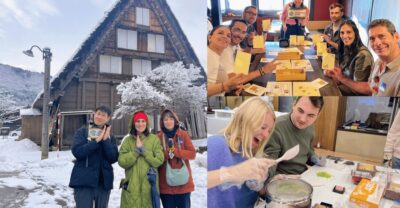
World Heritage Shirakawa-go & Two Local Experience
Read our review →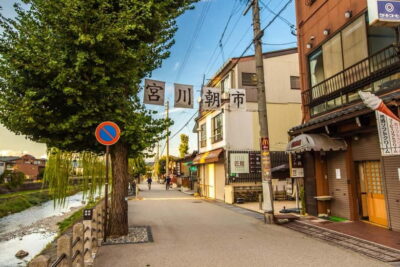
[One-day bus tour departing from Kanazawa Station] Shirakawa-go and Gokayama – Two World Heritage Villages Enjoyable Bus Tour
Read our review →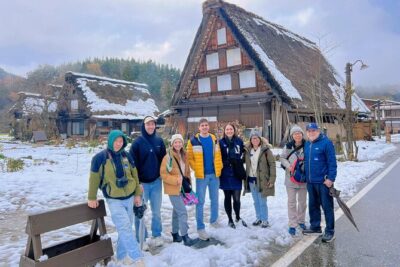
World Heritage Shirakawa-go Perfect Guided Tour from Kanazawa
Read our review →Browse the lists this tour appears in