
Reviewed · SAMURAI & NINJA EXPERIENCES
Gifu Samurai Sword Town;Japanese Damascus Knife Making Experience
Seki’s knife-making tradition gives this workshop real weight. You do not simply buy a Japanese blade in a shop. You help assemble, polish, sharpen, and test one at the G.SAKAI factory, then take home a useful piece of cutlery with your name on it. The best part is the final vegetable test, when you feel how sharply your finished knife cuts.
I especially like the small group limit of five, which should give you more direct time with the craftspeople. I also like the mix of museum, factory, and workshop: you see old blades, modern production, and your own knife in one compact visit. The main consideration is the location. Seki is off the usual tourist route, and the advertised price of $250.38 per person is a serious spend for a two-and-a-half-hour activity, especially if you choose a knife with a higher price.
Key points
- Make and test a real Damascus knife: Assemble, polish, sharpen, personalize, and use your own blade to cut fresh vegetables.
- See Seki’s cutlery tradition up close: Visit the G.SAKAI Knife Museum and the adjoining factory.
- Choose from three knife styles: Pick a Japanese Damascus kitchen knife, folding Damascus hunting knife, or Chinese Damascus kitchen knife, with prices varying by type.
- Get personal instruction: Hiro, Sumi, and Yoshi are named hosts associated with the workshop, and Hiro has been praised for his English.
- Plan around the train journey: The meeting point is Sekitomioka Station, about 1.5 to 2 hours from Kyoto by train.
- Keep the timing in mind: The activity begins at 10:30 a.m., lasts about 2 hours and 30 minutes, and returns you to the meeting point.
Why Seki is the right place for a knife workshop
Seki City, in Gifu Prefecture, has been connected with sword making since the 13th century. Iron sand from the Nagaragawa River helped local smiths work metal, and during the Edo period, hundreds of blacksmiths made samurai swords and knives here.
That background matters because this is not a generic craft class placed in a random workshop. Seki grew around blade making, and its modern cutlery industry still carries that identity. The city is now widely regarded as one of the world’s leading cutlery centers, alongside Sheffield in the United Kingdom and Solingen in Germany.
You will not spend the whole session watching a swordsmith hammer red-hot steel. The focus here is a Damascus knife made with modern factory methods and hands-on finishing. That is a good fit if you want a practical souvenir rather than a stage show about ancient Japan.
G.SAKAI produces knives for cooking, hunting, outdoor sports, and other professional uses. Its international trade links also mean this is an established manufacturer, not a small souvenir stall selling a decorative blade. You get a closer look at how a serious Japanese knife producer presents its craft.
Other samurai and ninja experiences in Takayama people book:
- Ninja Experience in Takayama – Basic Course
★ 5.0 · 62 reviews - Seki: Samurai Knife Making Experience at the Knife Museum
★ 5.0 · 61 reviews - Ninja Experience in Takayama – Basic Course
★ 4.6 · 59 reviews
Arriving at Sekitomioka Station at 10:30
The stated meeting point is Sekitomioka Station in Seki, at 10:30 a.m. The tour ends back there. Pickup is offered, and one guide named Hiro has collected participants from their hotel before taking them to the workshop and later to a sword museum and local sword shop.
Because the pickup details can vary, confirm them when booking rather than assuming a hotel transfer is included for every reservation. If you are making your own way there, allow plenty of time. Seki can be reached as a day trip, but the journey from Kyoto is roughly 1.5 to 2 hours by train. That makes this a full-day outing once you add the return trip and any time spent exploring the area.
The station meeting point is useful for visitors without a car. Still, this is not a quick side trip from central Kyoto. I would place it on a day when you want to focus on Seki and its cutlery tradition, rather than squeezing it between major Kyoto sights.
The group size is limited to five. That is one of the strongest practical features of the activity. Knife work is easier to follow when you can see the demonstration and ask for help without competing with a large class.
The Canadian-style Knife Museum
The first stop is the Knife Museum, housed in an attractive Canadian-style log building beside the G.SAKAI factory. Inside, you can see rare items and cutlery from Japan and other parts of the world.
This stop gives the workshop context. You can compare different blade shapes and uses before choosing or working on your own knife. It also helps explain why a kitchen knife is not just a simple piece of sharpened metal. Blade shape, balance, edge, and intended use all affect how the tool feels in your hand.
The museum should appeal to anyone who likes tools, industrial design, or unusual objects. It is also a helpful stop for families with older children, since the displays give younger participants something to look at before the more focused workshop begins.
Do not expect a huge museum visit. The activity lasts about 2 hours and 30 minutes in total, and the museum is one part of a tightly organized route. Its value comes from setting up the factory visit and the hands-on work, not from being a full morning on its own.
Inside the G.SAKAI factory
After the museum, you enter the factory to see how Japanese knives are made today. The factory visit connects the polished museum displays with the modern production behind G.SAKAI’s products.
The exact factory steps shown to you may depend on the day and the operating area available, so it is best to think of this as an introduction rather than a complete industrial tour. You will see the setting in which quality knives are produced, then move to the atelier to work on your own piece.
This modern setting is important. It shows that Japanese cutlery is not only about traditional hand-forging. Quality can also come from careful manufacturing, finishing, sharpening, and inspection. The workshop then lets you take part in several of those final stages yourself.
If you are hoping to watch a blade being forged from raw steel over a fire, this may not match your expectations. The description centers on assembly, polishing, sharpening, and personalization. That is still hands-on, but it is a different kind of craft experience.
Other swordplay and stealth sessions in Takayama:
- Knife Making Experience in Samurai Sword Town
★ 5.0 · 29 reviews - Ninja experience in Takayama – Special Course
★ 4.9 · 13 reviews - Tokyo: Samurai Restaurant Show Ticket with 2 Drinks
★ 4.5 · 1,307 reviews - Kyoto Samurai Experience
★ 5.0 · 1,294 reviews
Choosing between three Damascus knife styles
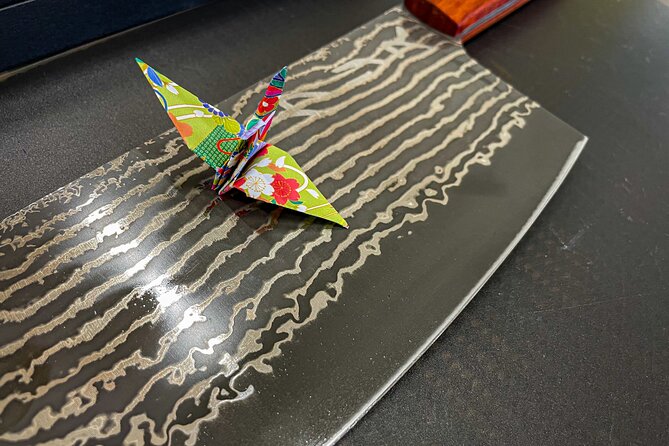
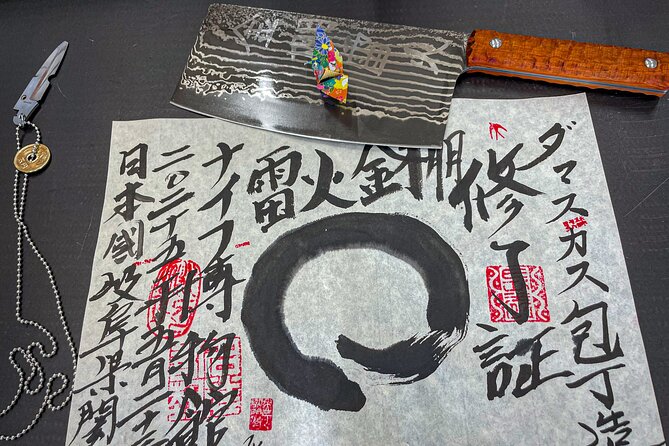
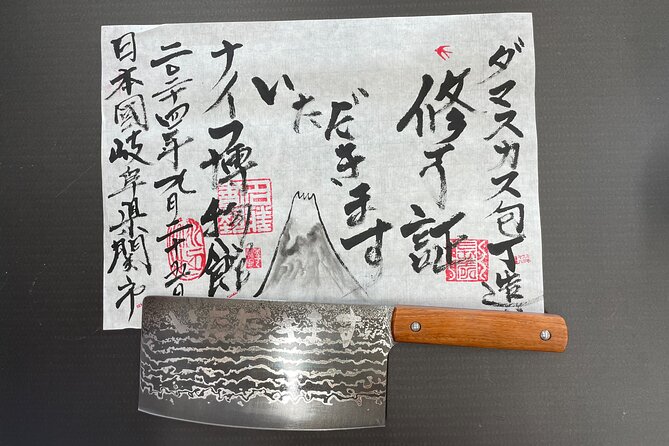
You can choose from three knife types. The Japanese Damascus kitchen knife is intended for everyday cooking. The folding Damascus hunting knife is the portable option for outdoor use. The Chinese Damascus kitchen knife is designed with traditional Chinese cooking in mind.
The choice changes the meaning of the finished souvenir. The Japanese kitchen knife makes the most sense if you cook regularly and want a blade for daily use. The folding hunting knife suits someone who prefers outdoor equipment or wants a compact tool. The Chinese kitchen knife may be the better match if you already cook Chinese dishes and understand the shape and handling you prefer.
Prices vary according to the knife you choose. The advertised price of $250.38 per person should therefore be treated as a starting point rather than a guarantee for every option. Ask about the cost difference before committing to a style.
I would also choose based on how you plan to transport and use the knife after the tour. A kitchen knife is a practical home souvenir, while a folding knife may suit camping or hunting equipment. The most expensive choice is not automatically the best one. Pick the blade that fits your real habits.
Assembling and polishing your own blade
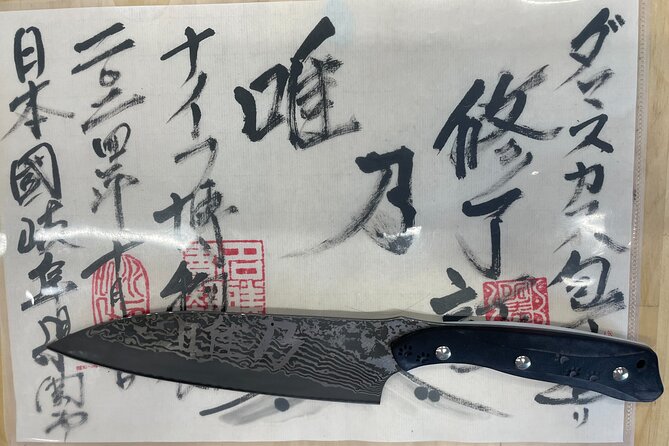
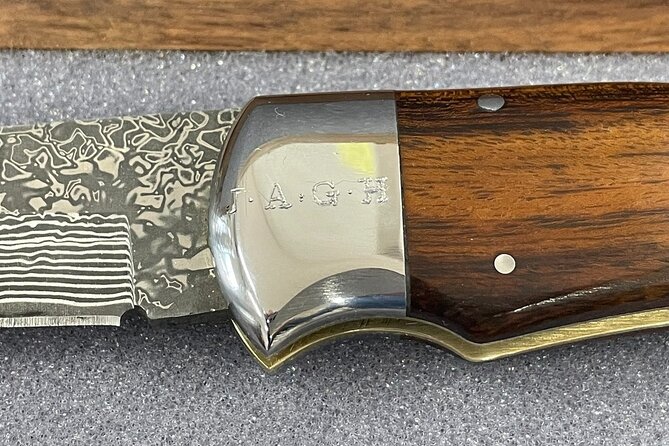
In the atelier, the craftsperson guides you through constructing the knife. The process includes assembling and polishing the blade, then sharpening it. You also write your name on the finished knife, giving the object a personal mark without turning it into a mere display piece.
This sequence is what gives the activity its value. You are not simply watching an expert perform difficult work while you pose for photographs. You handle the stages that make the final knife feel like yours, while the craftsman remains close by to guide the process.
The work is educational but not presented as a full apprenticeship. You will learn the basic ideas behind finishing and maintaining a knife, yet the professional craftsperson handles the steps that require specialist control. That balance makes the class suitable for most participants, including people with no previous knife-making experience.
The hosts are a major part of the experience. Hiro has been praised for speaking English well and for giving extra time to participants, including transportation and visits to a sword museum and local sword shop. Sumi and Yoshi are also named as welcoming hosts. If you want clear explanations in English, it is worth noting Hiro’s reported language ability when arranging your visit.
Learning how to sharpen the edge
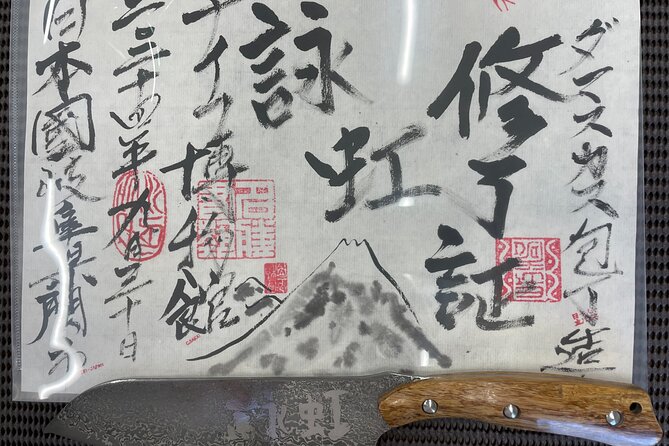
The sharpening lesson may be the most useful part long after your Japan trip ends. A good knife is only as useful as its edge, and regular sharpening keeps it working properly.
You learn the essential method for maintaining a razor-sharp edge. This is more valuable than simply leaving Japan with a beautiful Damascus pattern. A knife that sits in a drawer because you do not know how to care for it is an expensive souvenir. A knife you can maintain becomes a lasting tool.
Pay close attention here. Ask the instructor to repeat the angle or hand position if you are unsure, and do not let the polished appearance distract you from the practical lesson. The goal is not to make the sharpest possible object for a photograph. It is to understand how to keep the blade in good condition.
The activity is especially worthwhile for home cooks who already own Japanese knives or are considering buying one. You leave with a better sense of why sharpening matters and how the edge affects cutting.
The vegetable test puts the knife to work
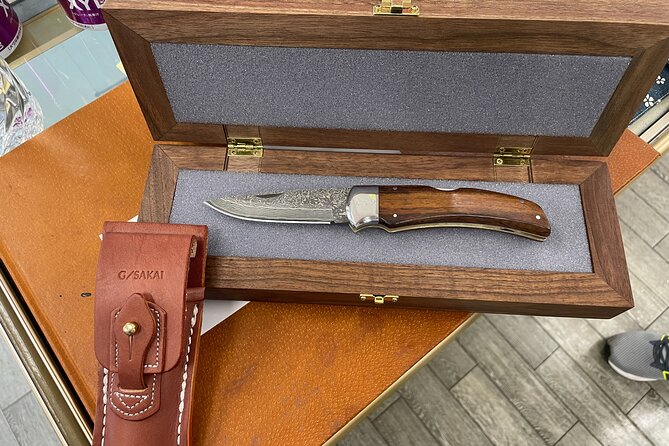
Once the knife is finished, you test its sharpness by cutting fresh vegetables. This is the moment when the workshop becomes very concrete. You can feel the difference between a dull blade that presses through food and a sharp one that moves cleanly.
The vegetable test also gives you a safe, simple way to judge your own work. You do not need specialist knowledge to notice whether the blade cuts smoothly. It is a satisfying final step because the knife immediately performs a real kitchen task.
Do not confuse sharpness with carelessness. A very sharp blade needs careful handling, especially when you take it home. Use appropriate protection and follow any packing or transport instructions supplied during the activity. The provided information does not specify the exact packing method or airline rules, so check those points if you plan to fly with your knife.
What the $250.38 price buys you
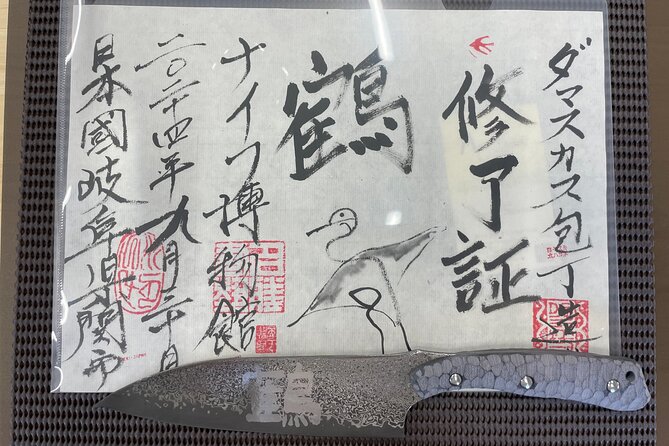
At $250.38 per person, this is not a budget attraction. You are paying for a small-group workshop, instruction from knife craftsmen, access to the museum and factory, and a finished Damascus knife. Pickup may also be available, depending on the arrangement.
The value improves if you care about the object you take home. Buying a Japanese knife in a shop can be quicker and cheaper, but it does not give you the same connection to the manufacturing process. Here, you learn how the knife is assembled, polished, sharpened, and tested.
The value is also stronger if you are already planning to visit Seki. The activity gives structure to a day in a city known for cutlery, rather than asking you to make a long trip only for a short class.
For a casual souvenir hunter, the cost may feel high. For a serious cook, knife enthusiast, outdoor user, or parent planning a memorable activity with an older child, it can make sense. Remember that the knife type affects the final cost, so clarify the upgrade price before the session begins.
Who will enjoy this most
I would recommend this workshop to:
- Home cooks who want to understand sharpening and care
- Knife collectors and fans of Japanese cutlery
- Outdoor enthusiasts interested in the folding Damascus option
- Families with older children who can follow workshop instructions
- Visitors who enjoy practical souvenirs more than decorative ones
- Anyone willing to spend most of a day reaching Seki from Kyoto
It is less suitable if your schedule is already packed with Kyoto sightseeing. The train journey takes time, and the class is only one part of the outing. It may also disappoint you if you expect a traditional sword-forging demonstration rather than a modern knife workshop.
Most participants can take part, and the activity is near public transportation. The information provided does not list specific accessibility features, so ask the provider about any mobility needs before booking.
Timing, cancellation, and small practical points
The activity starts at 10:30 a.m. and lasts approximately 2 hours and 30 minutes. Since it returns to the meeting point, you can plan your onward travel from Sekitomioka Station after the workshop, but leave a buffer for delays.
Confirmation is received at booking, and mobile tickets are offered. Free cancellation is available if you cancel at least 24 hours before the local start time. Cancellations or changes made inside that window are not refunded or accepted.
The group maximum is five people. That number is small enough for a personal class, but it also means dates may fill up. Check your train plan, meeting point, and knife choice before reserving.
FAQ
Where does the knife-making activity start?
It starts at Sekitomioka Station, Hidase, Seki, Gifu 501-3911, Japan. The activity ends back at the same meeting point.
What time does the activity begin?
The scheduled start time is 10:30 a.m.
How long does the workshop last?
The experience takes approximately 2 hours and 30 minutes.
Which knives can I choose?
You can choose a Japanese Damascus kitchen knife, a folding Damascus hunting knife, or a Chinese Damascus kitchen knife. Prices vary according to the type selected.
Is pickup available?
Pickup is offered. One guide, Hiro, has provided hotel pickup and transportation for participants, but confirm the exact pickup arrangement when booking.
How many people can join?
The activity has a maximum of five participants.
Can I cancel for a full refund?
Yes. You can receive a full refund by cancelling at least 24 hours before the experience start time. Cancellations or changes made less than 24 hours before the start are not accepted for a refund.
Should you book the Seki knife workshop?
Book it if you want more than a factory souvenir. The real appeal is the full chain of the visit: Seki’s cutlery background, the G.SAKAI museum, a look inside the factory, hands-on finishing, sharpening instruction, and a vegetable test with the knife you helped complete.
I would book this for a cook, knife enthusiast, or family member who values useful objects and practical skills. I would also book it if Hiro, Sumi, or Yoshi’s personal guidance and the small five-person group appeal to you.
Think twice if $250.38 feels steep, if you have only a few hours in Kyoto, or if your main goal is to watch a traditional sword being forged. For everyone else, this is a focused and memorable reason to make the trip to Seki, with a knife you can actually use when you get home.
More craft workshops in Takayama
- Chopstick Making Workshop in Ginza
★ 4.8 · 1,366 reviews - Kyoto : Chopsticks Making Workshop in Gion with Engraving Option
★ 5.0 · 958 reviews - Tokyo Chopstick Making Workshop with Artisan
★ 5.0 · 466 reviews - Osaka Sushi Making Experience
★ 5.0 · 400 reviews
Just added in Takayama
- Private Afternoon Cycling Tour in Hida-Furukawa★ 5.0 · 109 reviews
- Private-group Morning Cycling Tour in Hida-Furukawa★ 5.0 · 105 reviews
- Short Morning Cycling Tour in Hida★ 5.0 · 17 reviews
- Explore Kiso Valley : Magome – Tsumago Mountain Trail Walk★ 5.0 · 33 reviews
- Magome & Tsumago Nakasendo Trail Day Hike with Government-Licensed Guide★ 5.0 · 38 reviews
- Frozen fall trekking★ 5.0 · 21 reviews
- Magome & Tsumago Nakasendo Full-Day Private Trip with Government-Licensed Guide★ 5.0 · 20 reviews
- Takayama Private Custom Tour with Local Guide★ 5.0 · 31 reviews
Samurai & Ninja Experiences, compared.

Samurai Ninja Museum Guided tour and Experience
Read our review →
Kendo and Samurai Experience with Uniform and Gear
Read our review →
Samurai Sword Class by Experts in Traditional Arts
Read our review →
Skip the lines Basic Ticket at SAMURAI NINJA MUSEUM KYOTO
Read our review →
Samurai Sword & Archery Class from Samurai Descendant
Read our review →
Browse the lists this tour appears in