
Reviewed · SHIRAKAWA-GO & GOKAYAMA TOURS
1-Day Shirakawago & Takayama Tour (Round Trip from Kanazawa)
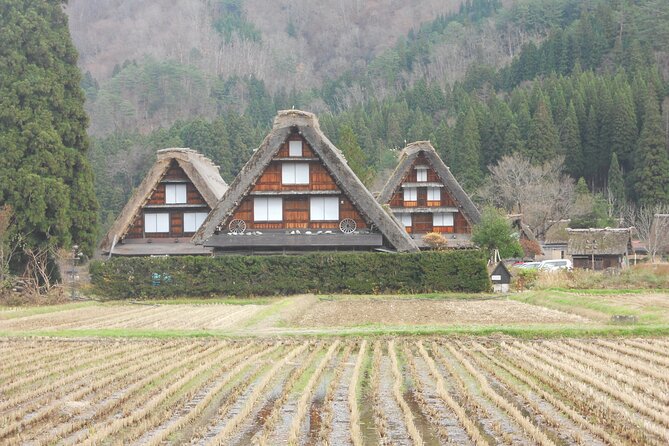
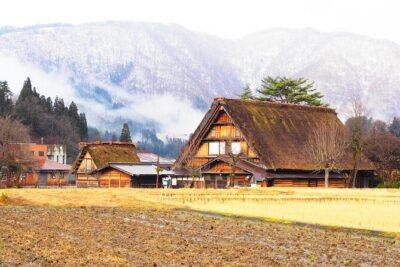
Shirakawago is the star here: a mountain village of steep gassho-zukuri farmhouses, built to shed heavy winter snow. Pairing it with old Takayama gives you two very different looks at rural Japan in one long day, from a quiet thatched settlement to a former merchant quarter lined with sake breweries and craft shops.
I like the small maximum group of 15, which should make it easier to hear the guide and keep track of the day. I also like the licensed English-speaking guide, since the farmhouses and festival floats mean much more when someone explains how they were built and used. The trade-off is time: you spend about four hours on the road, and lunch is your responsibility.
Key points to know before booking
- Shirakawago gets 2 hours 30 minutes, including entry to one traditional thatched house and free time to walk around Ogimachi.
- Takayama combines three distinct stops: the Festival Floats Exhibition Hall, the Kusakabe Folk Museum in 2025, and the old Kami-Sannomachi quarter.
- The bus leaves Kanazawa Station at 8:15 a.m. and returns to the same meeting point after roughly 10 hours.
- A heated and air-conditioned coach is included, a real comfort on the long mountain road and in snowy weather.
- The observation deck shuttle costs extra, and service can stop in poor weather.
- The 2025 and 2026 programs differ: the Kusakabe Heritage House is scheduled for 2025 only, while Kami-Sannomachi receives more walking time in 2026.
Why this day trip works from Kanazawa
Kanazawa is a fine base for exploring central Japan, but Shirakawago and Takayama are not places you casually squeeze into an afternoon. The road journey to Shirakawago takes roughly two hours, and the full round trip lasts about 10 hours.
That is a long day, but it solves a practical problem. You do not need to work out separate bus connections, reserve several transport legs, or worry about getting stranded after spending time in the mountains. Transportation, admission fees, and the guide are included in the $209.53 price.
I see the value most clearly if you want both destinations but have limited time. A private car would offer more control, but this tour handles the driving and road conditions for you. In winter, that matters. One tour day took place after fresh snow, and the driver was praised for reaching each stop safely. You still need to accept the fixed timetable and the possibility of delays from traffic or mountain weather.
The group limit is 15 people. That is smaller than a large coach tour and should help when the guide explains details inside the farmhouse or at the float museum. The bus may also carry people booked on other tour arrangements, so the exact mix of participants can vary.
Other village days out of Kanazawa:
Leaving Kanazawa at 8:15 a.m.
The meeting point is Kanazawa Station. Be ready for an early start, since the day begins at 8:15 a.m. The tour may also stop at Kanazawa hotels to collect people after departure. Those hotel pickups are not rest stops, so do not count on getting off the bus for a break.
The bus is heated and air-conditioned, a useful detail when the road moves from city streets into colder mountain country. The route itself is part of the appeal. You pass through changing scenery on the way toward Shirakawago, and the trip gives you a clear sense of how separated these communities once were.
The schedule is an estimate, not a promise. Road conditions, congestion, and the number of people entering attractions can change the order and timing. I would avoid booking a tight evening train or restaurant reservation in Kanazawa after the tour.
Shirakawago and its snow-ready farmhouses
You get about 2 hours 30 minutes in Shirakawago, specifically in the Ogimachi village area. This is the part of the day that makes the early start worthwhile.
The traditional gassho-zukuri houses have tall, sharply angled thatched roofs. The design is practical rather than decorative. Heavy snow can slide off the roof, while the broad interior spaces supported the old household economy. The houses are not an abandoned stage set. People still live in the village, which gives the place more weight than a simple open-air museum.
Entry to one thatched-roof house is included. You remove your shoes before going inside, so wear socks and footwear you can take off without fuss. Inside, you can expect a closer look at traditional construction and domestic life. The entry queue may take time, especially during busy periods. If the house is crowded, you may be allowed to explore the interior independently rather than follow a full group explanation.
After the house visit, you are free to walk around the village. This is important because the best part of Shirakawago is not limited to one building. You can take in the lanes, farmhouses, shrine gates, temples, and mountain views at your own pace.
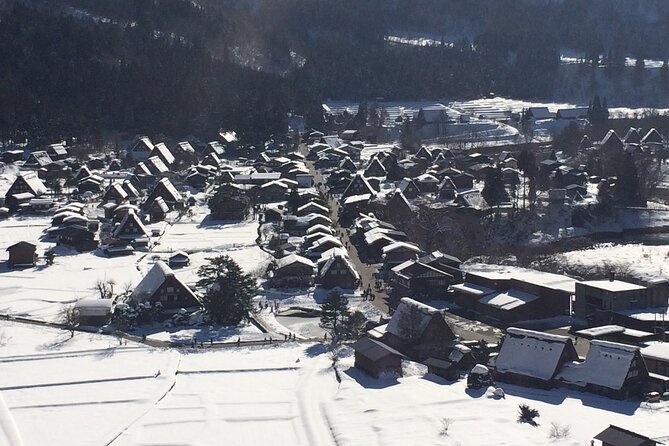
The observation deck offers the classic view over the village. A shuttle bus runs there for an additional fee, paid locally. Weather can stop the shuttle, so treat the deck as an option, not a guaranteed part of the tour. If you decide to use it, keep an eye on the clock. Your included time is limited, and waiting for transport can reduce time on foot.
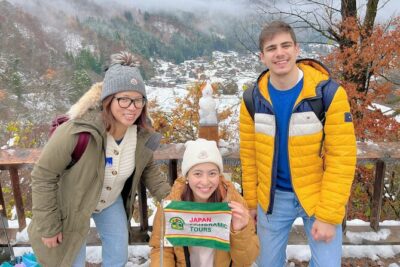
Snow changes the mood completely. The village can look almost storybook-like after a snowfall, but cold weather also means icy paths and slower walking. Even in warmer months, you should expect a fair amount of walking over uneven village surfaces.
Shirakawago is not a place for a rushed photo stop. You will get a better sense of it by looking at how the homes sit together, noticing the roof shapes, and remembering that the village remains a living community. Still, the 2-hour-30-minute allocation means you cannot explore every corner.
Takayama’s festival floats in 30 minutes
After Shirakawago, the tour continues to Takayama, often called the Little Kyoto of the Alps. The first stop is the Takayama Festival Floats Exhibition Hall, with about 30 minutes inside.
The hall displays ornate floats used during the famous Takayama Festival. These are not simple parade carts. They feature detailed woodwork, decoration, and careful craftsmanship, and the scale is easier to appreciate in person than in a photograph.
Thirty minutes is enough for a focused visit, especially with admission included and a guide to point out what matters. It is not enough for a slow museum visit with every label read. I would stay close to the guide at the beginning, then use any remaining time for a second look at the floats that catch your eye.
This stop adds useful context to Takayama. Shirakawago shows village architecture shaped by snow. The float hall shows the artistic and ceremonial skill of a historic town. The contrast makes the day feel varied rather than repetitive.
Same base, a different sort of day:
- Kanazawa: Kenrokuen Tea Ceremony Experience
★ 4.8 · 1,139 reviews - Kanazawa Half Day Tour (Private Guide)
★ 5.0 · 361 reviews - Kanazawa Full Day Tour (Private Guide)
★ 5.0 · 323 reviews - World Heritage Shirakawa-go Perfect Guided Tour from Kanazawa
★ 5.0 · 220 reviews
The Kusakabe Folk Museum in the 2025 program
For tours operating in 2025, the schedule includes about 30 minutes at the Kusakabe Folk Museum. This is a traditional Japanese townhouse with folk art and handicrafts.
The building itself matters as much as the objects inside. A merchant townhouse gives you a sense of how commercial families lived and worked in old Takayama. You can look for the structure of the house, the woodwork, and the way domestic and business spaces fit together.
The tour information specifies that the Kusakabe Heritage House will not be visited in 2026. If you are choosing between travel years and this kind of interior interests you, check the date of your tour carefully. The 2026 program gives more time to Kami-Sannomachi instead.
As with the thatched house, expect to remove your shoes in a traditional building. That small detail is easy to overlook when planning, but it affects comfort during a full day of walking and repeated stops.
Kami-Sannomachi and old Takayama
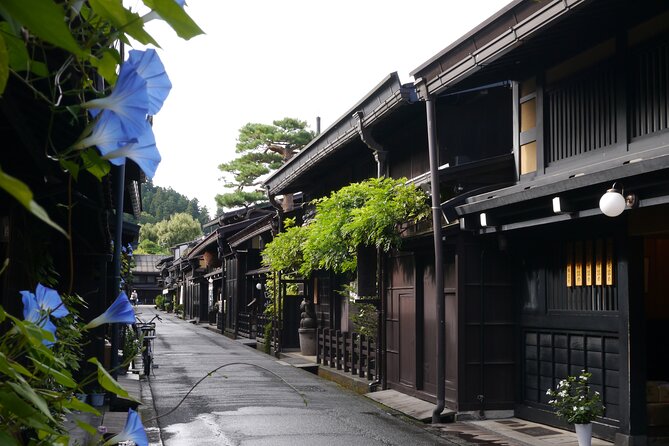
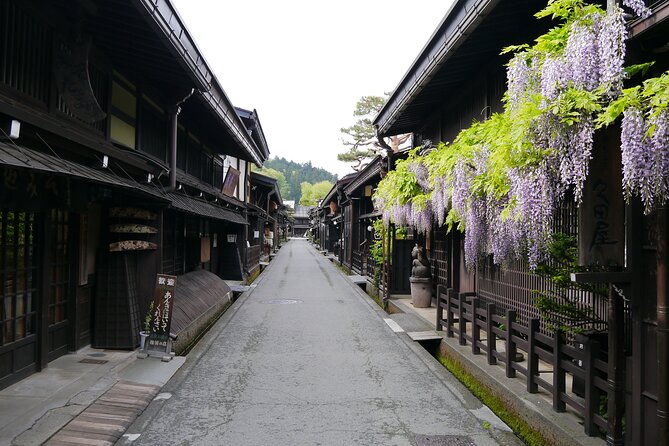
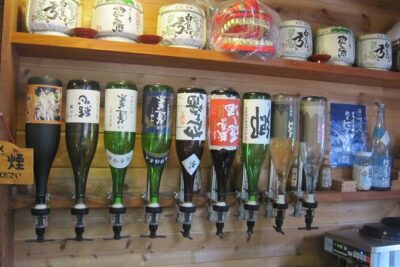
Kami-Sannomachi is the most flexible part of the Takayama visit. This old merchant district retains traces of the Edo period, from 1603 to 1868, and its traditional streets contain sake breweries, miso shops, small boutiques, folk art, and local food.
In 2025, the scheduled walking time is about 40 minutes. In 2026, it increases to 70 minutes, which is a meaningful improvement. Forty minutes is enough for a quick walk and a few photographs, but it leaves little room to browse several shops. Seventy minutes lets you slow down, inspect the old facades, and make a modest purchase without feeling you are racing back to the bus.
The area is more town-like than Shirakawago. That is part of its appeal. You see how commerce shaped Takayama, rather than only looking at rural homes. Sake and miso shops also give you a chance to connect the architecture with local food traditions.
Do not expect a long independent shopping session. The walking time is fixed, and the guide may need to gather the group before the next move. If you see something you want, deal with it early rather than saving every purchase for the last five minutes.
A stop at Takayama Station may be possible for drop-off. You must tell the guide that morning if you want to leave there. The bus does not return people to Takayama Station after the tour unless this arrangement applies, so confirm your plan before departure.
What the guide adds to the day
The tour includes a National Government Licensed Guide Interpreter or a region-specific tour guide interpreter, with English support. That is more useful here than on a simple sightseeing bus.
At Shirakawago, a guide can explain why the roofs have their distinctive form and how the houses relate to local life. At Takayama, the float hall and merchant quarter benefit from background about festivals, crafts, and trade. Without that context, you may enjoy the scenery but miss why these places look the way they do.
Guide assignments vary. Names associated with this tour include Hiro, Hiroko, Shin, and Joe. The strongest guide experiences described for the tour center on clear explanations, kindness, and attention to individual needs. You should still expect the exact guide to depend on the date.
The guide is also useful for keeping the day on track. With three Takayama stops, a long return drive, and possible congestion, clear meeting instructions matter. Listen carefully when the guide gives the next departure time.
Food, walking, and the small print that matters
Lunch is not included. Plan to buy food during the day or bring something with you, but the supplied details do not promise a specific lunch stop or restaurant. Do not assume you will have a leisurely meal in Takayama. The schedule is built around sightseeing, and the time available can shift.
You should be comfortable walking for much of the day. Shirakawago involves village streets and a house visit, while Takayama includes museum interiors and old-town walking. Snow, rain, or crowds can slow you down.
The observation deck shuttle is also extra. Pay locally if you want to use it, and remember that bad weather may suspend service. The deck is worthwhile when open, but the village itself remains the main attraction.
Most people can participate, but the tour requires planning for a full day. Children aged five and under may join free, though they do not receive a bus seat unless booked at the child rate. Anyone under 18 needs written parental permission. Anyone under 15, or not yet in middle school, must be accompanied by a parent or guardian.
The tour can be canceled for a full refund if you act at least 24 hours before the start time. Changes or cancellations inside that window are not accepted for a refund.
Is $209.53 a fair price?
At $209.53 per person, this is not the cheapest way to see Shirakawago and Takayama. The price makes more sense when you count the included transport, admissions, guide, and the convenience of returning to Kanazawa.
You are paying for a managed day rather than just a bus ticket. The driver handles the long mountain route, the guide provides English explanations, and the tour links two destinations that would take more planning to combine independently.
The value drops if you dislike fixed schedules or already have a strong plan for Takayama. You may want more time in Kami-Sannomachi, a slower lunch, or a longer visit to the observation deck. The 2026 schedule improves the old-town time to 70 minutes, but the day remains tightly organized.
I think the price is reasonable for a first visit from Kanazawa, especially in winter or when you do not want to manage mountain transport. It is less compelling for independent travelers who enjoy building their own route and spending a full day in one town.
Who should book this tour?
I would choose it if you want a clear introduction to two famous rural destinations without changing hotels. It suits couples, families with older children, and first-time visitors who prefer a guide and a fixed plan.
It is also a good fit if Shirakawago is high on your list but you want more than a single village visit. The combination of snow-adapted farmhouses, festival floats, a traditional townhouse, and old merchant streets gives you several angles on regional Japan.
I would think twice if you need a slow pace, dislike long bus rides, or want a guaranteed observation deck visit. You also need to arrange your own lunch and leave room in your evening schedule for a late return.
FAQ
Where does the tour begin?
The tour begins at Kanazawa Station at 8:15 a.m. The listed meeting address is Kanazawa Station, 1-1 Kinoshinbo-machi, Kanazawa, Ishikawa 920-0858.
How long does the tour last?
The experience lasts about 10 hours and returns to the meeting point in Kanazawa.
Is lunch included?
No. Lunch is not included, and the tour price does not cover meals.
Is the Shirakawago observation deck included?
No. A shuttle bus to the observation deck costs extra and is paid for locally. Shuttle service may stop because of weather.
Can I get off in Takayama instead of returning to Kanazawa?
A drop-off at Takayama Station may be available. Tell the guide that morning if you want this option. The normal tour ends back at the Kanazawa meeting point.
What happens if I need to cancel?
You can receive a full refund if you cancel at least 24 hours before the experience start time. Cancellations or changes made less than 24 hours before the start time are not accepted for a refund.
Just added in Kanazawa
- Kanazawa: Sushi & Japanese Cooking Class at a Historic School★ 5.0 · 66 reviews
- Taste of Kanazawa (Food tasting in Omicho Market & Higashi Chaya)★ 5.0 · 58 reviews
- Takayama and Shirakawago/Photoshoot by professional photographer★ 5.0 · 67 reviews
- Kanazawa private 1 day/Photoshoot by professional photographer★ 5.0 · 33 reviews
- Photoshoot session by professional photographer in Kanazawa★ 5.0 · 42 reviews
- Private Tour of Shirakawago and Gokayama from Kanazawa★ 5.0 · 50 reviews
- Shirakawago & Kanazawa from Kanazawa★ 5.0 · 51 reviews
- Private Ring Craft Experience in Kanazawa★ 5.0 · 22 reviews
Shirakawa-go & Gokayama Tours, compared.
World Heritage Shirakawa-go and Experience Tours from Kanazawa
Read our review →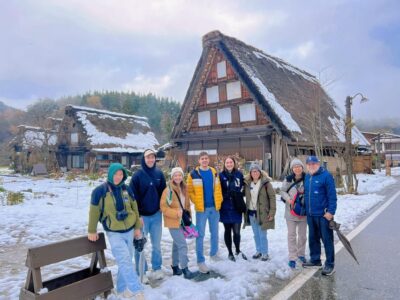
World Heritage Shirakawa-go Morning Guided Tour
Read our review →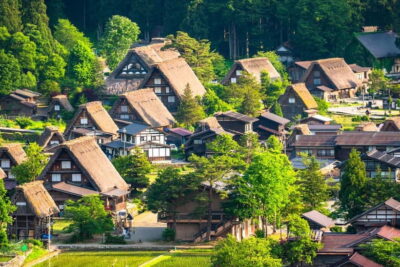

World Heritage Shirakawa-go & Two Local Experience
Read our review →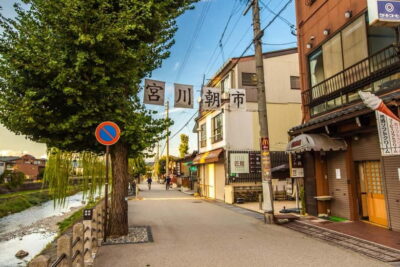
[One-day bus tour departing from Kanazawa Station] Shirakawa-go and Gokayama – Two World Heritage Villages Enjoyable Bus Tour
Read our review →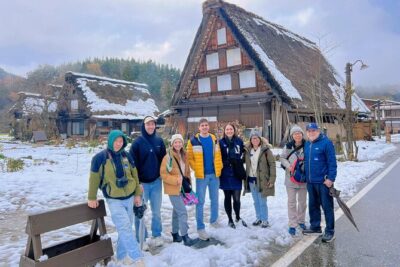
World Heritage Shirakawa-go Perfect Guided Tour from Kanazawa
Read our review →Browse the lists this tour appears in