
Reviewed · GOVERNMENT-LICENSED GUIDE TOURS
Nagasaki Full-Day Private Tour with Government-Licensed Guide
Nagasaki’s story is unusually layered: Chinese temples, Dutch trade, Catholic churches, the atomic bombing, and a city rebuilt around peace. This private six-hour tour lets you choose three or four places rather than follow a fixed route. I like the freedom, and I like having a guide who can explain what you are seeing instead of leaving you to connect the dots alone. The main catch is that transport, meals, and most admission fees cost extra.
I also like the use of ordinary trams and buses. You see Nagasaki as a working city, not just a string of photo stops. Guides named Hiro, Yoko, Mei, Yoshi, Yoshiko, and others have brought different strengths, from family-friendly quizzes to help finding a special anime gift. Just remember that three or four sites in six hours means you must choose carefully.
Six useful things to know before booking
- You choose three or four sights: Build a serious peace-focused day, a church-and-foreign-trade day, or a mix of temples, views, and city landmarks.
- The tour is genuinely private: Only your party takes part, so the pace and subjects can be adjusted as you go.
- Public transport is part of the experience: You meet on foot and ride Nagasaki’s trams and buses. A private vehicle is not provided.
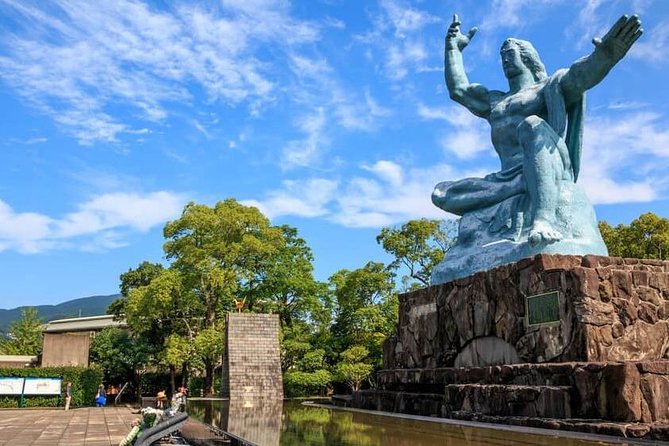
- The Peace Park and Atomic Bomb Museum work well together: One offers open space and memorial sculpture, while the other gives a fuller account of the bombing and recovery.
- The guides add local character: Hiro, Yoko, Mei, Yoshi, Yoshiko, and others have helped with history, food, family questions, photography, and small personal requests.
- The price is a guide fee, not an all-inclusive day: At $155.22 per person, you still pay for transport, lunch, and most entrance tickets.
A private route through Nagasaki’s many pasts
Nagasaki is not a city you understand from one landmark. Its identity was shaped by Chinese merchants, European traders, Christian communities, Japanese officials, wartime destruction, and postwar peace work.
That makes a flexible guide useful. You can spend the day on the atomic bombing and its human cost, or balance that subject with Dejima, Glover Garden, temples, and the city’s port views. You choose three or four sites from a long menu, and your guide builds the route around them.
The tour lasts about six hours. That sounds generous, but Nagasaki is hilly, and the sites are spread across several parts of town. A route with the Peace Park, Atomic Bomb Museum, and Urakami Cathedral has a clear historical thread. A route that tries to include Mount Inasa, Glover Garden, Dejima, and two temples will feel more rushed.
The strongest part of the arrangement is the one-to-one attention. If a church, shrine, food stop, or family interest catches your attention, you can ask the guide to adjust the day. This is much more useful than a large group tour with a fixed script.
Other tours with a licensed guide in Japan:
- Tokyo 6hr Private Tour with Government-Licensed Guide
★ 5.0 · 3,902 reviews - Tokyo 4hr Private Tour with Government-Licensed Guide
★ 5.0 · 1,394 reviews - Kyoto 6hr Private Tour with Government-Licensed Guide
★ 5.0 · 1,369 reviews
Peace Park and the Atomic Bomb Museum
For many people, the most important choice is the Peace Park and Atomic Bomb Museum pairing. The park commemorates the atomic bombing of Nagasaki on August 9, 1945. It is a calm, open place, with memorials that ask you to pause rather than simply take photographs.
The Atomic Bomb Museum, located near the hypocenter, documents the bombing, the destruction of the city, and Nagasaki’s recovery. The museum can be emotionally difficult. That is not a flaw, but you should plan your energy and expectations accordingly. A good guide can provide context, answer questions, and help you move through the subject at your own pace.
Urakami Cathedral adds another layer. It is a working Catholic church in a large red-brick building, with a tragic connection to the bombing. If you want the day to focus on how ordinary people and religious communities were affected, these three sites make a strong group.
The advertised stop times are often short, around 15 or 30 minutes. Treat those times as planning estimates, not a promise that every visit will feel complete. The museum, in particular, may deserve more attention than a quick stop. Tell your guide at the start if you prefer fewer places and more time at each one.
Mount Inasa for Nagasaki’s best view
Mount Inasa rises 333 meters near the city center. From the observation deck, you can look across Nagasaki, its harbor, and the surrounding hills. The summit is reached by ropeway, bus, or car, and the ride itself can add variety to a day spent visiting indoor sites.
This is a good choice if you want a visual break after the Peace Park or museum. It also helps you understand Nagasaki’s unusual shape, with the city spread through narrow valleys and around the water.
The tour does not include a private vehicle, and transportation fees are extra. The guide can help you use public transport, but you should confirm the route and any ropeway cost before you settle on this stop. The listed visit time is only 15 minutes, which is brief for a viewpoint if you want photographs or a relaxed look.
The view is especially appealing to people who want a lighter final stop after serious museum content. It may be less suitable if your priority is maximizing historic interiors.
Glover Garden and Oura Church
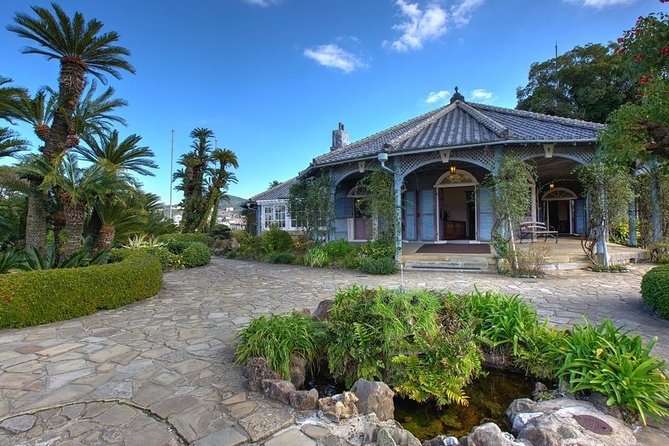
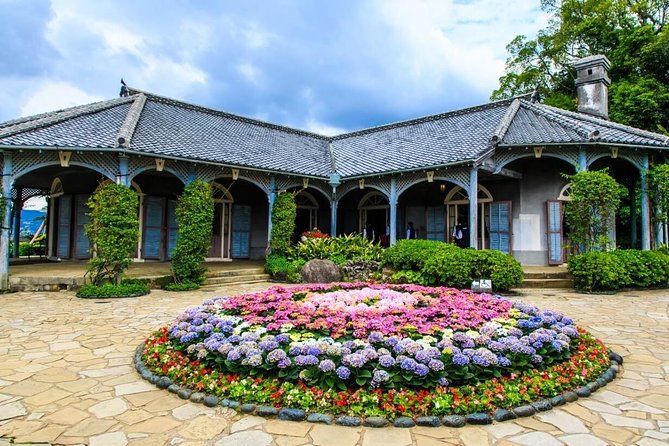
Glover Garden is an open-air museum on a hill above the port. It presents former foreign residents’ houses and related buildings, including the world associated with Western merchants after Nagasaki opened to foreign trade.
The site gives you a feel for the city’s international past, but the hillside setting matters. You will be walking uphill and around an outdoor complex, so this is not the easiest choice if you want a flat, low-effort day. Admission is not included.
Nearby Oura Church offers a different view of Nagasaki’s foreign and Christian past. Built in 1864 by a French missionary for foreign merchants, it is one of the city’s most notable Catholic buildings. The church pairs naturally with Glover Garden, though choosing both means giving up time at another part of town.
The two sites also work well for visitors who want architecture and port history rather than a full day focused on wartime memory. Your guide can explain how the church, foreign settlement, and international trade fit together.
Same base, a different sort of day:
- Mt Fuji and Hakone 1-Day Bus Tour Return by Bullet Train
★ 5.0 · 26,383 reviews - 1-Day Tokyo Bus Tour
★ 5.0 · 14,250 reviews - PERFECT KYOTO 1-Day Bus Tour
★ 5.0 · 13,518 reviews - Tokyo: TOKYO SKYTREE® Admission ticket
★ 4.5 · 11,192 reviews
Dejima and the Nagasaki Museum of History and Culture
Dejima began as a man-made island built in 1636 to separate Portuguese residents from the Japanese population and control missionary activity. Later, it became associated with Dutch trade during Japan’s long period of restricted foreign contact.
A visit here helps explain why Nagasaki became Japan’s main window to the outside world. The reconstructed setting is also a useful counterpoint to the city’s Chinese temples and Christian churches.
The Nagasaki Museum of History and Culture takes a broader approach. It presents Nagasaki as one of Japan’s major international trading centers, with exhibits in a modern museum setting. Choose this museum if you prefer organized displays and background material. Choose Dejima if you want to walk through a specific historic setting.
Doing both in one day could make sense for a visitor interested in trade and international exchange. Still, the six-hour limit means you may need to keep the remaining stops simple. Entrance fees are extra for both, and your guide’s admission is covered only for sights specified by the operator, so clarify the details when planning.
Chinese temples and the city’s religious mix
Sofukuji Temple was built in 1629 for Nagasaki’s Chinese residents and belongs to the Obaku school of Zen Buddhism. Its Chinese architectural character makes it different from many Japanese temple visits.
Kofukuji Temple is the oldest and one of the most important Chinese-founded temples in Nagasaki. It sits in Teramachi, the city’s Temple Town district, and is linked with the Obaku tradition. The supplied route information lists Kofukuji more than once, so confirm that your final plan includes it only once unless your guide has a specific reason to return.
These temples are excellent choices if you want to see how Chinese residents shaped Nagasaki. They also offer a quieter counterpoint to the Peace Park and museums. Admission is extra, and the suggested visit time for Kofukuji is about 30 minutes.
The Nagasaki Confucius Shrine, also called Nagasaki Gokoku Shrine in the supplied information, was built in 1893 by Nagasaki’s Chinese community. It is one of only a small number of Confucius shrines in Japan. If you are curious about Chinese influence but have already visited a Buddhist temple, this may be the more distinctive choice.
Small landmarks with local texture
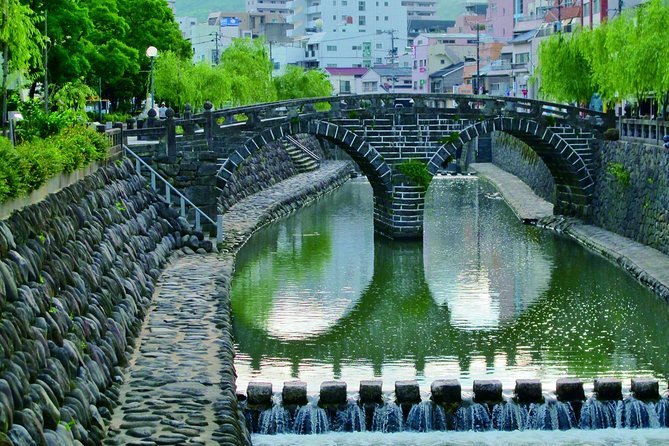
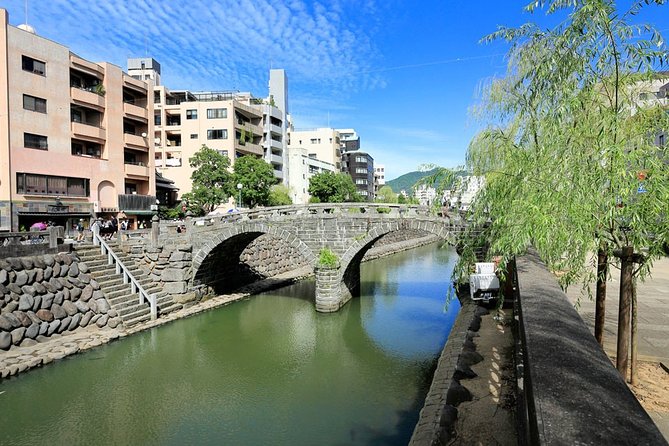
Meganebashi, or Spectacles Bridge, is the best known of the stone bridges over the Nakashima River. Its name comes from the shape created by the bridge and its reflection. It is a compact stop, good for photographs and a short walk along the river.
The Dutch Slope is a stone-paved street on a hillside where foreign traders lived after the port opened to foreign trade in 1859. It is not a major museum, but it gives you a sense of how the foreign quarter occupied the city’s slopes.
The Twenty-Six Christian Martyrs Monument and adjacent museum recall the Christians executed in Nagasaki on February 5, 1597. This is an important stop for understanding the long and painful story of Christianity in Japan, especially if you are not visiting Oura Church.
The Nagasaki Prefectural Art Museum sits by the port in a modern complex designed by a famous architect. It offers a change of pace for art lovers, but it is probably not the best use of limited time if this is your first visit and you want Nagasaki’s defining historical sites.
How the walking and transit setup works
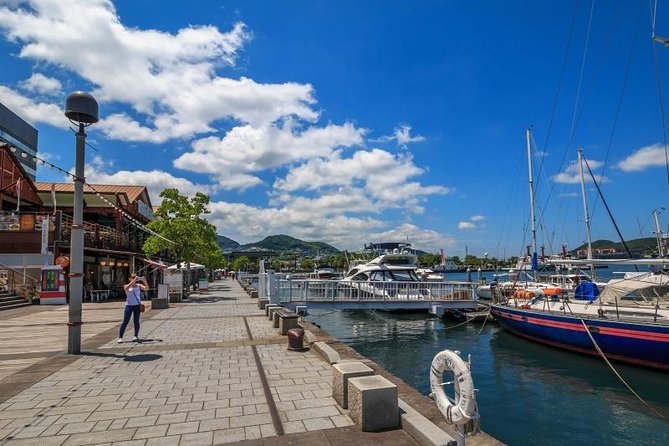
This is a walking and public transport tour. Pickup means meeting your guide on foot within the designated Nagasaki area, not being collected in a private car. Trams and buses form part of the day, with transportation fees paid separately.
That arrangement has real value. You ride among local residents, see how the city works, and avoid paying for a private vehicle that may not be necessary. One guide, Mei, used trams to make a family itinerary easy to manage, and Hiro’s approach included riding buses and trams while explaining local culture, history, and food.
The tradeoff is pace. Nagasaki has hills, stairs, and spread-out sights. Most people can participate, and service animals are allowed, but you should think honestly about how comfortable you are walking and using public transport for several hours.
Wear practical shoes and keep your route focused. If you want Mount Inasa, Glover Garden, or several temples, ask the guide how much time the transfers will take before committing to every stop.
What the guides add to the day
The provider uses licensed local English-speaking guides. The names appearing in the guide responses include Hiro, Mei, Yoko, Yoshi, Yoshiko, Hiromi, and Norah. Your assigned guide may differ, but the range of examples gives you a sense of the personal side of this tour.
Yoko is described as meeting a visitor on time, quickly sorting out priorities, and using a picture book to identify places from simple clues. That kind of preparation is useful when you have only one day and a long wish list.
Mei used quizzes to keep a child involved during a museum and Peace Park visit. Another guide helped arrange an anime-related gift request for a grandson. Hiromi added Chinese food to a day and helped make the schedule work when the group was cooperative.
These details matter because a private guide is not only a walking encyclopedia. The best use of this format is to tell the guide what you care about: serious history, photography, food, architecture, family activities, or a particular personal request.
Price, inclusions, and real value
The price is $155.22 per person. For a private six-hour service with a licensed English-speaking guide, that can be fair value if you are sharing the cost with family or friends and want help shaping a full day.
It is less attractive if you expect an all-inclusive excursion. The price does not include transportation, entrance fees, lunch, other personal expenses, or a private vehicle. You may also need to pay the guide’s admission at sights not covered by the operator’s stated rules.
The value comes from time saved and better choices. Nagasaki’s sites are scattered, and a guide can help you avoid building an impossible route. You also get room to ask questions, stop longer at a museum, or swap a landmark for a temple that better fits your interests.
Group discounts are offered, but the tour cannot combine separate groups. Only your own party participates, which is helpful for families and friends who want to keep their own pace.
Who should book this Nagasaki tour?
I would choose this experience if you have a short stay, a clear list of interests, or family members who need different levels of history and walking. It is especially useful for first-time visitors who want the Peace Park and museum but also want to see another side of Nagasaki.
It suits people who enjoy public transport and conversation. You should be comfortable meeting on foot, walking through hilly areas, and paying extra for transport and admissions.
I would skip it if you want a private car, a fixed all-inclusive price, or a leisurely visit to many museums. Six hours and three or four main sites require choices. That is the point of the tour, but it also sets a firm limit.
FAQ
How long does the Nagasaki private tour last?
The tour lasts approximately six hours.
How many sights can I choose?
You can customize the itinerary by selecting three or four sites from the available attractions.
Is hotel pickup included?
You meet the guide on foot within the designated Nagasaki area. A private vehicle is not included.
Are transportation and admission fees included?
No. Transportation fees, entrance fees, lunch, and personal expenses are not included. Guide admission is covered only for sights specified by the operator.
Is this a group tour?
No. It is a private activity for your party only, and separate tour groups cannot be combined.
Can I cancel for a full refund?
Yes. You can cancel at least 24 hours before the experience start time for a full refund. Cancellations or changes made less than 24 hours before the start time are not accepted for a refund.
Should you book it?
Book this tour if you want Nagasaki explained by a local guide and prefer to shape the day around your own interests. I would suggest choosing the Peace Park and Atomic Bomb Museum for a serious first visit, then adding either Urakami Cathedral, Dejima, Glover Garden, Mount Inasa, or a Chinese temple.
Before the day begins, name your top three priorities and ask how the route will work by tram and bus. If you do that, the $155.22 price buys more than a list of sights. It buys a practical plan for a complex city, with enough flexibility to make the visit personal.
Just added in Japan
- 1 Day Tour: Snow Monkeys & Snow Fun in Shiga Kogen★ 5.0 · 52 reviews
- Sapporo: Hokkaido, Noboribetsu and Lake Toya Day Tour★ 4.1 · 88 reviews
- Discover the Wonders of Sakurajima Half Day Tour in Kagoshima★ 5.0 · 34 reviews
- 《MEMBERS-ONLY-BAR-HOPPING》Discover Your Special Whiskey in Tokyo!★ 5.0 · 29 reviews
- Hokkaido Seasonal: Lake Toya & Noboribetsu Jigokudani Valley★ 4.7 · 173 reviews
- Kagoshima Private & Custom Tour with Licensed Guide and Vehicle★ 5.0 · 29 reviews
- Japanese Whisky Hunting《HIGH-QUALITY-ONLY》Rare Tasting Class★ 5.0 · 20 reviews
- Kobe: Guided Sake Breweries Tour with Tastings★ 5.0 · 55 reviews
Government-Licensed Guide Tours, compared.
Tokyo 6hr Private Tour with Government-Licensed Guide
Read our review →
Hiroshima / Miyajima Full-day Private Tour with Government Licensed Guide
Read our review →
Kyoto 4hr Private Tour with Government-Licensed Guide
Read our review →
Hiroshima City 4hr Private Walking Tour with Licensed Guide
Read our review →
Private Kyoto Tour with Licensed Guide & Vehicle (Max 15 persons)
Read our review →
Nikko Full-Day Private Tour with Government-Licensed Guide
Read our review →
Himeji Half-Day Private Tour with Government-Licensed Guide
Read our review →Browse the lists this tour appears in