
Reviewed · GOVERNMENT-LICENSED GUIDE TOURS
Kyoto 4hr Private Tour with Government-Licensed Guide
Kyoto’s biggest advantage is also its problem: the city has far too many temples, shrines, gardens, and old districts for one short visit. This private four-hour tour lets you choose two or three sights and have a nationally licensed guide shape the route around your interests. Guides such as Yuka, Yuri, Nabet, Akira, and Tomy have helped visitors balance famous places with quieter corners.
I especially like the custom itinerary and the practical help with Kyoto’s trains, buses, and taxis. I also like the on-foot hotel pickup, which saves you from finding a meeting point. The main catch is simple: entrance fees, transport, lunch, and personal costs are extra, and four hours passes quickly.
Key points at a glance
- Choose two or three sights: Focus on a small group of places instead of racing across Kyoto.
- Meet at your hotel on foot: Pickup is included within the designated Kyoto area, but it is not a private-car pickup.
- Use local transport: Guides can help you manage trains, buses, walking routes, and taxis.
- Pick your Kyoto: Combine Fushimi Inari with Gion, Golden Pavilion with Ryoan-ji, or Arashiyama with Tenryu-ji.
- Private means personal: Only your group takes part, so the pace and explanations can fit your family.
- Budget for extras: Admission tickets and transportation are not included. A car upgrade costs more.
A private Kyoto introduction built around your interests
This tour works best as a focused introduction, not as a checklist of every famous Kyoto sight. You get about four hours with your own licensed English-speaking guide, then choose a practical route from a long menu of temples, shrines, markets, gardens, and historic districts.
That flexibility matters. If you care about Japanese religion, you can build a temple and shrine route. If you want food and old streets, choose Nishiki Market, Gion, and Pontocho. If you have children, your guide can adjust the pace, include photo stops, and add an activity that keeps younger members interested. One family guide, Ken, arranged a kimono experience for a child and allowed breaks when the children needed them.
The tour is private, but it is not a private-car sightseeing trip by default. Your guide meets you at the front door of your hotel on foot, then you travel like a local by public transportation or taxi. A private vehicle can be arranged for an added charge.
The price is listed at $109.43 per person. That is fair value if you want help making decisions, moving around Kyoto, and understanding what you are seeing. It is less of a bargain for visitors who already know the city, speak some Japanese, and are happy to handle transit alone. Add admission tickets and transport to your budget before booking.
The tour has a 4.9 rating from 629 ratings, with 97 percent recommending it. The strongest pattern is not one particular attraction. It is the guides’ ability to listen, explain, and keep a short day moving.
Other tours with a licensed guide in Kyoto:
- Kyoto 6hr Private Tour with Government-Licensed Guide
★ 5.0 · 1,369 reviews - Kyoto: Private Tour with Local Licensed Guide
★ 4.8 · 463 reviews - Private Kyoto Tour with Licensed Guide & Vehicle (Max 15 persons)
★ 5.0 · 417 reviews
What your four hours can realistically include
The long attraction list can look misleading. It names more than thirty possible stops, but the included plan is for two or three sites. You cannot reasonably visit Fushimi Inari, Kinkaku-ji, Arashiyama, Kiyomizu-dera, and Nijo Castle in four hours, especially by public transport.
I would choose sights that sit in the same part of town. For eastern Kyoto, pair Fushimi Inari with Kiyomizu-dera or Gion. For northern Kyoto, combine Kinkaku-ji with Ryoan-ji and perhaps Ninna-ji. For western Kyoto, concentrate on Arashiyama, Tenryu-ji, the bamboo grove, and Togetsukyo Bridge.
Your guide should discuss the route with you before or at the start of the tour. Guides such as Masa have worked with visitors in advance to reduce backtracking and avoid the worst crowd patterns. Akira also planned the day around preferences and kept the pace comfortable while covering the chosen sights.
The time estimates shown beside individual attractions should not be read as promises that each visit lasts only one or three minutes. They are part of the attraction information. Your actual visit depends on the route, crowds, walking speed, transport, and the two or three places you select.
Fushimi Inari and southern Kyoto
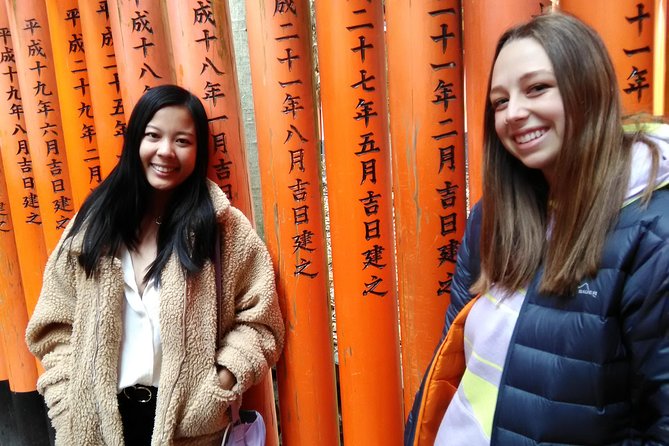
Fushimi Inari-taisha is one of the most recognizable sights in Japan, with thousands of orange-red torii gates climbing the wooded mountain. The lower shrine area can be crowded, but the complex continues far beyond the first photo stop.
A guide can give meaning to the gates, shrine customs, and the importance of Inari worship. One useful approach is to see the main shrine and walk partway up the torii-covered trail rather than trying to complete the entire mountain route during a short tour.
Pair Fushimi Inari with Tofuku-ji, a major Zen temple known for its autumn color, or with Toji, the old East Temple near Kyoto Station. Tofuku-ji gives you broad temple grounds and seasonal beauty. Toji offers an early Heian-period connection and a large temple setting.
Fushimi Inari also fits with Gion or Kiyomizu-dera if your guide uses trains and taxis wisely. Expect stairs and plenty of walking. Comfortable shoes are not optional here.
Kiyomizu-dera, Higashiyama, and Gion
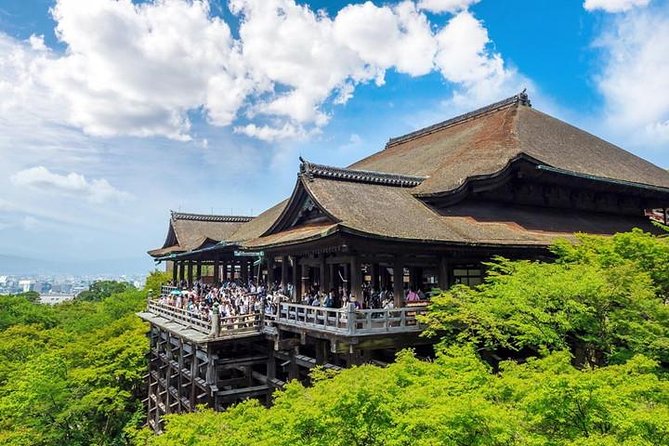
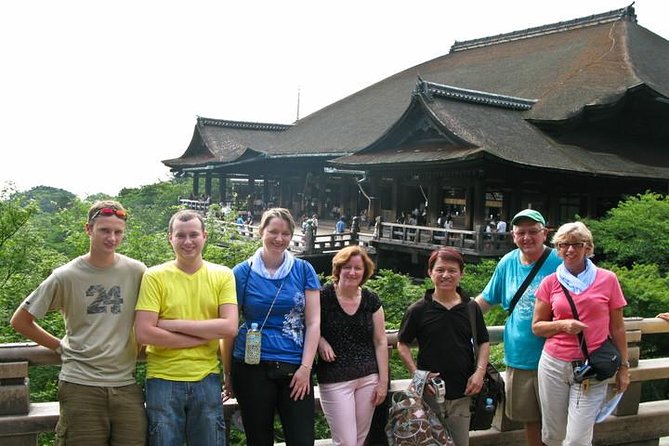
Kiyomizu-dera is one of Kyoto’s essential temple visits. It sits on the eastern hills above the old streets, with wide views and a famous wooden stage. The approach leads through the historic Higashiyama area, where traditional-looking lanes connect shops, small shrines, and temple grounds.
The area is attractive but can be crowded, especially around the main approach. Your guide earns the fee here by explaining the temple’s rituals, history, and layout while helping you avoid wasting time at confusing turns.
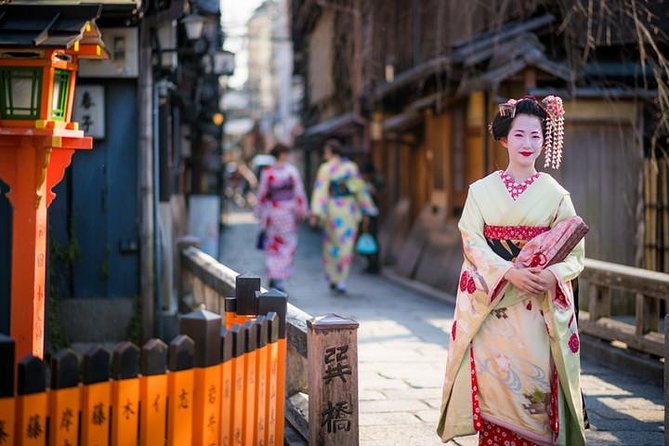
Gion is nearby and gives you a different view of old Kyoto. Its narrow lanes, traditional buildings, and connection with geisha culture make it atmospheric, but you need to behave carefully. Stay on public streets, do not photograph people without permission, and follow local signs.
Kennin-ji is a useful alternative in this area. It is close to Hanamikoji and Shijo streets, yet its temple grounds offer a calmer walk and dry gardens. If you want a short route with history, architecture, and old neighborhoods, Kiyomizu-dera, Gion, and Kennin-ji make a strong combination.
The practical drawback is the hills and stairs. One guide took a group through several eastern Kyoto sights in hot weather, then arranged taxis when family members became tired. That kind of flexibility is valuable, but you should still tell your guide about mobility limits before the tour begins.
Same base, a different sort of day:
- PERFECT KYOTO 1-Day Bus Tour
★ 5.0 · 13,518 reviews - Kyoto: Fushimi Inari, Kinkakuji, Bamboo Grove 1 Day Bus Tour
★ 4.8 · 4,316 reviews - Kyoto: Tea Ceremony in a Traditional Tea House in Kiyomizu
★ 4.9 · 3,519 reviews - Kyoto Geisha Walking Tour: Gion District & Hidden Gems
★ 4.7 · 3,273 reviews
Nishiki Market, Pontocho, and central Kyoto
Nishiki Market is Kyoto’s Kitchen, a narrow shopping street lined with more than one hundred food shops and restaurants. It is a good choice if you want to see what Kyoto residents eat, browse local products, and sample small bites.
Four hours is enough for a guided look, but not enough for a leisurely food crawl plus several distant temples. The market can feel tight, and you should avoid stopping in the middle of the walkway. Your guide can point out foods and customs that are hard to understand from a quick walk alone.
Pontocho is another central Kyoto stop. This narrow dining alley runs between Shijo and Sanjo, close to the Kamogawa River. It is most atmospheric later in the day, but a daytime walk still helps you understand the layout and gives you ideas for dinner.
Several guides have provided restaurant suggestions after the tour. That is a useful extra, especially if you are new to Kyoto’s dining customs. Just remember that meals are not included.
Nijo Castle gives the central route a strong historical anchor. Tokugawa Ieyasu built it in 1603 as his Kyoto residence, and the castle helps explain the power structure of the Edo period. Admission is extra, and the castle deserves more than a quick look if you want to study its rooms, gardens, and famous floors designed to make a sound when walked on.
Kinkaku-ji, Ryoan-ji, and northwest Kyoto
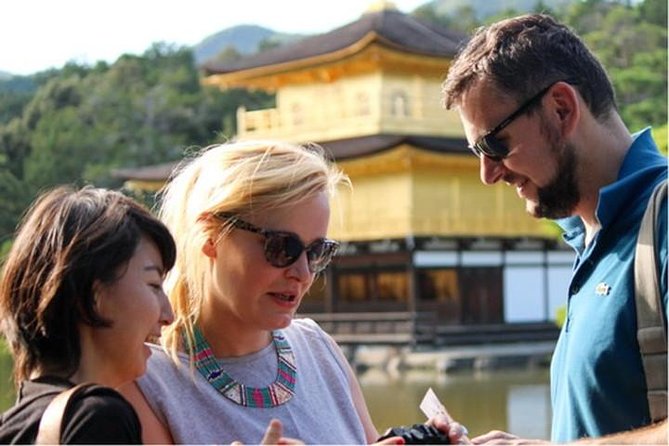
Kinkaku-ji, the Golden Pavilion, is Kyoto’s most instantly recognizable building. Its upper floors are covered in gold leaf, and the pavilion reflects in the pond below. The view is striking, but the route through the grounds can be busy and controlled, so you may not linger wherever you wish.
Because Kinkaku-ji is farther from central Kyoto, combine it with nearby sights. Ryoan-ji is the obvious partner. Its famous Zen rock garden invites a slower visit and a very different mood from the glittering pavilion.
Ninna-ji adds another option. This World Heritage temple is associated with the Omuro school of Shingon Buddhism and has broad grounds with a quieter feel than some of Kyoto’s most photographed places.
A northern route works well for first-time visitors who want major sights without crossing the entire city. Choose Kinkaku-ji and Ryoan-ji for contrast, or add Ninna-ji if your group is willing to keep moving. Entrance fees for these temples are not included.
Arashiyama, bamboo, and western Kyoto
Arashiyama is a full half-day destination by itself. Its main sights include Tenryu-ji, the bamboo groves, Togetsukyo Bridge, and a long list of smaller temples.
Tenryu-ji is the main cultural stop, with Zen gardens and a place in Kyoto’s group of major Zen temples. The bamboo path is photogenic, but it is not a private trail. Crowds can reduce the quiet woodland feeling, and the walk takes time.
Togetsukyo Bridge gives you the classic Arashiyama river view. Okochi Sanso Garden, set behind the bamboo groves, offers gardens and buildings connected with actor Okochi Denjiro. Admission is extra, so decide if the garden fits your priorities before adding it.
If you prefer less famous places, your guide can point toward Jojakko-ji, Nison-in, Gio-ji, Adashino Nenbutsu-ji, and Otagi Nenbutsu-ji. These temples offer moss, wooded paths, hillside settings, and distinctive stone figures. They are not sensible additions to a broad city tour, but they make a rewarding Arashiyama-focused route.
Daikaku-ji is another western Kyoto choice, originally built as Emperor Saga’s detached palace. Katsura Imperial Villa is important for Japanese architecture and garden design, but it requires extra travel and is not a casual add-on to several other districts.
Northern mountains and imperial sites
Shugakuin Imperial Villa and Katsura Imperial Villa appeal to visitors interested in gardens, design, and imperial culture. Both require careful planning because they are not close to the city’s best-known central sights.
Kibune and Kurama-dera take you into Kyoto’s northern mountains. Kibune developed around Kifune Shrine, while Kurama is known for Kurama-dera and its hot spring. These places offer a cooler, more rural side of the city, but travel time takes a large share of a four-hour tour.
Yoshimine-dera, in Kyoto’s western mountains, is another hillside temple with broad views and garden paths. It can suit a repeat visitor who has already seen the central sights, but it is not my first choice for a first four-hour introduction.
Byodoin Temple in Uji is also listed as an option, with its famous Phoenix Hall and World Heritage status. The important warning is that extra travel time is expected because Uji is outside Kyoto’s central sightseeing area. Choose it only if Byodoin matters more to you than several central attractions.
The guide makes the biggest difference
The tour’s strongest feature is the person you get. A good guide does more than recite dates. The guide explains shrine behavior, Buddhist traditions, old political systems, local food, and the logic of Kyoto’s layout in plain English.
Yuri has helped groups move through trains and buses, translate signs, find photo spots, and adjust plans when heat became too much. Yuka has been praised for fitting three major highlights into a tight schedule while giving detailed explanations. Tomy has combined transit help with history, local food suggestions, and advice for walks after the tour.
Other guides, including Hiro-san, Hiromi, Nabet, Satoko, Seiko, Junko, Olive, Mizu, Masa, and Yoshi, have been described as warm, organized, flexible, and easy to understand. English ability can vary by guide, so if clear language is especially important to you, ask about that when booking.
A private guide also helps families. Ken adjusted the day around children, connected explanations to a child’s interest in samurai, arranged photos, and allowed rest time. That is hard to achieve in a large group.
Walking, transport, and the real pace
This is a walking tour with public transportation or taxis, not a fully driven sightseeing service. You may climb hills, use station stairs, and walk between temples. One itinerary reached more than 20,000 steps, so bring supportive shoes and take the heat seriously.
Transportation costs are extra. A private vehicle is available only as an upgrade, and you should not assume it is included in the listed price. For most visitors, trains, buses, and occasional taxis are the better value, especially with a guide who understands Kyoto’s routes.
Hotel pickup is on foot within a designated area. Confirm that your accommodation qualifies and understand that your guide may meet you in the lobby before walking to the first station or sight.
The tour is private, and separate groups cannot be combined. That keeps the pace personal, but the price may be less attractive for solo visitors than for a family or small group sharing the cost.
Who should book this Kyoto tour?
I would choose this tour for a first visit, a short stay, a family group, or anyone who wants cultural context without spending hours planning routes. It is especially useful if Kyoto’s transit system feels intimidating or if you want to see two or three major sights efficiently.
I would also consider it for a cruise or port stop, since one guide met a group at the port and adapted the day to the time available. Still, confirm your exact timing before choosing a distant attraction.
I would not book it expecting a relaxed all-day temple tour, included admission, or door-to-door private transport. Four hours is a short introduction. The best result comes from choosing a tight geographic route and telling your guide what matters most.
Free cancellation is available up to 24 hours before the start time. Changes or cancellations inside that window are not accepted for a refund.
Should you book it?
Book this tour if you want Kyoto explained by a local guide and would rather spend your limited time seeing places than sorting out routes and customs alone. The price becomes good value when your group shares the private guide and uses the time well.
Before booking, select your top three priorities and group them by district. Ask about the guide’s English, tell the operator about children or mobility concerns, and budget for tickets, trains, buses, taxis, and lunch.
My ideal plan would be Fushimi Inari, Kiyomizu-dera, and Gion for a first taste of eastern Kyoto. If you prefer gardens and famous architecture, choose Kinkaku-ji, Ryoan-ji, and Ninna-ji. If you want food and old streets, choose Nishiki Market, Pontocho, and Gion. The tour is at its best when you resist the urge to see everything.
FAQ
How long is the Kyoto private tour?
The tour lasts approximately four hours.
How many attractions can I choose?
The included plan is for two or three sites from the available attraction list.
Is hotel pickup included?
Yes. The guide meets you on foot at the front door of your hotel within the designated Kyoto area.
Is a private car included?
No. The standard tour uses public transportation or taxis. A private vehicle can be arranged for an additional cost.
Are entrance fees included?
No. Entrance fees are extra for sights such as Nijo Castle, Kiyomizu-dera, Kinkaku-ji, Ryoan-ji, and other paid attractions.
Are transportation costs included?
No. You pay for trains, buses, taxis, or other transportation used during the tour.
Is the tour private?
Yes. Only your group takes part, and separate tour groups cannot be combined.
What is the cancellation policy?
You can cancel up to 24 hours before the local start time for a full refund. Cancellations or changes made less than 24 hours before the start time are not accepted for a refund.
Just added in Kyoto
- Kyoto: Private Photoshoot Service★ 5.0 · 158 reviews
- Kyoto Rickshaw Tour★ 5.0 · 210 reviews
- Kyoto: Traditional Concert at Townhouse or Bathhouse★ 4.9 · 224 reviews
- Ninja 2-hour Hands-on Lesson by Japanese master in Kyoto -Medium★ 5.0 · 218 reviews
- Kyoto: Arashiyama Bamboo, Temple, Matcha, Monkeys & secret spots★ 5.0 · 219 reviews
- Izakaya Style Cooking Class★ 5.0 · 219 reviews
- Kyoto: Gion & Pontocho Food Tour with 13 Dishes★ 4.9 · 235 reviews
- Kyoto: Afternoon Japanese Izakaya Cooking Class★ 4.9 · 241 reviews
Government-Licensed Guide Tours, compared.
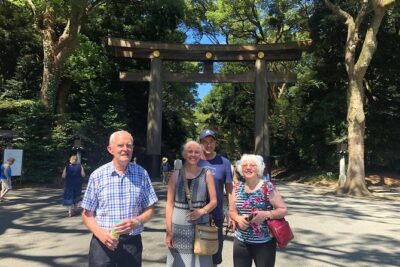
Tokyo 6hr Private Tour with Government-Licensed Guide
Read our review →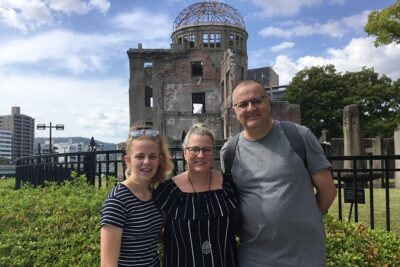
Hiroshima / Miyajima Full-day Private Tour with Government Licensed Guide
Read our review →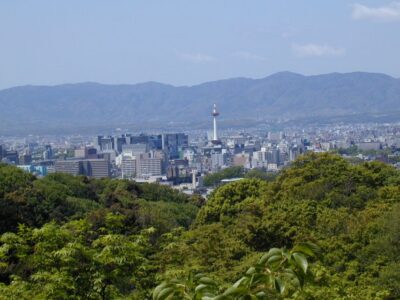
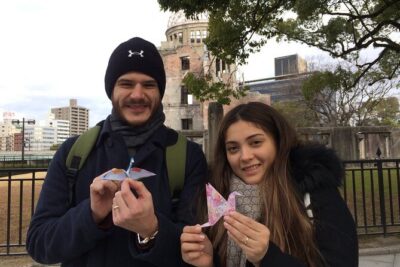
Hiroshima City 4hr Private Walking Tour with Licensed Guide
Read our review →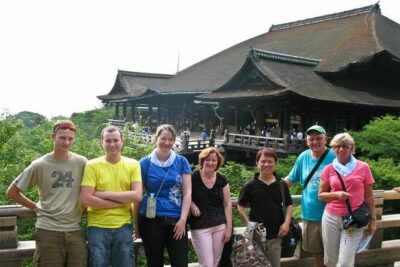
Private Kyoto Tour with Licensed Guide & Vehicle (Max 15 persons)
Read our review →
Osaka 4hr Private Tour with Government-Licensed Guide
Read our review →
Nikko Full-Day Private Tour with Government-Licensed Guide
Read our review →
Himeji Half-Day Private Tour with Government-Licensed Guide
Read our review →Browse the lists this tour appears in