
Reviewed · GOVERNMENT-LICENSED GUIDE TOURS
Tokyo 4hr Private Tour with Government-Licensed Guide
Tokyo is too large to understand by simply ticking off famous sights. This private tour gives you four hours with a licensed local guide who can shape the day around your interests, then guide you through the city’s trains, streets, temples, gardens, and shopping districts. You might pair Meiji Shrine and Shibuya Crossing, or choose old Tokyo in Asakusa and the food stalls around Tsukiji.
I like the freedom to choose only two or three places, and I like the practical help with public transportation. Guides such as Katsu, Yusuke, Michio, and Koba have helped people read subway routes, manage Suica cards, find easier station exits, and adjust the pace for older adults and young children. The main drawback is simple: four hours goes quickly, especially when your chosen sights are far apart.
What matters most
- Choose two or three sights: The tour is not designed to cover every place on the long list.
- Use the guide as your Tokyo translator: Guides explain shrine customs, local history, food, transport, and daily life.
- Expect a walking and public-transit tour: A private vehicle is not included.
- Plan your route before meeting: Asakusa, Shibuya, Odaiba, and Tokyo Tower cannot all fit comfortably into four hours.
- Budget for extras: Train fares, food, garden and museum admission, and Tokyo Tower access are separate.
- Best value comes from personal help: The more specific your interests, the more useful the private format becomes.
Four hours to get Tokyo right
This tour works best as a first look at Tokyo, not as a grand sweep of the entire city. You meet your guide on foot within the designated Tokyo area, discuss what matters to you, and settle on a route that can actually work in the time available.
That last point is important. The choice includes major sights from Asakusa to Odaiba, but the tour includes only two or three sites. Tokyo’s size, station walks, transfers, crowds, and waiting time can eat up a half-day faster than you expect.
A good guide helps you make that choice. If this is your first visit, you might want a traditional shrine, a famous crossing, and one calm green space. If you have already seen the postcard sights, you could focus on Nezu, Shibamata, Gotokuji, or a garden such as Rikugien.
The experience is private, so only your group takes part. That makes it easier to stop for questions, slow down for a child, choose a less demanding route, or change plans when the weather or your energy level calls for it.
Other tours with a licensed guide in Tokyo:
- Tokyo 6hr Private Tour with Government-Licensed Guide
★ 5.0 · 3,902 reviews - Kyoto 6hr Private Tour with Government-Licensed Guide
★ 5.0 · 1,369 reviews - Hiroshima / Miyajima Full-day Private Tour with Government Licensed Guide
★ 5.0 · 1,298 reviews
Senso-ji and Asakusa for old Tokyo
Asakusa is one of the strongest choices for a four-hour introduction. This is Tokyo’s old downtown, where the atmosphere feels different from the tall towers and neon districts farther west.
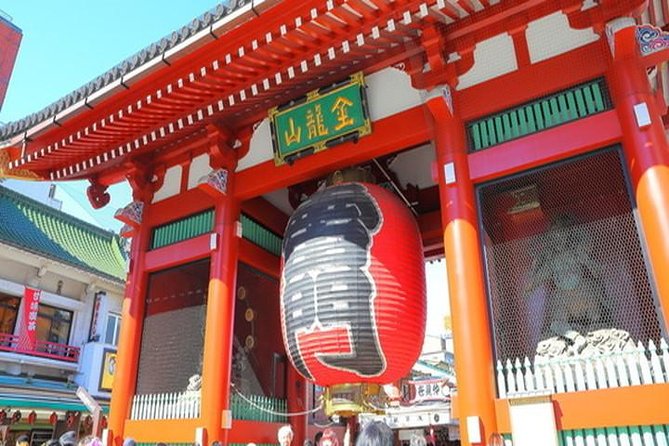
Senso-ji is the centerpiece. The approach leads toward the Kaminarimon Gate and the temple precinct, with Nakamise shopping street connecting the gate to the main hall. Your guide can explain the temple’s Buddhist setting and the local legend involving two fishermen who found a statue of Kannon in the Sumida River.
The temple itself is free, which helps keep the cost down. You can also use this stop to ask practical questions about Japanese temple etiquette, incense, prayer, and the difference between a Buddhist temple and a Shinto shrine.
The catch is distance. Asakusa pairs naturally with the Tokyo National Museum or nearby Ueno, but it is not a quick hop from Shibuya. If you want Asakusa plus Meiji Shrine and Shibuya in four hours, expect a brisk outing with little room for lingering.
Meiji Shrine, Yoyogi Park, and Harajuku
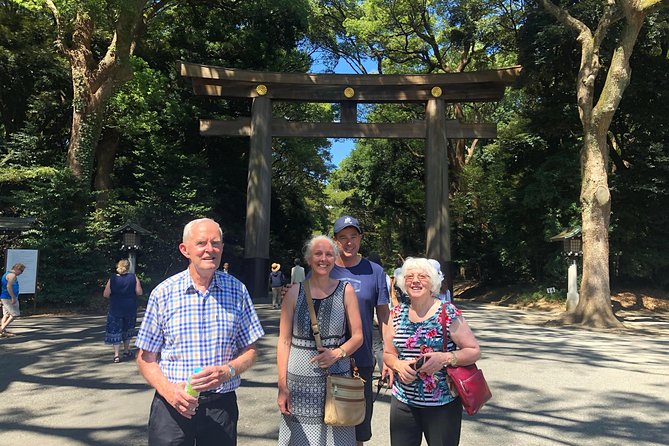
Meiji Jingu offers a quieter side of Tokyo beside busy Harajuku Station. The shrine is dedicated to Emperor Meiji and Empress Shoken, and the approach passes through a large wooded area that creates a strong contrast with the surrounding city.
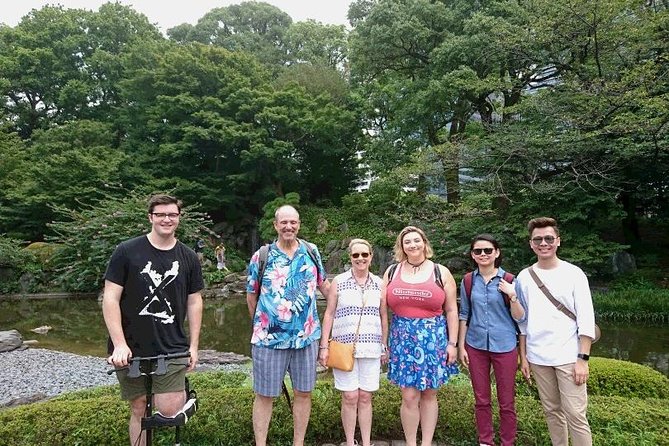
A guide can show you how to behave at the shrine and explain basic Shinto customs. This is one of the most useful parts of the tour for first-time visitors, since the rituals can otherwise feel mysterious. You may also see a traditional wedding procession or seasonal displays, though those are not guaranteed.
Yoyogi Park is a natural companion stop. It has broad lawns, ponds, and wooded areas, and it gives you space to walk without the tight crowds of central shopping streets. The listed visit is about 30 minutes, so treat it as a short break rather than a full park visit.
Takeshita Street adds a very different mood. The Harajuku street is known for youth fashion, unusual shops, and Japanese pop culture. It can be crowded and intense, but that is part of the point. I would choose Meiji Shrine and Takeshita Street if you want tradition and modern youth culture in one compact area.
Shibuya Crossing and the Hachiko story
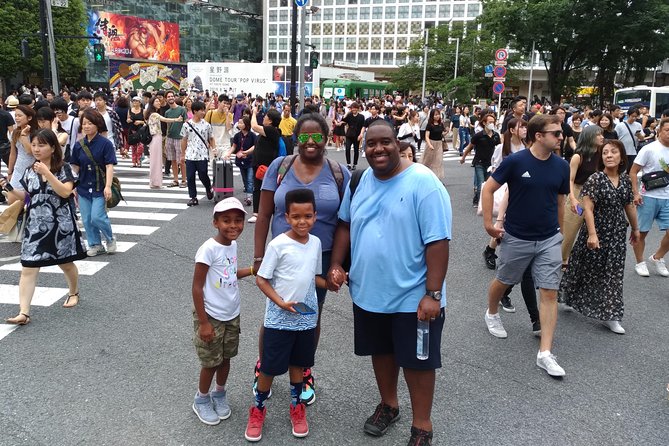
Shibuya Crossing is a natural choice if you want a quick hit of modern Tokyo. When the signals change, pedestrians cross from several directions at once, creating the famous scramble seen in photographs and films.
The nearby Hachiko statue adds a human story to the stop. Hachiko, the loyal dog, became a symbol of devotion after continuing to wait for his owner. A guide can give the story more meaning than a quick photograph alone.
The crossing itself does not take long. Your guide may show you a useful viewing point, then explain how the surrounding district developed into a center of shopping, entertainment, and youth culture.
Shibuya works well with Meiji Shrine or Harajuku because the areas are connected by the JR Yamanote Line and nearby routes. It is less sensible to combine it with Odaiba, Tokyo Tower, and Asakusa unless you are content with brief photo stops and lots of transit.
Same base, a different sort of day:
- Mt Fuji and Hakone 1-Day Bus Tour Return by Bullet Train
★ 5.0 · 26,383 reviews - 1-Day Tokyo Bus Tour
★ 5.0 · 14,250 reviews - Tokyo: TOKYO SKYTREE® Admission ticket
★ 4.5 · 11,192 reviews - Tokyo: teamLab Planets TOKYO Digital Art Museum Entry Ticket
★ 4.6 · 9,779 reviews
Imperial Palace grounds without palace access
The Imperial Palace occupies the former site of Edo Castle, with broad grounds, moats, and massive stone walls. The area gives you a useful introduction to the political center of Japan and the power of the Tokugawa shoguns.
Be clear about the limitation: this tour does not include access to the inside of the Imperial Palace. The experience focuses on the surrounding grounds and the East Garden area when included in your chosen route.
The palace grounds are a good fit for people who like history, open space, and stonework more than shopping. One guide, Koba, combined the East Garden with Meiji Shrine and Shibuya Crossing in four hours. That is a practical example of a route that covers three distinct parts of Tokyo without trying to force in Asakusa as well.
The grounds can also make a good first stop if you are arriving with a guide who can explain the city’s past before taking you into its modern districts.
Tsukiji for food and local texture
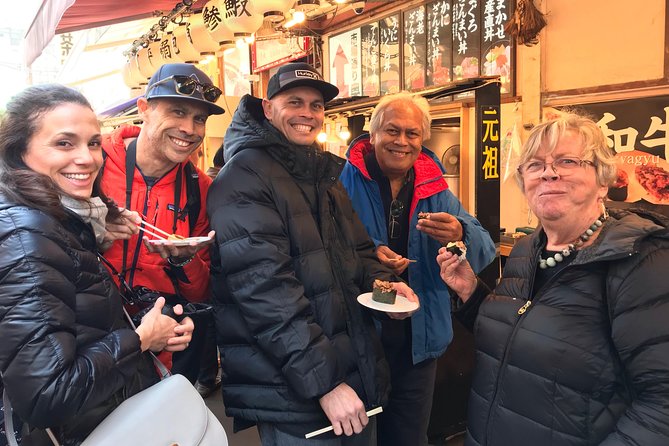
Tsukiji is now the old fish market rather than Tokyo’s main wholesale market, but the outer market remains a useful stop for food. Shops and stalls offer seafood and other Japanese specialties, and you are encouraged to buy something rather than treat the area as a passing photo stop.
This is one place where a private guide can add real value. A guide may help you understand what you are seeing, point out food worth trying, and keep the visit moving when you are unsure where to go. One route included sushi, sake, and time to speak with local food specialists.
You pay for food separately, so set aside extra money if eating is part of your plan. Tsukiji is also better suited to a morning or lunchtime visit than an evening schedule, though the exact timing depends on your booking.
Pair Tsukiji with Hama Rikyu Gardens for a pleasant change of pace. The garden sits beside Tokyo Bay and includes seawater ponds that change with the tide, along with a teahouse. Admission is not included.
Tokyo’s gardens for a slower half-day
Tokyo’s gardens are a good answer if you want a break from stations, traffic, and shopping. Shinjuku Gyoen has broad lawns, winding paths, and quiet scenery close to Shinjuku Station. It is one of the city’s best places to slow down.
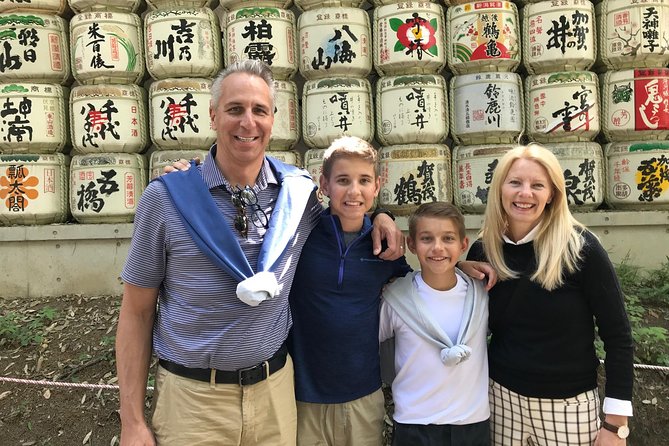
Koishikawa Korakuen is one of Tokyo’s oldest Japanese gardens. It was created in the early Edo period for the Mito branch of the ruling Tokugawa family. Rikugien, another excellent choice, was built around 1700 and takes its name from the six Chinese poetic themes reflected in its design.
These gardens require admission fees, and each needs enough walking time to feel worthwhile. If you select one, I would avoid adding too many distant districts. A garden, a shrine, and a nearby neighborhood usually make a more satisfying route than four rushed attractions.
Garden visits also suit older adults and anyone who prefers a calmer pace. One guide, Julie, adjusted the route for older participants and helped them avoid long stairs while including a garden and a teahouse stop.
Akihabara, Odaiba, and Tokyo Tower
Akihabara is Tokyo’s electronics and pop-culture district. It is the place to choose if you care about anime, games, gadgets, and specialist shops more than old temples or gardens. The area has a very different feel from Asakusa and Meiji Shrine.
Odaiba sits on a man-made island in Tokyo Bay and offers shopping and entertainment. It can work for families or people interested in modern waterfront development, but its distance makes it a poor match for a route that also includes several central Tokyo sights.
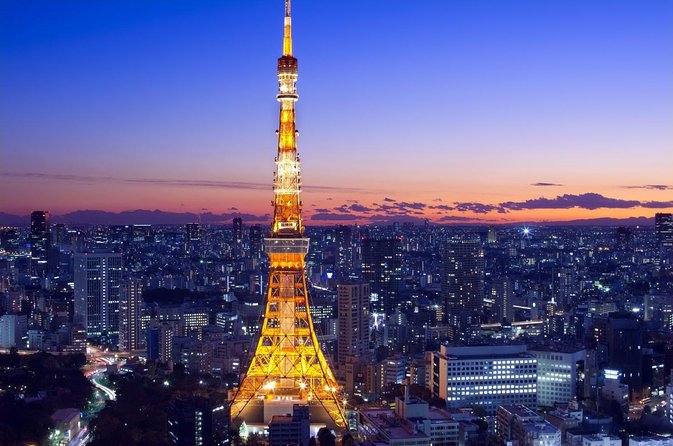
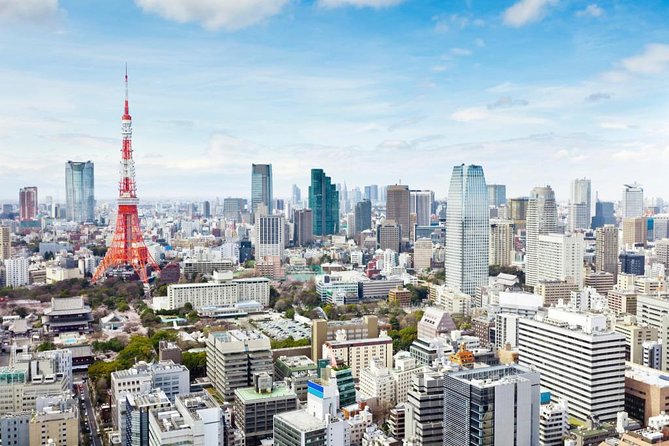
Tokyo Tower provides a classic city view. The tour covers access only up to the main deck, and the top deck is not included. Admission is extra, so confirm the cost before you commit.
These three choices are best treated as separate themes. Akihabara suits technology and pop culture. Odaiba suits modern recreation and the bay. Tokyo Tower suits views and landmark architecture. Trying to combine all three with Asakusa or Shibuya would leave little time for anything beyond transit and photographs.
Nezu, Shibamata, Gotokuji, and Golden Gai
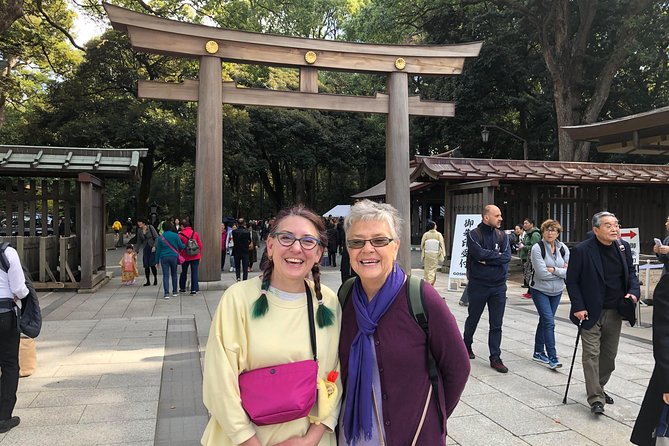
The long list of possible stops includes several places that reward a more personal route.
Nezu belongs to the older Yanaka and Nezu area, where old houses and neighborhood shrines survived the destruction that changed much of Tokyo. This is a chance to see a quieter residential side of the city and learn how local communities remember their ancestors.
Shibamata, at Tokyo’s eastern edge near the Edogawa River, keeps an old-fashioned town feel. It is farther from the usual central route, so choose it only if local atmosphere matters more to you than seeing the major landmarks.
Gotokuji Temple is associated with the maneki-neko, the familiar cat figurine with one raised paw. It makes a short, unusual stop and can suit anyone interested in Japanese folk culture.
Golden Gai in Shinjuku began as a postwar area of small eating and drinking establishments. The narrow lanes are atmospheric, but the stop is brief and is more useful as part of a Shinjuku-focused route than as a reason to cross the whole city.
The guide can teach you Tokyo’s transport system
For many people, the most useful part of this tour is not a landmark. It is learning how to move around Tokyo after the four hours end.
The city’s train and subway network can feel confusing at first. Guides have helped with metro routes, JR lines, Shinkansen tickets, Suica cards, station exits, ATMs, and directions for later days in Kyoto and Osaka. That practical coaching can save you time well beyond the tour itself.
The guide does not pay your transport fares. Bring the payment method that works for you, and expect to buy tickets or use your own card. Since the tour is on foot and by public transportation, wear comfortable shoes and keep your day bag light.
Pickup means meeting on foot, not riding away from your hotel in a private car. The designated pickup area matters, so confirm the meeting point and allow time to reach it.
What the $109.43 price really buys
At $109.43 per person, the value depends heavily on your group size and what you need. You are paying for a private, customized four-hour service with a licensed English-speaking guide, not for a vehicle, meals, train fares, or a bundle of admissions.
For one person, the price is harder to justify unless you want focused help with transport, food, photography, or a particular neighborhood. For a couple or family, the private format becomes more appealing because you share the guide rather than joining a large group with a fixed route.
You also avoid spending hours researching connections and deciding which sights can fit together. That is useful on a short Tokyo visit, especially during your first day when the city’s scale can be tiring.
The tour is strongest when you arrive with a clear wish list. Tell the guide if you want temples, gardens, food, modern districts, local neighborhoods, or transport practice. A vague plan can lead to wasted time deciding on the day.
Free cancellation is available up to 24 hours before the start time. Changes made less than 24 hours ahead are not accepted, so keep that deadline in mind.
Who should book this private Tokyo tour?
I would choose this tour if you are visiting Tokyo for the first time, have only a short stay, or feel uneasy about the transport system. It also suits families, older adults, honeymooners, and anyone who prefers a flexible pace instead of a fixed coach schedule.
The guides have shown they can adapt. Michio adjusted a route for a four-year-old child. Other guides helped older people avoid difficult stairs, supported visitors with different transport cards, and changed plans when the group wanted something else.
I would not choose it if your main goal is a long museum visit, a full meal tour, or a relaxed day at one garden. Four hours is too short for that unless you make one site the clear priority.
English ability can vary between guides, so if detailed conversation is central to your plans, explain your interests clearly before the tour. The agency has many guides, including Yusuke, Katsu, Koba, Julie, Michio, Taku, Yuri, Toru, and Naoko. You may not be able to select a particular guide, but stating your needs early can help shape the match.
Should you book it?
Book this tour if you want a private local guide to help you choose wisely, walk efficiently, and learn Tokyo’s transit system while seeing two or three meaningful places. The best combinations are close and contrasting, such as Meiji Shrine with Shibuya, Asakusa with the Tokyo National Museum, or Tsukiji with Hama Rikyu Gardens.
Skip it if you expect a private car, a full Tokyo grand tour, or all admissions and meals included. You will get the most from the experience by choosing a compact route, wearing good shoes, budgeting for extras, and treating the guide as both a cultural interpreter and a practical city coach.
FAQ
How long is the Tokyo private tour?
The tour lasts approximately four hours.
How many sights can I choose?
The tour includes a customizable itinerary of two or three sites from the available choices.
Is transportation included?
No. Transportation fees are not included, and the tour does not provide a private vehicle. The experience is conducted on foot and by public transportation.
Does the tour include entry to the Imperial Palace?
No. The tour does not include access inside the Imperial Palace. You may visit the surrounding grounds and related garden areas if selected.
Are entrance fees included?
No. Entrance fees are generally not included. The guide’s entry fees are covered only for sights listed under the tour’s What to Expect information.
Where does the guide meet the group?
The guide meets your group on foot within the designated area of Tokyo. This is not a hotel pickup by private car.
Can I cancel for a full refund?
Yes. You can cancel at least 24 hours before the experience start time for a full refund. Cancellations or changes made less than 24 hours before the start time are not accepted or refunded.
Just added in Tokyo
- Luxury Tokyo Sake, Cocktail, Whisky and Pairing Tour★ 5.0 · 18 reviews
- Wagyu & Sake Pairing in Shinjuku – Steak, Shabu-Shabu & More★ 5.0 · 112 reviews
- Small-Group Wagyu Beef and 7 Japanese Dishes Tokyo Cooking Class★ 5.0 · 190 reviews
- Nikko: Edo Wonderland Edomura Cultural Theme Park Ticket★ 4.3 · 205 reviews
- 《MEMBERS-ONLY-BAR-HOPPING》Discover Your Special Whiskey in Tokyo!★ 5.0 · 29 reviews
- Japanese Whisky Hunting《HIGH-QUALITY-ONLY》Rare Tasting Class★ 5.0 · 20 reviews
- From Tokyo: Private Tour to Fuji/Hakone – Onsen, Art, Nature★ 5.0 · 116 reviews
- Tokyo: KABUKI Show at Kabukiza Theatre Admission Ticket★ 4.8 · 152 reviews
Government-Licensed Guide Tours, compared.
Tokyo 6hr Private Tour with Government-Licensed Guide
Read our review →
Hiroshima / Miyajima Full-day Private Tour with Government Licensed Guide
Read our review →
Kyoto 4hr Private Tour with Government-Licensed Guide
Read our review →
Hiroshima City 4hr Private Walking Tour with Licensed Guide
Read our review →
Private Kyoto Tour with Licensed Guide & Vehicle (Max 15 persons)
Read our review →
Nikko Full-Day Private Tour with Government-Licensed Guide
Read our review →
Himeji Half-Day Private Tour with Government-Licensed Guide
Read our review →Browse the lists this tour appears in