
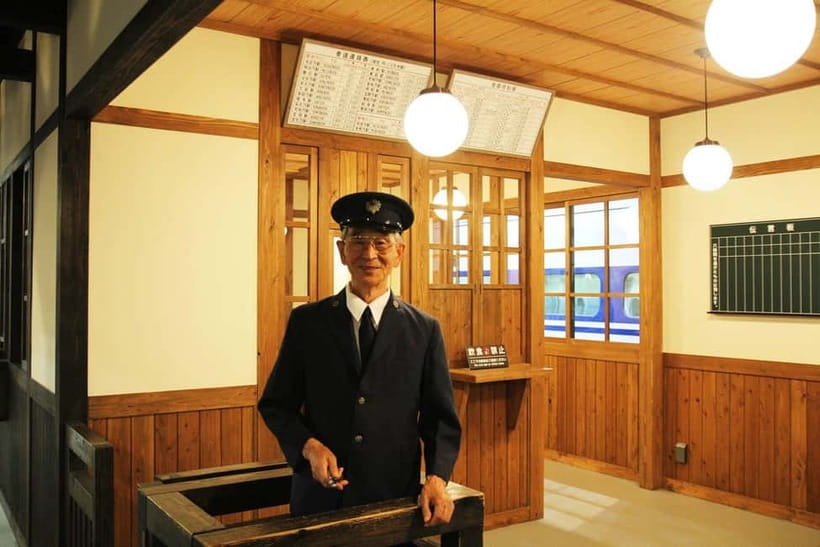
Reviewed · TRAIN EXPERIENCES
Kyoto Railway Museum Admission Ticket
Japan’s railway story comes alive among 53 real trains, from old steam engines to the sleek Shinkansen. You can step inside the cars, study the machinery, and see how rail travel changed the country without treating the subject like a dusty textbook.
I especially like the working steam locomotive ride and the historic roundhouse turntable. The hands-on simulators and detailed railway dioramas give children something to do while adults take in the engineering. The main consideration is time: this is a full-day ticket, and the museum is closed every Wednesday, so check the official opening hours before you go.
Key points at a glance
- 53 full-size trains: See steam locomotives, classic railway cars, and Japan’s famous Shinkansen.
- Working steam locomotive: Take a nostalgic ride and experience rail travel at a slower, more old-fashioned pace.
- Historic roundhouse: Watch the turntable rotate, a rare piece of railway theater that works for both children and adults.
- Hands-on exhibits: Try realistic train-driving simulators and learn how railway systems function.
- Sky Terrace views: Take a break from the indoor exhibits and look out over the railway area from above.
- Good family value: The $9 adult price covers standard museum admission for one day, with free entry for children under three.
A full day with Japan’s railway story

The Kyoto Railway Museum is not simply a room full of locomotives. It is a working introduction to how trains operate, how railway technology changed, and why rail travel matters so much in Japan.
You begin at the museum itself, using your admission ticket at the entrance. There is no guided tour or named guide included, so you set your own pace. That is useful here because the collection covers several kinds of interest at once. You can spend time on engineering, Japanese transport history, family activities, or the pleasure of simply walking through old trains.
The museum is a sensible choice when you want an indoor break from Kyoto’s temples and gardens. It also gives you something different from the usual sightseeing circuit. The subject is specific, but the displays are designed for curious newcomers as well as committed rail fans.
Other trips by rail from Kyoto:
- Full Day Hiroshima and Miyajima Tour by Bullet Train from Kyoto
★ 4.5 · 120 reviews - Mt Fuji and Hakone 1-Day Bus Tour Return by Bullet Train
★ 5.0 · 26,383 reviews - Mt Fuji & Hakone Cruise, Drum Show Bullet Train 1 Day from Tokyo
★ 4.0 · 7,413 reviews
Start with the 53 real trains
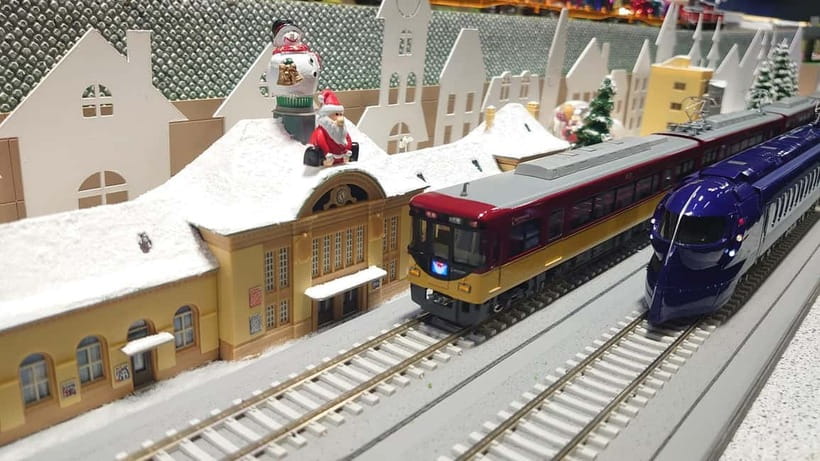
The strongest part of the visit is the collection of full-size railway vehicles. Seeing 53 real trains in one place gives you a sense of scale that photographs cannot provide. You can walk around the engines, notice the differences in shape and equipment, and step inside selected trains.
The range matters. Steam locomotives show the age of coal, pistons, and smoke. Later railway cars reveal changes in comfort and design. The Shinkansen brings the story into modern Japan, with its clean lines and unmistakable bullet-train shape.
For you, the appeal depends on how you like to look at transport. If you care about machinery, the locomotives offer plenty of physical detail. If you know little about trains, the collection still works because the basic story is easy to follow: older engines, changing railway systems, and faster modern services.
I would not rush through this section. The real value is in comparing the trains rather than counting them. Look at how passengers entered, how the driver’s area changed, and how the cars were built for different periods of Japanese rail travel.
Families should split the visit into small sections. Children may want to climb aboard every accessible train, while adults may need time with the explanations and technical displays. The museum’s scale helps here, since you can move between quiet displays and more active exhibits instead of asking everyone to do the same thing at once.
Ride a working steam locomotive
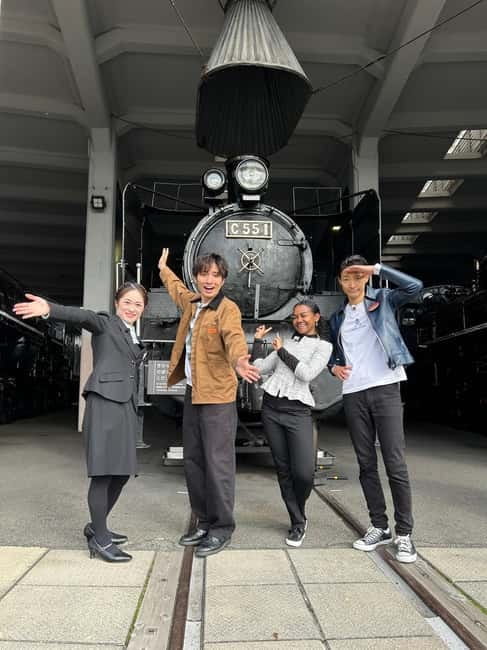
The steam locomotive ride is the museum’s most memorable hands-on feature. Rather than only looking at an old engine behind a barrier, you get the chance to ride behind a working steam locomotive and feel the nostalgic side of rail travel.
This is valuable because it connects the machinery to the experience of being on a train. Steam engines are not just large metal objects. They represent a slower style of travel, with a very different feel from the high-speed Shinkansen nearby.
The exact operating schedule is not provided, so you should not build your whole day around a particular departure time unless the museum confirms it. Treat the ride as a major part of the visit to look for, not as a guaranteed timed departure described in your ticket details.
For children, the ride adds movement to what could otherwise be a display-heavy outing. For adults, it gives the museum a touch of nostalgia without requiring a separate railway excursion outside Kyoto.
Watch the roundhouse turntable rotate
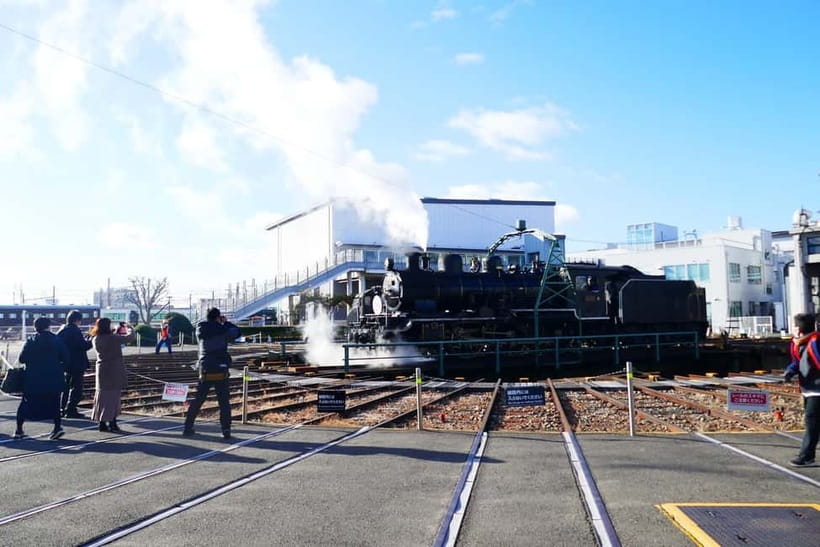
The historic roundhouse is another major reason to visit. Its turntable rotates locomotives into position, offering a clear look at how trains were stored and directed before modern railway yards took their current form.
This is a short, mechanical show with real purpose. You are watching railway equipment do the job it was built to do, not a decorative replica made only for display. The motion also gives young children an easy way into the subject. You do not need to understand railway engineering to enjoy a giant machine turning a locomotive in front of you.
The roundhouse helps explain why older train depots were built in a circular layout. It places the engines, tracks, and maintenance system in one view. If you are interested in design, this may be more revealing than a single locomotive on its own.
Try to see the turntable rotation during your visit, but check the day’s timing once inside. The supplied activity details do not give a set schedule, and museum operations can change.
A few more things to do in Kyoto worth a look
- Kyoto: Tea Museum Tickets and Matcha Grinding Experience
★ 4.9 · 739 reviews - Skip the lines Basic Ticket at SAMURAI NINJA MUSEUM KYOTO
★ 4.5 · 632 reviews - Kyoto : Geiko Maiko Dance of Kyoto & Visits of Gion Museum
★ 4.6 · 415 reviews - Kyoto Sword Experience – includes Museum Ticket/Ninja Experience
★ 4.5 · 149 reviews
Try simulators and hands-on exhibits
The museum adds practical exhibits so you are not only reading labels. Realistic train-driving simulators let you try the controls and get a sense of the concentration involved in running a train.
A simulator cannot reproduce the full responsibility of operating a railway, of course. It can show you that driving is more than pushing a lever and watching scenery pass. For families, it gives children a clear task and makes the visit feel active.
The hands-on displays also help explain how railway systems work. This is one of the museum’s better qualities: it does not assume that you already know the difference between an engine, a train car, and the systems that keep rail travel moving.
Demand for simulators may be higher than for ordinary displays, especially when many families are visiting. The information provided does not state how simulator access is managed, so expect to spend some time waiting if the area is busy. That is one reason to allow the full day rather than trying to squeeze the museum into a short stop.
Take time with the railway dioramas
The detailed railway dioramas offer a smaller view of the subject. After standing beside full-size engines, you can watch miniature railways show how tracks, trains, stations, and surrounding activity fit together.
Dioramas are useful because they turn a complex railway network into something you can understand at a glance. You can follow movement and see how different parts of a rail system relate to one another.
They also make a good pause between larger exhibits. If you are visiting with children, the miniature scenes may hold their attention longer than a written panel. If you are an adult rail fan, the detail rewards a slower look.
Do not treat this section as filler. It gives context to the full-size trains. A locomotive makes more sense when you can also see the wider system it served.
Reach the Sky Terrace for a change of pace
The Sky Terrace provides views from above and gives you a chance to step away from the indoor displays. That break matters during a day-long visit, especially if you have been moving through large galleries and train cars.
The terrace is also a useful place to think about the museum’s subject in real terms. Railways are not only objects in a collection. They connect places, carry people, and shape the way cities function. The elevated view helps you shift from close-up machinery to the larger railway setting.
The activity information does not promise a particular city view or identify specific landmarks from the terrace, so keep expectations general. You are getting a higher vantage point and an outdoor pause, not a guaranteed panoramic Kyoto lookout.
How the $9 price works for your day
At about $9 per person, standard admission is a strong value if you plan to spend several hours here. The ticket is valid for one day, and the museum offers enough variety to support a long visit: full-size trains, train interiors, simulators, dioramas, the steam locomotive, the roundhouse, and the Sky Terrace.
The value is even clearer for families with very young children. Infants under three enter free. Children from three to seven can buy tickets on-site for 200 yen, which keeps the total cost down for families with several small children.
The ticket covers standard museum admission. It does not list a guide, meal, transport, or extra services, so you should budget for your own way to the museum and any activity not clearly included in admission. The supplied details do not specify separate charges for the steam ride or simulator access, so check at the museum if those details affect your plans.
A non-refundable booking policy means you should confirm your date before paying. Wednesday closures are especially important. Opening hours can change, and the museum advises checking its official website for current information.
Practical arrival and entry advice
You go directly to the Kyoto Railway Museum for redemption. The listed coordinates are 34.9870986, 135.7422732. No pickup service is included, and no meeting with a guide is described.
When you arrive, present your admission ticket to staff. If you leave and plan to return the same day, keep the ticket with you because it must be shown for re-entry.
The entry information also gives a useful queue warning. If the line is long, wait at the entrance marked for the Early Bird Advance Ticket. Follow staff instructions rather than joining a random queue, since the museum may separate lines by ticket type.
The museum is wheelchair accessible, which makes the indoor visit more practical for visitors who need step-free access. The supplied information does not provide details about every train interior, simulator, or platform, so ask staff about access to individual exhibits if needed.
Who will get the most from this museum
Rail enthusiasts will find the widest range of material here, especially with 53 real trains and the chance to see both steam power and the Shinkansen.
Families are also a natural fit. The museum gives children several ways to stay involved: stepping inside trains, watching the turntable, riding the steam locomotive, using simulators, and looking at dioramas. Those activities break up the quieter reading sections.
You do not need to be a train expert. The displays cover how railways and their equipment work in a way that can suit first-time visitors. If you enjoy technology, transport, or Japanese history, you will find a clear reason to visit even if you cannot name a single locomotive.
The museum may be less suitable if you want a quick attraction that takes only an hour. The ticket is designed for a full day, and the collection rewards a slower pace. If your Kyoto schedule is packed with temples on the same day, you may need to choose between depth here and a shorter museum stop elsewhere.
How I would plan the visit
I would begin with the full-size trains while energy is high. Start by getting a broad sense of the collection, then return to the engines and cars that interest you most.
Next, I would look for the steam locomotive ride and check the timing for the roundhouse turntable. Since schedules are not provided in the ticket information, confirm both at the museum rather than guessing.
After that, spend time with the simulators and hands-on exhibits. If the simulator queue is long, visit the railway dioramas first and return later.
Finish with the Sky Terrace and any train interiors you missed. This order gives you a mix of large objects, active experiences, technical displays, and fresh air instead of placing all the quiet exhibits together.
Allow extra time for children. They may move slowly through the train cars and want repeated turns at interactive stations. The $9 admission becomes better value when you use the ticket for most of the day rather than making a fast circuit.
Should you book the Kyoto Railway Museum?
I would book this if you want an indoor Kyoto attraction with real machinery, family-friendly activities, and a clear connection to Japan’s transport story. The $9 price is modest for a full day, and the combination of a working steam locomotive, Shinkansen, roundhouse, simulators, and dioramas gives you more variety than a standard display museum.
Book with care if your schedule is tight, since the visit can easily take much of a day and the ticket is non-refundable. Check the official hours, avoid Wednesday, and confirm the day’s ride and turntable times when you arrive.
If you like trains even a little, this is an easy recommendation. If you do not, the museum still makes sense for a family day or a break from temples, provided you are willing to give it more than a quick hour.
FAQ
How long is the Kyoto Railway Museum ticket valid?
The ticket is valid for one day.
What does the standard admission include?
It includes standard admission to the Kyoto Railway Museum.
How many trains can I see at the museum?
The museum has 53 real trains, including steam locomotives and Shinkansen trains.
Can I ride a steam locomotive?
The experience includes the chance to ride a working steam locomotive. The provided information does not give the operating schedule, so check the timing at the museum.
Is the museum open every day?
No. The museum is closed every Wednesday. Opening hours may change, so check the official website before visiting.
Do young children need a ticket?
Children under three enter free. Children between three and seven can buy tickets on-site for 200 yen.
Is the museum wheelchair accessible?
Yes. The activity information states that the museum is wheelchair accessible.
Just added in Kyoto
- Private Cooking Class Udon in Kyoto Japan★ 5.0 · 23 reviews
- Your Private Vacation Photography Session In Kyoto★ 5.0 · 110 reviews
- Kyoto: Zen Meditation at a Private Temple with a Monk★ 5.0 · 25 reviews
- Private Pewter Sake Cup Experience with a Kyoto Artisan★ 5.0 · 31 reviews
- Kyoto Wagashi(Japanese sweets) Cooking Class near Fushimiinari★ 5.0 · 60 reviews
- Kyoto:Family-Friendly Kimono & Yukata Experience at WARGO★ 5.0 · 147 reviews
- Private Guided Traditional Buddhist Cooking in Japan★ 5.0 · 16 reviews
- Kyoto: Gion Geisha District & Sake-in-Hand Walking Tour★ 5.0 · 37 reviews
Train Experiences, compared.

Mt Fuji and Hakone 1-Day Bus Tour Return by Bullet Train
Read our review →
Mt Fuji & Hakone Cruise, Drum Show Bullet Train 1 Day from Tokyo
Read our review →
Tokyo Mt Fuji 5th St & Hakone Cruise Bus Tour w/Bullet Train
Read our review →
Osaka/Kyoto: Hiroshima Miyajima Bus Tour & Shinkansen Ticket
Read our review →
From Tokyo 1-Day Kyoto English-guided Tour by Bullet Train
Read our review →
Mt. Fuji and Hakone Day Trip From Tokyo with Bullet Train Option
Read our review →
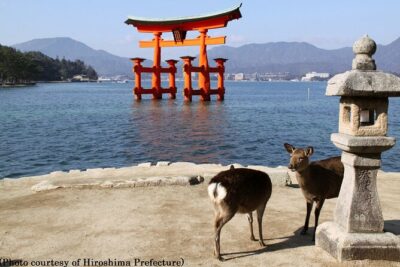
Full Day Hiroshima and Miyajima Tour by Bullet Train from Kyoto
Read our review →Browse the lists this tour appears in