Reviewed · TOURS IN KYOTO
Private Guided Traditional Buddhist Cooking in Japan
Shojin-ryori is Japanese cooking at its most thoughtful: no meat, fish, or animal products, yet plenty of flavor from tofu, miso, vegetables, lotus root, wheat gluten, and careful seasoning. In this Kyoto class, you learn the food by making it, then sit down to a seven-dish meal prepared with your own hands.
I like the private format, which gives your group direct time with Yukari and makes the class a good fit for families or first-time cooks. I also like the practical recipes, from nasu dengaku and lotus-root kinpira to vegetarian fried chicken made with wheat gluten. The main consideration is that the class lasts about two and a half hours, so you will need to give it a solid part of your day, and the temple stops listed with the experience need clarification since private transportation is not included.
Key points at a glance
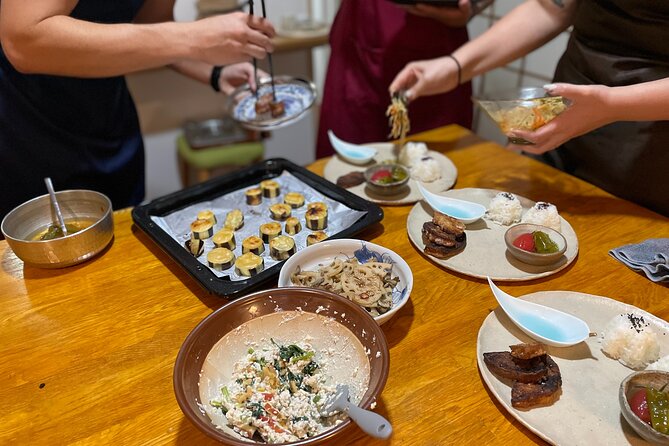
- Seven dishes in one class: Prepare seasonal vegetables, tofu salad, eggplant with miso, lotus root, wheat-gluten teriyaki balls, vegetarian fried chicken, and two rice balls.
- A true vegan meal: The cooking follows Buddhist rules that avoid meat, fish, and other animal products.
- Private instruction: Only your group takes part, with personal guidance from Yukari.
- Recipes to take home: You receive written recipes, so the lesson can continue in your own kitchen.
- A useful Kyoto location: The meeting point is in Sakyo Ward, near public transportation, with Enkoji, Shisendo, and Ginkakuji named in the wider plan.
- Good value for a hands-on meal: At about $70.94 per person, the price includes ingredients, drinks, equipment, apron, facility charges, and lunch.
Why shojin-ryori makes this Kyoto class different
Many Japanese cooking classes focus on familiar restaurant favorites such as sushi, ramen, or tempura. This one takes another path. Shojin-ryori developed in Buddhist temples, where the food avoids killing animals and makes careful use of plants, grains, soybeans, seaweed, and fermented ingredients.
That gives you a useful lesson in Japanese food culture, not just a set of recipes. You learn how a meal can feel complete without meat or fish. Tofu supplies body, miso adds depth, vegetables provide color and texture, and simple rice balls help round out the plate.
The class also shows why Japanese cooking can seem simple but precise. A dish may use only a few ingredients, yet the preparation, slicing, simmering, and seasoning all matter. You will not just follow a recipe mechanically. You will see how local ingredients are handled to preserve their natural taste.
The approach is traditional but not rigid. The dishes draw from classic Buddhist cooking with modern touches, which makes the meal more approachable for home cooks. You can expect food that is healthy and balanced, but not austere or dull.
Other experiences people book in Kyoto:
- PERFECT KYOTO 1-Day Bus Tour
★ 5.0 · 13,518 reviews - Kyoto: Fushimi Inari, Kinkakuji, Bamboo Grove 1 Day Bus Tour
★ 4.8 · 4,316 reviews - Kyoto: Tea Ceremony in a Traditional Tea House in Kiyomizu
★ 4.9 · 3,519 reviews
Meet Yukari and learn through cooking
The host is Yukari, the cook behind Yukari’s Japanese Home Cooking. Some class responses are signed Yuka, so it is sensible to confirm the instructor’s name when you book. The available descriptions present her as both teacher and guide, with experience writing books and articles about Japanese food.
That background matters here. The class includes an introduction to shojin-ryori and an explanation of local ingredients and products before you begin cooking. You can ask about the role of tofu, the use of miso, or the differences between ordinary home cooking and Buddhist temple food.
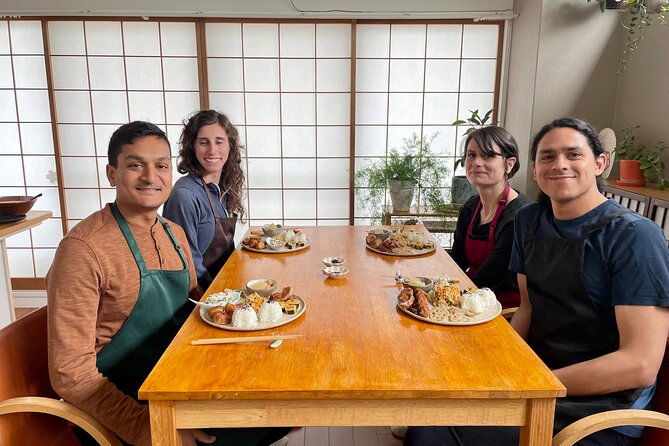
The teaching style appears suited to mixed groups. Families with children have taken part, and the class is described as keeping 11-year-olds involved. At the same time, couples who had already attended several Japanese cooking courses found enough detail and variety to make this class their favorite.
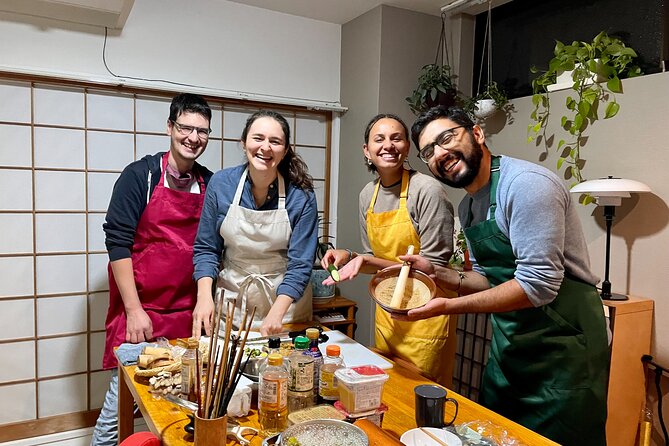
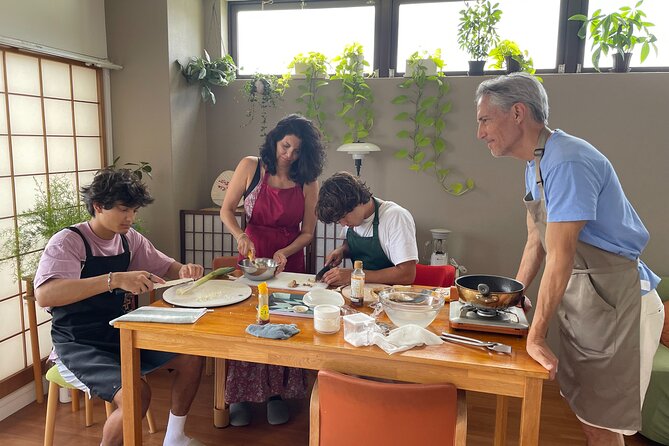
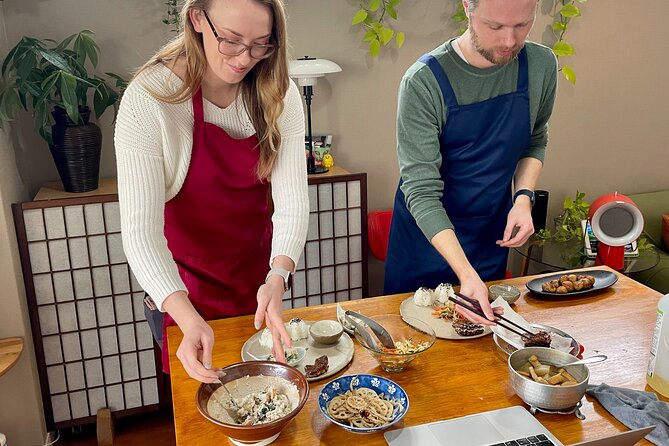
You put on an apron and work through the dishes with guidance. The format is hands-on rather than a demonstration followed by a meal you did not prepare. That makes the two and a half hours feel useful: you gain cooking practice, cultural context, and lunch in one sitting.
Seven dishes, from lotus root to wheat gluten
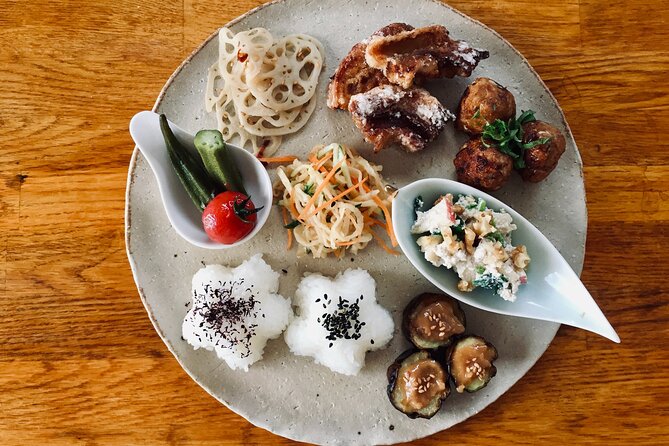
The menu gives you a broad look at Japanese vegetarian cooking. It is not one large dish with a few side items. You make a series of small preparations that come together as a carefully balanced plate.
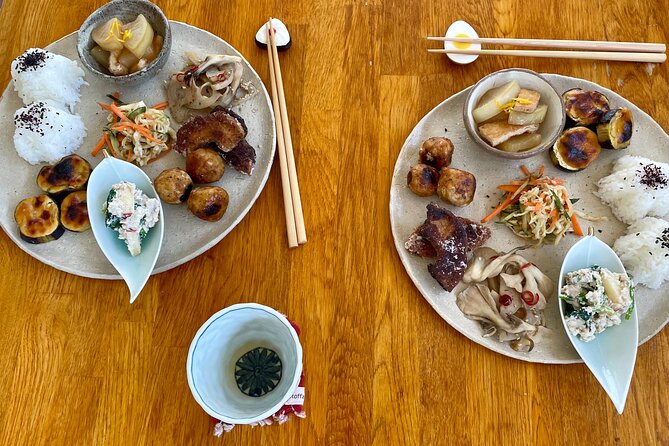
The dishes include:
- Simmered seasonal vegetables
- A salad made with dried strips of daikon
- Kinpira of lotus root
- Nasu dengaku, eggplant glazed with miso
- Shiraae, a mashed tofu salad
- Spicy teriyaki balls
- Vegetarian fried chicken made with wheat gluten
- Two rice balls
The count is described as seven dishes, with the two rice balls included as part of the meal. The exact seasonal vegetables may change, which is part of the point. Shojin-ryori pays close attention to the time of year, so the class uses ingredients that reflect what is available.
The lotus-root kinpira is a good example of the style. Lotus root has a distinctive shape and crisp texture, and thin slices can take on seasoning while keeping some bite. The dried daikon salad gives you another texture and shows how preserved vegetables can add interest.
Nasu dengaku is likely to be a favorite if you enjoy eggplant. The vegetable is paired with a sweet-savory miso glaze, giving a soft ingredient a bold finish. Shiraae uses mashed tofu as the base for a salad, which helps explain how soybeans can replace dairy or mayonnaise in a plant-based kitchen.
The wheat-gluten fried chicken is the playful dish on the menu. It uses a meat-free ingredient to recreate the idea of a familiar fried bite. That makes the class especially useful for anyone who wants Japanese food that feels satisfying without relying on animal products.
The meal is part of the lesson
At the end, you eat a plate lunch or dinner made from the dishes you prepared. This is more than a convenient finish. Sitting down with the complete meal lets you see how the separate items work together.
A Japanese meal often depends on contrast: soft tofu beside crisp vegetables, sweet miso beside savory seasoning, and small portions that offer different flavors without overwhelming the palate. The class gives you a chance to taste those contrasts in one setting.
You also get water or tea with the meal. Ingredients, equipment, apron, utility charges, and facility fees are included, so you do not need to budget for the basic working parts of the class. The recipes are included as well, which adds real value if you want to repeat the meal at home.
This is where the price makes sense. At $70.94 per person, you are paying for instruction, a private setting, a full vegan meal, ingredients, and a cultural lesson. It is not the cheapest way to eat lunch in Kyoto, but it is reasonable for a small-group cooking experience that leaves you with skills and recipes.
Same base, a different sort of day:
- Kyoto Geisha Walking Tour: Gion District & Hidden Gems
★ 4.7 · 3,273 reviews - Kyoto: Tea Ceremony Ju-An at Jotokuji Temple
★ 4.9 · 3,207 reviews - Kyoto: Gion Magical Night Walking Tour with Geisha Trivia
★ 4.9 · 2,393 reviews - Kyoto: 45-Minute Tea Ceremony Lesson Experience
★ 4.3 · 2,378 reviews
What the named Kyoto temples add
Enkoji Temple, Shisendo Temple, and Ginkakuji Temple are named as stops connected with the activity. These places are all in Kyoto’s northeastern area, a part of the city known for temples and traditional neighborhoods.
The cooking meeting point is at Fairmont Building, 16 Ichijoji Nodacho, Sakyo Ward, with a 10:00 a.m. start. The activity ends back at that meeting point. Private transportation is not included, so you should not assume a vehicle will carry you between every named location.
The temple references may describe the surrounding route or related stops rather than full guided temple visits. The supplied details focus most clearly on the cooking lesson, not on entrance tickets, temple tours, or a fixed sightseeing schedule. If visiting Enkoji, Shisendo, or Ginkakuji is important to your plans, ask the host exactly how those stops fit into your booking.
That uncertainty is not a reason to dismiss the class, but it is worth sorting out before you go. You may prefer to treat the cooking lesson as the main event and plan your own temple sightseeing separately. Ginkakuji, in particular, is a major Kyoto sight and may require more time than a brief stop.
Timing, meeting point, and group size
The class begins at 10:00 a.m. and lasts about two hours and 30 minutes. A morning start works well if you want a substantial lunch afterward and still have the afternoon for sightseeing.
You meet in Kyoto’s Sakyo Ward at the Fairmont Building, 16 Ichijoji Nodacho. The area is near public transportation, which helps because no private vehicle is supplied. Check the route carefully before setting out, and allow enough time to arrive ready to begin at 10:00.
The activity is private, meaning only your group participates. That is one of its strongest practical features. You can ask questions without waiting for a large class to catch up, and the host can keep an eye on each person’s preparation.
The private setup should also appeal to families. Children can take part in the cooking, and the menu gives them several textures and shapes to work with. Still, the experience is a real lesson, not simply a meal served to you, so young children need to be comfortable spending time at a counter or work surface.
Dietary needs and accessibility details
The menu is vegan by design, with no meat, fish, or animal products. That makes the class a natural choice for vegetarians and vegans who want more than a restaurant meal.
Gluten-free requests can be accepted if you notify the host in advance. This is important because the menu includes wheat gluten, and the class also covers several prepared ingredients. Do not wait until arrival to mention the need for substitutions.
Service animals are allowed, and the meeting point is near public transportation. The information provided does not explain step-free access, seating arrangements, or the suitability of the cooking area for every mobility need. If you have a specific access requirement, contact the provider before booking.
The drink included is water or tea. You should not expect alcohol or a broad beverage pairing. The focus is firmly on the food and the cooking process.
How the class compares with an ordinary restaurant meal
A restaurant can introduce you to shojin-ryori, but a cooking class explains how the food reaches the table. You learn why tofu is useful, how vegetables are prepared, and how a vegan meal gains depth without meat stock or fish.
That makes this experience valuable for curious eaters, not only for people following a plant-based diet. You can take the same ideas into your own kitchen, even if you do not recreate all seven dishes.
The recipes are a practical benefit. Several cooking classes leave you with photographs and a pleasant memory. This one gives you written instructions so you can try the food again. The class responses also point to detailed explanations and patient teaching, which is helpful if Japanese ingredients are new to you.
The meal should not be confused with temple dining at a major monastery. You are learning Buddhist-inspired home cooking with modern touches, not being promised a formal temple ceremony. That is a strength if you want an approachable lesson, but it matters if your main goal is religious or ceremonial study.
Who should book this experience
I would recommend this class to you if you want a slower, more personal Kyoto activity and enjoy learning through food. It suits couples, families, and private groups who would rather make lunch than watch another demonstration.
It is especially well matched to:
- Vegans and vegetarians who want a full Japanese meal
- Curious cooks who want recipes they can repeat at home
- Families with older children who can take part in hands-on preparation
- Visitors who have already tried sushi or ramen and want a less familiar side of Japanese cuisine
- Anyone interested in seasonal vegetables, tofu, miso, and fermented foods
You may want to choose another activity if you have only a short time in Kyoto, dislike plant-based food, or want a sightseeing tour with guaranteed private transportation. The cooking lesson takes most of a morning, and the temple references should be confirmed before you count on them as part of your sightseeing.
Is $70.94 a fair price?
For a standard lunch, $70.94 per person would be a high price. For a private cooking class with ingredients, instruction, equipment, apron, tea or water, facility charges, a seven-part meal, and recipes, it is a fair rate.
The best value comes from the small-group format and the amount of food you prepare. You are not paying only for a plate. You are paying for access to Yukari’s instruction, explanations of Buddhist cooking, and the chance to take the methods home.
The value is also higher for people with dietary restrictions. A vegan visitor may have difficulty finding a meal that feels varied and substantial in a regular restaurant. Here, the entire class is built around plant-based cooking, with gluten-free arrangements possible when requested ahead of time.
Free cancellation is available up to 24 hours before the 10:00 a.m. start. Changes or cancellations inside that window are not accepted for a refund, so keep the local cut-off time in mind.
Should you book it?
Book this experience if you want to understand Kyoto through its food and are happy to spend a morning cooking rather than simply sightseeing. The private format, seven dishes, written recipes, and vegan menu give it more substance than a quick tasting.
Before confirming, check the meeting route, ask how the temple stops relate to the cooking class, and notify Yukari about any gluten-free needs. If those details fit your plans, this is a strong choice for a personal and useful introduction to shojin-ryori.
FAQ
Where does the cooking class begin?
It begins at Fairmont Building, 16 Ichijoji Nodacho, Sakyo Ward, Kyoto, Japan, 606-8165.
What time does the class start?
The class starts at 10:00 a.m.
How long does the experience last?
The activity lasts about two hours and 30 minutes.
Is the cooking class private?
Yes. Only your group participates in the private activity.
What kind of food will I prepare?
You will prepare Buddhist-inspired vegan dishes, including seasonal vegetables, dried daikon salad, lotus-root kinpira, miso-glazed eggplant, mashed tofu salad, spicy teriyaki balls, wheat-gluten vegetarian fried chicken, and two rice balls.
Is the food vegan?
Yes. Shojin-ryori avoids animal products, including meat and fish.
Can the class accommodate a gluten-free diet?
Yes. Gluten-free arrangements can be accepted, but you need to notify the host in advance.
What is included in the price?
The price includes lunch ingredients, water or tea, an apron, cooking equipment, utility charges, facility fees, and recipes.
Is transportation included?
No. Private transportation is not included. The meeting point is near public transportation, and the activity ends back at the meeting point.
Just added in Kyoto
- Private Cooking Class Udon in Kyoto Japan★ 5.0 · 23 reviews
- Your Private Vacation Photography Session In Kyoto★ 5.0 · 110 reviews
- Kyoto: Zen Meditation at a Private Temple with a Monk★ 5.0 · 25 reviews
- Private Pewter Sake Cup Experience with a Kyoto Artisan★ 5.0 · 31 reviews
- Kyoto Wagashi(Japanese sweets) Cooking Class near Fushimiinari★ 5.0 · 60 reviews
- Kyoto:Family-Friendly Kimono & Yukata Experience at WARGO★ 5.0 · 147 reviews
- Kyoto: Gion Geisha District & Sake-in-Hand Walking Tour★ 5.0 · 37 reviews
- Tour in Kyoto with a Goverment Certified Tour Guide★ 3.5 · 117 reviews
Tours in Kyoto, compared.

Tea Ceremony in a Traditional Tea House in Kiyomizu
Read our review →
Kyoto Geisha Walking Tour: Gion District & Hidden Gems
Read our review →


Gion Geisha District Walking Tour – Stories of Geisha
Read our review →
Best of Kyoto: Gion, Geisha, Pagodas & Cobblestones
Read our review →