
Reviewed · GOVERNMENT-LICENSED GUIDE TOURS
Aomori Full-Day Private Trip with Government-Licensed Guide
Aomori’s best sights are spread between bold modern museums, ancient Jomon ruins, and places tied to the city’s famous Nebuta Festival. This private six-hour tour lets you choose three or four stops and shape the day around art, archaeology, local food, or festival culture.
I like the one-to-one format, which gives you room to ask questions and adjust the pace. I also like the chance to visit Sannai-Maruyama with a guide who can explain what the excavated foundations mean, rather than leaving you to decode an archaeological site alone. The main drawback is that this is a walking tour with no private vehicle, and entrance fees, lunch, and local transport cost extra.
Key things to know before you book
- Choose three or four sights: Six listed stops are available, but the tour does not include all of them in one day.
- Nebuta floats are the star attraction: Wa Rasse displays five large floats from the previous festival and explains their design through video, sound, and photographs.
- Sannai-Maruyama adds ancient Japan: The Jomon site gives you a look at reconstructed settlement foundations dating back thousands of years.
- Your guide can shape the day: Guides including Fuji, Kaz, Rocky, Tomohiko, Tomi, and Rocky Tanaka have led past tours, but the assigned guide is not guaranteed.
- Plan for extra costs: Transportation, admission tickets, lunch, and personal purchases are not included in the $154.84 price.
- Do not plan on Hirosaki: Hirosaki cannot be added to this tour, even though some past guiding experiences described in the tour material included it.
A private way to make sense of Aomori
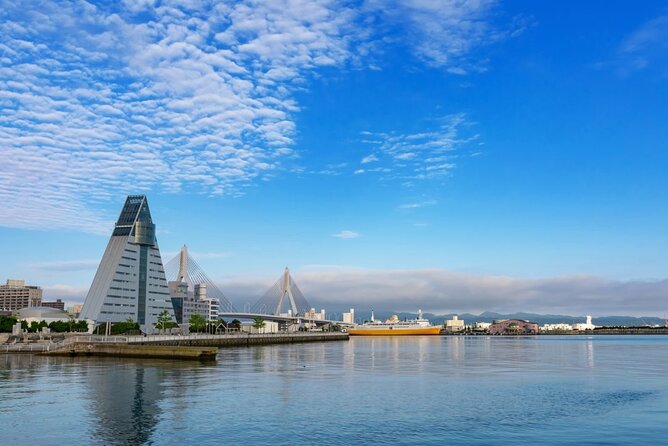
Aomori is not a city where every attraction sits around one tidy old quarter. It lies on Mutsu Bay and still follows parts of its Edo Period street grid, but much of what you see today was built after heavy wartime destruction. The result is a city of contrasts: modern museums, old religious sites, seafood markets, broad streets, and reminders of a much older Japan.
That makes a local guide useful. You are not simply ticking off buildings. You can ask why Nebuta matters, how the Jomon settlement functioned, or why Aomori has invested so heavily in contemporary art. With a private booking, your guide can spend more time on the subjects that interest you and less time on places that do not.
The advertised price is $154.84 per person. Its value depends heavily on group size. For one or two people, it is a fairly substantial guiding fee once you add admission and transport. For a larger party, the group discount can make the cost easier to justify, especially if you want live interpretation and a flexible plan rather than a fixed bus itinerary.
The six-hour length is enough for three or four meaningful stops. It is not enough for all six listed attractions, plus lunch and travel, without rushing. I would decide on your top two priorities before meeting your guide, then keep one or two flexible choices for the day.
Other tours with a licensed guide in Japan:
- Tokyo 6hr Private Tour with Government-Licensed Guide
★ 5.0 · 3,902 reviews - Tokyo 4hr Private Tour with Government-Licensed Guide
★ 5.0 · 1,394 reviews - Kyoto 6hr Private Tour with Government-Licensed Guide
★ 5.0 · 1,369 reviews
Wa Rasse brings the Nebuta Festival to life
Nebuta Museum Wa Rasse is the clearest starting point for understanding Aomori. The center is dedicated to the city’s major festival, held from August 2 through August 7, when enormous illuminated floats move through the streets.
Inside, five floats from the previous festival are displayed. Their scale is hard to grasp from photographs alone. The museum also uses video, sound, and images to show how the floats are built and used. A guide can help you notice the figures, colors, movement, and dramatic faces rather than treating the displays as giant decorations.
This is a good choice even if you are not visiting in August. It gives you the background needed to appreciate the festival at another time of year. It can also be a strong first stop because it gives cultural context for the rest of your day in Aomori.
Allow about an hour here. Admission is not included. Ask your guide in advance how the ticket arrangement works, since guide entry fees are covered only for listed sights under the tour terms, while your own entrance costs remain separate.
Festival information deserves careful handling. One past experience included confusion over parade details and festival explanations, so ask direct questions and confirm current event information if the festival is taking place during your visit. A private guide can be excellent for context, but you should not assume every guide has the same level of festival expertise.
Sannai-Maruyama connects Aomori with ancient Japan
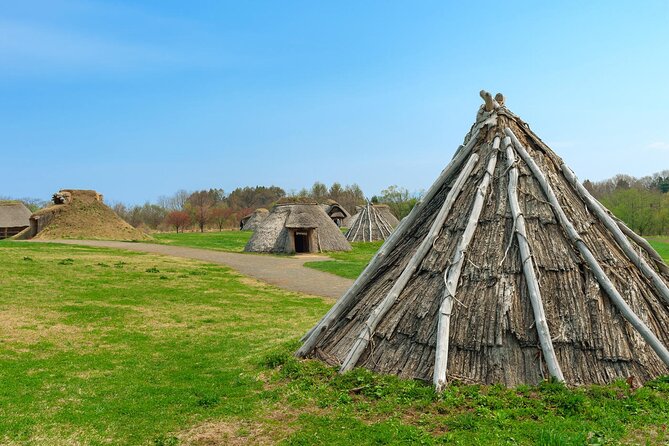
Sannai-Maruyama is the strongest reason to choose this tour for archaeology. The site reveals the reconstructed foundations of a Jomon Period settlement, and it was only discovered in 1992. It later received special national historic landmark status.
The Jomon people lived in Japan long before the better-known samurai and castle eras. At Sannai-Maruyama, the foundations and reconstructions help you picture daily life in a settlement that once included homes, storage buildings, tools, and communal spaces. The site is more rewarding when someone explains what the post holes, earthworks, and building layouts suggest.
One guide, Kaz, was particularly associated with explaining Sannai-Maruyama in detail. You should not assume Kaz will be your guide, but you can request a guide with strong archaeological knowledge when booking or contacting the operator.
The site works well for adults and older children who enjoy questions about how people lived. It may be less appealing if your interest is limited to famous paintings or city shopping. The Aomori Museum of Art is close by, so the two can make a sensible pairing if you want ancient and modern culture in one part of the city.
Aomori Museum of Art pairs white architecture with Jomon themes
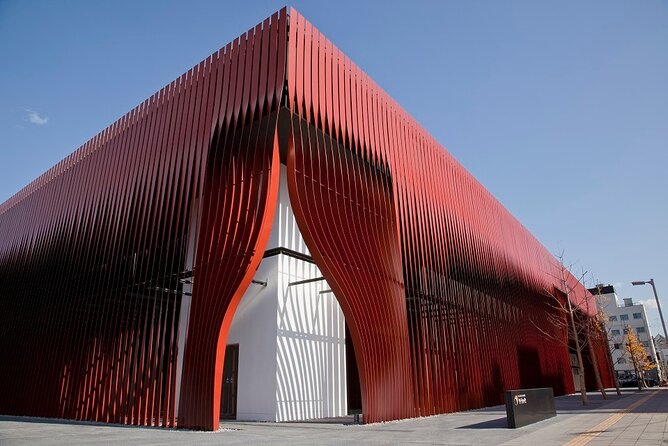
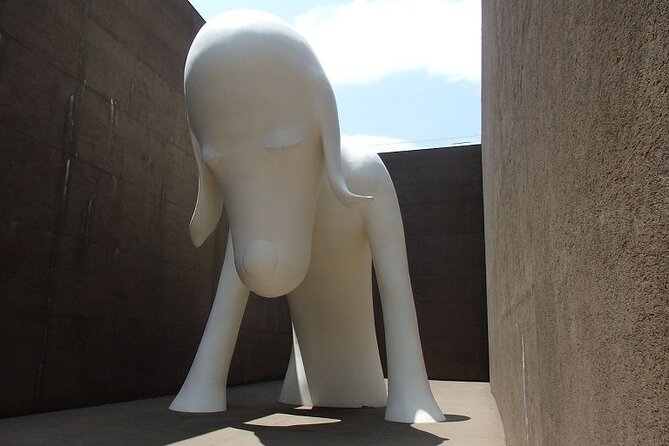
The Aomori Museum of Art is housed in a white cubic building designed by architect Jun Aoki. Its design was made to relate to the nearby Sannai-Maruyama archaeological site, giving the museum a strong connection to the older settlement rather than making it feel like an isolated modern box.
The building itself is part of the visit. The clean geometry and large white surfaces create a different mood from the dark, theatrical interiors at Wa Rasse. Your guide can help you connect the museum’s architecture, its setting, and the wider way Aomori presents its past and present.
Plan about an hour. Admission is extra, and you may want to check which exhibitions are on display when you visit. The tour description identifies the museum as a key stop but does not promise a particular exhibition, so choose it for the building and general art experience rather than one specific work.
Pairing this museum with Sannai-Maruyama is efficient. Pairing it with Wa Rasse gives you two very different expressions of Aomori culture: festival spectacle and contemporary art.
Same base, a different sort of day:
- Mt Fuji and Hakone 1-Day Bus Tour Return by Bullet Train
★ 5.0 · 26,383 reviews - 1-Day Tokyo Bus Tour
★ 5.0 · 14,250 reviews - PERFECT KYOTO 1-Day Bus Tour
★ 5.0 · 13,518 reviews - Tokyo: TOKYO SKYTREE® Admission ticket
★ 4.5 · 11,192 reviews
Munakata Shiko shows Aomori’s printmaking tradition
The Munakata Shiko Memorial Museum of Art honors Munakata Shiko, an Aomori native who lived from 1903 to 1975. His woodblock prints are central to the collection, including his major series Ten Great Disciples.
Munakata’s work gives the tour a more personal connection to Aomori. Instead of only seeing large public institutions, you are following the work of an artist from the region. A guide can add useful background about his place in Japanese printmaking and help you look at the forceful lines and carved surfaces in the prints.
This is a good stop for art-focused visitors, especially if you want something quieter than the festival museum. It is also a useful alternative if your group does not want to spend time at an archaeological site.
The museum is listed as a one-hour stop, but the final length depends on your interests and the day’s route. Admission is not included. Check the museum’s current opening information before building your entire plan around it.
Kyodokan offers local history in a smaller setting
The Aomori Prefectural Kyodokan, also described as the Aomori Prefectural Folk Museum, holds a large collection of Jomon Period pottery. It also includes miniature reconstructions of Jomon huts and displays of tools from this early period.
This stop can help you understand Sannai-Maruyama before or after seeing the actual site. Pottery and tools are easier to appreciate when you can ask how they were used, what they reveal about daily life, and how archaeologists interpret them.
I would choose Kyodokan if your main interest is local history and material culture. If your priority is seeing the most famous places in a limited six-hour window, you may prefer Sannai-Maruyama itself, Wa Rasse, and one art museum.
The museum is planned as an hour-long visit, with admission extra. Because the tour allows only three or four sites, ask your guide to explain the difference between Kyodokan and Sannai-Maruyama before committing to both.
Building a realistic six-hour plan
The tour offers six main choices:
- Nebuta Museum Wa Rasse
- Aomori Prefectural Kyodokan
- Aomori Contemporary Art Center
- Munakata Shiko Memorial Museum of Art
- Aomori Museum of Art
- Sannai-Maruyama archaeological site
Each stop is shown as about one hour, but six hours of visits alone leaves no room for walking, transfers, food, delays, or conversation. A sensible plan is three stops, or four if they are close together and your group moves efficiently.
For a first visit, I would consider Wa Rasse, Sannai-Maruyama, and the Aomori Museum of Art. That combination covers festival culture, ancient Japan, and modern architecture. If you prefer traditional objects and art, swap in Kyodokan or the Munakata museum.
The Aomori Contemporary Art Center is another option for visitors who enjoy architecture and modern art. It was designed by Tadao Ando on the grounds of Aomori Public College, and its building and water feature are intended to work together. Because the tour details do not specify its current exhibitions or exact transport time, ask your guide how well it fits with your other choices.
What the guides add, and where you should stay alert
The tour uses licensed local English-speaking guides, but the experience can vary by person. Past guide names include Fuji, Rocky Tanaka, Kaz or Kazumi, Tomohiko Kudo, Tomi, and Rocky. Some guides have been praised for their warmth, preparation, local stories, apple tasting suggestions, help with food, and ability to adapt the day.
Kaz received especially strong praise for explaining Sannai-Maruyama. Tomohiko was described as having long local experience and a city marketing background. Other guides helped arrange local food, used kimono shopping, temple visits, or access to a Nebuta festival performance. These details show what a good private guide can do beyond reciting facts.
At the same time, you should keep expectations practical. A licensed guide is not automatically the right specialist for every subject. One serious complaint described missed sights, rushed meals, incorrect information, and poor communication during a late cruise-ship day. The operator responded that it was investigating the matter.
If you are arriving by cruise ship, confirm the meeting point, the exact available hours, and the route before the morning begins. If you have mobility concerns, tell the operator in advance. The tour is on foot, and one positive experience involved a guide helping arrange accessible seating at a Nebuta event, but that kind of support should be discussed ahead of time rather than assumed.
Walking, transport, lunch, and extra costs
Pickup means meeting your guide on foot within a designated area of Aomori city. This is not a private car tour. Transportation fees are excluded, and you are responsible for lunch, admission tickets, and personal expenses.
That matters because Aomori’s attractions are not all next door. A guide can help select a route, but you may still use public transport or pay for other local transfers. The tour description says most travelers can participate and that the route is near public transportation, but it does not promise a fully step-free route.
Wear comfortable shoes and leave room in the schedule for weather. Aomori can be rainy, and one successful tour took place in wet conditions with the group still enjoying the city and cherry blossoms. If you are visiting during a festival or peak season, crowded sites can also change the day’s timing.
The food side is flexible rather than built in. Past guiding days included fish-market meals, local apples, and regional fried foods, but lunch is not part of the package. Ask your guide for a food suggestion, then allow enough time to eat properly. A rushed meal can undermine the value of a private day.
Cancellation and booking details
You receive confirmation at booking. Free cancellation is available up to 24 hours before the start time for a full refund. Changes or cancellations inside that 24-hour window are not accepted for a refund, and cut-off times use local Aomori time.
Service animals are allowed. The activity is private, so only your party participates, and groups cannot be combined. Hirosaki cannot be added to this tour, despite some past guiding experiences that included Hirosaki Castle and nearby attractions. If Hirosaki is your priority, choose a separate tour.
Who should book this Aomori tour?
I would book this experience if you want a flexible introduction to Aomori and prefer conversation over a fixed group schedule. It suits first-time visitors, art lovers, people curious about Jomon archaeology, and cruise passengers who want help using limited time.
It is also a good fit for families or small groups with different interests. One person can focus on Nebuta, another on art, and another on archaeology, then the guide can build a compromise route.
I would hesitate if you want private transport, a packed list of every major attraction, or a guaranteed specialist guide. The six-hour format is best when you accept that three or four thoughtful stops are better than six rushed ones.
Should you book it?
Book it if you want Aomori explained by a local guide and are willing to plan the day with some care. Start with Wa Rasse and Sannai-Maruyama, then choose one art museum or Kyodokan based on your interests.
Before paying, confirm your meeting point, expected walking distance, transport costs, guide language ability, and preferred sights. Ask specifically about Nebuta information if you are visiting during festival season. With those details settled, the tour can give you a useful, personal introduction to a part of Japan that is easy to skim past on your own.
FAQ
How long is the Aomori private tour?
The tour lasts approximately six hours.
Is the tour private?
Yes. Only your own party participates, and groups cannot be combined.
How many sights can I visit?
The tour includes a customizable selection of three or four sites from the listed attractions.
Which attractions are available?
The listed choices are Nebuta Museum Wa Rasse, Aomori Prefectural Kyodokan, Aomori Contemporary Art Center, Munakata Shiko Memorial Museum of Art, Aomori Museum of Art, and Sannai-Maruyama archaeological site.
Is transportation included?
No. This is a walking tour, and transportation fees and private transportation are not included.
Are entrance tickets included?
No. Entrance fees are not included in the price. Guide entry fees are covered only for sights listed under the tour’s stated attractions.
Is lunch included?
No. Lunch and other personal expenses are separate.
Can I visit Hirosaki on this tour?
No. Hirosaki cannot be included, even though some past guiding experiences mentioned Hirosaki attractions.
What is the cancellation policy?
You can cancel up to 24 hours before the start time for a full refund. Cancellations or changes made less than 24 hours before the experience are not refunded or accepted.
Just added in Japan
- Nagasaki Private Customizable Half Day Tour★ 5.0 · 16 reviews
- Nagasaki Full Day Tour with Licensed Guide and Vehicle★ 5.0 · 27 reviews
- Nagasaki Like a Local: Private & Custom Experience (2-3 hrs)★ 5.0 · 14 reviews
- Nagasaki Private Tour with a Local – Highlights & Hidden Gems★ 5.0 · 24 reviews
- Nagasaki WW2 History and Culture Tour★ 5.0 · 19 reviews
- Snow Monkeys, Hokusai & Sake: A Perfect Day in Nagano★ 5.0 · 19 reviews
- Wasabi Farm Walking Tour & Lunch★ 4.5 · 20 reviews
- Nagasaki Street Food Adventure: Private Walking Tour with a Local★ 5.0 · 26 reviews
Government-Licensed Guide Tours, compared.
Tokyo 6hr Private Tour with Government-Licensed Guide
Read our review →
Hiroshima / Miyajima Full-day Private Tour with Government Licensed Guide
Read our review →
Kyoto 4hr Private Tour with Government-Licensed Guide
Read our review →
Hiroshima City 4hr Private Walking Tour with Licensed Guide
Read our review →
Private Kyoto Tour with Licensed Guide & Vehicle (Max 15 persons)
Read our review →
Nikko Full-Day Private Tour with Government-Licensed Guide
Read our review →
Himeji Half-Day Private Tour with Government-Licensed Guide
Read our review →Browse the lists this tour appears in