
Reviewed · CYCLING TOURS
Bike Tour Exploring North Kyoto plus Lunch
Kyoto reveals itself best at street level, and this tour gets you off crowded buses and into the city’s quieter lanes. You’ll ride to Nishi Honganji, Kitano Tenmangu, the Golden Pavilion, Gion, and other corners that are easy to miss from a taxi window.
I like the small maximum of eight people and the way the guides adjust the pace to the group. I also like the included lunch, which has ranged from a 400-year-old noodle restaurant to sushi, depending on the day. The main caution is simple: this is an active half-day, and heat, rain, traffic, or a 13-mile route can affect your comfort.
Key points to know before you book
- A street-level view of Kyoto: Ride through back lanes and local streets instead of moving from sight to sight by bus.
- The Golden Pavilion is included: Kinkakuji entrance, guidance, and time to pause are part of the route.
- Lunch is built into the day: The meal may be noodles or sushi, and dietary needs should be shared in advance.
- Small groups matter: The tour accepts no more than eight people, giving the guide room to adjust the pace.
- Expect about 13 miles: The cycling takes roughly two and a half hours, spread across a five to six-hour outing.
- Guides shape the experience: Mayko, Julian, Indra, Quinn, Karl, Jay, and Jamie are among the guides praised for clear history, humor, and careful riding.
Why Kyoto works so well by bicycle
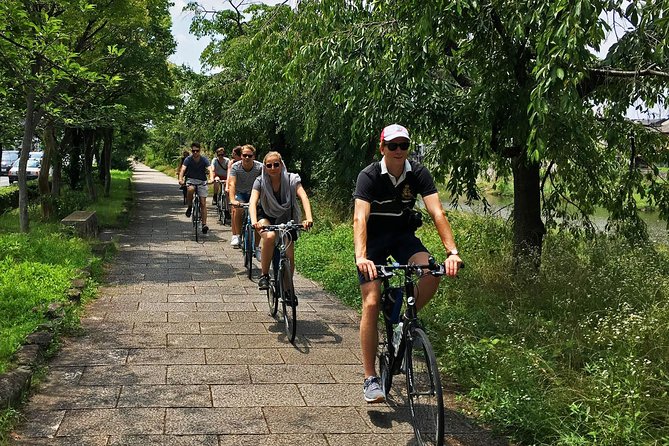
Kyoto is not a difficult city to understand, but it can be frustrating to cross. The major sights are spread out, buses fill quickly, and a short map distance can take longer than expected in traffic. A bicycle gives you a practical middle ground: more range than walking, more freedom than a bus, and a better view of ordinary streets.
This is not a racing tour. The route is generally easy to moderate, with one noticeable incline toward Kinkakuji and a downhill stretch afterward. You stop often for temples, shrines, photographs, water, and explanations, so the riding is broken into manageable sections.
The day starts at Cycle Kyoto at 7 Higashikujō Nishisannōchō, near public transportation, at 10 a.m. You meet the guide and group, get fitted to a high-quality Cannondale bike, and receive the day’s guidance. Bottled water is included. Helmets have been offered on some departures, and seat padding and bike sizing help make the long ride more comfortable.
I like the way this format combines orientation with sightseeing. If you schedule the tour early in your Kyoto stay, you’ll get a useful sense of the city’s layout and may find several places to revisit later on your own.
Other cycling tours in Kyoto people book:
- Arashiyama Bamboo Forest & Hidden Gems Bike Tour (Early Bird)
★ 5.0 · 613 reviews - 5 Top Highlights of Kyoto Full Day Bike Tour (E-bike option)
★ 5.0 · 511 reviews - E-Bike Tours of the highlights of Kyoto!!!
★ 5.0 · 291 reviews
Nishi Honganji and the scale of Kyoto’s religious buildings
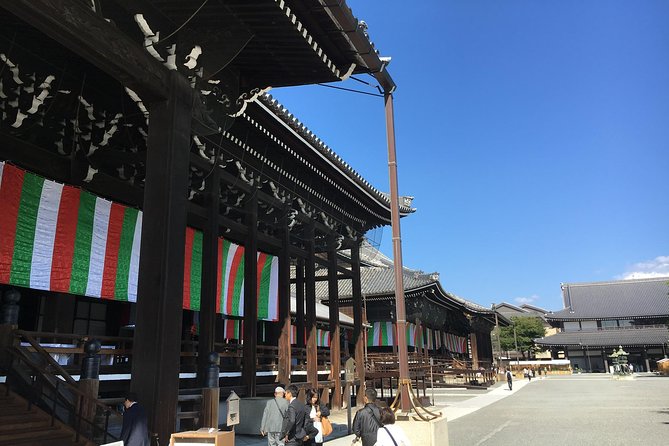
The first major stop is Nishi Honganji, one of Kyoto’s less-visited religious sites and home to one of the world’s largest wooden buildings. You spend about 15 minutes here, enough to enter, look around, and hear why the site matters.
This is a good early stop because it sets the tone for the day. Kyoto is not only a collection of famous postcard sights. Its religious buildings can be vast, active, and central to local life, even when they receive less attention from international visitors.
The short visit also keeps the morning moving. You won’t spend hours inside one complex while the rest of the route waits. Instead, the guide uses the stop to explain the setting before leading you back into the streets.
Pay attention to the building details and repairs. One memorable feature noted by a guide-led visit was the visible mending at Nishi Honganji, where restoration became part of the character of the place rather than something to ignore. That kind of detail is hard to notice when you rush through independently.
Kitano Tenmangu brings daily shrine life into view
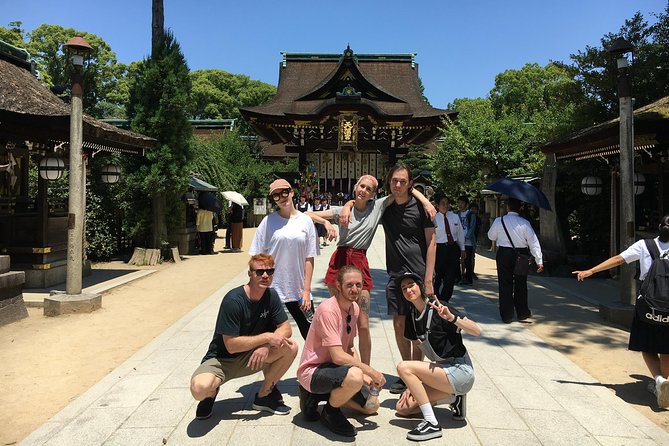
At Kitano Tenmangu, you spend about 20 minutes with local shrine goers and learn about the shrine’s past. It is a calmer stop than the Golden Pavilion and gives the guide room to explain Shinto customs, religious practice, and the way old traditions fit into modern Japanese life.
The guides are especially useful here. Indra has been praised for explaining the differences between Buddhism and Shinto, while Quinn and Jay are noted for spending extra time on the meaning of shrine and temple spaces. You are not simply pointed toward a gate and sent off to take pictures.
The visit is also a good example of the route’s balance. The day includes famous attractions, but it does not treat Kyoto as a checklist. You get a major shrine, a large Buddhist temple, a former imperial site, and the geisha district, with cycling between them providing the thread.
Kinkakuji, the Golden Pavilion, and the one real climb
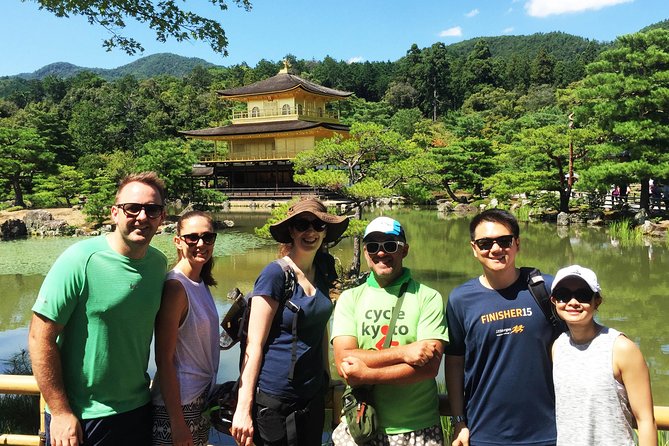
Kinkakuji is the headline stop. You spend around 30 minutes at the Golden Pavilion, with admission included and commentary from the guide. This is one of Japan’s most visited attractions, so it can be busy, but the tour makes the visit easy by handling the entrance and placing the site within the wider story of Kyoto.
The building’s gold exterior and pond setting make it a strong visual reward after the morning ride. You’ll have time for photographs, an ice cream, and a short rest before getting back on the bike.
There is a slight climb on the approach. It is not described as a major hill, but it is the part of the ride most likely to test casual cyclists. Afterward, the route becomes easier, with a downhill section that many people appreciate.
The 30-minute stop is long enough for a proper look but not long enough for a slow, detailed exploration of every corner. If Kinkakuji is a personal priority, you may want to return independently for more time. The tour’s value is that you see it without spending the whole day there.
Other rides on two wheels around Kyoto:
- Afternoon Kyoto Bike Tour: Bamboo Forest, Monkeys & Hidden Spots
★ 5.0 · 283 reviews - South Kyoto in a Nutshell: Gentle Backstreet Bike Tour!
★ 5.0 · 225 reviews - Tokyo Great Cycling Tour
★ 5.0 · 811 reviews - Tokyo Top Highlights 3h Guided E-bike Tour
★ 5.0 · 714 reviews
The former imperial grounds add breathing room
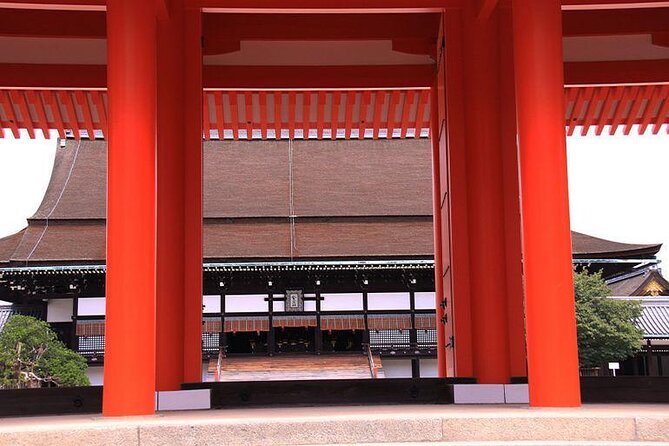
The itinerary also takes you through the grounds of the former seat of Japan’s imperial family. The supplied schedule does not give this stop a formal number or fixed duration, but it is part of the ride between the major sights.
This section matters because it changes the rhythm. After temple interiors, shrine gates, and busy sightseeing areas, open grounds provide space to ride and listen. The guide explains the site’s past while you move through it, making the history easier to place geographically.
The route is not only about arriving at attractions. Some of the best moments come between them, as you pass older streets, quieter corners, and parts of Kyoto you might otherwise skip. That is where the bicycle earns its keep.
Gion offers a brief look at Kyoto’s geisha district
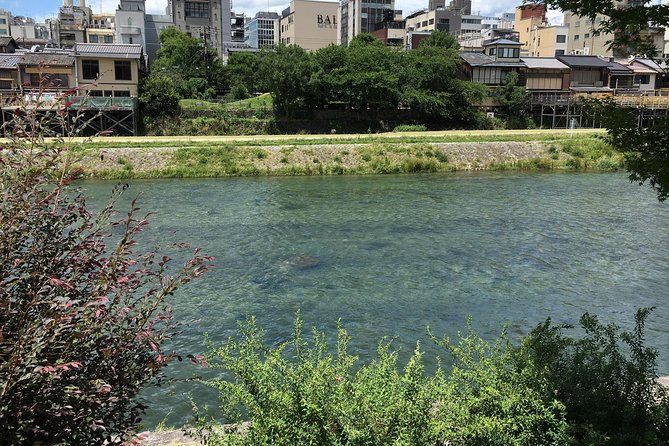
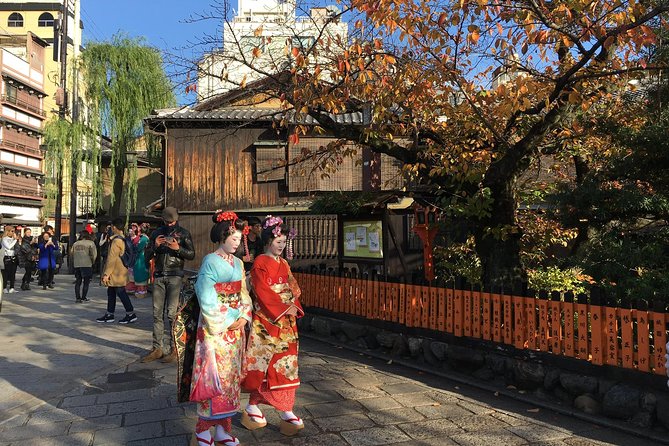
The tour stops in Gion for about 10 minutes. This is a short pause, not a full evening in the district, but the guide introduces the area’s geisha culture and explains some of the customs surrounding this famous part of Kyoto.
You might catch a glimpse of an entertainer, but that should never be treated as the point of the visit. Gion is a working district, not a stage set. The guide’s role is to help you understand the area respectfully rather than encourage intrusive photography or pursuit.
Ten minutes is enough for orientation and a few photographs, but not enough to explore Gion’s lanes in depth. If the district is high on your list, plan separate time for it. The bicycle tour gives you context and a location to return to, not a complete Gion visit.
Lunch is more than a practical refueling stop
Lunch is included, and it adds real value to a day that could otherwise feel like a long sequence of sights. The meal has varied by departure. Some groups have eaten at a traditional noodle restaurant with roughly 400 years of history, while another group was redirected to a sushi bar when the planned noodle house was closed.
That flexibility is worth knowing. You should expect a Japanese lunch, but not assume one fixed restaurant or one exact dish. Sushi, noodles, and other local options may be used depending on the day.
The meal also gives the group a proper pause. Six hours on a bike can feel different from six hours walking, and sitting down with the guide and other riders makes the day more social. Vegetarian arrangements have been provided, but you need to tell the operator about dietary requirements ahead of time.
Extra drinks are not included, so keep that in mind in hot weather. Bottled water is supplied, and guides have taken care to keep groups hydrated during very warm Kyoto days, but bringing suitable clothing and paying attention to your own water needs is still sensible.
The guides are a major part of the value
The route is strong, but the guide determines how much you get from it. Mayko has been praised for connecting old traditions with present-day Japanese culture. Julian is described as relaxed, engaging, and generous with local advice. Indra brings strong explanations of religion, history, and geisha culture.
Quinn has been praised for learning everyone’s name, adapting the speed, and adding breaks in hot weather. Karl is known for quick answers, humor, and a lively riding style. Jay has been especially good with families, keeping younger riders interested and adding time when needed. Jamie is another guide noted for humor and enthusiasm.
These names do not guarantee a particular guide on your date. They do show what to look for from the experience: clear storytelling, attention to safety, and a guide who can adjust the outing instead of forcing every group into the same pace.
The small group size helps. With a maximum of eight people, it is easier to ask questions, slow down for a photograph, or receive help with a bike adjustment. Solo participants can also fit in comfortably, since the guide has room to include everyone.
How demanding is the riding?
The most useful estimate is about 13 miles, or roughly 24 kilometers, over six hours. Actual distances and timing can vary, and one reported outing included around two and a half hours of actual cycling. The rest is spent at sights, over lunch, and taking short breaks.
You need to be comfortable riding a bicycle and have moderate physical fitness. The route is not presented as a hard athletic challenge, and the pace can be adjusted. Still, this is not a sightseeing ride where you pedal for five minutes and sit down. You will spend a meaningful part of the day on a bike.
A first-time city cyclist may find it easier than expected because the route is spread out and includes frequent stops. Someone who has not ridden for years may still feel tired by the end. The main factors are the weather, your comfort with urban cycling, and how you handle the slight climb to Kinkakuji.
The minimum age is 13. Families with teenagers can be a good match, particularly when everyone can ride confidently. The tour is less suitable for anyone who wants a slow, vehicle-free stroll through Kyoto.
Price, timing, and what is included
At $106.12 per person, the price is reasonable if you value a guide, a quality bicycle, temple admission, water, and lunch in one package. You are also paying for route planning and the ability to connect distant sights without arranging several bus rides.
The value is strongest for a first or second day in Kyoto. You cover major landmarks while learning how the city fits together, then use the rest of your trip to return to the places that caught your attention.
Included items are:
- Cannondale bicycle
- Guide service
- Bottled water
- Lunch
- Kinkakuji admission
- Other temple entrance fees listed for the tour
Extra drinks and gratuities are not included. The tour begins at 10 a.m. and ends back at the Cycle Kyoto meeting point after about five to six hours.
Free cancellation is available up to 24 hours before the local start time. Poor weather can lead to a rescheduled date or full refund, and the same applies if the minimum group size is not reached.
Who should book this Kyoto bike tour?
I would choose this for active first-time visitors who want a broad introduction without spending the day on buses. It suits couples, families with riders aged 13 and up, solo visitors, and small groups who like history with their sightseeing.
It is also a good fit if you want more than famous buildings. The back streets, quiet religious spaces, local shrine activity, and conversations with the guide are the real reason to book. You will see the major sights, but you will also get a sense of how they connect.
I would think twice if you dislike cycling in city streets, struggle with heat, or want long, unhurried visits inside each attraction. Gion is brief, Kinkakuji gets about 30 minutes, and the full route keeps moving.
Should you book it?
Book this tour if you want to see a lot of Kyoto in one day and prefer a bicycle to a crowded bus. The strongest reasons are the small group, included lunch and temple admission, flexible pace, and guides who bring real knowledge of Japanese religion, history, and local customs.
Skip it if your ideal Kyoto day means lingering at one temple, avoiding physical activity, or following a fixed lunch menu. For most reasonably fit visitors, though, this is a smart way to get your bearings, cover northern Kyoto, and leave with several places worth exploring again.
FAQ
Where does the bike tour start?
It starts at Cycle Kyoto, 7 Higashikujō Nishisannōchō, Minami Ward, Kyoto, 601-8003, Japan.
What time does the tour begin?
The start time is 10 a.m.
How long does the experience last?
The tour lasts approximately five to six hours.
Where does the tour end?
The activity ends back at the Cycle Kyoto meeting point.
What sights are included?
The route includes Nishi Honganji, Kitano Tenmangu Shrine, Kinkakuji Temple, the grounds of the former imperial seat, and Gion.
Is the Golden Pavilion admission included?
Yes. Kinkakuji entrance is included, along with the temple entrance fees listed for the experience.
Is lunch included?
Yes. Lunch is included, although the restaurant and meal can vary. Past meals have included noodles and sushi.
How old must riders be?
Riders must be at least 13 years old and comfortable riding a bicycle.
What happens if the weather is poor?
If the experience is canceled because of poor weather, you’ll be offered another date or a full refund.
Just added in Kyoto
- Kyoto: Private Photoshoot Service★ 5.0 · 158 reviews
- Kyoto Rickshaw Tour★ 5.0 · 210 reviews
- Izakaya Style Cooking Class★ 5.0 · 219 reviews
- Kyoto: Traditional Concert at Townhouse or Bathhouse★ 4.9 · 224 reviews
- Ninja 2-hour Hands-on Lesson by Japanese master in Kyoto -Medium★ 5.0 · 218 reviews
- Kyoto: Arashiyama Bamboo, Temple, Matcha, Monkeys & secret spots★ 5.0 · 219 reviews
- The right way to know Kyoto★ 5.0 · 257 reviews
- Kyoto Geisha District Walking Tour in Gion★ 5.0 · 232 reviews
Cycling Tours, compared.
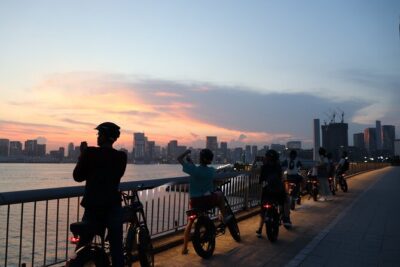

3h Tokyo E-Bike Tour: Hidden Gems, and Local Life with guide
Read our review →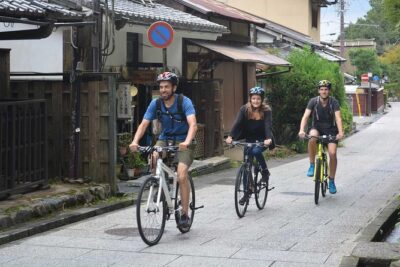
Arashiyama Bamboo Forest & Hidden Gems Bike Tour (Early Bird)
Read our review →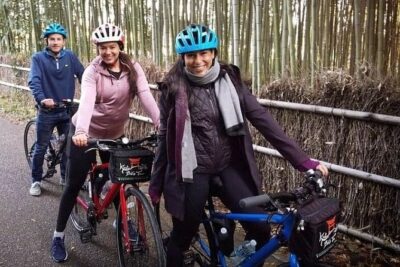
5 Top Highlights of Kyoto Full Day Bike Tour (E-bike option)
Read our review →
Hiroshima 2hr Peace Cycling Tour with Local Guide
Read our review →
5-Hour Osaka Bike Tour to the Neighborhood of Osaka Castle
Read our review →Browse the lists this tour appears in