
Reviewed · CYCLING TOURS
3h Tokyo E-Bike Tour: Hidden Gems, and Local Life with guide
Tokyo makes far more sense from a bicycle seat. In three hours, you can move from office towers and palace moats to old food shops, sumo country, and quiet residential lanes. The morning and afternoon routes differ, so your booking time shapes the whole experience.
I like the electric assist, which lets you cover a lot of ground without arriving worn out, and the small groups, capped at six people. Guides such as Yo, Jenny, Ted, Take, Kazu, Ninja, and Yoshiko are praised for clear explanations and careful pacing. The main caution is simple: you must be comfortable riding on busy city streets, and Tokyo summer heat can be serious.
Tokyo by e-bike: the key points
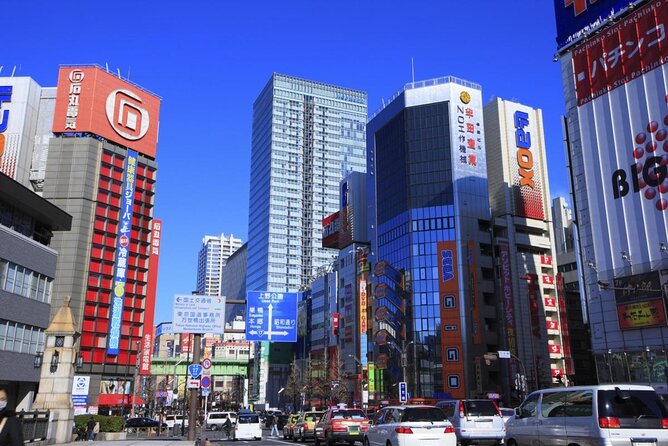
- Two different route options: Morning rides visit Tokyo Station, the Imperial Palace, Ginza, Tsukiji, and Nihonbashi. Afternoon rides head toward Akihabara, Kappabashi, Asakusa, Ryogoku, and Nihonbashi.
- Small groups matter: A maximum of six people makes it easier to ask questions, stay together, and adjust the pace.
- Electric assistance saves your legs: The bikes help you cover central Tokyo while still enjoying the feel of moving through its streets.
- Local streets are part of the experience: You are not simply ticking off famous sights. The route can include backstreets, neighborhood lanes, small bars, and everyday city scenes.
- Practical extras are included: You get a helmet, insurance, luggage storage for nonvaluables, simple rain gear, and seasonal items such as winter gloves or summer cooling products.
- You need basic cycling confidence: The tour is not suitable if you cannot ride a bicycle, and the city traffic requires attention.
Why cycling gives you a better first look at Tokyo
Tokyo is too large to understand from a train window, but too spread out to cover comfortably on foot in one afternoon. An e-bike solves much of that problem. You can stop at a gate, bridge, market, or photo point, then continue without waiting for another train or navigating a complicated station.
The electric assist is especially useful when the weather is hot. It does not turn the ride into a motorized sightseeing trip. You still pedal and remain part of the street scene, but hills, longer stretches, and a three-hour route feel more manageable.
I also like the way a bicycle links famous places with ordinary ones. You may see the grand Marunouchi buildings, then pass through a small lane near Kanda. You may visit Tsukiji, then ride along streets where local life matters more than sightseeing. That contrast is one of the tour’s strongest features.
This is not a private ride. Other people may join, although each booking is limited to six participants. The guide has to keep the group together, and you should stay alert at intersections and follow instructions. One useful point from the practical feedback is that it can be easy to fall behind, especially if you stop to take a photo without warning the guide.
Other rides on two wheels around Tokyo:
- Tokyo Great Cycling Tour
★ 5.0 · 811 reviews - Tokyo Top Highlights 3h Guided E-bike Tour
★ 5.0 · 714 reviews - Tokyo: 3-Hour Bike or E-Bike City Highlights Tour
★ 4.8 · 435 reviews
Meeting in Kanda and getting set up
The tour begins at Cycling Holiday Tokyo, about a one-minute walk from the west exit of JR Kanda Station. The shop has a restroom, waiting area, and storage for luggage other than valuables. That makes the start easy if you have come directly from another part of Tokyo.
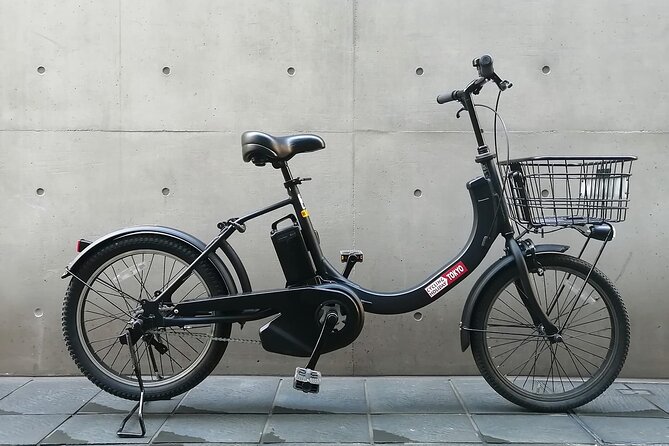
You will receive an electric-assist bicycle and helmet. A basket is available on the front of the bike, which is useful for water and a small bag. You should wear the helmet, bring sunscreen in warm weather, and carry a towel or extra drink during the hottest months.
The minimum age is 12, and the minimum height is 147 centimeters. You also need to be able to ride a bicycle. The route runs on city streets, so this is not a gentle park ride for complete beginners.
A short introduction to the bike helps you get comfortable with the controls. The bikes are described as easy to operate, but you still need to handle turns, pedestrians, traffic, and stops on your own. If you have not ridden in a city before, think carefully before booking.
The morning route: Tokyo Station, the Imperial Palace, and Tsukiji
The morning ride begins around Kanda, a compact downtown area associated with Japanese office workers. You may see small Japanese-style bars and side streets that feel far removed from Tokyo’s giant stations and shopping districts.
From there, the route moves through the financial center toward Tokyo Station. At Marunouchi Ekimae Hiroba, you stop to view the red-brick Tokyo Station building from Gyoko-dori Street. The guide explains the station’s history, giving context to the grand architecture rather than treating it as just a photo stop.
The visit to Tokyo Station is brief, around five minutes. That is enough for an introduction and photographs, but not for a museum visit or a long look inside the station. The value comes from fitting the landmark into a wider ride.
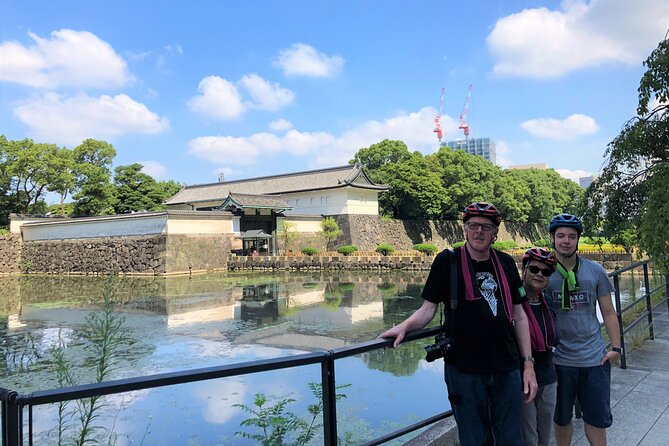
Next comes the Imperial Palace area. At Otemon Gate, you look across the moat toward Fujimi Yagura Tower. The scene is a useful reminder of Tokyo’s older layers, especially after the modern office blocks near Marunouchi.
The route can also pass through the Imperial Palace East Gardens area, a broad green space of roughly 200,000 square meters in the center of the city. The exact stops may change with traffic, pedestrian conditions, road conditions, the season, and whether it is a weekday or weekend.
Sakuradamon is another notable point on the morning route. You pass through one of the traditional castle gates, a strong visual contrast to Tokyo’s modern business districts. The tour does not offer a long palace visit, so you should book this for a broad city overview rather than a detailed palace tour.
Ginza backstreets and the old food stalls of Tsukiji
The ride through Ginza can use the main streets or quieter back lanes, depending on conditions. Ginza is famous for luxury stores, but the side streets give you a different sense of the district. The guide can point out the contrast between high-end shopping and older local eating and drinking spots.
That flexibility is one of the reasons the route feels less rigid than a standard sightseeing circuit. A guide can respond to traffic and pedestrian levels while still showing you the area’s character.
At Tsukiji Outer Market, you have a short stop among small, old-fashioned food shops. The market is a good place to see how food remains tied to daily life in Tokyo. You should not expect a full meal included in the tour. Food and drinks are self-paid, and the official stop is around ten minutes.
If you want to shop or eat slowly at Tsukiji, plan to return later on foot. The short stop gives you an introduction, not enough time for a detailed market crawl. That is a fair trade on a three-hour ride because the tour continues through local streets that most first-time visitors would not find easily.
The morning route finishes back at the meeting point after passing through central Tokyo and Nihonbashi. Nihonbashi Bridge has long been a central reference point in the city, and traditional road-distance measurements begin there. It is a small stop, but it helps connect Tokyo’s commercial past with its current city center.
Other quiet corners of Tokyo:
- Tokyo: Custom Hidden Gems & Highlights Tour with Local Guide
★ 4.7 · 272 reviews - Tokyo: 3-hour Guided E-Bike Tour of the City’s Hidden Gems
★ 4.8 · 251 reviews - Kyoto Geisha Walking Tour: Gion District & Hidden Gems
★ 4.7 · 3,273 reviews - Private Kyoto Tour with a Local, Highlights & Hidden Gems, Personalised
★ 5.0 · 1,543 reviews
The afternoon route: Akihabara, Kappabashi, and Asakusa
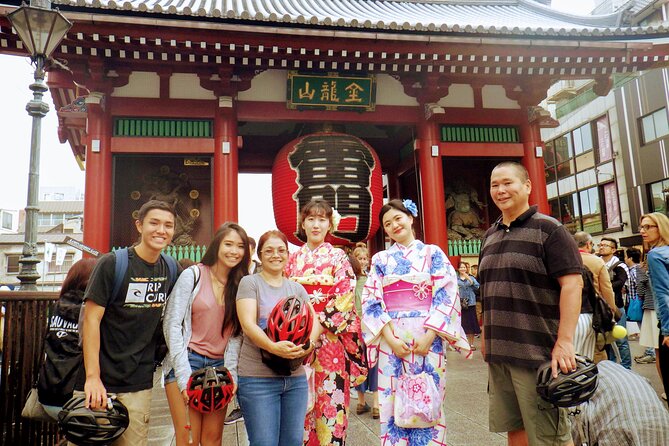
The afternoon ride takes a different direction. Akihabara is the city’s well-known center for youth culture, electronics, and geek culture. The stop is brief, around five minutes, so the guide’s explanation matters more than shopping time.
You will not have time for a full tour of the district’s shops or maid cafes. Instead, you get a quick look at how Akihabara fits into Tokyo’s modern subcultures. If you want to browse stores, return after the tour.
From Akihabara, the ride continues toward Kappabashi Street, also called Kappabashi Dogugai. This is a practical shopping district for kitchen equipment, professional cooking tools, Japanese knives, and restaurant supplies. It is one of the more unusual stops because it shows a working side of Tokyo rather than a conventional attraction.
The stop lasts about ten minutes, with some opportunity to look around or shop. Keep purchases modest unless you are prepared to carry them safely on the bike. The tour does not state that shopping time is guaranteed, since the route can change with traffic and other conditions.
Asakusa is the afternoon route’s most famous stop. The district is home to Senso-ji, Tokyo’s oldest temple, and is one of the places most people want to see on a first visit to Tokyo. The stop is also brief, so you should not expect a full temple visit or a detailed exploration of the surrounding lanes.
Still, arriving by bicycle gives you a useful orientation. The guide can explain temple customs and rituals, which helps you understand what you are seeing later in your Japan trip. You can return to Asakusa afterward when you have more time for the temple grounds, shopping streets, and food.
Ryogoku and Nihonbashi add local character
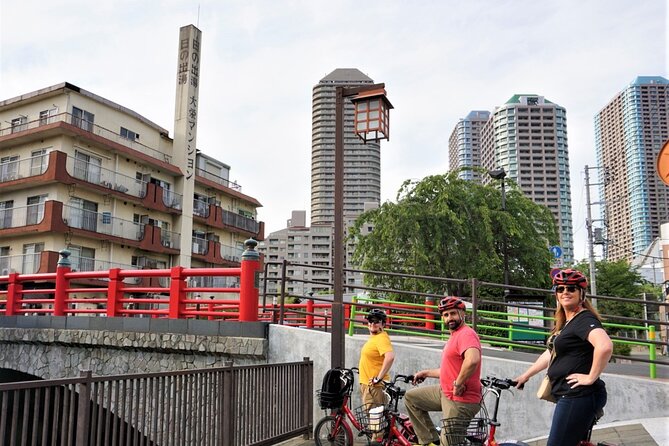
The afternoon route continues toward Ryogoku, Tokyo’s sumo district. If timing is lucky, you might see sumo wrestlers in the area, but that is not guaranteed. The stop is best understood as a look at the neighborhood connected with Japan’s national sport, not a promise of a wrestling event.
Ryogoku adds a welcome change from the better-known temple and shopping areas. It also gives the guide room to explain how different parts of Tokyo develop their own identities.
The route also includes Nihonbashi Bridge, a historic center of the city. Like the morning tour, the afternoon ride ends back at the Kanda meeting point. Having the same start and finish is practical, especially if you left luggage at the shop.
What the guides add to the ride
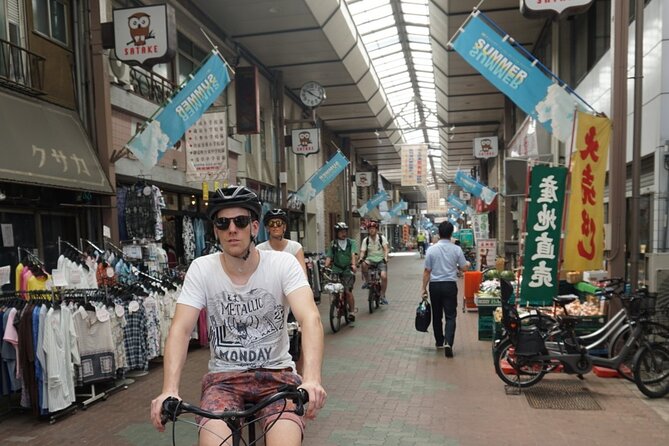
The guide is the difference between a useful city orientation and a simple bicycle rental. The team includes guides named Yo, Jenny, Ted, Take, Kazu, Ninja, Yoshiko, and others. The experience can vary by guide, but the strongest pattern is personal attention, safety reminders, local explanations, and frequent photo stops.
Yo is described as friendly and easygoing. Ted is praised for answering questions and caring about group safety. Jenny is noted for keeping the group together and for showing less crowded local areas. Take is known for history, food information, and a calm, entertaining approach.
Ninja is associated with the Imperial Palace and bay-area morning course. Kazu has led rides that cover a wide section of the city with historical explanations along the way. Yoshiko has also been praised for looking after families during very hot conditions.
You should not expect a lecture from a script. The best use of the guide is to ask questions as you ride. Ask about food, local customs, neighborhood names, or places to revisit later. Several people used the tour as an orientation at the start of a Tokyo stay, then returned to areas they had noticed from the bike.
Price, pace, and overall value
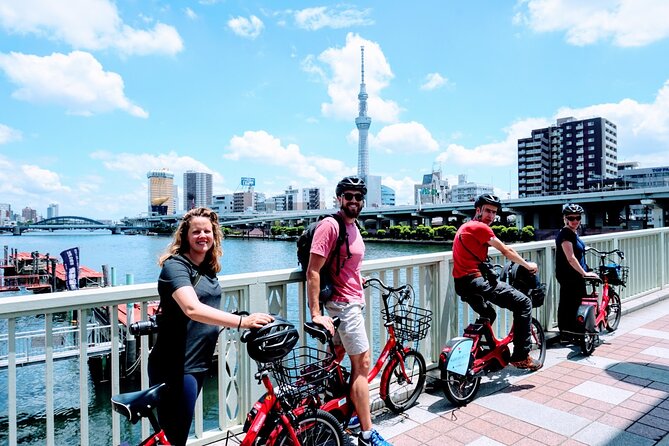
At $63.01 per person, this is not the cheapest way to move around Tokyo, but it offers more than bicycle rental. The price includes the e-assist bike, helmet, English-speaking guide, insurance, luggage storage for nonvaluables, and basic weather supplies.
The value is strongest if you want a broad first look at the city. In three hours, you can connect several districts that would take much longer on foot. You also avoid the planning burden of choosing safe roads and working out how to reach each stop.
The value is weaker if you prefer slow museum visits, long market meals, or extended shopping. Most stops are short, often five or ten minutes. You are buying movement, orientation, local commentary, and access to side streets, not a detailed visit inside every attraction.
With a 98 percent recommendation rate and a 4.9 rating from 670 reviews, the experience has a strong record. Still, those numbers should not hide the physical demands. A hot day, busy roads, and the need to keep pace can affect your enjoyment.
Weather, clothing, and safety advice
Tokyo’s July and August heat can be intense and humid. Bring water, sunscreen, and a towel. An electrolyte drink is a sensible choice on a very hot day, and light clothing will make the ride easier.
Winter riders should bring warm clothes and gloves. Simple winter gloves are provided, but your own warm layers may be more comfortable. Simple rain gear is included, but rain can still make cycling less pleasant, especially if you wear glasses.
The tour may be canceled for rain or dangerous heat. The operator checks the forecast the day before, using the heat stress index as one guide in summer. If conditions become unsafe during the ride, the guide may stop the tour and return to the starting point. In that case, the fee is refunded.
Traffic is the main practical concern. You need to watch the guide, obey instructions, and avoid drifting behind the group. Routes can change to deal with traffic, pedestrians, road conditions, weekdays, weekends, and seasonal conditions. That flexibility is good for safety, but it means the exact sequence is not guaranteed.
Free cancellation is available up to 24 hours before the start time. Cancellations or changes inside that period are not refunded, except when the operator cancels for weather or because the minimum number is not met.
Who should book this Tokyo ride?
I would choose this tour for a first or second day in Tokyo, when you want a clear mental map before exploring on your own. It also suits families with children aged 12 and up, provided everyone can ride confidently and manage city traffic.
It is a good match for people who enjoy local streets, short photo stops, and practical historical context. The electric bikes make it more approachable than a standard cycling tour, especially when you want to cover a large area.
I would think twice if you dislike traffic, have trouble cycling for three hours, or want a relaxed walking tour. The ride is designed to keep moving. You will see more places, but you will spend less time at each one.
Should you book the 3-hour Tokyo e-bike tour?
Book it if you want to see how Tokyo’s famous districts connect, with a local guide handling the route and explaining what you pass. The morning ride is best for grand architecture, palace views, Ginza, and Tsukiji. The afternoon ride is better for Akihabara, kitchen-tool shopping, Asakusa, and sumo country.
Choose the route that fits your interests, pack water, and treat the ride as an orientation rather than a series of full attraction visits. If you can handle city cycling and accept the weather risk, this is a practical, social way to get beyond the train system and see Tokyo at street level.
FAQ
Where does the Tokyo e-bike tour start?
It starts at Cycling Holiday Tokyo, 3-chome-8-6 Uchikanda, Chiyoda City, Tokyo 101-0047. The shop is about a one-minute walk from the west exit of JR Kanda Station.
Where does the tour finish?
The tour ends back at the meeting point in Kanda.
How long does the tour last?
The tour lasts approximately three hours.
How much does the experience cost?
The listed price is $63.01 per person.
What is included in the price?
The price includes an electric-assist bicycle, helmet, English-speaking guide, insurance, simple rain gear, and seasonal items such as winter gloves or summer cooling products. You may also leave nonvaluable luggage at the shop.
Is food included?
No. Food and drinks are paid for separately at the shop or during any stops.
What places does the morning route visit?
The morning route may include Kanda, Tokyo Station, the Imperial Palace area, Otemon Gate, Sakuradamon, Ginza, Tsukiji Outer Market, local backstreets, and Nihonbashi.
What places does the afternoon route visit?
The afternoon route may include Kanda, Akihabara, Kappabashi Street, Asakusa, Ryogoku, local streets, and Nihonbashi.
What age and height limits apply?
The minimum age is 12, and the minimum height is 147 centimeters. You must be able to ride a bicycle.
What happens if it rains or becomes dangerously hot?
The operator may cancel the tour because of rain or dangerous heat. You will be offered another date or a full refund. If unsafe weather develops during the ride, the guide may return the group to the starting point, and the tour fee will be refunded.
Just added in Tokyo
- Nikko: Edo Wonderland Edomura Cultural Theme Park Ticket★ 4.3 · 205 reviews
- 《MEMBERS-ONLY-BAR-HOPPING》Discover Your Special Whiskey in Tokyo!★ 5.0 · 29 reviews
- Japanese Whisky Hunting《HIGH-QUALITY-ONLY》Rare Tasting Class★ 5.0 · 20 reviews
- Luxury Tokyo Sake, Cocktail, Whisky and Pairing Tour★ 5.0 · 18 reviews
- Wagyu & Sake Pairing in Shinjuku – Steak, Shabu-Shabu & More★ 5.0 · 112 reviews
- Small-Group Wagyu Beef and 7 Japanese Dishes Tokyo Cooking Class★ 5.0 · 190 reviews
- Tokyo: KABUKI Show at Kabukiza Theatre Admission Ticket★ 4.8 · 152 reviews
- Tokyo: KABUKI, BUNRAKU, etc. presented by National Theatre★ 4.6 · 135 reviews
Cycling Tours, compared.
Arashiyama Bamboo Forest & Hidden Gems Bike Tour (Early Bird)
Read our review →
5 Top Highlights of Kyoto Full Day Bike Tour (E-bike option)
Read our review →
Hiroshima 2hr Peace Cycling Tour with Local Guide
Read our review →
5-Hour Osaka Bike Tour to the Neighborhood of Osaka Castle
Read our review →Browse the lists this tour appears in