
Reviewed · HIROSHIMA & MIYAJIMA DAY TRIPS
Hiroshima: Hiroshima and Miyajima UNESCO Sites 1-Day Tour
Hiroshima and Miyajima make an unusually powerful pairing. In the morning, you face the Atomic Bomb Dome, Peace Memorial Park, and the museum. By afternoon, you are eating layered okonomiyaki, watching the Seto Inland Sea, and walking beneath the great torii of Itsukushima Shrine. The change in mood is part of what makes the day work.
I like the way the tour handles the difficult history with a live English-speaking guide, then gives you free time to take in the sites at your own pace. I also like the practical transport: an air-conditioned coach, round-trip ferry, museum and Miyajima entrance fees, and Wi-Fi on the bus are bundled into the $122 price. The main drawback is time. You see a lot in eight hours, but Hiroshima Castle is only passed by, and Miyajima can feel crowded around Omotesando Street.
- Two UNESCO-linked stops in one day: Visit the Atomic Bomb Dome and Itsukushima Shrine without arranging separate transport.
- A thoughtful morning: The Peace Memorial Park and museum receive enough time to feel meaningful, not merely photographed.
- A scenic change of pace: Ferry rides and Miyajima’s mountain setting follow the serious first half.
- Lunch choice matters: Hiroshima-style okonomiyaki is available, including a vegetarian version, but not vegan, halal, or gluten-free.
- Strong guide element: Guides such as Rino, Marin, Tomo, Mo, and Momiji are praised for clear English, warmth, and careful explanations.
- Easy station access: Meet at Hiroshima Station’s north side, then return there in the late afternoon.
Why the Hiroshima and Miyajima pairing works
Hiroshima is not a one-note destination. Its Peace Memorial sites ask you to slow down and think about the human cost of the atomic bombing. Miyajima then offers shrines, temple buildings, sea views, local food, and time to wander.
That contrast can feel abrupt, but it is useful. The tour does not treat the Peace Memorial as just another sightseeing stop. You have a guided introduction at the Atomic Bomb Dome and Peace Memorial Park, followed by an hour inside the museum. Then the ferry carries you toward Miyajima and a very different setting.
I especially value the structure for a first visit. Hiroshima’s key memorial sites are spread around the city, while Miyajima requires a train or bus connection, a ferry, and careful timing. Here, the coach and ferry connections are handled for you.
The price is $122 per person. That is not the cheapest way to visit Hiroshima, especially if you already know the local transport system and prefer to set your own pace. But the fee includes the coach, ferries, entrance charges for the Peace Memorial Museum and Miyajima, an English-speaking guide, and taxes. Add the logistics of fitting both places into a single day, and the cost is reasonable for a tightly planned first visit.
Meeting at Hiroshima Station and getting oriented
The meeting point is in front of the Shinkansen Ticket Gate on the second floor of Hiroshima Station’s North Gate, at 2-1185 Matsubarachō, Minami-ku. Look for a staff member holding a green and white flag.
The day begins with a short coach ride of about 20 minutes. You pass Hiroshima Castle rather than stopping there. That is worth knowing if the castle is a priority for you. This tour is built around the Peace Memorial area and Miyajima, not a broad tour of every major Hiroshima sight.
The bus is air-conditioned and has free Wi-Fi. A multilingual audio guide is available in Spanish, French, Italian, German, Portuguese, and Ukrainian. The live tour languages are English and Japanese. The audio system adds useful background between stops, although one person found the English audio volume too low, so you should treat the guide’s live explanations as the main source of information.
If you are coming from Osaka, the tour can work as a long day trip by Shinkansen. Leave plenty of margin around the schedule. If you plan to take a bullet train after the tour, do not book it too tightly. The operator advises buying the ticket after the tour or booking a departure after 6:30 p.m.
Other long days west of Hiroshima:
- Peaceful Hiroshima & Miyajima UNESCO 1 Day Bus Tour
★ 5.0 · 5,309 reviews - Hiroshima / Miyajima Full-day Private Tour with Government Licensed Guide
★ 5.0 · 1,298 reviews - Hiroshima Historical Walking Tour – Why A-Bomb was Dropped
★ 4.8 · 893 reviews
The Atomic Bomb Dome: a quiet first stop
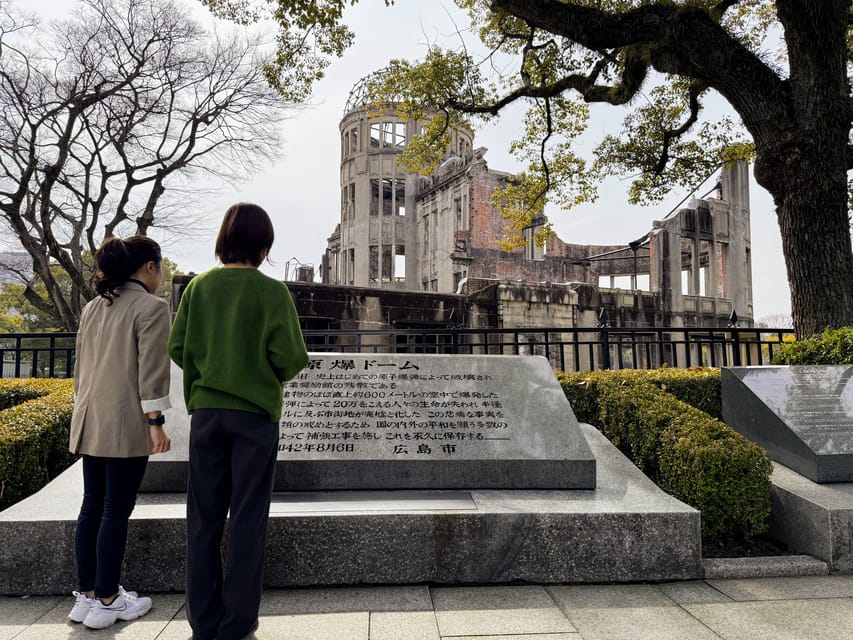
The first major stop is the Atomic Bomb Dome, the preserved remains of the former Hiroshima Prefectural Industrial Promotion Hall. It became a UNESCO World Heritage Site in 1996.
You receive about 20 minutes of guided time here. That is enough to see the structure, hear the basic story, and take in its position beside the river. It is not enough for a long architectural study, but the guide helps you understand why this damaged building was preserved rather than removed.
The dome is powerful partly because it is so direct. You are looking at a building altered by the blast, not at a later memorial designed from scratch. Your guide may also help you understand the surrounding memorial area, which gives the site more meaning than a quick photo stop.
Keep your attention on the guide during this opening section. The details shared here prepare you for the park and museum that follow.
Peace Memorial Park and the human scale of history
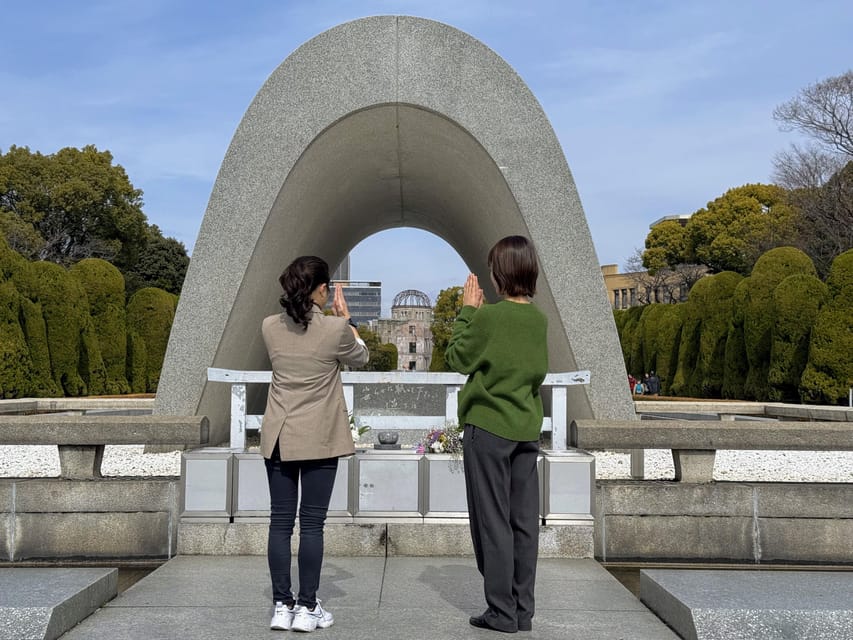
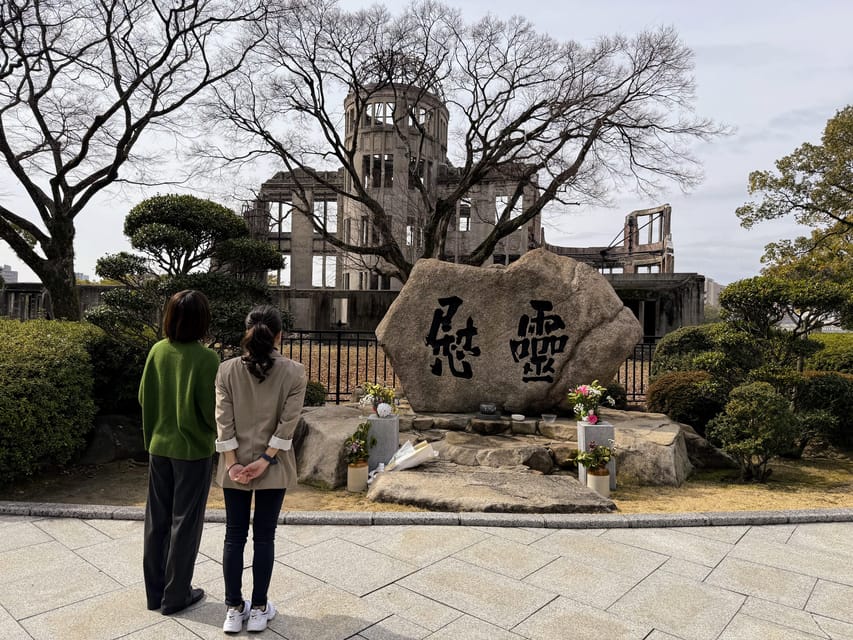
The coach continues to Hiroshima Peace Memorial Park, where the guided walk lasts about 40 minutes. The park includes the Cenotaph for the A-bomb Victims and the Children’s Peace Monument, associated with Sadako Sasaki, who died from radiation-induced leukemia.
The park is spacious and quiet, but the subject is heavy. A good guide matters here. Guides including Marin, Rino, Tomo, Mo, and Momiji have been praised for explaining the material clearly while treating it with care. Their role is not simply to point out monuments. It is to give you the context needed to understand what you are seeing.
You will have some walking during this part of the day, so comfortable shoes are sensible. The tour moves as a group, but the pacing includes guided time and later personal time. This balance helps you absorb the setting without being talked at every minute.
One hour inside the Peace Memorial Museum
The museum visit lasts about an hour and includes free time. That distinction matters. Your guide provides background around the memorial sites, but the museum portion is largely self-guided.
The exhibits address the atomic bombing and its aftermath in detail. Expect a serious, emotional visit rather than a quick historical overview. The material can be difficult, and you should plan to use the hour at your own pace.
One useful option is the museum’s separate audio guide, which has been noted as costing an additional 500 yen. It is not part of the tour package, but you may find it worthwhile if you want more explanation while moving through the exhibits.
The one-hour window is efficient, not generous. You can see the main sections, but you may want more time if you read every display carefully. If the museum is the central reason for your visit to Hiroshima, an independent visit on another day would give you more room. If you want to combine the museum with Miyajima, this arrangement gives you a solid introduction without sacrificing the island.
From February 16 to 21, 2026, the museum is closed for exhibit replacement. During those dates, the itinerary changes to the Hiroshima National Peace Memorial Hall for the Atomic Bomb Victims. No refund is offered for that substitution, so check your date before booking.
Same base, a different sort of day:
- Hiroshima Peace (Heiwa) Walking Tour at World Heritage Sites
★ 5.0 · 872 reviews - Hiroshima in a Nutshell: Morning Bike Adventure
★ 5.0 · 524 reviews - Hiroshima City 4hr Private Walking Tour with Licensed Guide
★ 5.0 · 437 reviews - From Hiroshima: Hiroshima & Miyajima 1 Day Tour with Lunch
★ 4.7 · 395 reviews
Ferrying across to Miyajima

After the museum, you travel by coach for about 40 minutes before taking a ferry for roughly 20 minutes. The ferry ride is more than a transfer. It gives you open views across the Seto Inland Sea and a clear change of setting after the memorial morning.
The tour includes the round-trip ferry, so you do not need to work out the ticketing or connection yourself. You should still keep track of the guide and meeting instructions, since the afternoon combines a restaurant, shrine, temple, shopping street, and two more transport legs.
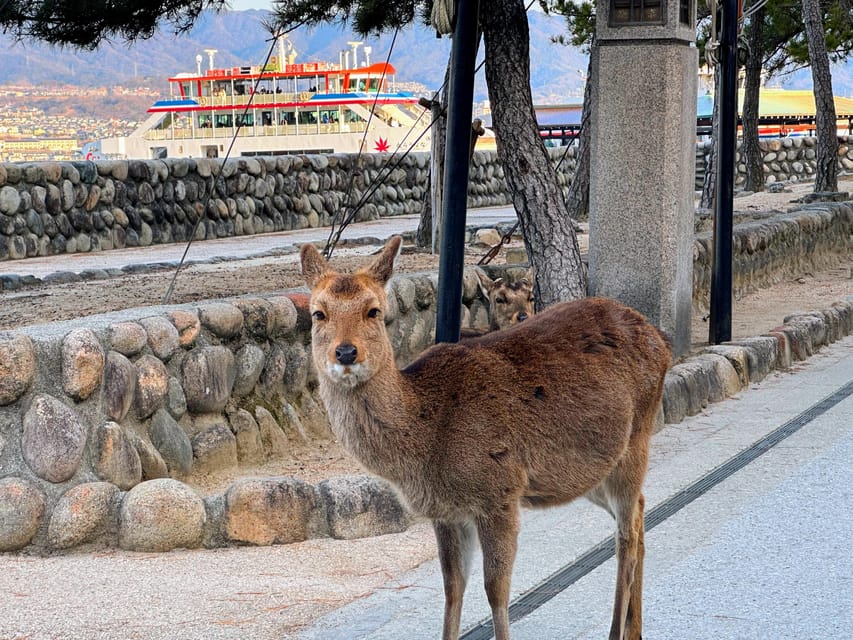
Miyajima is known for its deer, island views, and famous shrine. It can also be busy, especially around the main shopping street. That is the tradeoff for seeing one of Japan’s best-known cultural sights in a single day.
Hiroshima-style okonomiyaki for lunch
If you select the lunch option, you eat at a local restaurant for about 50 minutes. Hiroshima-style okonomiyaki is built in layers, with cabbage, pork, noodles, and egg. It is a filling regional meal and a good way to experience a local food tradition rather than settling for a generic restaurant stop.
The lunch option is not required. You can book without lunch if you prefer to choose your own food on Miyajima or have dietary restrictions that the restaurant cannot handle.
A vegetarian okonomiyaki option is available if you request it at least two days before the tour. There is no vegan, halal, or gluten-free option. If any of those restrictions apply to you, choose the no-lunch option.
The 50-minute meal is practical rather than leisurely. You have a full afternoon ahead, so this is not the time for a long, slow lunch. It does, however, keep the group together and protects time for the shrine and temple.
Itsukushima Shrine and the great torii
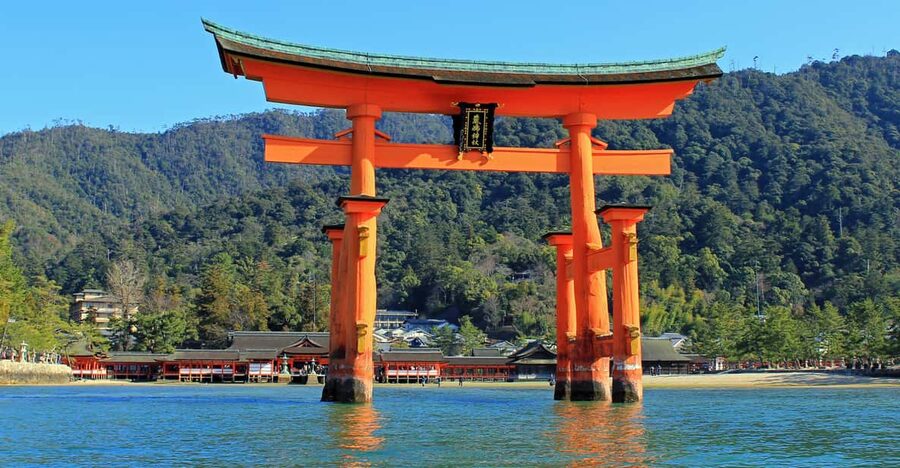
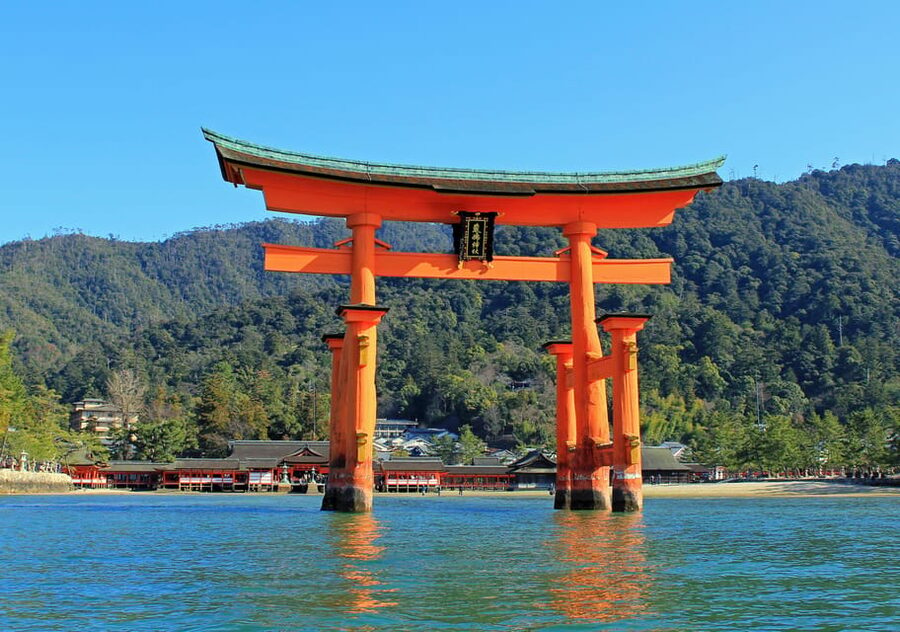
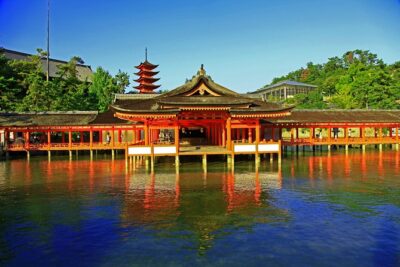
Itsukushima Shrine receives about an hour, including guided and free time. The shrine is famous for its great torii, which can appear to float in the sea at high tide. The effect depends on tide conditions, so the gate may not always look exactly like the classic water-surrounded image.
The shrine’s setting is the real attraction. Traditional buildings, the sea, and the wooded slopes of Miyajima come together in a way that feels very different from central Hiroshima. Your guide can explain the religious traditions and local stories, while free time lets you take photographs and look around without staying in one fixed group.
This stop can be crowded. You may need patience around the most popular viewpoints, and the tour cannot control the number of people on the island. Still, the guided visit saves you from trying to understand the shrine layout on your own, which is especially helpful when your time is limited.
Daishoin Temple and a quieter Miyajima
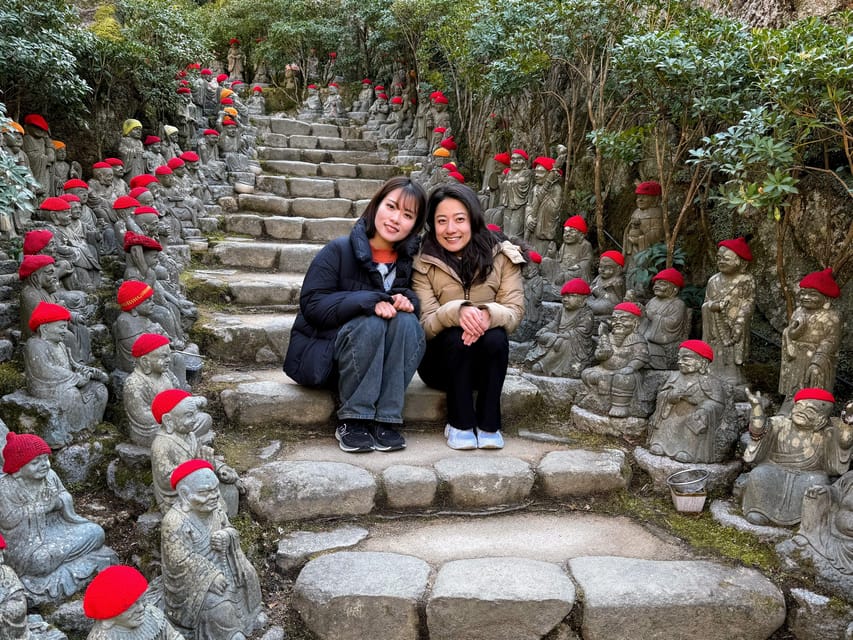
The next stop is Daishoin, a Buddhist temple on Mount Misen. You have about 30 minutes here, with free time to look around.
The temple is known for gardens and numerous stone statues. It offers a calmer contrast to the shrine and shopping street, and the elevated setting provides views toward Miyajima and the Seto Inland Sea.
Thirty minutes is enough to appreciate the atmosphere and take photographs, but not enough for a long exploration of the mountain. The tour does not include a Mount Misen hike or a ropeway visit, so do not book this day expecting an extended mountain excursion.
I like this stop because it adds a second religious tradition to the day. Itsukushima Shrine gives you Shinto architecture and island ritual, while Daishoin gives you a Buddhist temple setting. Together, they make Miyajima more than a single famous torii gate.
Omotesando Street and the final free time
After Daishoin, you have about 40 minutes to explore Miyajima. Omotesando Street is the island’s main shopping area, with local snacks, souvenirs, hand-painted fans, and maple-themed crafts.
This is your chance to pick up food or gifts, but keep an eye on the meeting time. The island has more to offer than can fit into this short visit, and the schedule is designed to get you back to Hiroshima Station on time.
You might also use this window to photograph the deer, browse local specialties, or simply enjoy the island atmosphere. The shopping area is the liveliest part of the afternoon, so anyone looking for quiet should spend more of the free time near the temple or along less crowded paths.
The return ferry takes about 20 minutes, followed by a coach ride of roughly 50 minutes to Hiroshima Station. The full day lasts about eight hours.
The guides make the difference
The strongest part of this experience is the human explanation. Names frequently associated with the tour include Rino, Marin, Tomo, Mo, and Momiji. You cannot choose your guide from the information provided, but the guiding style is clear: expect English explanations, answers to questions, help with timing, and practical support moving between stops.
Marin is praised for her energy, sketchbook, strong English, and careful treatment of the atomic bombing. Rino is often described as friendly, prepared, and good at using notes and photos to explain stories. Tomo is noted for answering questions and keeping the day organized, while Mo and Momiji are praised for warmth, humor, and clear historical context.
The quality of a day like this depends heavily on the guide. A bus can move you from place to place, but it cannot explain why the Children’s Peace Monument matters or how Miyajima’s traditions fit together. Here, the guide is a central part of the value.
Who should book this day tour?
I would choose this tour if you have one day in Hiroshima and want the major memorial sites plus Miyajima without managing several transport connections. It suits first-time visitors, families, and anyone arriving from Osaka who wants a structured day.
It is also a good fit if you prefer context over simply checking off landmarks. The live guide connects the sites, while free periods at the museum, shrine, and shopping street give you some independence.
I would think twice if you want a slow museum visit, a full exploration of Hiroshima Castle, a Mount Misen hike, or long stretches of unplanned time. The schedule is full. You will see the essential sights, but you will not see every corner of either destination.
The tour is not suitable for wheelchair users. It also requires walking, ferry boarding, and moving between several sites, so consider your comfort with an active day.
Should you book the Hiroshima and Miyajima tour?
Book it if you want a well-organized first look at Hiroshima’s most important memorial sites and Miyajima’s best-known cultural sights in one day. The $122 cost is fair once you count the coach, ferries, entrance fees, guide, taxes, and the time saved on planning.
Choose the no-lunch option if you need vegan, halal, or gluten-free food, or if you prefer to eat independently. Request vegetarian okonomiyaki at least two days ahead.
The clearest reason to book is efficiency with meaning. You begin with the difficult truth of Hiroshima, then move to the beauty and traditions of Miyajima. That is a demanding day, but it gives you a grounded introduction to both places.
FAQ
How long does the Hiroshima and Miyajima tour last?
The tour lasts about eight hours, including coach travel, ferry rides, guided visits, lunch if selected, and free time.
Where does the tour meet?
Meet in front of the Shinkansen Ticket Gate on the second floor of Hiroshima Station’s North Gate, at 2-1185 Matsubarachō, Minami-ku, Hiroshima. Look for staff holding a green and white flag.
Is transportation included?
Yes. The tour includes an air-conditioned coach and round-trip ferry transportation to Miyajima.
Is the Peace Memorial Museum entrance included?
Yes. Entrance fees for the Atomic Bomb Museum and Miyajima are included in the tour price.
Is lunch included?
Lunch is included only if you select the lunch option when booking. The meal is Hiroshima-style okonomiyaki.
Can I request a vegetarian lunch?
Yes. A vegetarian okonomiyaki option is available, but you should request it at least two days before the tour.
Are vegan, halal, or gluten-free meals available?
No. The tour does not provide vegan, halal, or gluten-free lunch options. Choose the no-lunch option if you need one of these diets.
What languages are available?
The live tour is available in English and Japanese. The bus audio guide is available in Spanish, French, Italian, German, Portuguese, and Ukrainian.
Is the tour suitable for wheelchair users?
No. The experience is not suitable for wheelchair users.
Just added in Hiroshima
- Hiroshima 3hr Peace Cycling Tour with Local Guide★ 5.0 · 131 reviews
- Day Trip to Hiroshima & Miyajima with Itsukushima Shrine★ 4.6 · 124 reviews
- Hiroshima: Best of Hiroshima Guided Bike Tour★ 4.9 · 89 reviews
- Hiroshima & Miyajima 6.5h Guided Tour – Dome, Park & Shrine★ 4.9 · 83 reviews
- Hiroshima: Food and Culture Guided Walking Tour with Dinner★ 4.9 · 212 reviews
- Hiroshima Local guided Hiking Tour&Open-air Tea Ceremony★ 5.0 · 213 reviews
- Hiroshima & Miyajima: Full-Day Private Tour & Licensed Guide★ 4.8 · 252 reviews
- Miyajima: Cultural Experience in Zen Temple★ 5.0 · 258 reviews
Hiroshima & Miyajima Day Trips, compared.
Peaceful Hiroshima & Miyajima UNESCO 1 Day Bus Tour
Read our review →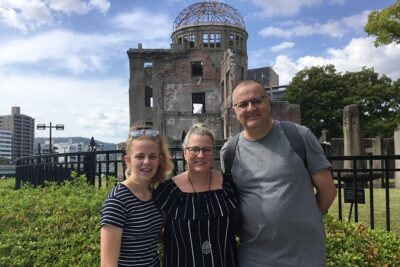
Hiroshima / Miyajima Full-day Private Tour with Government Licensed Guide
Read our review →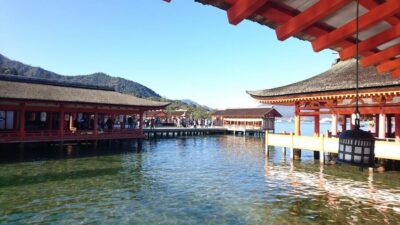
Osaka/Kyoto: Hiroshima Miyajima Bus Tour & Shinkansen Ticket
Read our review →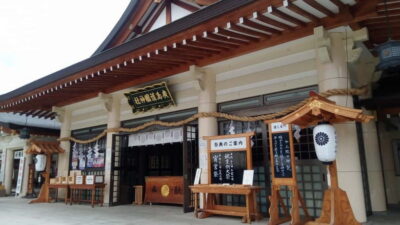
Hiroshima Historical Walking Tour – Why A-Bomb was Dropped
Read our review →
Hiroshima Peace (Heiwa) Walking Tour at World Heritage Sites
Read our review →
Hiroshima in a Nutshell: Morning Bike Adventure
Read our review →
Hiroshima City 4hr Private Walking Tour with Licensed Guide
Read our review →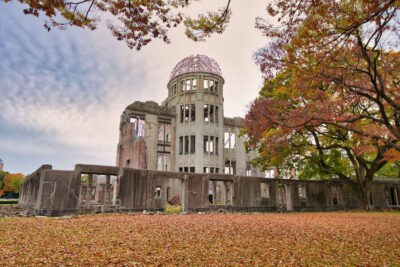
Browse the lists this tour appears in