
Reviewed · HIROSHIMA & MIYAJIMA DAY TRIPS
Hiroshima Historical Walking Tour – Why A-Bomb was Dropped
Hiroshima’s atomic-bomb story makes more sense when you begin before the blast. This 150-minute walk starts at a shrine for war dead and Hiroshima Castle, then moves through the city’s memorial sites toward the Peace Memorial Museum. That order gives you the military setting before asking what happened to the people living inside it.
I like the way the tour connects military strategy with ordinary life, instead of treating the bombing as one isolated event. I also like the human touch from guides such as Chihiro, Emi, Emmy, and Thomas, who explain the subject clearly and, in some cases, share personal or family connections to Hiroshima.
The main drawback is the subject itself. This is not a light sightseeing walk, and the pace leaves limited time at some stops. You will get a strong framework for the museum, but you may want extra time afterward to examine the exhibits at your own speed.
Key things to know before you book
- The route begins at Gokoku Shrine and Hiroshima Castle, placing Hiroshima’s wartime role before the bombing.
- The tour ends at the Peace Memorial Museum, making it a useful introduction before your museum visit.
- Guides bring different perspectives, including local Hiroshima voices and long-term residents of Japan such as Thomas.
- The walk covers the Atomic Bomb Dome and Peace Memorial Park, with time for photographs, monuments, and questions.
- The price is $35 per person, a fair rate if you want historical explanation rather than simply finding the sites yourself.
- The tone is serious but not grim from start to finish, with discussion of peace, reconciliation, local food, and modern Hiroshima.
Why the starting point matters at Gokoku Shrine
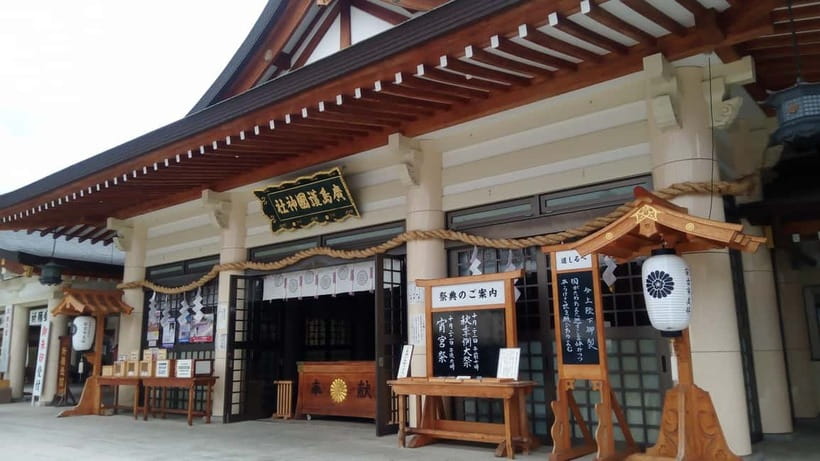
Meet in front of the torii gate of Hiroshima Gokoku Shrine, near the main hall. This is a practical meeting place inside the Hiroshima Castle area, but it also sets the tone for the tour.
Gokoku Shrine is connected with those who died in war. Starting here asks you to consider the Japanese wartime experience before reaching the familiar images of the Atomic Bomb Dome and Peace Memorial Park. You are not beginning with a single photograph or a famous ruin. You are beginning with the city’s place in Japan’s military story.
That opening is one of the tour’s strongest ideas. If you visit only the memorial park, you can leave with a powerful emotional impression but fewer answers about why Hiroshima was chosen. Here, the guide first explains the city’s military importance, then builds toward August 1945.
The shrine is also a calm place to get your bearings. You will have time to listen, ask questions, and adjust to the serious theme before the route becomes more emotionally difficult. Wear comfortable shoes, since the tour continues on foot through several central sites.
Other walking tours in Hiroshima people book:
- Hiroshima Peace (Heiwa) Walking Tour at World Heritage Sites
★ 5.0 · 872 reviews - Hiroshima City 4hr Private Walking Tour with Licensed Guide
★ 5.0 · 437 reviews - Hiroshima Walking Tour Why A Bomb was dropped to Hiroshima
★ 5.0 · 347 reviews
Hiroshima Castle and the city’s military role
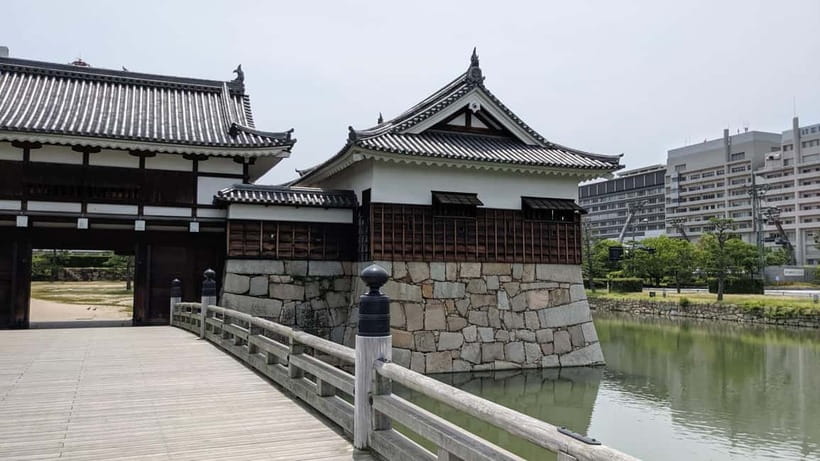
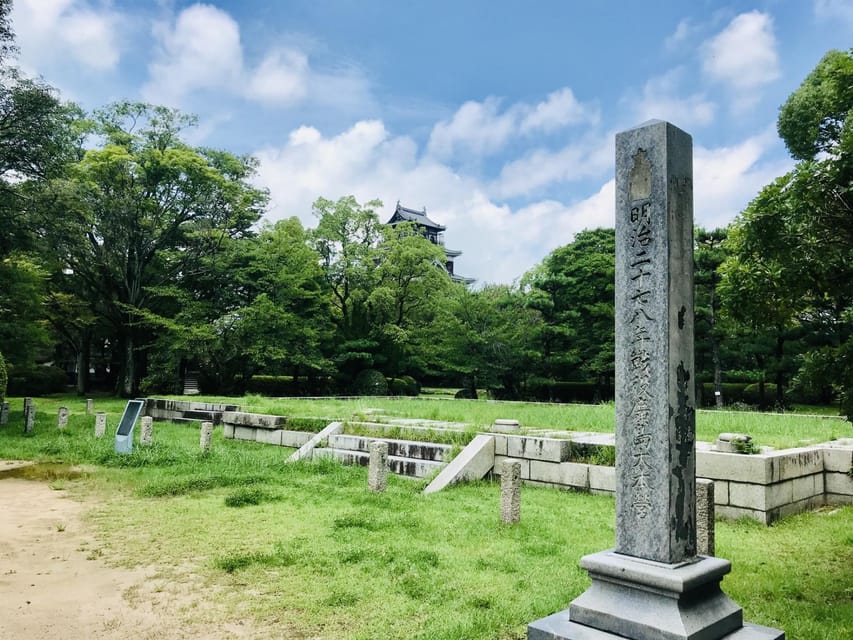
The next major stop is Hiroshima Castle, with about 20 minutes for a visit, guided explanation, and photographs. The castle helps show that Hiroshima was not selected at random. Its military and administrative importance formed part of the wider wartime setting the tour explores.
Your guide uses the castle and surrounding area to explain how Hiroshima functioned before the bombing. This is also where the tour begins to answer the central question in its title: why this city, and why at that moment?
Do not expect a long, museum-style castle visit. The stop is short, so the value comes from the explanation rather than from seeing every part of the grounds. You will get context, a few good photo opportunities, and a clearer idea of how the city’s prewar identity differs from its present role as a place of peace.
The route may feel especially useful if you know little about Japanese history. Guides explain the wider events leading to the bombing in plain English, and they take side questions about Japan, Hiroshima, and the decision to use the weapon. Several guides also add cultural details, which keeps the walk from becoming a narrow military lecture.
A short stop that links the old city to the new one
The itinerary includes another guided visit of about 10 minutes before the longer stop at Hiroshima Gate Park. The exact detail of this brief section can vary with the route and guide, but the overall purpose is clear: move you from the historic castle area toward the memorial district.
Some tour experiences include nearby points such as Hiroshima Orizuru Tower and the Hiroshima Prefectural Industrial Promotion Hall. The Orizuru connection is especially meaningful because folded paper cranes are now closely tied to Hiroshima’s peace message. One route description included a view of origami cranes floating down inside the tower, though you should not treat that as a guaranteed activity on every departure.
This shorter section is not the tour’s main attraction. Think of it as a transition, with the guide continuing the story while you walk. It helps prevent the afternoon from becoming a string of disconnected monuments.
Hiroshima Gate Park and the city rebuilt
Hiroshima Gate Park receives about 30 minutes. This part of the walk gives you a chance to see present-day Hiroshima as a living city, not only a memorial site.
That balance matters. Hiroshima is often presented through the bombing alone, yet the city has rebuilt, developed its own food culture, and created a public life beyond the events of 1945. Guides may offer suggestions for local restaurants and other places to visit after the tour. Those tips are a useful extra, particularly if this is your first day in town.
The park also gives the group a little breathing room. The subject is heavy, and small sitting breaks or pauses along the route can help. One of the tour’s strengths is its pace: it covers plenty of ground without turning into a forced march. Still, the exact amount of free time is limited because the route must reach the museum on schedule.
Other long days west of Hiroshima:
- Peaceful Hiroshima & Miyajima UNESCO 1 Day Bus Tour
★ 5.0 · 5,309 reviews - Hiroshima: Hiroshima and Miyajima UNESCO Sites 1-Day Tour
★ 4.9 · 2,330 reviews - Hiroshima / Miyajima Full-day Private Tour with Government Licensed Guide
★ 5.0 · 1,298 reviews - Hiroshima in a Nutshell: Morning Bike Adventure
★ 5.0 · 524 reviews
The Atomic Bomb Dome, where the story becomes physical
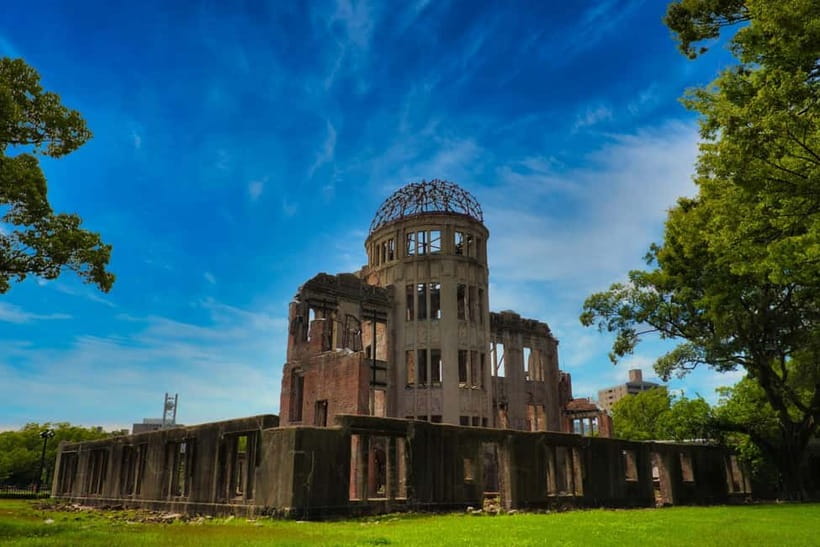
The Atomic Bomb Dome is one of the tour’s most important stops, with about 20 minutes of guided explanation. This is the point where the historical discussion becomes intensely visual.
The surviving structure gives you something concrete to look at while the guide explains the destruction around it. You will have time for photographs, but this is not treated as a quick photo stop alone. The guide places the building within the story of the bombing and explains why it remains central to Hiroshima’s memory.
The dome can be emotionally difficult because it is both a ruin and a preserved symbol. The tour handles it as part of a larger sequence, so you are not left to interpret the site without context. That is especially helpful if you are visiting Hiroshima for the first time.
Keep in mind that 20 minutes passes quickly here. You will hear the key explanation and see the site, but you may want to return later for a quieter look. The guided tour gives you meaning; a separate visit gives you time.
Peace Memorial Park and the meaning of the paper cranes
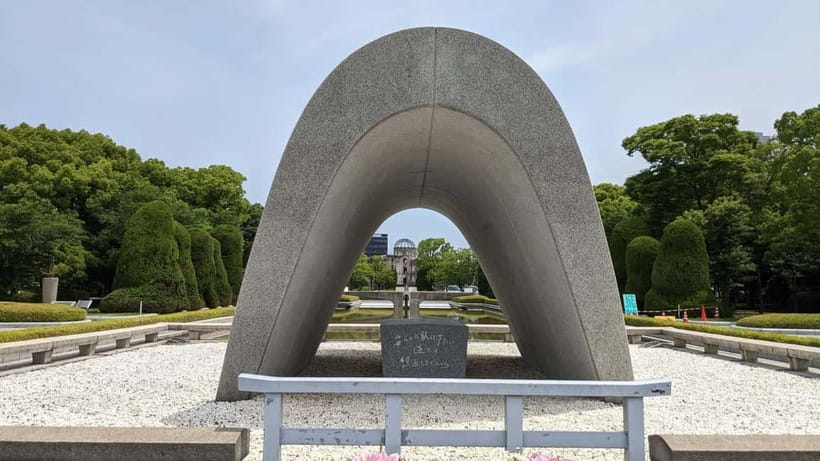
The final outdoor section is Hiroshima Peace Memorial Park, with about 30 minutes of guided touring. This is where the focus shifts from military decisions and destruction to victims, remembrance, and the city’s appeal for peace.
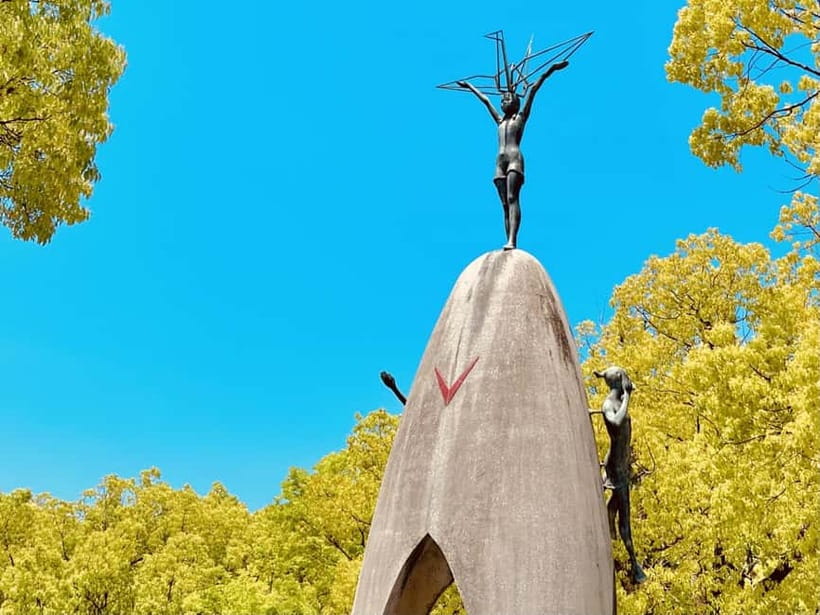
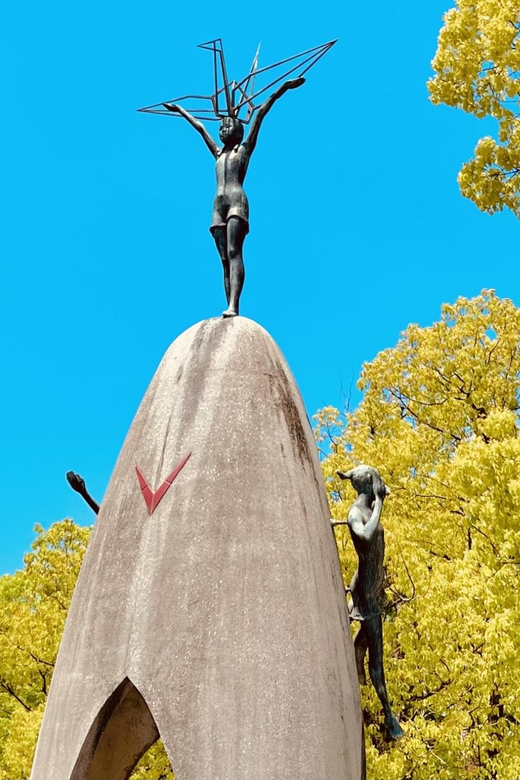
Expect the guide to explain monuments and their meaning rather than simply point them out. The Children’s Peace Monument is a particularly moving part of the park, with the paper crane tradition connected to children affected by the bombing. Origami cranes appear again and again in Hiroshima, and the guide helps explain why this simple folded form carries such weight.
The park is broad, open, and emotionally demanding. You might find yourself wanting more time at individual memorials, but the walking tour has to keep moving. I see this as a strength if you want an organized first visit, and a limitation if you prefer long periods of quiet reflection.
The best guides keep the tone balanced. Chihiro and other local guides have been praised for explaining their personal connection to Hiroshima and their commitment to peace. Other guides, including Thomas, offer an outside perspective shaped by years living in Japan. Both approaches can work: a local voice gives the subject personal depth, while an international guide may make difficult historical questions easier to discuss openly.
Finishing at the Peace Memorial Museum
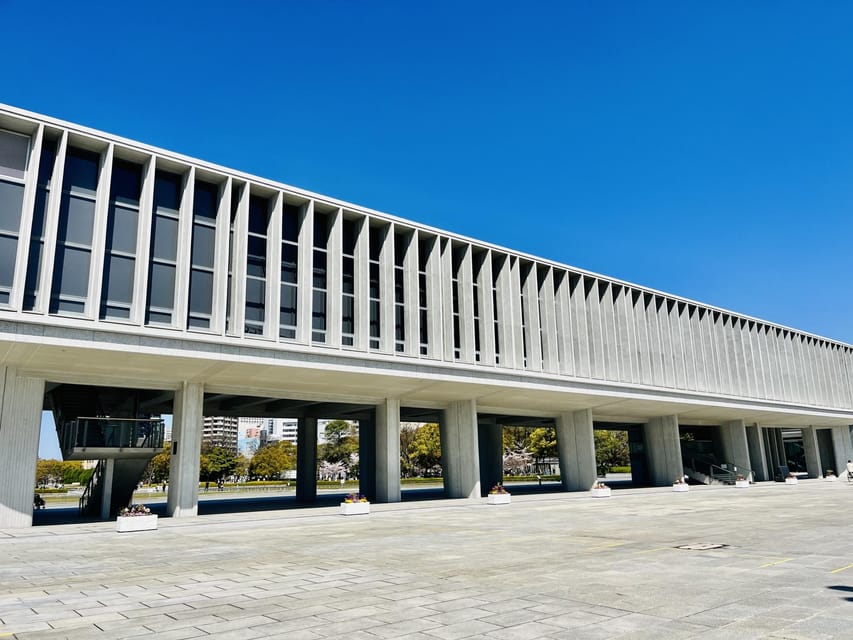
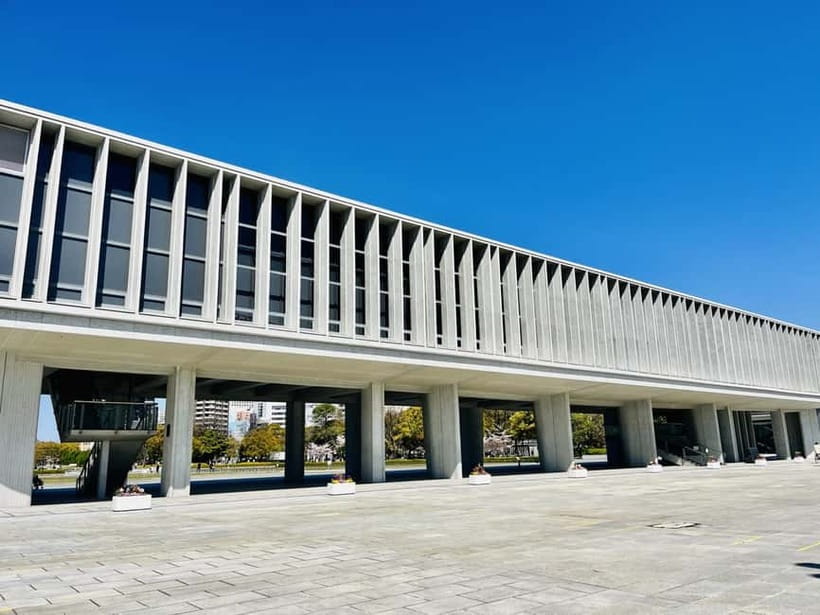
The tour ends at the Hiroshima Peace Memorial Museum, which is one of its smartest planning choices. You receive the historical setup outdoors, then finish where the museum’s exhibits can add detail, objects, photographs, and personal accounts.
I recommend entering the museum soon after the walk if you have enough energy. The guide has already explained the city’s military role, the reasons behind the target selection, the bombing, and the postwar peace message. That background can make the museum easier to follow, especially if you are unfamiliar with the history.
The museum may also feel more confronting after the walk. The outdoor stops give you time to ask questions and absorb the broad story. Inside, the focus can become more personal and immediate. Plan your emotional energy as carefully as your schedule.
The tour itself does not include a museum guide or museum admission details, so check what you need for entry separately. The advertised finish is at the museum, not a guided museum visit.
How the guides shape the experience
The guide is the biggest variable in a tour like this. The listed language is English, and the strongest guide experiences come from clear explanations, patient answers, and a good sense of pace.
Chihiro is a local Hiroshima guide who has shared family experiences and her personal work for peace. Emi and Emmy have also been praised for telling the story with warmth, clear English, and a strong Japanese perspective. Chisa, Katja, and Kasha are among the other named guides associated with positive experiences.
Thomas offers a different angle. He is from Europe and has lived in Japan for years, giving him the viewpoint of someone who understands Japanese culture while also explaining it to international visitors. His clear English and willingness to answer questions make him a good fit if you want more discussion along the way.
You cannot choose a specific guide from the information provided, so book this for the format and subject rather than one individual. Still, the range of guides is encouraging. Some are local, some are long-term residents, and several bring personal feeling without turning the tour into a speech about themselves.
Is $35 good value for 150 minutes?
At $35 per person, this is good value if you want the sites connected by a clear explanation. You could walk between Gokoku Shrine, Hiroshima Castle, the dome, the park, and the museum on your own, but you would need to build the historical sequence yourself.
The price also covers something a map cannot: the chance to ask why questions. Why was Hiroshima militarily important? Why was it selected? What did the bombing mean for the city? How did Hiroshima develop its peace message afterward? A good guide links those questions together.
The tradeoff is depth at individual sites. The walk spends roughly 20 minutes at Hiroshima Castle and the Atomic Bomb Dome, and about 30 minutes in the park and at Gate Park. If you want a slow, detailed study of every monument, you will need additional time after the tour.
Tips for the guide are not included. Carry water and wear shoes suited to a two-and-a-half-hour walk. The tour is listed as wheelchair accessible, but it is still sensible to confirm the exact route if you need specific mobility arrangements.
Who should take this walk?
I would choose this tour for a first visit to Hiroshima, especially if you plan to see the Peace Memorial Museum. It gives you a clear sequence before you confront the museum’s more difficult material.
It also suits you if you want more than a list of dates. The guides discuss Japanese culture, local food, the meaning of the monuments, and modern Hiroshima alongside the wartime story. Families can benefit too, although the subject may be too heavy for very young children.
History-minded visitors should enjoy the way the route starts with military and civic context. Those who prefer quiet contemplation may find the group pace restrictive, but the tour can still serve as a useful orientation before returning alone to the sites.
If you have already spent several hours at the museum and memorial park, you may not need this particular introduction. If you want to understand the city before visiting them, the timing is ideal.
Booking flexibility and practical details
You can cancel up to 24 hours before the tour for a full refund, and the reserve-now, pay-later option lets you keep your plans flexible. Starting times depend on availability, so check the schedule when booking.
The meeting point is specifically in front of the torii gate of Hiroshima Gokoku Shrine, near the main hall. Do not wait at the castle entrance or the Peace Memorial Park, since the walk begins at the shrine.
The tour is conducted in English and is listed as wheelchair accessible. Tips are not included, so bring a little extra if you want to thank your guide at the end.
Should you book the Hiroshima Historical Walking Tour?
Book it if you want the why behind Hiroshima, not only the famous photographs. The route links a war shrine, castle, city park, Atomic Bomb Dome, Peace Memorial Park, and museum in an order that makes historical sense.
I especially recommend it before your museum visit. The guides add the context that can be easy to miss when you move from monument to monument alone, and local voices such as Chihiro and Emi can make the subject feel personal without losing the wider picture.
Skip it only if you prefer to explore silently at your own pace or have very limited time in Hiroshima. For $35, two and a half hours, and an English-speaking guide, this is a thoughtful and practical introduction to one of Japan’s most important places.
FAQ
How long does the Hiroshima Historical Walking Tour last?
The tour lasts 150 minutes, or two and a half hours.
Where does the tour begin?
It begins in front of the torii gate of Hiroshima Gokoku Shrine near the main hall.
Where does the tour finish?
The tour finishes at the Hiroshima Peace Memorial Museum.
What language is the tour conducted in?
The live guided tour is conducted in English.
Which main sites are included?
The route includes Gokoku Shrine, Hiroshima Castle, Hiroshima Gate Park, the Atomic Bomb Dome, Peace Memorial Park, and the area around the Peace Memorial Museum.
Does the tour explain why the atomic bomb was dropped on Hiroshima?
Yes. The tour focuses on Hiroshima’s history, military significance, the reasons behind its selection as a target, and the human and cultural effects of the bombing.
Is the tour wheelchair accessible?
Yes, the activity is listed as wheelchair accessible.
Can I cancel the booking?
Yes. You can cancel up to 24 hours in advance for a full refund.
Do I have to pay when I reserve?
No. The reserve-now, pay-later option lets you book while keeping payment for later.
More walking tours elsewhere in Japan
- Miyajima Half-day Trip Historical Walking Tour
★ 5.0 · 284 reviews - Hiroshima: History of Hiroshima Group Walking Tour
★ 4.8 · 266 reviews - Hiroshima: Food and Culture Guided Walking Tour with Dinner
★ 4.9 · 212 reviews - Kyoto Geisha Walking Tour: Gion District & Hidden Gems
★ 4.7 · 3,273 reviews
Just added in Hiroshima
- Hiroshima 3hr Peace Cycling Tour with Local Guide★ 5.0 · 131 reviews
- Day Trip to Hiroshima & Miyajima with Itsukushima Shrine★ 4.6 · 124 reviews
- Hiroshima: Best of Hiroshima Guided Bike Tour★ 4.9 · 89 reviews
- Hiroshima & Miyajima 6.5h Guided Tour – Dome, Park & Shrine★ 4.9 · 83 reviews
- Hiroshima: Food and Culture Guided Walking Tour with Dinner★ 4.9 · 212 reviews
- Hiroshima Local guided Hiking Tour&Open-air Tea Ceremony★ 5.0 · 213 reviews
- Hiroshima & Miyajima: Full-Day Private Tour & Licensed Guide★ 4.8 · 252 reviews
- Hiroshima: History of Hiroshima Group Walking Tour★ 4.8 · 266 reviews
Hiroshima & Miyajima Day Trips, compared.
Peaceful Hiroshima & Miyajima UNESCO 1 Day Bus Tour
Read our review →
Hiroshima and Miyajima UNESCO Sites 1-Day Tour
Read our review →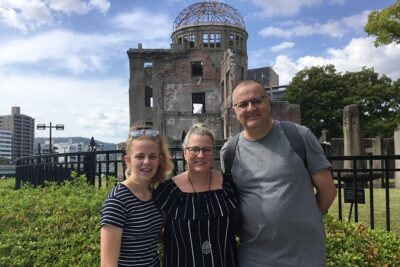
Hiroshima / Miyajima Full-day Private Tour with Government Licensed Guide
Read our review →
Osaka/Kyoto: Hiroshima Miyajima Bus Tour & Shinkansen Ticket
Read our review →
Hiroshima Peace (Heiwa) Walking Tour at World Heritage Sites
Read our review →
Hiroshima in a Nutshell: Morning Bike Adventure
Read our review →
Hiroshima City 4hr Private Walking Tour with Licensed Guide
Read our review →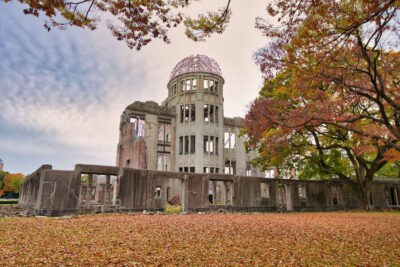
Browse the lists this tour appears in