
Reviewed · HIROSHIMA & MIYAJIMA DAY TRIPS
Hiroshima History Tour : A-Bomb Dome, Peace Memorial & City
Hiroshima’s story feels different when it is explained by someone whose family has carried it through daily life. This private walk pairs the Peace Memorial Museum and A-Bomb Dome with personal local perspectives, then moves into Hiroshima’s castle and garden traditions. Guides may include Yuka, Masa, Yuta, or Ally, depending on availability.
I like the customizable private format and the included skip-line museum entry. I also like that Shukkeien Garden adds a quiet, beautiful counterpoint to the difficult morning or afternoon. The main drawback is the amount of walking, plus the fact that public transport, lunch, and Hiroshima Castle’s indoor museum are extra.
Key points to know before booking
- Personal Hiroshima perspective: Some guides are second-generation atomic bomb survivors, while others grew up in the city or have family members affected by the bombing.
- A serious museum visit: You receive skip-line entry to the Peace Memorial Museum, with about an hour planned for its exhibits.
- More than the Peace Park: The route can include Hiroshima Castle and Shukkeien Garden, giving you a wider view of the city.
- Private and adjustable: Only your group takes part, and the route can be adjusted to your pace and interests.
- Walking is central: The tour lasts about three hours, or four hours in the longer version, and private transport is not included.
- Good value for a focused visit: At $105.42 per person, the price makes the most sense if you want a guide who can explain both the public history and the local meaning behind it.
Why this Hiroshima tour feels personal
Hiroshima is not a place to rush through with a camera and a checklist. The Peace Memorial sites are moving on their own, but a local guide helps you connect the monuments, buildings, family memories, and recovery of the city.
That personal element is the heart of this experience. Some guides have direct family ties to the atomic bombing. Others were born and raised in Hiroshima and learned about the event through family conversations, local customs, and the city’s long effort to remember. You are not simply receiving dates and facts. You are hearing how Hiroshima’s past is carried into ordinary life.
The guides named in the feedback include Yuka, Masa, Yuta, and Ally. Masa receives particular praise for explaining the city through her family connection, while Yuka has led museum visits and taken guests to Shukkeien during its Momiji Festival. Ally has also arranged family-friendly routes and met guests at their hotel.
These details matter because a private tour can be as much about conversation as sightseeing. You can ask questions that may not fit a large group tour. You can slow down at a memorial, spend more time in the museum, or give more attention to the castle and garden.
Other long days west of Hiroshima:
- Peaceful Hiroshima & Miyajima UNESCO 1 Day Bus Tour
★ 5.0 · 5,309 reviews - Hiroshima: Hiroshima and Miyajima UNESCO Sites 1-Day Tour
★ 4.9 · 2,330 reviews - Hiroshima / Miyajima Full-day Private Tour with Government Licensed Guide
★ 5.0 · 1,298 reviews
The Peace Memorial Museum: allow a full hour
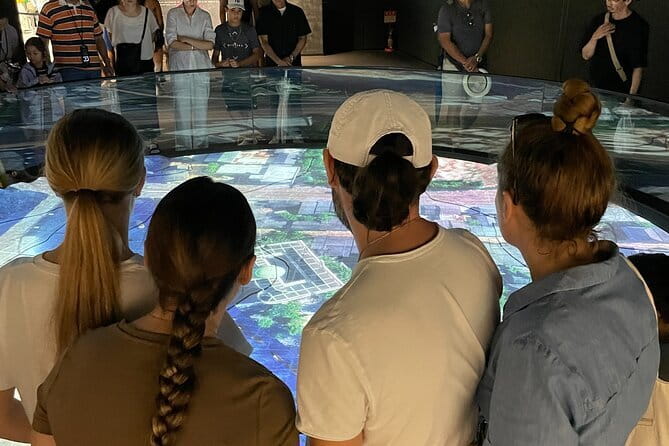
The tour begins at the Hiroshima Peace Memorial Museum, with admission included and skip-line access. The planned visit lasts about one hour, though your guide can help shape how you use that time.
The museum presents Hiroshima as the first city hit by an atomic bomb. Its exhibits include historical facts, data, paintings by survivors, and displays that show the human cost of the bombing. This is not a light sightseeing stop. The material can be upsetting, and you should expect a serious visit.
A guide is especially useful here because the museum can feel dense and emotionally heavy. You can ask about the events surrounding the bombing, the city’s recovery, or details that are easy to miss when you walk through alone. The local viewpoint also helps connect the museum displays with what you will see outside.
One practical note: the museum is listed for about one hour within a three-hour tour. If you read every display carefully, you may want to request the four-hour version or ask in advance for extra museum time. The private format gives you a better chance of matching the visit to your interests.
Peace Memorial Park and the Children’s Peace Monument
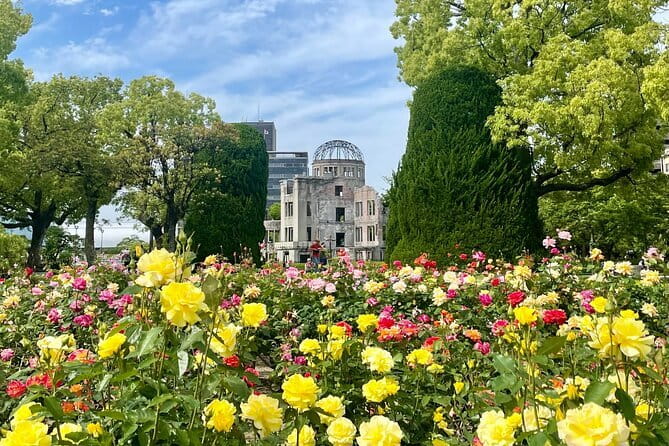
After the museum, you walk through Peace Memorial Park for about 20 minutes. The park is more than an open space around monuments. It is where the city’s public memory takes shape, with memorials placed among paths, trees, and quiet areas for reflection.
Your guide can explain how Hiroshima recovered from destruction and how the park functions today. The description of the tour places special weight on stories that come from someone who grew up in the city. That is useful here, since the park can otherwise feel like a series of solemn stops without a clear connection between them.
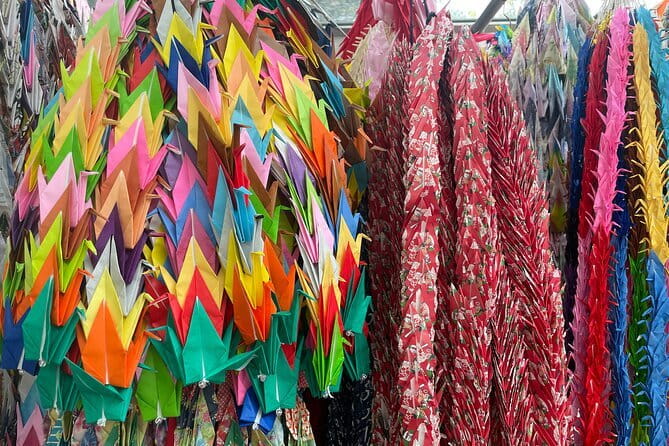
The Children’s Peace Monument receives its own short visit of about five minutes. It recalls Sadako Sasaki, the girl whose story became closely linked with folded paper cranes. You will see many origami cranes at the monument.
The stop is brief, but it carries a strong emotional weight. If you have children with you, this can be an accessible way to discuss the human side of the bombing without turning the entire visit into a lecture. Families can also ask the guide to adjust the pace if the museum and memorials feel like too much at once.
The A-Bomb Dome and the Hypocenter
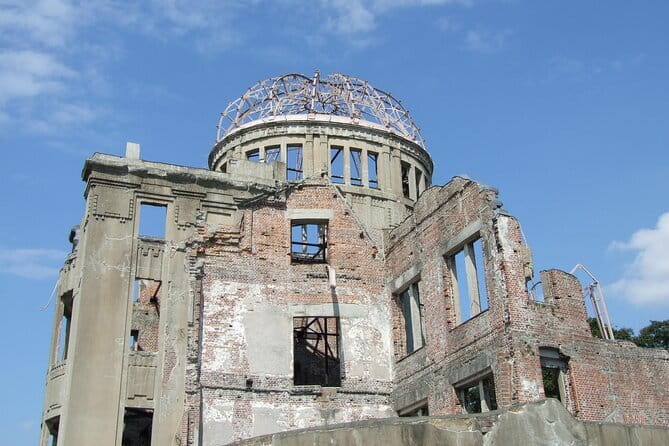
The Atomic Bomb Dome is one of Hiroshima’s most recognizable sights, but it is not simply a photo stop. The building remains close to its original appearance because it was near the hypocenter of the blast. Today, it is a UNESCO World Heritage Site and a symbol of the destruction caused by war.
The planned visit lasts about 20 minutes. From outside, you can see the preserved structure and hear how it fits into the wider story of Hiroshima. Your guide can also help you place the building within the modern city, where daily life continues around one of the world’s most powerful memorials.
The tour then goes to the Hypocenter Monument for about 10 minutes. The atomic bomb exploded directly above the Shima hospital site. This stop is smaller and less visually dramatic than the Dome, but its location gives the event a precise physical point.
I find that the two stops work well together. The Dome shows the visible remains of the city. The Hypocenter Monument asks you to consider the exact point where the blast occurred. Allow yourself a little quiet time at both.
Same base, a different sort of day:
- Hiroshima Historical Walking Tour – Why A-Bomb was Dropped
★ 4.8 · 893 reviews - Hiroshima Peace (Heiwa) Walking Tour at World Heritage Sites
★ 5.0 · 872 reviews - Hiroshima in a Nutshell: Morning Bike Adventure
★ 5.0 · 524 reviews - Hiroshima City 4hr Private Walking Tour with Licensed Guide
★ 5.0 · 437 reviews
Hiroshima Castle adds the city’s older story
Hiroshima is not only a place of twentieth-century history. The route can continue to Hiroshima Castle, a samurai castle built in the sixteenth century.
The current castle is a replica because the original was destroyed by the atomic bomb. The usual plan is an exterior photo stop lasting about 15 minutes, but you can request entry to the museum inside. That admission is not included, so confirm your preference when arranging the tour.
This stop helps widen the picture. After the Peace Memorial sites, the castle brings you back to Hiroshima’s earlier political and samurai history. It also gives you a chance to see how the city’s older identity fits beside its modern memorial role.
Because the castle visit is normally short, it may not suit you if you want a long indoor museum visit. The private format is helpful here. You can ask for more castle time, but that may mean shortening another stop or choosing the four-hour option.
Shukkeien Garden offers a quiet finish
Shukkeien is one of the strongest reasons to choose the longer route. Created in 1620, the garden belonged to a samurai who settled in the area. Its design includes a pond, trees, and carefully shaped changes in level.
The planned visit lasts about 45 minutes, and admission is included. After the difficult material at the museum and memorials, the garden gives you room to slow down. Its calm scenery also shows another part of Hiroshima’s identity, one shaped by older Japanese aesthetics rather than twentieth-century tragedy.
The garden can be especially appealing in seasonal color. One guide, Yuka, took guests there during the Momiji Festival, when the autumn scenery was particularly striking. Festival timing will vary, so do not book this tour expecting a specific seasonal event unless you confirm the dates.
Shukkeien is also a practical choice for mixed-interest groups. One person may want detailed history, while another may need a quieter setting after the museum. The garden gives the tour a softer ending without taking away from the importance of the earlier stops.
Three hours or four hours?
The experience is advertised as a three-hour or four-hour private walking tour. The listed stops add up to more than three hours if you visit every location at the suggested times, so you should discuss the route before the day begins.
A shorter version may focus on the Peace Memorial Museum, Peace Memorial Park, Children’s Peace Monument, A-Bomb Dome, and Hypocenter Monument. That gives you the core Hiroshima experience and keeps the tour centered on the bombing and its aftermath.
The longer version can add Hiroshima Castle and Shukkeien Garden. It is the better choice if you want a broader view of the city or prefer not to rush between emotionally demanding sites.
Ask for customization in advance. You can state whether your priorities are the museum, family history, the castle, the garden, local streets, or a combination. The more specific you are, the easier it will be for the guide to use the limited time well.
Walking, transport, and the price
This is a private walking tour, not a vehicle tour. Private transportation is not included, and public transportation costs ¥240 per person. Pickup is offered, and the guides can meet you according to the arrangements made before the tour.
At $105.42 per person, the price is not the cheapest way to see Hiroshima’s memorials. The value comes from the private guide, the ability to adjust the route, skip-line museum entry, Shukkeien admission, and the chance to discuss the city’s history with someone connected to Hiroshima.
The price works best for couples, families, and solo visitors who want conversation rather than a fixed group script. It can also be worthwhile for a first visit when you have only part of a day and want to avoid spending time figuring out how the sites fit together.
For a group, ask about the available discount. The tour is private, so only your party takes part. That gives families more control over pace, though you should still expect plenty of walking.
Food and drinks are not included. A guide may help with a restaurant recommendation, and one guide took a group to a restaurant for lunch, but lunch is not part of the stated package. Plan for a separate meal and for the extra cost of any food, transport, or castle admission.
Who will get the most from this experience?
I would choose this tour if you want Hiroshima explained through both public history and local family memory. It suits visitors who prefer a thoughtful walk with time for questions rather than a large group moving from one stop to the next.
It is also a good fit for families. The private setting lets you adjust the conversation and pace, while the Children’s Peace Monument, castle, and garden add variety for younger visitors. Most people can participate, and service animals are allowed.
You should think twice if you dislike walking, want a purely cheerful sightseeing outing, or need a highly fixed schedule. The museum and memorial sites can be emotionally difficult, and the route may feel full if you try to include every stop in only three hours.
You should also avoid joining if you have cold symptoms. The experience requires good weather, and a poor-weather cancellation offers either a different date or a full refund.
My booking advice
Book this Hiroshima tour if you want the Peace Memorial sites to feel connected to the living city around them. The guides’ personal links, especially those described by Masa and the other local guides, are the feature that gives the experience its character.
Choose the four-hour option if Shukkeien and Hiroshima Castle matter to you, or if you want more breathing room at the museum. Choose the shorter route if your main goal is the Peace Memorial Museum, Dome, park, and Hypocenter.
At $105.42 per person, it is a considered purchase, but the private format and included admissions make it reasonable for visitors who value context and flexibility. I would not choose it for a quick photo tour. I would choose it for a serious, human account of Hiroshima, followed by the quiet beauty of a historic Japanese garden.
FAQ
How long does the Hiroshima history tour last?
You can book a private tour lasting approximately three or four hours. The exact route and timing can be customized in advance.
Is the Hiroshima Peace Memorial Museum admission included?
Yes. Museum admission is included, with skip-line entry provided.
Is Shukkeien Garden admission included?
Yes. Entry to Shukkeien Garden is included.
Is Hiroshima Castle admission included?
No. The castle is normally an exterior photo stop. If you want to enter the museum inside, admission is optional and not included.
Is transportation included?
Private transportation is not included. Public transportation costs ¥240 per person, and food and drinks are also separate.
Is this a private tour?
Yes. Only your group participates in the activity.
Can the tour be customized?
Yes. The tour can be customized in advance around your pace and interests.
Are hotel pickups available?
Pickup is offered. Confirm the meeting arrangements when booking.
What is the cancellation policy?
You can cancel at least 24 hours before the experience start time for a full refund. Cancellations or changes made less than 24 hours before the start time are not accepted for a refund. If poor weather cancels the tour, you can choose another date or receive a full refund.
Just added in Hiroshima
- Iya Valley BROMPTON Slow Cycling Tour★ 5.0 · 28 reviews
- Iya Valley All Must-Sees Private Chauffeur Full-day Tour with a Driver★ 5.0 · 20 reviews
- Shore Excursion from Hiroshima Port : Private Tour in Hiroshima★ 5.0 · 17 reviews
- Hiroshima & Miyajima All-Inclusive Tour w/Licensed guide Pancho★ 5.0 · 54 reviews
- Okunoshima Rabbit Island Cycling Tour with Local Guide★ 4.5 · 17 reviews
- The Peace Memorial to Miyajima : Icons of Peace and Beauty★ 4.5 · 31 reviews
- Hiroshima Private Tour with a Local – Highlights & Hidden Gems★ 4.5 · 24 reviews
- Private Full Day Hiroshima Tour★ 4.5 · 29 reviews
Hiroshima & Miyajima Day Trips, compared.
Peaceful Hiroshima & Miyajima UNESCO 1 Day Bus Tour
Read our review →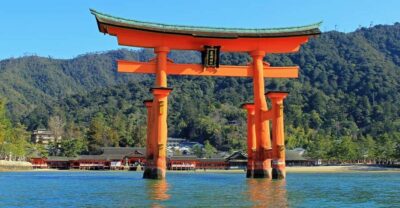
Hiroshima and Miyajima UNESCO Sites 1-Day Tour
Read our review →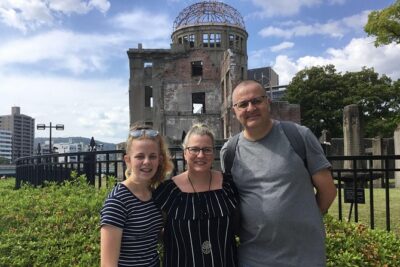
Hiroshima / Miyajima Full-day Private Tour with Government Licensed Guide
Read our review →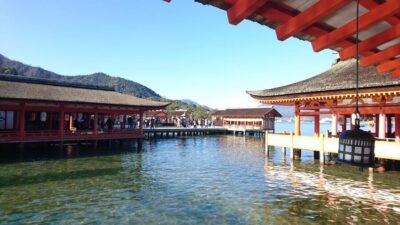
Osaka/Kyoto: Hiroshima Miyajima Bus Tour & Shinkansen Ticket
Read our review →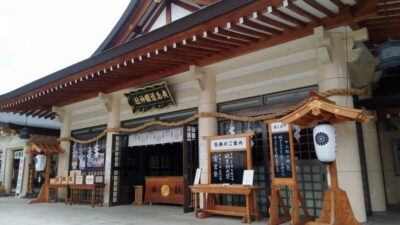
Hiroshima Historical Walking Tour – Why A-Bomb was Dropped
Read our review →
Hiroshima Peace (Heiwa) Walking Tour at World Heritage Sites
Read our review →
Hiroshima in a Nutshell: Morning Bike Adventure
Read our review →
Hiroshima City 4hr Private Walking Tour with Licensed Guide
Read our review →Browse the lists this tour appears in