
Reviewed · HIROSHIMA & MIYAJIMA DAY TRIPS
Hiroshima: Peace Memorial Park and Atomic Bomb Dome Tour
Hiroshima’s Peace Memorial Park is easy to visit on your own, but its monuments do not explain themselves. This two-hour walking tour connects the sites, the people, and the decisions behind the bombing, ending at the Atomic Bomb Dome and the exact hypocenter monument.
I like the way the route includes the less familiar Korean Victims Cenotaph and the story of Sadako Sasaki, not just the famous dome. I also like the guides’ calm, personal approach, especially when discussing survivors and those who died. The main drawback is the amount of walking, often in full weather, with no food, hotel transport, or wheelchair access included.
Key points to know before you go
- The route ends at the hypocenter monument, giving you a clear physical sense of where the blast began.
- You visit more than the Atomic Bomb Dome, including the Prayer Fountain, Peace Bell, Korean Victims Cenotaph, and Children’s Peace Monument.
- Guides such as Hussain, Syed, Shah, Khan, and Aaze bring different strengths, from historical detail to easy conversation and local restaurant advice.
- Personal stories make the history easier to grasp, including Sadako Sasaki and a man who survived near the blast center.
- The $23 price is strong value if you want context before visiting the museum on your own.
- Wear proper walking shoes and carry water, since the tour runs in all weather and is not suitable for wheelchair users.
Why a guided walk helps in Hiroshima
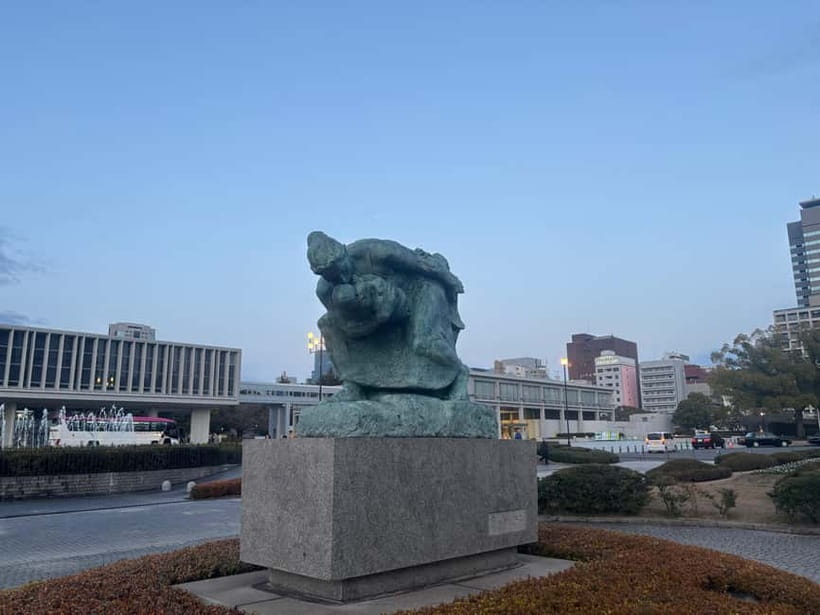
Hiroshima Peace Memorial Park is spacious, quiet, and carefully planned. That calm can make it hard to understand what you are seeing. A guide gives each monument a place in the larger story, so the Cenotaph is not just an arch, the Peace Bell is not just a photo stop, and the Atomic Bomb Dome is not just a striking ruin.
This tour also handles a difficult subject with care. The guides explain the bombing, wartime conditions, civilian losses, and postwar rebuilding without turning the walk into a rushed lecture. Personal accounts help put human scale on events that can otherwise feel too large to absorb.
The tour is led in English, Urdu, or Hindi. Hussain is the named experience provider, while different departures have been guided by Syed, Shah, Khan, and Aaze. Syed is often praised for keeping a steady pace, answering questions, and adding local suggestions. Aaze has a particularly relaxed way of drawing teenagers and adults into the discussion. Your exact guide may vary, but the key strength of the experience is the live explanation along the route.
Other long days west of Hiroshima:
- Peaceful Hiroshima & Miyajima UNESCO 1 Day Bus Tour
★ 5.0 · 5,309 reviews - Hiroshima: Hiroshima and Miyajima UNESCO Sites 1-Day Tour
★ 4.9 · 2,330 reviews - Hiroshima / Miyajima Full-day Private Tour with Government Licensed Guide
★ 5.0 · 1,298 reviews
Starting at the Gates of Peace
Meet at the Gates of Peace, on the front side of the Italian restaurant Mario. This is a useful starting point because the gates frame the approach to the memorial grounds and immediately signal that this is a place for reflection rather than ordinary sightseeing.
The opening guided talk lasts about 20 minutes. Here you begin to understand the design of the park and how the city presents its message of peace. I appreciate that the tour starts with orientation instead of rushing straight to the most famous monument. You get a sense of direction, then gradually move into the harder details.
Be on time and confirm the start time in advance. One participant reported confusion over the meeting time, though the guide managed to recover the situation. A short message before the tour can prevent an avoidable problem.
The Prayer Fountain and the need for water
The Prayer Fountain receives about 10 minutes. Its meaning is tied to the suffering of people who were desperately thirsty after the bombing. That makes this a small stop with a heavy emotional weight.
You may find this one of the places where a guide adds the most value. Without context, it can seem like a pleasant feature in a green park. With explanation, its purpose becomes much clearer. The stop also introduces a practical theme for your own visit: Hiroshima can be hot, and you should carry water, a hat, and sunscreen.
The tour does not serve food or drinks. Bring your own water, particularly in warm weather. The route is outdoors, and the activity operates in rain and other weather conditions.
Walking through Peace Memorial Park
The main Peace Memorial Park segment lasts about 40 minutes. This is the longest part of the route and the point where the different memorials begin to connect.
Your guide explains how the park remembers those who died while also looking toward peace. You hear about the city before the bombing, the impact on civilians, and the long work of rebuilding. The discussion also touches on Hiroshima today, including local traditions, food, and contemporary life.
That balance matters. A visit focused only on destruction can leave you with a frozen image of Hiroshima in 1945. The city rebuilt itself and became a global symbol of peace, and the tour gives some attention to that continuing story.
The park is not a museum, so you should not expect long indoor displays or a large collection of artifacts along the walk. Instead, the guide helps you read the outdoor memorials. If you plan to visit the Hiroshima National Peace Memorial Hall or the main museum separately, this tour can give you useful context first.
Same base, a different sort of day:
- Hiroshima Historical Walking Tour – Why A-Bomb was Dropped
★ 4.8 · 893 reviews - Hiroshima Peace (Heiwa) Walking Tour at World Heritage Sites
★ 5.0 · 872 reviews - Hiroshima in a Nutshell: Morning Bike Adventure
★ 5.0 · 524 reviews - Hiroshima City 4hr Private Walking Tour with Licensed Guide
★ 5.0 · 437 reviews
The Flame of Peace and the promise behind it
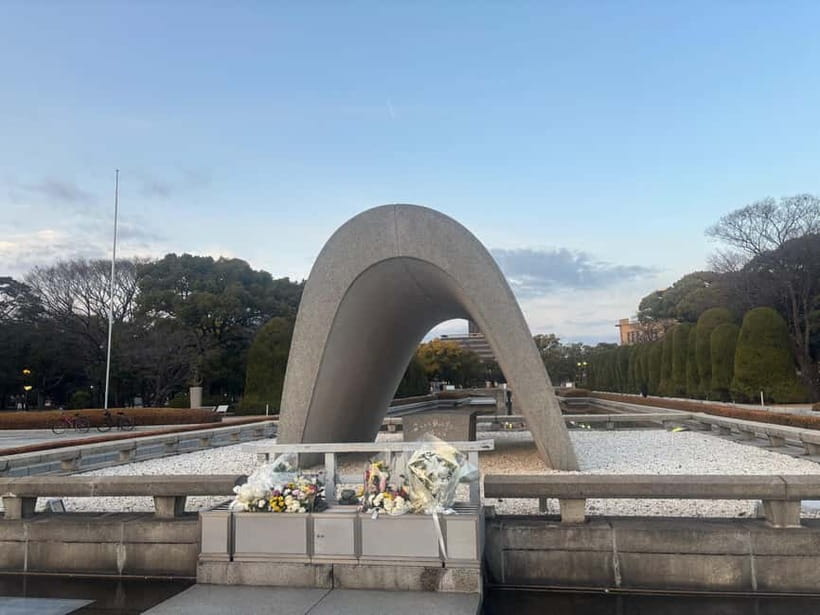
The Flame of Peace receives around 20 minutes, making it one of the more substantial stops. Its symbolism is central to the park’s message and gives the guide a chance to explain how Hiroshima remembers the victims while calling for an end to nuclear weapons.
This is also a point where the tone can become solemn. The walk is not designed as light entertainment, although guides keep the conversation open and approachable. You can ask questions, and the pace allows some room to process what you are hearing.
If you prefer to take memorial visits quietly and alone, a group tour may feel more public than you want. If you value explanation and want to understand the meaning behind the design, this is one of the tour’s strongest sections.
Sadako Sasaki at the Children’s Peace Monument
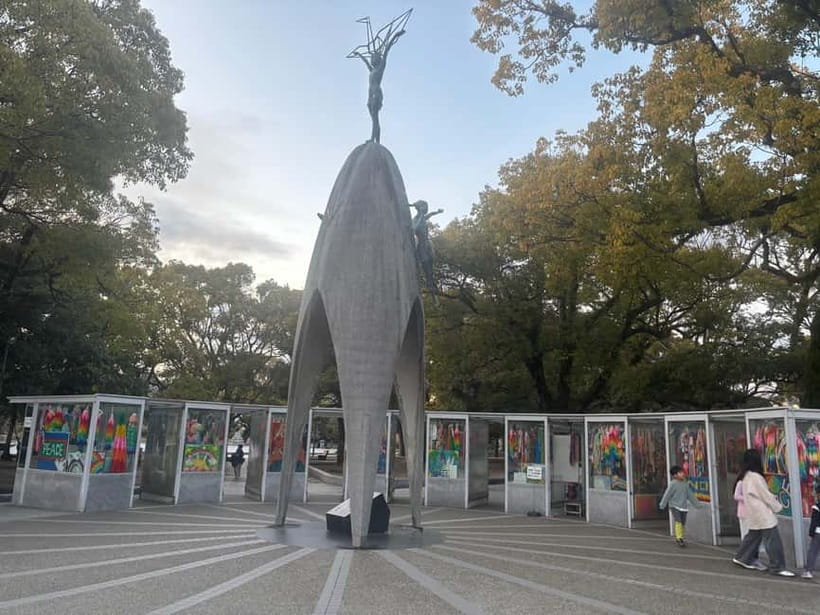
The Children’s Peace Monument gets about 10 minutes. Here you learn the story of Sadako Sasaki and the thousand paper cranes, one of the best-known personal stories connected with Hiroshima.
The monument helps shift the focus from military decisions and citywide statistics to children and families. That change in scale is important. You begin thinking about the bombing not only as a historic event but as something that shaped individual lives long after the day itself.
The stop is also a good reason to bring children or teenagers who may find a technical account of wartime history difficult to follow. The subject remains serious, but the story offers a clear human entry point.
Remembering Korean victims
The Korean Atomic Bomb Victims Cenotaph is a valuable part of the route because it broadens the story beyond Hiroshima’s best-known local memorials. The guide explains the presence and suffering of Korean victims of the bombing, a part of the history that can be missed if you walk through the park without help.
This stop also reminds you that Hiroshima was connected to the wider history of the Japanese empire and the war in Asia. It adds needed context without taking away from the focus on Hiroshima’s civilians.
The inclusion of this cenotaph is one of the tour’s most useful choices. You get a fuller account of who was affected, rather than a narrow visit centered only on the most photographed sites.
Ringing the Peace Bell
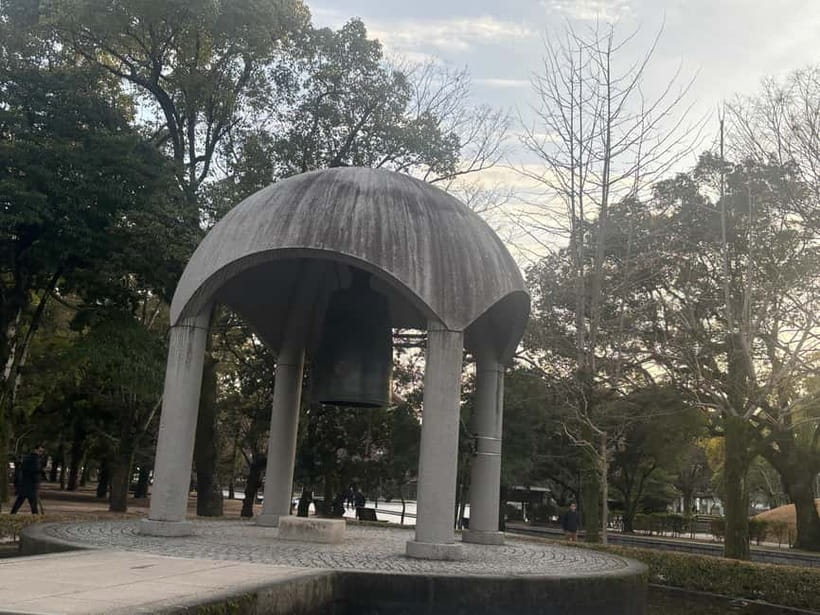
The Peace Bell receives about 10 minutes. You are invited to ring it as a symbol of hope and world peace.
This is a more participatory moment than the other memorial stops. You are not simply looking at an object or listening to a description. You take part in a small ritual, though you should still behave respectfully and follow the guide’s direction around the memorial areas.
Photography is allowed throughout the tour, but the setting calls for restraint. Ask before photographing people, avoid treating solemn places like ordinary photo backdrops, and give others space.
The Aioi Bridge and why the target mattered
The walk continues to Aioi Bridge for about 10 minutes. This stop helps explain why Hiroshima was selected as the primary target and how the bridge fit into the bombing plan.
The guide discusses the wider wartime setting and the reasons the city became a target. One especially useful part of the discussion is the attention to world affairs before the bomb was dropped, material that may not receive the same treatment in a museum visit.
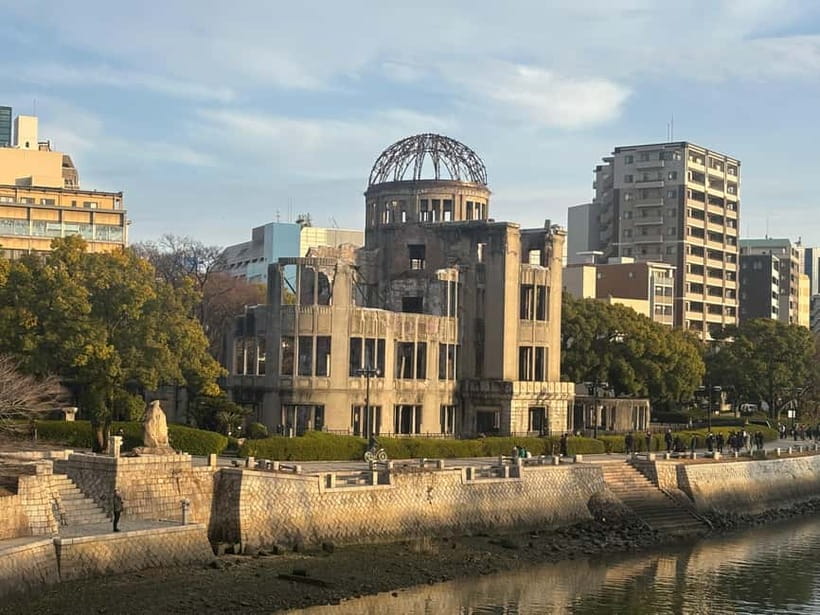
Aioi Bridge also helps you understand the geography of the park and the city around it. Seeing the bridge in relation to the dome, the river, and the memorial grounds gives the story a physical setting. You are not just hearing about a target on a map. You are standing among the streets and waterways that shaped the event.
The Atomic Bomb Dome, seen with context
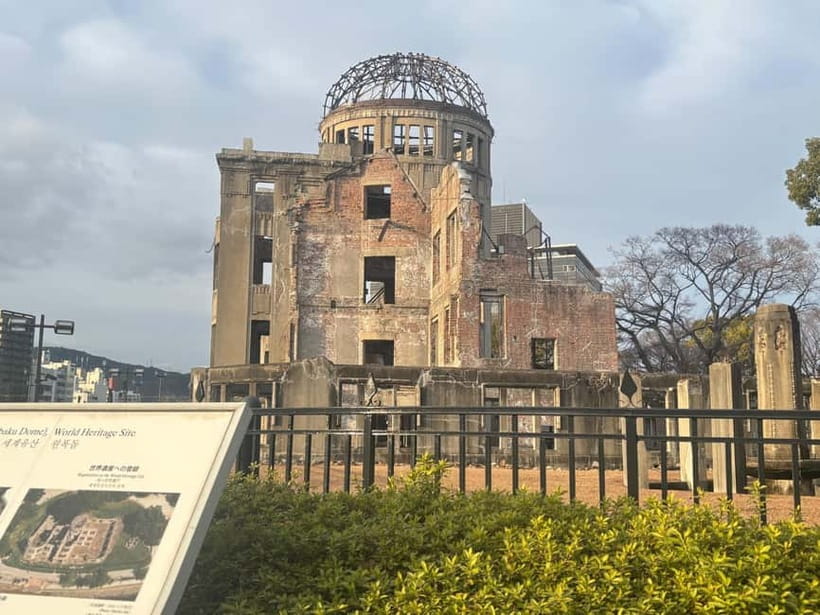
The Atomic Bomb Dome is the tour’s most recognizable stop and a UNESCO World Heritage Site. The guide gives it about 10 minutes, which is enough for a clear explanation but not enough for an extended personal visit.
The building survived close to the blast center, although much of the surrounding area was destroyed. Its exposed frame has become Hiroshima’s visual symbol, but the guide helps you see more than a dramatic ruin. You learn why it was preserved and how its meaning changed from a surviving structure to a warning about war and nuclear weapons.
Expect other people taking photographs here, especially during busy parts of the day. An evening departure can be appealing if you want fewer crowds. One group found that the park felt easier to appreciate after the main daytime rush had faded.
Do not treat the dome as the end of Hiroshima’s story. It is the most famous image, but the earlier memorials and personal accounts give it meaning. The route works best when you allow the whole walk to build toward this stop.
Finishing at the atomic bomb hypocenter
The tour ends at the Hiroshima Atomic Bomb Hypocenter Monument. This is a strong final stop because it identifies the point directly below the blast’s center.
Ending here changes the order you might naturally choose for yourself. Many people head straight to the dome, take photographs, and then enter a museum. This route leaves you with the exact place where the explosion began after you have already heard about the victims, the memorials, and the city’s recovery.
The tour also includes the Dr. Marcel Junod Memorial, the Norman Cousins Memorial, and the Hiroshima National Peace Memorial Hall among its covered sites. The amount of time at each place can vary, so ask your guide if one of these matters to you in particular.
What the guides do well
The strongest feature is the human delivery of a difficult subject. Syed is described as warm, articulate, and able to keep people engaged while covering a great deal of information. He also gives lunch suggestions, including recommendations for okonomiyaki after the walk.
Shah is praised for giving clear historical insight, while Hussain is noted for talking easily with the whole group. Khan and Aaze have also led departures, with Aaze especially effective at involving both adults and teenagers.
A good guide matters here because the tour contains many stops in only two hours. The information could easily become a list of names and dates. Instead, the best version of the tour links the monuments to personal stories and invites questions.
The pace appears to be generally steady, but do not assume every departure will last exactly two hours. One group finished after about 90 minutes and found the ending abrupt. If you want a slower, more reflective visit, allow extra time afterward for the museum, the National Peace Memorial Hall, or a return to the dome.
Is $23 a fair price?
At $23 per person, this is a good-value introduction to Hiroshima’s memorial district. You are paying for a live guide who connects several major sites, explains the reasons behind the target, and adds personal stories that you would likely miss by simply walking from monument to monument.
The tour does not include meals, hotel pickup, or drop-off. You also need to pay for any personal expenses. That keeps the price low, but it means you should plan your own transport and lunch.
I would use this tour as a first visit, not as a complete Hiroshima day. The two-hour walk gives you a framework. Then you can spend more time at the museum or memorial hall, revisit a monument that affected you, and choose lunch nearby. The guide’s okonomiyaki suggestions can help with that last part.
Who should book this walk?
Book it if you want a clear introduction before exploring the memorial area independently. It suits first-time visitors, history-minded travelers, families with older children, and anyone who wants to ask questions in English, Urdu, or Hindi.
It is also a good choice if you worry that the park’s many monuments will blur together. The route gives you order, meaning, and a finish at the hypocenter.
Think twice if you have limited walking ability. The experience is not suitable for wheelchair users or people with mobility impairments, and you should expect outdoor walking in all weather. It may also be less suitable if you want a private, silent visit with no group discussion.
Free cancellation is available up to 24 hours before the tour, and you can reserve now and pay later. That flexibility is useful when your Hiroshima plans depend on train schedules or changing weather.
My verdict on the Hiroshima Peace Walking Tour
I would book this tour for the first morning or afternoon of a Hiroshima stay, then return to the museum and Peace Park at your own pace. The best features are the guide’s personal storytelling, the Korean Victims Cenotaph, the explanation of the target and wartime setting, and the final stop at the hypocenter.
The $23 cost is modest for two hours of useful context. Just bring water, wear comfortable shoes, dress for the forecast, and leave room afterward for quiet reflection. If you want Hiroshima to be more than a quick photograph of the Atomic Bomb Dome, this walk is a practical and thoughtful place to begin.
FAQ
How long does the Hiroshima Peace Walking Tour last?
The advertised duration is two hours. One departure lasted about 90 minutes, so the exact timing can vary.
Where does the tour meet?
Meet at the Gates of Peace, on the front side of the Italian restaurant Mario.
Where does the tour finish?
The walk finishes at the Hiroshima Atomic Bomb Hypocenter Monument.
Which languages are available?
The live tour is available in English, Urdu, and Hindi.
Does the tour include food or drinks?
No. Food is not served, and personal expenses are not included. Bring your own water.
What should I bring?
Wear comfortable walking shoes and bring water, a hat, sunscreen, and a camera. The tour operates in all weather, so dress appropriately.
Is the tour suitable for wheelchair users?
No. The activity is not suitable for wheelchair users or people with mobility impairments.
Just added in Hiroshima
- Iya Valley BROMPTON Slow Cycling Tour★ 5.0 · 28 reviews
- Iya Valley All Must-Sees Private Chauffeur Full-day Tour with a Driver★ 5.0 · 20 reviews
- Shore Excursion from Hiroshima Port : Private Tour in Hiroshima★ 5.0 · 17 reviews
- Hiroshima & Miyajima All-Inclusive Tour w/Licensed guide Pancho★ 5.0 · 54 reviews
- Okunoshima Rabbit Island Cycling Tour with Local Guide★ 4.5 · 17 reviews
- The Peace Memorial to Miyajima : Icons of Peace and Beauty★ 4.5 · 31 reviews
- Hiroshima Private Tour with a Local – Highlights & Hidden Gems★ 4.5 · 24 reviews
- Private Full Day Hiroshima Tour★ 4.5 · 29 reviews
Hiroshima & Miyajima Day Trips, compared.
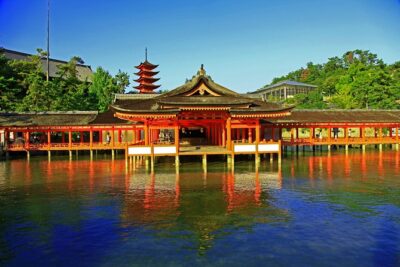
Peaceful Hiroshima & Miyajima UNESCO 1 Day Bus Tour
Read our review →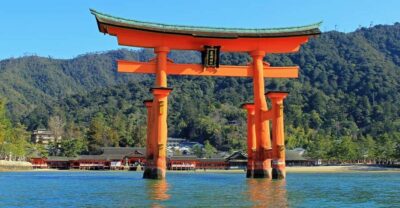
Hiroshima and Miyajima UNESCO Sites 1-Day Tour
Read our review →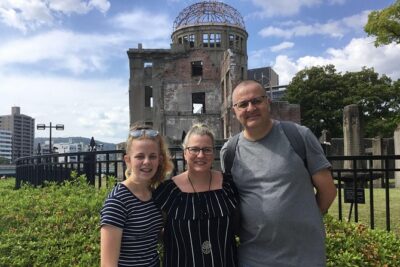
Hiroshima / Miyajima Full-day Private Tour with Government Licensed Guide
Read our review →
Osaka/Kyoto: Hiroshima Miyajima Bus Tour & Shinkansen Ticket
Read our review →
Hiroshima Historical Walking Tour – Why A-Bomb was Dropped
Read our review →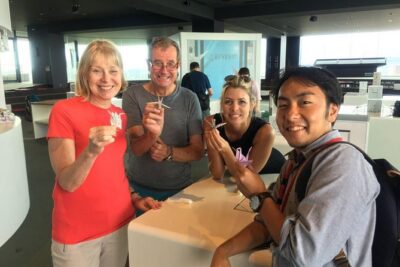
Hiroshima Peace (Heiwa) Walking Tour at World Heritage Sites
Read our review →
Hiroshima in a Nutshell: Morning Bike Adventure
Read our review →
Hiroshima City 4hr Private Walking Tour with Licensed Guide
Read our review →Browse the lists this tour appears in