
Reviewed · TEMPLE & SHRINE TOURS
Ise Jingu(Ise Grand Shrine) Half-Day Private Tour with Government-Licensed Guide
Ise Jingu is not just another Japanese shrine stop. It is the country’s most sacred Shinto complex, and the best part of this private tour is having someone explain what you are seeing as you move through it. You get help with shrine etiquette, the meaning of the buildings, and the role of Amaterasu Omikami, the sun goddess honored at Naiku.
I like two things here. First, the tour is private, so you can shape the four hours around your group instead of following a fixed crowd. Second, guides such as Tetsuya Tanahashi have helped visitors plan the route sensibly, including advice to hire a taxi when trying to fit Geku, Naiku, and Meoto Iwa into one morning.
The main catch is time. Four hours is enough for two or three sites, but not for every stop at a relaxed pace. Transportation is not included, and the guide meets you on foot or by public transport, so a busy Sunday or a far-flung stop can make the schedule tight.
Key points to know before booking
- Choose two or three sites: The private format lets you focus on the places that matter most to you.
- Start with shrine manners: Your guide can explain purification, prayer, sacred boundaries, and the customs that are easy to miss alone.
- Naiku and Geku are different visits: Naiku honors Amaterasu Omikami, while Geku is the outer shrine and part of the wider Ise worship route.
- Okage Yokocho adds a local pause: Shops and food stalls recreate Ise town scenes from the Edo and Meiji periods.
- Meoto Iwa needs careful planning: The wedded rocks are in Futami, and reaching them within four hours may require a taxi.
- The price buys attention, not transport: At $108.38 per person, the value depends on your group size and how much context you want.
Why Ise Jingu is better with an explanation
Ise Jingu is made up of two major shrine areas, Naiku and Geku, with other sacred places around them. You can walk through the grounds on your own, but the meaning of the gates, paths, river, buildings, and worship rituals is not always obvious.
That is where this tour earns its keep. A licensed English-speaking guide can explain how to purify yourself, how to pray, which areas are restricted, and why certain routes matter. One guide, Yoshi, has also explained the people who work at the shrines and the special path used only by the emperor when visiting the greatest shrine compounds.
You are not simply checking off an old religious site. You are learning how Shinto treats nature, ancestry, purity, and renewal. That last point is especially useful at Ise, where shrine buildings are periodically rebuilt in a major ceremony known as Sengu. One review response pointed ahead to the next Sengu in 2033, which gives you a sense of how the shrine’s cycle reaches far beyond a single visit.
The private setup helps if you have questions. You can stop and ask about a roof detail, a prayer gesture, or the difference between a shrine and a temple without worrying about holding up a large group.
Other places of worship worth the walk in Japan:
- Kyoto: Tea Ceremony Ju-An at Jotokuji Temple
★ 4.9 · 3,207 reviews - Tokyo: Meiji Shrine, Asakusa, Skytree Bus Tour and Cruise
★ 4.7 · 1,986 reviews - Tokyo: Asakusa Walking Tour with Sensoji Temple Visit
★ 4.8 · 1,583 reviews
Naiku, the shrine of Amaterasu Omikami
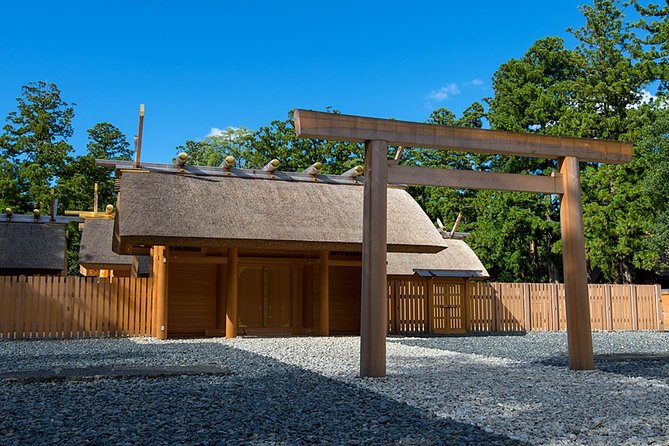
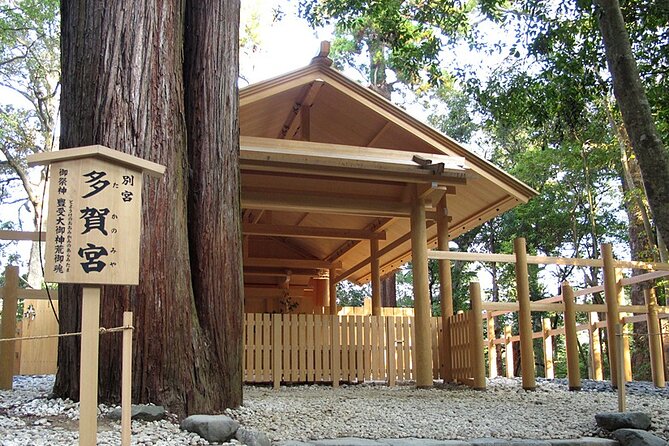
Naiku, formally known as Kotai Jingu, is the emotional center of a visit to Ise. It is dedicated to Amaterasu Omikami, the sun goddess and one of the most important deities in Shinto tradition.
Expect a serious, respectful atmosphere rather than a museum-style attraction. The shrine grounds combine sacred buildings, wooded paths, and areas connected with purification. Your guide can help you understand where to pause, how to approach the shrine, and what you can and cannot see.
The central buildings are not presented as ordinary tourist sights. Access is limited, and the privacy of the innermost areas is part of the experience. A guide helps you appreciate the design and ritual even when parts of the shrine remain beyond view.
Allow about an hour here if Naiku is one of your chosen stops. That is enough to walk through the main area with commentary, though you may want more time if you prefer a slow pace or want to linger beside the river and wooded grounds.
Naiku is the strongest choice for a first visit. If you have only four hours, I would make it one of your priorities, then pair it with either Geku or Okage Yokocho.
Geku and the wider Ise pilgrimage route
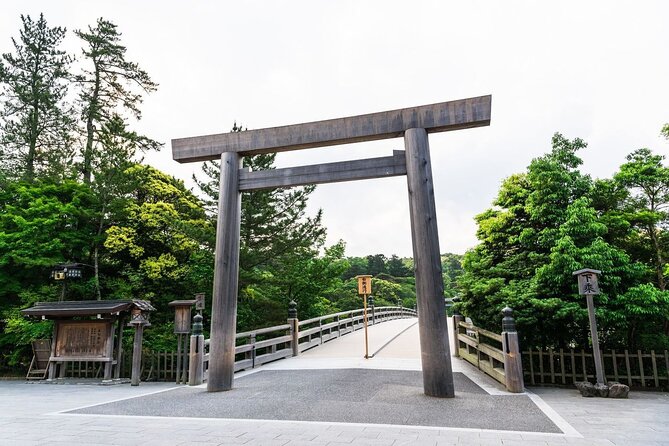
Geku, or the Outer Shrine, is formally known as Toyouke Daijingu. The tour description links the Ise visit with paying respect at Naiku, but Geku is also part of the traditional route through Ise and deserves separate attention.
A guide can show you how the two shrine areas relate to one another and explain the different religious roles they hold. This matters because it prevents the visit from becoming a quick stop at one famous gate followed by a shopping break.
A common plan is to meet near Ise City Station, visit Geku, and then use public transport toward Naiku. One carefully planned route also included Sarutahiko Shrine before continuing through Oharai-machi and into Naiku. That kind of adjustment is one of the clearest benefits of booking privately.
The drawback is distance and time. Geku and Naiku are not one compact site, and the tour does not include private transport. Public buses may work well, but the schedule can become difficult on a crowded Sunday. If both shrines are essential to you, ask about the route before the tour begins and consider paying for a taxi.
Isuzugawa River and the meaning of purification
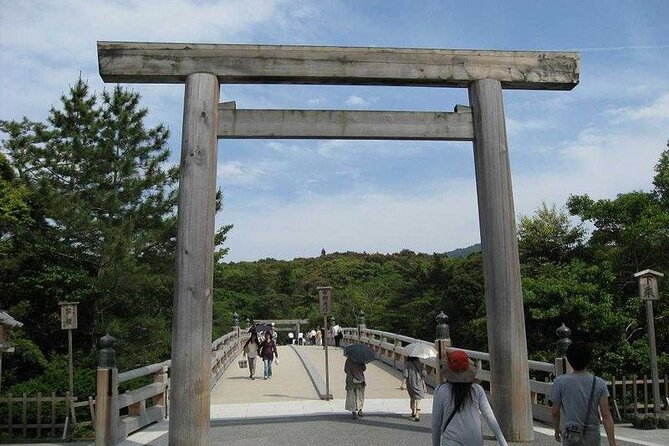
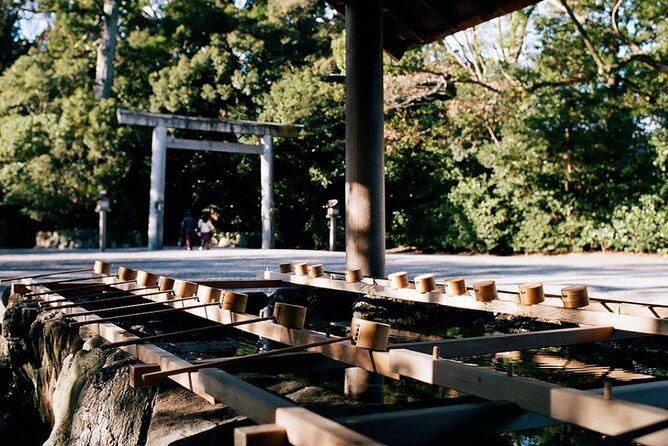
The Isuzugawa River runs beside the Naiku grounds and adds a natural element to the visit. It is connected with purification, an important part of Shinto practice.
This is a good place to slow down and let your guide connect the physical setting with the religious customs. The river is not simply a pretty break between shrine buildings. It helps explain why water, cleanliness, and preparation matter before prayer.
You do not need to book this as a separate major stop. It works best as part of your Naiku visit. If your group wants a calm walk and cultural explanation rather than a packed schedule, Isuzugawa may be more valuable than adding another distant site.
The tour information does not charge an entrance fee for the river area. Still, remember that your overall cost includes the guide but not transportation, meals, or personal purchases.
Other tours with a licensed guide in Japan:
- Tokyo 6hr Private Tour with Government-Licensed Guide
★ 5.0 · 3,902 reviews - Tokyo 4hr Private Tour with Government-Licensed Guide
★ 5.0 · 1,394 reviews - Kyoto 6hr Private Tour with Government-Licensed Guide
★ 5.0 · 1,369 reviews - Hiroshima / Miyajima Full-day Private Tour with Government Licensed Guide
★ 5.0 · 1,298 reviews
Okage Yokocho and Oharai-machi
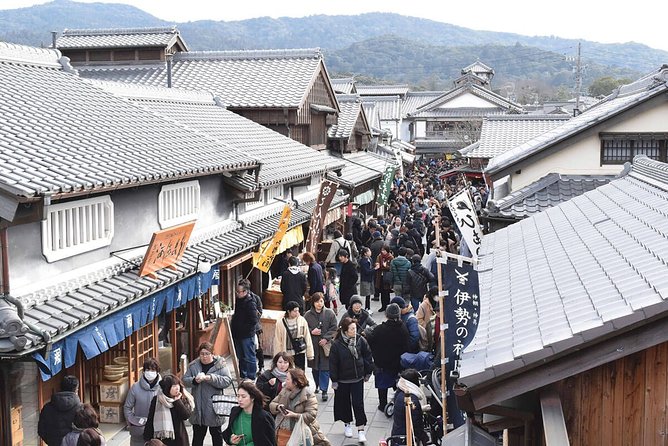
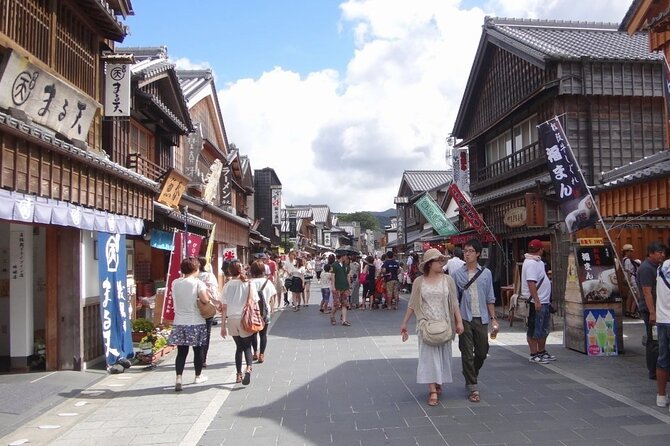
Okage Yokocho sits in front of the Naiku gate and recreates the look of an Ise town from the Edo and Meiji periods. It is an easy place to add character to a shrine-focused morning.
Here you can browse shops and stop for food. The street gives you a chance to see how the pilgrimage economy around Ise has been presented for modern visitors, with traditional-style facades and local businesses gathered along the route.
I like this stop because it balances the formality of Naiku. After concentrating on shrine etiquette and sacred spaces, you can take a more relaxed walk, try something local, and ask your guide about the town’s connection with the shrine.
Give Okage Yokocho roughly an hour if shopping and food appeal to you. If you do not care about browsing, you could use that time for a more careful visit to Geku or Naiku instead.
This is also a practical meeting point for a route that includes Naiku. The downside is simple: it can tempt you to linger. A private guide can help you keep an eye on the clock, but your group still controls the pace.
Meoto Iwa, the wedded rocks at Futami
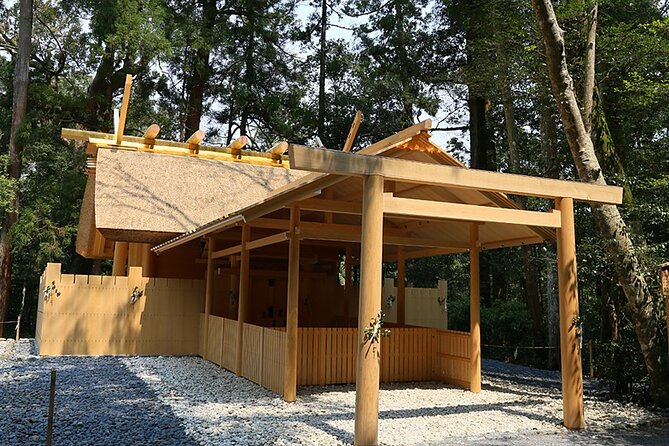
Meoto Iwa means the wedded rocks. Two sacred rocks sit offshore near Futami, with the larger rock paired with a smaller one. They are connected by a sacred rope and are known as a symbol of marriage.
The setting gives the tour a different mood from the shrine compounds. Instead of wooded grounds and formal worship spaces, you get a coastal view and a striking piece of Shinto symbolism. It is a strong choice if you want scenery as well as religious context.
The practical issue is location. Meoto Iwa is not beside Naiku or Geku, and the four-hour schedule does not comfortably allow every major stop without efficient transport. One guide specifically advised arranging a taxi so a group could see Geku, Naiku, and Meoto Iwa in the same half-day.
I would choose Meoto Iwa only if it is a priority for you. Pair it with Naiku for a focused route, or with Geku if you want to see both major shrine areas and accept a faster pace. Adding all five listed places can turn the tour into a race.
What the private format changes
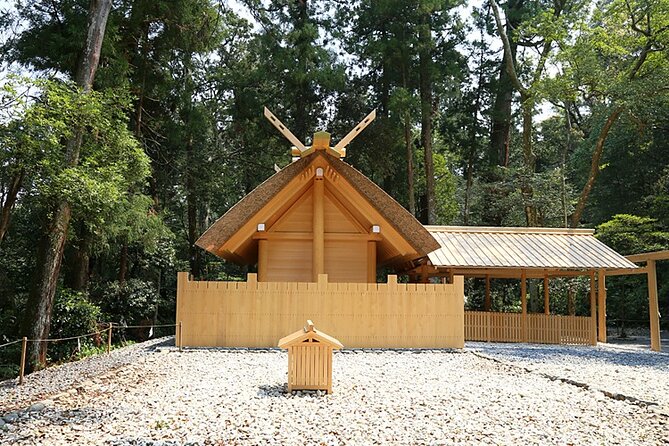
A private tour is most useful when your group has a clear preference. You can ask for more shrine explanation, more time at the river, a food stop in Okage Yokocho, or a route that includes Meoto Iwa.
The guide’s full attention also helps with small but important questions. You can ask where to stand, how to pray, why a gate is arranged in a certain way, or how the shrine’s buildings are maintained. One particularly strong part of Tetsuya’s guiding was his explanation of the structures and their upkeep, not just their age.
The experience is not a private car tour. The group meets the guide on foot within the designated Ise area and uses public transport unless you arrange and pay for another option. That distinction matters. You are buying personal guiding, not door-to-door service.
You also cannot combine multiple tour groups. The activity is intended for your own party, which keeps the pace flexible and the questions personal.
Price, timing, and value at $108.38
At $108.38 per person, this is not the cheapest way to see Ise Jingu. The price makes more sense for a small group that wants cultural interpretation and route planning rather than a simple walk through the grounds.
For two people, the cost buys four hours of a licensed local English-speaking guide. For a larger private group, the per-person price may feel easier to justify, especially if you share a taxi. Group discounts are offered, though the exact savings are not provided.
The value falls if you only want photographs and a quick look at the buildings. You can visit the shrine areas without paying for a private guide, but you would lose the explanations about Shinto practice, shrine maintenance, purification, and the relationship between Naiku and Geku.
I would treat transport as part of your budget. Buses may be enough for a simple Naiku and Okage Yokocho plan. A taxi becomes more sensible if you want to connect Geku, Naiku, and Meoto Iwa within four hours.
The activity is often booked well ahead, with an average booking lead time of 46 days. That suggests you should not leave it until the last minute if a particular date matters. Confirmation arrives at booking, and free cancellation is available until 24 hours before the start time.
Which route should you choose?
For a first visit, I would choose Naiku, Isuzugawa River, and Okage Yokocho. These places fit together naturally and give you sacred architecture, Shinto context, nature, food, and shopping without forcing a long transfer.
For a more religious focus, choose Naiku and Geku. You will spend less time moving around and more time understanding the two main shrine areas.
For scenery, choose Naiku and Meoto Iwa, but ask about a taxi before the day begins. The route can work, yet transport costs and traffic may affect how long you have at each site.
For repeat visitors, Geku, Meoto Iwa, and a carefully chosen local stop may provide more variety than another standard Naiku visit. You can also request Sarutahiko Shrine as part of the discussion, since it was included in one customized route, but the tour allows only two or three selected sites.
Who will get the most from this tour?
This suits first-time visitors who want to understand Shinto rather than simply walk through a famous shrine. It also works well for families or mixed-age groups because the private format lets you adjust the pace and explanation level.
It is a good match for anyone unsure about shrine etiquette. Having a guide explain purification and prayer can remove the worry of doing the wrong thing in a serious religious setting.
The tour also suits history and culture fans who enjoy details about construction, maintenance, imperial connections, and religious practice. Guides such as Yoshi, Tetsuya Tanahashi, and Nishio have each been associated with thoughtful explanations and route planning, although you should not assume that a particular guide will be assigned.
I would be more cautious if your main goal is to cover every major sight in one morning. The tour is customizable, but four hours, public transport, and separate shrine areas impose real limits.
Should you book it?
Book this tour if you want Ise Jingu to make sense, not just appear in your photo album. The strongest reasons are the private attention, the English commentary, and the ability to shape the visit around Naiku, Geku, Okage Yokocho, Isuzugawa River, or Meoto Iwa.
Before booking, decide which two or three places matter most. If Meoto Iwa is included, ask about a taxi and accept that the schedule may be brisk. If you want a slower and more peaceful morning, stay around Naiku, Isuzugawa, and Okage Yokocho.
At $108.38 per person, the tour is worthwhile for groups that value cultural guidance and practical route help. It is less compelling for independent visitors who are happy to explore quietly and pay their own way.
FAQ
How long does the Ise Jingu private tour last?
The tour lasts approximately four hours.
How many sites can I choose?
The tour includes a customizable selection of two or three sites from the available options.
Is transportation included?
No. Transportation fees and private transportation are not included. You meet the guide on foot within the designated Ise area and may use public transport or arrange other transportation at your own cost.
Are entrance fees included?
Entrance fees are not generally included. Guide entry fees are covered only for sights listed under the tour’s included expectations.
Is this a private group experience?
Yes. Only your own group participates, and multiple tour groups cannot be combined.
Can I cancel for a full refund?
Yes. You can cancel at least 24 hours before the experience start time for a full refund. Changes or cancellations made less than 24 hours before the start time are not accepted for a refund.
Just added in Japan
- Nagasaki Private Customizable Half Day Tour★ 5.0 · 16 reviews
- Nagasaki Full Day Tour with Licensed Guide and Vehicle★ 5.0 · 27 reviews
- Nagasaki Like a Local: Private & Custom Experience (2-3 hrs)★ 5.0 · 14 reviews
- Nagasaki Private Tour with a Local – Highlights & Hidden Gems★ 5.0 · 24 reviews
- Nagasaki WW2 History and Culture Tour★ 5.0 · 19 reviews
- Wasabi Farm Walking Tour & Lunch★ 4.5 · 20 reviews
- Nagasaki Street Food Adventure: Private Walking Tour with a Local★ 5.0 · 26 reviews
- Snow Monkeys, Hokusai & Sake: A Perfect Day in Nagano★ 5.0 · 19 reviews
Temple & Shrine Tours, compared.

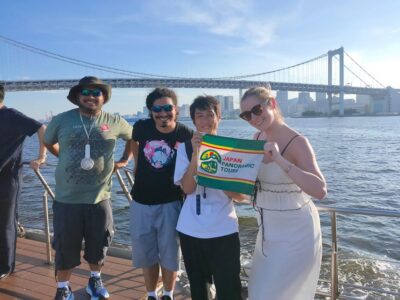
Meiji Shrine, Asakusa, Skytree Bus Tour and Cruise
Read our review →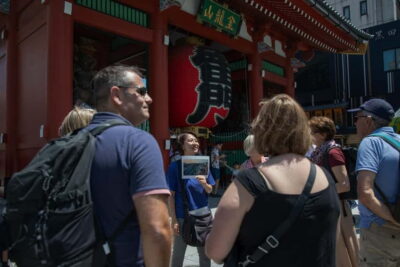
Asakusa Walking Tour with Sensoji Temple Visit
Read our review →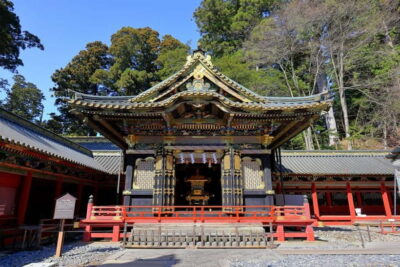
Kamakura & Enoshima Day Trip including Temple Tickets
Read our review →
Nikko Toshogu Shrine and Kegon Waterfall Tour
Read our review →
Tokyo Panoramic 1 Day: Meiji Shrine, Asakusa, Odaiba and SKYTREE®
Read our review →
1-Day Snow Monkeys, Zenko-ji Temple & Sake in Nagano
Read our review →Browse the lists this tour appears in