
Reviewed · GOVERNMENT-LICENSED GUIDE TOURS
Kumamoto Full-Day Private Tour with Government-Licensed Guide
Kumamoto’s best feature is its mix of major sights and local corners. In six hours, you can pair Kumamoto Castle with a peaceful garden, a small museum, a shopping arcade, or a stop chosen around your interests. Guides such as Mieko and Jun shape the day around your group rather than marching everyone through the same route.
I like the personal planning and the chance to ask real questions about Japanese history and daily life. I also like that the guides can add less obvious stops, such as Fujisaki Hachiman Shrine or a hands-on traditional craft activity, when those fit your interests. The catch is simple: transportation and entrance fees are extra, and fitting three or four sights into six hours requires sensible choices.
Key points to know before you book
- Choose three or four sights: The long list of possible stops is a menu, not a promise that you will see them all.
- Meet on foot in central Kumamoto: This is not a private-vehicle tour, so plan on walking and using public transportation or taxis at your own cost.
- Expect personal guiding from Mieko or Jun: Both guides have adjusted plans around family interests, food, museums, crafts, and travel needs.
- Pair big sights with local life: Kumamoto Castle and Suizenji Garden give you the classic view, while Shimotori and Josaien add shopping and regional food.
- Budget beyond the tour price: The listed price is $154.37 per person, excluding admissions, transport, lunch, and personal spending.
- Leave room for conversation: The value comes from explanations and flexibility, not from racing through every attraction.
A six-hour plan built around your interests
This experience works best when you treat it as a private day with a local interpreter, not as a fixed sightseeing bus. Before the start, you select the places that matter most to you from the available list. Your guide then builds a practical six-hour route around three or four choices.
That distinction matters. The suggested sights each carry an approximately one-hour time label, but the tour itself lasts about six hours. Add walking, transfers, meals, and conversation, and you will not visit all eleven places in one day.
The guide’s role is more useful than simply pointing at buildings. Mieko has helped families combine historic sights, markets, parks, and museums, while Jun has prepared background material and figures to make Kumamoto’s past easier to follow. Both have also adjusted plans after learning what a group actually enjoys.
You can ask for a history-heavy day, a family-friendly mix, art and crafts, shopping and food, or a broad first look at Kumamoto. Be specific before the meeting. If you want a particular shrine, museum, workshop, or meal, say so early.
Other tours with a licensed guide in Japan:
- Tokyo 6hr Private Tour with Government-Licensed Guide
★ 5.0 · 3,902 reviews - Tokyo 4hr Private Tour with Government-Licensed Guide
★ 5.0 · 1,394 reviews - Kyoto 6hr Private Tour with Government-Licensed Guide
★ 5.0 · 1,369 reviews
Kumamoto Castle: the essential first choice
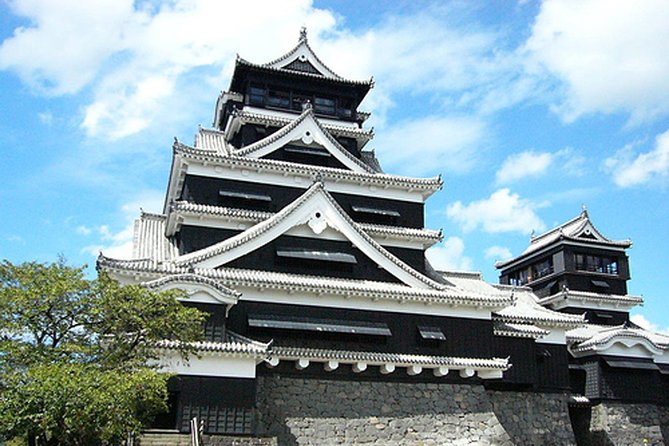
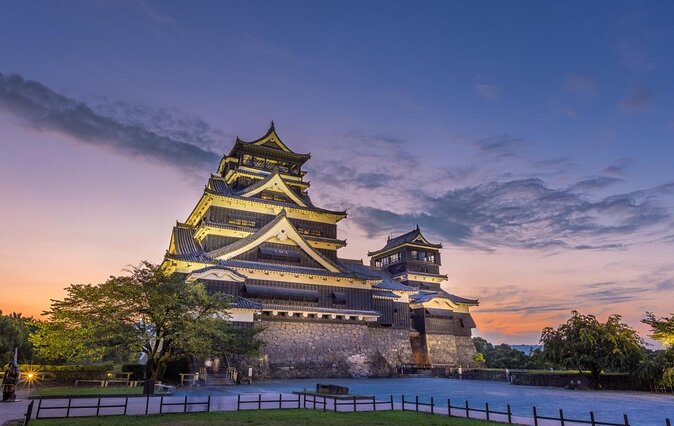
Kumamoto Castle is the city’s main sight and the obvious anchor for a first visit. Its broad grounds and collection of buildings give you more than a single keep to photograph. You can expect a substantial stop, with plenty to see and plenty for a guide to explain.
The castle is especially useful for understanding Kumamoto’s place in Japanese history. A licensed guide can connect the architecture, the ruling Hosokawa family, and the city’s development in a way that a quick walk with a map cannot.
Allow about an hour if you want a focused visit. That is enough for a useful introduction, but it is not enough to inspect every corner at a slow pace. Since admission is not included, keep an extra amount available for the entrance ticket.
I would choose the castle for a first visit unless you have already seen it. Then pair it with Suizenji Garden or Josaien rather than trying to add several museums. That gives you history, scenery, and a taste of present-day Kumamoto.
Suizenji Jojuen Garden: a quiet change of pace
Suizenji Jojuen is a Japanese-style garden built by the Hosokawa family in the seventeenth century. Its circular walking path gives the visit a steady rhythm, with water, greenery, and carefully arranged views replacing the stone walls and city streets of the castle.
This is a good pick if you want a calmer hour or if your group includes children who need a break from indoor exhibits. Families have enjoyed feeding carp and turtles here, which adds a simple, hands-on element to the visit. The garden also gives your guide room to explain Japanese garden design and the Hosokawa connection.
The main limitation is time. A garden rewards a relaxed walk, and a one-hour visit may feel short if you like photography or want to sit quietly. If you choose it, avoid stacking too many other outdoor stops into the same afternoon.
Suizenji works particularly well with Kumamoto Castle. One shows power and defense, the other shows leisure, taste, and controlled natural beauty. Together, they give you a more rounded picture of the city.
Former Hosokawa Mansion: a closer look at samurai-era life
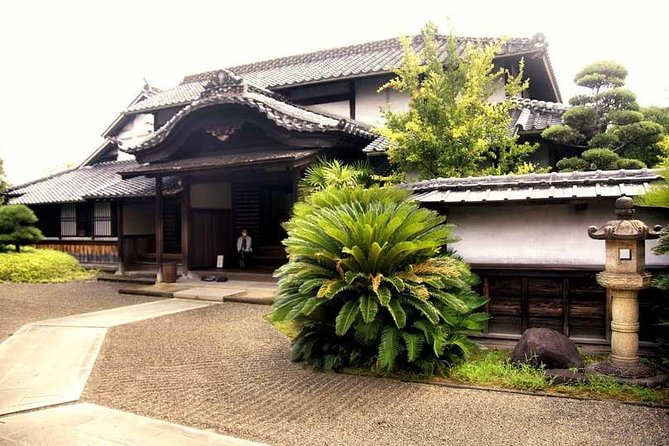
The Former Hosokawa Mansion was the residence of a branch family of the Hosokawa clan, the powerful family that ruled Kumamoto during the Edo period. It offers a more domestic view of the ruling class than a castle does.
I would choose this stop if you enjoy old residences, rooms, family history, and details of how elite households were organized. A guide can help you notice the difference between a residence built for daily life and a castle built for authority and defense.
The mansion is not the best choice if your group wants only grand landmarks or modern city life. It also competes with the castle for your history time. If you already plan to visit Kumamoto Castle and have only six hours, pick the mansion because you specifically want architecture and the Hosokawa story.
Same base, a different sort of day:
- Mt Fuji and Hakone 1-Day Bus Tour Return by Bullet Train
★ 5.0 · 26,383 reviews - 1-Day Tokyo Bus Tour
★ 5.0 · 14,250 reviews - PERFECT KYOTO 1-Day Bus Tour
★ 5.0 · 13,518 reviews - Tokyo: TOKYO SKYTREE® Admission ticket
★ 4.5 · 11,192 reviews
Lafcadio Hearn House: Japan through a foreign writer’s eyes
Lafcadio Hearn, known in Japan as Koizumi Yakumo, was among the first Western authors to write widely about Japan. His former house offers a literary angle on the country, with attention to the foreign writer who tried to describe Japanese culture for an outside audience.
This stop suits readers, writers, and anyone curious about how Japan was presented to the English-speaking world in the late nineteenth and early twentieth centuries. It is a more focused visit than the castle or garden, and its appeal depends on your interest in literature.
I would not put it at the top of a first-time visitor’s list unless Hearn interests you. But it can be a thoughtful choice for a repeat visit, or for a group that wants something beyond the standard castle-and-garden route.
Josaien: regional food, souvenirs, and a smart lunch stop
Sakuranobaba Josaien Tourist Information Center gathers Kumamoto specialties, local dishes, and souvenirs in one convenient place. You can use it as a shopping stop, a food stop, or a practical way to decide what to try next.
One local specialty mentioned for this area is salad chikuwa, a deep-fried fish cake filled with salad. Kumamoto is also known for horse meat, and one guide helped a group try raw horse meat at an izakaya-style lunch, along with shochu connected to the family’s name. That kind of food guidance is one of the strongest reasons to book a private guide.
Lunch is not included, so you pay for your own meal. That is a drawback if you expect an all-inclusive tour, but it also leaves you free to choose what suits your group. Tell the guide your comfort level with unfamiliar foods rather than assuming you must try everything.
Josaien is a sensible companion to Kumamoto Castle. It keeps the day close to the city center and adds a local-food stop without requiring a long detour.
Shimotori Shotengai: see how Kumamoto shops and eats
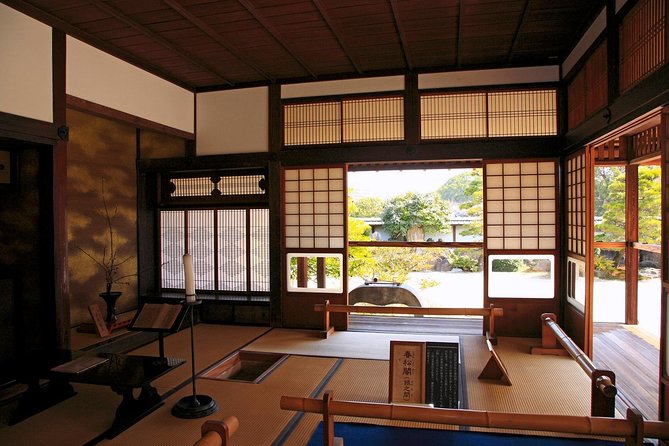
Shimotori is Kumamoto Prefecture’s largest shopping arcade, stretching about 511 meters long and 15 meters wide. Department stores, shops, restaurants, and everyday businesses line the covered route.
This is where you see Kumamoto as a living city rather than a collection of historic monuments. You can browse, stop for a drink, look for practical souvenirs, or ask your guide about local specialties and dining customs.
The arcade works best when you have a clear purpose. If you want a quick walk and a meal, it can fit neatly into the day. If you enjoy shopping, you may spend far longer than planned. Keep an eye on the clock because the tour has only six hours.
I would choose Shimotori for a group that has already seen major Japanese castles and wants ordinary city life. It is also a useful choice in poor weather because the shopping route is covered.
Contemporary Art Museum Kumamoto: a modern counterpoint
The Contemporary Art Museum, Kumamoto focuses on modern and contemporary art. Its displays include works integrated into different parts of the building, so the visit is not limited to a line of framed pieces in standard galleries.
Choose this museum if your group wants a break from historical sites or if you like architecture and modern art. It gives the day a different tone and prevents a full schedule of castles, houses, and gardens from feeling repetitive.
The museum is a poor match for anyone who wants only traditional Japan. Since exhibits can vary, ask your guide what is on view when you plan the day. Admission is not included, so add that cost to your budget.
Hanaokayama Park: a city view when weather cooperates
Hanaokayama is a hill above the city with broad views over Kumamoto. It is especially attractive in the evening, when city lights begin to appear.
The practical warning is the climb and the weather. The stop is best when visibility is good, and a cloudy or rainy day can reduce the reward. Since this is a walking tour, ask your guide how the hill fits with your group’s pace and the rest of the route.
I would choose Hanaokayama late in the day if the forecast looks favorable. It can provide a strong finish, but it should not replace Kumamoto Castle or Suizenji Garden on a first visit unless views matter most to you.
Soseki Natsume Uchitsuboi Old House: literary Kumamoto
This former home is connected with Natsume Soseki, a major writer of the Meiji period who died in 1916. The memorial hall is based in a house dating from the eighteenth century.
This stop is a good fit for anyone interested in Japanese literature or the transition into modern Japan. It offers a personal setting for discussing a writer’s life, rather than presenting history only through castles and official buildings.
As with the Lafcadio Hearn House, the appeal is specialized. You will get more from it if you know a little about Soseki or want your guide to explain his place in Japanese culture. It is not essential for every first-time visit.
Traditional crafts and the Shimada Museum of Arts
The Kumamoto Prefectural Traditional Crafts Center is the choice for hands-on cultural context through objects and techniques. You can see a wide range of regional crafts and ask your guide about how they fit into Kyushu’s artistic traditions.
The Shimada Museum of Arts is smaller, with galleries devoted to items such as calligraphy and paintings. Its size can make it easier to enjoy at a measured pace, though it will not offer the scale of a major national museum.
A private guide can make these stops more useful by steering the discussion toward the objects that interest you. One guide also arranged a zogan workshop, a traditional decorative craft activity, for a group. That is a good example of why you should describe your interests before the day begins, since the best experience may be an activity connected to the subject rather than a standard sightseeing stop.
What the $154.37 price really covers
At $154.37 per person, the price pays for a private, licensed English-speaking guide and a custom six-hour plan. Only your group takes part, so you are not waiting for strangers or following a rigid schedule.
The value is strongest for families, couples, and small groups who want context and help making choices. A guide can save time deciding what to see, explain customs at shrines, help with food choices, and offer travel suggestions after the tour. Jun has even helped with onward travel arrangements, while Mieko has kept in touch with groups about their preferences before meeting.
The price is less attractive if you only want a basic walk between free sights. You must also pay for public transportation or taxis, entrance fees, lunch, and personal purchases. There is no private vehicle.
Group discounts are available, but you cannot combine separate tour groups. Since pickup is on foot within a designated area of Kumamoto city, confirm the meeting point carefully. Pickup from Yatsuhiro Port is not allowed. Cruise passengers arriving there need to arrange their own way to Kumamoto, and the tour provider cannot treat the port as a pickup point.
Free cancellation is available up to 24 hours before the start time. Inside that window, changes and refunds are not accepted.
Who will get the most from this tour
I would recommend this experience to you if you want a private guide with room to adjust the day. It suits families, older relatives, first-time visitors, and anyone who wants help with Japanese history, food, or local customs.
It is also a good fit for repeat visitors. You can skip the headline sights and ask for literature, crafts, a shrine loved by local residents, or a more unusual food experience.
I would be cautious if you dislike walking, need a private vehicle, or want every expense included. The tour is not a sightseeing bus, and the six-hour limit means you must choose carefully. It also may not suit a group that refuses to decide what matters most before the start.
Should you book the Kumamoto private tour?
Book it if you value flexibility, clear explanations, and a guide who will shape the day around your group. Choose Kumamoto Castle and Suizenji Garden for the strongest first visit, then add Josaien or Shimotori for food and city life.
If you already know Kumamoto well, ask for crafts, literature, a local shrine, or an activity such as a zogan workshop. Give your guide honest details about walking pace, food interests, and museum tastes.
At $154.37 per person before extra costs, this is not the cheapest way to see Kumamoto. It can be good value when a private guide helps you use six hours well and turns a list of sights into a day that actually fits your interests.
FAQ
How long does the Kumamoto private tour last?
The tour lasts approximately six hours.
How many sights can I choose?
The experience includes a customized selection of three or four sites from the available attractions.
Is the tour private?
Yes. Only your group participates, and separate tour groups cannot be combined.
Is a private vehicle included?
No. This is a walking tour. Transportation fees and any private transport you choose are paid separately.
Where do I meet the guide?
You meet the guide on foot within a designated area of Kumamoto city. Pickup is not provided at Yatsuhiro Port.
Is the guide licensed?
The tour includes a local English-speaking guide with National Government Licensed Guide Interpreter certification.
Are entrance fees included?
No. Entrance fees are paid separately. Guide entry fees are covered only for sights listed under the tour’s included attractions.
Is lunch included?
No. Lunch and other personal expenses are not included.
Can I cancel for a full refund?
Yes, if you cancel at least 24 hours before the experience start time. Cancellations or changes made less than 24 hours before the start are not refunded or accepted.
Just added in Japan
- Nagasaki Full Day Tour with Licensed Guide and Vehicle★ 5.0 · 27 reviews
- Nagasaki Private Customizable Half Day Tour★ 5.0 · 16 reviews
- Nagasaki Like a Local: Private & Custom Experience (2-3 hrs)★ 5.0 · 14 reviews
- Nagasaki Private Tour with a Local – Highlights & Hidden Gems★ 5.0 · 24 reviews
- Nagasaki WW2 History and Culture Tour★ 5.0 · 19 reviews
- Snow Monkeys, Hokusai & Sake: A Perfect Day in Nagano★ 5.0 · 19 reviews
- Wasabi Farm Walking Tour & Lunch★ 4.5 · 20 reviews
- Nagasaki Street Food Adventure: Private Walking Tour with a Local★ 5.0 · 26 reviews
Government-Licensed Guide Tours, compared.
Tokyo 6hr Private Tour with Government-Licensed Guide
Read our review →
Hiroshima / Miyajima Full-day Private Tour with Government Licensed Guide
Read our review →
Kyoto 4hr Private Tour with Government-Licensed Guide
Read our review →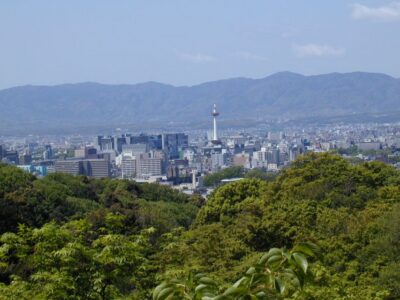
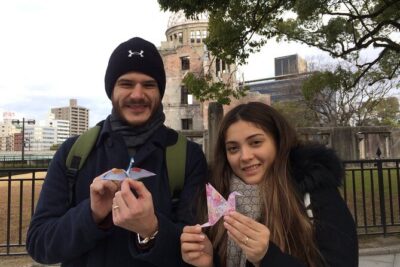
Hiroshima City 4hr Private Walking Tour with Licensed Guide
Read our review →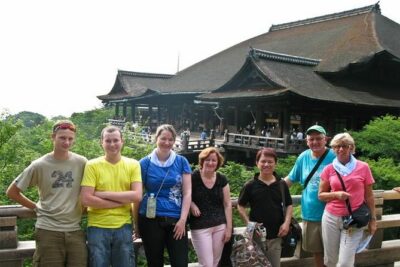
Private Kyoto Tour with Licensed Guide & Vehicle (Max 15 persons)
Read our review →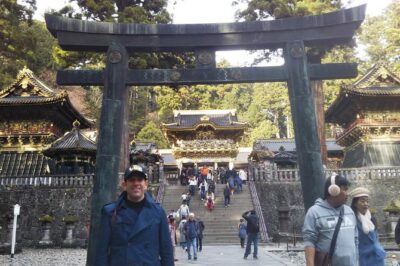
Nikko Full-Day Private Tour with Government-Licensed Guide
Read our review →
Himeji Half-Day Private Tour with Government-Licensed Guide
Read our review →Browse the lists this tour appears in