

Reviewed · SAMURAI & NINJA EXPERIENCES
Matsumoto Castle Tour & Samurai Experience
Matsumoto Castle is the main event here, but the hands-on samurai lesson gives this three-hour outing its spark. You walk through one of Japan’s oldest surviving castle keeps, then put on a samurai outfit, choose a practice sword, and learn basic movements from an instructor such as Miharu or Kei.
I like the clear pairing of serious history and family fun, and I like that the walk from Matsumoto Station includes local stories before you reach the castle. The main caution is physical: the keep has steep, narrow stairs, low beams, and chilly wooden floors. The sword session uses theatrical or wooden swords, not a sharp katana.
Key points to know before booking
- Matsumoto Castle is a National Treasure: The black-and-white keep dates from the late 1500s and is known as Crow Castle.
- The castle visit takes about 90 minutes: Expect steep stairways, tight passages, low beams, and excellent views from the upper levels.
- The samurai class lasts about one hour: You learn basic stance, drawing, returning, attack, and defense movements.
- Costumes and practice swords are included: Children under six can join free with a child’s outfit and foam sword.
- Guides add local context: Guides including Tim, Naomi, Tom, and Kei have been praised for clear explanations, humor, and a relaxed pace.
- The group is capped at 15 people: That keeps the class more manageable than a large bus tour.
Two very different hours in Matsumoto
This experience works because it does not treat Matsumoto Castle as a quick photo stop. The first part gives you the setting and the story. The second lets you act out a carefully controlled piece of samurai training.
You meet at Matsumoto Station, then walk toward the castle with an English-speaking guide. The route takes roughly 20 minutes according to the tour details, and guides may point out places of interest along the way. That short walk matters. It gives you time to hear about Matsumoto, the surrounding area, and the castle before you are standing in front of it.
At the castle, your guide explains the building, the samurai lords who lived there, defensive features, weapons, and daily life in a feudal stronghold. Later, you continue to Nakamachi Kurassic-kan for the sword activity. The tour finishes back at the station meeting point.
The result is part walking tour, part historic visit, and part stage-combat class. You should not book it expecting a museum lecture followed by real sword cutting. You should book it for a lively introduction to the castle and a safe, memorable activity afterward.
Other castle tours in Nagano people book:
- Matsumoto Castle Tour & Samurai Experience
★ 4.9 · 128 reviews - 1-Day Tour from Nagano and Matsumoto Kamikochi & Matsumoto Castle
★ 5.0 · 105 reviews - Full-Day Tour: Matsumoto Castle & Kamikochi Alpine Valley
★ 4.8 · 78 reviews
Entering black-and-white Matsumoto Castle
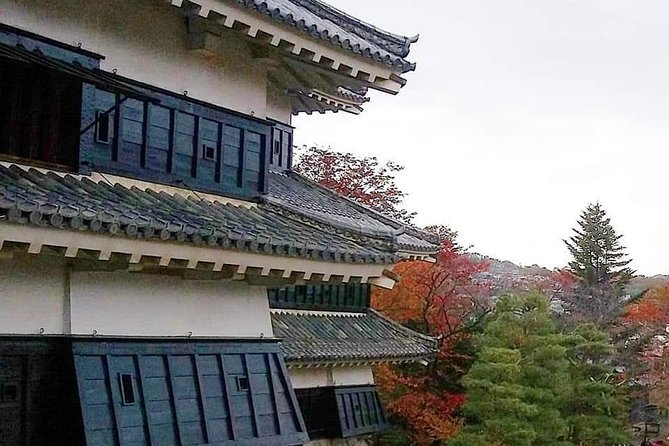
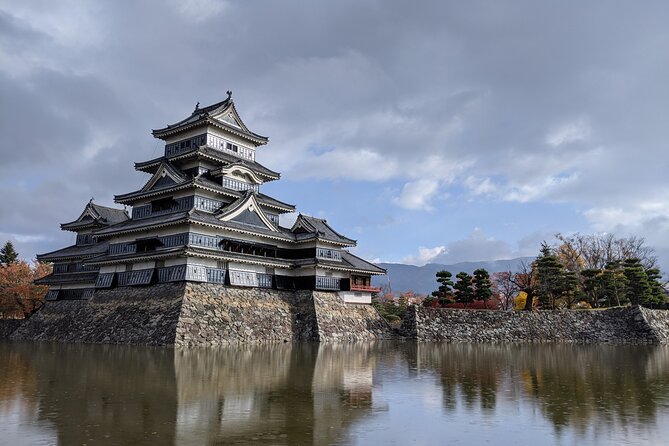
Matsumoto Castle is one of only five Japanese castles designated as National Treasures. Construction began in 1592, and the surviving donjon is the oldest remaining castle tower of its kind in Japan. Its dark outer walls give it the nickname Crow Castle, a striking contrast to the pale mountains and sky around Matsumoto.
The outside is impressive, but the interior is where the visit becomes more physical. You climb through several levels using narrow wooden stairways. The steps are steep and unusually high, almost like a short ladder in places. You need to use the handrails, move carefully, and allow extra time when other people are coming the opposite way.
Low beams are another small hazard. Keep your eyes up as you move through the old structure. The castle was built for defense, not modern comfort, and its awkward passageways help you understand that this was a working stronghold rather than a decorative residence.
The upper levels reward the climb with views over Matsumoto. You also see the castle’s structure up close, including its timber construction, defensive openings, and changing floor plans. A guide can help you connect those details to the political and military life of the period.
The castle itself has a relatively modest admission cost, so the value of the tour does not come from entry alone. You are paying for the guide, the walk, the interpretation, and the added samurai class. If you already know Matsumoto’s history and prefer to explore at your own pace, you may find the guided portion less essential. If you want context and have only a short time in town, the explanation adds real value.
Bring warm socks for the castle floors
Japanese castles often require visitors to remove their shoes, and Matsumoto can be cold inside. The wooden floors do not hold much warmth, particularly in cooler months. One guide, Tim, has reportedly carried spare slippers for the group, which is a thoughtful touch, but you should still bring warm socks.
This is one of those simple details that can affect your enjoyment more than expected. Your feet may be cold while you climb, and the stairs already demand attention. An extra pair of socks takes almost no room in a day bag.
The castle is not a good match for anyone who cannot manage steep, narrow stairs. The activity information says most people can participate, but it specifically warns about the stairways. Take that seriously, especially if you have mobility limits, balance concerns, or young children who need close supervision.
What the guide adds to the castle visit
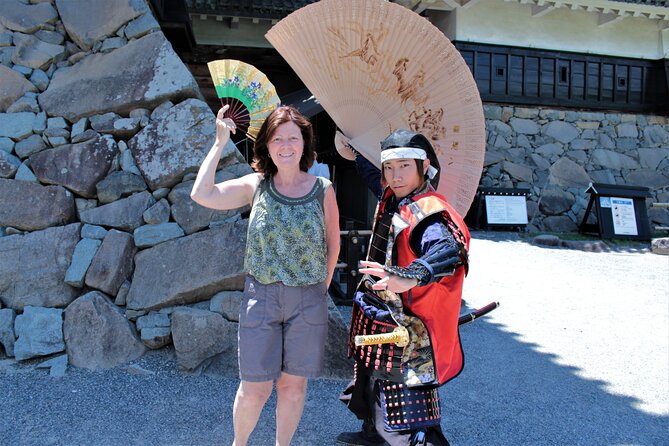
The guide is an important part of the price. The experience has used guides including Tim, Naomi, Tom, Kei, and others, and the guiding style can vary from person to person. The strongest feedback highlights clear English, local knowledge, humor, a comfortable pace, and useful information about Matsumoto beyond the castle walls.
Tom, for example, has been described as having lived in Japan for decades and having worked as a teacher. Kei has led both solo visitors and families through the castle. Naomi has been praised for her friendly explanations and ability to keep children involved. Guides may also help with local suggestions and explain points of interest on the walk from the station.
That personal element makes the tour feel less like reading labels as you go. You can ask questions, connect the architecture with samurai culture, and get a broader picture of life in Matsumoto.
There is a fair limitation here. The guide is not necessarily a specialist historian, and the tour provider gives guides room to bring their own experience and style. One critical review found the castle explanations too light for someone with professional knowledge of medieval castles. If you want a scholarly examination of military architecture, this may not go far enough.
For most people, the format should work well. You get accessible history rather than an academic seminar, followed by an activity that gives younger members of your group something active to anticipate.
Other swordplay and stealth sessions in Nagano:
- Tokyo: Samurai Restaurant Show Ticket with 2 Drinks
★ 4.5 · 1,307 reviews - Kyoto Samurai Experience
★ 5.0 · 1,294 reviews - Tokyo: Samurai Ninja Museum Guided tour and Experience
★ 4.6 · 1,010 reviews - Kyoto: Kendo and Samurai Experience with Uniform and Gear
★ 4.9 · 815 reviews
Changing into a samurai at Nakamachi Kurassic-kan
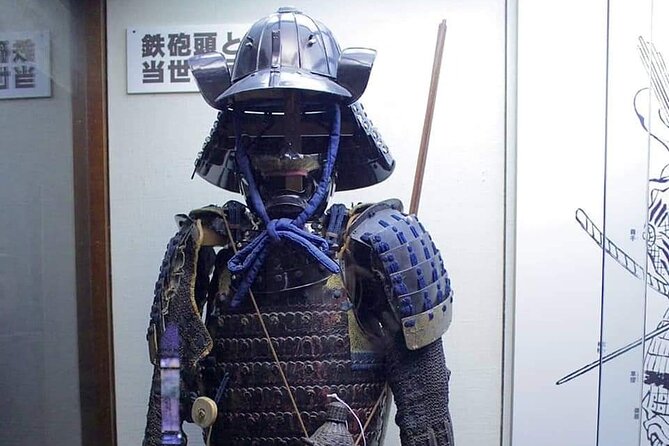
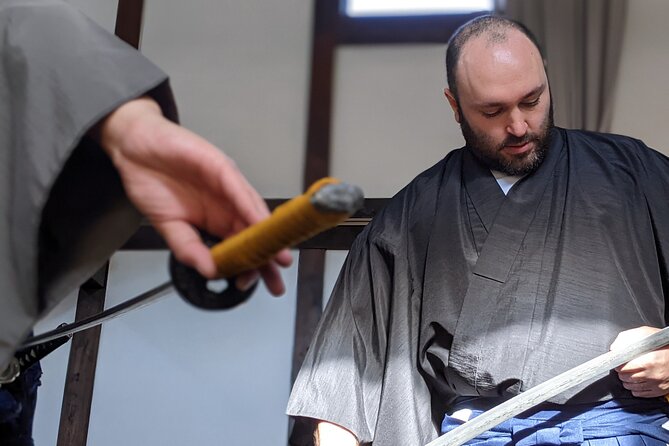
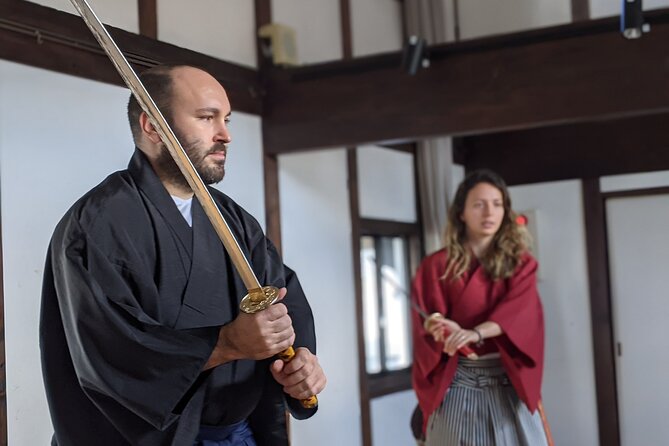
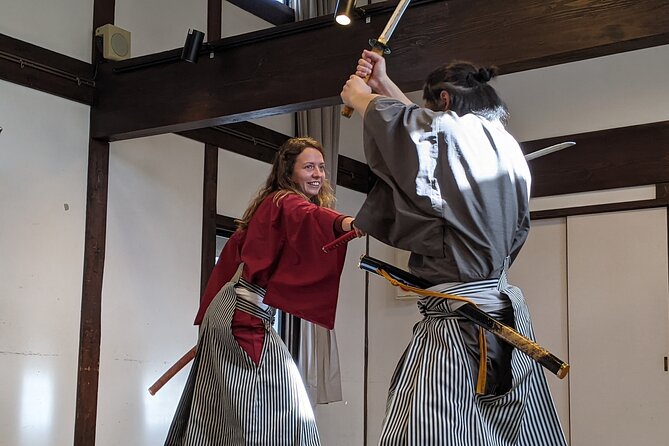
After the castle, the group goes to Nakamachi Kurassic-kan for the one-hour samurai session. You choose a costume and a practice sword, then learn basic samurai movement, including the stance known as kamae.
The instructor demonstrates the movements first. You may practice drawing and returning the sword, controlled attack and defense positions, and a short sequence. The activity is designed for participation and photographs, so you will have a chance to look the part while learning the motions.
The instructors, including Miharu and Kei, have received especially warm praise for patience, humor, clear demonstrations, and their ability to work with children and teenagers. The class is active without being described as strenuous. It gives a 9-year-old something to do with their hands, while adults and older children can still enjoy the theatrical side.
You should understand the style before you arrive. This is stage combat and basic kata, not a cutting lesson. There is no practice fight with sharp blades, no slicing of objects, and no sword test. Authentic katana are regulated as weapons in Japan, so the activity uses theatrical swords, wooden swords, plastic blades, or foam swords for young children.
That safety rule is not a flaw. It is what makes the session suitable for families and mixed-age groups. Still, the wording about choosing your own sword can create an expectation of a genuine metal katana. If handling an authentic blade is important to you, this is not that experience.
Why families and teenagers tend to enjoy it
The activity gives children a clear change of pace. A castle visit can lose a younger child after several rooms and explanations. Here, the promise of dressing up and learning sword movements keeps the day varied.
Teenagers also have a reason to stay engaged. The instructors use demonstrations, role-playing, and photographs rather than asking the group to stand still for a long talk. Several families have particularly enjoyed seeing older children take the lesson seriously while still having fun with the costumes.
Adults are not left out. The session offers a brief look at how controlled movements, posture, and presentation are used in samurai-themed performance. You will not become a trained swordsman in an hour, but you will leave with a better sense of the discipline behind the movements and some memorable pictures.
Children under six can participate without an extra charge. The included equipment for them is a child’s costume and foam sword. There is no stated minimum age for the overall activity, but you should consider your child’s ability to manage the castle stairs and follow instructions around other participants.
Is $88.53 a fair price?
At $88.53 per person, this costs more than paying for castle admission and walking through the keep alone. That comparison is important. The castle ticket by itself does not explain the price.
You are also paying for an English-speaking guide, the walk from the station, about 90 minutes inside the castle, a one-hour samurai activity, costume rental, sword rental, and a small-group setting capped at 15 people. For a first visit to Matsumoto, the combination can be good value because it fills three hours with two distinct activities.
The price makes the most sense for families, first-time visitors, and anyone who wants help understanding what they are seeing. It is less compelling if you are already well read on Matsumoto Castle, dislike guided visits, or mainly want a real sword-handling experience. Meals, snacks, souvenirs, insurance, and other personal costs are not included.
The high overall rating, 4.9 from 69 reviews with 97 percent recommending the activity, suggests that the format works for most people. I would still read the description carefully and treat the sword element as safe theatrical training, not martial arts instruction with real weapons.
Timing, meeting point, and practical details
The tour starts at Matsumoto Station, at 1 Chome-1 Fukashi, Matsumoto, Nagano 390-0815. It ends back at the station meeting point. That arrangement is useful if you are arriving by train or building the activity into a day of sightseeing without arranging a separate return transfer.
The total duration is about three hours. Allow a little extra time around the start and finish, especially if you have a train reservation afterward. A mobile ticket is provided, and confirmation is received at booking.
The group maximum is 15 people. That is small enough for questions and class instruction, though the exact feel will depend on the day’s group and guide. The activity is near public transportation, and most people can take part.
Free cancellation is available until 24 hours before the local start time. Inside that window, the payment is not refunded, and changes are not accepted. Keep that cutoff in mind if your Matsumoto plans depend on weather or train connections.
Who should book this Matsumoto experience?
I would recommend it to families with school-age children, couples who want more than sightseeing photographs, and first-time visitors who appreciate a guide’s help. It is also a good pick for anyone with a strong interest in samurai culture but limited time in Matsumoto.
You will get the most from it if you enjoy a relaxed pace, ask questions, and are happy with a theatrical sword lesson. Bring warm socks, wear comfortable walking shoes, and prepare for the castle stairs.
I would hesitate if you have difficulty with steep steps, need a fully accessible route, or expect authentic sword use. I would also think twice if your main goal is advanced historical detail. The castle remains the strongest cultural part, while the samurai class supplies the fun and the photographs.
Should you book it?
Book this tour if you want Matsumoto Castle explained in plain English and like the idea of following history with a safe, hands-on activity. The combination is especially effective for families and mixed-age groups, and the best guides add local stories, humor, and useful context.
Skip it if you prefer independent sightseeing or want genuine martial arts training. For everyone else, the cost is reasonable for a guided castle visit plus costumes, equipment, and a one-hour samurai class. Just bring warm socks, watch the stairs, and arrive knowing that your sword is for practice, movement, and pictures, not cutting.
FAQ
How long does the Matsumoto Castle and samurai experience last?
The activity lasts approximately three hours. About 90 minutes are allocated to Matsumoto Castle, followed by about one hour for the samurai activity, with walking time included.
Where does the tour begin?
The meeting point is Matsumoto Station at 1 Chome-1 Fukashi, Matsumoto, Nagano 390-0815, Japan.
Where does the tour end?
The experience ends back at the meeting point at Matsumoto Station.
Are castle admission and the samurai activity included?
Yes. Entry to Matsumoto Castle and admission to the samurai activity are included.
Are costumes and swords provided?
Yes. Samurai outfits and swords are provided for use during the activity. Children under six receive a child’s outfit and foam sword at no extra charge.
Will I use a real katana?
No. The activity uses theatrical, wooden, plastic, or foam practice swords. It teaches safe sword techniques and kata and does not include cutting or slicing objects.
Are there age restrictions?
There is no minimum age requirement. Children under six can participate free of charge with the included child’s outfit and foam sword.
Can I cancel for a full refund?
Yes, if you cancel at least 24 hours before the local start time. Cancellations or changes made within 24 hours are not refunded or accepted.
More castle tours elsewhere in Japan
- Matsumoto Castle Town Walking Tour
★ 4.8 · 58 reviews - Osaka Castle: Museum and Tower Entry Ticket
★ 4.5 · 2,380 reviews - Tokyo Castle & Imperial PalaceーShogun Walking Tour
★ 4.7 · 1,068 reviews - Kyoto: Nijo-jo Castle and Ninomaru Palace Guided Tour
★ 4.7 · 1,020 reviews
Just added in Nagano
- 1 Day Tour: Snow Monkeys & Snow Fun in Shiga Kogen★ 5.0 · 52 reviews
- Matsumoto Castle Town Walking Tour★ 4.8 · 58 reviews
- Matsumoto Discovery – Half Day Walking Tour★ 5.0 · 43 reviews
- From Matsumoto/Nagano: Nakasendo Trail Walking Tour★ 4.9 · 33 reviews
- Matsumoto Castle Tour & Samurai Experience★ 4.9 · 128 reviews
- Nagano: 1-Day Snow Monkey & Cherry Blossom Tour in Spring★ 4.8 · 51 reviews
- 1-Day Winter Tour From Nozawa Onsen: Snow Monkeys, Zenko-ji Temple & Sake★ 5.0 · 32 reviews
- 1-Day Tour from Nagano and Matsumoto Kamikochi & Matsumoto Castle★ 5.0 · 105 reviews
Samurai & Ninja Experiences, compared.

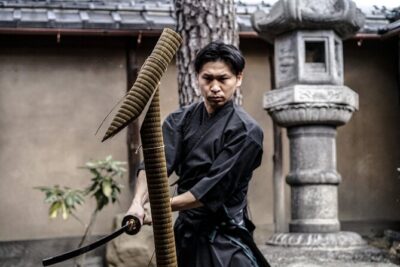
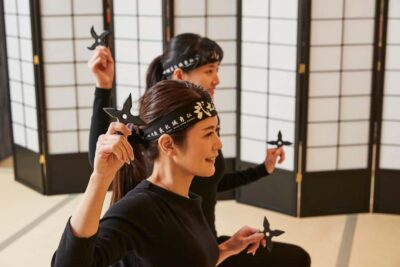
Samurai Ninja Museum Guided tour and Experience
Read our review →
Kendo and Samurai Experience with Uniform and Gear
Read our review →
Samurai Sword Class by Experts in Traditional Arts
Read our review →
Skip the lines Basic Ticket at SAMURAI NINJA MUSEUM KYOTO
Read our review →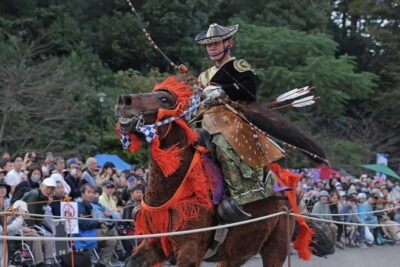
Samurai Sword & Archery Class from Samurai Descendant
Read our review →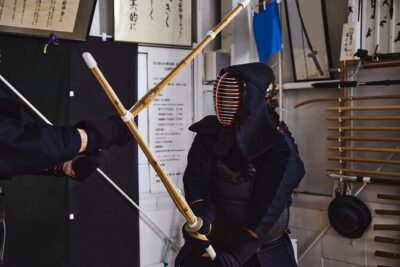
Browse the lists this tour appears in