
Reviewed · TOURS IN OSAKA
Osaka: Private Ceramic Painting Workshop
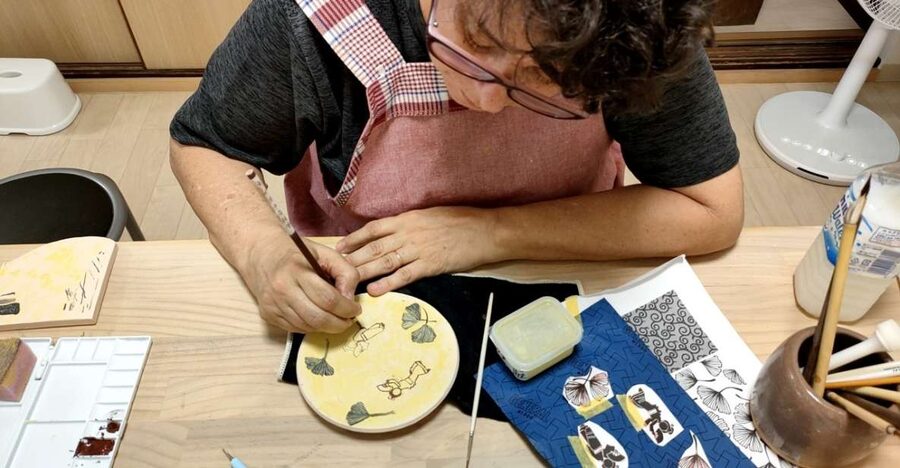
The best part of this Osaka experience is that it combines hands-on pottery with a look at everyday southern Osaka. You meet at JR Teradacho Station, walk through a Showa-era neighborhood, and settle into a century-old house for a private painting class. I like the personal scale, and I like that you can use traditional designs, paint Mount Fuji or sushi, or add a kanji character of your choice.
I also like the thoughtful extras: a small handmade dish and sakura-shaped chopstick holder to take home that day. The main drawback is practical rather than artistic: your painted dish takes about a month and a half to fire and ship, and shipping costs are not included.
Key points to know
- A private class in a century-old Osaka house: You get direct help rather than sharing the table with a large group.
- A walk through southern Osaka: The route from JR Teradacho Station passes through a less tour-focused part of the city.
- Your own Shigaraki-clay dish: You paint a ceramic plate with Japanese designs, food images, nature scenes, or kanji.
- Language choices beyond English: The workshop is available in English, Spanish, Catalan, and Japanese.
- Useful gifts on the day: You receive a small traditional-pattern dish and a sakura-shaped chopstick rest.
- Plan ahead for delivery: Your finished pottery is shipped after firing in roughly one and a half months, with postage paid separately.
A creative Osaka experience with a local feel
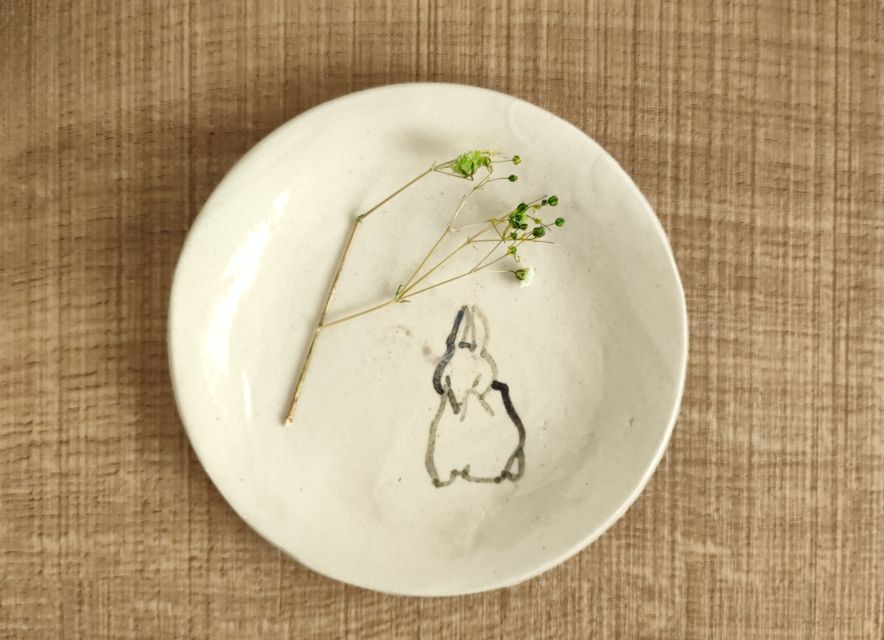
Many Osaka activities show you something. This one lets you make something. In a quiet studio south of the city center, you sit down with a ceramic dish and paint it with a design connected to Japan.
That difference matters. You are not simply buying a souvenir from a shop shelf. You decide what goes on the plate, receive help with the brushwork, and leave with a small gift made for your use. The finished piece arrives later, after firing, so the experience continues after your Japan trip.
The workshop is held in a roughly century-old house. That setting gives the class a more personal feel than a modern craft center, though you should not expect a polished tourist attraction with a large reception area. The charm is in the home-like atmosphere and the chance to see a less commercial side of Osaka.
The walk from the meeting point is part of the experience. You meet at the north exit of JR Teradacho Station and look for a guide carrying a Ceramics Tocoton sign. From there, the route leads through a Showa-era part of the city, an area described as closer to everyday Osaka than the districts most visitors place at the top of their sightseeing list.
Other experiences people book in Osaka:
- Osaka Go Karting Tour with Funny Costume
★ 5.0 · 2,658 reviews - Osaka Castle: Museum and Tower Entry Ticket
★ 4.5 · 2,380 reviews - Osaka: Shinsekai Food Tour with 13-15 Dishes at 5 Eateries
★ 4.8 · 2,204 reviews
Meeting Ryo at Teradacho Station
Your starting point is simple: JR Teradacho Station, north exit. The guide carries a sign with the studio name, Ceramics Tocoton, so you have a clear way to identify the pickup.
Ryo is one of the hosts associated with the experience. The walk to the studio can be a useful transition from train travel into the class. Ryo has been described as chatting with participants along the route, giving you an early chance to ask about Osaka and Japanese culture before you begin painting.
Take the meeting time seriously. If you will be more than 15 minutes late, you need to contact the provider. More than 15 minutes late is treated as a no-show, which means a relaxed approach to the start time could cost you the activity.
The station pickup is especially helpful if you do not know this part of Osaka. You do not need to find the house on your own, and the walk gives the outing a sense of place. At the same time, anyone looking only for a quick craft lesson near a major tourist sight should remember that this is a neighborhood-based activity, not a city-center stop.
Walking through Showa-era southern Osaka
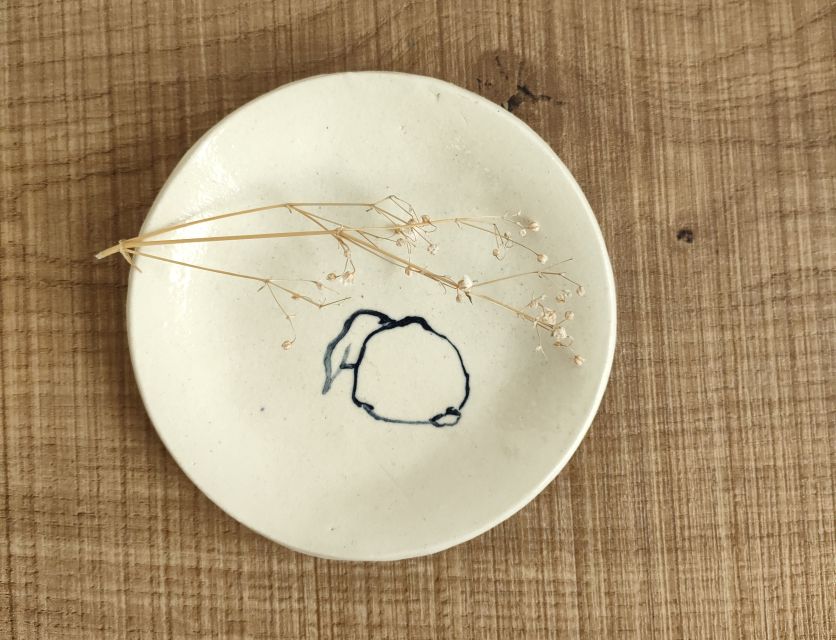
The route to the workshop shows a side of Osaka that many sightseeing plans skip. The area is described as non-touristy, with a Showa-era character. That does not mean you are joining a formal walking tour, but the short transfer gives you a look at ordinary streets south of the main sightseeing zones.
I like this setup because the class does not feel dropped into a generic studio. The neighborhood helps explain the setting. You are going to a local house for a small class, not entering a large attraction designed around quick turnover.
Keep your expectations grounded. The experience does not promise a long guided tour of Teradacho or a detailed architectural explanation of every street. The walk is mainly transportation, with conversation and local atmosphere along the way. Its value comes from the setting and the contrast with Osaka’s better-known districts.
Inside the private ceramic painting class
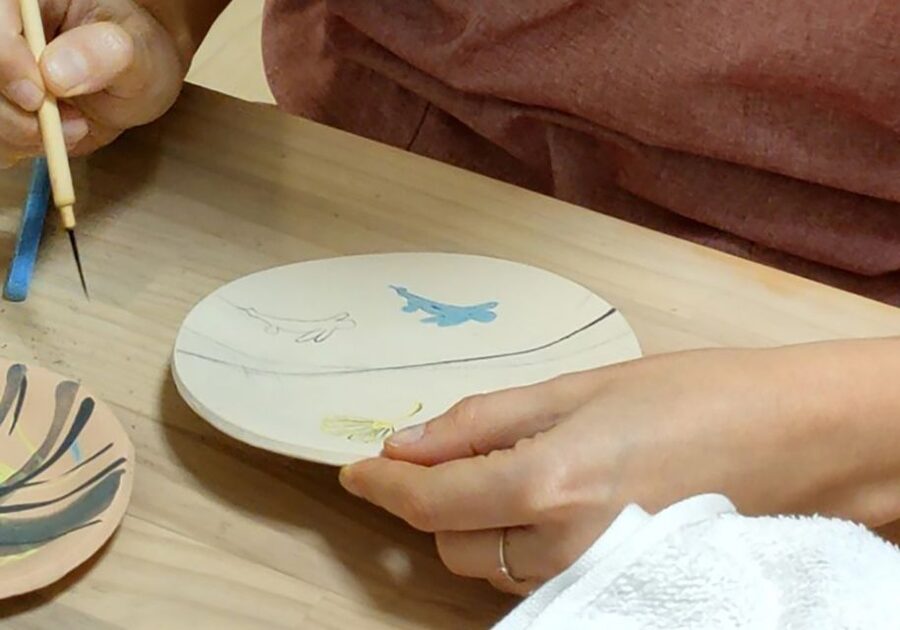
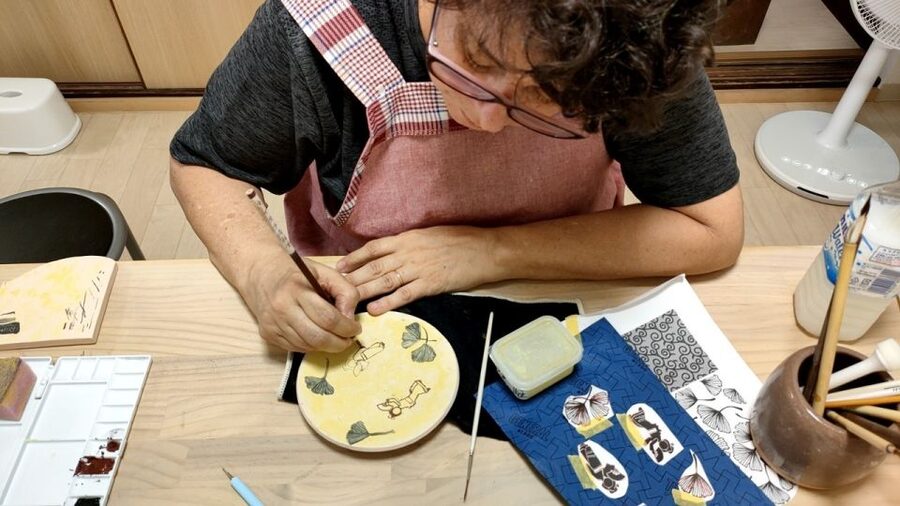
Once inside, you paint a ceramic dish with a brush. The material is clay from the Shigaraki area, a part of Japan known for pottery, and the class includes the ceramic paints and other needed materials.
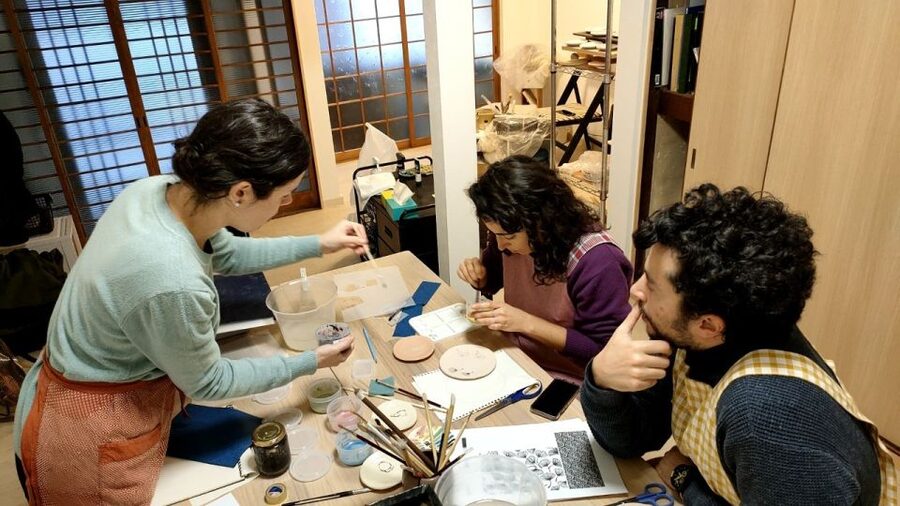
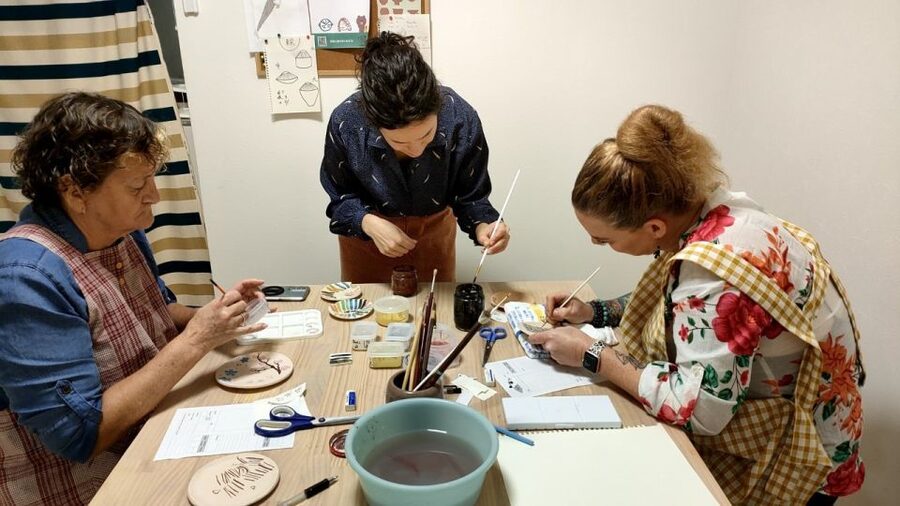
The private format is one of the strongest reasons to choose this activity. The group is reserved for you, so the instructor can respond to your design, pace, and questions. You do not need to be an artist. The class is built around interest and guidance, not a test of drawing skill.
Anna is one of the instructors connected with the workshop. She has been described as welcoming participants, explaining the ceramic painting process, and allowing extra time when needed. That last point matters if you work slowly or want to make careful choices before covering the dish with color.
You can choose from traditional Japanese patterns or more recognizable images, such as Mount Fuji, sushi, or a cherry tree. You can also write a word in kanji. If you want a design with personal meaning, think about it before the class, but you can also arrive with only a general idea and use the available guidance.
The class is not presented as a full pottery-throwing lesson. You are painting a prepared ceramic dish rather than shaping clay on a wheel. That makes the activity approachable in a two-hour visit and gives you enough time to focus on decoration.
Same base, a different sort of day:
- Osaka Food Tour: 13 Dishes at 5 Local Eateries
★ 5.0 · 2,149 reviews - Hungry Osaka Street Food Tour:15 Tastings & 3 Drinks with a Local
★ 5.0 · 1,727 reviews - Osaka: teamLab Botanical Garden Entry Ticket
★ 4.5 · 1,710 reviews - Osaka: Tea Ceremony Experience
★ 4.9 · 1,426 reviews
What you can paint, and how much freedom you get
The design choices give this experience a useful balance. You have Japanese subjects to work from, but you are not limited to copying one fixed pattern. You can choose a classic motif, use a food image, paint nature, or add kanji.
I like that freedom because it lets you decide what kind of souvenir you want. A Mount Fuji design may feel immediately connected to Japan. A sushi image can be playful. A kanji character can make the piece more personal, but you should make sure you understand the word you choose before painting it permanently.
The private setting also gives you room to change your mind. The teaching approach includes help if you have difficulties, and extra time may be available to finish your artwork. You should still remember that two hours passes quickly when you are choosing a design, painting details, and talking with the instructor.
The workshop includes one main dish for you to paint. That makes the end result manageable, but it also means you should not expect to produce a full matching dinner set during one visit.
Conversation, tea, and the human side of the workshop
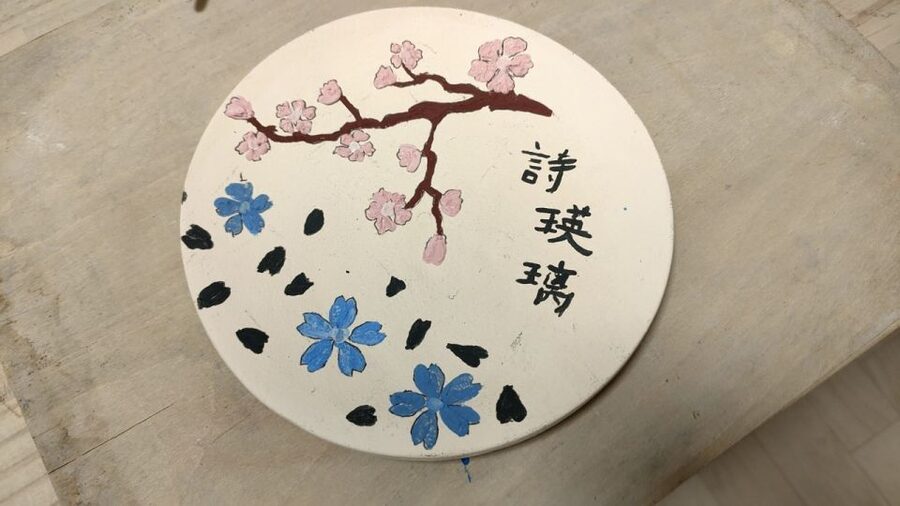
This class is as much about conversation as brushwork. The activity includes time to talk about Japanese culture while you paint, and the instruction is available in English, Spanish, Catalan, or Japanese.
Spanish and Catalan are unusual advantages here. If you are more comfortable discussing a creative process in one of those languages, this is a particularly useful option. English is also available, along with Japanese, so the class can suit mixed-language groups when arranged through the available language choices.
The tone is intended to feel personal rather than formal. Participants have described being welcomed into the home-like setting, and tea may be served at the end of the experience. Tea is not listed as a guaranteed inclusion, so treat it as a possible extra rather than the main reason to book.
There is also a small gallery upstairs where you may be able to buy Japanese ceramics made by Anna. Purchases are separate from the class, and the gallery gives you another way to see finished work before deciding how ambitious you want your own design to be.
The gifts you take home immediately
The class price includes a small dish with a traditional Japanese pattern and a sakura-shaped chopstick holder. These are handmade for your use and can be taken with you on the day of the workshop.
That is a nice practical touch. You do not leave empty-handed while waiting for your painted dish to be fired. The gift also gives you an example of Japanese ceramic design that is already finished, which can help you think about color and pattern during the lesson.
The chopstick holder is small and easy to pack. The dish is also more straightforward to carry than a larger ceramic piece, though you should protect both items in your luggage.
The long wait for your finished pottery
Your painted dish is not ready to take home at the end of the class. It is fired after the workshop and shipped to your home in about one and a half months.
Shipping costs are not included. This is the main extra expense to consider when comparing the $61 per-person price with other craft activities. The final cost depends on the shipping arrangements, which are not specified here, so ask for the current postage details before booking if your budget is tight.
The delay also affects how you pack for the trip. You will not need to carry the main dish through the rest of Japan, but you will need to provide the correct home-shipping information. Make sure your address is accurate and that someone can receive the package later.
I see the delayed delivery as both a weakness and part of the appeal. You lose the instant satisfaction of carrying your finished artwork away, but a package arriving weeks after Japan can be a welcome reminder of the trip.
Is $61 a fair price?
At $61 per person, this is not the cheapest way to paint a small plate. The price includes the instructor, materials, pickup from Teradacho Station, a private class, and two handmade gifts.
The value comes from the combination rather than the amount of ceramic you produce. You get direct instruction, a local walk, a private setting, language flexibility, and a finished piece sent after firing. If you only want a quick souvenir, buying a dish will cost less and take less time.
For a couple, family group, or small party that wants a shared activity, the private format makes the price easier to justify. You can talk freely, work at your own pace, and make designs that suit your group instead of following a large class schedule.
The price is less attractive if you dislike shipping charges, have limited luggage or address flexibility, or want to leave Osaka with the completed dish in hand. In that case, choose this only if the process matters as much as the object.
Who will enjoy this workshop most?
I would recommend it to you if you enjoy making something with your hands and want a quieter Osaka experience. It suits couples, friends, families with older children, and solo visitors who prefer direct conversation to a large group class.
The activity is also a strong match for Spanish or Catalan speakers. Having those language options can make it easier to discuss Japanese motifs, ask questions, and understand painting guidance.
It is less suitable for children under five, who are specifically excluded. Younger children who can handle a two-hour seated creative activity may be fine, but the provider does not give a wider age recommendation, so parents should judge their child’s patience and interest.
Artistic confidence is not required. You might arrive worried about making a mistake, but the class allows instruction and help when needed. Still, this is not a completely passive activity. You will spend time choosing, painting, and concentrating, so it is a poor fit if you want a short demonstration with no hands-on work.
Practical advice before you book
Check the available start time and leave enough room to reach Teradacho Station. The workshop lasts two hours, not including the station-to-studio walk, so avoid placing a tight reservation immediately afterward.
Think about your design before you arrive. You might sketch a simple idea, choose a Japanese subject, or decide on a kanji word in advance. A plan helps, but do not overwork it. The instructor can help you adapt the idea to a ceramic dish.
Wear something you can paint in comfortably, and keep your schedule flexible enough to enjoy the conversation. Contact the provider if you will be more than 15 minutes late.
Free cancellation is available up to 24 hours before the activity, and you can reserve now and pay later. Those options help if your Osaka plans are still shifting, but they do not remove the need to account for the later shipping payment.
Should you book the Ceramics Tocoton workshop?
Book this experience if you want a personal souvenir made by you, not just another item bought in Osaka. The private lesson, home-like setting, language choices, and walk through southern Osaka give it more character than a standard craft class.
Skip it if you need immediate possession of your finished work or want to avoid a separate shipping fee. For everyone else, $61 is a reasonable price for two hours of making, conversation, and local contact, with a ceramic piece arriving at home later as a reminder of Osaka.
FAQ
Where do I meet the instructor?
Meet at the north exit of JR Teradacho Station. Look for a guide carrying a sign with the name Ceramics Tocoton.
How long does the workshop last?
The ceramic painting workshop lasts two hours. Check the available starting times when booking.
What languages are available?
The workshop is taught in English, Catalan, Spanish, and Japanese.
What will I paint?
You will paint a ceramic dish made with clay from the Shigaraki area. You can choose traditional designs, Japanese cultural images such as Mount Fuji or sushi, a cherry tree, or a kanji word.
Can I take my finished dish home that day?
No. Your painted pottery is fired and shipped to your home in about one and a half months. Shipping costs are not included.
What is included in the price?
The price includes the instructor, materials, pickup from Teradacho Station, a small handmade dish with a traditional Japanese pattern, and a sakura-shaped chopstick holder.
Just added in Osaka
- Private arrival transfer from Kansai International airport to Kyoto City★ 5.0 · 32 reviews
- (Ticket Included) Explore Osaka Castle & Museum of History★ 4.8 · 21 reviews
- Hidden Osaka – Yukaku Red Light Tour & Culinary Adventure★ 4.8 · 96 reviews
- Osaka: Walking Tour and Top Highlights★ 4.8 · 104 reviews
- Pickleball in Osaka, Kobe & Kyoto with Locals!★ 4.7 · 80 reviews
- Osaka:SUMO BEATS SHOWCASE: Taiko Drum and Wagyu burger!★ 4.2 · 37 reviews
- Eat Like a Local in Osaka – Private Custom Street Food Tour★ 4.3 · 33 reviews
- Kimono photoshoot-Includes 100 photo data★ 5.0 · 21 reviews
Tours in Osaka, compared.

Osaka Food Tour: 13 Dishes at 5 Local Eateries
Read our review →
Hungry Osaka Street Food Tour:15 Tastings & 3 Drinks with a Local
Read our review →


Hotspots & Hidden Gems Walking Tour Private or Group
Read our review →Browse the lists this tour appears in