
Reviewed · TEA CEREMONY EXPERIENCES
Osaka: Tea Ceremony Experience
The most appealing part of this Osaka tea ceremony is that you do not just sit and watch. After a short introduction and demonstration, you use the bamboo whisk yourself, prepare a bowl of matcha, and taste it with a seasonal sweet. The hands-on part makes the ceremony easier to understand, even if Japanese tea culture is new to you.
I like the calm setting in a traditional tatami room, especially after a noisy day around Dotonbori. I also like the clear English instruction and the chance to ask questions about the meaning of each movement. Guides including Yuki, Akiko, Kazu, and Mayumi have been praised for their warmth and patience. The main drawback is practical: you sit on the floor, and the meeting point on the second floor can be hard to spot, so arrive with time to spare.
Key points to know before booking
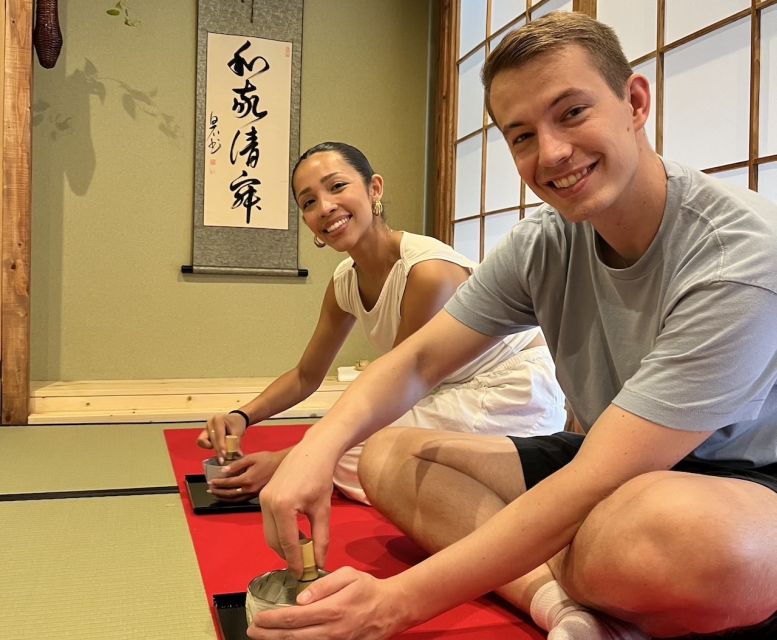
- You make your own matcha: After watching the demonstration, you whisk and drink your own bowl of powdered green tea.
- The ceremony is explained in English: Japanese instructors in traditional kimono cover the history, manners, tools, and meaning behind the ritual.
- Seasonal sweets are included: Delicate Japanese confections are served with the tea and help balance matcha’s strong, slightly bitter flavor.
- The experience lasts 45 minutes: It is long enough to learn the basics without taking half a day from your Osaka plans.
- The venue is near Dotonbori: Use Google Maps and search for Tea Ceremony Osaka The Osaka. The room is at 大阪市中央区道頓堀1丁目東5-26, on the second floor.
- The price is modest: At $25 per person, the activity offers a focused cultural experience with tea, sweets, instruction, and use of the traditional tools.
A quiet tea room near Dotonbori
Osaka is famous for bright signs, crowded streets, and generous plates of food. This experience gives you a short pause from all that motion. The tea room is in the Dotonbori area, but the ceremony itself is arranged around quiet attention, careful movements, and the simple sound of tea being whisked.
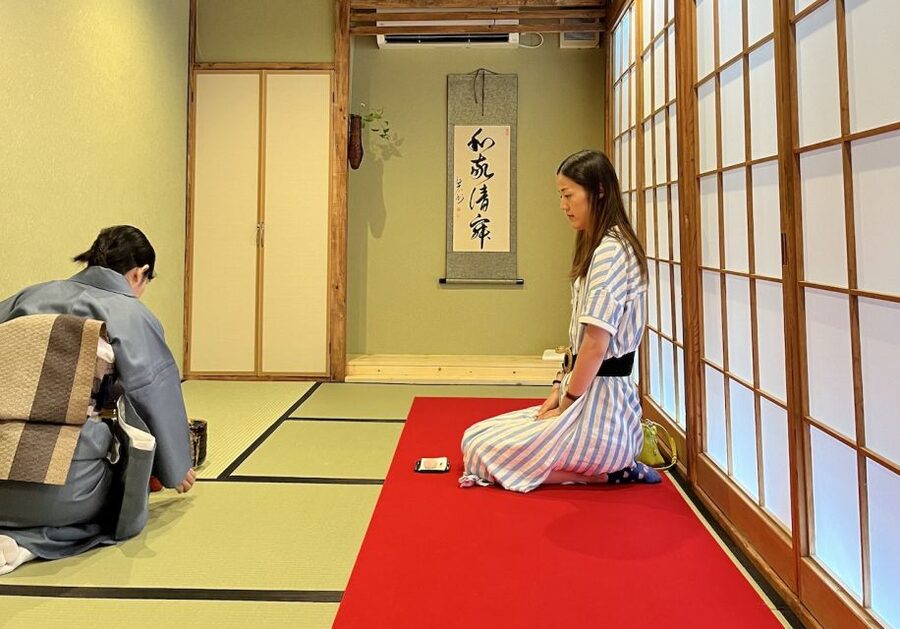
You are welcomed into a traditional Japanese room with tatami flooring. The instructors wear kimono and speak English, so you can follow the explanations without needing to guess what is happening. The room provides the right setting for the ceremony, though this is not a grand historic teahouse or a long formal retreat. It is a compact introduction designed for visitors with limited time.
That balance is one of the activity’s strengths. You get a taste of a traditional practice without committing several hours to it. The 45-minute format also makes it easy to fit between sightseeing, shopping, and a meal in central Osaka.
The meeting point deserves extra attention. The address is on the second floor at 大阪市中央区道頓堀1丁目東5-26, with coordinates listed as 34.6688508, 135.5063291. Search Google Maps for Tea Ceremony Osaka The Osaka rather than relying only on the English description. The entrance may not be instantly clear, and there is not a comfortable place to wait if you arrive much too early, so aim for punctuality rather than turning up far ahead.
Other tea rooms and ceremonies in Osaka:
- Tea Ceremony Experience in Osaka Doutonbori
★ 5.0 · 754 reviews - Matcha Making Class in Osaka with Authentic Japanese Sweets Set
★ 5.0 · 509 reviews - Osaka Temple Cool Foot Bath & Matcha Experience〈45min〉
★ 4.9 · 82 reviews
The welcome and the story behind matcha
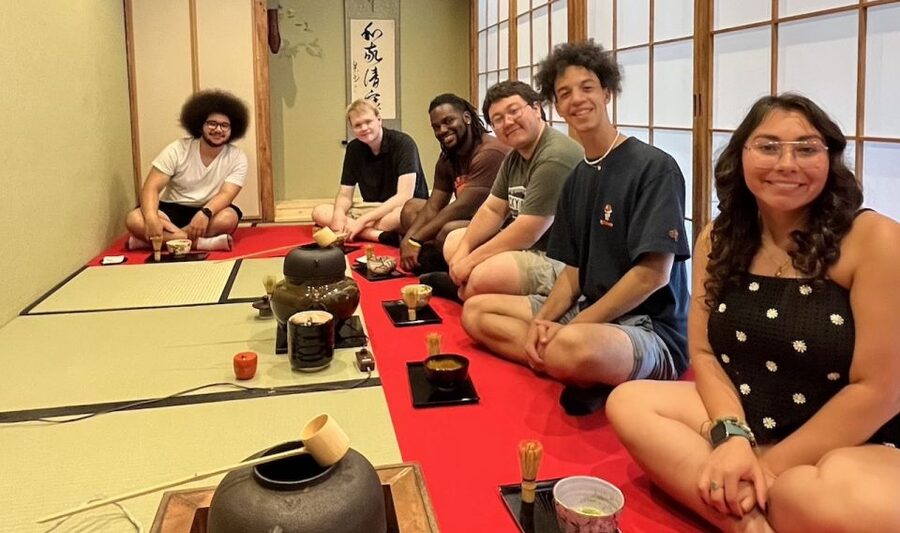
The session begins with a welcome and a short explanation of the tea ceremony’s purpose and history. This introduction matters because the movements can otherwise look like a set of exact rules with no obvious reason behind them.
Your instructor explains the basic manners of serving tea and the role of the tools. You learn that the ceremony is not simply about drinking powdered green tea. The pace, the placement of each object, the way the bowl is handled, and the care shown to the person receiving tea all form part of the experience.
The teaching style is clear and friendly rather than stiff. Guides such as Yuki, Kazu, Akiko, and Mayumi have been singled out for patient explanations and an ability to answer questions. Other instructors have also been praised for speaking excellent English and giving just enough context for a short session.
That last point is important. A 45-minute activity cannot explain every school, regional variation, or historical period connected with Japanese tea practice. What it can do is give you a working sense of why the ritual is slow, deliberate, and respectful. You leave better prepared to notice these details if you encounter tea culture elsewhere in Japan.
Watching the full demonstration
Next, the instructor performs a tea ceremony demonstration. This is the most reflective part of the session. You watch the careful handling of the tea bowl, scoop, whisk, and other tools while the instructor explains the basic manners.
The demonstration gives you a model to copy later. Instead of being asked to follow instructions before you understand them, you first see the order of the movements. That makes the hands-on part less intimidating.
The kimono and tatami room add visual appeal, but the real value is the explanation of purpose. The instructors describe what they are doing and why. Several sessions have been led by guides who make the demonstration calm and easy to follow, with a gentle pace that suits the subject.
Do not expect a silent ceremony in which you must know every rule in advance. The activity is made for international visitors, and the instructors explain the process in English. You can ask questions and take part without pretending to be an expert in Japanese etiquette.
Still, you should respect the room. Food, outside drinks, jumping, and loud noise are not allowed. Baby strollers and baby carriages are also not permitted. The setting works best when everyone lets the ceremony keep its quiet rhythm.
Making your own bowl of matcha
The most useful part of the session comes after the demonstration. You receive the chance to prepare your own matcha with traditional tea tools.
You are shown how to work with the powdered green tea and bamboo whisk. The aim is not to produce a perfect bowl on your first attempt. It is to understand the basic action and feel how the whisk changes the tea’s texture.
Matcha has a strong taste that can surprise people who are used to ordinary green tea. It is grassy, concentrated, and sometimes bitter. The seasonal sweet served alongside it is not just a small treat. It helps balance the tea and shows how Japanese sweets and matcha are traditionally enjoyed together.
Some sessions include the chance to drink matcha more than once, including a prepared serving and the bowl you make yourself. The exact flow can vary with the instructor and group, but the central feature is consistent: you do not merely observe the process.
This makes the activity a good choice for first-time matcha drinkers. You can learn how the tea is made before deciding if you like the flavor. Even people who do not become matcha converts can still appreciate the preparation, the utensils, and the pairing with sweets.
The activity is also suitable for curious beginners who want a cultural experience without a formal performance. You are encouraged to try, and the instructors guide you through the movements rather than judging your technique.
Same base, a different sort of day:
- Osaka Go Karting Tour with Funny Costume
★ 5.0 · 2,658 reviews - Osaka Castle: Museum and Tower Entry Ticket
★ 4.5 · 2,380 reviews - Osaka: Shinsekai Food Tour with 13-15 Dishes at 5 Eateries
★ 4.8 · 2,204 reviews - Osaka Food Tour: 13 Dishes at 5 Local Eateries
★ 5.0 · 2,149 reviews
Seasonal sweets and the value of the pairing
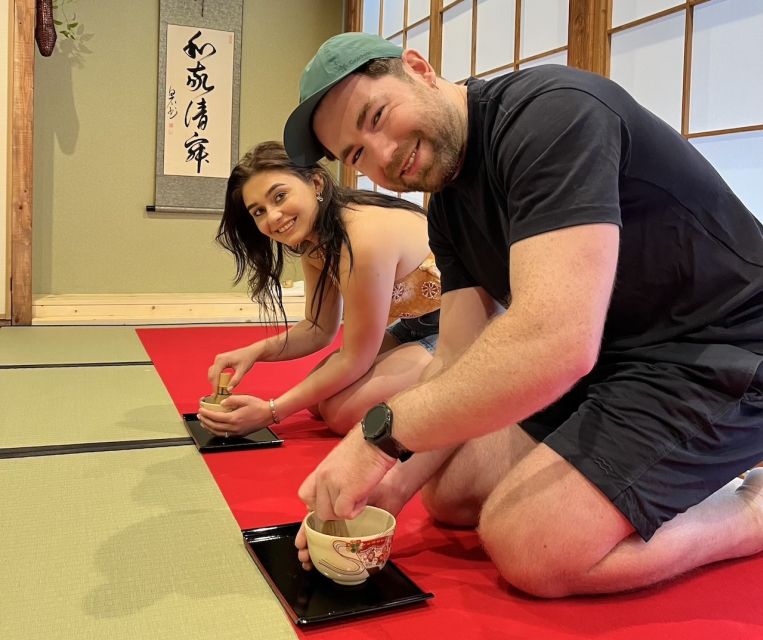
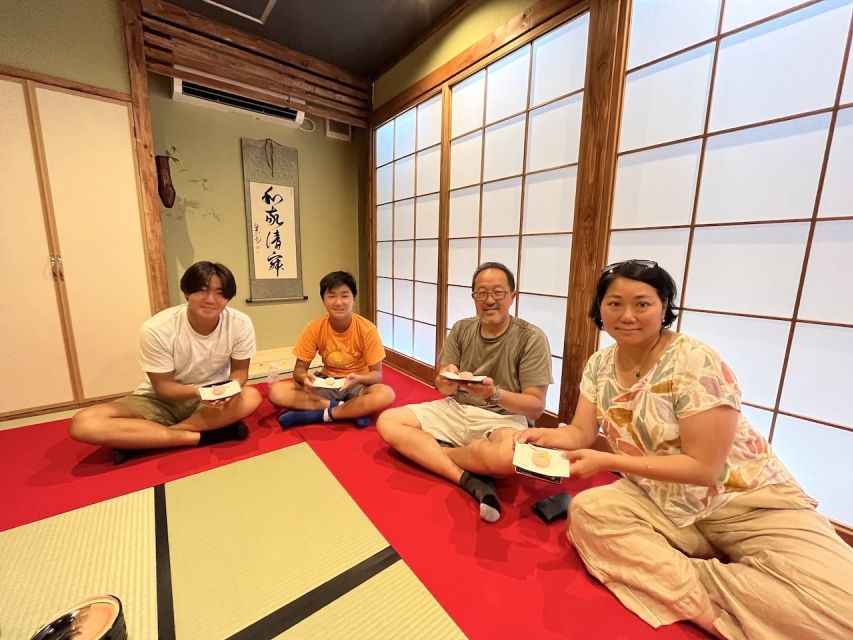
The included confections are small Japanese seasonal sweets. They provide a welcome contrast to the firm taste of the matcha, and they are part of the experience rather than an afterthought.
The sweets have received especially warm praise, with several people describing them as delicate, delicious, or a highlight of the session. Their appearance and seasonal connection help show how Japanese food traditions pay attention to presentation and timing.
You should not book this as a food tour. The confection is a modest serving, and the focus remains the tea ceremony. But at $25 per person, having both matcha and sweets included makes the price feel fair.
I also like that the food gives the ceremony an immediate, sensory quality. You learn the ideas behind the ritual, then taste the relationship between the sweet and the tea. That is more memorable than a lecture alone.
Why the 45-minute format works
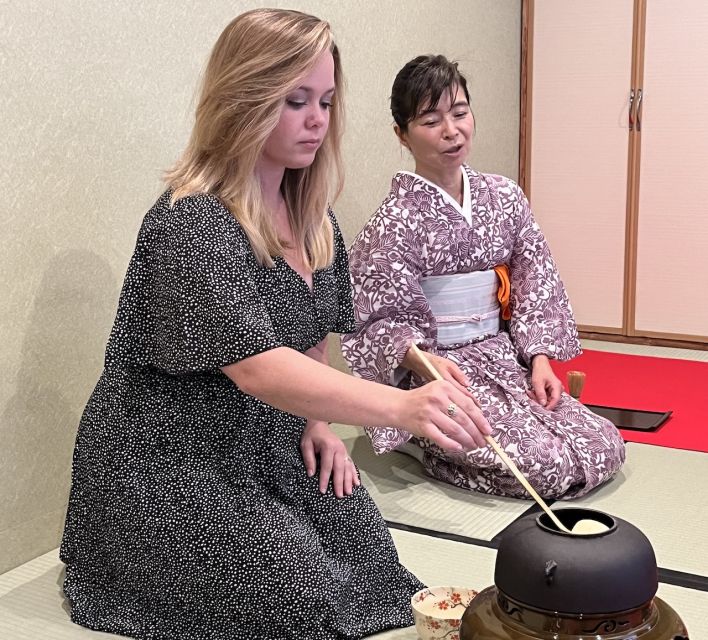
The short duration is one of the clearest advantages. A full formal tea gathering can require more time and a deeper knowledge of etiquette. This activity gives you a concise introduction that fits neatly into a day in Osaka.
You receive a welcome, historical explanation, live demonstration, hands-on practice, and tasting in 45 minutes. The schedule is focused, so there is little wasted time. If you are building a busy Osaka itinerary, you can place it between major stops in the Dotonbori area.
The short length also limits the depth. You will learn the basic meaning and manners, but not every detail of tea ceremony schools or Japanese tea production. If you already have extensive experience with chanoyu, you may find the session introductory.
For most first-time visitors, that is the right level. You get enough context to understand what you are seeing, plus a practical activity that keeps the session from becoming a passive talk.
Sitting on tatami: the practical catch
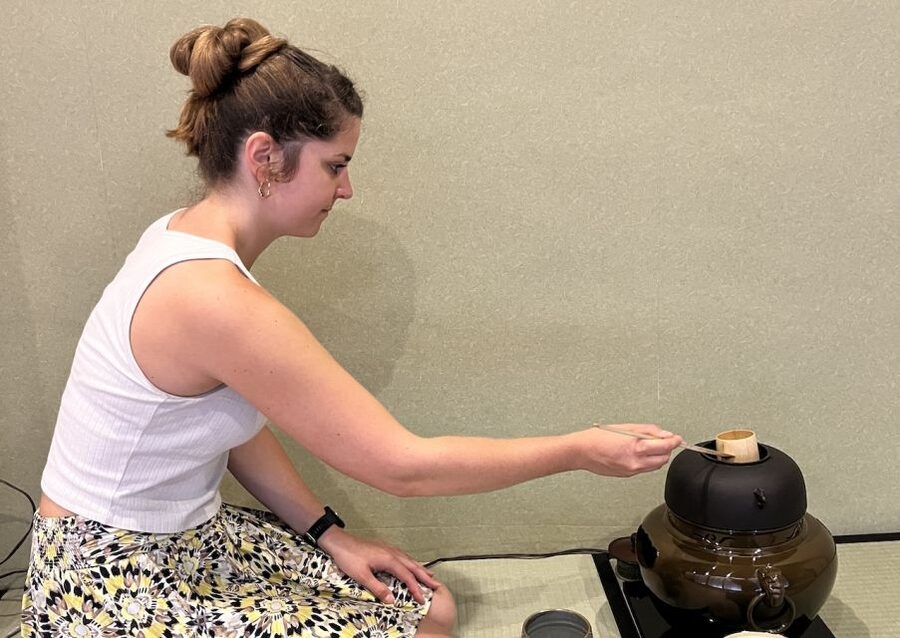
The main physical consideration is the seating. You sit on the floor in the tatami room, and one person specifically noted sitting on the floor for about an hour. The advertised duration is 45 minutes, but allow a little extra time for arrival and departure.
If floor sitting is uncomfortable for you, think carefully before booking. The information provided does not promise chairs or special seating arrangements. Contacting the provider ahead of time may be sensible if you have a mobility concern, but no alternative setup is guaranteed.
The rules also make this a poor match for very young children. Children aged five and above need their own ticket. The information says children under five are not allowed, and a child under four requires advance contact, so families should confirm the age policy before booking. The room is intended for quiet participation, not a noisy family stop.
There is no mention of an accessibility arrangement, elevator access, or stroller storage. Since the room is on the second floor and strollers are not allowed, you should plan accordingly.
Getting to the second-floor meeting point
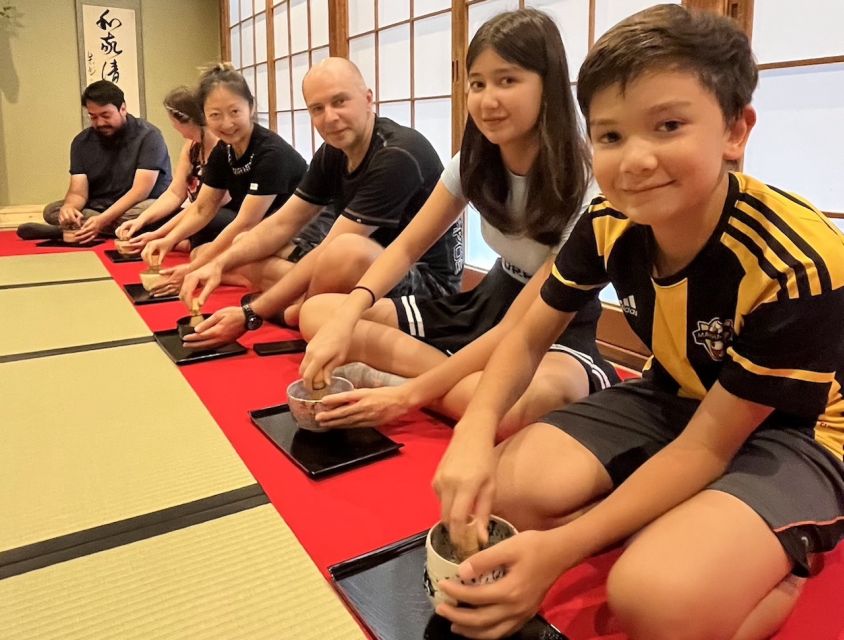
Give yourself enough time to find the address. The activity provider warns that people occasionally miss the start, and the directions specifically recommend using Google Maps.
Search for Tea Ceremony Osaka The Osaka. The supplied address is 大阪市中央区道頓堀1丁目東5-26, and the activity takes place on the second floor. The coordinates are 34.66885079999999, 135.5063291.
The meeting point is close to one of Osaka’s busiest visitor areas, but proximity does not guarantee an obvious entrance. Avoid cutting it close after a meal or shopping stop. Arriving on time matters, and waiting far too early may be awkward because there is nowhere to sit while you wait.
Once inside, the experience is more peaceful than the surrounding streets. That contrast is part of its appeal. You can spend the morning or afternoon amid Osaka’s bright commercial energy, then sit quietly with a bowl of tea and a seasonal sweet.
Who will enjoy this Osaka tea ceremony
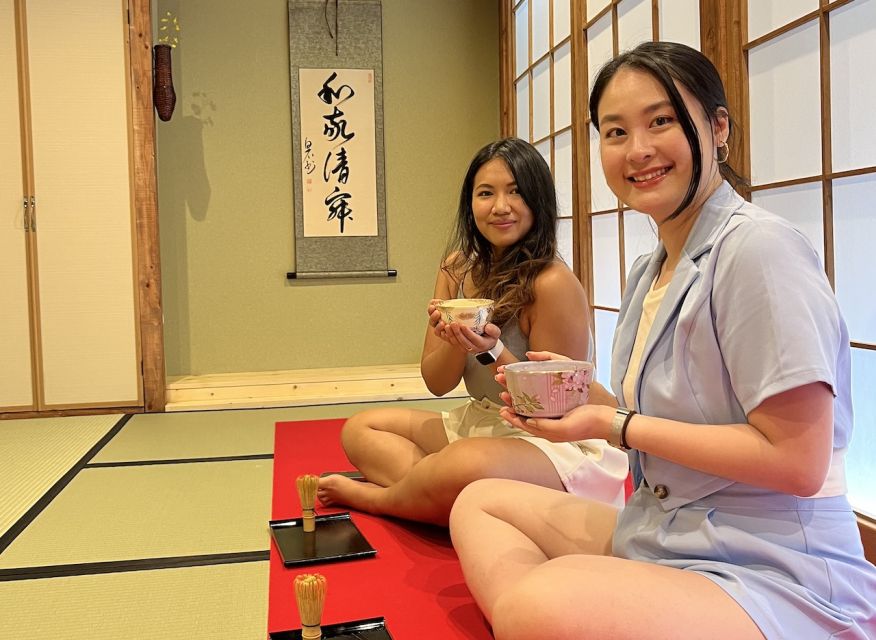
I would recommend this activity most strongly to first-time visitors to Japan, people curious about matcha, and anyone who wants a cultural experience that does not consume an entire day.
It suits couples, small groups, and solo visitors who enjoy learning by doing. The English-speaking instructors make it approachable, and the hands-on preparation gives everyone something to focus on. It can also be a welcome change of pace during a busy Osaka itinerary.
You should also consider it if you want photographs of a traditional setting and kimono-clad instructors, though the value is more than the visual setting. The explanations about the tools, manners, and meaning give the ceremony substance.
I would be less likely to recommend it to someone seeking an advanced tea-school lesson, an extended silent meditation, or a large meal. It is a friendly, introductory session, not an exhaustive study of Japanese tea culture.
Is $25 a fair price?
At $25 per person, the value is strong for a 45-minute cultural activity. The price includes entrance, matcha, seasonal confections, instruction in English, and use of the traditional tea tools.
You are paying for more than a cup of green tea. The instructor demonstrates the ceremony, explains its background, answers questions, and guides you through making your own bowl. The kimono and tatami setting also make the lesson feel connected to Japanese tradition rather than like a standard cooking class.
The limitation is the short format. You are buying a focused introduction, not a long private ceremony. If you want a highly formal or elaborate tea gathering, you may need a different type of experience. For a first look at matcha and tea ceremony customs in central Osaka, the price is reasonable.
Free cancellation up to 24 hours in advance and the option to reserve now and pay later add useful flexibility. Check the available start times when booking, since the session is offered at scheduled times rather than as an open drop-in activity.
Should you book it?
Book this Osaka tea ceremony if you want a calm, well-explained introduction to Japanese culture and enjoy taking part rather than simply watching. The strongest reasons are the English guidance, the careful demonstration, the chance to whisk your own matcha, and the seasonal sweets.
Plan carefully for the second-floor meeting point, arrive on time, and be ready to sit on the tatami floor. If you have very young children, a mobility concern, or a strong dislike of matcha, check the restrictions before paying.
For most visitors spending time around Dotonbori, this is a compact and worthwhile cultural break. It gives you enough history to understand the ritual, enough practice to remember it, and enough sweetness to make the strong matcha easier to appreciate.
FAQ
How long does the Osaka tea ceremony last?
The activity lasts 45 minutes. You will take part in an introduction, watch a demonstration, make matcha, and taste the tea with a seasonal sweet.
What language is the tea ceremony conducted in?
The instructors and greeters speak English, and an English audio guide is included.
Is matcha included in the price?
Yes. Matcha, the powdered green tea used in the ceremony, is included along with traditional Japanese confections.
Do I get to make my own matcha?
Yes. After watching the instructor demonstrate the ceremony, you use traditional tools to prepare your own bowl of matcha.
Where is the meeting point?
The address is 大阪市中央区道頓堀1丁目東5-26 in Osaka. The tea room is on the second floor. Use Google Maps and search for Tea Ceremony Osaka The Osaka. The listed coordinates are 34.66885079999999, 135.5063291.
Can children participate?
Children aged five and above must have their own ticket. The provided information says children under five are not allowed to enter, and families with a child under four should contact the provider in advance.
Can I cancel my reservation?
You can cancel up to 24 hours in advance for a full refund. The reserve-now, pay-later option is also available.
Just added in Osaka
- Osaka Temple Cool Foot Bath & Matcha Experience〈45min〉★ 4.9 · 82 reviews
- Osaka: Mind & Spirit Balance Temple Reiki Healing★ 5.0 · 41 reviews
- OSAKA NIGHT FUSION Japanese Taiko Kabuki Samurai Dance Show★ 4.8 · 155 reviews
- Osaka: A Modern Samurai, Kabuki, Taiko, & Dance Show★ 4.5 · 66 reviews
- Osaka: Samurai Training Experience KENDO in Osaka★ 5.0 · 111 reviews
- Full Day Kyoto Tour : Bamboo Forest, Golden Temple, Fushimi Inari★ 5.0 · 84 reviews
- Osaka: Minoh, Katsuoji Temple, & Minoh Falls Full-day Tour★ 4.9 · 172 reviews
- Ramen and Gyoza Cooking Class in Osaka★ 5.0 · 202 reviews
Tea Ceremony Experiences, compared.
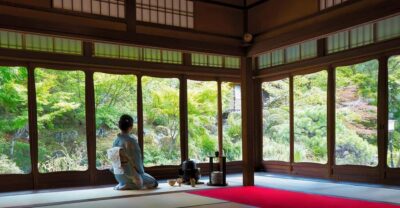
Tea Ceremony in a Traditional Tea House in Kiyomizu
Read our review →
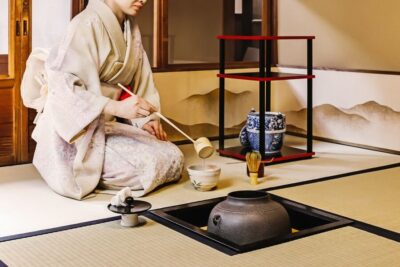
World Heritage Kyoto & Nara Uji Authentic Matcha Experience
Read our review →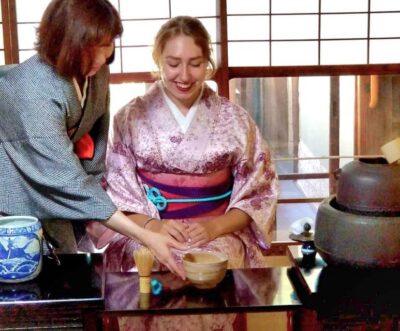
Arashiyama Bamboo Forest, Monkeys, Matcha & Temple Tour
Read our review →Browse the lists this tour appears in