
Reviewed · FOOD TOURS
Specialties of Nagoya Food Tour
Nagoya’s best food stories are tucked into ordinary-looking dishes: red miso simmered into udon broth, freshwater eel served several ways, and peppery chicken wings built for a cold drink. This 3.5-hour walking tour gives you a guided path through Sakae, Oasis 21, and Matsuzakaya, with food already selected and ordered for you.
I like the small maximum of six people, which keeps the pace personal, and I like the range of stops. You move from noodles and pickles to rice balls, sweets, eel, and izakaya food rather than eating one large meal. The main drawback is the price, $150.89 per person, and the tour is not suitable for vegans or vegetarians.
Key points at a glance
- Red miso udon and Nagoya classics: Taste hot miso nikomi udon, local pickles, shrimp tempura rice balls, eel, sweets, and spicy chicken wings.
- A walk through central Nagoya: The route links Sakae, Oasis 21, and the underground level of Matsuzakaya.
- Up to six people: The tour is private to your group, with a small-group format that keeps the guide close by.
- Food ordering is handled for you: Your guide chooses and orders the tastings, a real help when menus and language get in the way.
- Night tours add izakaya culture: Evening departures include one alcoholic or non-alcoholic drink at the final stop.
- Stories come with the food: Expect explanations about demons, famine, drinking customs, and the local way to eat hitsumabushi.
Why this food walk works in Nagoya
Nagoya can be easy to underrate as a food city. Its signature dishes are less familiar to many international visitors than sushi, ramen, or Osaka-style street food. That makes a guided tasting useful here. You are not just given a plate and a name. You hear why red miso matters, how eel is eaten, and how local customs connect food with older Japanese stories.
The route also saves you from spending your first evening searching menus. The guide orders the food, handles the flow between stops, and explains what you are eating. That is especially useful for dishes with several steps, such as hitsumabushi, the local preparation of freshwater eel.
The tour includes five or six foods and snacks, along with drinks. Food is pre-selected, and the exact choices can change with availability, so you should think of this as a guided sampling of Nagoya cuisine rather than a fixed menu.
More eating your way round Nagoya:
- Nagoya Street Food Walking Tour of Osu
★ 5.0 · 28 reviews - Tokyo: Shinjuku Food Tour (13 Dishes at 4 Local Eateries)
★ 5.0 · 6,603 reviews - Osaka: Shinsekai Food Tour with 13-15 Dishes at 5 Eateries
★ 4.8 · 2,204 reviews
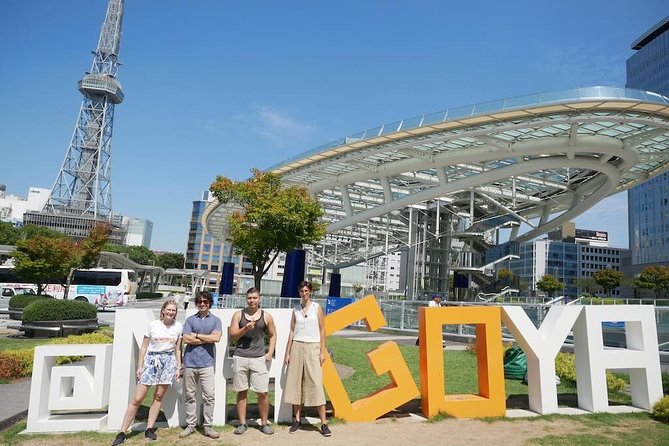
Starting beneath the MIRAI TOWER
The meeting point is at Chubu Electric Power MIRAI TOWER in central Nagoya, at 3-chōme-6-15-saki Nishiki, Naka Ward. From there, the tour begins on foot. The route includes plenty of walking, but restaurant breaks give you chances to sit, eat, and rest.
This is a sensible format for a food tour. A nonstop march between tasting counters would make the experience tiring, especially after a long day of sightseeing. Here, the walking provides context and the stops break up the pace.
The experience is listed as running Monday through Sunday, with hours shown from 10:00 a.m. to 5:00 p.m. The tour ends back at the meeting point. You need to arrange your own transportation to and from the starting location, but the central meeting point is near public transportation.
Guides may include Patricia, Erica, or Lena. Patricia brings a particularly unusual perspective, with Japanese ancestry, a childhood in Peru, and a move to Japan at age 19. That kind of background can add a useful personal angle to conversations about Japanese food and culture, although the guide assigned to your departure may vary.
Sakae: Nagoya food in the city center
Sakae is the first main area on the route and gives the tour its urban setting. You are not being taken to a single tourist restaurant and left there. Instead, the walk uses central Nagoya as the setting for several food stops.
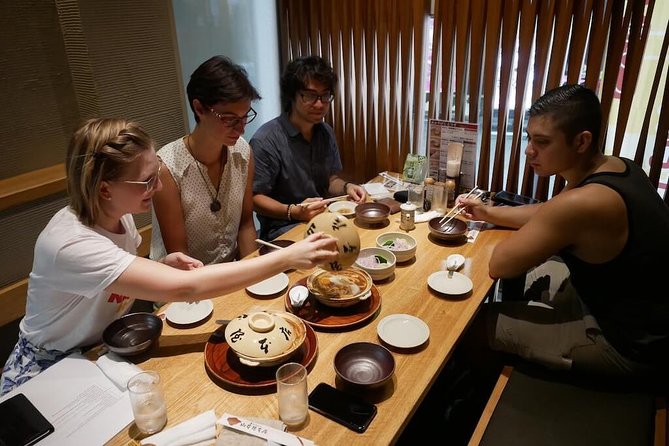
One early highlight is miso nikomi udon. This is udon served in a steaming soup made with red miso. The noodles and broth create a hearty dish, and the heat makes it especially welcome if the weather is cool. It also introduces one of Nagoya’s defining flavors right away.
Red miso is not a mild background seasoning. It has a strong, savory taste and can be more intense than the miso soup many visitors know. Having it in udon lets you understand how Nagoya uses miso as the main character of a dish, not just a small accent.
The tour also includes pickles made from the world’s longest radish. The point is not only to sample a crunchy side dish. Your guide explains the local ingredient and gives you a small example of how preserved foods fit into Japanese meals.
There is a useful lesson here for first-time visitors: Japanese food is not just about the famous centerpiece. Pickles, rice, broth, and small snacks help shape the meal. This tour gives those supporting foods enough attention to make the overall experience more complete.
Oasis 21 and the route between tastings
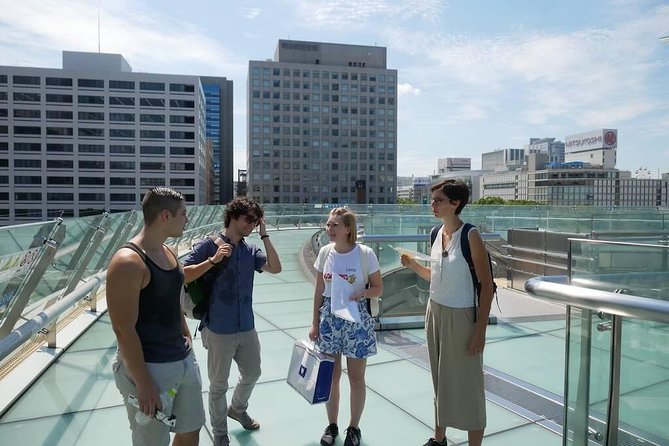
Oasis 21 is another stop on the central Nagoya route. The supplied details do not promise a separate attraction visit or a specific tasting at this location, so you should see it mainly as part of the walking circuit rather than expect a long sightseeing session there.
That distinction matters. The tour is food-led, not a full city tour. You will learn about the places you pass through, but most of your time is devoted to eating, listening, and moving between stops.
The walk can also help you get your bearings in Nagoya. If you are staying near Sakae, the route introduces a part of the city you may return to later for independent meals. Pay attention to the kinds of restaurants and food counters your guide points out. The practical value is not only what you eat during these three and a half hours, but also the ideas you take away for the rest of your stay.
Same base, a different sort of day:
- From Nagoya: Gujo, Hida Takayama, and Shirakawa-go Day Tour
★ 4.4 · 398 reviews - Ghibli Park 1-Day Bus Tour from Nagoya
★ 4.5 · 277 reviews - From Nagoya: Hida Takayama & Shirakawa-go Tour w/Opt. Lunch
★ 4.5 · 256 reviews - Hiking the Historic Nakasendo Trail [1 Day Tour from Nagoya]
★ 5.0 · 104 reviews
Matsuzakaya and the department store food world
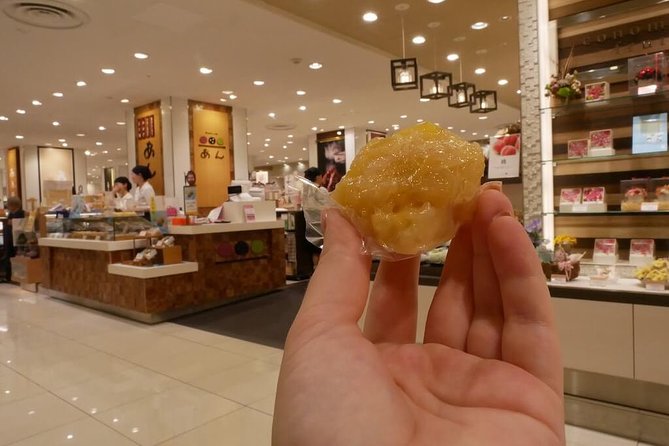
Matsuzakaya Nagoya adds a different side of the food scene. The tour explores the underground level of what is described as Japan’s oldest department store. In Japan, department store basements are often important food destinations, with displays of prepared dishes, sweets, snacks, and ingredients.
Here, the department store stop gives you a look at food as shopping culture, not just restaurant dining. You can see how carefully prepared food is presented and how department stores serve as everyday food centers.
The details do not specify exactly which products you will sample at Matsuzakaya, so do not book this expecting a guaranteed list of basement specialties. Food choices can change based on availability. Still, the stop fits the tour well because it shows a side of Nagoya you could easily miss if you only visited famous restaurants.
The guide’s role is important here. A department store food floor can be visually crowded and difficult to interpret, particularly if you cannot read Japanese. Having someone explain what you are seeing and select suitable tastings turns an otherwise confusing stop into a useful introduction.
Rice balls, local sweets, and stories with a sharp edge
One of the tastings is a local rice ball filled with shrimp tempura. The combination gives you a compact example of how familiar Japanese ingredients can be arranged in a less expected form. Your guide also explains the story behind it, so the food comes with context rather than appearing as an unexplained snack.
Another local treat is a sweet potato confection connected to Japanese demons and famine. That may sound like an odd combination, but it is exactly the kind of story that makes a food stop memorable. You learn that local sweets can carry older fears, beliefs, and memories rather than existing only as casual desserts.
The tour’s cultural explanations are one of its stronger features. The food list is appealing, but the stories help you remember what you tried. If you enjoy knowing why a dish exists and how it fits into local life, this format gives you more than a standard tasting menu.
The portions are not described individually, so you should not assume every stop is a full meal. Five or six foods and snacks over three and a half hours can add up, but the experience is best understood as a series of tastings with breaks.
Hitsumabushi: three ways to approach eel
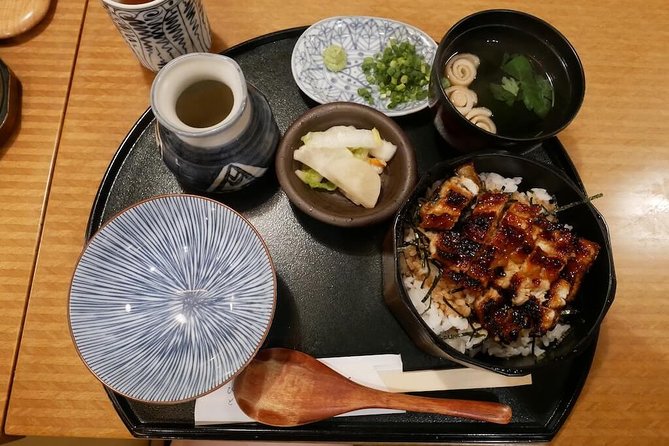
Hitsumabushi is one of the most useful dishes to learn about on this route. It is made with freshwater eel, and the guide teaches you how to eat it. That instruction matters because hitsumabushi is not simply a bowl of eel and rice to consume in one standard way.
The tour provides the chance to try the dish and understand the local method. The exact serving details are not specified, so your guide will be the best source for the steps used during your departure. The key point is that you are shown how the dish is meant to be approached instead of being left to guess.
For many people, this may be their first time eating unagi. If that includes you, the tasting provides a low-pressure introduction. You can pay attention to the texture, the sauce, and the way the eel works with the rice. One especially positive account of the experience singled out the eel as a first-time success, which suggests this stop can be a highlight even for someone who is unsure about freshwater fish.
Because eel is a substantial and distinctive food, this portion may matter to your decision. If you already know you dislike eel, ask about substitutions before booking. The food is pre-selected and may change, but the tour is built around local specialties rather than a fully customizable menu.
Evening izakaya food and the final drink
For a dinnertime tour, the final stop is a popular Nagoya izakaya. An izakaya is a Japanese drinking and dining place where small dishes are shared with drinks. This stop gives you a look at Japan’s social eating culture, rather than just another formal restaurant course.
The included food features peppery chicken wings. They pair with the drinking setting and offer a different flavor from the miso udon and eel earlier in the tour. Nighttime tours include one alcoholic or non-alcoholic drink at the last stop, so you can choose not to drink alcohol and still receive the included beverage.
This portion may be the most relaxed part of the experience. You have already learned the basic food vocabulary and sampled several regional dishes, so the final stop lets you connect food with social habits. Your guide also talks about Japanese drinking culture, which adds context you are unlikely to get from simply ordering wings at an izakaya on your own.
The tour information does not say that additional drinks or food are included beyond the stated tasting and one final drink. Budget extra money if you want to order more at the izakaya.
What $150.89 buys you
At $150.89 per person, this is not a cheap way to grab dinner. You are paying for a guided introduction, five or six tastings, drinks, restaurant coordination, and the convenience of not needing to order or settle small bills at each stop.
The value is strongest if you are new to Nagoya food. A first visit can involve plenty of guesswork, and a bad choice at one restaurant can cost a full meal. This tour spreads your risk across several dishes and gives you a better sense of what to seek out later.
The value is weaker if you already know Nagoya well, speak Japanese comfortably, and enjoy researching local restaurants on your own. You might spend less by ordering individual dishes independently. You would also have more control over portion size, timing, and dietary choices.
The small-group setup improves the price calculation. The tour is private to your group, and the group size is limited to six people. That means you are not being moved through the city in a large crowd. It also gives you a better chance to ask questions about ingredients, etiquette, and the stories behind each dish.
Who should book this experience
I would recommend this tour to first-time visitors who want a clear introduction to Nagoya’s food identity. It suits people who prefer sampling several dishes over committing to one large meal, and it is useful for anyone uneasy about Japanese menus or ordering customs.
It also works well for families, couples, and small groups who want a shared food activity. The three-and-a-half-hour length is long enough to cover several specialties without taking the entire day.
You should think twice if you are vegan or vegetarian. The experience is specifically listed as unsuitable for those diets. If you have food allergies or other restrictions, provide that information before the tour and ask what can be adjusted. Since the food is pre-selected and changes with availability, do not assume every request can be met.
You should also be ready to walk. The route includes Sakae, Oasis 21, and Matsuzakaya, with restaurant breaks along the way. Most people can participate, but the experience is not a seated tasting from start to finish.
Booking, timing, and cancellation details
The experience is commonly booked about 60 days ahead, so planning early is sensible if your Nagoya dates are fixed. Confirmation is sent within 48 hours of booking, subject to availability.
A mobile ticket is provided. Free cancellation is available if you cancel at least 24 hours before the start time. Cancellations or changes made less than 24 hours before the start time are not accepted for a refund, and the cut-off uses Nagoya local time.
Should you book the Nagoya food tour?
Book it if you want someone to guide you through Nagoya’s less familiar specialties and explain the culture behind them. The red miso udon, eel, shrimp tempura rice balls, pickles, sweets, and spicy wings create a varied introduction, while the small private group keeps the experience manageable.
Skip it if the $150.89 price is hard to justify, you prefer choosing every dish yourself, or you need a strictly vegan or vegetarian menu. For everyone else, this is a practical first-night choice, especially if you want to leave Nagoya with a short list of foods to order on your own.
FAQ
Where does the Nagoya food tour start?
The tour starts at Chubu Electric Power MIRAI TOWER, 3-chōme-6-15-saki Nishiki, Naka Ward, Nagoya, Aichi 460-0003, Japan.
Where does the tour end?
The activity ends back at the meeting point.
How long does the tour last?
The tour lasts approximately 3 hours and 30 minutes.
How many people can join?
The tour is limited to six people and is private to your group.
What food is included?
The tour includes five or six foods and snacks. Planned examples include miso nikomi udon, pickles, shrimp tempura rice balls, a local sweet potato treat, hitsumabushi, and spicy chicken wings. Food is pre-selected and may change based on availability.
Is a drink included?
Nighttime tours include one drink at the final stop. You can choose an alcoholic or non-alcoholic beverage.
Is the tour suitable for vegans or vegetarians?
No. The experience is listed as unsuitable for vegans and vegetarians. You should provide information about food allergies or dietary restrictions before booking.
Can I cancel for a full refund?
Yes. You can cancel for a full refund up to 24 hours before the experience start time. Changes or cancellations made less than 24 hours before the start time are not accepted for a refund.
Just added in Nagoya
- Nagoya Endoji Food and Cultural Tour★ 5.0 · 12 reviews
- Nagoya Street Food Walking Tour of Osu★ 5.0 · 28 reviews
- Walking Small-Group Nagoya City Tour★ 5.0 · 13 reviews
- Private Full-day Nagoya City Tour★ 5.0 · 22 reviews
- Sumo Tournament Experience in Nagoya★ 5.0 · 12 reviews
- Nagoya: 2026 Hida Takayama Shirakawa-go Light-up Winter Tour★ 3.5 · 16 reviews
- Pub Crawl in Nagoya★ 5.0 · 15 reviews
- Nagoya Samurai & Toyota Tour guided by a friendly local★ 5.0 · 24 reviews
Food Tours, compared.
Shinjuku Food Tour (13 Dishes at 4 Local Eateries)
Read our review →
Osaka Food Tour: 13 Dishes at 5 Local Eateries
Read our review →
Best of Shinjuku: Izakaya Food Tour (4 Stops, 14+ Tastings)
Read our review →
Kyoto Night Foodie Tour in Gion (9+ dishes + 6 Sake tastings)
Read our review →
Hungry Osaka Street Food Tour:15 Tastings & 3 Drinks with a Local
Read our review →
Tokyo Night Foodie Tour in Shinjuku – Seasonal Sushi, Wagyu Beef
Read our review →
Osaka Local Foodie Walking Tour in Dotonbori and Shinsekai
Read our review →
Eat and Drink Like a Local: Tokyo Ueno Food Tour-Taverns&Ramen
Read our review →Browse the lists this tour appears in