
Reviewed · TEMPLE & SHRINE TOURS
Naha: Guided E-Bike Tour of the 12 Zodiac Temples
Shuri’s small temples are easy to miss. They sit behind ordinary streets, traditional homes, trees, and walls rather than along one grand sightseeing route. This three-hour e-bike tour links them into a lively look at Okinawan religious customs, local history, and the old royal district.
I like the electric bikes for two clear reasons: they make Shuri’s hills far less work, and they let you reach quiet corners that a car cannot. I also like the helmet intercom, which lets you hear your guide while riding. Guides including Maki, Maria, Hiro, Reiji, and Jojo have been praised for clear explanations and kind attention. The main consideration is simple: you must already know how to ride a bike, and sandals are not allowed.
Key points at a glance
- Ride Shuri’s steep streets with electric assistance: The motor takes much of the strain out of the hills.
- Visit tucked-away temples and shrines: The route reaches places you could easily miss without local help.
- See Shuri Kannon Temple’s carvings and views: This bright red guardian temple connects the tour to the Ryukyu Kingdom.
- Photograph Shureimon Gate with your bike: The red gate is one of Okinawa’s best-known symbols.
- Use a helmet intercom while riding: You can hear directions and comments without stopping every few minutes.
- Keep the group personal: The tour is limited to five people and is offered in English, Chinese, or Japanese.
Why an e-bike is the right way to see Shuri
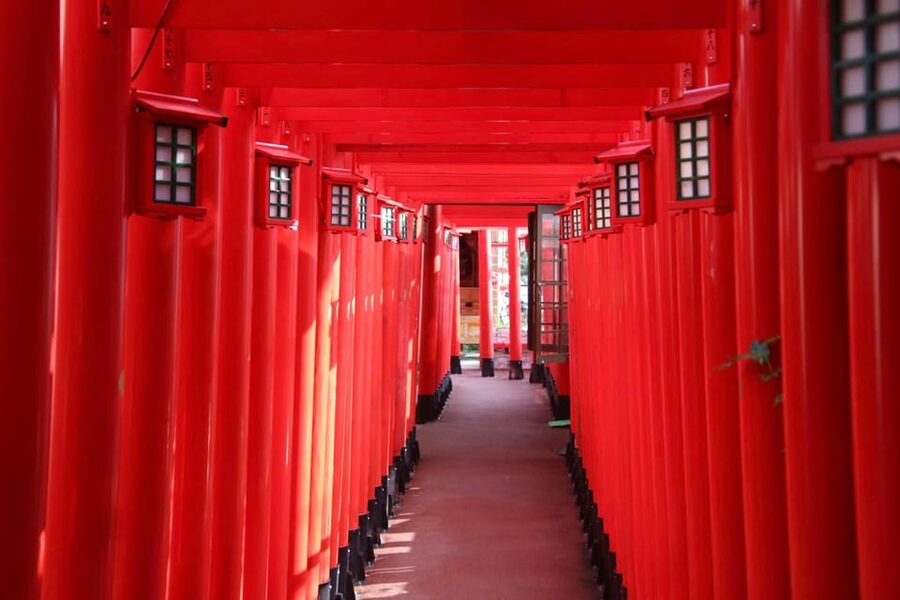
The best part of this outing is not simply counting temples. It is the change of pace. You ride through Shuri’s side streets, stop at small religious sites, then continue under your own power instead of being carried from one major sight to another.
Shuri is associated with the former Ryukyu Kingdom, and the tour uses that setting well. A red gate, a gajumaru tree, a small group of Jizo statues, and a spring in the forest each tell a different part of the story. You get a sense of how religious places fit into everyday neighborhoods.
The electric assistance matters. The route includes hills, and one rider specifically noted that the bikes made the steep sections easy. You still need to steer, brake, watch traffic, and pedal, but you are less likely to arrive at each temple hot and tired. The guide also gives directions for riding around traffic, an important benefit if you do not know Naha well.
The helmet communication system is another practical touch. Guides can speak to you as the group moves, and you can communicate with the people riding alongside you. That helps the tour feel social without requiring constant stops.
Other places of worship worth the walk in Okinawa:
- Kyoto: Tea Ceremony Ju-An at Jotokuji Temple
★ 4.9 · 3,207 reviews - Tokyo: Meiji Shrine, Asakusa, Skytree Bus Tour and Cruise
★ 4.7 · 1,986 reviews - Tokyo: Asakusa Walking Tour with Sensoji Temple Visit
★ 4.8 · 1,583 reviews
Starting near Makishi Station
You meet at the bike shop in Daisho Building, a five-minute walk from Monorail Makishi Station and next to the post office. This is convenient if you are staying around Kokusai Street or using the Naha monorail.
After fitting your electric bike and helmet, the guide explains the riding setup. The tour begins and ends at the same shop, so you do not need to arrange a second pickup point. Bring water, sunscreen, and a hat. Okinawa’s sun can be strong, and the route includes open stretches between temple visits.
Wear comfortable clothing and proper shoes. Sandals and flip flops are not permitted, and this is not a sightseeing ride where you can simply sit back. You need to be comfortable riding for roughly three hours, including stops and the moving sections between them.
The group limit is five participants. That makes it easier for the guide to check your pace, explain customs, and adjust small details when time allows. Several guides have been singled out for doing exactly that. Maki has been praised for adapting the experience to a small private group, while Hiro was noted for checking that everyone was comfortable and hydrated.
Shuri Kannon Temple and the first taste of old Shuri
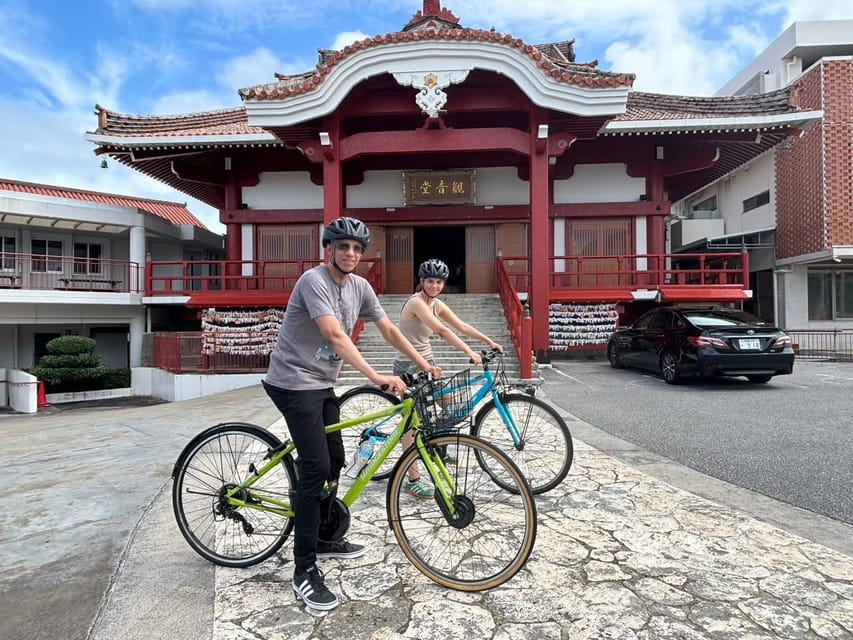
The first major visit is Shuri Kannon Temple, also called Shuri Kannondo. It is described as a guardian temple from the Ryukyu Kingdom, and its bright red structure gives the first stop a strong visual impact.
Look closely at the carvings and decorations rather than treating the temple as a quick photo stop. Your guide explains the religious setting and the local traditions connected with the place. From the temple, you can also enjoy views over Shuri.
This is where the tour begins to show its value. You are not just seeing a red building. You are hearing why the site matters, how it relates to the old kingdom, and how Okinawan Buddhist and Shinto practices appear in daily life.
The stop is also a good test of your expectations. These are working religious sites, not large museum exhibits. You should expect a quieter, more intimate visit rather than a long list of displays and signs in several languages.
Ankokuji Temple, an old gate, and a giant gajumaru tree
Ankokuji Temple provides a different mood. It is a local temple surrounded by traditional houses, with an ancient gate and a large gajumaru tree.
The short visit here lasts about five minutes in the stated schedule, so listen closely when the guide explains the site. The brief stop works because the appeal is atmospheric. You see how a temple can sit within an ordinary residential area, with old buildings and a mature tree giving the place its character.
The gajumaru is especially memorable. These trees are a familiar part of Okinawan scenery, and their broad forms make a strong contrast with the temple gate. You may want a camera ready, but do not expect a long period for wandering around.
The route then continues by bike. The schedule includes a roughly 20-minute riding section at this point. The intercom helps here, since your guide can keep the group moving and still share information.
Other rides on two wheels around Okinawa:
- Bike Tour Exploring North Kyoto plus Lunch
★ 5.0 · 1,087 reviews - Tokyo Great Cycling Tour
★ 5.0 · 811 reviews - Tokyo Top Highlights 3h Guided E-bike Tour
★ 5.0 · 714 reviews - 3h Tokyo E-Bike Tour: Hidden Gems, and Local Life with guide
★ 5.0 · 670 reviews
Shureimon Gate, Okinawa’s classic red photo stop
Shureimon Gate is the tour’s most recognizable landmark. Its red structure is a symbol of Okinawa, and the planned photo with your bike gives you a useful souvenir of the ride.
This stop may feel more familiar than the smaller temples, but it earns its place. The gate ties the quiet religious sites to the broader story of Shuri and the Ryukyu Kingdom. It also gives you the kind of clear, memorable photograph that is harder to capture at a small temple.
Do not expect the gate to be the whole focus of the tour. The point is the contrast: one famous symbol, followed by lesser-known religious sites and side streets. That balance keeps the experience from becoming a standard landmark circuit.
Your bike is part of the picture here. It makes the stop feel like a journey through Shuri rather than a sequence of disconnected taxi rides.
Daruma Temple and prayers for health
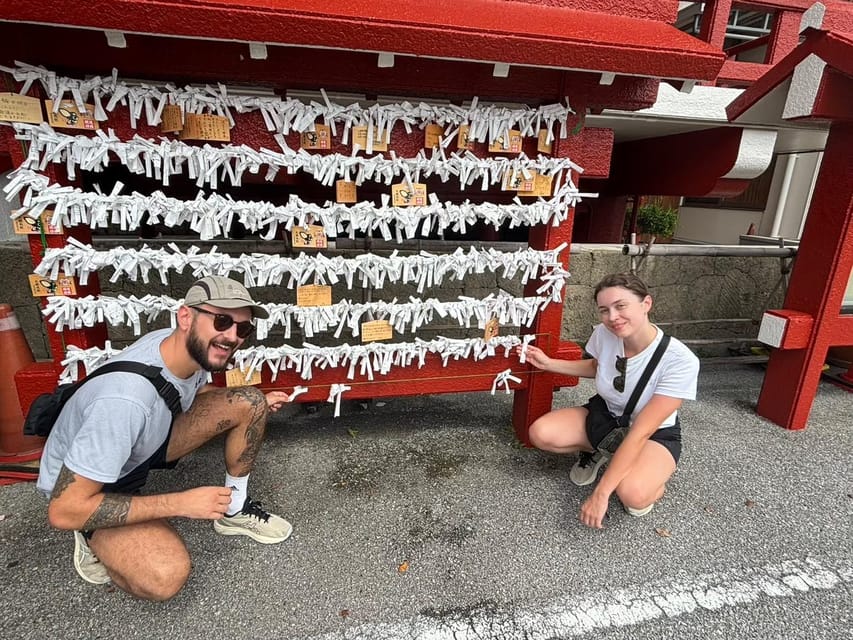
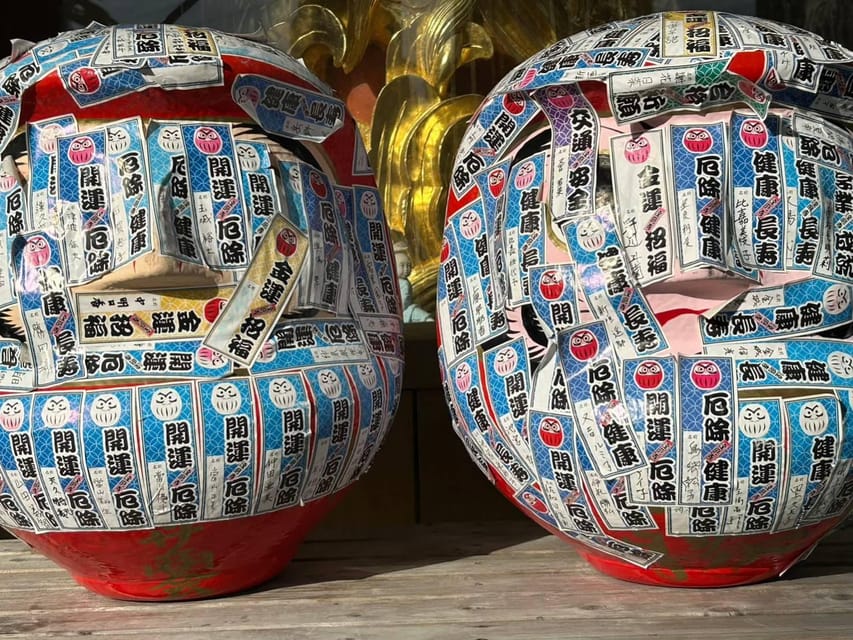
Daruma Temple is a colorful pause in the route. It is known for prayers related to health and pregnancy, and the red daruma dolls and torii gate give it a distinctive look.
The visit lasts about 20 minutes in the schedule, enough time to take in the dolls and hear about the customs connected with the temple. This is one of the stops where a guide adds real value. Religious symbols can look decorative if you do not know what they represent, but a short explanation turns them into part of a living practice.
You can offer money at temples and shrines if you wish, but offerings are not included in the price. The tour does not include meals or drinks either, so keep your water bottle with you and bring any small cash you want for personal offerings.
The Daruma Temple visit also adds variety. After the historic gate and more subdued temple grounds, the red dolls create a bright, approachable stop. It is easy to enjoy visually, even if you are new to Japanese religious traditions.
Seikoji Temple and a quieter pause
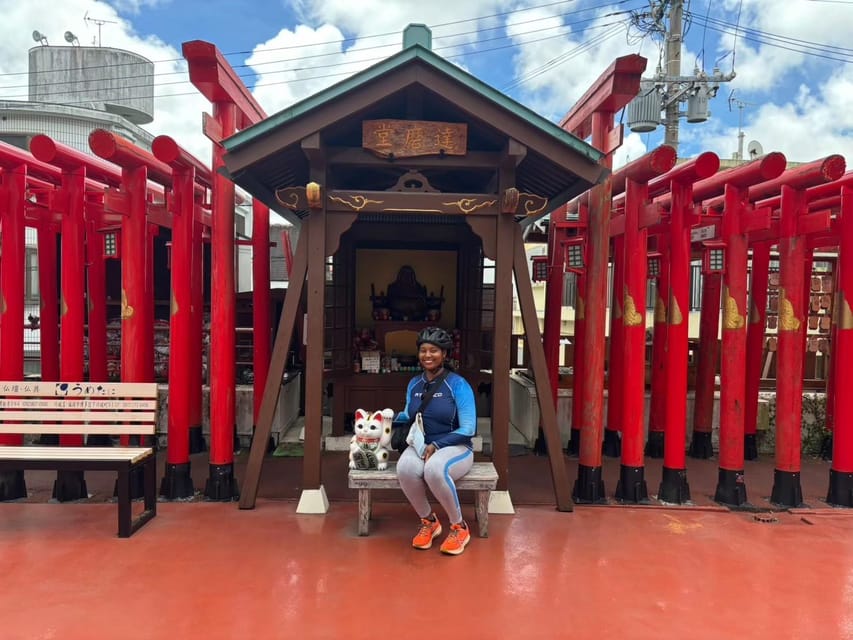
Seikoji Temple is described as peaceful, with a sacred atmosphere, Jizo statues, and a modern building. The planned visit is about 10 minutes.
The Jizo statues are worth noticing. Your guide can explain their place in local religious life, while the modern structure shows that these sites are not frozen in the past. Okinawan religious spaces can combine old customs, newer buildings, residential surroundings, and active community use.
This stop is shorter than Daruma Temple, so you will get the most from it by staying close to the guide and asking questions. The tour is not designed for long independent meditation at each site. It gives you a series of focused introductions, with the bike ride providing breathing space between them.
That rhythm works well for me. You get activity, history, and quiet moments without spending three hours inside one formal museum.
Saki Kasahigawa, a spring in the forest
Saki Kasahigawa is presented as a miracle spring flowing from a deep forest. The running water adds a natural element to a tour otherwise centered on temples, gates, and city streets.
Here, the value is less about a major structure and more about the feeling of continuity. Water, trees, and local belief connect the spiritual places to the physical setting around Shuri. Your guide can explain the history and meaning of the spring as you take in the sound and movement of the water.
The supplied schedule does not list a separate timed stop for the spring, so expect it to be part of the guided route rather than a long free period. That is worth knowing if you want extended time at every location. This tour favors breadth and connection, showing how several sites relate to one another.
Sogenji Temple and a former royal mausoleum
The final major stop is Sogenji Temple, a former royal mausoleum. Its park offers clean, quiet air, along with a gate and another large gajumaru tree.
Ending here makes sense. The tour moves from active streets and colorful religious details toward a calmer park setting. The former royal connection gives the stop historical weight, while the tree and open air keep it from feeling like a formal lecture.
You may find this the most reflective part of the route. After several short visits, it gives you a final chance to absorb how religion, royal history, and ordinary city life overlap in Shuri.
The group then returns to the bike shop. Since the beginning and end are at the same location, you can continue to Kokusai Street or return to your hotel without arranging another transfer.
What the three-hour schedule really feels like
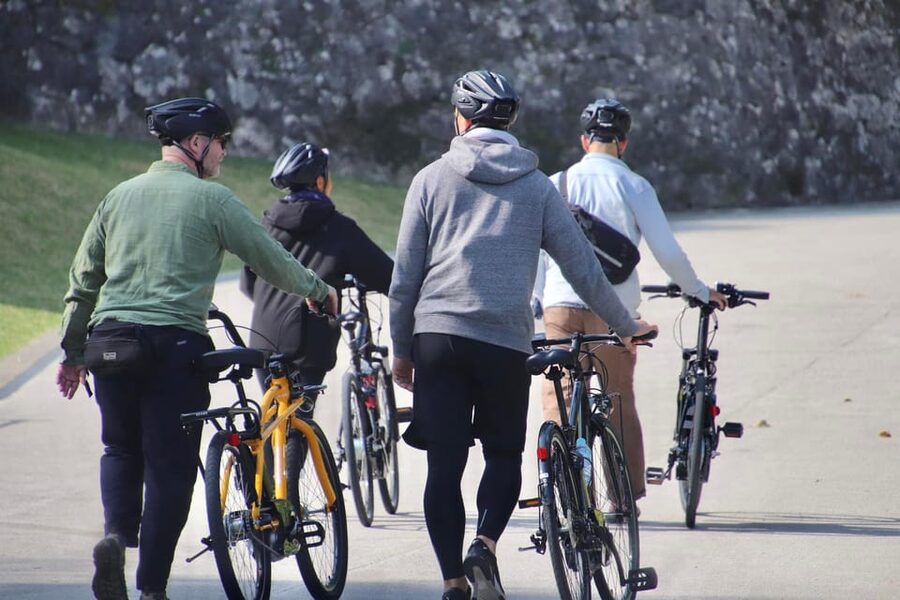
The advertised duration is three hours, but not all of that is spent inside temples. The schedule includes riding sections of about 15 to 20 minutes, along with visits lasting from roughly five to 20 minutes.
That means you should expect a moving tour, not a slow temple study. You will see several places and receive an introduction to each. If you want to photograph every detail or linger in silence, the pace may feel brisk. If you want a broad sense of Shuri without spending a full day on foot, it is a good fit.
The small group helps. Guides can pause for questions, take photos, and adjust the pace when possible. Elaine described Maki taking photos and shaping the outing around a two-person group. Other guides, including Maria, Jojo, Reiji, and Tiny, have been praised for their warmth, clear explanations, and care with riding directions.
The experience is available in English, Chinese, and Japanese. Guide quality can vary by date, but the repeated praise for the staff’s communication and personal attention is encouraging.
Is $95 a fair price?
At $95 per person, this is not the cheapest way to see Shuri. You could walk around some of the area for little money, and individual temple visits may not require an admission fee. The price is paying for the electric bike, helmet with intercom, guide, route planning, and access to sites that are difficult to connect on your own.
That package has real value if you have limited time or do not want to study a map before visiting. The bike lets you cover more ground than walking, while the guide supplies cultural context at each stop. The small group also feels more personal than a large bus tour.
The price is less attractive if you already know Shuri well, prefer slow independent visits, or dislike cycling in city traffic. Food and drinks are not included, nor are temple offerings, so budget for those separately if needed.
Free cancellation up to 24 hours before the start and the option to reserve now and pay later make the booking less rigid. If the precipitation probability exceeds 70 percent or severe weather is expected, the plan may change, with notice sent the day before.
Who should book this Naha e-bike tour?
I would choose this for a first visit to Naha, especially if you want more than the major sights. It suits confident cyclists who enjoy short active outings and like having local customs explained as they go.
It is also a strong choice for couples, friends, and small families with older children who can ride safely. The guide can communicate during the ride, and the electric assistance removes much of the hill work.
I would skip it if you cannot ride a bicycle, do not want to share streets with traffic, or need a fully seated sightseeing experience. You should also reconsider if hot weather and sun exposure make outdoor activity uncomfortable.
FAQ
Where does the tour start and finish?
It starts and ends at the bike shop in Daisho Building. The shop is a five-minute walk from Monorail Makishi Station, next to the post office.
How long does the tour last?
The tour lasts three hours, including riding between stops and visits to the temples, shrines, gates, and spring.
What languages are available?
The tour is offered in English, Chinese, and Japanese.
How many people can join?
The group is limited to five participants.
Is an electric bike included?
Yes. Electric bicycle rental is included, along with a helmet fitted with an intercom system.
Do I need to know how to ride a bike?
Yes. People who cannot ride a bike are not suitable for this tour.
What should I bring?
Bring comfortable shoes, water, sunscreen, and a hat. Clothing suitable for cycling is recommended, and sandals or flip flops are not allowed.
Are food, drinks, and temple offerings included?
No. Meals, drinks, and money for offerings at temples and shrines are not included.
Should you book it?
Book this tour if you want to see the quieter side of Shuri without fighting its hills on foot. The strongest reasons are the electric bikes, the small group, the helmet intercom, and guides such as Maki, Maria, Hiro, Reiji, and Jojo who bring clear local context to places you might otherwise pass by.
Skip it if you cannot ride, want a slow independent temple visit, or prefer to avoid cycling altogether. For a capable cyclist with three hours in Naha, the $95 price buys more than transportation. It gives you a connected look at Shuri’s temples, beliefs, royal past, and everyday streets.
Just added in Okinawa
- Okinawa: Discover SCUBA Diving 2 Dives at Minna, Sesoko or Motobu★ 5.0 · 19 reviews
- Okinawa: Scuba Diving Tour with Wagyu Lunch and English guide★ 5.0 · 32 reviews
- Okinawa Miyako Sea turtle Snorkeling Free Pick up and Drop off★ 5.0 · 86 reviews
- [Miyako Island / Half Day] Pumpkin Limestone Cave & Sea Kayaking★ 5.0 · 82 reviews
- Miyako SUP or Canoe Tour on a Spectacular Beach in Miyako★ 5.0 · 24 reviews
- Snorkeling Activity in Okinawa Miyako Japan★ 5.0 · 49 reviews
- Okinawa Miyakojima Half Day SUPor Canoe & Sea Turtle Snorkeling (Half Day Set)★ 5.0 · 51 reviews
- Okinawa Miyako Star Gazing & Subtropical Jungle Night Tour★ 5.0 · 97 reviews
Temple & Shrine Tours, compared.


Meiji Shrine, Asakusa, Skytree Bus Tour and Cruise
Read our review →
Asakusa Walking Tour with Sensoji Temple Visit
Read our review →
Kamakura & Enoshima Day Trip including Temple Tickets
Read our review →
Nikko Toshogu Shrine and Kegon Waterfall Tour
Read our review →
Tokyo Panoramic 1 Day: Meiji Shrine, Asakusa, Odaiba and SKYTREE®
Read our review →
1-Day Snow Monkeys, Zenko-ji Temple & Sake in Nagano
Read our review →Browse the lists this tour appears in