
Reviewed · NARA & THE DEER PARK
Nara: Great Buddha, Kasuga Shrine & Deer Park Tour
Nara’s deer are the quick hook here, but the real payoff is seeing how Shinto, Buddhism, and nature share the same setting. You feed the deer in Nara Park, follow lantern-lined paths to Kasuga Taisha, then face the immense Great Buddha at Todai-ji.
I like the route’s clear focus: it covers Nara’s three essential sights without wasting time on distant stops. I also like the guide-led context, especially at Kasuga Taisha, where a few explanations can turn rows of lanterns and wooden buildings into a living religious tradition. The main consideration is the pace. Three hours is efficient, but you will walk a lot and encounter steps, uneven paths, crowds, and outdoor weather.
Key points at a glance
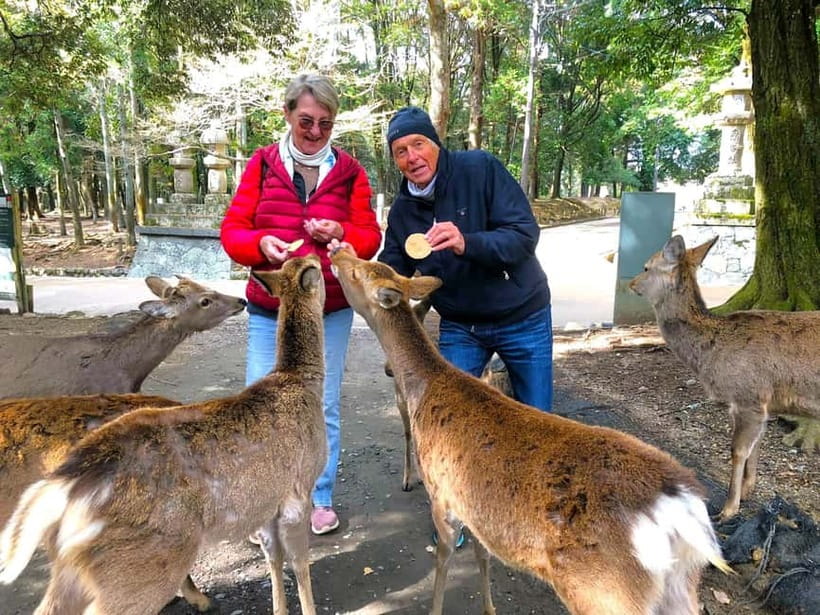
- Sacred deer encounter: Feed Nara’s free-roaming deer with included shika senbei crackers.
- Kasuga’s lantern paths: Visit the shrine’s special inner area and learn about Shinto purification and worship.
- Todai-ji’s Great Buddha: Enter the vast wooden hall and see the 8th-century bronze Vairocana Buddha.
- Useful local guidance: Guides including Eri, Takashi, Teppei, Nobu, and Yayoi are praised for clear explanations and personal help.
- Three-hour structure: See the main Nara sights in one compact walking tour.
- Good booking flexibility: Cancellation is free up to 24 hours before the start, and you can reserve now and pay later.
Why this compact Nara tour works
Nara was Japan’s first permanent capital in the 8th century. That early political role helps explain the scale of its temples and shrines. This was not a minor provincial town. It was the center of a young state trying to express its authority through religion, architecture, and ceremony.
This tour gives you the basic story in the right order. You begin among deer and trees, move into one of Japan’s best-known Shinto shrines, and finish with one of the country’s largest Buddhist buildings. The sequence makes the relationship between daily life and religious practice easier to understand.
You also get a live guide in English or Japanese. That matters in Nara, where a great deal of what you see is symbolic rather than self-explanatory. A guide can explain why the deer are protected, how to behave around shrine gates, what the lanterns signify, and why Todai-ji was built on such a massive scale.
The experience has a 4.8 rating from 62 bookings, and the strongest pattern is clear: the guides add much of the value. Eri, Takashi, Teppei, Nobu, Yayoi, Yoshi, and others are praised for answering questions, adjusting the pace, offering food advice, helping with local transport, and making the walk feel personal rather than scripted.
Other day trips out of Nara:
- World Heritage Kyoto & Nara Uji Authentic Matcha Experience
★ 5.0 · 1,573 reviews - Nara Half Day Trip Walking Tour (Private Option Available)
★ 5.0 · 937 reviews - Nara Early Morning Tour (Kyoto or Osaka Departure Available)
★ 5.0 · 676 reviews
Meeting at Himuro Shrine
The meeting point is in front of the torii gate at Himuro Shrine. Look for the guide holding a yellow DeepExperience sign.
This is a useful starting place because you meet close to the historic core rather than spending the first part of the tour on transport. You are responsible for getting to Himuro Shrine yourself, and transportation to and from the meeting point is not included. Plan that part before the day begins.
The tour ends at one of two drop-off points near Kasuga Taisha’s second torii gate. It does not return you to the original meeting point. That is not a problem if you plan to continue exploring Nara, but it matters if you have a train reservation or need to collect luggage elsewhere.
Guides have been praised for practical help after the formal tour. Nobu walked one visitor to the station and helped with an express train purchase, while Takashi helped with local bus arrangements. Treat this as helpful personal service, not a guaranteed transfer, but it shows the kind of local assistance you might receive.
Nara Park and the deer
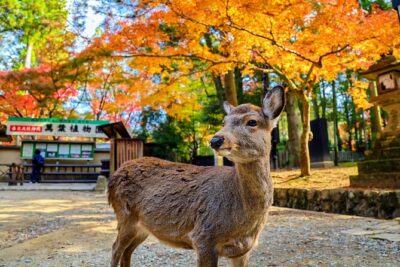
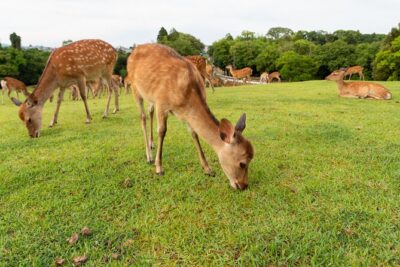
The first guided stop is Nara Park, with about 30 minutes set aside for the park and deer. The park is broad, green, and closely tied to the city’s religious sites. Deer move freely through the grounds, along paths, and near the temples.
In Shinto belief, the deer are sacred messengers, particularly associated with Kasuga Taisha. Their presence is more than a cute photo opportunity. It reflects an older Japanese idea that sacred places are not sealed away from nature. The animals share the same public space as worshippers, school groups, photographers, and commuters.
Your included deer crackers, called shika senbei, make the encounter more interactive. Feed carefully and follow your guide’s instructions. Deer can be eager once they see the crackers, so keep the food controlled and avoid teasing them with an empty hand.
This is one of the tour’s most memorable moments, especially for families and first-time visitors to Japan. It also gives your guide a natural opening to explain the city’s customs and the protected status of the deer.
The limitation is time. Thirty minutes is enough for feeding and photographs, but not for an unhurried wander through every corner of Nara Park. If you want long, quiet walks under the trees, add your own time before or after the tour.
Conditions also matter. Several visits took place in very hot weather or heavy rain, and guides helped make those days easier. Nobu provided neck coolers on a hot outing, while Marc kept the experience enjoyable during heavy rain. Those small touches are useful, but you should still dress for the forecast and expect to be outdoors.
Kasuga Taisha and its lanterns
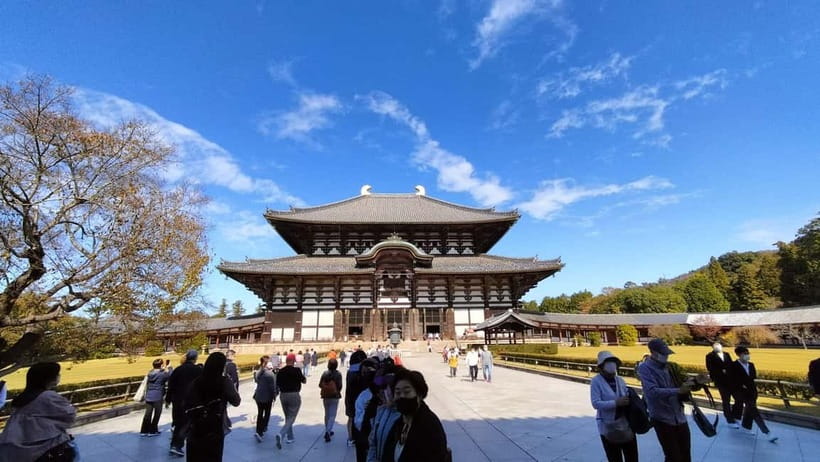
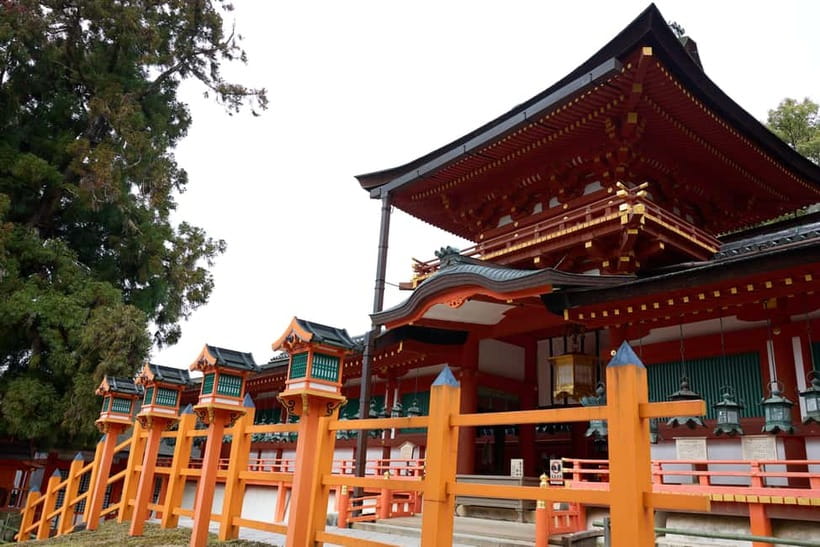
From the park, the tour continues to Kasuga Taisha, with about an hour for a guided visit. Founded in 768 and linked to the powerful Fujiwara clan, Kasuga Taisha became one of Nara’s most important Shinto sites.
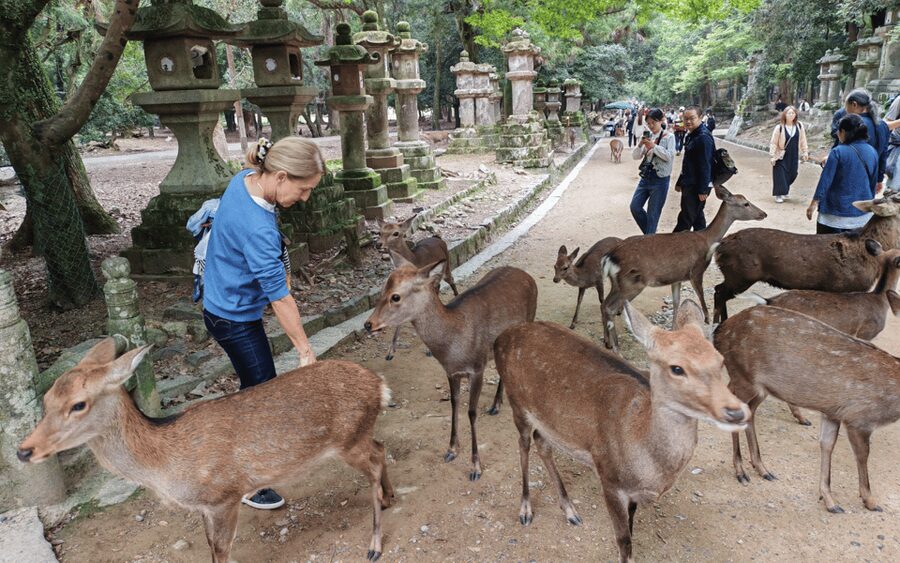
The route through the shrine area is one of the most atmospheric parts of the experience. Stone lanterns line the approach, while bronze lanterns hang within the shrine buildings. Worshippers donated these over many generations, so they are not simply decoration. They record long-term devotion and the connection between religious institutions and the families who supported them.
The shrine is surrounded by old forest protected for more than a thousand years. That setting gives Kasuga Taisha a different mood from Todai-ji. Todai-ji impresses through size and engineering. Kasuga works through shade, ritual, lanterns, and the feeling of entering a carefully protected sacred area.
Admission to the special inner shrine area is included. This is an important detail because the extra access gives the visit more substance than a quick look from the outer grounds.
Your guide can explain Shinto practices such as purification, the meaning of torii gates, and the layout of shrine buildings. You will also get a clearer sense of how Shinto differs from Buddhism, while seeing how closely the two traditions have lived beside one another in Nara.
Kasuga Taisha has a strong visual appeal, but do not expect every part of the visit to be dramatic. Some of the pleasure comes from walking slowly through the forest and noticing details. If you prefer large monuments and instant spectacle, Todai-ji will likely make the bigger first impression.
Other places of worship worth the walk in Nara:
- E-Bike Nara Highlights – Todaiji, Knives, Deer, Shrine
★ 4.8 · 186 reviews - Nara: Essential Private Tour with Deer Park and Temples
★ 5.0 · 24 reviews - Kyoto: Tea Ceremony Ju-An at Jotokuji Temple
★ 4.9 · 3,207 reviews - Tokyo: Meiji Shrine, Asakusa, Skytree Bus Tour and Cruise
★ 4.7 · 1,986 reviews
Todai-ji and the Great Buddha
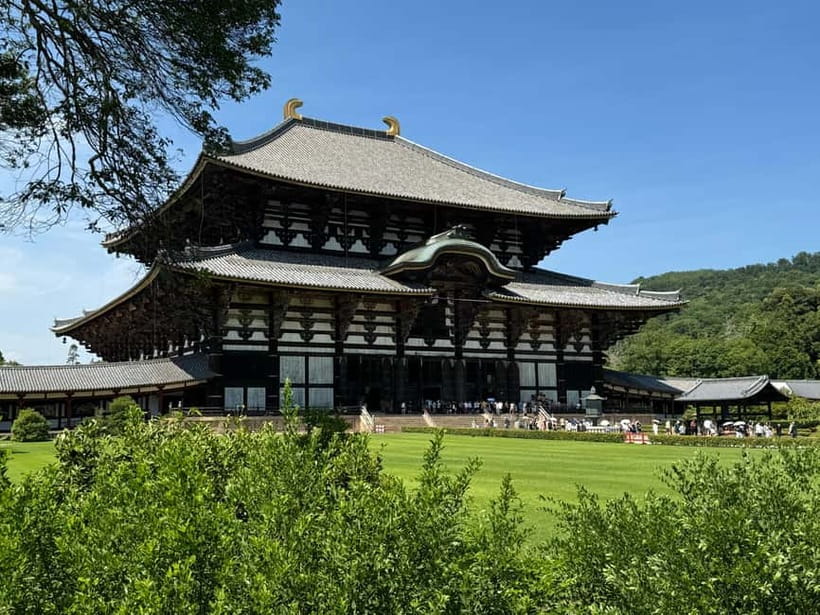
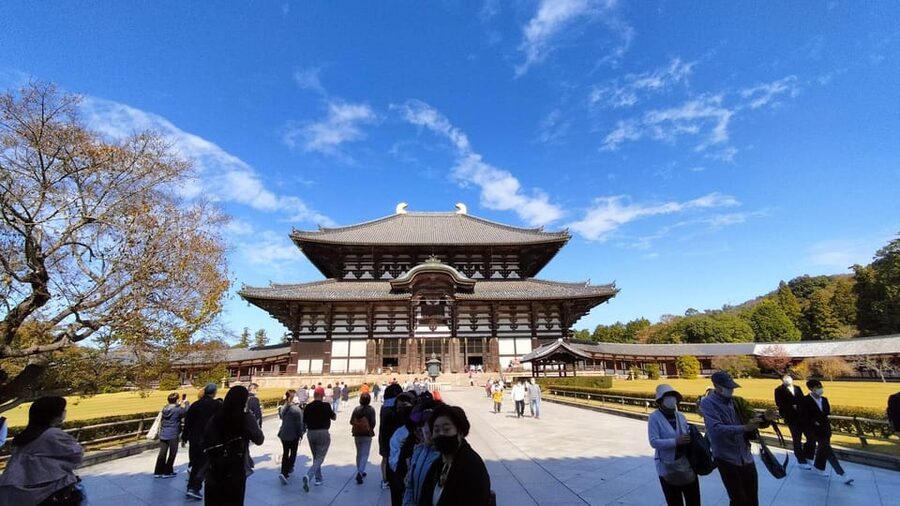
The final main stop is Todai-ji, one of Japan’s most important Buddhist monuments and a UNESCO World Heritage site. The visit includes admission to the temple.
The centerpiece is the Daibutsuden, or Great Buddha Hall. The building is among the largest wooden structures in the world, and its size is difficult to appreciate until you are standing in front of it. The hall was built to house the colossal bronze Great Buddha, known as the Daibutsu.
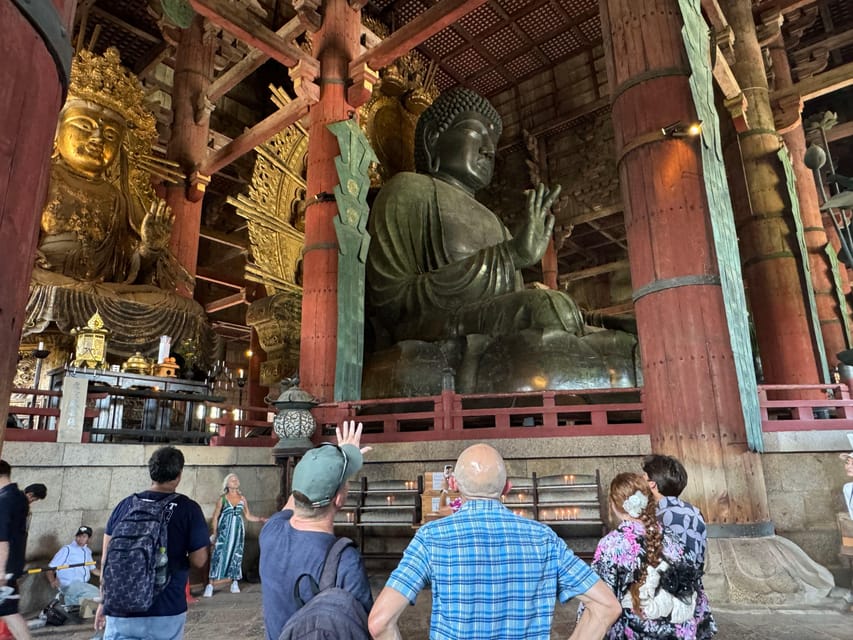
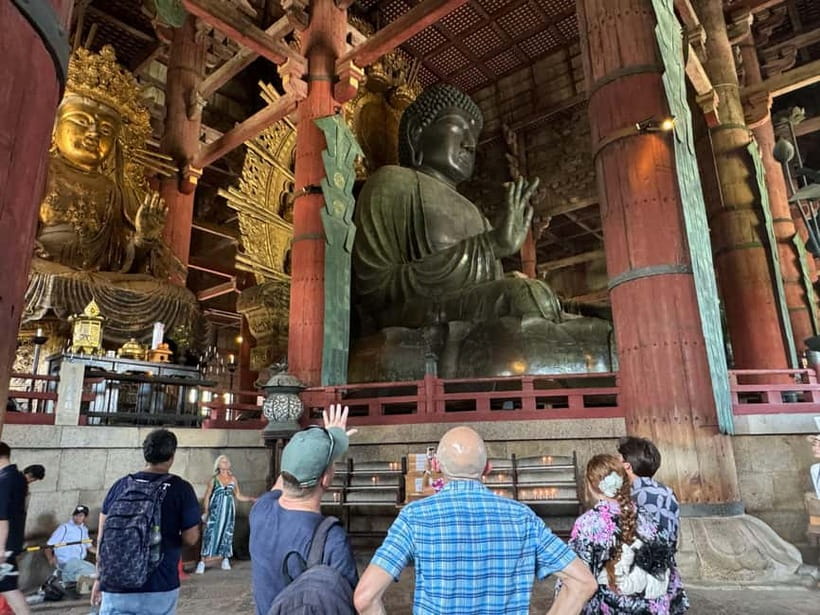
The statue represents Vairocana Buddha. Cast in the 8th century, it reflects the religious ambition of early Japan and the government’s desire to unite the country around a major Buddhist institution. Building it required enormous amounts of metal, labor, organization, and money.
A guide makes this stop much more meaningful. Without context, you may simply see a very large statue in a very large hall. With an explanation of its construction and purpose, the scale becomes a statement about early Japan, not just an impressive photograph.
Allow yourself a quiet moment inside. The hall can be busy, and the architecture draws attention in every direction. Still, the Buddha’s calm face and the sheer volume of the room create a strong contrast with the noise outside.
The tour gives you about an hour at Todai-ji. That is enough for the Great Buddha Hall and the main points of interest, but not for an exhaustive visit to every building in the temple complex. If you want to explore at a slower pace, return independently after the tour.
The guide makes the difference
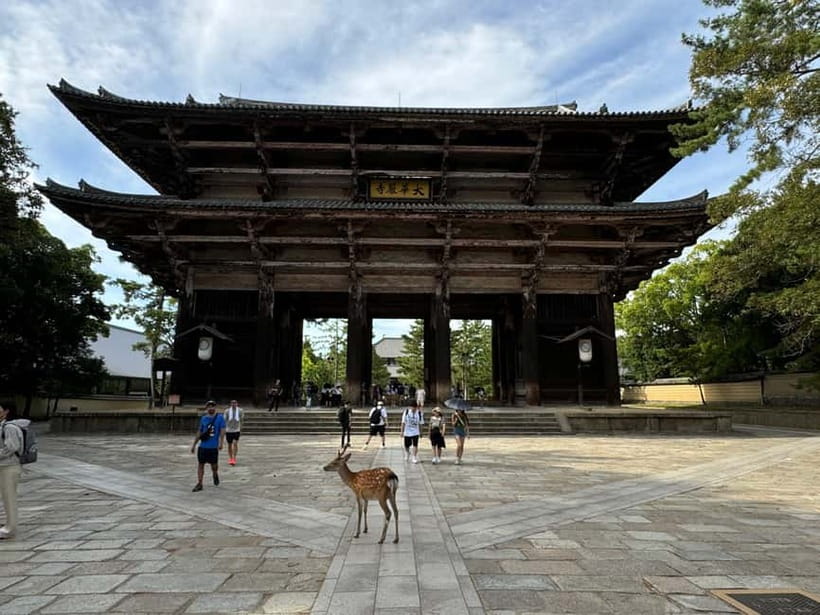
This is a walking tour of famous sights, so the quality of the explanation matters more than the number of stops. The strongest guide comments emphasize local knowledge, patience, and the ability to answer questions beyond a memorized script.
Eri is from Nara and has been praised for local insight, useful food suggestions, and small route adjustments that include quieter places and interesting shops. Takashi has been praised for detailed historical explanations and for helping with transport before or after the tour.
Teppei is described as kind, patient, and willing to discuss Japanese daily life as well as temples and shrines. Yayoi brings energy to the history of Nara and takes care around the deer. Nobu has helped visitors cope with heat and continue their journey to the station.
Other named guides include Yoshi, Marc, Ryan, Hana, Tomoe, and Takao Fuchigama. The experience can be private or arranged for a small group, so your exact guide and group feel may vary.
This range of guide feedback points to an important benefit: you can ask questions. If you are curious about religion, Japanese customs, food, transport, or modern daily life, use the walking time for conversation. The tour is strongest when you treat it as a chance to ask rather than simply follow.
Walking, timing, and comfort
Three hours sounds short, but the route covers three substantial sites. You will walk between Nara Park, Kasuga Taisha, and Todai-ji, with steps and uneven paths along the way. One visitor specifically noted the amount of walking and the number of steps, while also feeling the effort was worthwhile.
Wear comfortable shoes. Bring water, especially in warm months, and carry rain protection if the forecast is uncertain. The experience runs outdoors for much of the time, and the deer portion offers little control over the weather.
The schedule is structured as roughly 30 minutes at Nara Park, one hour at Kasuga Taisha, and one hour at Todai-ji. That leaves limited spare time for lingering, shopping, or a long meal. The final drop-off near the second torii gate makes it easy to continue exploring, but food and drinks are not included.
The tour suits visitors who want a strong introduction to Nara in one morning or afternoon. It is less suitable if you want a slow temple study, extended photography sessions, or a full day devoted to the park.
Is $77 a fair price?
At $77 per person, this is not the cheapest way to walk through Nara. You can see the public areas independently for far less. The question is what you want from the day.
The price includes an English or Japanese guide, Todai-ji admission, Kasuga Taisha’s special inner shrine admission, and deer crackers. It also buys you a planned route through the major sights and the chance to ask questions throughout.
For a first visit, that can be good value. You avoid working out the order of the stops, you receive context at places where signs may not explain much, and you can ask for practical advice about food or transport. The value is strongest if you are short on time or uncomfortable navigating religious sites on your own.
Independent exploration may suit you better if you have already studied Nara, speak Japanese, or prefer to stop whenever you like. You can also spend more time in the park or temple grounds without watching the clock.
Flexible booking helps reduce the risk. You can reserve now and pay later, and cancellation is free up to 24 hours before the start. Starting times vary, so check availability before booking.
Who should book this experience?
I would choose this tour for a first visit to Nara, especially if you are coming from Kyoto or Osaka for a limited amount of time. It gives you the essential sights and enough explanation to understand what you are seeing.
Families may appreciate the deer crackers and the clear route. Couples and solo visitors who want conversation will benefit from the private or small-group format. Visitors interested in religion, architecture, and Japanese history will get the most from the guide’s explanations.
You should think twice if you dislike walking, have only a narrow window before a train, or want a quiet, independent visit. The route is active, and the three-hour limit keeps it moving.
Final verdict: book it if context matters
Book this experience if you want Nara’s famous sights tied together by a local guide rather than visited as separate photo stops. The deer are fun, Kasuga Taisha provides the quieter spiritual setting, and Todai-ji delivers the big final impression.
The best reason to book is the guide support. Eri, Takashi, Teppei, Nobu, Yayoi, and the other guides are praised for history, conversation, practical help, and thoughtful adjustments. At $77, the tour is worth considering when your time is limited and you want admission, a clear route, and human explanation included.
Skip it if you prefer to set your own pace or already know Nara well. For most first-time visitors, though, this is a sensible three-hour introduction to the city’s deer, shrines, temples, and long spiritual story.
FAQ
How long does the Nara tour last?
The tour lasts three hours.
Where does the tour begin?
It begins in front of the torii gate at Himuro Shrine. The guide will hold a yellow sign with the DeepExperience logo.
Where does the tour end?
The tour ends at one of two drop-off points near the second torii gate of Kasuga Taisha.
Which languages are available?
Live guides are available in English and Japanese.
Is the tour private or shared?
Private and small-group options are available.
Are deer crackers included?
Yes. Deer crackers, called shika senbei, are included for feeding the deer.
Is Todai-ji admission included?
Yes. The Todai-ji Temple admission fee is included.
Is Kasuga Taisha admission included?
Yes. Admission to the special inner shrine area of Kasuga Taisha is included.
Is transportation included?
No. Transportation to and from the meeting point is not included.
Can I cancel the booking?
Yes. You can cancel up to 24 hours in advance for a full refund. You can also reserve now and pay later.
Just added in Nara
- Nara:5 Type of Tea Tasting & Mindful Tea Ceremony★ 5.0 · 28 reviews
- Nara:Authentic Tea Ceremony(Max 5 ppl) -Master Matcha Making★ 5.0 · 119 reviews
- Nara: Todai-ji y parque de Nara (Spanish Guide)★ 5.0 · 16 reviews
- Nara: Private Tour with Private Guide★ 4.8 · 66 reviews
- Nara: Essential Private Tour with Deer Park and Temples★ 5.0 · 24 reviews
- Nara: Private Walking Tour with a Local★ 4.3 · 36 reviews
- Nara Early Bird Tour (Kyoto Departure Option Available)★ 4.9 · 142 reviews
- Nara: City Highlights Shared Group or Private Bike Tour★ 4.9 · 34 reviews
Nara & the Deer Park, compared.
World Heritage Kyoto & Nara Uji Authentic Matcha Experience
Read our review →
Kyoto/Osaka: Nara, Fushimi Inari Taisha, Arashiyama Bus Tour
Read our review →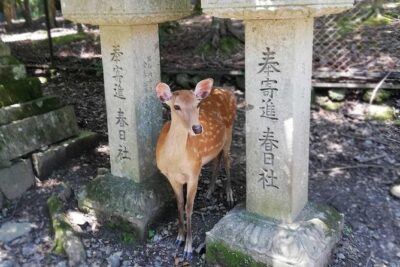
Nara Half Day Trip Walking Tour (Private Option Available)
Read our review →
Osaka/Kyoto: Arashiyama, Nara & Fushimi Inari Shrine w/Lunch
Read our review →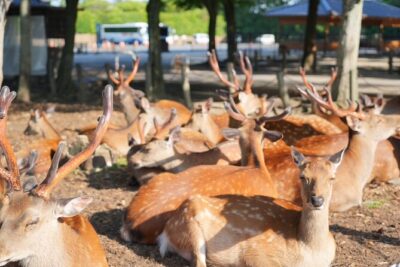
Nara Early Morning Tour (Kyoto or Osaka Departure Available)
Read our review →
Full Day Guided Tour to Kyoto and Nara from Osaka by Van
Read our review →
Browse the lists this tour appears in