
Reviewed · NARA & THE DEER PARK
Nara Half Day Trip Walking Tour (Private Option Available)
Nara’s famous deer are only the beginning. This five-hour walk links Todaiji’s giant Buddha, Kasuga Taisha’s lanterns, an old merchant quarter, and a traditional lunch without forcing you to plan every temple stop yourself. Guides such as Shin, Yuki, Miyabi, and Eri also explain how to behave around the deer, including their polite but sometimes pushy bowing for crackers.
I like the small maximum group of eight, which gives the guide room to answer questions and adjust the pace. I also like that lunch and entrance fees are included, since those details can otherwise slow down a short visit. The main drawback is the amount of walking in exposed weather, plus limited food flexibility for people with allergies or strict dietary needs.
Key points to know before booking
- Six useful stops in about five hours: Kofuku-ji, Todaiji, lunch, Kasuga Taisha, Nara Park, and Naramachi.
- The Great Buddha is included: You enter Todaiji’s Main Hall rather than viewing it only from outside.
- Deer guidance is part of the experience: Your guide can show you how to feed the deer without letting them crowd you.
- Lunch is built into the route: Expect a traditional Japanese meal at a long-established local restaurant.
- Small-group feel: The tour has a maximum of eight participants, with a private option available.
- Plan for real walking: Summer heat, winter cold, rain, and the deer park’s open paths all affect comfort.
Why this half-day Nara tour works so well
Nara can look simple on a map. A station, a temple complex, a park full of deer, and a few shrines seem easy enough to connect. In practice, the history is layered, the grounds are spread out, and the customs can be unfamiliar. A local guide helps you understand why the places matter instead of reducing the visit to a series of photo stops.
This route gives you a broad first look at the city. You see the major religious sites, spend time with the deer, eat a local lunch, and finish among the wooden buildings of Naramachi. That mix is the strongest part of the day. You are not spending five hours inside one temple complex, and you are not treating Nara as only a deer park.
The format also suits a first visit. The guide can explain shrine etiquette, show you where to bow or make a wish, and point out details you might pass without noticing. Several guides, including Shin, Yuki, Miyabi, Mari, Nao, and Eri, have been praised for adjusting the pace, helping with photographs, and keeping families involved.
The tour is still a walking tour, not a relaxed sightseeing bus ride. Short breaks are included, but you should expect to be on your feet for much of the five hours. Comfortable shoes, water, and weather protection matter.
Other day trips out of Japan:
- World Heritage Kyoto & Nara Uji Authentic Matcha Experience
★ 5.0 · 1,573 reviews - Kyoto/Osaka: Nara, Fushimi Inari Taisha, Arashiyama Bus Tour
★ 4.7 · 1,275 reviews - Osaka/Kyoto: Arashiyama, Nara & Fushimi Inari Shrine w/Lunch
★ 4.4 · 754 reviews
Starting at Kofuku-ji’s five-story pagoda
The meeting point is by the Statue of Gyoki-bosatsu at 27 Higashimuki Nakamachi. From there, the first stop is Kofuku-ji Temple and its five-story pagoda, an instantly recognizable Nara landmark.
The pagoda was built by the Fujiwara clan in 730 and is known for its detailed wooden construction. The visit here is brief, about 15 minutes, so think of it as an introduction rather than a full exploration of Kofuku-ji. Your guide can give you the historical setting and help you understand why this temple remains such an important part of Nara’s old center.
I like this opening because it eases you into the day. You begin with a strong visual landmark before moving toward the larger temple grounds. The short stop also protects time for Todaiji and Kasuga Taisha, the two places most visitors come to Nara to see.
The tradeoff is that anyone wanting an extended look at Kofuku-ji’s buildings or museum collections will need separate time. This tour is designed for range, not a slow study of one temple.
Entering Todaiji and meeting the Great Buddha
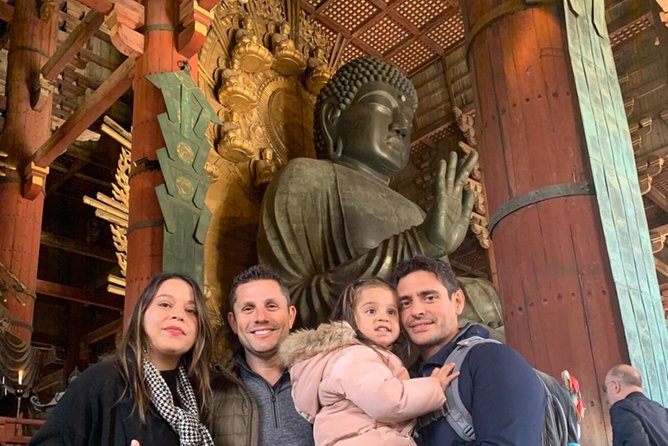
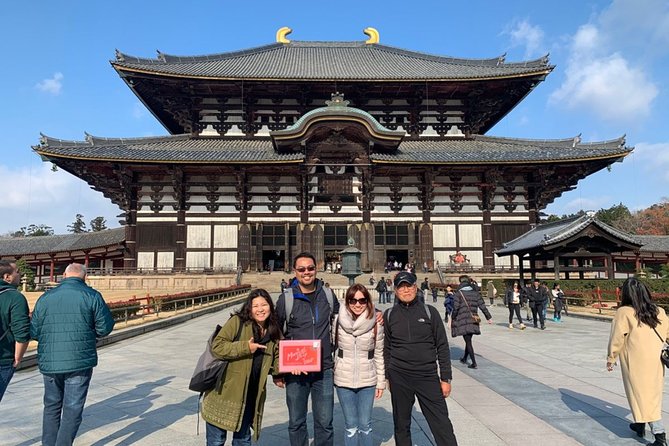
Todaiji is the centerpiece of the route. You visit the Main Hall and pass through Nandaimon, the Great South Gate, where two imposing Kongorikishi guardian statues greet you.
The Main Hall houses Nara’s Great Buddha, a sight that gives the tour its largest single moment. Admission is included, so you do not need to stop and arrange a separate ticket during the visit. The planned time at Todaiji is about 30 minutes, enough to see the key spaces and hear the essential background, though not enough for every corner of the grounds.
This is where a guide adds real value. The scale of the hall and statue is easy to appreciate, but the religious meaning, construction, and role of Todaiji in Nara’s development are harder to grasp from a quick look. A guide such as Shin or Miyabi can connect the building to the wider story of the city and explain customs in clear, everyday terms.
Expect crowds, especially around the Great Buddha and the main approach. The tour can help you move through the site efficiently, but no guide can make one of Japan’s best-known temples empty. If you want quiet photographs or a long visit inside the hall, return on your own at another time.
A traditional Japanese lunch in an old town setting
Lunch takes about 45 minutes at a traditional Japanese restaurant near 107 Zoshicho. The setting is part of the appeal. You eat in an older Japanese town area rather than treating lunch as a quick stop beside a major attraction.
The meal is described as a spread of local dishes, and many participants have especially enjoyed it. It can include familiar Japanese set-meal elements, though the exact menu may change. Some guides have also explained the food, introduced traditional treats such as mochi and red bean tea, or suggested places for sweets and shaved ice after the tour.
This meal improves the value of the tour. At $105.45 per person, the price is not simply paying for a walk and a guide. It also covers the Todaiji and Kasuga Taisha admissions and a substantial local lunch. If you were already planning to visit these sites and eat in Nara, combining them in one organized route can make financial and practical sense.
Food restrictions need careful attention. Gluten-free requests cannot be accommodated. Allergy-free meals are not guaranteed because the food is prepared in kitchens outside MagicalTrip, and substitutions may not always be possible. Vegetarian requests should be made by the day before, not on the morning of the tour. Some past meals have accommodated vegetarian and vegan needs, but you should confirm your request in advance rather than assume it will be available.
Other guided walks in Japan:
- Kyoto Geisha Walking Tour: Gion District & Hidden Gems
★ 4.7 · 3,273 reviews - Tokyo Tsukiji Fish Market Food and Culture Walking Tour
★ 5.0 · 3,184 reviews - Kyoto: Gion Magical Night Walking Tour with Geisha Trivia
★ 4.9 · 2,393 reviews - Tokyo: Imperial Palace and Shogun Historical Walking Tour
★ 5.0 · 2,251 reviews
Kasuga Taisha and the forest edge
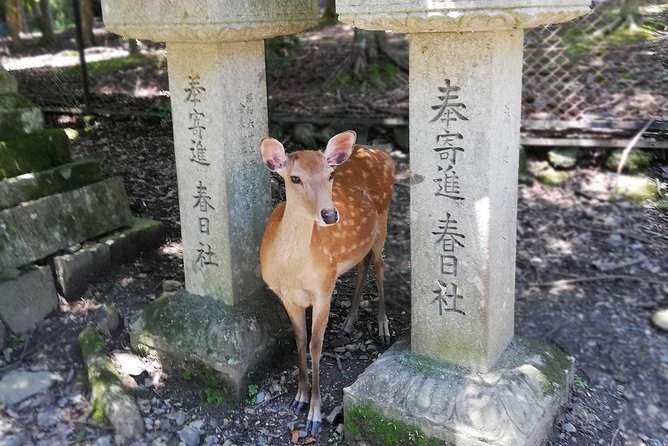
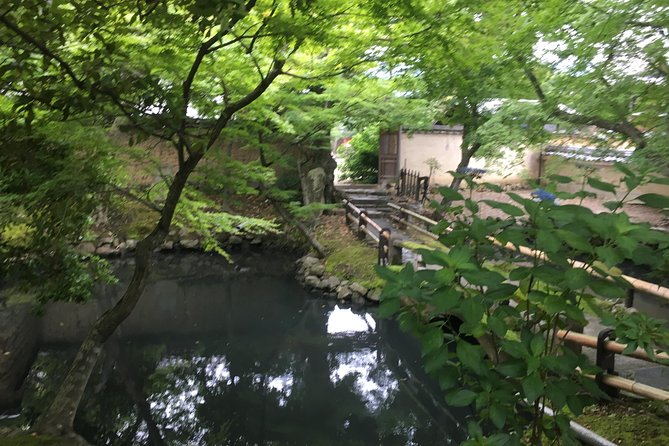
After lunch, the route continues to Kasuga Grand Shrine and the Kasugayama Primeval Forest area. The shrine is known for its red buildings and hundreds of stone and bronze lanterns, which give the approach a very different feel from Todaiji’s massive wooden hall.
The scheduled visit lasts about 30 minutes. Your guide can explain Shinto customs and show you how to make a respectful visit. This is useful if you want more than a quick photograph of a shrine gate. Guides have also explained how to make wishes and how religious practices here differ from those at Buddhist temples.
The forest setting helps vary the day. After the open deer park and the crowded approach to Todaiji, the wooded paths and lanterns create a calmer visual rhythm. You might find the ground uneven in places, and the walk still requires steady movement, but the route is not simply one temple courtyard after another.
The short timing is the main limitation. Kasuga Taisha has enough detail for a longer visit, especially if you enjoy lanterns, shrine architecture, and forest paths. This tour gives you an introduction, then keeps moving so you can reach Nara Park and Naramachi.
Feeding deer safely in Nara Park
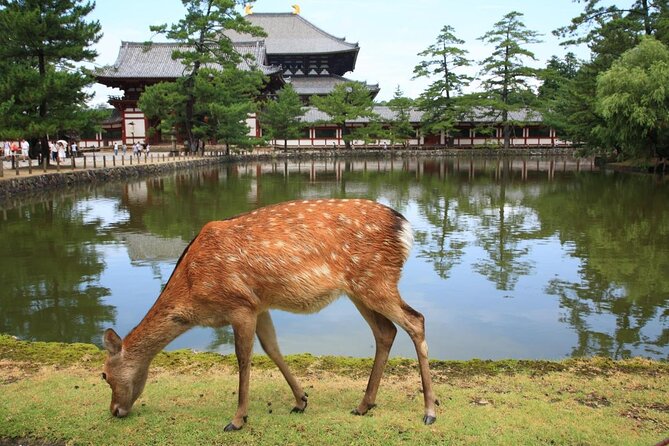
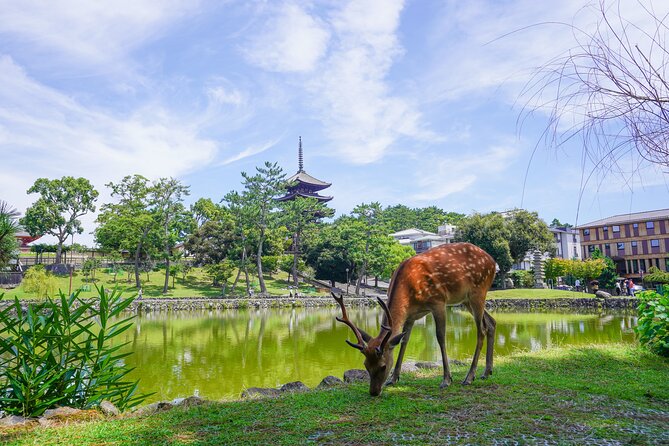
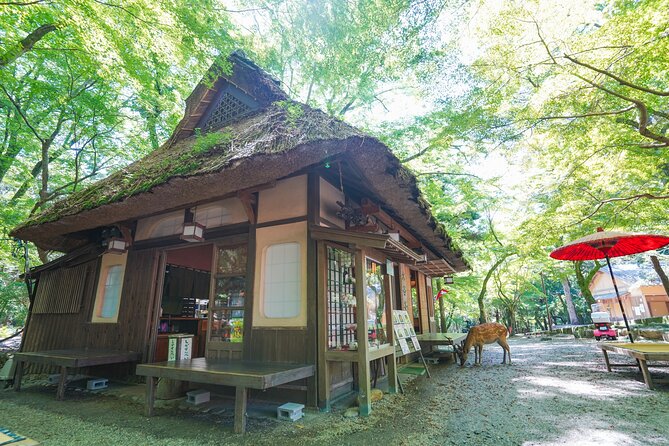
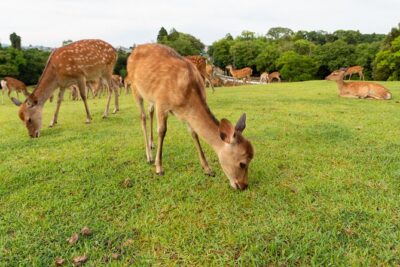
Nara Park is the most playful part of the experience. The deer roam freely, and you have time to see them at close range rather than treating them as a distant attraction. Their famous bowing gesture is charming, but the animals can also be persistent, particularly when they expect crackers.
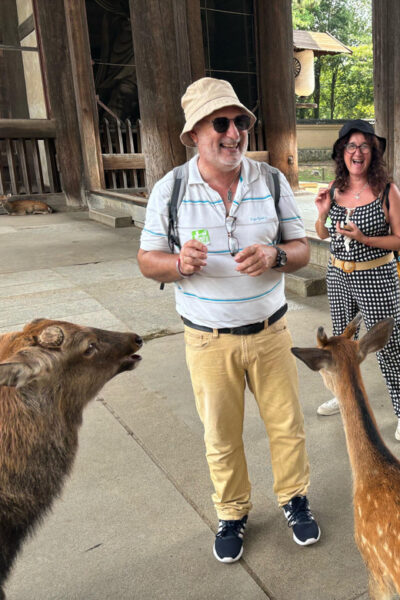
Your guide can explain how to feed them respectfully. A useful tip is to keep your hands visible once the crackers are gone, so the deer understand that the food has ended. Guides have also taken groups toward quieter areas near the forest, where younger and gentler deer may be found. Seeing a fawn is possible, but it should be treated as a fortunate moment, not a promised feature.
The park visit lasts about 30 minutes. That is enough for photographs and a close look at the deer, but you may wish for more time if children are especially excited or if you want to wander farther. The tour’s advantage is that you learn how to handle the encounter before the deer become too enthusiastic.
Be mindful of your surroundings. Deer are wild animals, not tame pets, and they may crowd you when food is present. Listen to the guide, avoid teasing them with crackers, and keep your belongings secure.
Walking through Naramachi’s merchant streets
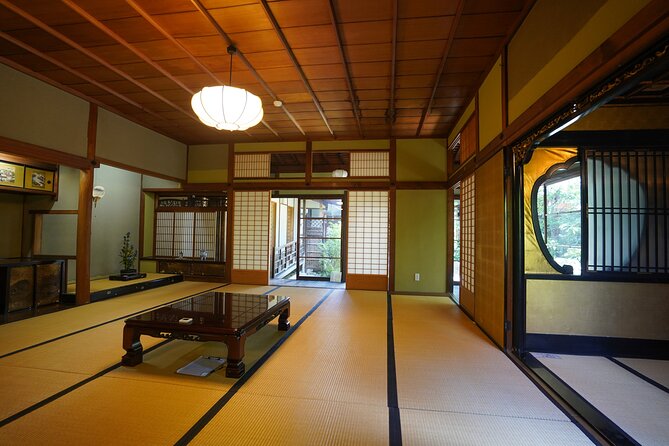
The final major stop is Naramachi, Nara’s old merchant quarter. Its historical buildings offer a welcome change from temple grounds and park paths. This is where the city feels more like an old neighborhood, with traditional townhouses and narrow streets replacing monumental religious buildings.
You enter Naramachi Nigiwai no Ie, a traditional merchant’s house, and learn how these older buildings were used. The visit gives you a look at ordinary town life, not just the grand architecture built for temples and shrines. That contrast is one of the tour’s best features.
You may also have time to see local craft shops and traditional foods. Past guide-led visits have included introductions to Nara sweets, knives, mochi, furoshiki, and sake tasting. These additions can vary, so do not book the tour expecting every one of them, but the neighborhood gives your guide room to add local suggestions.
The Naramachi portion lasts about 35 minutes and ends back at the original meeting point. If you find a shop or snack place you like, note its location and return after the tour. The guided schedule is useful for orientation, but it will not allow a long, unhurried shopping session.
How the guides shape the day
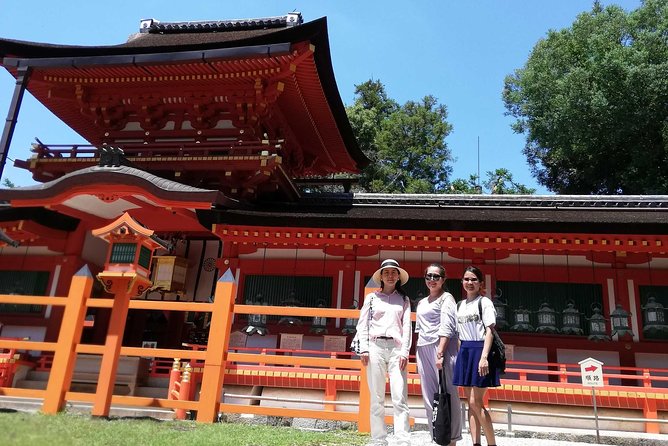
The guide is a major part of this experience. The itinerary has several well-known sights, but the quality of the day depends on how clearly the guide explains them and how well the pace fits your group.
Shin has been praised for his history explanations, friendly manner, photography, and ability to keep the route smooth. Yuki and Yuuki have been appreciated for patient pacing and personal attention. Miyabi has helped make temple visits more meaningful for people who had already seen several Japanese temples. Eri has offered careful advice about feeding deer and pointed out quieter spots.
Families should pay attention to the guide’s flexibility. Mari adjusted the route for a group’s mobility and energy levels, while other guides have kept children engaged with the deer, food, and hands-on customs. The small group limit helps here. With no more than eight people, it is easier to ask questions or request a brief pause than on a large coach excursion.
A private option is available if you want more control over the pace or group dynamic. The supplied details do not specify the private option’s exact price or arrangements, so check those before booking.
Is $105.45 good value?
The price is fair for what is included, especially if you want an efficient first visit. You receive roughly five hours with a local guide, entry to Todaiji and Kasuga Taisha, and lunch. You also get help with navigation, customs, deer etiquette, and finding the older parts of Nara.
The value is strongest for a first-time visitor who has only one day in Nara or is visiting as a day trip from another Japanese city. You can cover the major sights without spending time comparing routes or working out where to eat.
It is less compelling for someone who already knows Nara well, prefers long visits at individual temples, or wants complete control over meal choices. You are paying for structure and local guidance, not unlimited time at each stop.
Group discounts may be available, and the maximum group size is eight. A mobile ticket is provided. The tour starts and ends at the Statue of Gyoki-bosatsu, near public transportation, which makes it simple to connect with the rest of your day.
Weather, walking, and practical comfort
Nara’s weather can change the feel of the tour. Summer is hot and humid, with temperatures in Japan sometimes reaching 40°C, or 110°F. Bring water, wear a hat, and consider light clothing that dries quickly.
Winter can be cold, with temperatures sometimes falling to -5°C, or 20°F. One past group found the cold wind difficult, even though the sights and lunch made the outing worthwhile. Rain can also affect the day because much of the route is outdoors.
Most people can take part, and all ages are welcome. Still, you should tell the operator in advance about health concerns or mobility limits. There are short breaks, but the experience is not designed as a seated tour.
Free cancellation is available up to 24 hours before the start time. Changes or cancellations inside that window are not accepted for a refund. If poor weather causes the operator to cancel, you will be offered another date or a full refund.
Who should book this Nara walk?
I would choose this tour for a first visit, a family trip, or a short stay when you want the main sights explained in a sensible order. It is also a good fit if you want a local lunch and would rather not spend time figuring out deer etiquette, temple customs, or the route between Nara’s main areas.
You may prefer a private option if your group has mixed energy levels, specific interests, or younger children. The standard small group is already fairly intimate, but private guiding gives you more say over timing.
I would look elsewhere if you need gluten-free food, strict allergy control, or a fully accessible route with minimal walking. I would also skip it if you want to spend half a day at one temple. For most first-time visitors, though, this is a smart way to connect Nara’s grand monuments, living traditions, local food, and famous deer in one well-paced outing.
FAQ
How long does the Nara walking tour last?
The tour lasts approximately five hours, including the temple and shrine visits, lunch, Nara Park, and Naramachi.
Where does the tour start and finish?
It starts at the Statue of Gyoki-bosatsu at 27 Higashimuki Nakamachi, Nara. It ends back at the same meeting point.
What places are included?
The route includes Kofuku-ji Temple, Todaiji Temple, a traditional Japanese lunch, Kasuga Grand Shrine, Nara Park, and Naramachi.
Is lunch included in the price?
Yes. Lunch at a traditional Japanese restaurant is included.
Are entrance tickets included?
Admission to Todaiji and Kasuga Taisha is included. Kofuku-ji and Nara Park are listed as free admission stops.
How many people can join the tour?
The tour has a maximum of eight participants. A private option is also available.
Can children join the tour?
Yes. All ages are welcome, although the tour includes substantial walking and only a few short breaks.
Can the tour accommodate food allergies or gluten-free diets?
Gluten-free requests cannot be accommodated. Allergy-free meals are not guaranteed, and substitutions may not always be possible. Dietary requests should be made by the day before the tour.
What happens if the weather is poor?
The experience requires good weather. If the operator cancels because of poor weather, you will be offered another date or a full refund.
Just added in Japan
- 1 Day Tour: Snow Monkeys & Snow Fun in Shiga Kogen★ 5.0 · 52 reviews
- Fukuoka Your Way: 100% Customisable Private Tour with Local Guide★ 5.0 · 83 reviews
- Nagasaki Full-Day Private Tour with Government-Licensed Guide★ 5.0 · 66 reviews
- From Matsumoto/Nagano: Nakasendo Trail Walking Tour★ 4.9 · 33 reviews
- Private Fukuoka Tour with a Local, Highlights & Hidden Gems 100% Personalised★ 5.0 · 143 reviews
- Visit Gunkanjima Island (Battleship Island) in Nagasaki★ 4.0 · 32 reviews
- Best of Himeji Castle: 3hr Tour with Licensed Guide★ 5.0 · 186 reviews
- Hakone 8 hour Private Tour with Government-Licensed Guide★ 5.0 · 63 reviews
Nara & the Deer Park, compared.
World Heritage Kyoto & Nara Uji Authentic Matcha Experience
Read our review →
Kyoto/Osaka: Nara, Fushimi Inari Taisha, Arashiyama Bus Tour
Read our review →
Osaka/Kyoto: Arashiyama, Nara & Fushimi Inari Shrine w/Lunch
Read our review →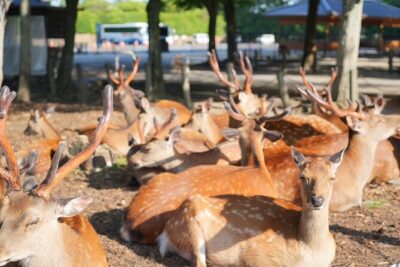
Nara Early Morning Tour (Kyoto or Osaka Departure Available)
Read our review →
Full Day Guided Tour to Kyoto and Nara from Osaka by Van
Read our review →
Browse the lists this tour appears in