
Reviewed · GO-KARTS
Official Japan Go-Kart Through Shibuya / Shinjuku
The great hook here is simple: you get to drive through Tokyo traffic in a go-kart, not watch the city from a bus window. The route can take you across Shibuya Scramble Crossing, past Tokyo Tower, and around central Tokyo landmarks while people wave, take photos, and wonder how this became part of their afternoon.
I like the clear safety setup and the way the guides keep the group together with a lead car and support vehicles behind. I also like the free photos and videos, plus the costumes, which turn an ordinary city ride into a cheerful bit of street theater. The main drawback is traffic. At busy times, you may spend plenty of the tour waiting at lights or moving slowly.
Key points to know before booking
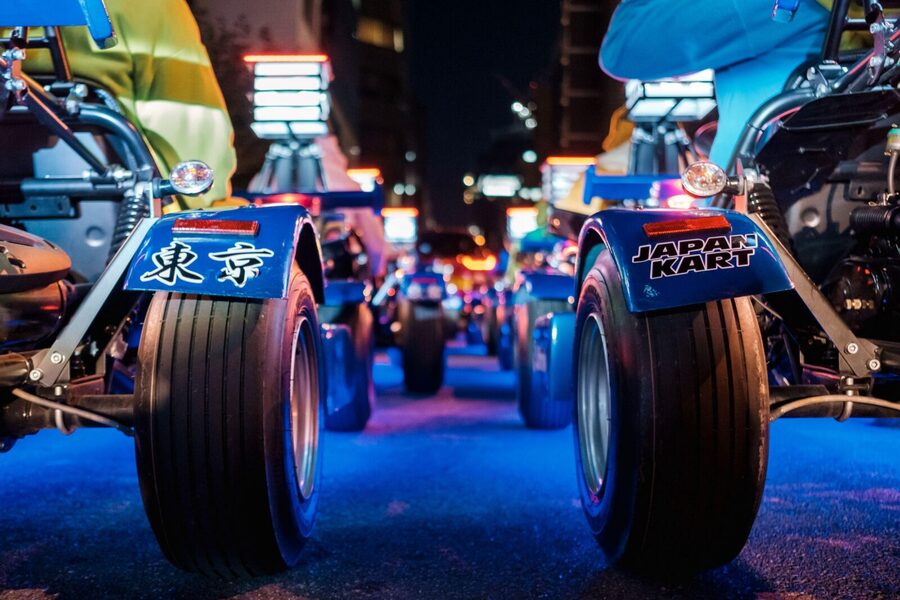
- Shibuya Scramble Crossing is the headline moment: You may cross the famous intersection more than once, depending on the route.
- The 90-minute route focuses on West Tokyo: Expect Shibuya, Harajuku, Omotesando, and Shinjuku Kabukicho.
- The two-hour route covers major central sights: Tokyo Tower, the Imperial Palace, Shibuya Crossing, and Tokyo Station are included.
- Your driving documents matter more than your costume: You need the correct Geneva Convention 1949 international permit, passport, and home-country license.
- Photos and videos are part of the experience: The staff may capture you on the route and share the files without an extra charge.
- Tokyo traffic shapes the ride: This is a city drive, not a high-speed kart race.
What this Tokyo go-kart tour is really like
This is best understood as a guided sightseeing drive with go-karts, rather than a racetrack activity. You sit low, feel the air, and see Tokyo from street level, but you also obey traffic lights, follow the group, and share the road with regular vehicles.
That difference matters. If you want fast laps and tight corners, this will not scratch that itch. If you want an unusual way to connect several Tokyo neighborhoods in one outing, it works much better.
The karts are designed for road driving, and the activity begins with a full safety briefing. The English-speaking instructor explains how the vehicles work and how to stay with the group. The staff also use a lead vehicle and support vehicles, including a motorcycle on some outings, to help guide the group and assist if anyone gets separated at a traffic light.
You do not need to bring food or drinks, and hotel pickup is not included. You start and finish at either the JAPANKART Kanda Branch or the JAPANKART Shinjuku Branch, depending on the option you reserve.
Other street-level rides in Tokyo:
- Flagship 2-Hours Official Street Go-Kart Tour – Tokyo Bay Shop
★ 5.0 · 4,974 reviews - Official Street Go-Kart in Shibuya
★ 5.0 · 3,435 reviews - Official Street Go-Kart Tour – Akihabara
★ 5.0 · 1,578 reviews
Choosing between the 90-minute and two-hour routes
The route length changes what kind of Tokyo you see.
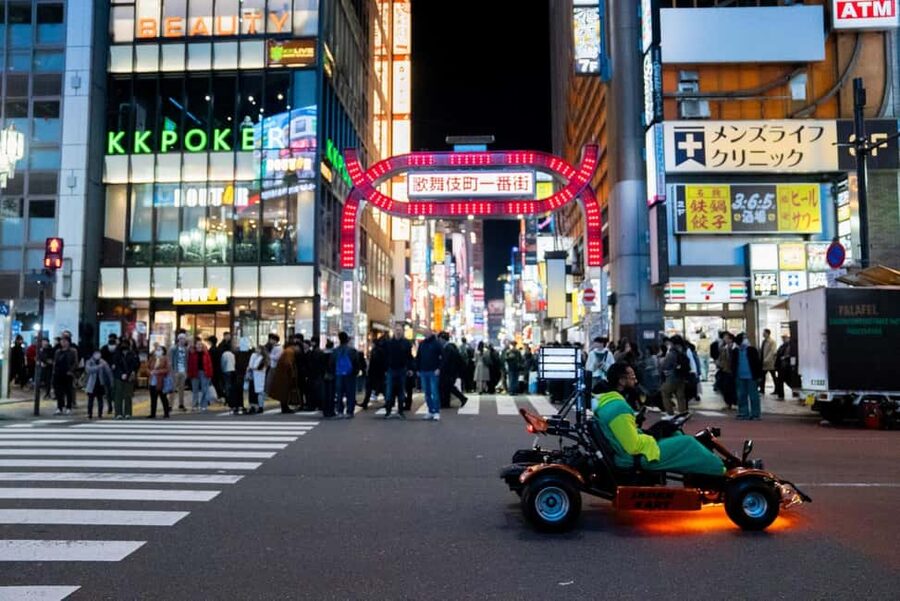
The 90-minute West Tokyo route includes Shibuya Scramble Crossing, Harajuku, Omotesando, and Shinjuku Kabukicho. This is the better choice if you want the city’s youth culture, shopping streets, fashion districts, and neon-heavy nightlife area in one compact ride.
The two-hour route is more spread out. It includes Tokyo Tower, Shibuya Crossing, the Imperial Palace, and Tokyo Station. You get more famous landmarks and a broader sense of central Tokyo, though the longer route also means more time exposed to weather and traffic.
The booking information also describes the activity as lasting two to three hours, while the route choices are listed as 90 minutes and two hours. Allow extra time for check-in, the briefing, costume selection, and returning equipment. Check the exact duration and meeting branch when you choose your option.
Some descriptions also mention possible routes through Ginza, Ueno, and Asakusa. These areas are not all part of the specific route described above, so check your selected departure and itinerary rather than assuming every landmark is included.
Rolling through Shibuya Scramble Crossing
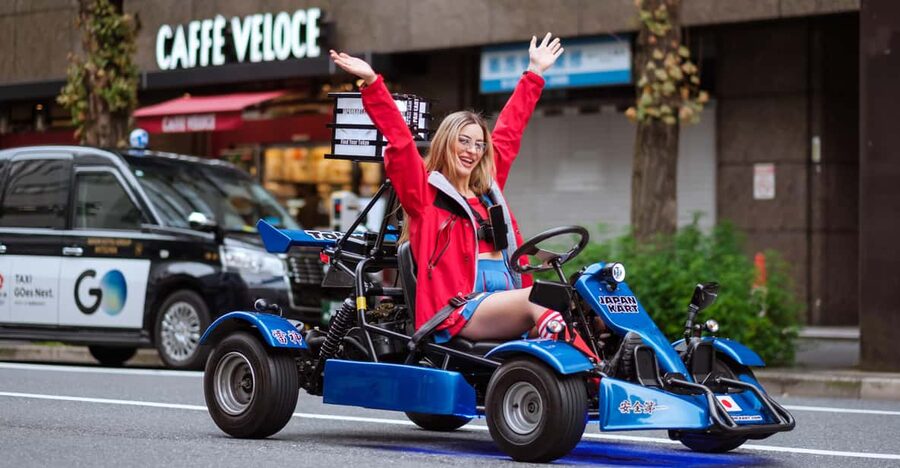
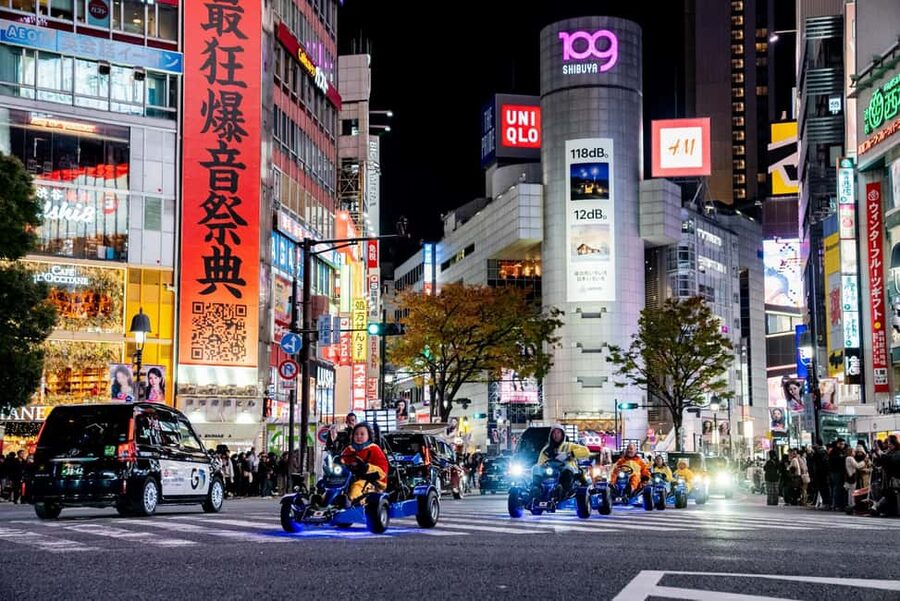
Shibuya Crossing is the star of the ride. From a go-kart, you experience the intersection from the middle of the street, surrounded by tall buildings, giant screens, pedestrians, and the full rhythm of Tokyo traffic.
The crossing is especially fun because it gives you a short burst of public attention. People may wave or take pictures as the costumed group passes through. You are not simply looking at Shibuya from a sidewalk. You become part of the scene for a few seconds.
The crossing may appear more than once on some routes, but the exact experience depends on traffic and the group’s schedule. At busy times, getting across Tokyo can involve a lot of stopping at traffic lights. That is not a flaw in the operation. It is simply what happens when you drive through one of the world’s busiest city centers.
If you want the most memorable photographs, keep your posture relaxed and follow the guide’s instructions. You should also secure your phone or camera properly. Mounts may be available for a GoPro or phone, but you should not handle a device carelessly while driving.
Harajuku, Omotesando, and Shinjuku Kabukicho
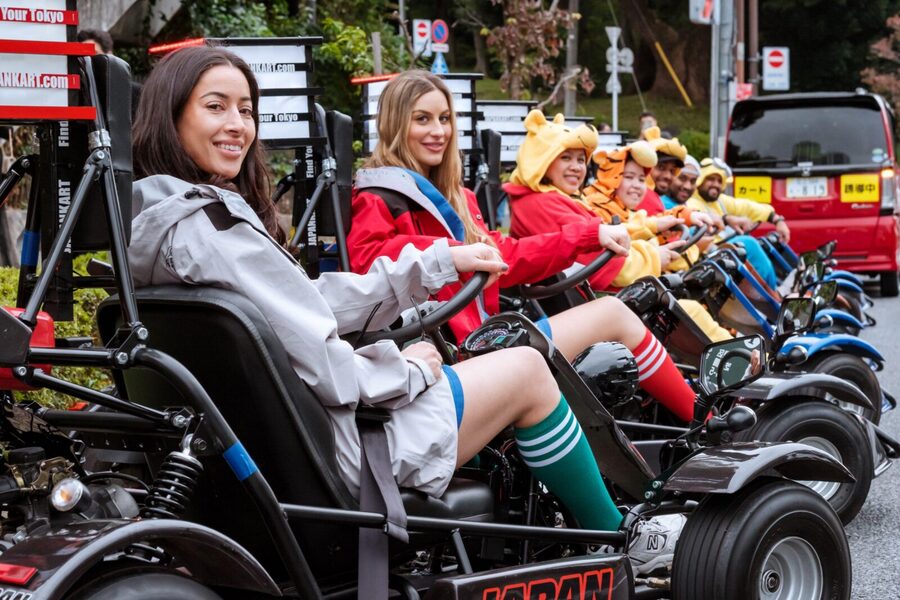
The West Tokyo route gives you a quick look at three very different districts.
Harajuku is associated with youth fashion, colorful shops, and a playful street scene. You do not stop for a shopping visit, but passing through gives you a sense of how quickly Tokyo changes from one neighborhood to the next.
Omotesando feels more polished, with broad avenues and high-end storefronts. From a kart, you notice the contrast between the tree-lined road, modern buildings, and the lively movement of pedestrians.
Shinjuku Kabukicho brings a different mood. It is known for bright signs, entertainment venues, and a dense nighttime atmosphere. A daytime ride will not look the same as an evening one, so consider your start time if the neon side of Tokyo appeals to you.
The advantage of this route is variety. The limitation is that you are passing through rather than exploring on foot. I would not use this tour as a replacement for spending time in Harajuku or Shinjuku. I would use it as a fast, unusual introduction before returning later to walk, shop, or eat.
Same base, a different sort of day:
- Mt Fuji and Hakone 1-Day Bus Tour Return by Bullet Train
★ 5.0 · 26,383 reviews - 1-Day Tokyo Bus Tour
★ 5.0 · 14,250 reviews - Tokyo: TOKYO SKYTREE® Admission ticket
★ 4.5 · 11,192 reviews - Tokyo: teamLab Planets TOKYO Digital Art Museum Entry Ticket
★ 4.6 · 9,779 reviews
Tokyo Tower, the Imperial Palace, and Tokyo Station
The two-hour route adds some of Tokyo’s most recognizable sights.
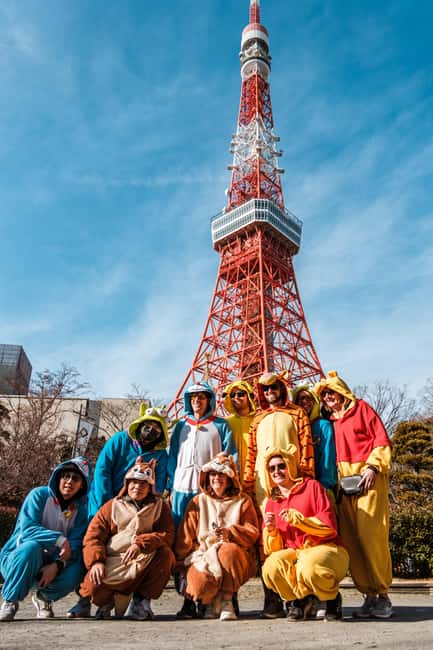
Tokyo Tower is an excellent photo stop because its orange and white structure rises clearly above the surrounding streets. The tour includes a break and photo opportunity here, giving you a chance to pause instead of viewing every landmark while moving.
The Imperial Palace is listed as a pass-by stop. You should not expect a palace tour or an extended visit inside the grounds. Its value is the setting and the sense of central Tokyo’s older imperial core among modern roads and office districts.
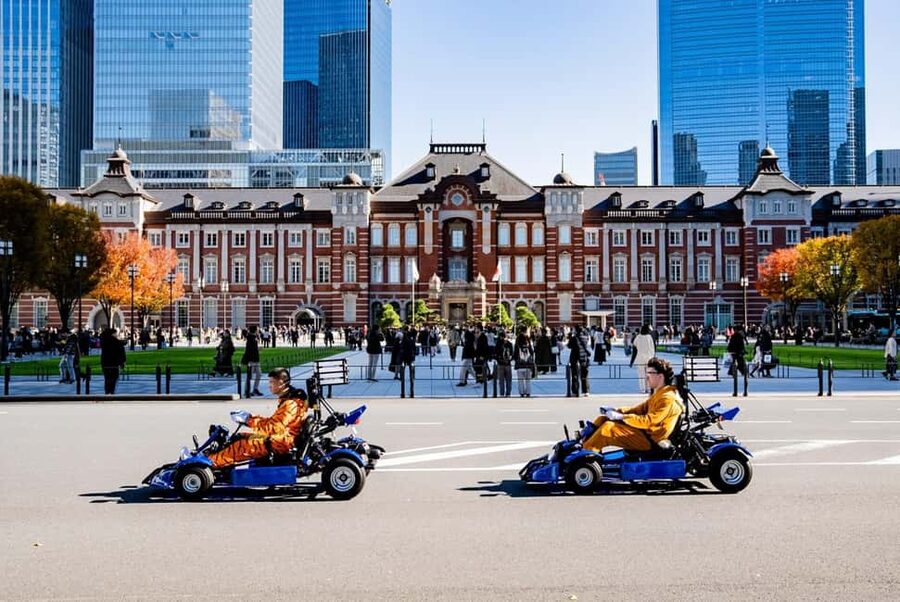
Tokyo Station offers a different kind of stop. Its historic red-brick exterior contrasts with the large modern city around it. Depending on traffic and the group’s timing, you may have time for photographs rather than a full look inside.
This route is a good fit if you want landmark photos and a broader city circuit. The West Tokyo route is better if your priority is Shibuya, Harajuku, and Shinjuku culture.
Costumes, cold-weather gear, and the photo package
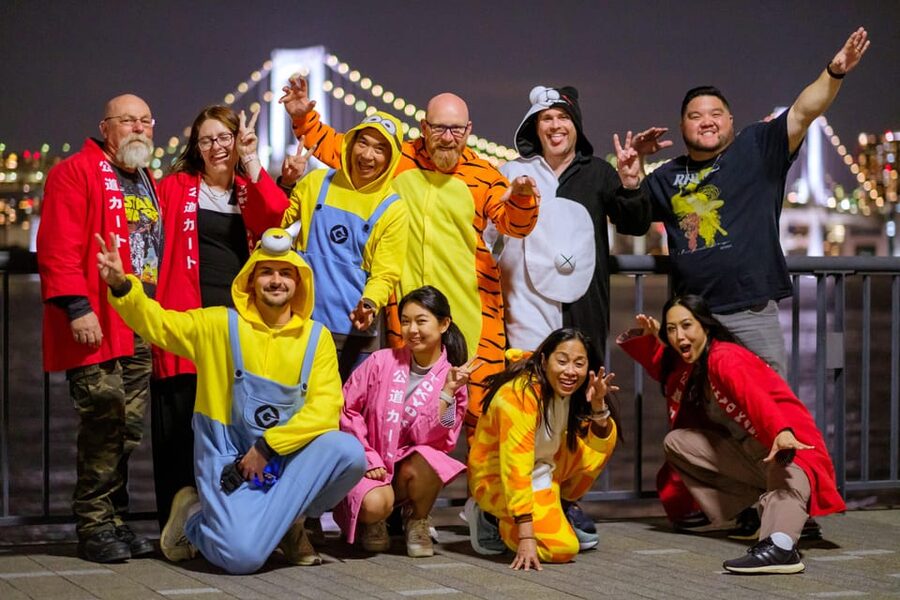
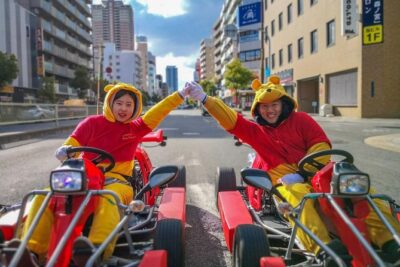
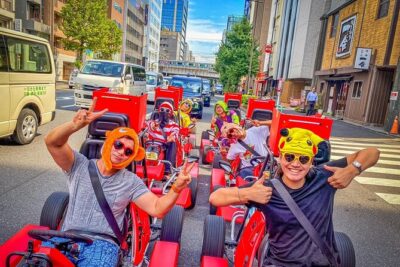
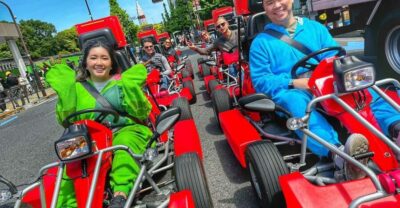
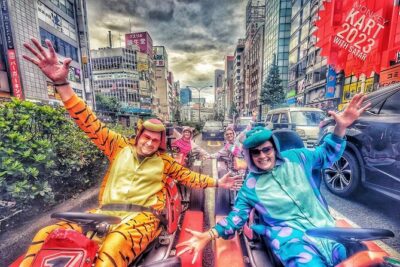
Costumes are included, along with jackets during colder months. The costumes are not a small detail. They make the ride visible and playful, and they explain why pedestrians often wave or stop to take pictures.
You should treat the costume choice as part of the fun, but do not let it distract you from the practical side. Sandals and flip-flops are not allowed, so wear secure shoes. Alcohol and drugs are prohibited, and you cannot bring alcoholic drinks into the vehicle.
The staff also take photos and videos during the ride and at stops. Files may be shared digitally at no extra cost, and some outings include group photos, moving footage, and individual shots along the route. This adds real value to the $122 price because you do not have to rely only on a quick phone picture taken at a traffic light.
The photo service also helps if you are traveling with a group. Everyone can be included without one person having to remain behind as the photographer.
Safety and how the group is managed
The safety briefing is a serious part of the experience. You receive instructions before leaving, and the staff guide the group on the road. The operation may place a lead car in front and a support vehicle or motorcycle behind, helping keep the group together.
You can still become separated briefly. Traffic lights and cars changing lanes may split the karts apart. The staff are prepared to guide you back toward the group, but you need to pay attention and follow instructions.
The karts are road vehicles, so basic confidence behind the wheel helps. You must be at least 18 years old. This is not an activity for someone who wants to sit back and let somebody else handle the driving.
The experience has a strong safety focus, but no road activity is completely free of stress. Tokyo traffic can feel intimidating if you rarely drive in large cities. If you are nervous, tell the staff before departure and listen closely during the practice and briefing period.
The paperwork can make or break your booking
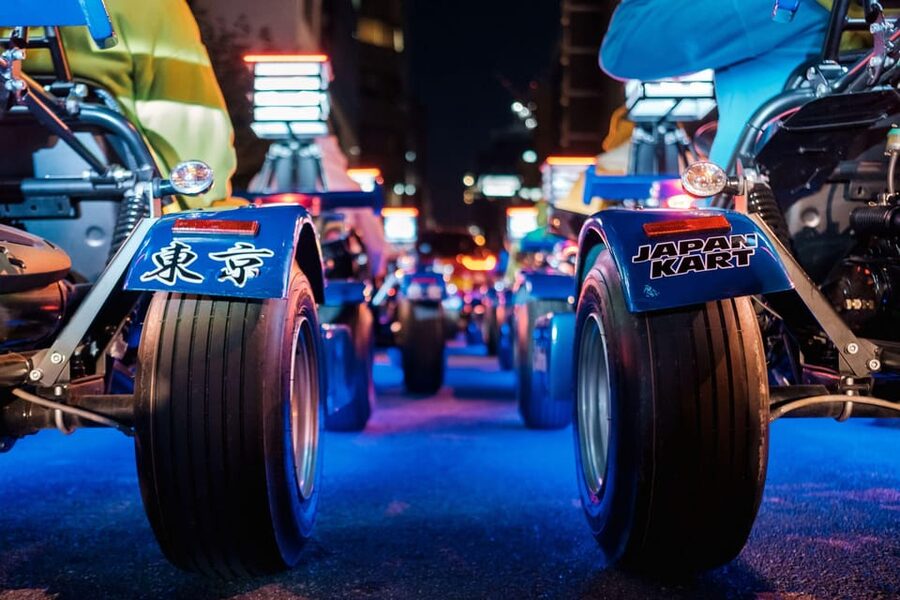
This is the most important practical warning. You must arrive with the correct original documents. The usual requirement is:
- Your driving license from your home country
- A hard-copy international driving permit issued under the Geneva Convention 1949 by an approved authority in your own country
- Your passport
The international permit must be a booklet, not a loose paper document. A permit issued under the Vienna Convention 1968 is not accepted in Japan. Do not assume that an online permit seller provides the document you need.
Examples of approved issuing organizations include AAA or AATA in the United States, AAA in Australia, AA or RAC in the United Kingdom, and CAA in Canada. The key point is that the permit must come from an approved issuer in your own country.
Drivers with licenses from Switzerland, Germany, France, Taiwan, Belgium, Estonia, or Monaco follow a different process. You need the original license, your passport, and an official Japanese translation from the authorized organization, such as JAF.
US military SOFA license holders need the combination of an active military ID and a stateside driver’s license.
Bring physical documents. If you arrive without the required license, permit, passport, or translation, you can be refused participation without a refund. This is the one part of the booking where a last-minute check is not enough. Confirm the rules before paying.
Is $122 a fair price?
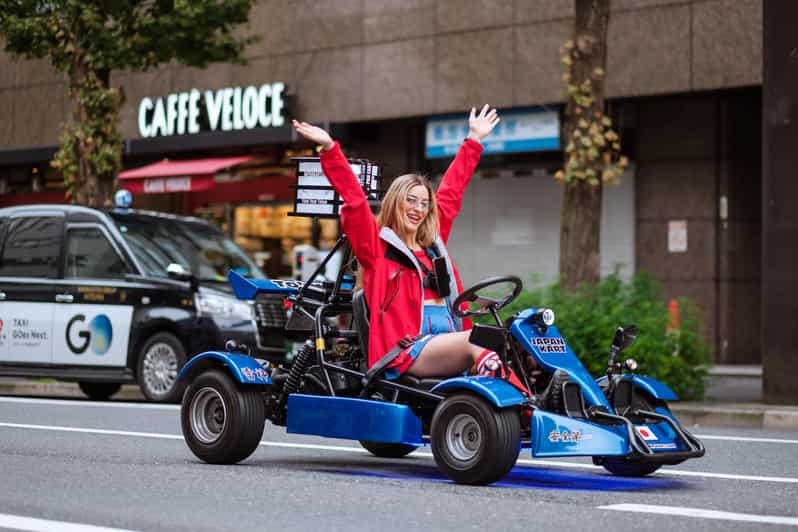
At $122 per person, this is not a cheap way to move around Tokyo. Public transport will cost far less, and you can see many of the same neighborhoods on foot or by train.
The value comes from the activity itself. You are paying for a road-ready kart, fuel, safety briefing, English-language guidance, costume use, cold-weather equipment when needed, group management, and photos or videos. You also get an experience that is difficult to duplicate with normal sightseeing.
I would call it good value for someone who enjoys unusual activities, wants memorable photographs, or is traveling with friends. I would call it less attractive if your main goal is efficient sightseeing or quiet time at Tokyo’s landmarks.
Traffic can also affect the value. A two-hour booking does not mean two hours of uninterrupted driving. You may spend part of it stopped at lights or moving slowly. The ride is still enjoyable, but you should book it for the novelty and street-level view, not for speed.
Picking the best time and season
The ride is exposed to the weather. Warm months can be hot, and one outing in September reached 35 degrees Celsius. Staff may provide ice water during very hot conditions, but you should still dress sensibly and expect the heat to affect your comfort.
Cold months are more manageable because jackets are available. Rain can make the drive harder and colder, so check the forecast and bring suitable layers. If bad weather cancels the tour, you can receive a full refund or reschedule if space is available.
Late afternoon can bring heavy traffic. That may give you more city atmosphere, but it can also mean more time at red lights. Evening rides offer a better chance of seeing Tokyo lit up, while daytime rides make landmarks and photographs easier to see.
If this is a priority activity, I would schedule it near the beginning of your Tokyo stay. That gives you room to reschedule if weather or mechanical trouble affects the original departure.
Who will enjoy this most?
I would recommend this to adults who are comfortable driving, enjoy a little public attention, and want a playful way to see several Tokyo districts. It works especially well for couples, groups of friends, and families with adult children.
It is also a good choice for a repeat visitor who has already seen Tokyo by train and wants a different view of the city. The ride connects familiar places in a new way.
I would hesitate to recommend it to anyone who dislikes traffic, feels uneasy driving in a foreign country, or wants detailed time at each landmark. You should also skip it if you cannot obtain the required permit or official translation. No costume or photo package can fix a documentation problem at check-in.
Final verdict: book it for the experience, not the speed
You should book this Japan go-kart tour if driving through Shibuya, posing in a costume, and collecting unusual Tokyo photos sounds more appealing than a standard sightseeing loop. The staff support, clear instructions, and organized escort vehicles make the road experience feel carefully managed.
Choose the 90-minute West Tokyo route for Harajuku, Omotesando, Shibuya, and Kabukicho. Choose the two-hour route for Tokyo Tower, Tokyo Station, the Imperial Palace, and a wider central Tokyo circuit.
I would book it, but only after checking your driving documents and accepting the traffic. If you do that homework, this can become one of the most memorable ways to see Tokyo at street level.
FAQ
How long does the go-kart tour last?
The experience is listed as lasting two to three hours overall. The route choices include a 90-minute tour and a two-hour tour, so check the exact option and starting time when booking.
How much does the activity cost?
The listed price is $122 per person.
Where does the tour start?
The available starting branches are JAPANKART Kanda Branch and JAPANKART Shinjuku Branch. Your meeting point depends on the option you book.
What landmarks can I see?
The routes may include Shibuya Scramble Crossing, Harajuku, Omotesando, Shinjuku Kabukicho, Tokyo Tower, the Imperial Palace, and Tokyo Station. Some activity information also mentions Ginza, Ueno, and Asakusa, so confirm the exact route selected.
What driving documents do I need?
Most drivers need their home-country driving license, a hard-copy international driving permit issued under the Geneva Convention 1949 by an approved authority in their own country, and their passport.
Are Vienna Convention 1968 international permits accepted?
No. International driving permits issued under the Vienna Convention 1968 are not accepted for this activity.
What if my license is from France, Germany, Switzerland, Taiwan, Belgium, Estonia, or Monaco?
You need your original driving license, an official Japanese translation from the authorized organization, and your passport.
Are photos included?
Yes. The staff take photos and videos during the activity, and the files may be shared digitally without an additional charge.
Can I cancel for a refund?
You can cancel up to 24 hours before the tour starts for a full refund. There is no refund if you cannot participate because you forgot the required license, permit, passport, or translation. If bad weather cancels the tour, you can receive a full refund or reschedule if availability allows.
Just added in Tokyo
- The 10 Tastings of Tokyo With Locals: Private Street Food Tour★ 5.0 · 48 reviews
- Small Town in the Big City: Tasting Tokyo’s Kichijoji★ 5.0 · 195 reviews
- Small Town in the Big City: Tasting Tokyo’s Kichijoji★ 5.0 · 16 reviews
- EXCLUSIVE Tokyo Secret: Kichijoji Small-Group Food & Bar Hopping★ 5.0 · 29 reviews
- Explore Kichijoji: Walk Through One of Tokyo’s Beloved Districts★ 5.0 · 21 reviews
- :Tokyo,Shibuya/ Pro Photography in Kimono / English-Friendly★ 5.0 · 26 reviews
- 【R34】Tokyo:Private Daikoku tour in Modified R34★ 4.9 · 92 reviews
- Tokyo:Calligraphy &Make your original folding fan in Asakusa★ 5.0 · 62 reviews
Go-Karts, compared.
Flagship 2-Hours Official Street Go-Kart Tour – Tokyo Bay Shop
Read our review →
Tokyo Go Kart: Asakusa, Skytree, and Akihabara **IDP MUST**
Read our review →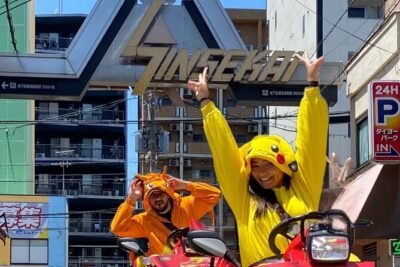

Asakusa, Skytree & Akhihabara Go-Kart City Experience
Read our review →Browse the lists this tour appears in