Reviewed · TOURS IN TOKYO
Explore Kichijoji: Walk Through One of Tokyo’s Beloved Districts
Kichijoji’s best feature is the way everyday Tokyo unfolds in a compact area. In two hours, you move from a busy shopping street to a quiet Zen temple, then through old-fashioned arcades and small specialty shops before ending at Harmonica Yokocho, where one drink and two yakitori skewers are included.
I like the small group size, capped at eight, and the local focus. Guides including Kate and Michi explain why Kichijoji developed as it did, while pointing out places you could easily miss alone. I also like the balance of old shops, modern cafés, and neighborhood history.
The main drawback is time. Two hours gives you a useful introduction, but not enough for a long meal, serious shopping, or a full visit to every side street. The 3 p.m. start also means this works best as an afternoon neighborhood walk, not as a full-day Kichijoji outing.
Key points to know before booking
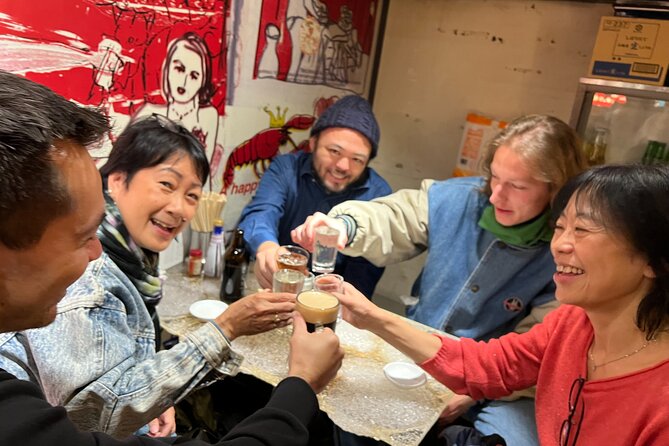
- The tour ends with food and a drink: You receive one drink and two yakitori skewers at Harmonica Yokocho.
- The group stays small: A maximum of eight people allows more room for questions and conversation with the guide.
- The route mixes four different sides of Kichijoji: Sunroad, Gesso-ji Temple, Nakamichi-dori and Harmonica Yokocho each feel distinct.
- Guides bring local context: Kate and Michi are named guides who explain both the area’s past and its current shops.
- It is built for first-time visitors: The walk helps you understand why Kichijoji is known as a desirable place to live.
- Plan around a two-hour window: The 3 p.m. start and short duration make it easy to fit after another Tokyo activity, including the Ghibli Museum.
Why Kichijoji makes a good break from central Tokyo
Kichijoji is in Musashino, west of central Tokyo, and is about a 15-minute train ride from Shibuya or Shinjuku. That makes it easy to reach, yet the area has a more local feel than Tokyo’s biggest shopping and entertainment districts.
The appeal is not one grand sight. It is the combination of ordinary pleasures: a covered shopping street, a small temple, independent stores, antique pottery, cafés, sweets shops and narrow lanes filled with bars. You get a look at how people shop, eat and spend time in a popular residential district.
This tour is useful because Kichijoji can be hard to read on your own. The streets do not form one obvious sightseeing circuit, and the best places are often small businesses rather than famous monuments. A guide gives the neighborhood a storyline, linking its past to the shops and streets you see today.
The area’s history reaches back around 350 years, when an earthquake helped trigger the creation of the town. Gesso-ji Temple also helps explain why Kichijoji formed where it did. That context turns a pleasant walk into something more meaningful: you begin to understand why the district developed its particular mix of commerce, homes and gathering places.
Other experiences people book in Tokyo:
- Mt Fuji and Hakone 1-Day Bus Tour Return by Bullet Train
★ 5.0 · 26,383 reviews - 1-Day Tokyo Bus Tour
★ 5.0 · 14,250 reviews - Tokyo: TOKYO SKYTREE® Admission ticket
★ 4.5 · 11,192 reviews
Starting on Sunroad’s 300-meter shopping street
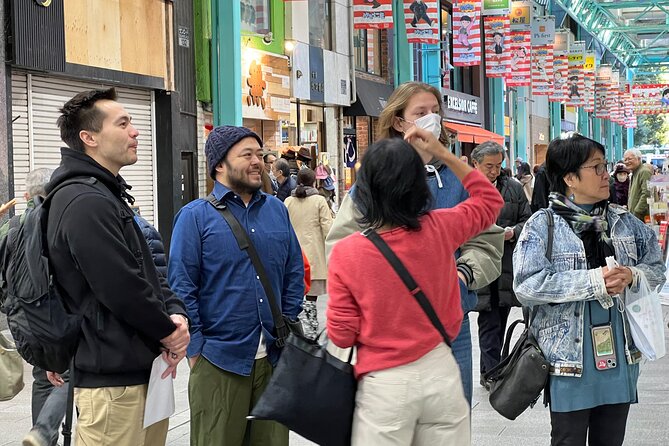
The walk begins at Sunroad, a covered shopping street stretching about 300 meters and lined with roughly 150 shops. It is a practical first stop because it quickly shows you the commercial side of Kichijoji.
You can expect a steady mix of stores rather than one big attraction. Sunroad is the kind of place where daily errands, casual shopping and local eating happen side by side. The guide can help you notice how the street fits into neighborhood life instead of treating it as a simple shopping stop.
Sunroad was voted Tokyo residents’ second-favorite shopping street in 2022, after Ameyoko. That detail gives you a useful comparison with one of Tokyo’s better-known market areas, but Sunroad has its own character. It feels more like a town center than a sightseeing market.
I like beginning here because it puts Kichijoji in practical terms. You are not starting with a grand historical speech or a postcard view. You start where people buy things, meet friends and move through the neighborhood. For a first visit, that is a good way to get your bearings.
The drawback is that 15 minutes is enough only for an introduction. If a shop catches your eye, you may need to return later. The tour is designed to show you the street and explain its role, not to provide extended shopping time.
Finding Kichijoji’s story at Gesso-ji Temple
After Sunroad, the walk turns toward Gesso-ji Temple. This quiet Zen Buddhist temple is important because it is tied directly to the formation of Kichijoji. It is not simply a peaceful stop added for variety. It helps explain the neighborhood’s name and early development.
The contrast with Sunroad is immediate. After the commercial energy of the shopping street, the temple offers greenery and a quieter setting. Fifteen minutes here gives you time to pause, listen to the guide and see how a religious site can remain part of an active urban district.
The temple also provides a chance to notice local customs. One account of the walk included a Tanabata celebration, with the chance to write a wish on a tanzaku, a small strip of paper, and hang it as part of the festival. That kind of seasonal detail is exactly what a local guide can bring into view, though the specific activity may depend on when you visit.
I especially value this stop for visitors who want more than shopping. The temple gives the route a sense of place and time. It also prevents Kichijoji from being reduced to cafés and boutiques, which would miss an important part of the district.
You should keep your expectations measured. This is a brief visit, not a long temple tour. If you want extensive Buddhist history or time for quiet reflection, you will need to return independently.
Old favorites and new ideas on Nakamichi-dori

The longest portion of the walk takes place around Kichijoji Nakamichi-dori and nearby streets. You have about an hour here, which is where the district’s personality comes through most clearly.
This area brings older businesses together with newer cafés, sweets shops and independent boutiques. Some shops have served the neighborhood for more than half a century, while others reflect newer tastes. That mix is one of the strongest reasons to book the walk rather than simply follow a standard Tokyo shopping route.
The guide can point out artisan stores and places that are easy to overlook. Antique shops are a particular highlight. You might find pottery gathered from different parts of Japan, offering a direct look at traditional craft through objects you can actually examine and buy.
That is more useful than a broad lecture about Japanese culture. You can see how design, materials and local shopping habits meet in a real neighborhood. If you enjoy ceramics, vintage goods or small specialty stores, allow yourself extra time after the tour to revisit the places that interest you.
The area also helps explain why Kichijoji is considered one of Japan’s most desirable places to live. It offers city conveniences without feeling like a district made only for office workers or tourists. Shopping, food, culture and residential life sit close together.
The guide’s role matters most here. Kate is described as warm and well informed about the area, while Michi is especially good at explaining both old and new Kichijoji. A good guide can tell you why a store matters, how a street has changed and what makes a particular corner worth noticing.
The hour can pass quickly. You will not have time to browse every shop, sit down for a full café break and take long detours. Think of this section as a well-chosen introduction, followed by a list of places to explore at your own pace.
Same base, a different sort of day:
- Tokyo: teamLab Planets TOKYO Digital Art Museum Entry Ticket
★ 4.6 · 9,779 reviews - Mt Fuji & Hakone Cruise, Drum Show Bullet Train 1 Day from Tokyo
★ 4.0 · 7,413 reviews - Tokyo: Sumo Show Experience with Chicken Hot Pot and a Photo
★ 4.8 · 6,678 reviews - Tokyo: Shinjuku Food Tour (13 Dishes at 4 Local Eateries)
★ 5.0 · 6,603 reviews
Finishing among tiny bars at Harmonica Yokocho
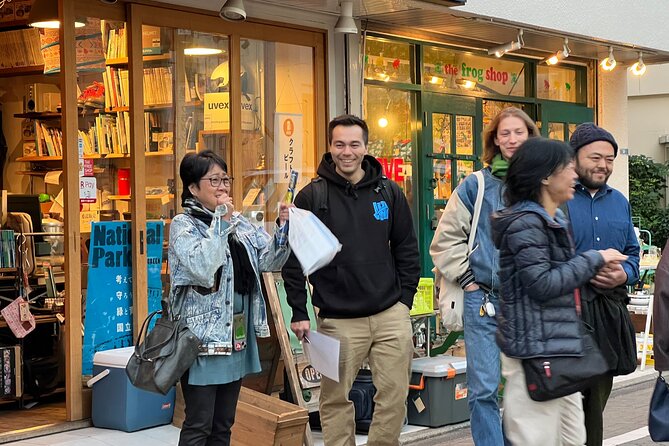
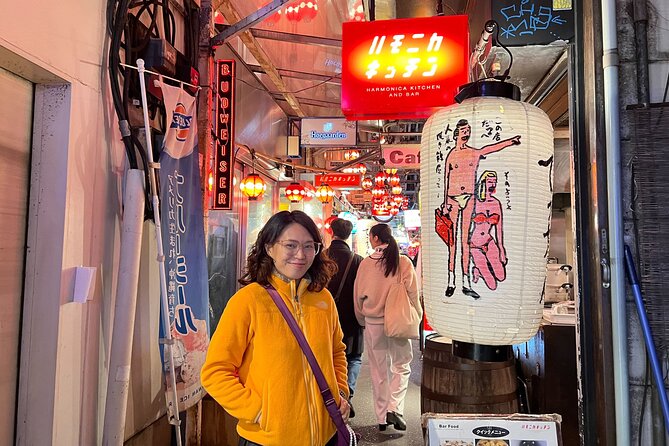
The walk ends at Harmonica Yokocho, a narrow maze of small bars and eateries near the north exit of Kichijoji Station. Its name refers to the way its tight lanes resemble the reeds of a harmonica.
This is the most atmospheric stop on the route. Red lanterns, narrow passages and compact eating places create a setting unlike the broad shopping arcades earlier in the walk. The alley began as a post-war black market, so it also carries a direct connection to Tokyo’s difficult rebuilding years.
You receive one drink and two yakitori skewers here. That inclusion matters because it gives you a simple way to experience the alley rather than merely walk past it. The food is not meant to be a full dinner, but it is a fitting finish to a neighborhood tour.
I would treat the included snack as a sample, not a meal replacement. If you are hungry, plan to eat afterward, perhaps by returning to the alley or choosing another nearby restaurant. The tour information does not promise a wider food selection or a longer stay.
Harmonica Yokocho is also a practical ending point. It is a short walk from the north exit of Kichijoji Station, so you can continue exploring, catch a train or make your own dinner plans without retracing the route.
What the two-hour format gives you
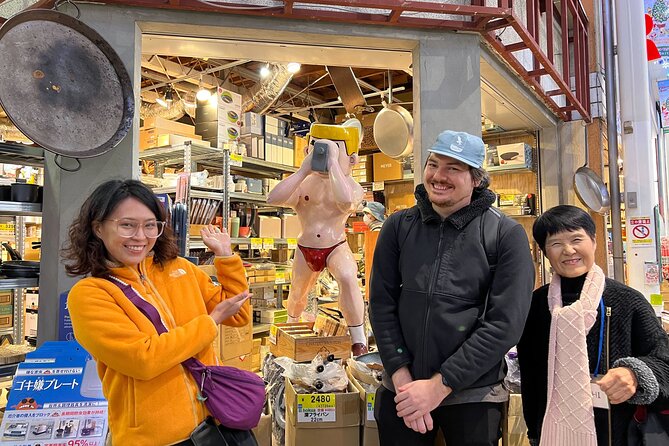
Two hours is a sensible length for this kind of introduction. The route has four stops, and each one shows a different part of Kichijoji. You get enough explanation to understand the area without giving up half a day.
The short format also works well after a visit to the Ghibli Museum, which is located near Kichijoji. The 3 p.m. start may fit neatly after another afternoon plan, though you should leave enough time to reach the meeting point at 1-chōme-1-24 Kichijōji Minamichō.
The tradeoff is depth. You will not have time to explore every side street, linger at the temple or shop at length. If you already know Kichijoji well, the pace may feel introductory. For a first visit, that is less of a problem because the guide helps you decide what deserves a longer return visit.
The maximum group size is eight. That is small enough for a more personal walk and makes it easier to ask about shops, food or local customs. It also means the experience may feel more like a guided neighborhood conversation than a large sightseeing circuit.
Is $45.98 a fair price?

At $45.98 per person, the value rests on the guide rather than on admission tickets. Sunroad, Gesso-ji Temple, Nakamichi-dori and Harmonica Yokocho do not require separate entry fees, so you are paying for local explanation, route planning, group access and the included drink and yakitori.
That can be worthwhile in Kichijoji, where the strongest attractions are small and scattered. A map will show you the station and shopping streets, but it will not necessarily explain why the temple matters, which old stores are worth attention or how the post-war alley fits into the neighborhood’s story.
The price is less compelling if you want a food tour with several tastings or a shopping tour with long stops. Only one drink and two skewers are included, and the entire experience lasts about two hours.
I see it as a good-value orientation walk for a first visit, particularly if you want cultural context and a local guide. Afterward, you can use what you learned to return to your favorite shops or stay for dinner.
Who should book this Kichijoji walk?
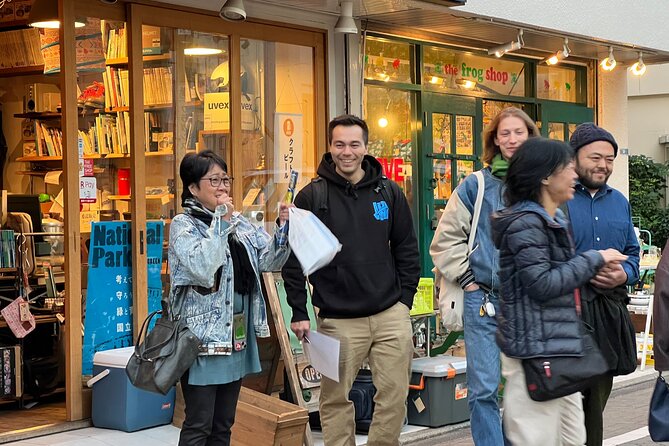
I would recommend it most to first-time visitors who want to see a more ordinary, lived-in side of Tokyo. It suits people who enjoy walking, small stores, local history and food in modest portions.
It is also a good choice if you are staying in Shibuya or Shinjuku and want an easy half-day trip beyond the most familiar central districts. The short train ride and two-hour schedule make Kichijoji simple to add to a wider Tokyo plan.
The tour should appeal to anyone interested in Japanese pottery, antique goods and independent shops. The time around Nakamichi-dori is the part to value if you prefer local businesses over major department stores.
You may want a different experience if your priority is a long meal, extensive shopping or a major landmark. This is a neighborhood introduction, not a museum tour, temple pilgrimage or full food crawl.
Confirmation arrives within 48 hours, subject to availability. The activity accepts most people, uses a mobile ticket and requires a minimum number of participants. You can cancel for a full refund up to 24 hours before the start time. Cancellations or changes inside that window are not refunded or accepted.
My verdict on the Kichijoji experience
I would book this walk if you want a clear, friendly introduction to a Tokyo district that rewards attention more than speed. The route connects commercial streets, a temple, independent shops and a post-war alley in a way that gives Kichijoji a human scale.
The strongest reasons to go are the small group, the local guides such as Kate and Michi, and the useful balance between old and new. The included yakitori and drink add a pleasant finish, though you should not expect them to replace dinner.
Book it early if your schedule is fixed, since it is often reserved about 33 days ahead. Choose it for context, conversation and neighborhood character. Skip it only if you need more time for shopping or want a major attraction instead of a guided look at daily Tokyo life.
FAQ
Where does the Kichijoji tour begin?
The tour begins at 1-chōme-1-24 Kichijōji Minamichō, Musashino, Tokyo 180-0003, Japan.
What time does the tour start?
The tour starts at 3:00 pm.
How long does the experience last?
The walking experience lasts approximately two hours.
Where does the tour end?
It ends at Harmonica Yokocho, 1-chōme-1 Kichijōji Honchō, Musashino, Tokyo 180-0004, Japan. The alley is a short walk from the north exit of Kichijoji Station.
Is food or a drink included?
Yes. The experience includes one drink and two yakitori skewers at Harmonica Yokocho.
How large is the group?
The activity has a maximum of eight participants.
Can I cancel for a full refund?
Yes. You can cancel at least 24 hours before the start time for a full refund. Cancellations and changes made less than 24 hours before the start time are not accepted or refunded.
Just added in Tokyo
- The 10 Tastings of Tokyo With Locals: Private Street Food Tour★ 5.0 · 48 reviews
- Small Town in the Big City: Tasting Tokyo’s Kichijoji★ 5.0 · 195 reviews
- Small Town in the Big City: Tasting Tokyo’s Kichijoji★ 5.0 · 16 reviews
- EXCLUSIVE Tokyo Secret: Kichijoji Small-Group Food & Bar Hopping★ 5.0 · 29 reviews
- :Tokyo,Shibuya/ Pro Photography in Kimono / English-Friendly★ 5.0 · 26 reviews
- 【R34】Tokyo:Private Daikoku tour in Modified R34★ 4.9 · 92 reviews
- Tokyo:Calligraphy &Make your original folding fan in Asakusa★ 5.0 · 62 reviews
- Tokyo: Allstar Food Tour★ 4.7 · 29 reviews
Tours in Tokyo, compared.
Mt Fuji and Hakone 1-Day Bus Tour Return by Bullet Train
Read our review →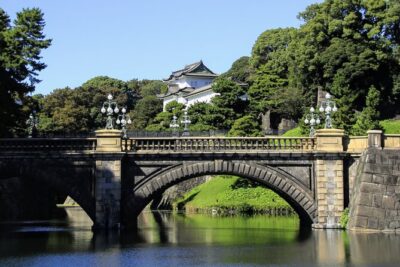

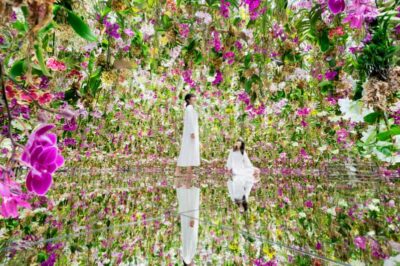
teamLab Planets TOKYO Digital Art Museum Entry Ticket
Read our review →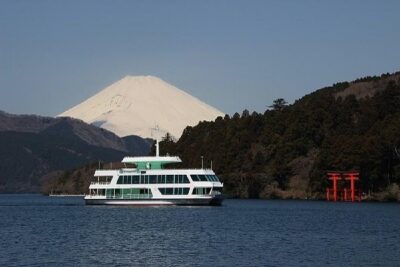
Mt Fuji & Hakone Cruise, Drum Show Bullet Train 1 Day from Tokyo
Read our review →
Sumo Show Experience with Chicken Hot Pot and a Photo
Read our review →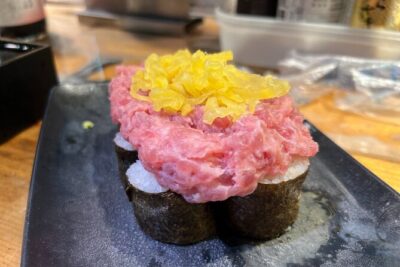
Shinjuku Food Tour (13 Dishes at 4 Local Eateries)
Read our review →