
Reviewed · HIROSHIMA & MIYAJIMA DAY TRIPS
Experience the Soul of Hiroshima: A Peaceful Koto Workshop
The most moving part of this Hiroshima experience is simple: you learn to play a traditional koto, then join a small group performance connected to the city’s message of peace. The final piece, Echo of Serenity, lets music carry the feeling of remembrance without turning the class into a formal memorial ceremony.
I like the hands-on pace and the clear English teaching. I also like the connection to Fukuyama City, where more than 70 percent of Japan’s kotos are made. The main drawback is time: 90 minutes is enough to play a full beginner piece, but not enough to become comfortable with every part of the instrument.
Key points to know before booking
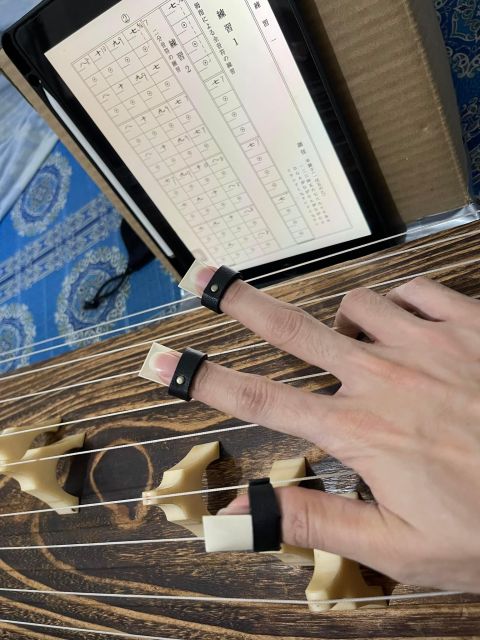
- Play a 13-string koto yourself, rather than only watching a performance.
- Learn in English, with no Japanese language skills or musical background required.
- Build toward a group performance of the peace-themed piece Echo of Serenity.
- Use authentic Fukuyama-made kotos, linked to Japan’s leading koto-making region.
- Take home a performance video and folded origami crane as reminders of Hiroshima.
- Expect a small class of no more than six people, with ages 10 and up.
Why this koto class belongs on a Hiroshima itinerary
Hiroshima is a city where history is never far away. A visit to the Peace Memorial Park can be quiet and serious, and this workshop gives you another way to think about the city’s message. Instead of only reading about peace, you take part in a short musical act built around listening, patience, and cooperation.
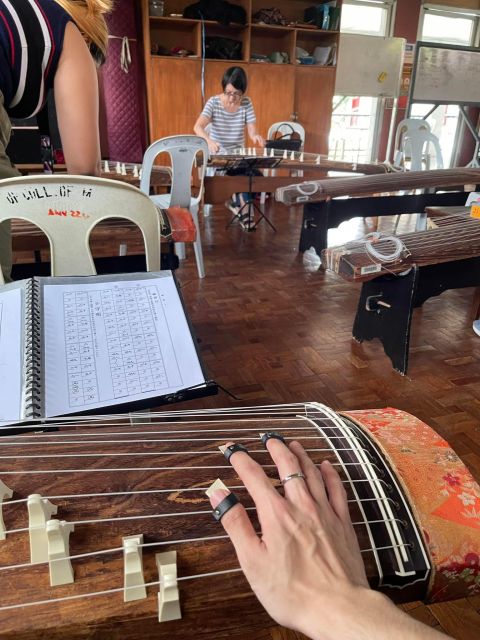
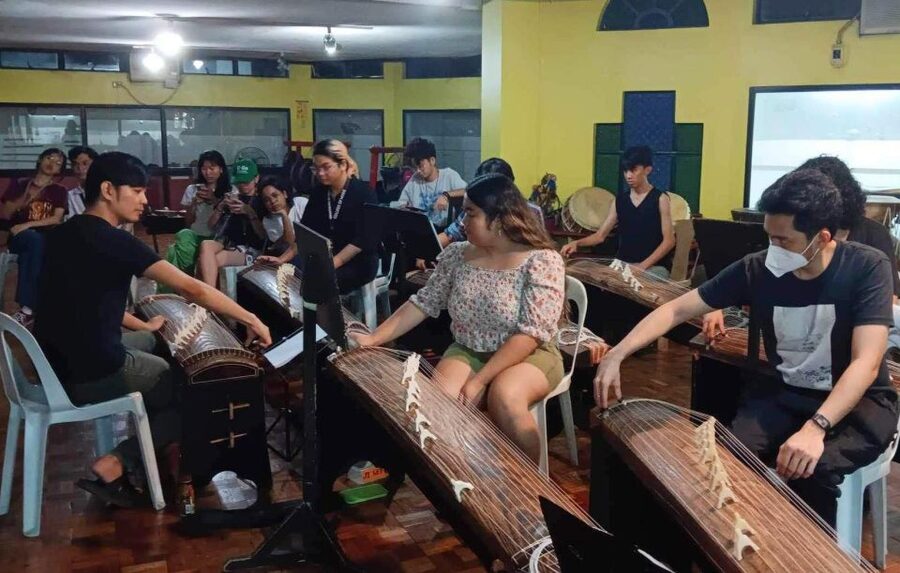
The koto is a long, elegant instrument with 13 strings and a history reaching back about 1,300 years. At first glance, it can look difficult to play. This class breaks it into manageable steps, so you can move from basic posture and plucking to a complete piece within the session.
I especially like the fact that the workshop does not treat the koto as a museum object. You sit at the instrument, handle the picks, learn the notation, and hear your own notes change as your technique improves. That makes the activity useful for people who want more than a standard sightseeing stop.
The class takes place in a peaceful studio within walking distance of the Peace Memorial Park. That location gives you an easy way to pair the workshop with Hiroshima’s central sights. You can visit the park and museum before or after, then approach the music class with some sense of the city’s past.
Other long days west of Hiroshima:
- Peaceful Hiroshima & Miyajima UNESCO 1 Day Bus Tour
★ 5.0 · 5,309 reviews - Hiroshima: Hiroshima and Miyajima UNESCO Sites 1-Day Tour
★ 4.9 · 2,330 reviews - Hiroshima / Miyajima Full-day Private Tour with Government Licensed Guide
★ 5.0 · 1,298 reviews
What happens during the 90-minute class
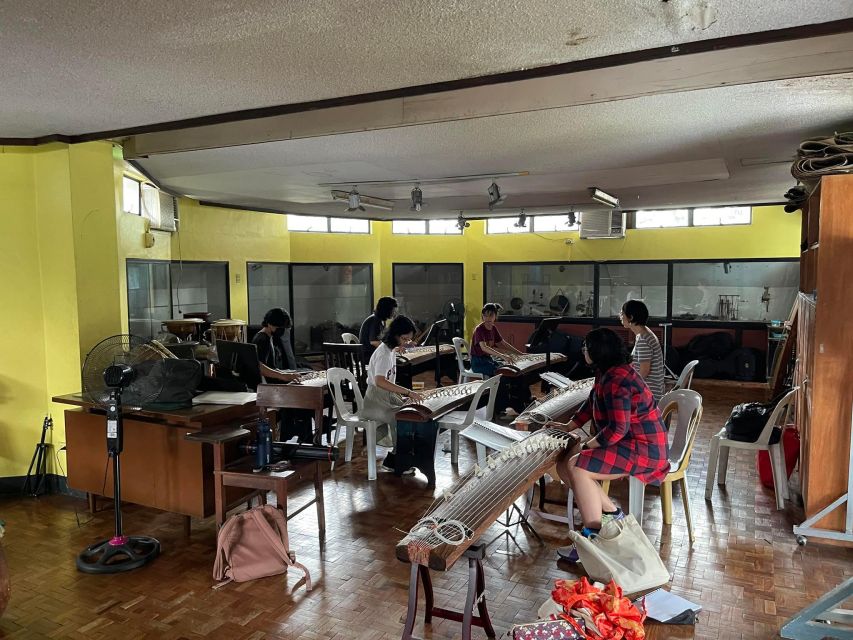
The session begins at Ishida Dai 2 Building, written in Japanese as 石田第2ビル. The experience itself is held in Hiroshima, in a small studio setting. Group size is limited to six participants, which matters here because beginners need direct guidance with posture, hand position, and plucking.
The first part introduces the koto and its place in Japanese culture. You learn about the instrument’s long history and the meaning attached to parts of its design. This is not just background decoration. Knowing what you are looking at makes the instrument feel less like an unfamiliar wooden box and more like a carefully designed part of Japanese musical life.
You also hear about Fukuyama City in Hiroshima Prefecture. More than 70 percent of Japan’s kotos are made there, and the workshop uses instruments crafted in that region. That gives the class a useful local connection. You are not simply playing any Japanese instrument in any Japanese city. You are learning about a craft center tied to the wider Chugoku Region.
Next comes the practical lesson. The instructor shows you how to sit, where to place your hands, and how to pluck the strings. You do not need to read music or play another instrument. Previous sessions have included complete beginners who learned a piece from scratch, with instructors such as Vincent and Nicholas guiding the class.
The teaching style is encouraging and step-by-step. One participant described learning several exercises before moving into a group performance. That progression makes sense: you first learn how the strings respond, then repeat short patterns, and finally combine them into music.
The class may use a piece such as Sakura, depending on the session, but the central program focuses on Echo of Serenity. The exact musical selection may be worth confirming when you book if that matters to you.
The peace theme and Echo of Serenity
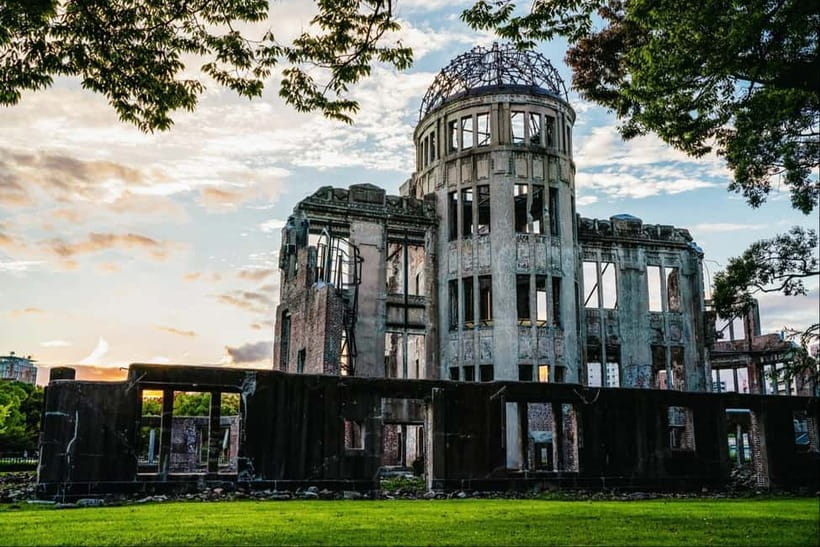
The workshop’s most distinctive feature is its link to Hiroshima’s peace message. You hear Echo of Serenity, a reflective composition presented in honor of the victims of the atomic bombing. The koto’s long, ringing notes give the piece a quiet and spacious quality.
This section works best if you allow it to remain simple. You are not being asked to make a speech or take part in a formal religious ritual. You learn a melody, listen to the sound of the other instruments, and consider why music can express grief and hope in ways ordinary conversation cannot.
The group performance is the emotional finish. Each participant plays a part while the instructor provides accompaniment. Because the class is limited to six people, you can hear how the separate notes fit together rather than getting lost in a large crowd.
You also receive a video recording of the performance. That is a practical touch. The recording gives you something concrete to keep, especially since the piece may be difficult to remember after a busy Japan trip. You can share it with family or friends, though the value is also personal: it captures the moment when a beginner group created something together.
What makes the Fukuyama koto connection useful
It is easy for a traditional-instrument class to offer a general explanation and move on. This one gives you a specific regional story. Fukuyama is described as the heartland of koto craftsmanship, with a large share of Japan’s instruments made there.
That detail adds weight to the lesson. You can ask about the differences between instruments and pay attention to their sound. One class participant noticed differences between the kotos and found it striking how quickly the group could produce a beautiful piece. Even in a short class, the instrument’s construction becomes part of what you are learning.
For you, the main benefit is context. You are not only learning a tune for 90 minutes. You are seeing how a craft, a place, and a musical tradition connect. If you enjoy local arts and handmade objects, this will likely be more satisfying than a quick demonstration where you never touch the instrument.
There is also an option to purchase a koto at the studio. If you become serious about continuing, online lessons are available after you return home. I would treat that as an optional extra, not as part of the basic value of the tour. A koto is a major purchase compared with the $50 class price, so take your time and ask questions before buying.
Same base, a different sort of day:
- Hiroshima Historical Walking Tour – Why A-Bomb was Dropped
★ 4.8 · 893 reviews - Hiroshima Peace (Heiwa) Walking Tour at World Heritage Sites
★ 5.0 · 872 reviews - Hiroshima in a Nutshell: Morning Bike Adventure
★ 5.0 · 524 reviews - Hiroshima City 4hr Private Walking Tour with Licensed Guide
★ 5.0 · 437 reviews
The $50 price and what you receive
At $50 per person, the workshop is reasonably priced for a 90-minute small-group lesson with an English-speaking instructor. The fee includes use of the koto, instruction, the final group performance, a video recording, a folded origami crane, and a soft drink afterward.
The drink service includes coffee, tea, and juice. One previous participant singled out the pineapple juice, which gives you a small, relaxed finish after concentrating on the instrument. It is not the reason to book, but it makes the class feel less rushed.
The strongest value comes from the teaching and the personal keepsakes. Many paid cultural activities give you a souvenir, but here the video records something you actually did. The origami crane adds a second connection to Hiroshima, where the crane is a lasting symbol of peace and hope.
I would not choose this class if you only want a polished concert. The point is participation, and your performance will be that of a beginner. That is part of the charm, but you should expect mistakes, repeated exercises, and a short learning curve rather than a professional recital.
Who will enjoy this experience most
This is a good fit for families with children aged 10 and older, couples, friends, solo visitors, and anyone who wants a calm activity between major Hiroshima sights. The small class makes it easier for a solo participant to join without feeling out of place.
Music lovers will find plenty to enjoy, but you do not need to identify as a musician. The lesson is designed for people with no previous koto experience. If you like trying something unfamiliar and seeing progress within one session, the format should suit you.
Families should note the minimum age. Children under 10 cannot take part. Older children may enjoy the combination of a real instrument, a clear goal, and a video they can show at home. Parents should be ready for a focused class rather than a free-form craft session.
Couples and friends may like the final ensemble because you create one shared result. Solo visitors get the same benefit from a small group: you are not left watching other people play from the edge of the room.
This may be less suitable if you want a long lesson with time for advanced technique. One participant specifically wished for a longer class to become more familiar with the instrument. That is a fair concern. Ninety minutes passes quickly once the history, exercises, and final performance are included.
Finding the studio near Tatemachi Station
The meeting point is manageable if you follow the directions carefully. From a streetcar, get off at Tatemachi Station. At the corner, use the Tully’s coffee shop as a landmark and walk toward the YMCA.
When you see the Gokku, or 悟空, okonomiyaki restaurant, turn right. Look for the workshop sign and go to the second floor of Ishida Dai 2 Building.
Allow a little extra time to find the entrance. The directions are specific, but a small studio in a city center building is not the same as meeting beside a large tourist attraction. Arriving early lets you settle in before the lesson starts.
The studio is within walking distance of the Peace Memorial Park, so you can combine the class with a visit to the park. I would avoid scheduling it too tightly against another paid activity. You will get more from the music if you are not watching the clock.
The experience is conducted in English, and the instructor leads the entire lesson in English. Pets are not permitted, except for assistance dogs. Alcohol and drugs are not allowed.
How the teaching comes across
The instructors receive strong praise for clarity, patience, humor, and encouragement. Vincent has been described as an excellent teacher who explains the history before moving into exercises. Nicholas has also led beginners through the koto’s background, technique, and a piece such as Sakura.
Those details matter because the koto uses a different playing method from the instruments most visitors know. A good instructor must explain not only which string to pluck, but also how to position your body and hands. The class appears to put real care into that foundation.
You may also find that the teachers play alongside you during the final piece. That support helps keep the performance together and lets you hear what the instrument can sound like when played with control.
The class is friendly rather than formal. You can expect a focused lesson, but there is room for questions and a little humor. That balance is useful in a beginner setting, since most people need encouragement as much as technical instruction.
A thoughtful souvenir from Hiroshima
The two take-home items serve different purposes. The video preserves your musical effort. The origami crane carries the wider meaning of Hiroshima’s peace message.
The crane is small, but it is not a random gift. It gives you a way to explain the workshop to someone at home without reducing it to I played a Japanese instrument. You can share the symbol and the reason it matters in Hiroshima.
The performance video also helps solve a common problem with short cultural activities: the memory can fade once you move on to the next city. Here, you have a recording of the group piece and your own part in it.
Should you book the Hiroshima koto workshop?
I would book this experience if you want a quiet, personal activity with a clear link to Hiroshima’s culture and history. The $50 price is fair for a small English-language lesson, drinks, a performance recording, and an origami crane.
Book it especially if you like music, local crafts, or activities where you make something rather than only look at something. It is also a smart choice after visiting the Peace Memorial Park, when a reflective musical session can give your day a different pace.
Skip it if you want advanced instruction, a long concert, or a completely casual drop-in activity. The 90-minute format is compact, and you will leave with the basics rather than mastery.
For most visitors aged 10 and up, the combination is unusually well judged: a real Japanese instrument, a local Fukuyama connection, English teaching, and a final performance tied to peace. That gives the workshop more substance than a standard souvenir activity, while keeping the lesson approachable.
FAQ
How long does the Hiroshima koto workshop last?
The workshop lasts 90 minutes, or one and a half hours. It includes an introduction to the koto, basic instruction, practice, and a final group performance.
Do I need musical experience or Japanese language skills?
No. The class is suitable for complete beginners, and all instruction is conducted in English.
What age is this activity suitable for?
The minimum age is 10. Children under 10 cannot take part.
How many people are in each group?
The class is limited to six participants, creating a small-group setting with room for direct instruction.
What is included after the performance?
You receive a video recording of the final performance and a folded origami crane. Coffee, tea, juice, and a soft drink service are also provided after the session.
How do I reach the meeting point?
Take the streetcar to Tatemachi Station. Walk from the Tully’s coffee shop toward the YMCA, turn right at the Gokku okonomiyaki restaurant, then follow the workshop sign to the second floor of Ishida Dai 2 Building.
Just added in Hiroshima
- Iya Valley BROMPTON Slow Cycling Tour★ 5.0 · 28 reviews
- Iya Valley All Must-Sees Private Chauffeur Full-day Tour with a Driver★ 5.0 · 20 reviews
- Shore Excursion from Hiroshima Port : Private Tour in Hiroshima★ 5.0 · 17 reviews
- Hiroshima & Miyajima All-Inclusive Tour w/Licensed guide Pancho★ 5.0 · 54 reviews
- Okunoshima Rabbit Island Cycling Tour with Local Guide★ 4.5 · 17 reviews
- The Peace Memorial to Miyajima : Icons of Peace and Beauty★ 4.5 · 31 reviews
- Private Full Day Hiroshima Tour★ 4.5 · 29 reviews
- Hiroshima Saijo Sake Tasting Tour with visit to 7 Breweries★ 5.0 · 104 reviews
Hiroshima & Miyajima Day Trips, compared.
Peaceful Hiroshima & Miyajima UNESCO 1 Day Bus Tour
Read our review →
Hiroshima and Miyajima UNESCO Sites 1-Day Tour
Read our review →
Hiroshima / Miyajima Full-day Private Tour with Government Licensed Guide
Read our review →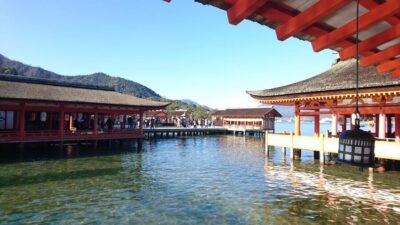
Osaka/Kyoto: Hiroshima Miyajima Bus Tour & Shinkansen Ticket
Read our review →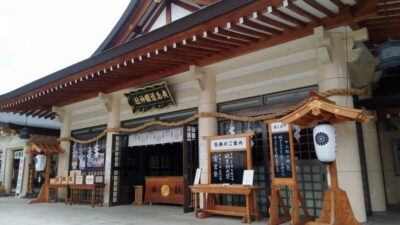
Hiroshima Historical Walking Tour – Why A-Bomb was Dropped
Read our review →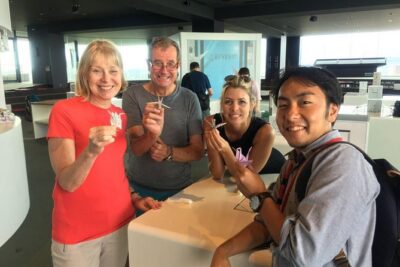
Hiroshima Peace (Heiwa) Walking Tour at World Heritage Sites
Read our review →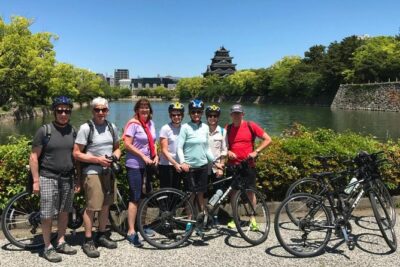
Hiroshima in a Nutshell: Morning Bike Adventure
Read our review →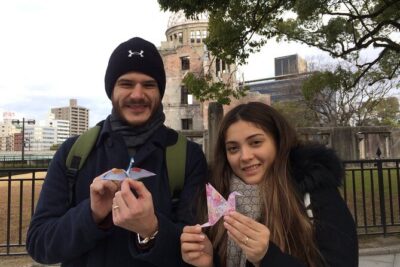
Hiroshima City 4hr Private Walking Tour with Licensed Guide
Read our review →Browse the lists this tour appears in