
Reviewed · TOURS IN OSAKA
Osaka: Visit the must-see places.
Osaka’s best sights are spread across the city, and this Spanish-language tour links them in one busy, rewarding day. You’ll move from Toyotomi Hideyoshi’s castle to Japan’s oldest Buddhist temple, then on to food markets, neon streets, and the famous Glico Man sign. Manuel Pérez is the guide, and he brings a clear focus on Japanese history and local recommendations.
I like the way the route mixes major sights with places that reveal everyday Osaka, especially Kuromon Market and the retro Shinsekai district. I also like that the tour includes both Shitennoji and Isshin-ji, two very different religious sites. The tradeoff is pace: with so many stops and subway rides, this is a long walking day, and it is not suitable for wheelchair users or baby carriages.
Key points at a glance
- A full city sampler: Cover Osaka Castle, two major temples, Shinsekai, Kuromon Market, Namba, and Dotombori in one day.
- Spanish-language guiding: Manuel Pérez explains Osaka’s history, culture, and religious traditions in Spanish.
- A striking temple contrast: See the formal grounds of Shitennoji and the unusual memorial statues at Isshin-ji.
- Food built into the route: Browse seafood, sushi, wagyu beef, and other local specialties at Kuromon Market, with kushikatsu in Shinsekai.
- Subway-based sightseeing: The guide handles the route, but you pay your own subway fares and need cash or an ICOCA, Suica, or PASMO card.
- A strong first-day choice: The tour gives you a useful overview before you return to your favorite districts on your own.
Why this route works for seeing Osaka in one day
Osaka can feel scattered when you first arrive. The castle sits east of the central districts, the old temples are farther south, and the food and nightlife areas cluster around Namba and Dotombori. This route ties those pieces together instead of leaving you to work out the subway connections yourself.
The day covers history, religion, food, and popular culture. That balance matters. A castle alone can feel formal. A market alone can feel like a quick snack stop. Put the two beside temples and neon streets, and you get a better sense of Osaka’s many moods.
The tour begins at Exit 3B of Morinomiya subway station and ends back at the same meeting point. Since no tour duration is specified, you should plan for a substantial day. The number of stops, time spent walking, and several subway journeys make comfortable shoes and light clothing essential, especially in warm weather.
Manuel’s style appears especially suited to readers who want explanation rather than a quick photo stop. He gives detailed background on Osaka and Japan, answers questions, and offers food suggestions. He also adapts to what you want to see and try, within the fixed route.
Other experiences people book in Osaka:
- Osaka Go Karting Tour with Funny Costume
★ 5.0 · 2,658 reviews - Osaka Castle: Museum and Tower Entry Ticket
★ 4.5 · 2,380 reviews - Osaka: Shinsekai Food Tour with 13-15 Dishes at 5 Eateries
★ 4.8 · 2,204 reviews
Osaka Castle and the story of Toyotomi Hideyoshi
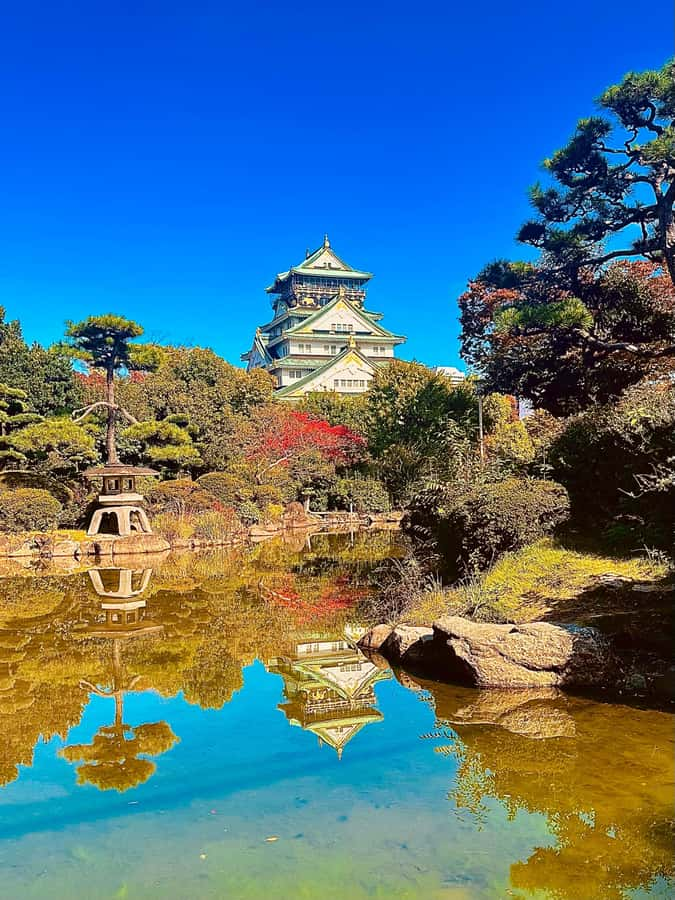
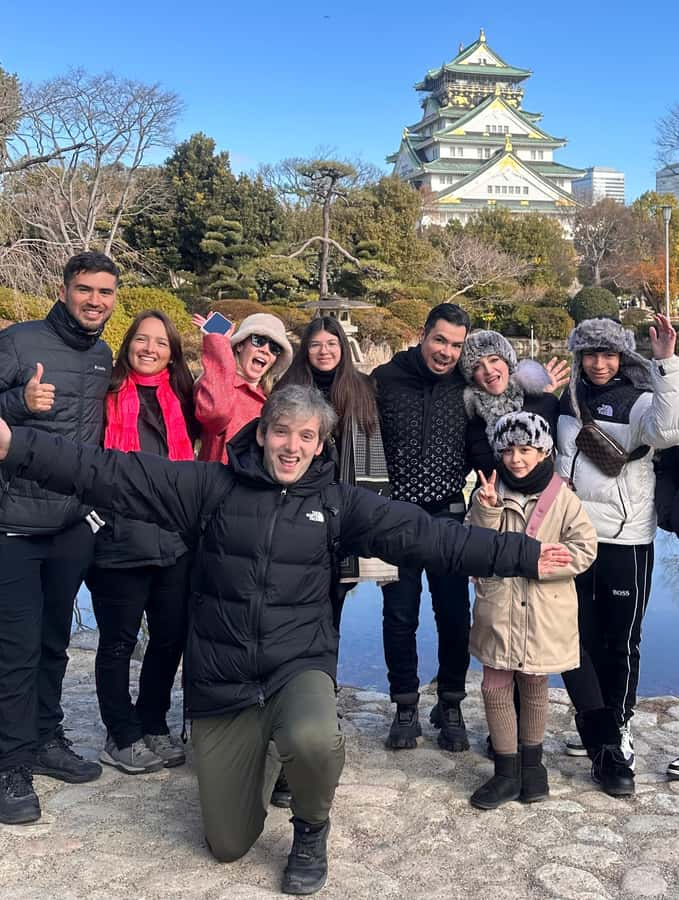
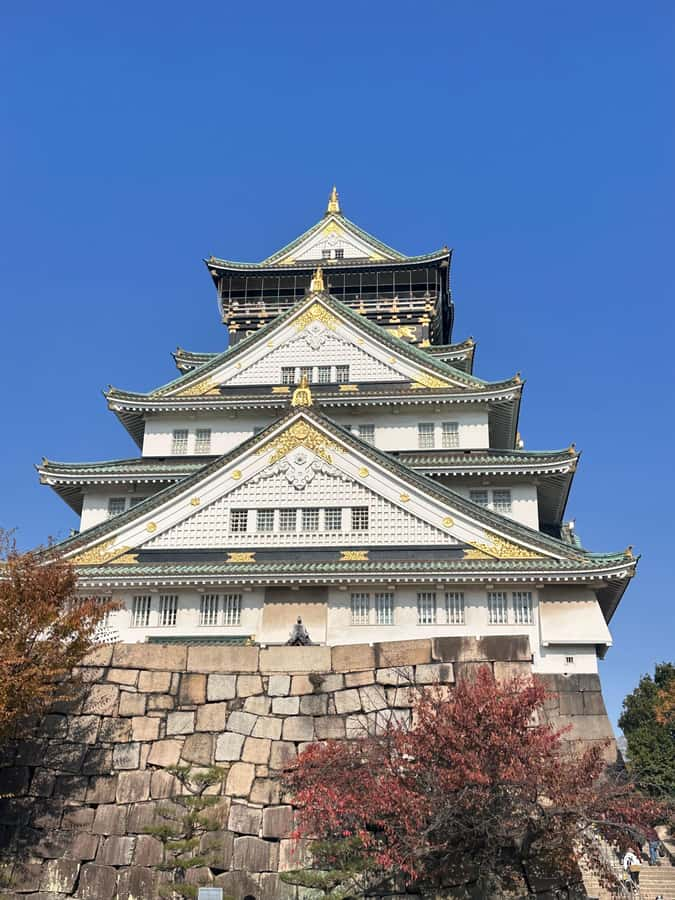
Osaka Castle is the grand opening act. Toyotomi Hideyoshi built the original castle in the sixteenth century, during the Sengoku period, when rival military leaders fought for control of Japan. The castle is closely tied to Hideyoshi’s attempt to unite the country.
You’ll explore the castle grounds and surrounding park with the guide explaining why this site matters. The park gives you room to take in the scale of the complex before the route moves on to smaller and more personal religious spaces.
The useful point here is context. Osaka Castle is not just a photogenic building. It represents political ambition, warfare, and the formation of early modern Japan. A guide can connect those large events to the place beneath your feet, which is hard to do from a quick visit alone.
Allow yourself time for walking around the grounds. The tour does not promise a specific amount of time inside the castle, so you should not book this expecting a slow museum visit with every exhibit. The focus is the castle, its setting, and its role in Osaka’s story.
Shitennoji, Japan’s oldest Buddhist temple
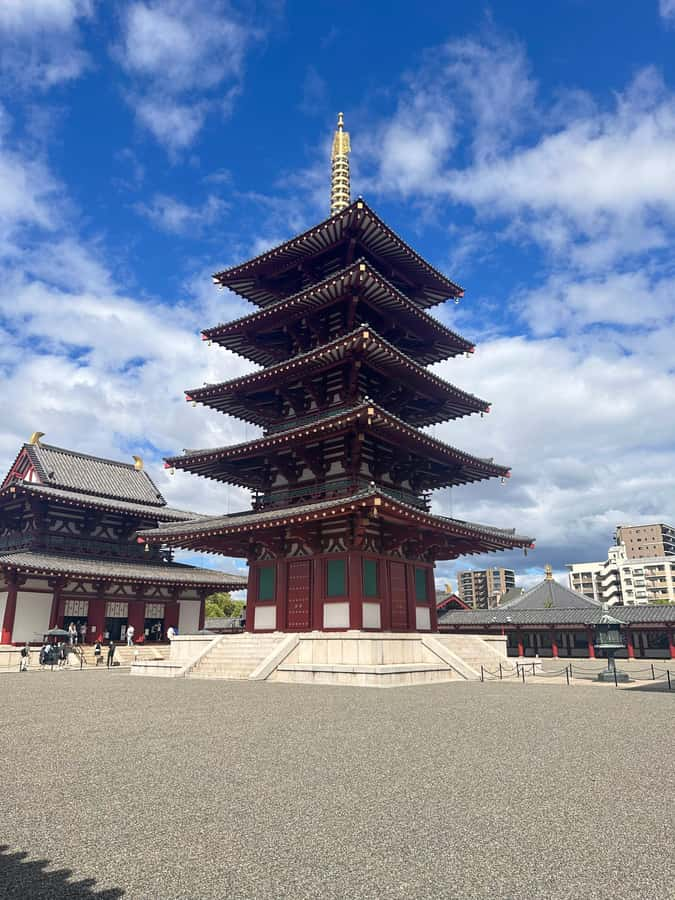
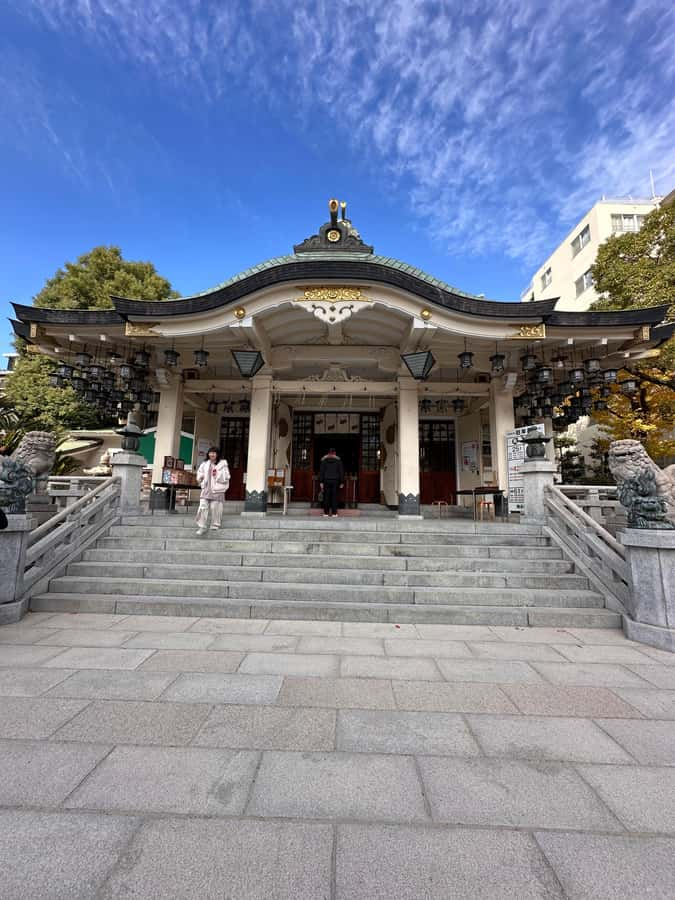
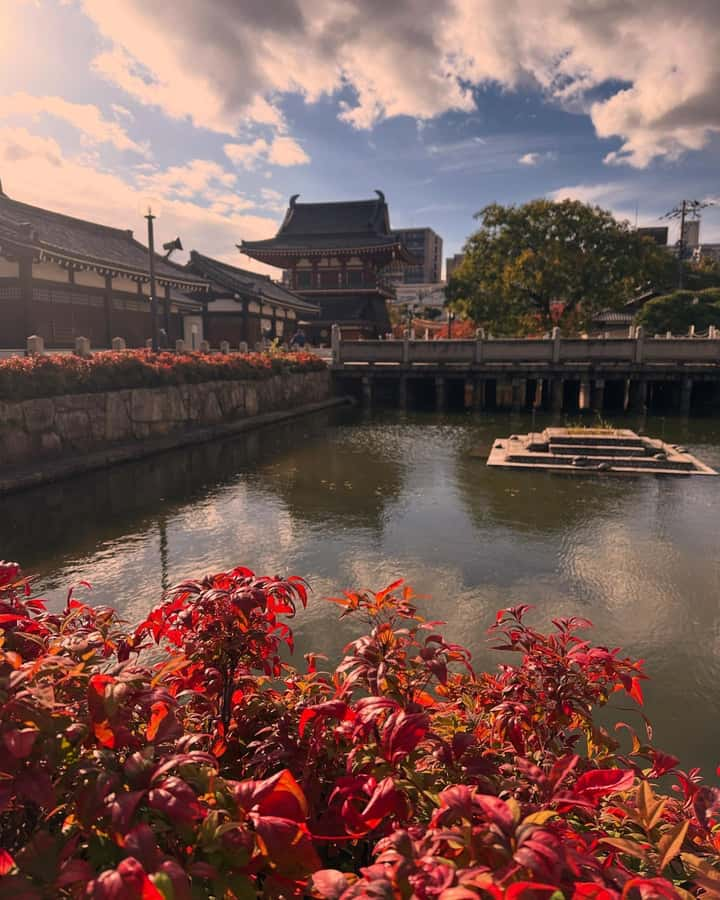
Shitennoji shifts the tone from military power to religious history. Founded in 593, it is described as Japan’s oldest Buddhist temple. The complex offers a direct way to learn about the arrival of Buddhism and its influence on Japanese culture.
You’ll walk through the grounds, see the five-story pagoda, and spend time in the temple garden. After the broad open spaces of Osaka Castle, the temple provides a quieter setting. It also gives the guide a chance to explain traditions that can be difficult to understand if you only look at the architecture.
I particularly like this stop because it gives the itinerary a clear historical arc. Osaka Castle shows political change in the sixteenth century. Shitennoji reaches much farther back, to the sixth century and the early spread of Buddhism in Japan.
Temple visits call for a respectful pace. You may find that the garden and pagoda are more meaningful when you slow down for a moment rather than treating the site as another item to check off. The guide’s explanations are useful here, since the tour is conducted in Spanish and is designed around cultural context.
Isshin-ji and an unusual Buddhist memorial tradition
Isshin-ji offers one of the day’s most unusual stops. The temple houses Buddhist statues made from the ashes of deceased people. This practice links religious devotion with funeral customs in Japan and gives the visit a more personal, solemn character.
It is very different from Osaka Castle and from the formal visual appeal of Shitennoji. You are not simply seeing another pagoda or temple gate. You are learning how a temple can serve as a place of remembrance and how Buddhist traditions can connect to family life after death.
This stop may not suit every mood. Some visitors prefer sightseeing that stays light and decorative, while Isshin-ji asks you to think about mortality and memorial practices. For me, that is exactly why it earns its place on the route. It adds a layer of meaning that a standard city highlights tour often misses.
The route may also include a chance to see a religious service. That possibility is not guaranteed, but the experience can make the temple feel like a living place of worship rather than a monument arranged only for sightseeing. Follow the guide’s advice about respectful behavior if a service is taking place.
Same base, a different sort of day:
- Osaka Food Tour: 13 Dishes at 5 Local Eateries
★ 5.0 · 2,149 reviews - Hungry Osaka Street Food Tour:15 Tastings & 3 Drinks with a Local
★ 5.0 · 1,727 reviews - Osaka: teamLab Botanical Garden Entry Ticket
★ 4.5 · 1,710 reviews - Osaka: Tea Ceremony Experience
★ 4.9 · 1,426 reviews
Shinsekai, kushikatsu, and the Tsutenkaku Tower
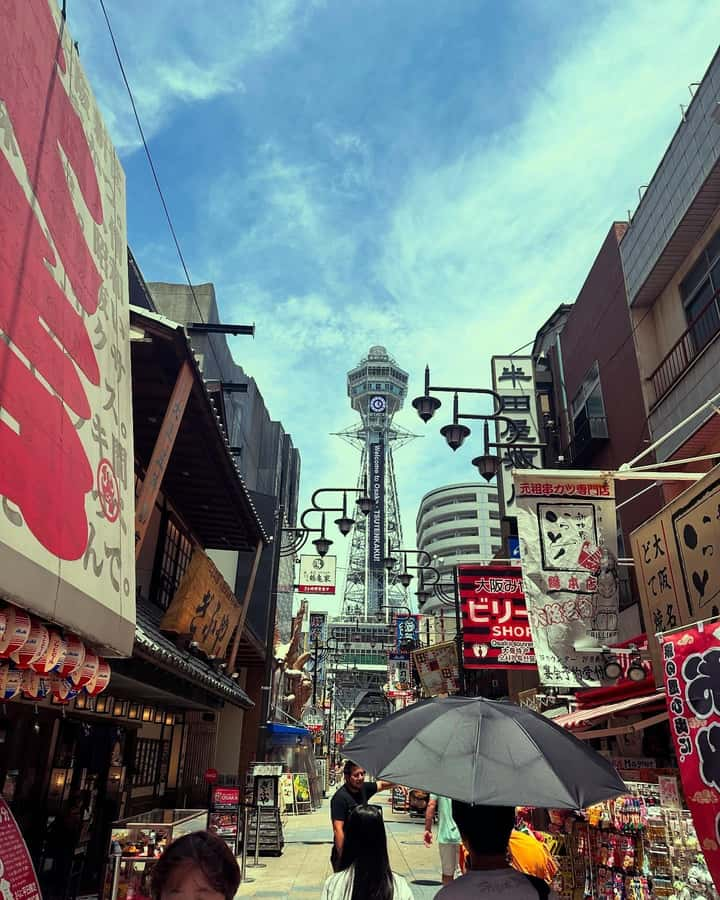
Shinsekai brings you back into Osaka’s street life. The district is known for neon signs, traditional restaurants, and a retro feel. At its center is Tsutenkaku Tower, one of the area’s most recognizable symbols.
This is the place to try kushikatsu, fried skewers that are strongly associated with Osaka. You may find meat, seafood, and vegetables served on sticks, though the tour does not include meals. Bring cash for anything you want to eat or buy.
The guide can help you understand why Shinsekai feels different from the polished image of a modern Japanese city. Its appeal comes from the old-fashioned restaurant signs, narrow food-focused streets, and colorful atmosphere. I like that the tour does not rush straight from the temples to Dotombori. Shinsekai gives you a more local-feeling middle chapter.
Keep in mind that food purchases are extra, and the schedule may not allow a long restaurant meal. If kushikatsu is a priority, ask Manuel how much time is available on the day. You should also avoid assuming that every food stop is included in the $73 price.
Kuromon Market is the day’s best food stop
Kuromon Market is one of the strongest parts of the itinerary for anyone interested in eating. The market is known for fresh produce and Osaka specialties, including sushi, seafood, and wagyu beef.
This is not a formal tasting tour. Meals, drinks, and personal purchases are not included, so you choose what to sample and pay for it yourself. That arrangement has an advantage: you can spend your money on the items that appeal to you instead of receiving a fixed selection.
Bring cash. The tour information specifically requires cash or a transit card for subway travel, and cash is also useful for small food purchases. The market can tempt you to stop often, so decide whether you want a proper snack, a quick taste, or simply a look at the displays.
I would ask Manuel for recommendations here. He is known for offering practical food advice, and that can save you from choosing at random when the market presents more options than you can reasonably try. You might find the best value in sharing a few small items rather than committing to one expensive purchase.
The market also helps explain Osaka’s reputation as a food city. You see ingredients, preparation, and casual eating in one place. It is a more grounded experience than simply taking a picture beside a restaurant sign.
Namba and Dotombori after dark or during the day
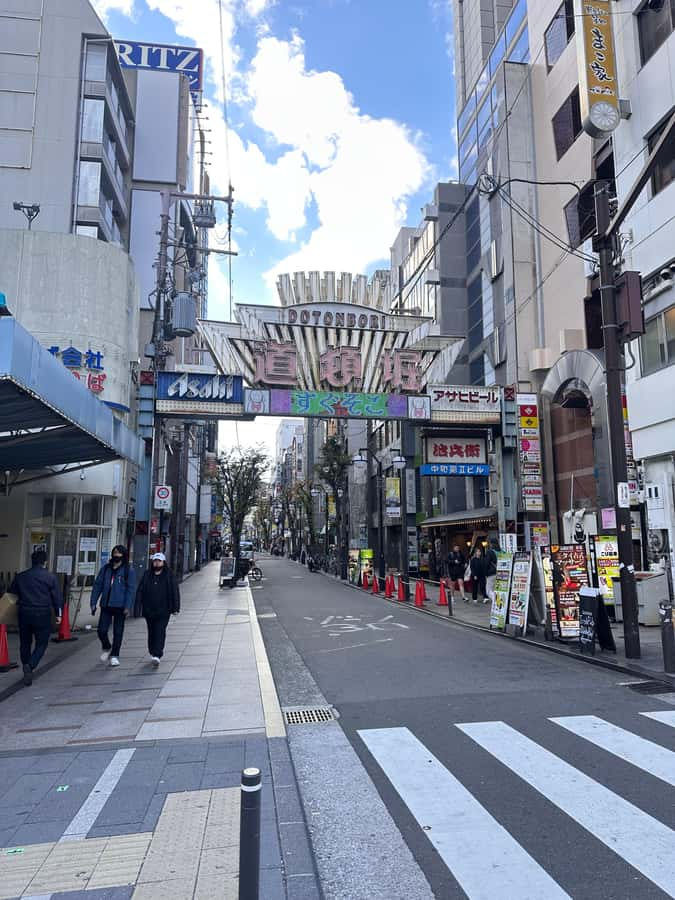
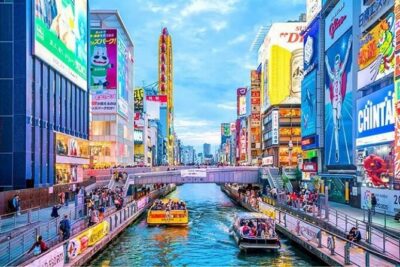
The final section moves into Namba and Dotombori, the city’s best-known entertainment and shopping districts. This is where Osaka’s oversized signs, bright storefronts, and food-focused streets take over.
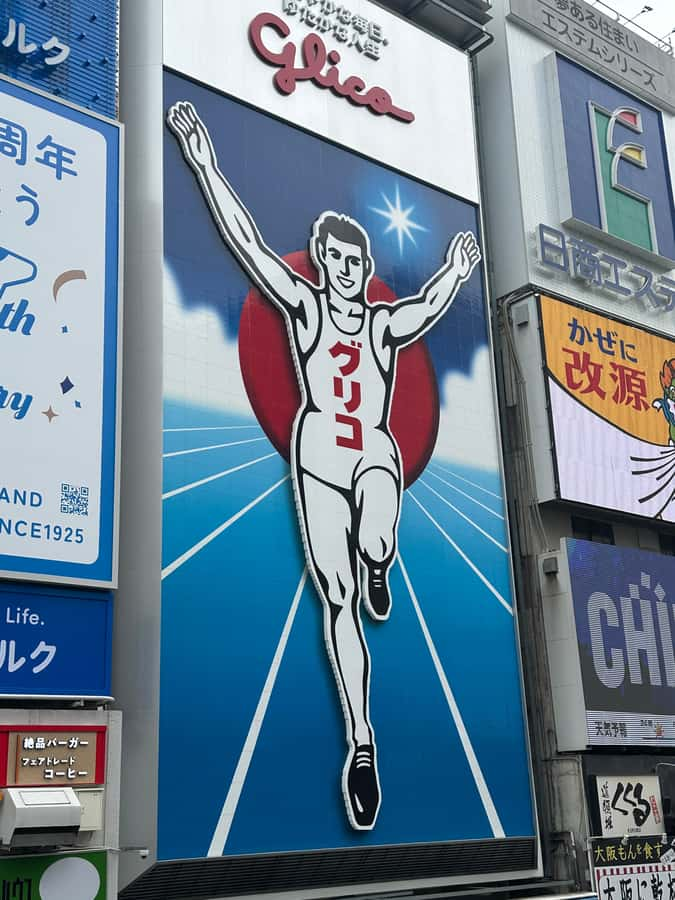
The route includes stops at the Glico Man sign and the animated crab outside Kani Doraku. These are classic Osaka photo points, and the guide helps you find the important markers without wasting time wandering through the district.
Dotombori can feel crowded and loud, especially around the canal and famous signs. That is part of its appeal, but it can also be tiring after a day of temples and walking. If you prefer quiet streets, this final stop may be less relaxing than Shitennoji or Isshin-ji.
Namba is also useful for orientation. Even if you return later on your own, you will have seen the main area and received food suggestions from someone familiar with Osaka. The tour ends back at Morinomiya, so you do not need to work out a separate return point.
What the $73 price really includes
At $73 per person, the value depends on how much guidance you want. You are paying for a Spanish-speaking guide who connects several major sights, explains the history, helps with the subway route, and gives food recommendations.
You are not paying for your subway fares, meals, drinks, entrance costs that may apply, or personal spending. The provided information specifically says customer transportation is not included, and subway travel is part of the day. Carry cash or use an ICOCA, Suica, or PASMO card.
The route would be difficult to reproduce efficiently on a first visit, especially if you are trying to fit Osaka Castle, two temples, Shinsekai, Kuromon Market, and Dotombori into one day. That makes the price more appealing for readers who value saved planning time and Spanish-language explanations.
It is less compelling if you prefer to spend half a day at one temple, browse the market slowly, or make your own food choices without a schedule. You are buying a broad introduction, not a leisurely deep study of one neighborhood.
Who will get the most from this Osaka tour
This experience suits you best if:
- You want Spanish-language guiding throughout the day.
- You are visiting Osaka for the first time.
- You want major sights mixed with food districts and less formal cultural stops.
- You enjoy history, temples, and local eating in equal measure.
- You are comfortable walking and using public transportation.
- You want practical restaurant and sightseeing recommendations for the rest of your stay.
Families can also find the route useful. Manuel paid close attention to a family traveling with a seven-year-old, including the child’s needs during a long day. Still, the walking, subway changes, heat, and number of stops may be demanding for young children.
This is not suitable for wheelchair users, and baby carriages are not allowed. If you need a slower pace or step-free access, choose a different way to see Osaka.
Practical advice before meeting at Morinomiya
Wear comfortable shoes and clothing. The route includes temple grounds, castle areas, market streets, and multiple subway transfers, so you should expect a fair amount of movement.
Bring cash even if you plan to use a transit card. You need to cover your own subway travel, and cash is also useful for food and personal purchases. ICOCA, Suica, and PASMO are all accepted options for getting around during the tour.
The tour is conducted in Spanish. Manuel Pérez is the named guide, and the experience is a good match for Spanish-speaking visitors who want detailed explanations rather than only basic directions.
You can reserve now and pay later, which keeps your plans flexible. Cancellation is available up to 24 hours before the tour for a full refund. Those details are useful when your Osaka schedule depends on weather, train plans, or a larger Japan itinerary.
Should you book it?
Book this tour if you want a single, well-packed introduction to Osaka and prefer to learn in Spanish. The combination of Osaka Castle, Shitennoji, Isshin-ji, Shinsekai, Kuromon Market, Namba, and Dotombori gives you more than a standard photo tour. You see political history, Buddhist practice, memorial customs, street food, and the city’s famous entertainment districts.
Skip it if you want a slow day, dislike walking, or would rather explore one neighborhood at your own pace. At $73, the value is strongest for first-time visitors who want a guide to handle the route and explain what they are seeing. With a top rating from 15 reviews and repeated praise for Manuel’s care, punctuality, detailed explanations, and recommendations, this is a sound choice for a broad Osaka overview.
FAQ
Where does the tour start?
The tour starts at Exit 3B of Morinomiya subway station.
Where does the tour finish?
The activity ends back at the meeting point at Morinomiya subway station.
What language is the tour conducted in?
The tour is conducted in Spanish. The named guide is Manuel Pérez.
Is transportation included?
The guide provides transportation guidance and the tour uses the subway, but you pay for your own transportation. Bring cash or an ICOCA, Suica, or PASMO card.
Are meals and drinks included?
No. Meals, drinks, and personal expenses are not included. You can buy food at places such as Shinsekai and Kuromon Market.
What should I bring?
Bring comfortable shoes, comfortable clothing, and cash. A transportation card such as ICOCA, Suica, or PASMO is also accepted for subway travel.
Is the tour suitable for wheelchair users or baby carriages?
No. The tour is not suitable for wheelchair users, and baby carriages are not allowed.
Can I cancel for a full refund?
Yes. You can cancel up to 24 hours in advance for a full refund.
Just added in Osaka
- Private arrival transfer from Kansai International airport to Kyoto City★ 5.0 · 32 reviews
- (Ticket Included) Explore Osaka Castle & Museum of History★ 4.8 · 21 reviews
- Hidden Osaka – Yukaku Red Light Tour & Culinary Adventure★ 4.8 · 96 reviews
- Osaka: Walking Tour and Top Highlights★ 4.8 · 104 reviews
- Pickleball in Osaka, Kobe & Kyoto with Locals!★ 4.7 · 80 reviews
- Osaka: Private Ceramic Painting Workshop★ 5.0 · 13 reviews
- Osaka:SUMO BEATS SHOWCASE: Taiko Drum and Wagyu burger!★ 4.2 · 37 reviews
- Eat Like a Local in Osaka – Private Custom Street Food Tour★ 4.3 · 33 reviews
Tours in Osaka, compared.

Osaka Food Tour: 13 Dishes at 5 Local Eateries
Read our review →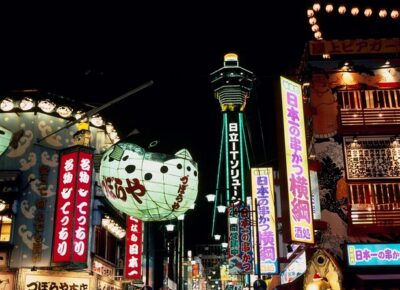
Hungry Osaka Street Food Tour:15 Tastings & 3 Drinks with a Local
Read our review →
Hotspots & Hidden Gems Walking Tour Private or Group
Read our review →Browse the lists this tour appears in