
Reviewed · HIROSHIMA & MIYAJIMA DAY TRIPS
Hiroshima / Miyajima Full-day Private Tour with Government Licensed Guide
Hiroshima’s most meaningful sights and Miyajima’s floating torii gate make a powerful pair, but fitting both into one day takes firm planning. This private tour gives you a guide who can handle the local trains, tram, ferry, walking routes, and changing pace while you focus on the places themselves.
I like the personal itinerary and the human context supplied by guides such as Sei, Yuji, Minori, Lisa, Mari, and Emmy. I also like the way guides can adjust the day for families, large groups, mobility needs, food preferences, or a tight cruise schedule.
The catch is simple: eight hours goes quickly. You pay separately for transport, admission, lunch, and the Miyajima visitor tax, and you will probably need to choose three or four major stops rather than see every place at leisure.
Key points to know before booking
- The day is private: Only your group joins the tour, so the guide can adjust the pace and order of stops.
- Hiroshima and Miyajima are combined: You cover memorial sites in the city and cultural sights on the island in one long day.
- Public transport is part of the experience: Expect walking, local transport, and a ferry rather than a private vehicle.
- The Peace Memorial Park needs quiet time: The museum and park can be emotionally demanding, especially for children and younger visitors.
- Miyajima works best with tide planning: The great torii gate looks most like it is floating at high tide.
- Tickets are extra: Entrance fees, transportation, lunch, personal purchases, and the ¥100 Miyajima visitor tax are not included.
Why this private day works
Hiroshima is not a city you should rush through with a camera and a checklist. The Peace Memorial Park and museum ask for attention, while Miyajima rewards a slower look at shrines, pagodas, deer, sea views, and old streets.
A private guide changes the experience in practical ways. You can ask about the bombing, Japanese customs, family stories, religion, food, or transport as you go. You are not waiting for a large group to gather, and the guide can keep an eye on the clock when you have a train or cruise departure.
Several guides have received especially warm praise for being prepared and personable. Sei is known for careful explanations and strong communication. Yuji has been appreciated for his calm planning and historical context. Minori, Lisa, Mari, Emmy, and Naomi have also been praised for shaping the day around individual interests, arranging food help, and watching the timing at crowded sights.
That said, the tour is not a chauffeur service. You meet the guide on foot in Hiroshima and use public transport. This keeps the cost below a private car tour, but you need comfortable shoes and enough energy for a full day of walking, station transfers, stairs, and ferry travel.
Other long days west of Hiroshima:
- Peaceful Hiroshima & Miyajima UNESCO 1 Day Bus Tour
★ 5.0 · 5,309 reviews - Hiroshima: Hiroshima and Miyajima UNESCO Sites 1-Day Tour
★ 4.9 · 2,330 reviews - Hiroshima Historical Walking Tour – Why A-Bomb was Dropped
★ 4.8 · 893 reviews
Peace Memorial Park and the A-Bomb Dome
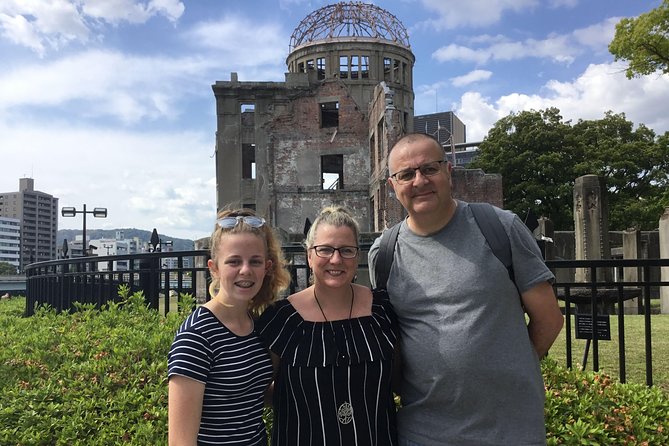
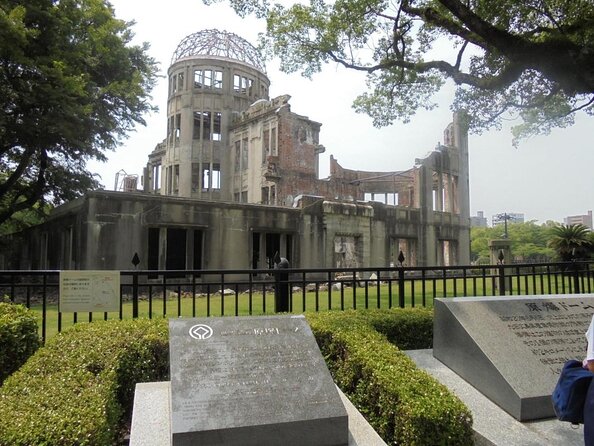
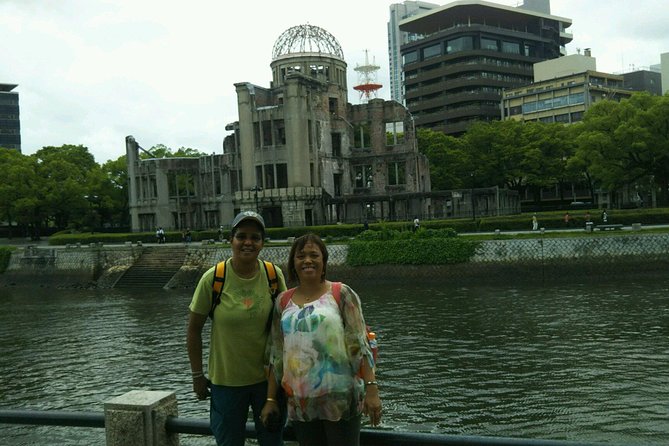
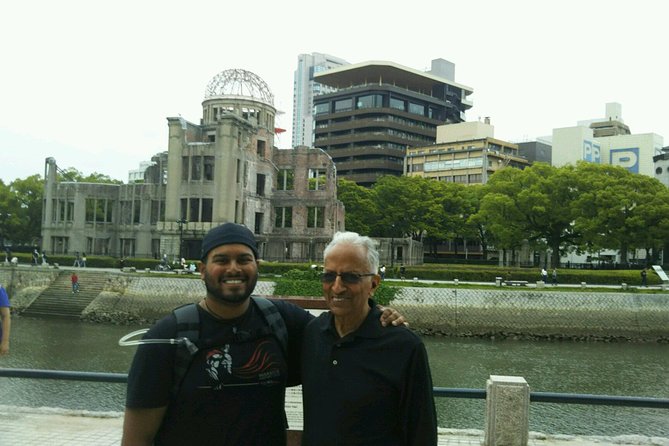
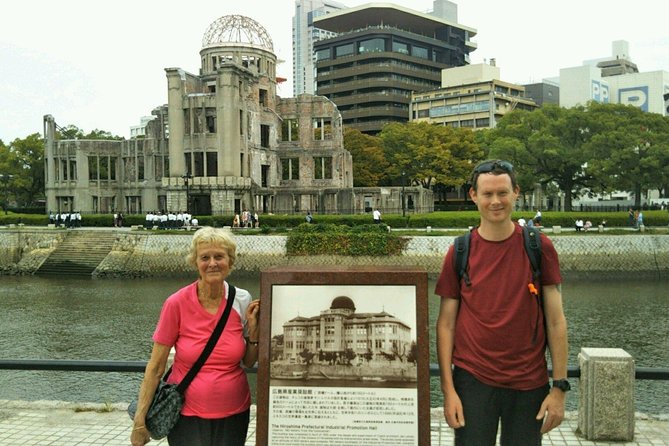
The city portion usually centers on Peace Memorial Park and the Hiroshima Peace Memorial Museum. The park covers a large area beside the river, with monuments, memorials, and the A-Bomb Dome. The dome is one of the city’s most recognizable reminders of the 1945 bombing, and seeing it close up gives the event a physical setting rather than leaving it as a distant chapter in a textbook.
Allow about an hour and a half for this part of the day, though the right amount of time depends on your group. The museum can feel crowded, and a rushed visit is not ideal. One group found that museum crowds cut into its available time, especially with a return to a cruise ship in mind.
A good guide gives you context before you enter, points out details you might pass on your own, and helps you talk through difficult material afterward. Sei has used a short film to explain the bombing and its effects, while other guides have shared local and family connections to Hiroshima. Those personal touches can make the history easier to understand, but they can also make this portion emotionally heavy.
I would place the Peace Memorial Museum early in the day if your main reason for visiting Hiroshima is historical understanding. If children are joining you, tell the guide their ages and ask for help with the order and pace. Families with children around ten and older have found the day especially worthwhile, but the subject matter remains serious.
Admission is not included. You should also check the day’s schedule with your guide, since a busy museum can affect the time available for Miyajima.
Hiroshima Castle and the view of old Hiroshima
Hiroshima Castle, also called Carp Castle, offers a different kind of history. Unlike castles built on hills, it sits on level ground near the center of the city. Its reconstructed five-story keep gives you a chance to consider Hiroshima before the atomic bombing and to see how the city has rebuilt itself.
The suggested visit lasts about an hour and a half, although you may spend less time if the Peace Park takes longer than planned. The castle is a good choice for visitors who want more than wartime history. It adds samurai-era culture and a sense of the city’s earlier identity.
I would not insist on the castle if your priority is the museum and Miyajima. With only eight hours, every extra stop reduces time elsewhere. It makes more sense for repeat visitors, history fans, or groups that want a broader picture of Hiroshima.
Admission is separate. Your guide’s entry fee is covered only at sights included in the tour’s expected choices, so confirm the exact plan and costs before the day begins.
Shukkeien Garden for a quieter pause
Shukkeien is a Japanese garden and a National Scenic Spot. It is also listed among Japan’s important historical parks. Ponds, paths, bridges, and arranged views offer a calmer break after the serious mood of the Peace Memorial Museum.
The stated visit time is about an hour and a half. In practice, you can use the garden as a reset between the city’s memorial sites and the trip to Miyajima. I like this option for visitors who want beauty and quiet without giving up cultural substance.
The garden may not be the best use of time for a first-time visitor determined to see both the museum and Itsukushima Shrine. Ask your guide to compare it with Hiroshima Castle before settling on the final three or four stops. The private format is most useful here because you can make that choice based on your interests rather than follow a fixed route.
Admission is not included. Wear shoes suited to walking paths and expect the visit to be outdoors.
Other tours with a licensed guide in Hiroshima:
- Hiroshima City 4hr Private Walking Tour with Licensed Guide
★ 5.0 · 437 reviews - Hiroshima & Miyajima: Full-Day Private Tour & Licensed Guide
★ 4.8 · 252 reviews - Tokyo 6hr Private Tour with Government-Licensed Guide
★ 5.0 · 3,902 reviews - Tokyo 4hr Private Tour with Government-Licensed Guide
★ 5.0 · 1,394 reviews
Miyajima and Itsukushima Shrine
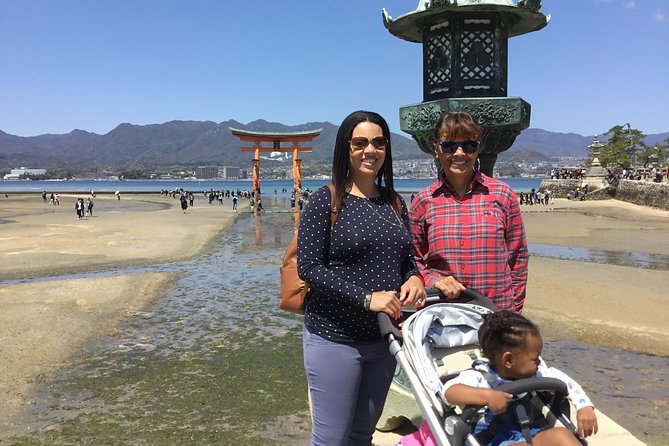
Miyajima is less than an hour from Hiroshima, but the trip involves public transport and a ferry. That journey is part of the appeal. You see how a major Japanese city connects with an island known for sacred sites, sea views, and roaming deer.
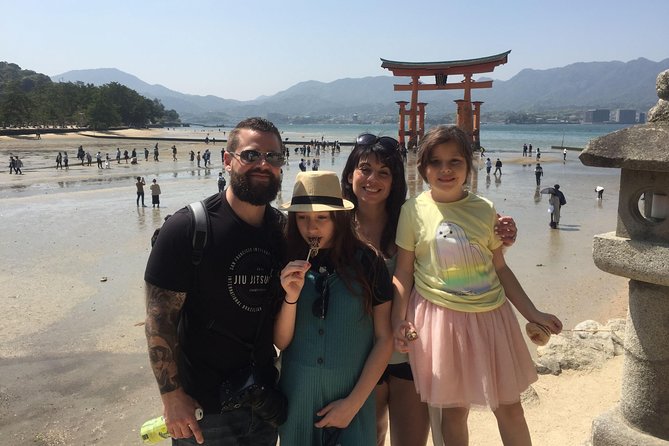
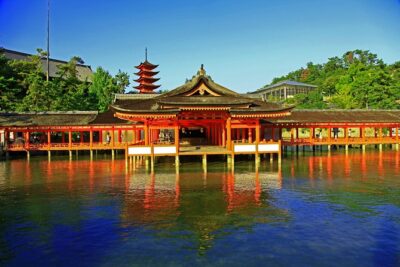
Itsukushima Shrine is the island’s main draw. The large torii gate sits offshore, and at high tide it can appear to float on the water. Tide timing matters, so ask your guide to plan the island visit around the water level if the gate is a priority. Lisa has been praised for checking the tide before arranging the day, a useful service when your time is limited.
The shrine visit is planned for about two hours. You may also encounter pagodas, temples, red-hatted Buddhist figures, narrow streets, and food stalls as you walk around the island. Guides can point out details that are easy to miss and explain how the island’s religious traditions fit together.
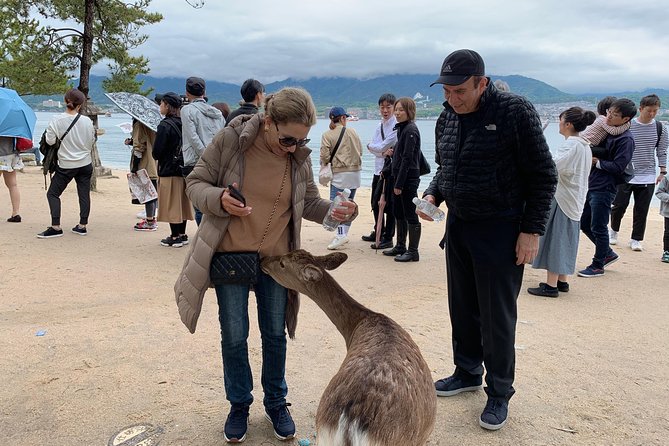
Miyajima can be crowded, particularly around the ferry and major shrine. Advance arrangements may help at busy places, although you should confirm exactly what your guide can reserve. Mari has been praised for arranging advance tickets and choosing a local restaurant, while Megumi has helped with meal planning and adjusted the route when a group needed more time on the island.
Admission to Itsukushima Shrine is extra. You also pay the ¥100 Miyajima visitor tax in cash. Ferry and other transport costs are separate, so carry Japanese yen for small payments.
Tenshinkaku and Miyajima’s hilltop view
Tenshinkaku is an old single-story house used as a café on a hill in Miyajima. From here, you can see Toyokuni Shrine, the five-story pagoda, and the Seto Inland Sea together.
The suggested stop lasts about an hour and a half. It is a good choice for photographs and for anyone who wants a less standard view of the island. It also gives you a reason to look above the main shrine streets instead of staying only at the waterfront.
The tradeoff is time and uphill walking. If Itsukushima Shrine, the torii gate, and lunch are your priorities, Tenshinkaku may not fit comfortably. If you have already seen the main memorial sites or prefer views to museum time, it can be a smart substitution.
The café and any food or drink cost extra. Ask your guide about the walking route if anyone in your group has mobility concerns.
What the transport adds to the day
You travel on foot and by public transport, using some combination of tram, train, and ferry. This is not merely a budget compromise. It shows you how Hiroshima residents move between the city and Miyajima, and a guide can explain each step so you are not left studying route maps.
The cost is not included, but one direct tip is that local transport is fairly inexpensive. The larger issue is time. Station transfers, waiting, boarding, and walking from stops all reduce the hours available for sightseeing.
This matters most for cruise passengers and day trippers from Osaka. One group booked the tour from Osaka by Shinkansen, and Emmy helped with train choices and met the couple at the station. Other groups met guides at a cruise pier or a Hiroshima station. Give the provider your arrival and departure details so the route can be built around them.
A private vehicle is not included. If you need door-to-door transport, this is not the right product. If you are comfortable with trains and ferries, the public system keeps the day flexible and usually costs less than hiring a car.
Food, family needs, and the walking load
Lunch is not included, but a guide can help you choose where and what to eat. Guides have taken groups to local restaurants, helped arrange meal selections, and searched for vegan food. Hiroshima-style okonomiyaki has also been part of some customized days.
Tell the guide about dietary needs before the tour. The same applies to mobility concerns. One large group included a person with limited mobility, and the guide adjusted routes and offered alternate paths. That does not make the day effortless, but it shows why a private format is useful.
Expect a lot of walking. Even with route changes, the combination of park paths, museum corridors, stations, shrine grounds, island streets, and hills can be tiring. Comfortable footwear is essential, and you should avoid scheduling an important evening activity too close to the stated eight-hour finish.
The tour changed from seven hours to eight hours for reservations made from November 6, 2024 onward. Older bookings remain seven hours, so check your confirmation if you reserved before that date.
Price and value at $202.29 per person
At $202.29 per person, this is not the cheapest way to see Hiroshima and Miyajima. You still pay for public transport, the ferry, admissions, lunch, personal expenses, and the ¥100 island tax.
The value comes from the guide’s time and planning. You get a private day rather than a fixed large-group route, and you avoid figuring out the city-to-island connection alone. The guide can explain sensitive history, adjust the sequence, help with food, and keep the group moving.
The price makes the most sense for families, first-time visitors, cruise passengers, couples with limited time, and groups that want personal explanation. It is less compelling if you enjoy independent travel, already understand the transport system, or want to spend a full half-day inside the museum without fitting in Miyajima.
Group discounts may improve the per-person value for larger parties. Since the tour cannot combine separate booking groups, your party remains private rather than being matched with strangers.
Who should book this Hiroshima day?
Book it if you want both the Peace Memorial Park and Miyajima in one day, especially if you value conversation and local guidance more than the lowest possible price. The guide’s personal attention is the main reason to choose this experience.
It also suits families and mixed-interest groups. One person can focus on history, another on gardens or architecture, and another on food and views. The guide can balance those wishes better than a rigid group itinerary.
Skip it if you dislike walking, do not want to use public transport, or need several hours at every stop. Hiroshima and Miyajima each deserve more than a day, and this tour is an efficient introduction, not a slow exploration.
For most first visits, I would ask the guide to prioritize the Peace Memorial Museum, A-Bomb Dome, and Itsukushima Shrine. Add Hiroshima Castle, Shukkeien, or Tenshinkaku according to your interests and the day’s timing. Cancel at least 24 hours before the start time for a full refund, and remember that later changes are not accepted.
FAQ
How long does the tour last?
The tour lasts approximately eight hours for reservations made from November 6, 2024 onward. Reservations made before that date remain seven hours.
Is the tour private?
Yes. Only your group participates, and separate tour groups cannot be combined.
Is hotel pickup included?
Pickup is offered on foot in Hiroshima. This is a walking tour, not a private vehicle service.
Are transportation tickets included?
No. You pay for public transportation, including relevant train, tram, and ferry costs, on the day.
Are admission tickets included?
No. Entrance fees are separate, and the guide’s entry fees are covered only for sights listed among the tour’s expected choices.
Do I need to pay a Miyajima visitor tax?
Yes. The Miyajima visitor tax is ¥100 per person and must be paid in cash.
Can I customize the itinerary?
Yes. The tour includes a customizable walking plan using three or four sites from the available choices. Tell the guide your priorities, timing limits, mobility needs, and food requirements before the day.
Just added in Hiroshima
- Day Trip to Hiroshima & Miyajima with Itsukushima Shrine★ 4.6 · 124 reviews
- Hiroshima 3hr Peace Cycling Tour with Local Guide★ 5.0 · 131 reviews
- Hiroshima: Best of Hiroshima Guided Bike Tour★ 4.9 · 89 reviews
- Hiroshima & Miyajima 6.5h Guided Tour – Dome, Park & Shrine★ 4.9 · 83 reviews
- Hiroshima Local guided Hiking Tour&Open-air Tea Ceremony★ 5.0 · 213 reviews
- Hiroshima: Food and Culture Guided Walking Tour with Dinner★ 4.9 · 212 reviews
- Hiroshima & Miyajima: Full-Day Private Tour & Licensed Guide★ 4.8 · 252 reviews
- Miyajima: Cultural Experience in Zen Temple★ 5.0 · 258 reviews
Hiroshima & Miyajima Day Trips, compared.
Peaceful Hiroshima & Miyajima UNESCO 1 Day Bus Tour
Read our review →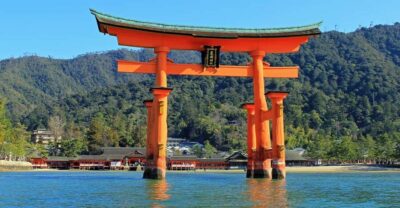
Hiroshima and Miyajima UNESCO Sites 1-Day Tour
Read our review →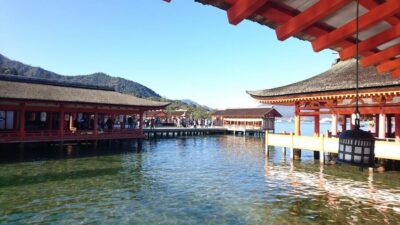
Osaka/Kyoto: Hiroshima Miyajima Bus Tour & Shinkansen Ticket
Read our review →
Hiroshima Historical Walking Tour – Why A-Bomb was Dropped
Read our review →
Hiroshima Peace (Heiwa) Walking Tour at World Heritage Sites
Read our review →
Hiroshima in a Nutshell: Morning Bike Adventure
Read our review →
Hiroshima City 4hr Private Walking Tour with Licensed Guide
Read our review →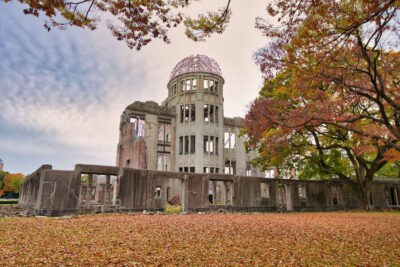
Browse the lists this tour appears in