
Reviewed · HIROSHIMA & MIYAJIMA DAY TRIPS
Hiroshima & Miyajima: UNESCO A-Bomb Dome & Itsukushima with Local
The most meaningful feature of this Hiroshima day is the way it connects Miyajima’s sacred sites with the city’s painful wartime memory. You move from the floating torii and old Buddhist temples to the A-Bomb Dome and Peace Memorial Museum, with a local guide helping you place both sides of Hiroshima in context.
I like the private format, especially the chance to adjust the pace. Guides such as Yuka, Masa, Massa, and Ally have helped visitors slow down, ask questions, and shape the day around their interests. I also like that hotel or station pickup is included on foot, so you do not have to figure out the first step alone.
The main drawback is the amount of walking and public transport. The price does not include trains, ferries, lunch, or optional boats, and seven hours can feel full when you add Miyajima’s slopes, shrine grounds, shopping street, and museum.
Key points to know before booking
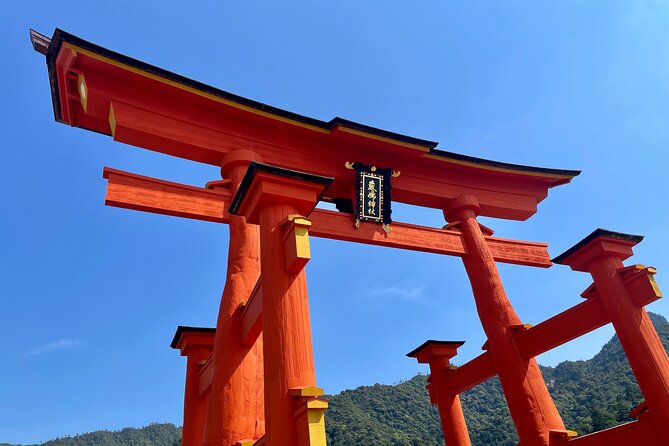
- Miyajima comes first or second: The guide can adjust the order to help you catch a better view of the floating torii.
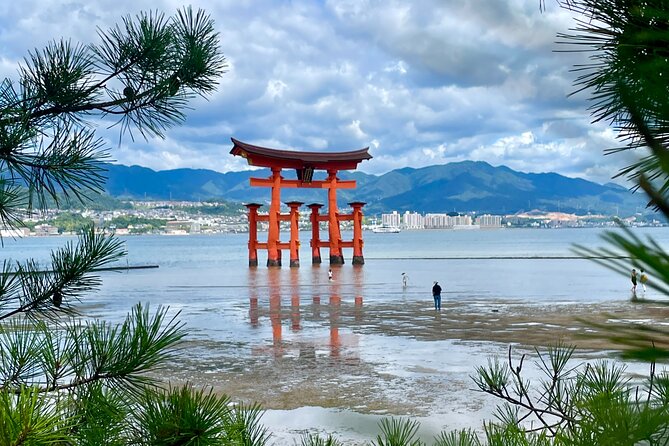
- Tide matters: Itsukushima’s torii appears to float at high tide, so check the timing before you commit to a date.
- This is a private walking tour: Your group sets the pace, but you still need to walk and use trains, ferries, or buses.
- The guide adds family perspective: The Hiroshima portion includes personal stories passed through local families, not only dates and facts.
- Transport costs extra: Basic public transport is about ¥1,340 to ¥1,380 per person, while direct boats and taxis cost more.
- The day covers a lot: Allow about seven hours for Miyajima, Peace Memorial Park, the museum, and the return journey.
Why this Hiroshima pairing works so well
Hiroshima and Miyajima are often treated as separate day trips. This experience links them in a thoughtful way. You begin with Miyajima, an island long regarded as sacred, then move into Hiroshima’s central memorial district. The contrast is powerful without being forced.
On Miyajima, you see a place shaped by Shinto and Buddhist practice, old temple buildings, sea views, local food, and deer wandering through the town. In Hiroshima, you confront the results of the atomic bombing and the city’s long recovery. A guide can help you move between these subjects without reducing either one to a quick photo stop.
The private setup matters here. You can ask why a shrine is built over the water, pause longer at a memorial, or spend less time shopping if that is not your interest. The guide can also change the order between Miyajima and Peace Memorial Park, which is useful when the tide or weather favors one side of the day.
Other long days west of Hiroshima:
- Peaceful Hiroshima & Miyajima UNESCO 1 Day Bus Tour
★ 5.0 · 5,309 reviews - Hiroshima: Hiroshima and Miyajima UNESCO Sites 1-Day Tour
★ 4.9 · 2,330 reviews - Hiroshima / Miyajima Full-day Private Tour with Government Licensed Guide
★ 5.0 · 1,298 reviews
Reaching Miyajima by public transport
Your guide meets you at a Hiroshima hotel or train station and starts the day on foot. From there, the group uses public transportation. The journey to Miyajima takes about an hour, and the exact combination can include a train and ferry.
This approach keeps the tour practical and usually less costly than hiring a private vehicle. It also means you experience the same transport system used by people moving around Hiroshima, rather than spending the whole day inside a car.
The tradeoff is that you must keep moving through stations, platforms, ferries, and connecting routes. Your guide helps with tickets and directions, which is particularly useful if you have just arrived in Japan or are using a rail pass. Basic transport is not included in the tour price. Expect roughly ¥1,340 to ¥1,380 per person, with the cost lower or even zero for some JR Pass users.
A direct boat from Miyajima to Peace Memorial Park is available as an optional upgrade. It takes about 45 minutes and can save time, but it costs more, around ¥4,500 in the information provided. Taxis and other private transport can range from about ¥2,300 to ¥8,000 one way, so ask about the route and cost before choosing that option.
Exploring Itsukushima, the island of the gods
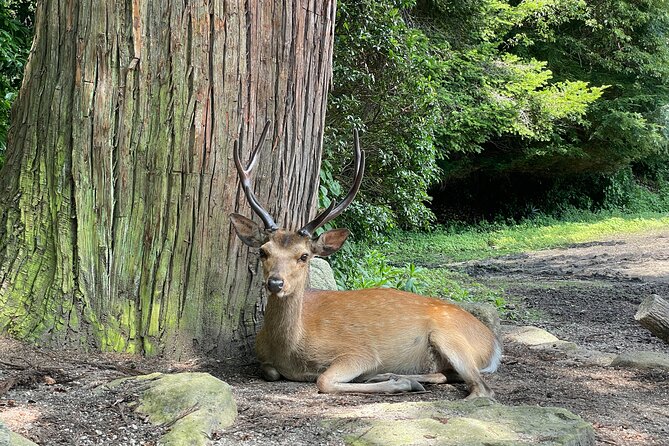
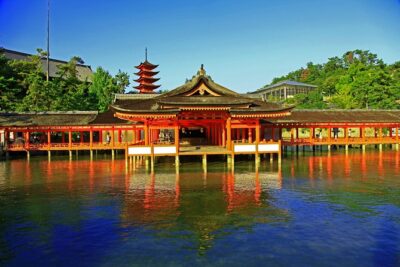
Miyajima is introduced as a sacred island, worshipped since ancient times. Even before you reach the main shrine, the setting gives the visit a different feel from a standard city attraction. The water, wooded hills, temple roofs, and old streets create a calmer rhythm, though the main shopping road can become busy.
The famous torii is the first major sight. At high tide, water surrounds its base and gives the gate its floating appearance. At low tide, you may be able to walk closer to it across the exposed shore. Both views are worthwhile, but they are very different, so the tide is one of the most important details to check before booking.
The tour allows about 15 minutes at the torii. That is enough for photos and an explanation, but not a long wait for the perfect light. If the gate is your main reason for visiting Miyajima, tell the guide during the advance planning conversation.
Itsukushima Shrine and the island’s spiritual side
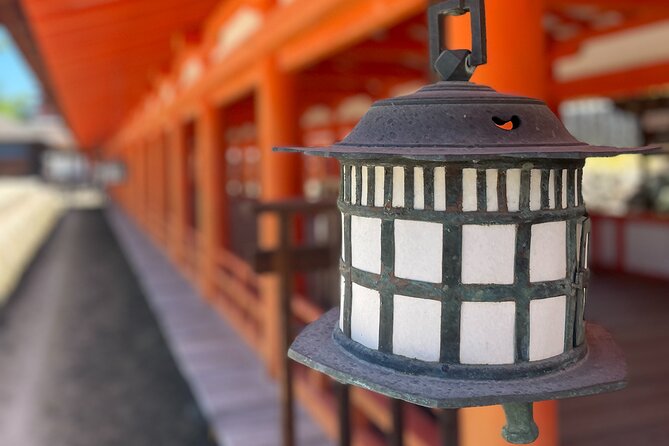
Itsukushima Shrine is a UNESCO World Heritage Site and a Japanese national treasure. Its buildings sit above the water, giving the complex its famous floating appearance. The shrine visit is included, so you do not need to buy a separate admission ticket.
The scheduled visit lasts about 20 minutes. That is a compact stop, but the guide can explain how the shrine relates to the island and why the water setting matters. If you enjoy architecture, religious customs, or photography, you may want to request a little more time here and trim another part of the schedule.
Daishoin Temple provides an important counterpoint. Miyajima is not only a Shinto shrine destination. This Buddhist temple is described as the island’s oldest, with more than 1,200 years of history, and it offers plenty to see within its grounds. The planned visit is about 40 minutes, making it one of the longer stops on the island.
For me, this is one of the strongest parts of the route. Many quick Miyajima visits focus almost entirely on the torii. Daishoin gives you a broader sense of the island’s religious life, with a more detailed visit than a simple photo stop.
Same base, a different sort of day:
- Hiroshima Historical Walking Tour – Why A-Bomb was Dropped
★ 4.8 · 893 reviews - Hiroshima Peace (Heiwa) Walking Tour at World Heritage Sites
★ 5.0 · 872 reviews - Hiroshima in a Nutshell: Morning Bike Adventure
★ 5.0 · 524 reviews - Hiroshima City 4hr Private Walking Tour with Licensed Guide
★ 5.0 · 437 reviews
Senjokaku and Miyajima’s quiet corners
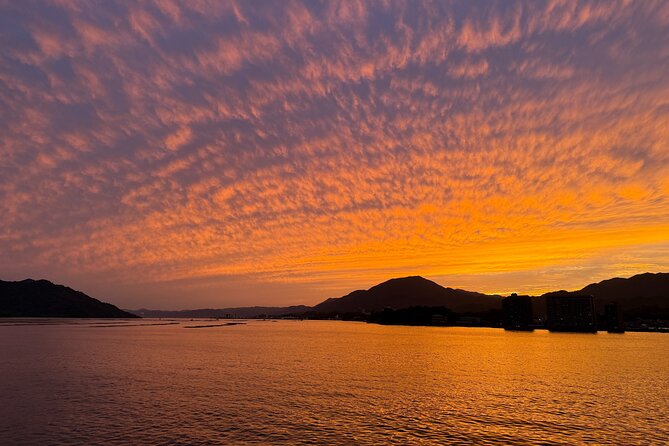
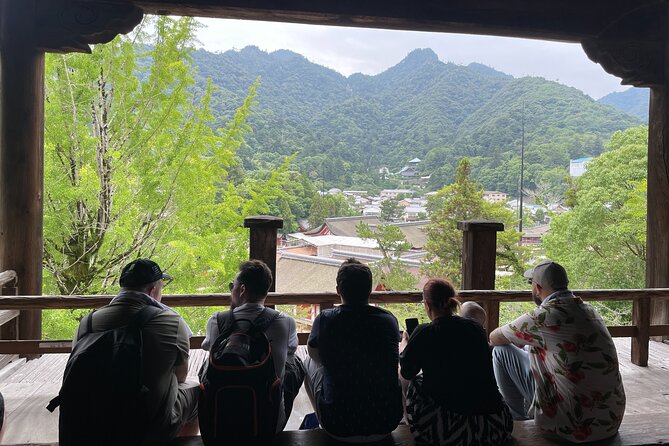
Senjokaku is part of the Itsukushima shrine area and dates from the 16th century. It was ordered by Shogun Hideyoshi and is known for its broad halls and open, wall-less spaces. The building has a simple, airy feel that differs from the more formal shrine structures.
The visit lasts about 15 minutes, and admission is not included. The tour information does not give the fee, so confirm the current amount with your guide or at the entrance. This is a short stop, but it offers a peaceful break from the more famous sights.
Miyajima also gives you time to wander through Omotesando Shopping Street. The scheduled hour is useful because this is where you can choose lunch or browse local specialties. Oysters, conger eel rice, momiji manju cakes, and souvenirs are among the foods and goods associated with the island.
Lunch is not included, so plan to buy food during this portion. Since the day is active, you should use this hour sensibly rather than treating it as a rushed snack stop. If food is important to you, ask the guide how much time can be reserved for eating.
Moving from Miyajima to Hiroshima’s memorial district
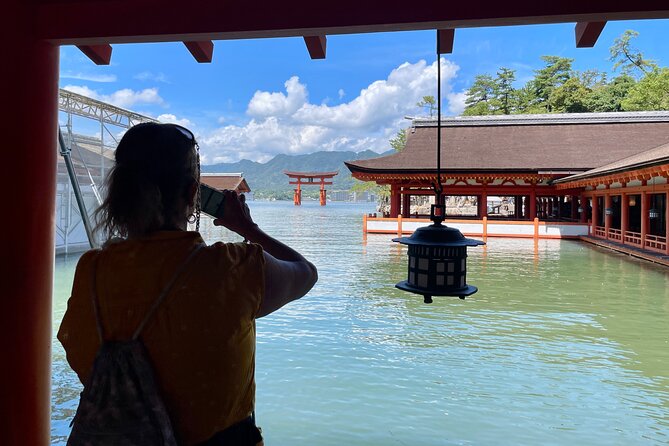
After Miyajima, the group returns toward Hiroshima’s Peace Memorial Park. The basic route takes about an hour using a ferry, JR service, or train. This travel time is part of the seven-hour schedule, not an extra transfer hidden outside it.
That matters when deciding how much sightseeing you can realistically do. The tour covers many stops, but most visits are brief. You will see the major places, hear their meaning, and ask questions, yet this is not a slow, two-day exploration of Hiroshima.
The guide can choose the order of Miyajima and Peace Park. A morning visit to Miyajima may work better for some tide schedules, while a different plan may help you reach the torii at a more favorable time. This flexibility is one of the clearest benefits of booking privately.
The A-Bomb Dome and the Hypocenter
The Atomic Bomb Dome is one of Hiroshima’s most recognizable structures and a UNESCO World Heritage Site. Its damaged frame remains beside the river, a direct reminder of the destruction caused by the atomic bombing.
The planned stop is about 15 minutes. That is enough to see the building from outside and hear the basic story, but the emotional weight of the place can make a short visit feel longer. You may want more time for photographs or quiet reflection, so mention this when discussing the schedule with your guide.
The Hypocenter monument marks the location directly below the point where the bomb exploded, about 600 meters above the hospital site. The stop is also planned for 15 minutes. It is a small, more restrained memorial than the Dome, but its location helps you understand the scale and intensity of the event.
These stops work best when the guide gives you room to process what you are seeing. Masa has been especially praised for explaining the bombing and its effects in a way that includes difficult questions about why the bomb was dropped. That kind of conversation is one reason a private guide can be useful in Hiroshima.
Peace Memorial Park and its many memorials
Peace Memorial Park is not one single monument. It is a collection of memorials and open spaces connected by paths. The scheduled visit lasts about 20 minutes, with the guide explaining the bombing, the city’s destruction, and its reconstruction.
The pace can feel quick if you want to read every plaque. On the other hand, a guide helps you understand which monuments are most important and prevents the park from becoming a blur of names and stone structures.
The Children’s Peace Monument receives its own 10-minute stop. It is tied to the story of Sadako and the many paper cranes placed around the monument. The visit is brief, but the symbolism is clear and gives the memorial district a more personal focus.
Because the subject is painful, this portion is not designed as light sightseeing. Give yourself some emotional space. If you need a pause, a private guide can adjust the rhythm more easily than a large group with a fixed departure time.
One hour at the Hiroshima Peace Memorial Museum
The Peace Memorial Museum is the central indoor visit, with about an hour scheduled. Admission is included. The exhibits use photographs, documents, and objects to show the effects of the bombing and radiation exposure.
You should expect difficult material. The museum is direct rather than decorative, and the experience can be upsetting. An hour gives you a solid introduction, though not enough time to read every display carefully. If museums are your priority, ask in advance if the schedule can place more weight here and reduce shopping or another short stop.
This is where the guide’s role can make the largest difference. Yuka has been praised for answering questions and explaining the places in clear English. The guide’s personal and family perspective can add context to the museum visit, while still leaving room for you to form your own response.
Tour photos are included as digital files. That is a small extra, but it means you can stay focused on the experience instead of stopping constantly to organize group photographs.
Price, pace, and what you really receive
At $181.19 per person, this is not the cheapest way to see Hiroshima and Miyajima. You also pay for basic transport, food, and any optional direct boat or taxi. For two people, those added costs are modest if you use standard public transport, but they should be included in your budget.
The price makes more sense if you value a private guide, hotel or station pickup, advance planning, and a flexible route. A guide can help you manage a complicated day that combines a ferry island, multiple religious sites, and a serious museum visit.
You are not paying for private transport by default. You are paying for someone to guide the day, explain what you are seeing, help with transit, and adjust the pace for your group. If you prefer to move independently and spend a long time at only one or two sights, you may get better value by visiting on your own.
The pace suits people who want a strong first look at both Hiroshima and Miyajima in one day. It is less suitable if you dislike walking, want a relaxed lunch, or prefer not to combine sightseeing with heavy historical material.
Who should book this private Hiroshima day
I would consider this tour a good choice for first-time visitors who want help with transport and cultural context. It also suits couples and families who want to set their own pace. One couple used the flexibility during a honeymoon, while another group appreciated help buying tickets at the station.
The tour is also a good fit if English-language guidance is important. Yuka, Masa, Massa, and Ally are named guides associated with the experience, and the strongest praise centers on clear explanations, friendly conversation, flexibility, and the ability to answer questions.
You should think twice if long walks are difficult. The experience is explicitly a walking tour, and the schedule includes stations, ferries, shrine grounds, temple grounds, streets, park paths, and museum corridors. Service animals are allowed, and most people can participate, but the tour is not recommended for those who cannot walk long distances.
The tour requires good weather. If poor weather cancels the experience, you are offered another date or a full refund. You can cancel for a full refund up to 24 hours before the start time, but changes or cancellations inside that window are not accepted.
Should you book it?
Book this experience if you want Hiroshima and Miyajima explained as connected places, not just a checklist of famous sights. The strongest reasons are the private pace, the flexible order, the help with public transportation, and the chance to discuss Hiroshima through local and family memory.
Before booking, check the tide, accept that transport and lunch cost extra, and be honest about your walking ability. If you want to spend a full morning in the museum or linger at every shrine, ask for a custom schedule ahead of time.
For a compact but serious introduction to both destinations, this is a strong choice. Its real value lies in the guide’s presence and the thoughtful connection between Miyajima’s spiritual traditions and Hiroshima’s memorials.
FAQ
How long does the Hiroshima and Miyajima tour last?
The tour lasts approximately seven hours, including travel between Hiroshima, Miyajima, and the Peace Memorial Park area.
Is pickup included?
Yes. Pickup is offered on foot from a hotel or train station in Hiroshima City.
Is this a private tour?
Yes. Only your group participates, and the route and pace can be customized in advance.
Are transportation costs included?
No. Basic public transportation costs about ¥1,340 to ¥1,380 per person. Optional direct boats, fast boats, and taxis cost extra.
Is admission to Itsukushima Shrine included?
Yes. Admission to Itsukushima Shrine and the Hiroshima Peace Memorial Museum is included.
Is lunch included?
No. Food and drinks are not included. You can buy local specialties such as oysters, conger eel rice, or momiji manju on Miyajima.
Can the tour be canceled because of weather?
Yes. The experience requires good weather. If it is canceled because of poor weather, you are offered a different date or a full refund.
Just added in Hiroshima
- Iya Valley BROMPTON Slow Cycling Tour★ 5.0 · 28 reviews
- Iya Valley All Must-Sees Private Chauffeur Full-day Tour with a Driver★ 5.0 · 20 reviews
- Shore Excursion from Hiroshima Port : Private Tour in Hiroshima★ 5.0 · 17 reviews
- Hiroshima & Miyajima All-Inclusive Tour w/Licensed guide Pancho★ 5.0 · 54 reviews
- Okunoshima Rabbit Island Cycling Tour with Local Guide★ 4.5 · 17 reviews
- The Peace Memorial to Miyajima : Icons of Peace and Beauty★ 4.5 · 31 reviews
- Private Full Day Hiroshima Tour★ 4.5 · 29 reviews
- Hiroshima Saijo Sake Tasting Tour with visit to 7 Breweries★ 5.0 · 104 reviews
Hiroshima & Miyajima Day Trips, compared.
Peaceful Hiroshima & Miyajima UNESCO 1 Day Bus Tour
Read our review →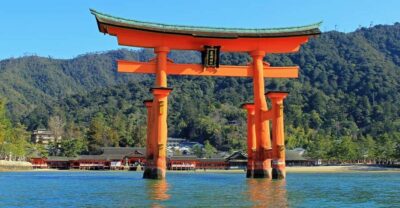
Hiroshima and Miyajima UNESCO Sites 1-Day Tour
Read our review →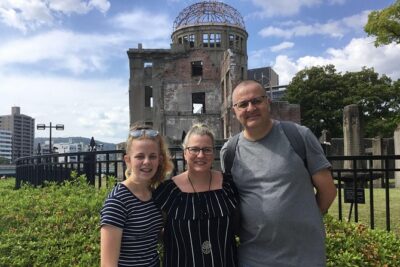
Hiroshima / Miyajima Full-day Private Tour with Government Licensed Guide
Read our review →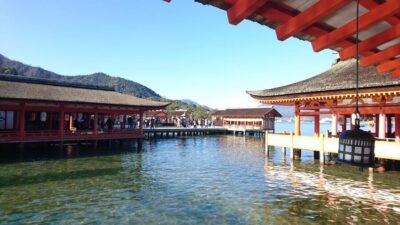
Osaka/Kyoto: Hiroshima Miyajima Bus Tour & Shinkansen Ticket
Read our review →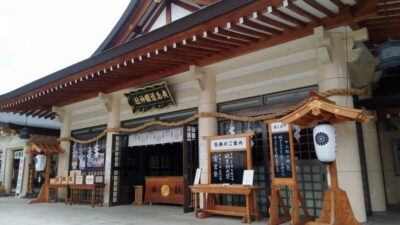
Hiroshima Historical Walking Tour – Why A-Bomb was Dropped
Read our review →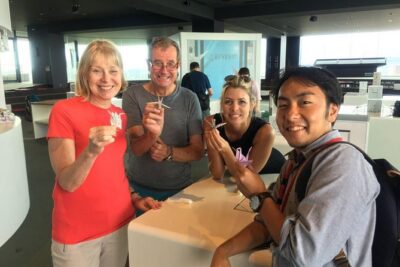
Hiroshima Peace (Heiwa) Walking Tour at World Heritage Sites
Read our review →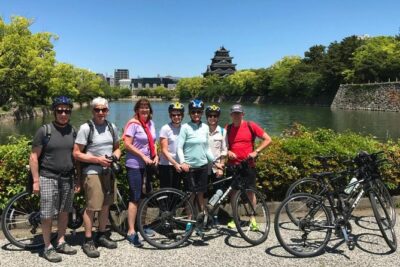
Hiroshima in a Nutshell: Morning Bike Adventure
Read our review →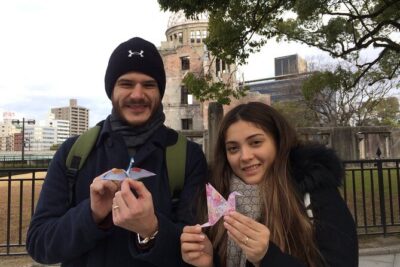
Hiroshima City 4hr Private Walking Tour with Licensed Guide
Read our review →Browse the lists this tour appears in