
Reviewed · HIROSHIMA & MIYAJIMA DAY TRIPS
Mitaki Peace Tour Beyond Central Hiroshima
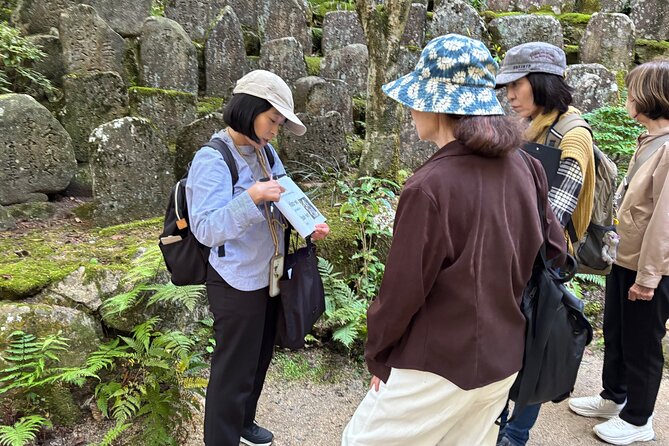
Mitaki Peace Tour links two very different sides of Hiroshima: the painful facts of the atomic bombing and the quiet mountain temple where locals go for calm. You begin at the Atomic Bomb Dome and Rest House, then ride a local bus to Mitaki-dera for shaded paths, Buddhist statues, a pagoda, and memorials tied to the bombing.
I like the thoughtful change of pace from city streets to forested temple grounds. I also like the small maximum group of six, which suits Mitaki’s narrow, peaceful paths and gives you room to ask questions. The main caution is walking: this is not a good fit if hills, steps, or a total of several hours on your feet are difficult.
Key points to know before booking
- Two kinds of Hiroshima history: The tour connects Peace Memorial Park with Mitaki Temple and shows how the bombing affected places beyond the city center.
- A quiet temple close to the city: Mitaki-dera feels far removed from urban Hiroshima, yet it is reached by local bus and train.
- Small-group format: The maximum is six people, useful on narrow temple paths and for personal questions.
- Transport is part of the plan: Bus fare to Mitaki, train fare back, and the temple entrance fee are included.
- Seasonal scenery matters: Autumn leaves can add bright color to the temple walk, though the tour remains worthwhile for its history and atmosphere.
- Plan for walking: The tour lasts about 3 hours 25 minutes to 4 hours and is not recommended for people with walking difficulties.
Why this tour adds Mitaki to Hiroshima’s peace story
Most first-time Hiroshima visits focus on the Peace Memorial Park, the Atomic Bomb Dome, and the Peace Memorial Museum. Those places are essential, but this tour gives you a wider view. It shows how the city’s story reaches into a wooded temple area outside the central streets.
The first hour takes place around Peace Memorial Park. Your guide explains the Rest House, a building damaged by the atomic bomb, and the Atomic Bomb Dome. If time allows, the walk may also include the hypocenter, the point directly beneath the bomb’s detonation.
That opening matters. You are not simply heading to a scenic temple for a change of scenery. You first receive the basic historical context, then see how Mitaki connects to Hiroshima’s postwar story. The shift from busy memorial sites to quiet religious grounds gives you time to think rather than simply collect more facts.
I like this structure because it avoids treating Mitaki as a random side trip. The temple visit has a clear purpose. Its statues, monuments, preserved bomb-damaged structures, and peaceful setting become part of a larger story about loss, survival, memory, and peace.
Other long days west of Hiroshima:
- Peaceful Hiroshima & Miyajima UNESCO 1 Day Bus Tour
★ 5.0 · 5,309 reviews - Hiroshima: Hiroshima and Miyajima UNESCO Sites 1-Day Tour
★ 4.9 · 2,330 reviews - Hiroshima / Miyajima Full-day Private Tour with Government Licensed Guide
★ 5.0 · 1,298 reviews
Starting at the Rest House and Atomic Bomb Dome
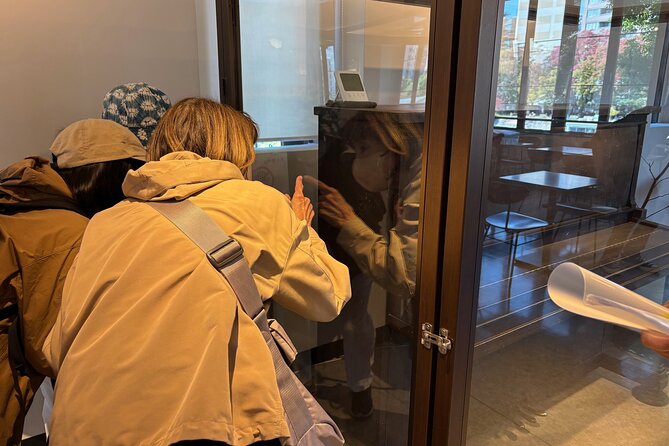
The meeting point is at the Hiroshima Peace Memorial Park Rest House, at 1:00 pm. The listed location also identifies a plaque explaining the building’s atomic-bomb damage. This is a practical meeting spot because it places you directly inside the first part of the tour, rather than requiring a separate transfer from Hiroshima Station.
The guide leads you around several important sites. The exact sequence can vary, and the hypocenter is included only if time permits. You should expect about 1 hour and 4 minutes for this section, including explanations and walking.
The Rest House is especially useful as a starting point because it is not only a memorial object viewed from outside. Its damaged structure helps show that the bombing affected ordinary buildings and daily life, not just famous monuments. The Atomic Bomb Dome then provides the more familiar visual symbol, but the guide’s explanations help connect it to the surrounding park.
This part is serious and direct. It is not designed as a fast photo stop. If you prefer to spend a long time inside the Peace Memorial Museum, this tour does not replace that visit. Instead, it gives you a guided introduction before moving to a less familiar site.
The bus ride from central Hiroshima to Mitaki
After the Peace Memorial Park walk, you take a local bus from the Atomic Bomb Dome area toward Mitaki. The fare is included, so you do not need to work out the payment system during the tour.
The public transport is part of the experience. You move from the central memorial district into a quieter part of Hiroshima using the same practical network that residents use. It also keeps the tour from feeling like a sealed sightseeing circuit. You see the city change as the route carries you away from the park.
The transfer does require flexibility. This is not a private vehicle tour, and the timing can be affected by the normal pace of local transport. The provider gives an approximate total duration rather than a fixed finish time, so avoid scheduling a tight evening reservation immediately afterward.
Walking up to Mitaki-dera
After leaving the bus, you walk for about 10 minutes to the temple. The pace is described as relaxed, with stops at points of interest along the way.
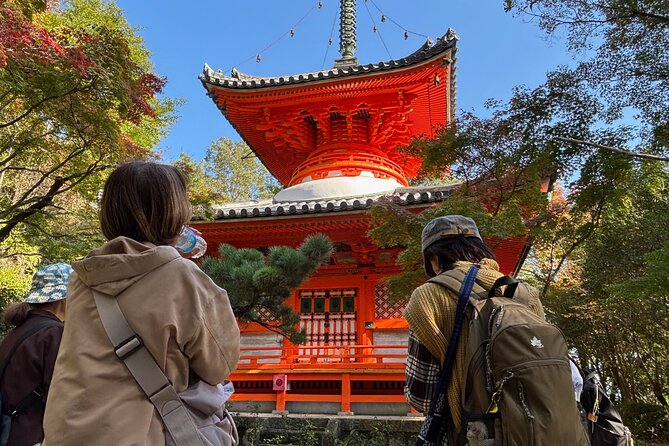
Mitaki-dera was founded in 809 and has been cared for by local people for centuries. Its setting is the first thing you notice: wooded slopes, stone features, and a quieter atmosphere than the central memorial sites. The exact visual appeal changes with the season. In early December, autumn leaves may still be scattered through the grounds, and the temple can show striking red and gold color higher along the path.
The scenery is not guaranteed, of course. A visit in another season may look very different. But the setting itself is a strong reason to come. The tour lets you experience a historic religious site without giving up the historical explanation that makes it meaningful.
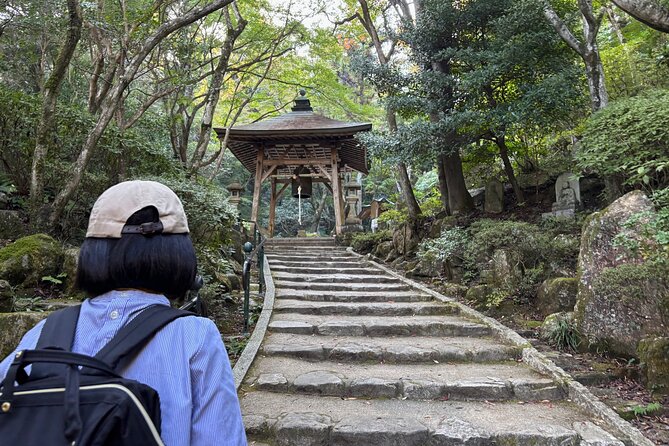
You should wear shoes suited to walking on temple paths. The tour is not described as strenuous, but Mitaki is on a mountainside, and the route includes walking higher into the grounds. People with walking difficulties may find the uneven paths or incline uncomfortable.
Same base, a different sort of day:
- Hiroshima Historical Walking Tour – Why A-Bomb was Dropped
★ 4.8 · 893 reviews - Hiroshima Peace (Heiwa) Walking Tour at World Heritage Sites
★ 5.0 · 872 reviews - Hiroshima in a Nutshell: Morning Bike Adventure
★ 5.0 · 524 reviews - Hiroshima City 4hr Private Walking Tour with Licensed Guide
★ 5.0 · 437 reviews
What you see inside the temple grounds
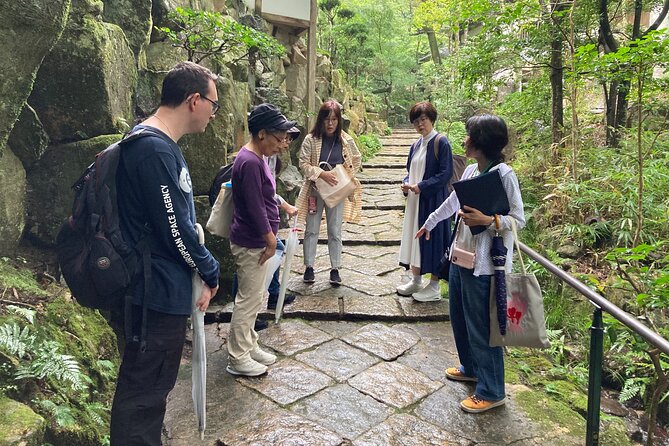
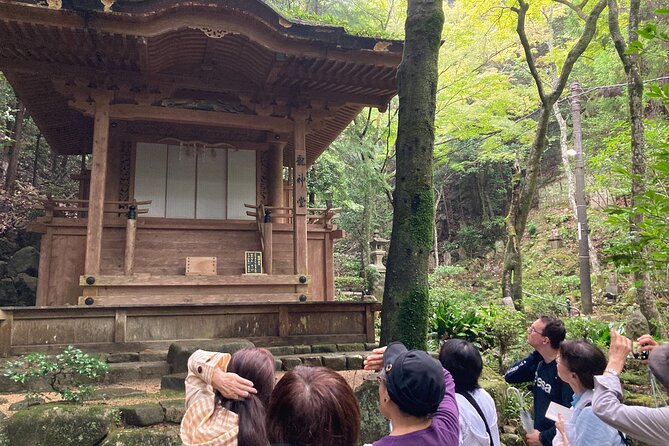
The temple entrance fee is included. Once inside, your guide takes you through the grounds and explains the features you pass.
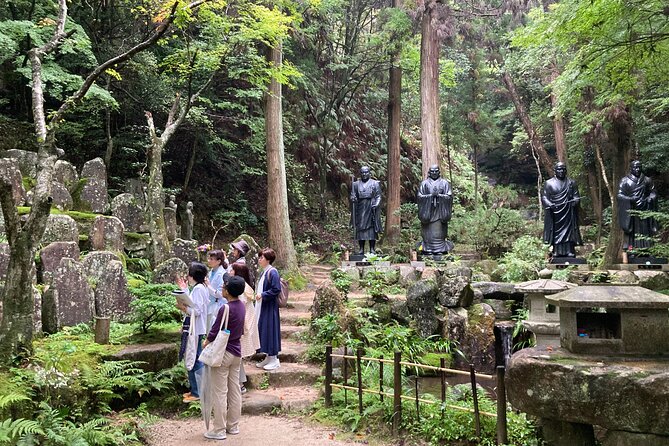
The pagoda is one of the most striking sights. You also see a bell hall, many stone Buddhist statues, and monuments connected with peace and remembrance. Some structures preserved at the temple bear a connection to the atomic bombing, which makes Mitaki more than an old temple in a wooded setting.
The stone statues reward a slower pace. On your own, you might notice their shapes and weathered surfaces but miss why they matter. The guided format gives you a chance to ask about the religious features, the temple’s role, and its connection to Hiroshima’s modern history.
There are also photo-friendly spots along the walk, especially when seasonal color is present. Still, this is a place for quiet observation rather than constant picture-taking. The paths are not wide, and a large group would work against the calm mood. The six-person maximum is a real advantage here.
The activity description refers to seven experiences at Mitaki and its surroundings. These are small moments rather than seven large attractions. You can expect a mix of easy walks, short stops, explanations, and simple activities that help you notice the site in a more personal way.
Why the quiet setting works so well
Mitaki feels different from both Peace Memorial Park and Miyajima. It is not presented as a replacement for either. Its strength is the combination of silence, nature, Buddhism, and Hiroshima’s painful past.
I like the way the tour lets you slow down after the direct historical material in the city. At Peace Memorial Park, the scale of the bombing can feel overwhelming. At Mitaki, the story becomes tied to individual buildings, memorials, and a place that has continued to be used and cared for.
The temple also offers a clearer sense of Hiroshima beyond its central tourist route. The city is not only memorials and museums. It also includes old religious sites, local transport, mountain paths, and places where people go for a peaceful break.
That balance is the tour’s strongest feature. You learn, but you also have time to look around. You walk, but the pace is not framed as a strenuous hike. You visit an important site, but you do not spend the whole afternoon in a crowded urban district.
Returning by train to Hiroshima
After the temple visit, you walk to Mitaki Station and take the train back. The guide accompanies you to Hiroshima Station, which is two stops from Mitaki.
The included train fare covers travel to Hiroshima Station, Yokogawa Station, or Hakushima Station. You can get off at Yokogawa, the next stop, or Hakushima, the stop after that, if one of those locations suits your plans better.
This ending is convenient for anyone continuing a day in central Hiroshima. It also gives you a clear finish point rather than leaving you to find your own way back from the temple. Still, remember that the tour begins at 1:00 pm and lasts roughly 3 hours 25 minutes to 4 hours. The return may fall near the early evening, depending on the walking pace and transport timing.
What the $88.68 price includes
At $88.68 per person, this is not the cheapest way to see Mitaki-dera. The value comes from the combination of a licensed guide, historical interpretation, temple admission, and two public transport legs.
If you visited independently, the admission and fares would be only part of the cost. The larger question is how much you value the explanations. Mitaki is easy to admire visually, but its connection to the atomic bombing and Hiroshima’s peace story is less obvious without context.
The small group also matters. With no more than six people, you are more likely to hear the guide clearly and ask questions. On a narrow temple path, this format feels more suitable than a large coach group.
A recycled-paper-crane postcard with a stamp is included as a small keepsake. It is not a major part of the price, but it fits the theme of the tour and gives you something tangible to take home.
Water is not included. Bring a bottle or another drink, especially in warm weather. You will be outside and walking for much of the experience.
Who should book this experience
I would choose this tour if you have already decided that Hiroshima’s history deserves more than a quick stop at the Atomic Bomb Dome. It is especially useful if you want a guide to connect the famous memorial sites with a quieter place that many independent visitors might skip.
It also suits you if you enjoy temples, stone statues, seasonal scenery, and short walks more than shopping or a tightly packed city itinerary. The autumn foliage can be a pleasant bonus, but the tour is not dependent on fall color.
The experience may not suit you if you want a long, detailed visit inside the Peace Memorial Museum, because the tour focuses on outdoor sites and then moves on. It may also be a poor choice if you have limited mobility, need frequent sitting breaks, or prefer private transport.
The tour is conducted in English based on the supplied information, but no guide name is provided. A licensed local guide leads the experience, and the small group allows the explanations to feel more personal than a standard city walk.
Practical details that affect your day
The tour starts at 1:00 pm at the Peace Memorial Park Rest House. The mobile ticket makes arrival straightforward, and booking confirmation is provided at the time of booking.
Wear comfortable shoes and bring water. The total time is listed as approximately 3 hours 25 minutes to 4 hours, and the route includes walking from the bus stop to the temple, paths within the grounds, and the walk to Mitaki Station.
The tour requires good weather. If poor weather causes cancellation, you are offered another date or a full refund. You can also cancel for a full refund up to 24 hours before the start time. Changes or cancellations made less than 24 hours before the start are not accepted for a refund.
Should you book the Mitaki Peace Tour?
Book it if you want Hiroshima’s peace story to include more than its central monuments. The tour’s best feature is the link between the Atomic Bomb Dome, the damaged Rest House, and a quiet mountain temple with its own memorial connections.
The price makes sense for a first visit when you want transport, admission, and interpretation handled in one small group. Independent visitors can reach Mitaki, but they may not understand why the site belongs in a Hiroshima peace itinerary.
Skip it if your walking ability is limited, your schedule is tight, or your main goal is a long museum visit. For most visitors who have an afternoon free and want a calmer, more reflective side of Hiroshima, this is a thoughtful choice.
FAQ
How long does the Mitaki Peace Tour last?
The tour lasts approximately 3 hours 25 minutes to 4 hours.
What time does the tour start?
The tour starts at 1:00 pm.
Where does the tour begin?
It begins at the Hiroshima Peace Memorial Park Rest House in Nakajimacho, Hiroshima.
What places are visited in Peace Memorial Park?
The tour includes the Rest House and the Atomic Bomb Dome. The hypocenter may also be included if time allows.
How do I get from Peace Memorial Park to Mitaki?
The group takes a local bus from the Atomic Bomb Dome area to the Mitaki area. The bus fare is included.
Is the Mitaki Temple entrance fee included?
Yes. The entrance fee to Mitaki Temple is included.
Where does the tour finish?
The guide accompanies you by train to Hiroshima Station. You may also get off at Yokogawa Station or Hakushima Station.
Can I cancel for a refund?
Yes. You can receive a full refund if you cancel at least 24 hours before the start time. If poor weather causes the tour to be canceled, you are offered another date or a full refund.
Just added in Hiroshima
- Iya Valley BROMPTON Slow Cycling Tour★ 5.0 · 28 reviews
- Iya Valley All Must-Sees Private Chauffeur Full-day Tour with a Driver★ 5.0 · 20 reviews
- Shore Excursion from Hiroshima Port : Private Tour in Hiroshima★ 5.0 · 17 reviews
- Hiroshima & Miyajima All-Inclusive Tour w/Licensed guide Pancho★ 5.0 · 54 reviews
- Okunoshima Rabbit Island Cycling Tour with Local Guide★ 4.5 · 17 reviews
- The Peace Memorial to Miyajima : Icons of Peace and Beauty★ 4.5 · 31 reviews
- Hiroshima Saijo Sake Tasting Tour with visit to 7 Breweries★ 5.0 · 104 reviews
- Hiroshima Private Tour with a Local – Highlights & Hidden Gems★ 4.5 · 24 reviews
Hiroshima & Miyajima Day Trips, compared.
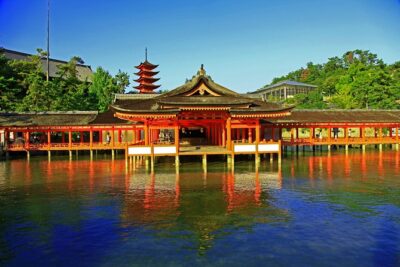
Peaceful Hiroshima & Miyajima UNESCO 1 Day Bus Tour
Read our review →
Hiroshima and Miyajima UNESCO Sites 1-Day Tour
Read our review →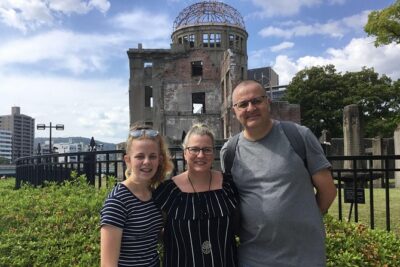
Hiroshima / Miyajima Full-day Private Tour with Government Licensed Guide
Read our review →
Osaka/Kyoto: Hiroshima Miyajima Bus Tour & Shinkansen Ticket
Read our review →
Hiroshima Historical Walking Tour – Why A-Bomb was Dropped
Read our review →
Hiroshima Peace (Heiwa) Walking Tour at World Heritage Sites
Read our review →
Hiroshima in a Nutshell: Morning Bike Adventure
Read our review →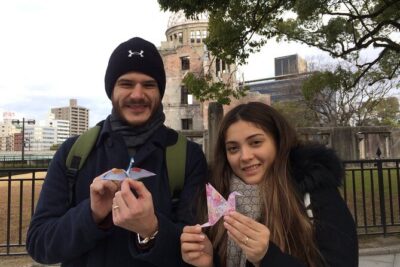
Hiroshima City 4hr Private Walking Tour with Licensed Guide
Read our review →Browse the lists this tour appears in