
Reviewed · HIROSHIMA & MIYAJIMA DAY TRIPS
The Peace Memorial to Miyajima : Icons of Peace and Beauty
Hiroshima’s past and Miyajima’s beauty make an unusually powerful pair. This eight-hour small-group tour moves from the Peace Memorial Park and museum to the island’s famous red torii gate, giving you a serious morning and a scenic afternoon. Guides such as Ken, Kensuke, and Yuka add local context in English.
I like the maximum group size of eight, which gives you room to ask questions and keep a reasonable pace. I also like that tram, bus, and ferry fares are included, so you can focus on the day rather than sorting out each ticket. The catch is that public transport takes time, and the $167.44 price is not cheap for a day without lunch.
Key points at a glance
- Two very different sides of Hiroshima: You spend the first part with the city’s wartime past, then shift to Miyajima’s shrine, deer, streets, and sea views.
- Up to eight people: A small group makes it easier to hear the guide and ask personal questions.
- Guides make a real difference: Ken and Kensuke are praised for their local insight and friendly English, while Yuka is noted for her strong cultural explanations.
- Public transport is part of the day: Tram, bus, and ferry costs are included, but the connections add travel time.
- A full walking day: You need moderate fitness for Peace Memorial Park, station changes, Miyajima, and Itsukushima Shrine.
- Lunch is your responsibility: Plan to buy food during the day, especially if you want to keep moving on schedule.
Why this Hiroshima combination works
Hiroshima can be difficult to plan because its two major draws sit in different settings. The Peace Memorial area calls for quiet attention and time. Miyajima asks for a slower eye, with traditional buildings, shrine architecture, deer, and views across the water.
This tour puts both into one day. You begin at 8:30 a.m. near the 7-Eleven Hiroshima Motoyasubashi East Store, then finish at Hiroshima Station. That start and end point make sense if you are staying in central Hiroshima or catching a train later, although the final station transfer can feel out of the way for some visitors.
The tour is especially useful if you have only one day in Hiroshima. You do not need to work out the tram, bus, and ferry connections alone, and a guide can explain what you are seeing rather than leaving you to read every sign yourself.
The tradeoff is simple: this is not a private car tour. You share public transport with other passengers, walk between stops, and lose some time to transfers. One guide described the tour as a middle ground between a costly private vehicle and a larger bus group. That is a fair way to judge it.
Other long days west of Hiroshima:
- Peaceful Hiroshima & Miyajima UNESCO 1 Day Bus Tour
★ 5.0 · 5,309 reviews - Hiroshima: Hiroshima and Miyajima UNESCO Sites 1-Day Tour
★ 4.9 · 2,330 reviews - Hiroshima / Miyajima Full-day Private Tour with Government Licensed Guide
★ 5.0 · 1,298 reviews
Hiroshima Peace Memorial Park: a quiet start
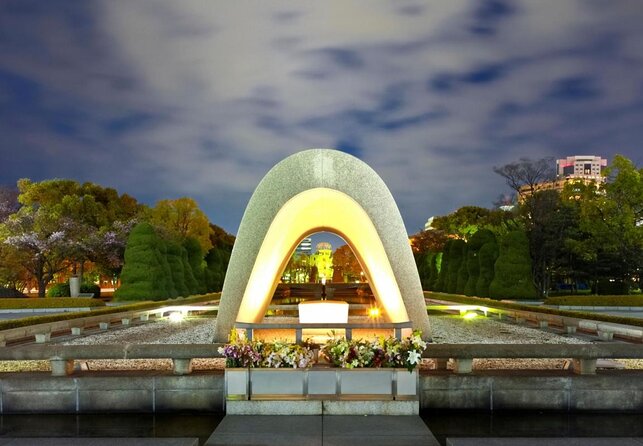
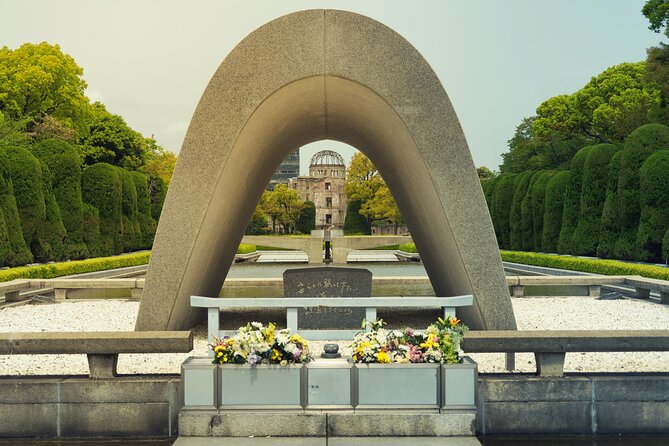
The day opens in Peace Memorial Park, a broad green area in the center of Hiroshima. The setting is calm, with open space and water, but the subject is heavy. Your guide introduces the events of August 6, 1945 and explains how Hiroshima has built a public commitment to peace around the sites of destruction.
Allow about two hours here. That is enough time to see the key memorial areas without treating the visit as a quick photo stop. The guide can explain the meaning of the monuments, help you place them in the city’s story, and answer questions as they come up.
I think this is where the small group matters most. In a large crowd, the Peace Memorial Park can become a sequence of stops and dates. With fewer people, you have a better chance to pause, ask about what you are seeing, and keep the pace suitable for your group.
The mood also requires some personal space. This is not a light sightseeing morning, and the tour does not try to make it one. You should expect a serious visit, followed by a change in tone once you head toward Miyajima.
The Atomic Bomb Dome in 20 minutes
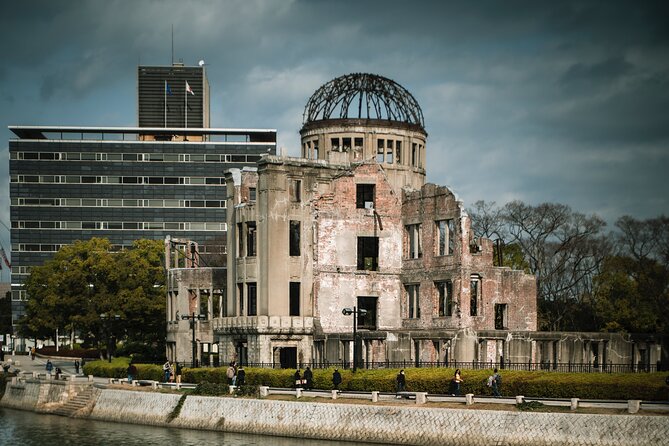
The Atomic Bomb Dome is one of Hiroshima’s most recognizable structures. Its damaged frame has been preserved near the river as a reminder of the bombing and its aftermath. It is a UNESCO World Heritage Site, but its power does not come only from the formal designation. The exposed remains make history feel immediate.
The scheduled stop is about 20 minutes, with no separate admission charge. That is enough for an exterior look, photographs, and an explanation from your guide. You should not expect a long indoor visit here. The Dome is seen from outside, as part of the wider Peace Memorial area.
A useful tip is to listen before rushing for pictures. The structure can seem stark at first glance, but the guide’s context helps you understand why it was preserved and why it remains central to Hiroshima’s public memory.
The Peace Memorial Museum needs your attention
The Peace Memorial Museum receives about an hour of the schedule, with admission included. This is the most emotionally demanding stop. Exhibits cover the bombing, the people affected, and the city’s effort to communicate the human cost of nuclear war.
One hour is enough for a focused visit, but not for every display in detail. If you read slowly or want to spend a long time with individual exhibits, you may feel the clock. The guide’s timing can help you avoid using too much of the morning here and missing Miyajima later.
The museum is not a casual attraction. You may find some displays upsetting, particularly those dealing with personal belongings and physical suffering. Go at your own pace, and do not feel obliged to rush through material simply because the group has a meeting time.
The best part of having a guide before entering is the framing. You already have a sense of the park and Dome, so the museum does not feel like isolated information. Guides such as Kensuke and Ken have been praised for explaining the subject clearly and making room for questions.
Same base, a different sort of day:
- Hiroshima Historical Walking Tour – Why A-Bomb was Dropped
★ 4.8 · 893 reviews - Hiroshima Peace (Heiwa) Walking Tour at World Heritage Sites
★ 5.0 · 872 reviews - Hiroshima in a Nutshell: Morning Bike Adventure
★ 5.0 · 524 reviews - Hiroshima City 4hr Private Walking Tour with Licensed Guide
★ 5.0 · 437 reviews
The public transport question
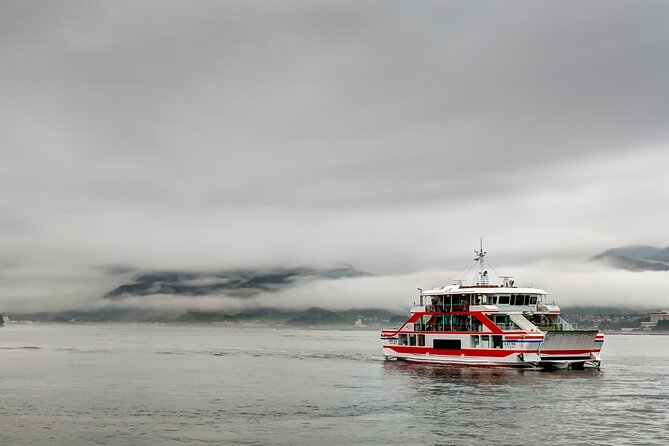
The tour includes tram, bus, and ferry fares. That is convenient, but it does not mean the transportation is fast. The journey from the Peace Memorial area toward Miyajima involves public connections, and the day includes travel time within its eight-hour duration.
This is the main practical weakness. A direct sightseeing boat from near the museum can be quicker when it is running, but smaller boats may depend on tides and weather and can sell out early. The public ferry is less glamorous, yet it offers a more dependable plan for a scheduled group tour.
You should book this experience knowing that public transport is part of the design, not a minor detail. The guide helps with the routes and keeps the group together, which is valuable in an unfamiliar city. Still, you will spend part of the day waiting, walking between connections, or riding with the general public.
That arrangement suits you if you want a lower-cost alternative to a private vehicle and prefer a small group to a large coach. It may frustrate you if you expect a premium tour with door-to-door transfers.
Miyajima changes the rhythm

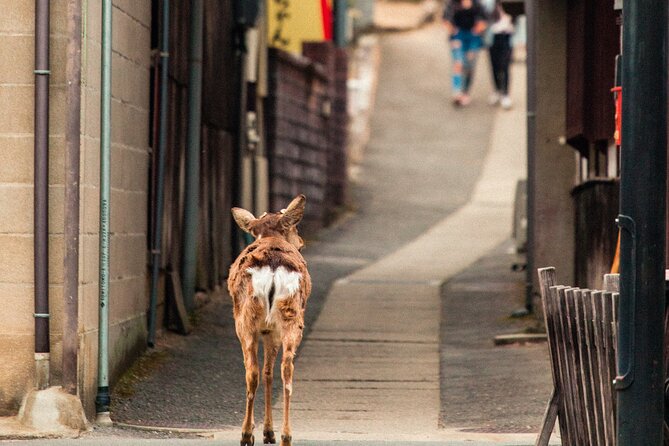
Miyajima gives the day a welcome shift in mood. The island is known for traditional architecture, maple trees, sea views, deer, and the famous red torii associated with Itsukushima Shrine. You have about two hours for the island itself, separate from the shrine visit.
This is not enough time to explore every corner. It is enough to get a feel for the place, walk through the main streets, see the deer, and take in the setting. You might find the island busy around its best-known sights, but the visual contrast with the morning is still striking.
The island’s appeal is not only the torii gate. The combination of water, shrine buildings, old-style streets, and forested hills gives Miyajima its character. You can enjoy the change from memorial sites to living cultural spaces without pretending the two places have the same mood.
The schedule asks you to keep moving. If you want long shopping stops, a relaxed lunch, or a hike, this tour may feel too tight. If your goal is a first look at Miyajima after seeing Hiroshima’s central memorial sites, the timing is more useful.
Itsukushima Shrine and the floating gate
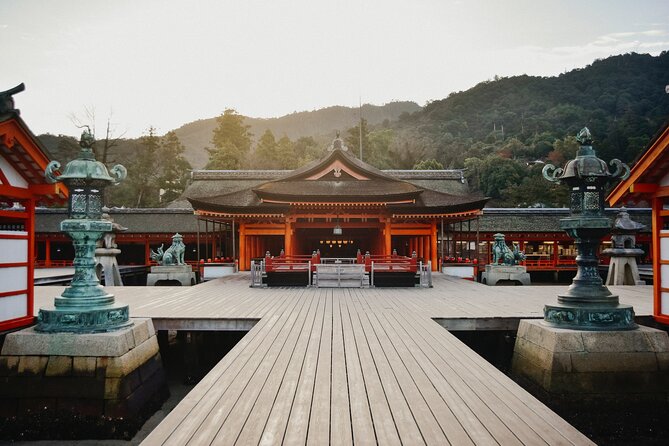
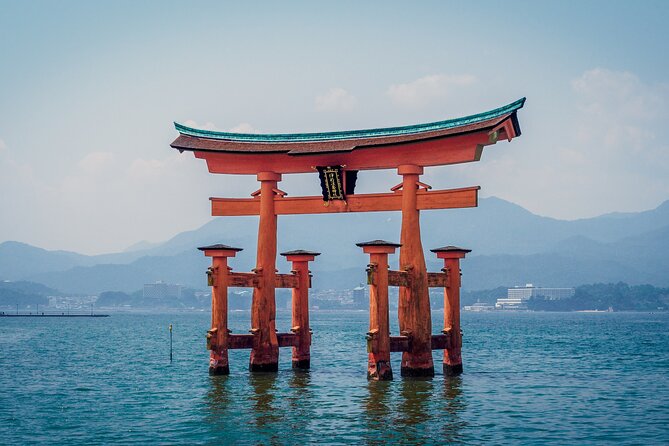
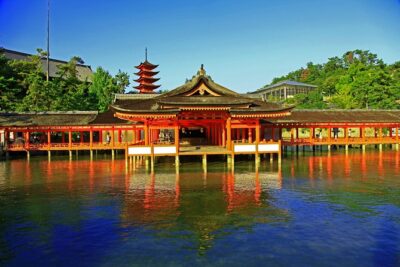
Itsukushima Shrine receives about 90 minutes, with admission included. Built over the water, the shrine is known for its red buildings and the great torii gate offshore. The relationship between the architecture, tide, and sea is central to the sight.
Your guide can explain the shrine’s role and point out details that are easy to miss when you are walking alone. The admission fee being included removes one small task, though you still need to follow the group’s schedule.
The view of the torii can change with the tide and weather. Do not expect one fixed postcard scene every time. The gate may appear surrounded by water or more accessible from the shore, and cloudy conditions can alter the feel of the visit.
Miyajima also has food worth making room for. Lunch is not included, and one guide’s group enjoyed Japanese food and desserts during the island portion. You should budget time and money for your own meal, but remember that a long restaurant stop could cut into sightseeing.
Guides: the human factor
The strongest part of this experience is likely to be your guide. Ken and Kensuke are repeatedly praised for local knowledge, clear explanations, warmth, and practical help with the rail system. Kensuke is also noted for his enthusiasm and his ability to explain the sites in accessible English.
Yuka Yoshida is described as a strong guide, with Miyajima’s scenery, shrine, and food among the highlights of her day. Guide quality can vary, so it is sensible to understand that names are not a guarantee of assignment. The provider also offers an option involving a professional photographer-guide, which may suit you if photographs are a major reason for booking.
One useful detail from the experience is the guide’s role beyond formal commentary. Ken has helped groups with train connections, stayed in touch when someone was late, and adjusted the final drop-off for a group that found Hiroshima Station inconvenient. Those gestures cannot be promised, but they show why a small group can be more flexible than a fixed coach excursion.
English ability may also vary by guide. Most of the available feedback praises communication, but one poor experience raised concerns about organization and English. That is worth keeping in mind, particularly if detailed historical explanation is essential to you.
Price, pace, and overall value
At $167.44 per person, this is a mid-to-high-priced public transport tour. You are paying for a guide, a carefully arranged day, admission to the Peace Memorial Museum and Itsukushima Shrine, and included tram, bus, and ferry fares.
You are not paying for lunch, private transport, or a large amount of free time. The value improves if you have one day in Hiroshima and want both major areas without planning the connections yourself. It is weaker if you are comfortable using Japanese public transport and would rather visit each site independently.
The average booking point is 36 days ahead, which suggests that planning early is wise, especially if you need a particular date or want the photographer-guide option. Group discounts may improve the price for more than one person, though the exact savings depend on the booking.
The cancellation terms are reasonable: cancel at least 24 hours before the start for a full refund. Poor weather can also lead to a new date or full refund. This is useful because the Miyajima portion depends on outdoor walking and ferry travel.
Who should book this day?
I would choose this tour if you want a guided first visit to Hiroshima, have limited time, and prefer a group capped at eight. It suits people who want historical context in the morning and a scenic cultural stop in the afternoon.
It is also a good fit if public transport feels stressful. The guide can direct you through the tram, bus, and ferry network, while keeping the day moving.
I would hesitate if you dislike walking, need a slow museum visit, or want a private vehicle. I would also think twice if your budget is tight, since lunch is extra and much of the transport is public.
Should you book it?
Book it if your priority is seeing Hiroshima’s Peace Memorial sites and Miyajima in one organized day, with a small group and a local English-speaking guide. The combination is memorable, and the guide can add the context that independent sightseeing often lacks.
Skip it if you want maximum time at the museum, a leisurely Miyajima visit, or direct transport. In that case, two separate days may serve you better.
For most visitors with only one Hiroshima day, this is a thoughtful and efficient choice, provided you accept the walking, the public connections, and the serious tone of the morning.
FAQ
How long does the tour last?
The tour lasts approximately eight hours, including travel time between stops.
What time does the tour begin?
The start time is 8:30 a.m.
Where does the tour begin?
It begins at the 7-Eleven Hiroshima Motoyasubashi East Store, 1-chōme-5-20 Ōtemachi, Naka Ward, Hiroshima.
Where does the tour end?
The scheduled drop-off is at Hiroshima Station in central Hiroshima.
How many people can join the tour?
The group has a maximum of eight participants.
Is lunch included?
No. Lunch is not included, so you need to buy your own food during the day.
Are transport fares included?
Yes. Public tram, bus, and ferry fares are included.
Are admission fees included?
Admission to the Peace Memorial Museum and Itsukushima Shrine is included. The Atomic Bomb Dome has no separate admission fee.
How much walking is involved?
The tour requires a moderate level of physical fitness and includes a good deal of walking.
Can I cancel for a full refund?
Yes, if you cancel at least 24 hours before the experience start time. Poor weather may result in a different date or a full refund.
Just added in Hiroshima
- Iya Valley BROMPTON Slow Cycling Tour★ 5.0 · 28 reviews
- Iya Valley All Must-Sees Private Chauffeur Full-day Tour with a Driver★ 5.0 · 20 reviews
- Shore Excursion from Hiroshima Port : Private Tour in Hiroshima★ 5.0 · 17 reviews
- Hiroshima & Miyajima All-Inclusive Tour w/Licensed guide Pancho★ 5.0 · 54 reviews
- Okunoshima Rabbit Island Cycling Tour with Local Guide★ 4.5 · 17 reviews
- Hiroshima Private Tour with a Local – Highlights & Hidden Gems★ 4.5 · 24 reviews
- Private Full Day Hiroshima Tour★ 4.5 · 29 reviews
- Hiroshima Saijo Sake Tasting Tour with visit to 7 Breweries★ 5.0 · 104 reviews
Hiroshima & Miyajima Day Trips, compared.
Peaceful Hiroshima & Miyajima UNESCO 1 Day Bus Tour
Read our review →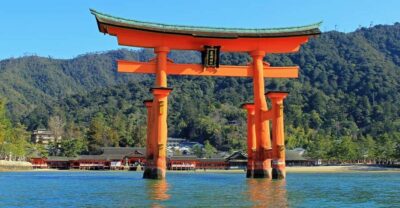
Hiroshima and Miyajima UNESCO Sites 1-Day Tour
Read our review →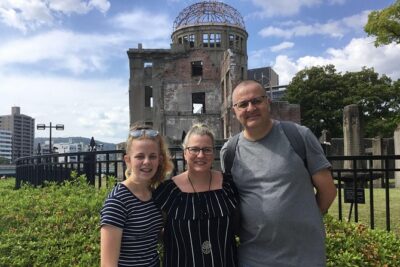
Hiroshima / Miyajima Full-day Private Tour with Government Licensed Guide
Read our review →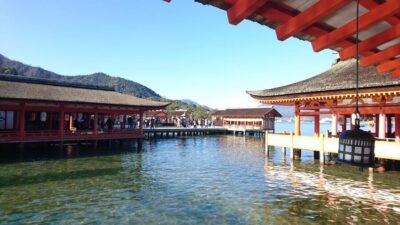
Osaka/Kyoto: Hiroshima Miyajima Bus Tour & Shinkansen Ticket
Read our review →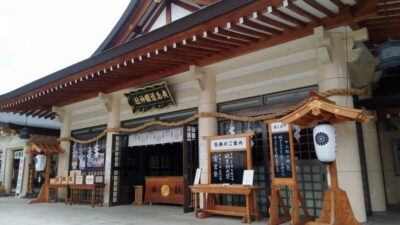
Hiroshima Historical Walking Tour – Why A-Bomb was Dropped
Read our review →
Hiroshima Peace (Heiwa) Walking Tour at World Heritage Sites
Read our review →
Hiroshima in a Nutshell: Morning Bike Adventure
Read our review →
Hiroshima City 4hr Private Walking Tour with Licensed Guide
Read our review →Browse the lists this tour appears in