
Reviewed · CYCLING TOURS
Kanazawa Half Day E-bike Tour
Kanazawa’s best sights are spread across several historic districts, and this small-group e-bike tour links them without making you spend the day on buses. You’ll see geisha streets, feudal gardens, castle walls, and samurai lanes, with a local guide explaining what you are looking at.
I like the easy pace and the chance to use quiet streets instead of simply following a sightseeing bus. I also like the tea and wagashi stop, plus the local tips from guides such as Rina, Nicola, Liam, and Ti. The main catch is weather: rain, snow, strong wind, or unsafe roads can change the bike tour into a walking and public transport outing.
Key points at a glance
- Eight-person maximum: The small group leaves room for questions, photo stops, and route adjustments.
- A useful first-day orientation: The route connects Kanazawa Station, Higashi Chaya, Kenrokuen, the castle area, and Nagamachi.
- Local guides shape the experience: Rina, Nicola, Liam, and Ti are praised for clear explanations, patience, and practical restaurant advice.
- Matcha with traditional wagashi: The tea break adds a quiet cultural moment to an active morning or afternoon.
- E-bikes cover more ground: You can reach several districts without the effort of a full day on a standard bicycle.
- Weather matters: The operator may replace cycling with buses and walking when conditions are unsafe.
Why an e-bike is a smart way to see Kanazawa
Kanazawa is compact enough to explore on foot, but its main sights do not sit in one neat cluster. The station is south of the traditional districts. Higashi Chaya lies across the Asano River, Kenrokuen and Kanazawa Castle sit near the center, and Nagamachi is farther west.
That makes the bicycle useful. You get the visual pleasure of moving through ordinary streets, while the electric motor takes the sting out of longer stretches and small slopes. You are not locked inside a bus, and you do not lose time waiting for the next ride.
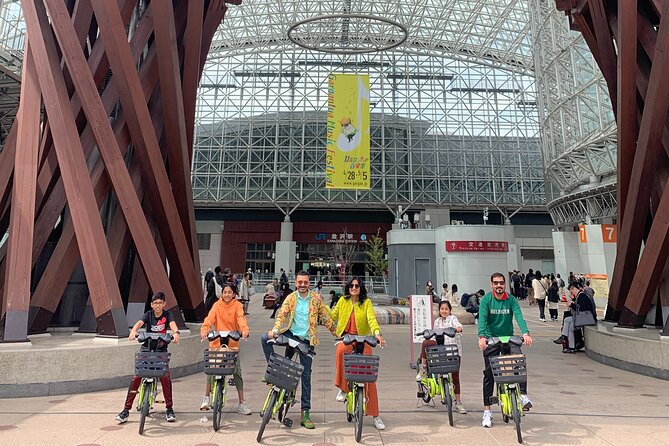
The tour lasts about four hours and has a maximum of eight people. That is a good size for city cycling. Your guide can keep the group together, explain a gate or garden feature without shouting, and answer questions without turning the outing into a private tour price.
You should still be comfortable riding a bicycle in town. The e-bike helps with effort, not with balance, traffic awareness, or stopping. Riders under 145 centimeters are not recommended for the e-bike, so check this before booking.
Other rides on two wheels around Kanazawa:
- Kanazawa Half Day E-bike Tour
★ 5.0 · 81 reviews - Kanazawa Ninja Temple Half Day E-bike tour
★ 5.0 · 14 reviews - Bike Tour Exploring North Kyoto plus Lunch
★ 5.0 · 1,087 reviews
Starting at Kanazawa Station and finding your bearings
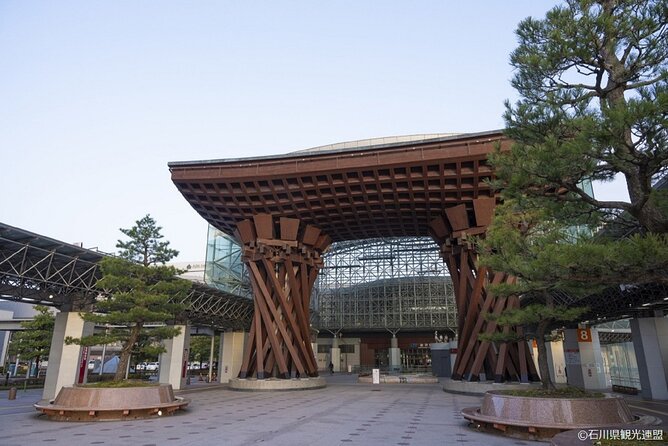
The meeting point is by McDonald’s at 1-1-1 Kinoshinbomachi, near Kanazawa Station. The station itself deserves a few minutes before you set off. Its large Motenashi Dome shelters the entrance, while the wooden Tsuzumi Gate takes its form from traditional Japanese drums.
Your guide begins here with an introduction to the city and the route. This is more useful than it may sound. Kanazawa has several districts that can blur together on a first visit, and the opening explanation gives you a mental map before you start moving.
The station area is also practical for people arriving by train with limited time. You can step off the train, find the meeting point, and begin seeing the city without first working out several bus connections.
The tour ends somewhere different from the starting point. The exact end location should be confirmed when you book or receive the meeting details. That matters if you have luggage, a restaurant reservation, or a train to catch soon after the tour.
Higashi Chaya, where the geisha district still feels distinct
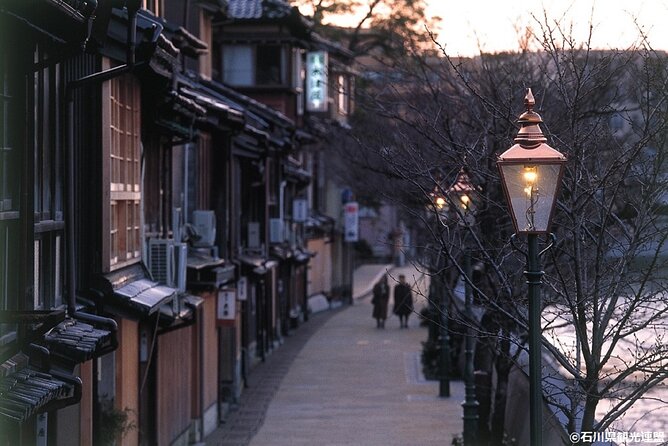
The ride to Higashi Chaya takes you into one of Kanazawa’s best-preserved entertainment districts. Broad lanes, dark wooden facades, and traditional teahouses give the area a clear sense of place, even when you are only passing through.
Your guide explains how the chaya system worked, including the social rules and merchant culture that shaped the district during the Edo period. This turns a photogenic street into a place with a human story. You learn why the teahouses existed, who used them, and how Kanazawa’s wealthy merchants supported this world.
The stop lasts about an hour, so you should have time to look closely rather than race through for a single photograph. You may also receive suggestions for food and other places to visit later. Rina, Nicola, Liam, and Ti are all described as guides who offer practical advice beyond the scheduled stops, which can be especially useful if this is your first day in town.
Higashi Chaya can feel busy at popular times, and bicycles are not a reason to ride carelessly through the district. Expect to park or leave the bikes while you walk through the most interesting lanes. The value here comes from the guide’s explanation and your time on foot, not from speed.
Kenrokuen Garden, careful design in every direction
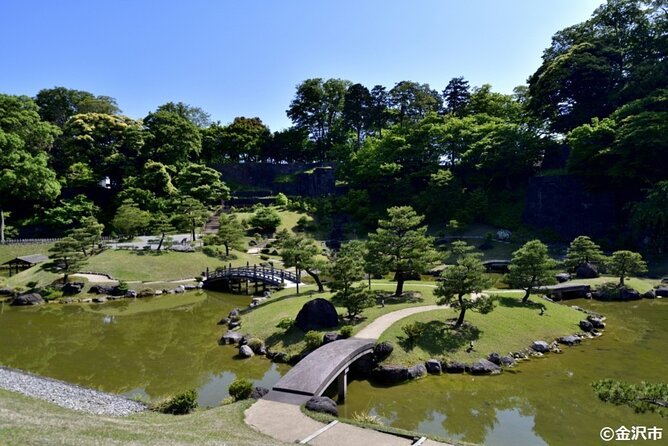
Kenrokuen is one of Japan’s Three Great Gardens and usually the visual high point of the tour. Its name refers to six qualities traditionally valued in a garden: spaciousness, seclusion, artifice, antiquity, water, and good views. You do not need to memorize the list, but it helps you notice that the garden was planned as a display of power and taste, not simply planted for decoration.
The stop lasts about an hour and includes admission. Your guide explains how the garden reflects feudal-era design, then gives you time to walk, look, and take photographs. Paths lead through ponds, trees, bridges, and carefully arranged viewpoints. The appeal changes with the season, so the same visit can feel very different at another time of year.
I like the way this stop breaks up the cycling. You get a chance to slow down, and the garden gives the guide plenty to discuss without turning the experience into a lecture. The route also leaves room for a tea stop with matcha and traditional wagashi, often highlighted as one of the most memorable parts of the afternoon.
Do not expect to cover every corner of Kenrokuen in one hour. The garden is best treated as a focused introduction. If you are a serious garden enthusiast, plan to return on your own with more time.
Same base, a different sort of day:
- World Heritage Shirakawa-go and Experience Tours from Kanazawa
★ 5.0 · 4,049 reviews - Kanazawa: Kenrokuen Tea Ceremony Experience
★ 4.8 · 1,139 reviews - Kanazawa Half Day Tour (Private Guide)
★ 5.0 · 361 reviews - Kanazawa Full Day Tour (Private Guide)
★ 5.0 · 323 reviews
Kanazawa Castle and Gyokusen’inmaru Garden
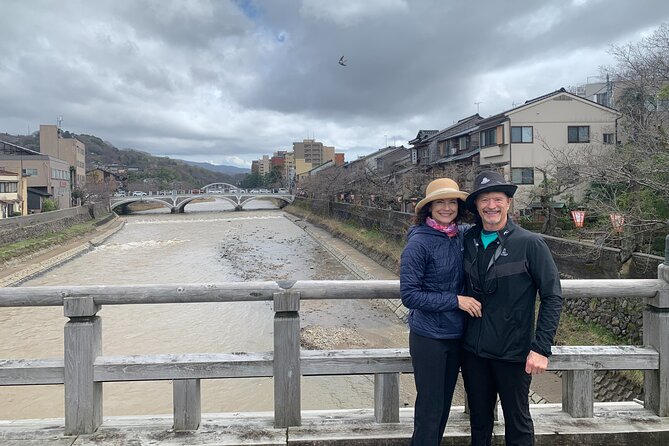
From Kenrokuen, the tour moves to Kanazawa Castle, once the base of the powerful Maeda clan for more than 280 years. The white walls and formal gates are impressive, but the guide helps you look past the obvious beauty.
You learn about practical castle design, including storehouses built with fire resistance in mind and defensive layouts that could confuse an approaching enemy. This is one reason a guided visit helps. A wall can look simple until someone explains its purpose.
The stop at the Ishikawa Gate lasts around 30 minutes and does not require a separate admission fee according to the tour details. That keeps the pace moving while still giving you a solid introduction to the castle grounds.
Gyokusen’inmaru Garden follows as a quieter counterpoint. It was once a private garden for the feudal lord and has been restored with the help of historical records. The garden is smaller and more restful than Kenrokuen, which makes it a good place to pause and take in the details.
Admission to Gyokusen’inmaru is included. You may appreciate the contrast between a famous public garden and a less prominent space that was designed for private enjoyment. The visit lasts about 30 minutes, so it is an introduction rather than a long garden walk.
Nagamachi and the lives of Kanazawa’s samurai
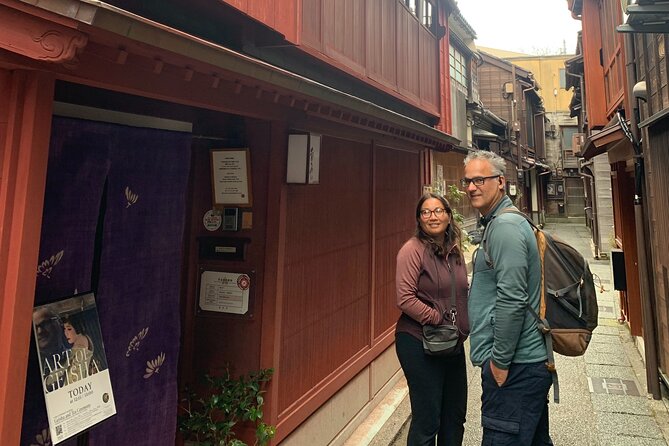
The final major district is Nagamachi, the former samurai quarter. Stone lanes, earthen walls, and narrow canals create a different mood from Higashi Chaya. Here, the guide shifts the focus from merchants and entertainers to the warrior class.
You hear how the samurai adapted over time and how the quarter functioned within Kanazawa’s social order. The point is not only to admire old walls. It is to understand who lived behind them and how rank shaped daily life.
The stop lasts around 30 minutes and is free to enter as described. You may wish it were longer, especially if you want to explore individual residences in detail. Still, the short visit works well within a four-hour route that already includes several major sights.
This district is also a useful reminder that Kanazawa is more than gardens and pretty streets. The city’s identity grew from a complex mix of castle authority, merchant wealth, artistic culture, and samurai administration. Seeing these areas in one outing helps those pieces fit together.
Guides who add the human side
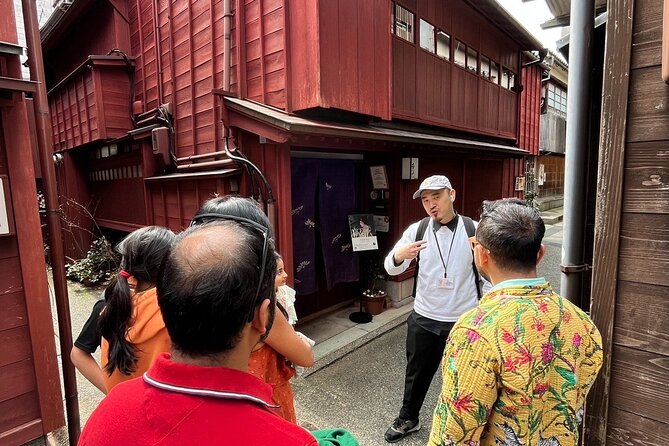
The guide can make or break a city cycling tour. Here, named guides include Rina, Nicola, Liam, and Ti. The available feedback gives each a slightly different strength.
Rina is described as patient with riders who had not been on bicycles for about 20 years. That is important. A good guide should let you practice, check that you are comfortable, and avoid rushing the group. She is also praised for clear communication, lively explanations, and useful advice about food and the rest of a Kanazawa visit.
Nicola is described as friendly and well informed, with a local connection to the city. Liam is praised for punctuality, route handling, patience, and answering questions in a relaxed way. Ti is noted for adapting the route when he had only one participant and for offering restaurant suggestions and ideas for a later stop.
The group may include people with different riding abilities. If you are nervous, tell the guide early. Helmets are available on request, so ask for one before setting off if you want to wear one.
What happens when the weather turns bad
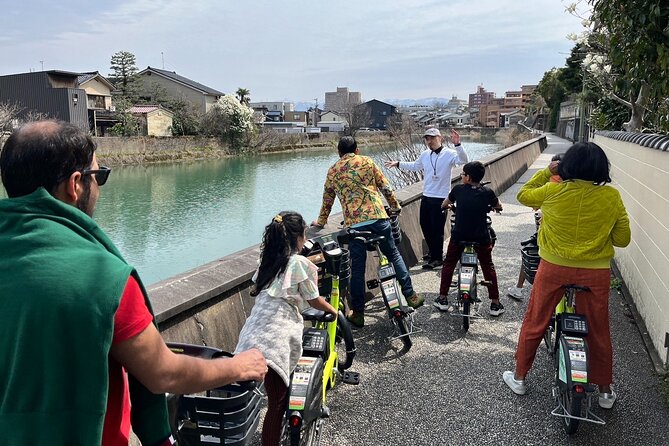
Kanazawa is known for changeable weather, and cycling conditions matter. The tour can be canceled because of rain, snow, strong winds, or unsafe roads. If that happens, you are offered another date or a full refund.
In some cases, the guide may replace the bikes with walking and public transport. That version still visits the gardens and historic areas, and the tea stop can remain a highlight. It will not provide the same freedom or rhythm as cycling, so check the forecast and avoid booking the tour at the very end of a tight itinerary if the route is essential to your plans.
You receive a full refund if you cancel at least 24 hours before the start time. Changes made within 24 hours are not accepted, and late cancellations are not refunded. The weather rule is separate from a personal change of plans, so read the conditions before booking.
Is $125.50 a fair price?
At $125.50 per person, this is not the cheapest way to see Kanazawa. You are paying for more than a bicycle rental, though. The price includes the electric bike, a local guide, entrance fees, traditional snacks, and matcha.
The value depends on how you like to explore. If you would otherwise pay for individual admissions, rent a bike, work out the route, and spend time reading signs, the package becomes easier to justify. The guide’s route planning also lets you visit several districts in four hours, which is useful if you have only one full day in Kanazawa.
The price is harder to justify if you prefer long, unhurried visits at one or two sites. Kenrokuen and Nagamachi both reward extra time, and a self-guided day may suit you better if you want to linger.
For a first visit, I see the tour as an orientation with cultural context. Use it early in your stay, then return to the place that caught your attention. That is also when the restaurant and sightseeing advice from the guide can save you time later.
Who should book this ride?
You should consider it if you want to see the main historic districts in one outing, enjoy learning from a local guide, and feel comfortable on a bicycle. It suits couples, small groups, and solo participants. The route can be adjusted in some circumstances, as shown by the guide adapting a weekday outing for one participant.
It is also a good fit for anyone who finds a full walking day tiring. The e-bike gives you more range without demanding the same effort as a standard bicycle.
You may want another plan if you dislike cycling in towns, have limited balance, are shorter than 145 centimeters, or need a guaranteed bike route in poor weather. Serious garden visitors may also prefer separate, longer visits to Kenrokuen and Gyokusen’inmaru.
Should you book the Kanazawa Half Day E-bike Tour?
Book it if you want a clear introduction to Kanazawa and value stories, local advice, and efficient movement between districts. The combination of Higashi Chaya, Kenrokuen, Kanazawa Castle, Gyokusen’inmaru, and Nagamachi is strong, and the matcha and wagashi stop gives the outing a calm finish.
I would book it near the start of your stay, ideally with enough time afterward to revisit your favorite area. Just keep your plans flexible around the weather, request a helmet if desired, and confirm the end point before you set off. For most first-time visitors who can ride an e-bike comfortably, this is a practical and enjoyable way to get oriented.
FAQ
How long does the Kanazawa e-bike tour last?
The tour lasts approximately four hours. It includes cycling between districts, guided visits, photo time, and a tea break with traditional Japanese snacks.
What sights are included?
The route includes Kanazawa Station, Higashi Chaya District, Kenrokuen Garden, Kanazawa Castle’s Ishikawa Gate, Gyokusen’inmaru Garden, and the former samurai quarter of Nagamachi.
What does the price include?
The $125.50 price includes the electric bicycle, local guide, entrance fees, traditional Japanese snacks, and matcha. Hotel pickup, hotel drop-off, extra food and drinks, and personal expenses are not included.
Where does the tour meet?
The meeting point is McDonald’s at 1-1-1 Kinoshinbomachi, Kanazawa, Ishikawa 920-0858, Japan, near Kanazawa Station. The activity ends at a different location, so check the final details before booking.
Can the tour run in bad weather?
The cycling portion may be canceled because of rain, snow, strong winds, or unsafe road conditions. Depending on the situation, the outing may use walking and public transport instead. If the operator cancels, you can choose another date or receive a full refund.
Can children or shorter riders use the e-bike?
The e-bike is not recommended for riders under 145 centimeters. The tour is a group activity with a maximum of eight participants, and most people can participate if they are comfortable riding a bicycle.
Just added in Kanazawa
- Kanazawa: Sushi & Japanese Cooking Class at a Historic School★ 5.0 · 66 reviews
- Taste of Kanazawa (Food tasting in Omicho Market & Higashi Chaya)★ 5.0 · 58 reviews
- Takayama and Shirakawago/Photoshoot by professional photographer★ 5.0 · 67 reviews
- Kanazawa private 1 day/Photoshoot by professional photographer★ 5.0 · 33 reviews
- Photoshoot session by professional photographer in Kanazawa★ 5.0 · 42 reviews
- Private Tour of Shirakawago and Gokayama from Kanazawa★ 5.0 · 50 reviews
- Shirakawago & Kanazawa from Kanazawa★ 5.0 · 51 reviews
- Private Ring Craft Experience in Kanazawa★ 5.0 · 22 reviews
Cycling Tours, compared.

3h Tokyo E-Bike Tour: Hidden Gems, and Local Life with guide
Read our review →
Arashiyama Bamboo Forest & Hidden Gems Bike Tour (Early Bird)
Read our review →
5 Top Highlights of Kyoto Full Day Bike Tour (E-bike option)
Read our review →
Hiroshima 2hr Peace Cycling Tour with Local Guide
Read our review →Browse the lists this tour appears in