
Reviewed · WORLD HERITAGE TOURS
Kyoto UNESCO World Heritage Site Private Tour with a Premium Van
Kyoto’s biggest sights are spread across the city, and this private tour tackles them by comfortable van rather than asking you to decode several train and bus connections. In one long day, you visit Nijo Castle, Kinkakuji, Ryoanji, Tenryuji, Kiyomizu-dera, and Fushimi Inari, with a guide to keep the day moving.
I like the private format, since your group gets the driver and guide to itself. I also like the practical touch of a guide who can take photos, explain what you are seeing, and help arrange lunch around vegetarian, vegan, or gluten-free needs. Guides named Meri and Mari have been singled out for their friendly manner, local insight, and flexibility.
The tradeoff is pace. Six major sights plus lunch in roughly nine hours means about 30 minutes at many stops, before allowing for traffic and walking. This is a strong first look at Kyoto, but not the right choice if you want long, quiet hours in temple gardens.
Key points to know before booking
- Six major Kyoto sights in one day: The route covers castles, Buddhist temples, a Zen garden, a Shinto shrine, and a famous pavilion.
- Private van and driver: Your group rides together, with drivers such as Mr. Yamashita or Kyomi handling the city driving.
- Meri or Mari may guide your day: Both names appear in the tour’s feedback, with praise for warmth, clear explanations, and an easygoing style.
- Photo help is built into the experience: Your guide can point out photo locations and take pictures of your group.
- Lunch can accommodate several diets: Vegetarian, vegan, and gluten-free meals are available when requested ahead of time.
- The schedule is ambitious: Expect highlights and orientation rather than a slow study of each temple.
Why a private van helps in Kyoto
Kyoto looks compact on a map, but its main sights are not clustered in one easy walking district. Nijo Castle is near the center, Kinkakuji and Ryoanji are farther northwest, Tenryuji is in Arashiyama, and Kiyomizu-dera and Fushimi Inari are on the eastern and southeastern sides of the city.
The private van changes the feel of the day. You do not need to keep checking train platforms, find a bus stop after each temple, or split your party across public transport. After a busy visit, you can return to the vehicle, sit down, and let the driver handle the next leg.
That comfort matters most for families, solo visitors who want easy logistics, and anyone with only one full day in Kyoto. It also helps if you want to see a broad range of sites without spending the day studying transit maps.
You begin at 9:00 a.m. at the general taxi rank by Kyoto Station’s Karasuma Entrance. The activity ends back at the same meeting point. Hotel pickup is offered, but confirm the exact pickup arrangement when booking, since the listed meeting point is Kyoto Station.
The van is useful, but it cannot erase Kyoto’s crowds or road traffic. The day’s order may need to shift, and a 30-minute visit can feel short at a place such as Kiyomizu-dera or Ryoanji. Think of this as a well-organized sampler with private transportation, not a leisurely temple retreat.
Other listed sites reached from Kyoto:
- Kyoto: Nijo Castle World Heritage Guided Tour with Admission
★ 5.0 · 128 reviews - World Heritage Shirakawa-go and Experience Tours from Kanazawa
★ 5.0 · 4,049 reviews - World Heritage Kyoto & Nara Uji Authentic Matcha Experience
★ 5.0 · 1,573 reviews
Nijo Castle sets the historical tone
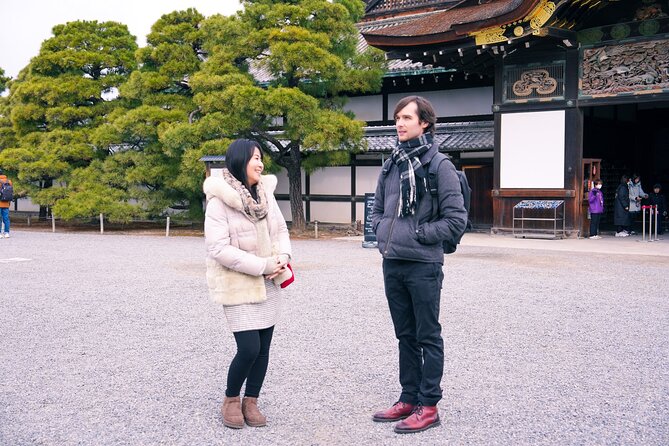
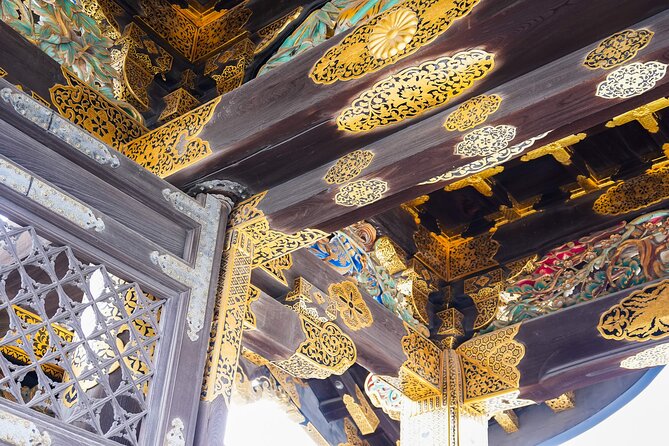
Nijo Castle is a smart first stop. It gives you a change of mood from the modern station area and introduces Kyoto through a former seat of power rather than a religious site.
The visit is listed at about 30 minutes, with admission included. That is enough to get a clear sense of the castle grounds and hear the main points from your guide, but you should not expect to examine every room or garden at length.
Your guide can also help you understand why this place belongs in a Kyoto highlights tour. The castle offers a different kind of cultural experience from the temples later in the day. You begin with architecture, political history, and formal grounds before moving into Zen gardens and Shinto worship.
If you care most about detailed interiors, ask at the start how much time is possible here. The day is flexible in spirit, but the number of stops makes long extensions difficult.
Kinkakuji delivers the famous golden view
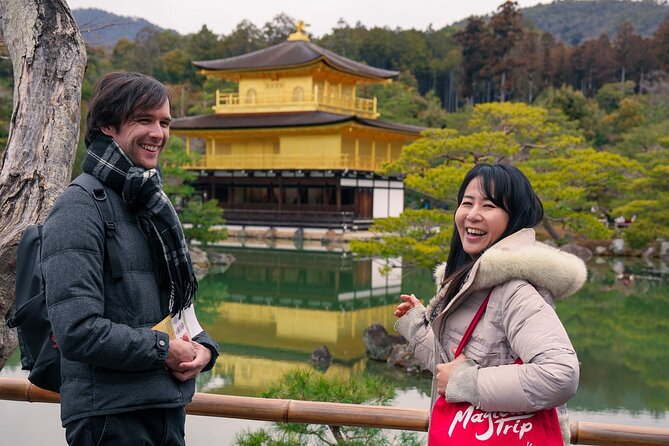
Kinkakuji, commonly called the Golden Pavilion, is the stop most likely to match the image you already have of Kyoto. Its gold-covered exterior reflects in the pond, creating the classic photograph that draws people here.
The scheduled visit is about 30 minutes, and admission is included. That works well for seeing the pavilion from its main viewing areas, taking photos, and hearing why it is recognized as a UNESCO World Heritage site. The setting does much of the work. You do not need a long lecture to understand why this stop matters.
The short visit also has a benefit. Kinkakuji can become crowded, and a focused stop keeps you from losing half the day around one view. Your guide can help you find the best angle and take group photos, which is useful if you do not want one person left out of every picture.
Still, this is a place where you might want more time if you enjoy gardens or photography. Ask your guide whether the schedule allows a few extra minutes, especially if the pond reflection is good and the paths are moving slowly.
Ryoanji offers Kyoto’s quietest contrast
Ryoanji changes the rhythm again. Its famous rock garden is spare, still, and built around careful observation rather than visual spectacle. After the bright gold of Kinkakuji, the plain stones and pale gravel can feel like a reset.
The tour allows about 30 minutes here. That gives you time to sit or pause before the garden, look at its arrangement, and hear an explanation of its Zen setting. It is a worthwhile stop even if you do not usually spend much time in religious buildings, because the experience depends more on looking closely than on knowing every historical detail.
The limitation is clear: half an hour passes quickly. If you want to sit in silence, study the garden from different angles, and explore more of the temple grounds, this itinerary may feel too brisk. I would treat Ryoanji as a meaningful introduction, then return on a future day if the rock garden becomes a favorite.
The tour information also mentions Ninnaji as an alternative in the broader route description, while the detailed stop lists Ryoanji. Confirm the final temple plan before you go if that distinction matters to you.
Same base, a different sort of day:
- PERFECT KYOTO 1-Day Bus Tour
★ 5.0 · 13,518 reviews - Kyoto: Fushimi Inari, Kinkakuji, Bamboo Grove 1 Day Bus Tour
★ 4.8 · 4,316 reviews - Kyoto: Tea Ceremony in a Traditional Tea House in Kiyomizu
★ 4.9 · 3,519 reviews - Kyoto Geisha Walking Tour: Gion District & Hidden Gems
★ 4.7 · 3,273 reviews
Tenryuji and Sogenchi Teien bring in Arashiyama
The next listed stop is Sogenchi Teien, the garden associated with Tenryuji in Arashiyama. The description pairs the visit with bamboo groves and Tenryuji, a Zen temple known for its garden setting.
This is one of the day’s most scenic sections. The garden gives you a softer, more spacious view of Kyoto than the compact urban streets around the central temples. The bamboo area adds a different visual experience, with tall green stalks and narrow paths that make for strong photographs.
The planned visit is again about 30 minutes. That is enough for a brisk walk and a few photographs, but Arashiyama deserves more time if you want to explore at an unhurried pace. The area has several sights, and this tour is designed to give you the main impression rather than cover every corner.
Your guide’s role is especially helpful here. The day can otherwise become a string of famous names, but a good explanation connects the temple, garden, bamboo paths, and wider character of Arashiyama. Guides such as Meri and Mari have been praised for making the cultural details easy to follow without making the day feel stiff.
Lunch is a practical pause, not a fixed restaurant promise
Lunch lasts about one hour at a locally recommended restaurant. The exact restaurant is not specified, so the appeal is flexibility rather than a guaranteed menu or dining style.
This break matters. Six major cultural stops can make even an enthusiastic sightseer tired, and sitting down gives you time to ask questions, regroup, and adjust the afternoon. One account specifically praised the lunch stop and the way the day included breaks when needed. Another noted a sushi meal, but you should not assume sushi is the fixed lunch for every group.
Dietary planning is one of the tour’s better practical features. Vegetarian, vegan, and gluten-free choices are available with advance notice. Tell the operator before the tour rather than waiting until the morning of departure.
The lunch is listed as admission free, but that does not clearly say that the meal itself is included in the price. Confirm what you will pay for lunch when booking. That small check prevents confusion, especially when comparing this tour with other private day tours.
Kiyomizu-dera gives you Kyoto’s big eastern view
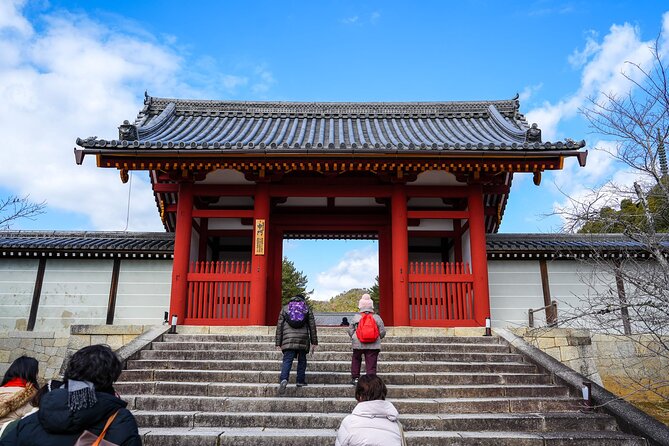
Kiyomizu-dera is one of Kyoto’s best-known temples and another UNESCO-listed property within the Cultural Properties of Ancient Kyoto group. The grounds include national treasures and important cultural properties, so this is more than a quick photo stop.
The route allows about 30 minutes with admission included. You can expect a guided look at the main temple area, a chance to photograph the famous wooden structure and surrounding views, and a short explanation of the site’s religious importance.
The approach and temple grounds can involve walking, and the schedule does not leave much room for a slow climb through every lane around the temple. If your priority is the wider Higashiyama area, including traditional streets or the Geisha district, ask whether there is flexibility. One full-day account included the Geisha district, but the listed itinerary here focuses on the six main sites, so you should not assume that extra stop is guaranteed.
Kiyomizu-dera is also a good place to notice the difference between a private tour and a self-guided visit. Your guide can give you a clear starting point and help you avoid wasting time. The van cannot take you into every pedestrian area, so be ready for some walking after you leave the vehicle.
Fushimi Inari ends with a memorable burst of color
The final stop is Fushimi Inari-taisha, the Shinto shrine famous for its long corridors of vermilion torii gates. It is a strong ending because the visual character is unlike the castle, pavilion, rock garden, or temple grounds earlier in the day.
Admission is free, and the visit is scheduled for about 30 minutes. That is enough to walk through the first section of gates and take photographs. It is not enough to hike the full mountain route, so set your expectations accordingly.
Your guide can explain the shrine’s connection to Inari worship and the many Inari shrines found across Japan. The torii are donated gates, and the repetition creates the famous tunnel effect that makes Fushimi Inari one of Kyoto’s most recognizable sights.
Ending here also means the day closes with a shrine rather than another Buddhist temple. That variety is one of the tour’s strengths. The drawback is that Fushimi Inari is often most rewarding when you walk farther from the entrance, while this schedule gives you only a short taste.
What the guide and driver add
The guide is not simply there to point at buildings. The best use of the guide is to turn a rapid route into a connected day. Meri is repeatedly described as warm, fun, and well informed, while Mari is praised for being flexible, easy to chat with, and good at adjusting the pace. Because guide assignments can change, treat those names as examples, not a guarantee.
The driver is just as important. A private day around Kyoto can become tiring if every transfer is a negotiation. Drivers including Mr. Yamashita and Kyomi have been praised for competent, stress-free service and for getting the group where it needed to go.
The photography help is a useful extra. At major sights, someone in the group often ends up taking every picture. Having the guide take photos can keep the whole group in the frame, though you should still ask before relying on the service for a particular shot.
Is $525.50 per person a fair price?
At $525.50 per person, this is not a budget sightseeing day. Its value depends heavily on group size and on how much you value private transport, a personal guide, included admission at several sites, and a planned route.
For a couple or a solo visitor, the price is a serious splurge. You could spend much less using Kyoto’s trains and buses, then pay individual admission fees as needed. You would also have more control over how long you stay at each place.
For a family or small group, the calculation is better. You are paying for a private vehicle, a dedicated driver, a guide, route planning, photo help, and less friction between distant sights. If your group would otherwise need multiple transit fares, taxis, or a separate guide, the premium may feel more reasonable.
The tour has also earned a 5 out of 5 rating from 20 ratings, with 100 percent recommending it. The strongest praise centers on the guide’s friendliness and local explanations, the driver’s calm service, the comfortable vehicle, and the way the route covers many major sights in one day. Those are the areas that justify the price. If you mainly want admission and transportation, it is expensive. If you want someone else to manage the day, it offers more value.
Who should book this Kyoto day?
I would choose this tour for a first visit when you have only one full day for Kyoto and want to see the city’s major cultural sites without handling the transport yourself. It also fits families, couples, solo visitors, and groups with dietary needs that require advance planning.
It suits people who want context and photos but do not need hours at every temple. The private format also makes it easier to ask questions, request a break, or discuss a small adjustment with your guide.
I would hesitate if you already know Kyoto well, dislike fixed schedules, or want to spend a full morning in one garden. The 30-minute visits are efficient, but efficiency is not the same as depth.
Free cancellation is available up to 24 hours before the 9:00 a.m. start. Changes or cancellations inside that window are not refunded, and poor weather can lead to a new date or a full refund. Since the experience requires good weather, keep that policy in mind when fitting it into a tightly planned trip.
FAQ
How long does the Kyoto UNESCO private tour last?
The tour lasts approximately nine hours, beginning at 9:00 a.m. and ending back at the meeting point.
Where does the tour begin and end?
The listed meeting point is the general taxi rank at Kyoto Station’s Karasuma Entrance. The activity ends back at the same meeting point. Pickup is also offered, so confirm the arrangement when booking.
Is the tour private?
Yes. Only your group participates in the private activity, with a personal guide and private vehicle.
Which sites are included?
The detailed route includes Nijo Castle, Kinkakuji Temple, Ryoanji Temple, Sogenchi Teien and Tenryuji, lunch in Kyoto, Kiyomizu-dera Temple, and Fushimi Inari-taisha Shrine.
Can the tour accommodate dietary restrictions?
Vegetarian, vegan, and gluten-free options are available when requested in advance.
Can I cancel for a full refund?
Yes. You can cancel at least 24 hours before the experience start time for a full refund. Cancellations or changes made less than 24 hours before the start are not refunded or accepted. If poor weather causes the tour to be canceled, you will be offered another date or a full refund.
Should you book it?
Book this tour if you want a private, comfortable first look at Kyoto and would rather spend your day seeing temples than planning transfers. The guide, driver, lunch planning, and photo help make a packed route easier to manage.
Skip it if your ideal Kyoto day means lingering in Ryoanji’s garden, hiking far into Fushimi Inari, or exploring Arashiyama at a slow pace. At this price, the tour earns its keep through convenience and personal service, not through long visits. For the right first-time visitor, that trade is sensible.
Just added in Kyoto
- Private Cooking Class Udon in Kyoto Japan★ 5.0 · 23 reviews
- Your Private Vacation Photography Session In Kyoto★ 5.0 · 110 reviews
- Kyoto: Zen Meditation at a Private Temple with a Monk★ 5.0 · 25 reviews
- Kyoto Wagashi(Japanese sweets) Cooking Class near Fushimiinari★ 5.0 · 60 reviews
- Private Pewter Sake Cup Experience with a Kyoto Artisan★ 5.0 · 31 reviews
- Kyoto:Family-Friendly Kimono & Yukata Experience at WARGO★ 5.0 · 147 reviews
- Private Guided Traditional Buddhist Cooking in Japan★ 5.0 · 16 reviews
- Kyoto: Gion Geisha District & Sake-in-Hand Walking Tour★ 5.0 · 37 reviews
World Heritage Tours, compared.
World Heritage Shirakawa-go and Experience Tours from Kanazawa
Read our review →
World Heritage Kyoto & Nara Uji Authentic Matcha Experience
Read our review →
World Heritage Shirakawa-go Morning Guided Tour
Read our review →
Hiroshima Peace (Heiwa) Walking Tour at World Heritage Sites
Read our review →
World Heritage Shirakawa-go & Two Local Experience
Read our review →
[One-day bus tour departing from Kanazawa Station] Shirakawa-go and Gokayama – Two World Heritage Villages Enjoyable Bus Tour
Read our review →
World Heritage Shirakawa-go Perfect Guided Tour from Kanazawa
Read our review →Browse the lists this tour appears in