
Reviewed · GEISHA & GION DISTRICT TOURS
Kyoto Geisha Walking Tour: Gion District & Hidden Gems
Gion is at its most atmospheric when the lanterns come on and Geiko or Maiko hurry quietly toward an appointment. This tour gives you the setting, the stories, and the cultural background to understand what you are seeing, rather than simply wandering past painted doorways and hoping for a lucky photograph. I especially like the two-hour route through both famous lanes and quieter corners, plus the practical restaurant and sightseeing advice at the end.
I also like the guides’ personal style. Michael receives especially warm praise for his clear explanations, humor, and useful Kyoto tips, while Anton, Yuri, Ikuro, and others also lead tours. The main consideration is simple: seeing a Geiko or Maiko is possible, not promised. You will walk quite a bit, and cold or wet weather can make the open-air route less comfortable.
Key points at a glance
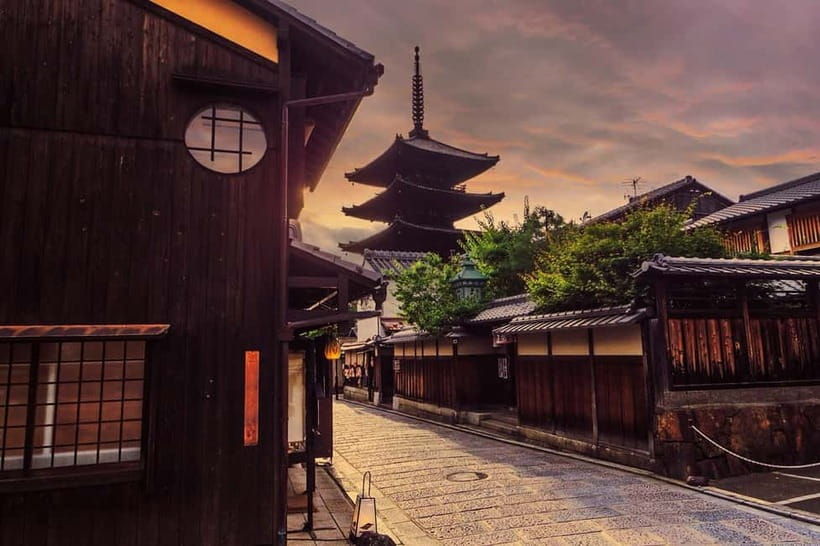
- Gion after dark: Lantern-lit streets create the tour’s most atmospheric setting, especially on later departures.
- Culture beyond costumes: You learn about Geiko and Maiko, the origins of the tradition, and its place in modern Kyoto.
- Three important sights: Kennin-ji, Chion-in, and Hokan-ji Pagoda give the walk more substance than a simple neighborhood stroll.
- Small-group feel: Some departures have been intimate enough to feel almost private, allowing guides to adjust the conversation to your questions.
- Useful trip planning: Guides share personal suggestions for restaurants, bars, shops, attractions, films, and hands-on activities.
- Good value: At $25 for two hours, the tour is an inexpensive way to get your bearings in one of Kyoto’s most confusing and photogenic areas.
Why Gion is more than a photo stop
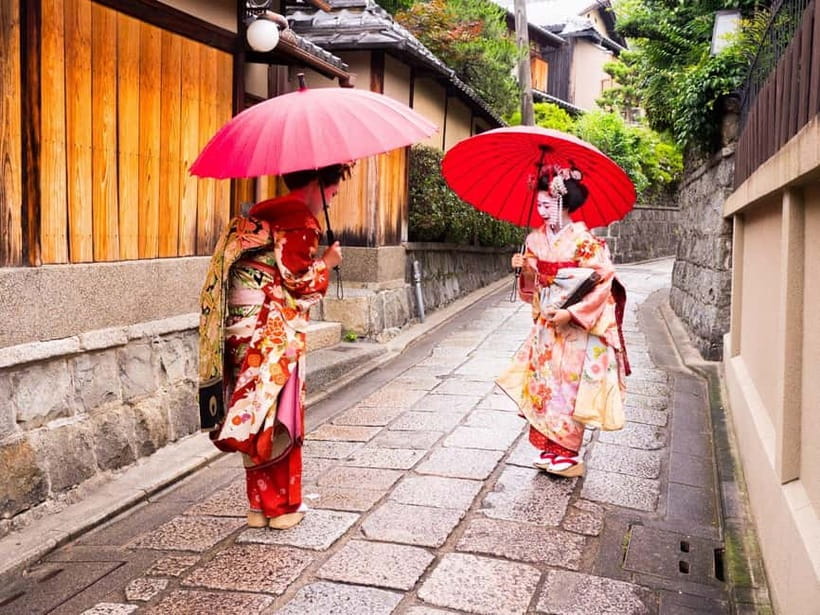
Gion is often reduced to images of white makeup, silk kimono, wooden houses, and narrow lanes. Those images are part of the appeal, but they do not explain how the district works or why its traditions have lasted.
On this walk, your guide places the streets in context. You learn about the origins of Geisha culture, the role of teahouses, and the difference between seeing an entertainer on the way to work and attending a private performance. That distinction matters. The graceful figures moving through Gion are professionals going about their business, not performers posing for a public show.
I appreciate that the tour treats Geiko and Maiko as part of a living culture rather than as decorative scenery. You get a better sense of why the district has private teahouses, why access is limited, and how the old customs fit into present-day Kyoto.
The walk also helps you read the architecture. A traditional machiya townhouse can look like just another narrow wooden façade if you do not know what to notice. With a guide explaining the street design and preserved buildings, Gion feels less like a film set and more like a working historic neighborhood.
Other walking tours in Kyoto people book:
- Kyoto: Gion Magical Night Walking Tour with Geisha Trivia
★ 4.9 · 2,393 reviews - Kyoto: Gion Geisha District Walking Tour – Stories of Geisha
★ 4.7 · 2,187 reviews - Kyoto Gion Geisha District Walking Tour – The Stories of Geisha
★ 5.0 · 1,441 reviews
Meeting beside Hotel Alza Kyoto
The meeting point is on the side street next to Hotel Alza Kyoto. Look for the red parasol or umbrellas with marble seats beneath them.
That is a useful landmark in a district where small lanes can blur together. I would arrive a few minutes early, especially if you are new to Kyoto and still learning how the streets are arranged. The tour is conducted in English, and the guides named in the feedback include Michael, Anton, Yuri, Ikuro, and Ron. Your actual guide depends on the departure.
The tour lasts two hours. That is enough time for a strong introduction, but not enough for long temple visits or a slow look inside every building. Think of it as a well-planned orientation walk, not a full-day historical tour.
Walking the teahouse lanes of Gion
The central pleasure of the experience is simply walking. Gion’s cobblestones, dark timber fronts, paper lanterns, and quiet side streets create a mood that changes as the light fades.
Your guide points out teahouses and explains their place in Geiko culture. These are not ordinary cafés where you can stroll in for a quick drink. Private performances are arranged for wealthy clientele, and the closed-door nature of the tradition is part of what makes the district difficult to understand from the outside.
You also pass boutique-style souvenir shops and preserved machiya homes. These smaller details are valuable because they break up the famous sights. Instead of moving from one postcard view to another, you get a sense of how Gion is arranged and where its old character survives.
The pace is generally comfortable, but this is still a walking tour on uneven streets. One person described it as involving lots of walking, while another found a later departure especially calm because the area was quieter. Wear sensible shoes and keep your schedule loose enough that you do not need to rush away at the finish.
Meeting Geiko and Maiko respectfully
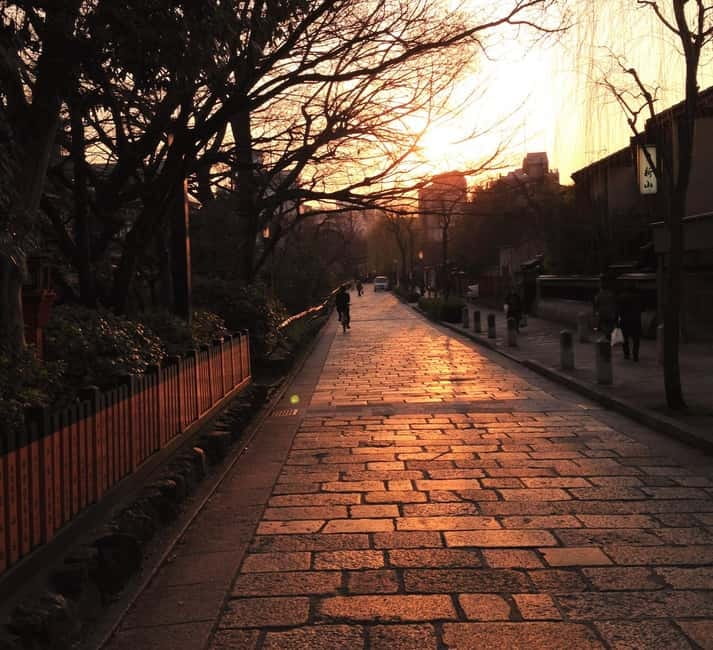
The possibility of seeing a Geiko or Maiko is a major reason people book this walk. You may see one heading to an appointment, particularly as evening approaches, when the district becomes more active.
That possibility should be treated as a bonus, not the measure of the tour. One person saw a Geisha during the walk, while another specifically noted that no Geisha appeared but still found the tour worthwhile. The guide’s cultural explanation, architecture, and temples give the experience value even if the timing does not bring a sighting.
Your guide can also help you understand what you are looking at. The traditional clothing and makeup are striking, but the person wearing them is on the way to work. I would follow the guide’s lead, avoid blocking narrow lanes, and treat photography with care. The best memory may be the atmosphere of the street rather than a hurried close-up.
Other evenings in the old entertainment quarters of Kyoto:
- Best of Kyoto: Gion, Geisha, Pagodas & Cobblestones
★ 4.9 · 2,058 reviews - Night Walk in Gion: Kyoto’s Geisha District
★ 4.5 · 2,003 reviews - Kyoto Night Foodie Tour in Gion (9+ dishes + 6 Sake tastings)
★ 5.0 · 1,762 reviews - Kyoto Gion: 2-Hour Geisha Culture & History Walking Tour
★ 5.0 · 1,186 reviews
Hokan-ji Pagoda and the best photo stops
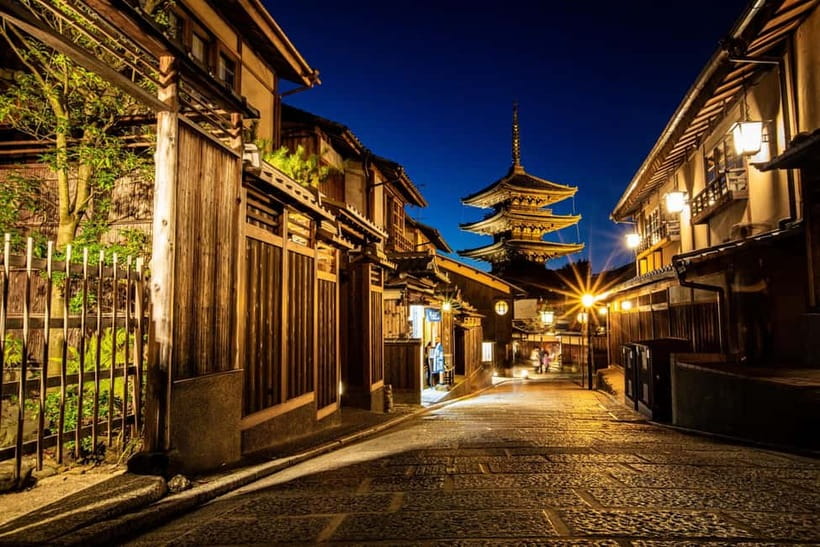
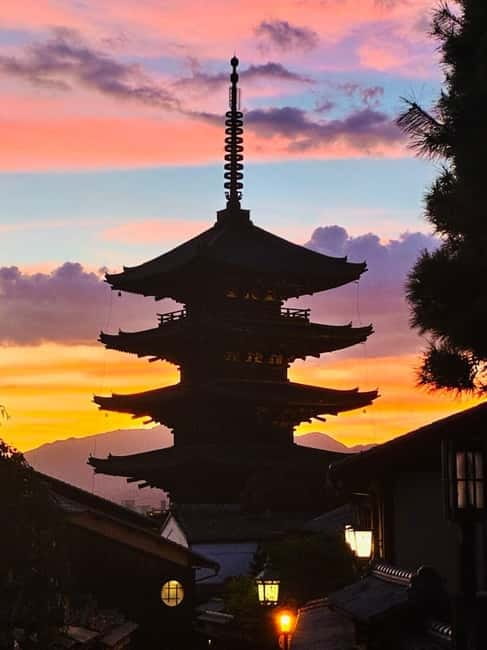
Hokan-ji Pagoda is one of the walk’s strongest visual moments. Its shape is a familiar symbol of Kyoto’s old quarters, and the surrounding streets offer the kind of framed view that makes Gion so popular with photographers.
The advantage of having a guide here is knowing where to pause. You are shown photo locations away from the most obvious route, including quieter corners that are easy to miss when you are navigating on your own. Several guides are praised for finding good picture spots, and the route is designed to provide plenty of attractive views.
Do not expect a private photo session or unlimited time at each location. Two hours must cover a lot of ground, so the stops are selective. Still, the combination of pagoda views, timber houses, and lantern-lit lanes gives you a strong visual introduction to eastern Kyoto.
Kennin-ji, Kyoto’s oldest Zen temple
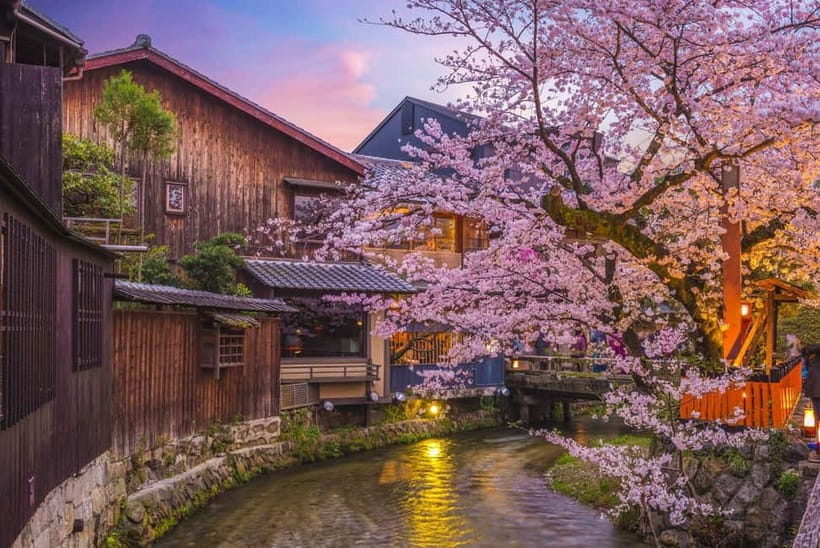
Kennin-ji adds a calmer, more reflective pause to the Gion walk. It is described as the oldest Zen temple in Kyoto, giving the tour a direct connection to the city’s religious and artistic traditions.
The temple helps balance the focus on Geiko culture. You are not simply following entertainment districts and souvenir shops. You are also seeing how Zen institutions shaped the character of Kyoto and remain part of its cultural identity.
Because the tour is only two hours, the temple stop is best understood as an introduction. If Kennin-ji captures your interest, you may want to return later with more time. The guide’s role here is to give you enough background to recognize why the site matters, then keep the route moving.
Chion-in and a quieter side of Kyoto
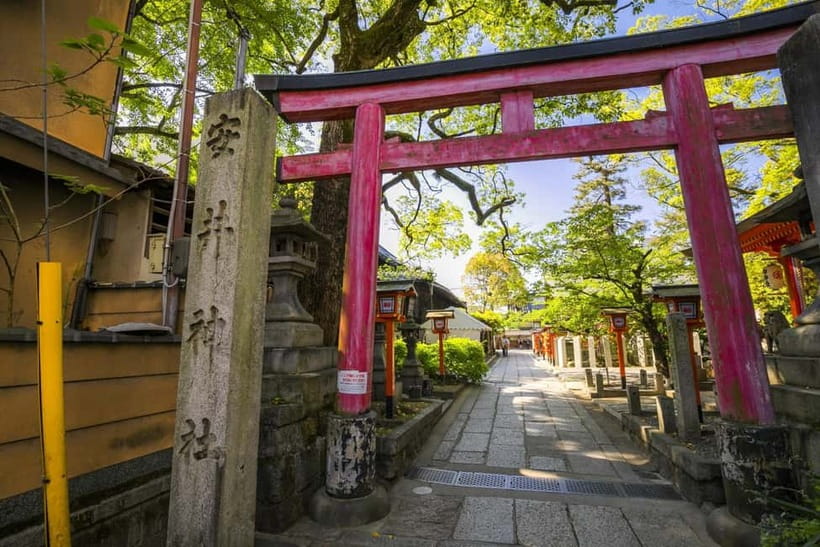
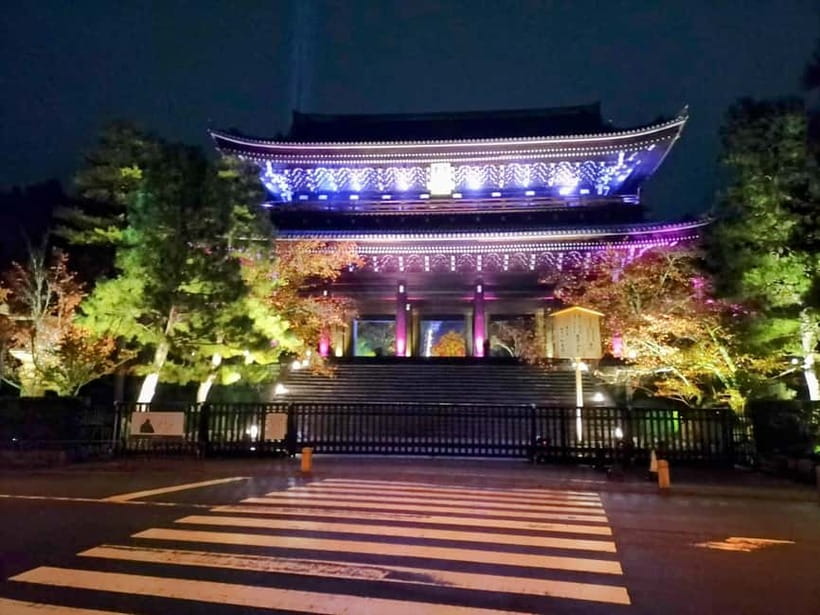
Chion-in is described as an often-overlooked stop, with three designated national treasures within its broad, picturesque grounds. That makes it a useful contrast to Gion’s narrow lanes and busy photo points.
I like this part of the route because it widens your view of the area. The walk is not only about Geiko, teahouses, and evening lights. It also shows how large temple grounds and national cultural treasures sit close to one of Kyoto’s most famous entertainment districts.
Again, this is not a full temple examination. You will receive context and see the setting during the route, but the schedule does not allow the leisurely pace of a dedicated temple visit. The tradeoff is sensible: you get a broad introduction to several important places in one compact outing.
What the guides add to the walk
The strongest part of this experience is the guide’s storytelling. Michael is repeatedly praised for his clear explanations, friendly manner, historical detail, and humor. Several people describe him as passionate about Kyoto and Geiko culture, and one person found his tips useful enough to shape the rest of the stay.
Other guides receive equally positive comments. Anton is described as relaxed and personable, Yuri as excellent, and Ikuro as respectful and engaging. One departure led by Michael and Ron became almost private because the group was so small. In that situation, the guide adjusted the route and discussion to the participant’s interests.
Group size can vary, so you should not book expecting a private tour. Still, the format seems suited to questions. People have asked about Japanese culture, temple history, films, food, and the daily world of Geiko and Maiko, and the guides make room for that conversation.
This is especially useful if you are visiting Kyoto early in your trip. You can ask where to eat, what to see next, and which activities fit your interests. Suggestions include restaurants, bars, shops, attractions, pottery, and perfume-making activities.
Choosing the right departure time
The tour offers different starting times, depending on availability. A 3 p.m. departure gives you more daylight for architecture and photographs, while a later start brings you closer to the lantern-lit mood of evening.
One person specifically preferred 3 p.m. because of the available sunlight and would not choose a later time for photography. Another found 6 p.m. ideal because Gion was quieter and there was more space to take in the surroundings.
I would choose based on your priority:
- Pick an earlier departure for clearer views, temple grounds, and photographs of buildings.
- Pick a later departure for lanterns, evening atmosphere, and a better chance of seeing Geiko or Maiko heading to appointments.
- In winter, remember that evening temperatures can be very cold. One person suggested the tour could use a warm-up stop during freezing conditions.
The route is outdoors, so weather affects comfort. A warm layer, comfortable shoes, and an umbrella if rain is expected are sensible choices.
Is $25 good value?
At $25 per person, this is a strong value for a two-hour guided introduction to Gion. You receive a route through a difficult-to-read neighborhood, explanations of Geiko culture, several major cultural sites, photo opportunities, and practical advice for the rest of your Kyoto visit.
The price is especially attractive if this is your first time in the district. You could walk through Gion alone for free, but you would likely miss the meaning of the teahouses, the context behind the traditional buildings, and the quieter places the guide points out.
The limitations are clear. The tour does not include a private Geiko performance, food, temple admission details beyond the guided visit, or a guarantee of seeing Geiko or Maiko. It is also not suitable for wheelchair users or people with mobility impairments.
For a short, affordable introduction, I think the cost is easy to justify. The personal recommendations may save you more than the ticket price if they help you find a meal or activity that fits your plans.
Who should book this Gion walk?
I would recommend it to first-time Kyoto visitors, culture-focused families, photographers, and anyone who wants a clearer understanding of Geiko traditions before exploring Gion alone.
It also suits people who prefer conversation over a formal lecture. The guides use stories, questions, history, and practical suggestions to keep the walk moving. Children can enjoy it too, especially with a guide who explains the subject in plain language.
You may want something else if you need step-free access, dislike walking, or want a guaranteed encounter with a Geiko or Maiko. You should also consider a different activity if you want to enter a teahouse or attend a performance, since this tour explains that world from the street rather than arranging private access.
Should you book it?
Book this tour if you want an affordable first look at Gion with real cultural context. The route combines atmospheric streets, major temples, strong photo stops, and practical Kyoto advice in two hours. The guides, particularly Michael, are praised for making complicated history easy to follow and for answering questions with warmth and humor.
Do not book it solely for a promised Geiko sighting. That may happen, but the dependable value is the explanation of Gion itself. Choose an earlier time for daylight or an evening departure for lanterns, dress for the weather, and leave room afterward for the restaurant and sightseeing suggestions your guide shares.
FAQ
How much does the Kyoto Geisha Walking Tour cost?
The tour costs $25 per person.
How long does the tour last?
The walking tour lasts two hours.
What language is the tour conducted in?
The live guided tour is conducted in English.
Where does the tour meet?
The meeting point is on the side street next to Hotel Alza Kyoto. Look for the red parasol or umbrellas with marble seats underneath.
Will I definitely see a Geiko or Maiko?
No. The tour offers an opportunity to spot Geiko and Maiko as they travel to appointments, but sightings are not guaranteed.
Which places are included on the walk?
The route includes Gion’s teahouse streets, traditional machiya homes, Hokan-ji Pagoda, Kennin-ji Temple, and Chion-in Temple.
Do the guides provide recommendations for the rest of my trip?
Yes. The guide shares recommendations for restaurants, bars, shops, attractions, and other activities in Kyoto and beyond.
Can I cancel for a full refund?
Yes. You can cancel up to 24 hours in advance for a full refund.
Is the tour suitable for wheelchair users or people with mobility impairments?
No. The activity is not suitable for wheelchair users or people with mobility impairments.
More walking tours elsewhere in Japan
- Nishiki Market Brunch Walking Tour (7 Tastings + Brunch)
★ 5.0 · 1,355 reviews - Kyoto Arashiyama Walking Tour: Bamboo, Monkeys, Gardens & Secrets
★ 5.0 · 1,216 reviews - Kyoto: Izakaya Bars Guided Walking Tour
★ 4.9 · 815 reviews - Kyoto Sake Brewery & Tasting Walking Tour
★ 5.0 · 623 reviews
More hidden-gem tours in Kyoto
- Private Kyoto Tour with a Local, Highlights & Hidden Gems, Personalised
★ 5.0 · 1,543 reviews - Arashiyama Bamboo Forest & Hidden Gems Bike Tour (Early Bird)
★ 5.0 · 613 reviews - Osaka Kickstart: Hotspots & Hidden Gems Tour
★ 5.0 · 1,306 reviews - Osaka: Hotspots & Hidden Gems Walking Tour Private or Group
★ 4.9 · 1,300 reviews
Just added in Kyoto
- Kyoto: Private Photoshoot Service★ 5.0 · 158 reviews
- Kyoto Rickshaw Tour★ 5.0 · 210 reviews
- Izakaya Style Cooking Class★ 5.0 · 219 reviews
- Kyoto: Traditional Concert at Townhouse or Bathhouse★ 4.9 · 224 reviews
- Ninja 2-hour Hands-on Lesson by Japanese master in Kyoto -Medium★ 5.0 · 218 reviews
- Kyoto: Arashiyama Bamboo, Temple, Matcha, Monkeys & secret spots★ 5.0 · 219 reviews
- Kyoto Geisha District Walking Tour in Gion★ 5.0 · 232 reviews
- The right way to know Kyoto★ 5.0 · 257 reviews
Geisha & Gion District Tours, compared.
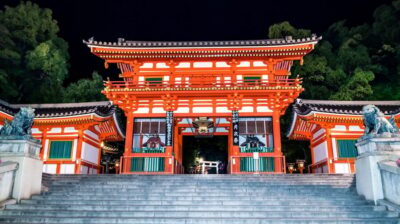
Gion Geisha District Walking Tour – Stories of Geisha
Read our review →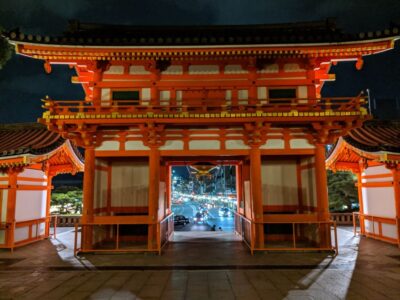
Best of Kyoto: Gion, Geisha, Pagodas & Cobblestones
Read our review →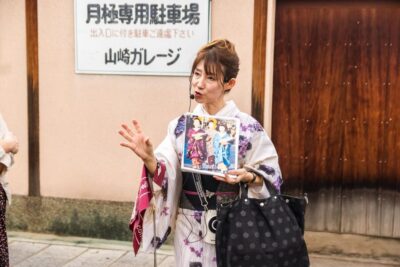
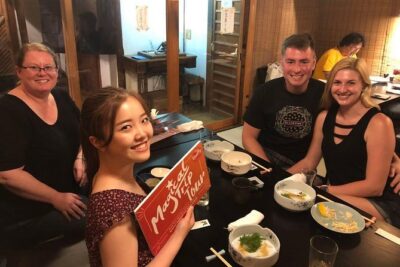
Kyoto Night Foodie Tour in Gion (9+ dishes + 6 Sake tastings)
Read our review →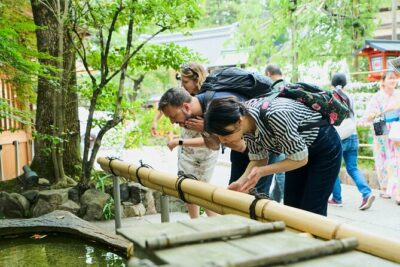
Kyoto Gion: 2-Hour Geisha Culture & History Walking Tour
Read our review →
Chopsticks Making Workshop in Gion with Engraving Option
Read our review →
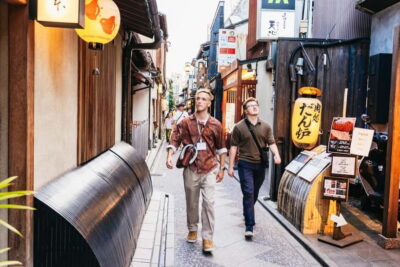
Kyoto Night All-Inclusive Eats and Streets, Gion and Beyond
Read our review →Browse the lists this tour appears in