
Reviewed · CYCLING TOURS
No. 1 E-Bike Tour for Up to 5 Guests in Kyoto with a Local!
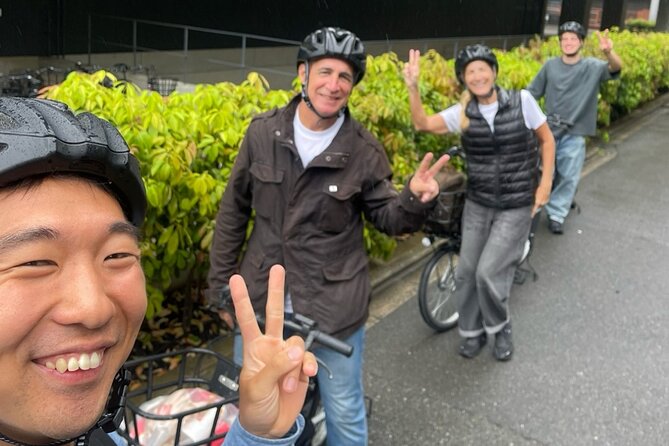
Kyoto’s best sights are spread across the city, and this small-group e-bike tour links them by bicycle rather than by crowded buses. You’ll see temples, old tea-house streets, canals, a former Nintendo headquarters, and the Kamo River in one four-hour outing. I like the relaxed pace and the chance to hear local stories while moving through ordinary Kyoto neighborhoods.
I also like the intimate size, limited to five people, and the cooling break beside the Kamo River. The main consideration is that you need to ride confidently in city streets, and the tour depends on good weather. Also check the guide’s meeting message carefully, since the cycling port is described as being behind a hotel near Seikouin Wagatazizou, while the listed meeting address is Times Car Rental at 682 Higashishiokōjichō.
Key points at a glance
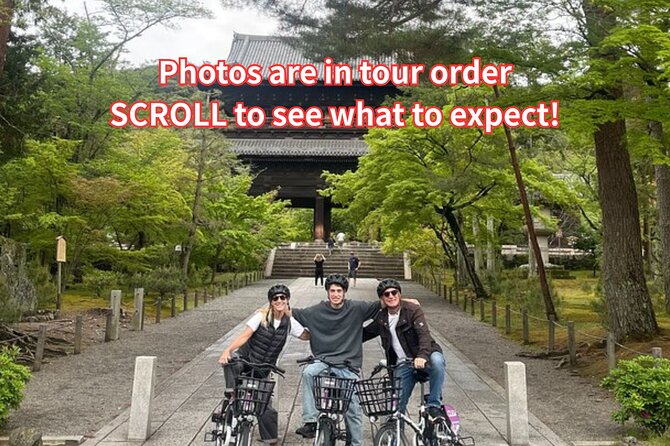
- Five-person maximum: This is a personal outing, not a large cycling procession.
- Four hours on an e-bike: You can cover far more ground than on foot without turning the day into a race.
- Kyoto beyond the headline temples: The route includes a former Nintendo headquarters and local streets near Kagiyacho.
- Several distinct settings: Expect temple grounds, Gion’s waterways, the Biwa Canal, Heian Shrine, and the Kamo River.
- Guide Yuki leads the ride: Some language requests may be possible if arranged before booking.
- A weather-sensitive plan: You receive a full refund or another date if poor weather forces cancellation.
Why an e-bike makes sense in Kyoto
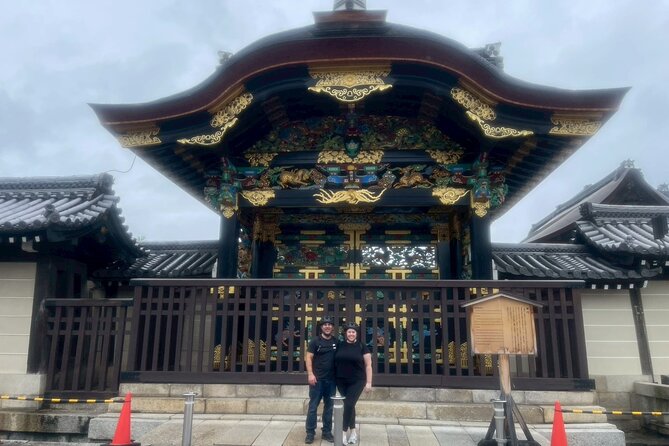
Kyoto is easy to admire and surprisingly spread out. Nishi Honganji sits west of the central area, Gion lies farther east, and Nanzenji and Heian Shrine are beyond the main downtown streets. Walking between all of them would take much of a day. Public transport can help, but buses are often slow when roads are busy.
An electric bicycle gives you a useful middle ground. You still see the city at street level, but you can make the longer connections without exhausting yourself. The motor matters most when the route continues for several hours and includes repeated riding between stops. You are not simply being carried from one attraction to another. You pedal, watch the road, and get a sense of how the neighborhoods connect.
The group limit of five is important. Your guide can give a short briefing, keep an eye on the group, and adjust the pace more easily than on a large tour. It also makes conversation possible. The tour is designed around stories and local observation, not just quick photo stops.
You receive a bicycle, helmet, and cycling guide. A briefing covers cycling hand signals before departure. That is a small but useful detail, especially if you are not used to riding in a Japanese city.
Other cycling tours in Kyoto people book:
- Bike Tour Exploring North Kyoto plus Lunch
★ 5.0 · 1,087 reviews - Arashiyama Bamboo Forest & Hidden Gems Bike Tour (Early Bird)
★ 5.0 · 613 reviews - 5 Top Highlights of Kyoto Full Day Bike Tour (E-bike option)
★ 5.0 · 511 reviews
Starting near Higashishiokōjichō
The ride begins at a share-cycle Clew port near Seikouin Wagatazizou, with the location described as being behind the hotel. The listed meeting point gives the address as Times Car Rental, 682 Higashishiokōjichō, Shimogyo Ward. Because those descriptions do not match perfectly at first glance, I would rely on the message sent through Viator before leaving your hotel.
The start time is 1:00 pm. Allow a little extra time to locate the port and meet your guide. The opening 15 minutes are used for the bicycle hand-signal briefing and getting ready to ride.
Children under 10 may join if they are at least 140 centimeters tall and can ride a bicycle. They pay the adult price. The data does not give a separate child bicycle, so families should confirm that the available equipment suits their child before booking.
Nishi Honganji and a quieter look at central Kyoto
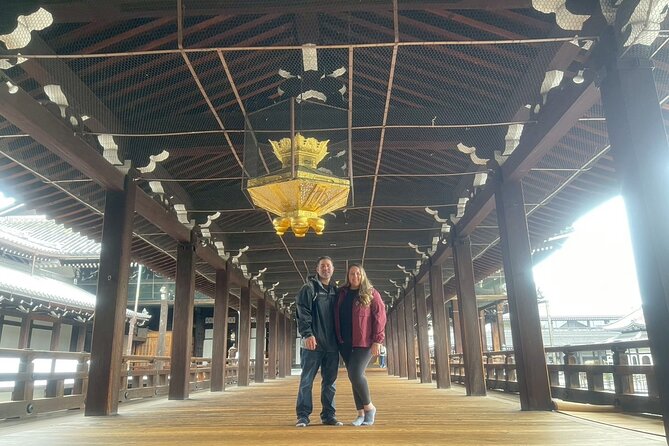
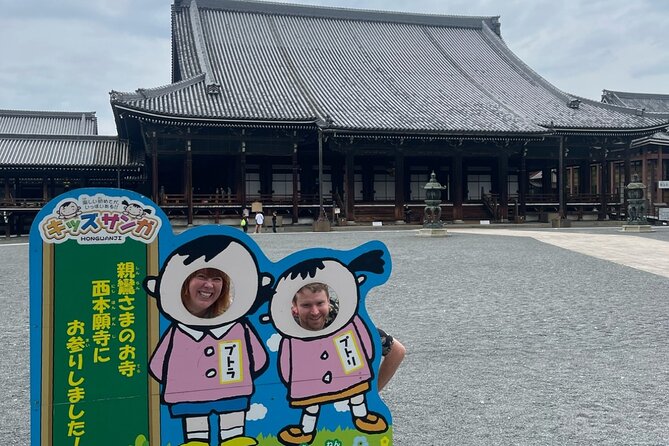
The first major stop is Nishi Honganji, the head temple of the Jodo Shinshu Hongwanji-ha sect. You have about 30 minutes here, enough to see the important buildings and get a sense of the temple’s scale without spending the entire afternoon inside one complex.
Nishi Honganji is a good early stop because it shows a different side of Kyoto from the famous lanes of Gion. Its buildings carry serious religious and architectural weight, yet reaching them by bicycle lets you approach through the working city rather than through a sightseeing corridor.
The tour does not charge a separate admission fee at the listed stops. That helps keep the price focused on the guide and bicycle rather than entrance tickets. You should still expect the visit to be an outdoor temple stop, with the usual need to respect quiet areas and temple customs.
Kagiyacho and the old Nintendo headquarters
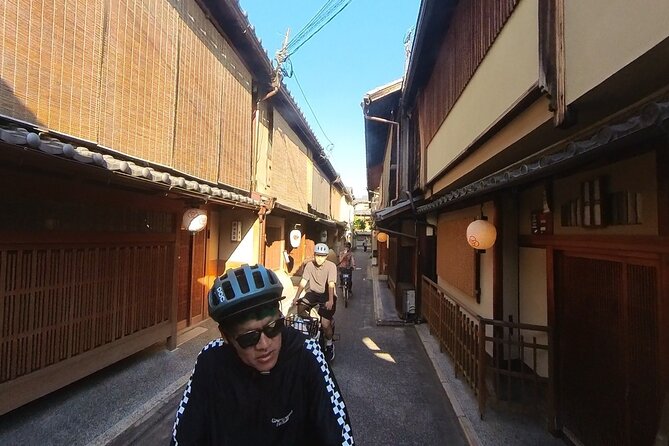
Next comes Kagiyacho, a local area where the route passes the former headquarters of Nintendo. The stop lasts about 20 minutes. This is one of the tour’s most unusual details, since it adds a piece of modern Japanese business history to a route otherwise centered on temples, shrines, canals, and traditional streets.
You may not think of Kyoto as a technology stop, but the old headquarters gives the ride a useful change of tone. The building’s size and appearance catch the eye, and your guide can connect it with the company’s earlier presence in the city. It is not presented as a museum visit, so expect an exterior sight rather than an indoor tour.
This stop also shows the value of cycling. You pass through a regular neighborhood and notice something that could easily be missed from a bus window or a standard temple itinerary.
Other rides on two wheels around Kyoto:
- E-Bike Tours of the highlights of Kyoto!!!
★ 5.0 · 291 reviews - Afternoon Kyoto Bike Tour: Bamboo Forest, Monkeys & Hidden Spots
★ 5.0 · 283 reviews - South Kyoto in a Nutshell: Gentle Backstreet Bike Tour!
★ 5.0 · 225 reviews - Pedal Adventure Kyoto’s iconic landmarks on an e-bike tour
★ 5.0 · 189 reviews
Gion Shirakawa by the water
The ride then reaches Gion, with about 30 minutes around the Shirakawa area. This is the Kyoto many first-time visitors picture: old buildings along a river, traditional tea-house streets, and seasonal plants. Cherry blossoms can add color in spring, while other seasons bring their own changes.
Gion is worth seeing, but it can feel hurried when visited only as a short walk from a crowded main street. The bicycle route gives you a slower arrival and a chance to take in the setting beside the water. You will not be cycling through every narrow lane. The guide’s job is to show the atmosphere while keeping the group moving safely.
Be considerate here. Gion is a living neighborhood, not a stage set. Keep the bicycle under control, follow your guide’s instructions, and avoid blocking entrances or lingering where the street is tight.
Following the Biwa Canal toward Nanzenji
The next section follows the Lake Biwa Canal. One listed canal stop takes about 20 minutes, followed by another Nanzenji-area canal visit lasting about 50 minutes. Together, these are a substantial part of the afternoon.
The canal links Kyoto with Lake Biwa and helped supply water to the city. You will see how the waterway fits into Kyoto’s development, not just how it looks in a photograph. The route also includes an engineering point: the canal system was designed to manage the change in elevation between Lake Biwa and Kyoto.
This is the part of the ride that rewards people who like to understand how a city works. The canal is scenic, but its importance is practical as well. It explains why water appears so often in this eastern part of Kyoto and why the route feels different from the dense central streets.
The 50-minute section may be the longest continuous part of the tour. If you want a tour made almost entirely of short stops, this may feel slow. I see it as a strength for anyone who prefers context, open air, and a steady ride between major sights.
Heian Shrine and the red torii
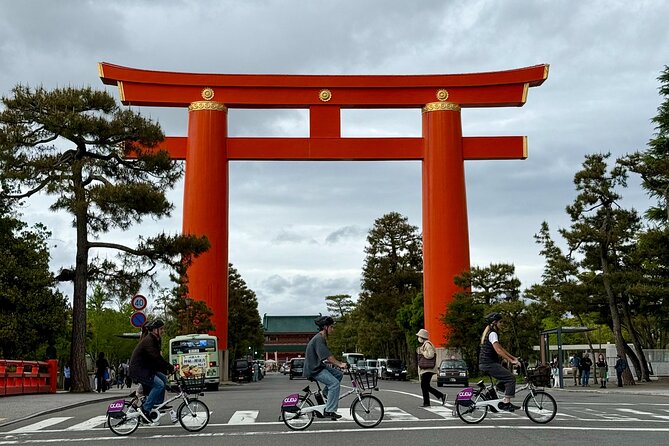
Heian Shrine is included between the canal and Nanzenji portions of the route. It was established to mark the 1,100th anniversary of the move of the capital to Heian-kyo, with Emperor Kanmu as its enshrined deity. The large red torii is one of the area’s unmistakable landmarks.
The information provided does not list a separate time for the shrine, so you should think of it as part of the route rather than a long independent visit. You may have time to pause at the torii and shrine area, but do not assume a lengthy interior tour.
That short stop can still be worthwhile. After the canal’s quieter waterway, the strong color and ceremonial scale of Heian Shrine give the ride a visual change. It also adds historical context to the city’s long role as Japan’s imperial capital.
Nanzenji Temple and the canal district
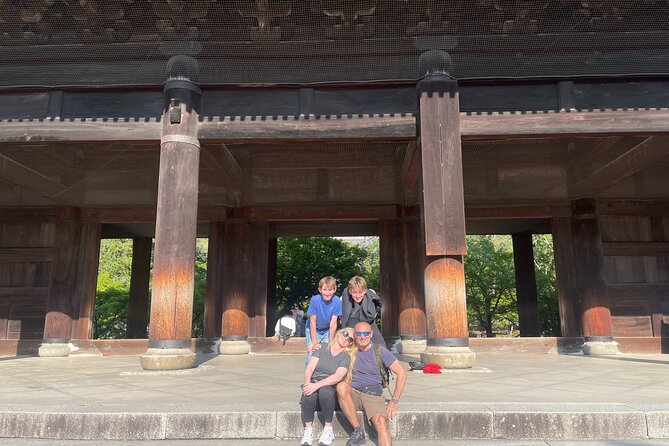
Nanzenji gets about 20 minutes. The temple is regarded as especially important among Kyoto’s Five Mountains, and its main temple and gate make a strong impression even during a brief visit.
A 20-minute stop is enough to look around and hear the guide’s explanation, but not enough to explore every corner. Nanzenji contains more than one point of interest, so you should treat this as an introduction. If the temple is high on your personal list, return later on your own with more time.
The location works well in the larger route because Nanzenji brings together religion, architecture, and the canal district. You get a major temple without losing the rhythm of the bicycle journey.
A cool finish at the Kamo River
Near the end, the tour reaches the Kamogawa River for about 10 minutes. You can relax on the riverbed, ride along the bank, and put your feet in the water to cool down.
This is a simple finish, but it makes sense after several hours in the saddle. The river offers a pause instead of one last formal sight. It also gives you a chance to look back on the afternoon and see Kyoto as a city organized around water, roads, temples, and daily life.
Ten minutes is not a long riverside break. If you want a substantial picnic or long rest, plan to return another time. Still, the short stop can be refreshing, especially in warm weather.
What the $99.08 price delivers
At $99.08 per person, this is not the cheapest way to rent a bicycle for an afternoon. You are paying for more than the e-bike. The price includes the helmet, bicycle use, and a guide who links the sights together and explains what you are seeing.
The value is strongest if you want several parts of Kyoto in one outing and would otherwise spend money on separate transport. Nishi Honganji, Gion, Heian Shrine, Nanzenji, and the Kamo River are not all clustered in one small area. The electric bicycle saves time and reduces the effort involved in connecting them.
The five-person limit also matters. A private guide for one or two people would normally cost more, while a large group could be less personal. This tour sits between those choices. Friends and families can share the outing without paying a fully private-tour price.
The price is less attractive if you already plan to rent a bicycle independently and feel comfortable navigating Kyoto without guidance. It is also not ideal if you want long, unhurried visits inside each temple. This is a broad city ride with several stops, not a deep study of one shrine or temple.
Who should book this Kyoto ride
I would point this tour toward active visitors who want an overview of Kyoto without spending the whole day on foot. It suits couples, families with capable cyclists, and small groups of friends. The five-person maximum is particularly useful if you dislike large organized tours.
It also works well early in a Kyoto stay. You can get your bearings across several districts, then return later to the places that deserve more time. The route introduces both famous sights and less obvious details, including the old Nintendo headquarters and the canal system.
You should think twice if you are not comfortable riding in city streets, dislike changing locations often, or want a fully indoor cultural tour. The cycling itself is central, not just a way to reach the stops.
The tour is listed as suitable for most people, but the information does not give a detailed mobility assessment. Anyone with concerns about balance, stamina, or bicycle fit should ask before reserving.
Practical details before you reserve
You receive booking confirmation at the time of reservation, and the activity ends back at the starting point. After returning the bicycle, you are free to continue exploring Kyoto on your own.
A message is sent through Viator before departure. Check it carefully for the exact meeting instructions, guide details, and any language arrangement. Yuki is identified in the available information, and some guides may speak German, Dutch, Bangladeshi, Hindu, or Urdu. If you need a particular language, contact the operator before booking rather than assuming it will be available.
The tour requires good weather. You can cancel for a full refund up to 24 hours before the start time. If poor weather causes the operator to cancel, you are offered another date or a full refund. That policy is useful here because the appeal of the outing depends heavily on being outdoors.
Should you book it?
Book this tour if you want a friendly, active introduction to Kyoto and like the idea of seeing temples, canals, traditional streets, and a river in one half-day. The small group, electric assistance, and local guiding give it real value at the listed price.
Skip it if your priority is long temple visits, private touring, or complete freedom to stop whenever you wish. For most reasonably confident cyclists, though, this is a smart way to connect parts of Kyoto that are too far apart for a comfortable walk. Check the meeting message, ask about language needs, and reserve with the weather in mind.
FAQ
How long does the e-bike tour last?
The tour lasts approximately four hours.
What time does the tour start?
The scheduled start time is 1:00 pm.
Where does the tour begin?
The listed meeting point is Times Car Rental at 682 Higashishiokōjichō, Shimogyo Ward, Kyoto. The meeting instructions also describe a Clew share-cycle port near Seikouin Wagatazizou, behind the hotel, so you should check the pre-tour Viator message for the exact location.
What is the maximum group size?
The tour accepts a maximum of five participants.
Is bicycle equipment included?
Yes. The price includes bicycle use, a cycling guide, and an installed cycling helmet.
Can children join the tour?
Children under 10 may participate if they are at least 140 centimeters tall and can ride a bicycle. They are charged the same fee as adults.
Which places does the route visit?
The route includes Nishi Honganji, Kagiyacho and the former Nintendo headquarters, Gion, the Lake Biwa Canal, Heian Shrine, Nanzenji Temple, and the Kamo River.
What happens if the weather is poor?
The activity requires good weather. If the operator cancels because of poor weather, you can choose another date or receive a full refund.
Just added in Kyoto
- Private Cooking Class Udon in Kyoto Japan★ 5.0 · 23 reviews
- Your Private Vacation Photography Session In Kyoto★ 5.0 · 110 reviews
- Kyoto: Zen Meditation at a Private Temple with a Monk★ 5.0 · 25 reviews
- Private Pewter Sake Cup Experience with a Kyoto Artisan★ 5.0 · 31 reviews
- Kyoto Wagashi(Japanese sweets) Cooking Class near Fushimiinari★ 5.0 · 60 reviews
- Kyoto:Family-Friendly Kimono & Yukata Experience at WARGO★ 5.0 · 147 reviews
- Private Guided Traditional Buddhist Cooking in Japan★ 5.0 · 16 reviews
- Kyoto: Gion Geisha District & Sake-in-Hand Walking Tour★ 5.0 · 37 reviews
Cycling Tours, compared.

3h Tokyo E-Bike Tour: Hidden Gems, and Local Life with guide
Read our review →
Arashiyama Bamboo Forest & Hidden Gems Bike Tour (Early Bird)
Read our review →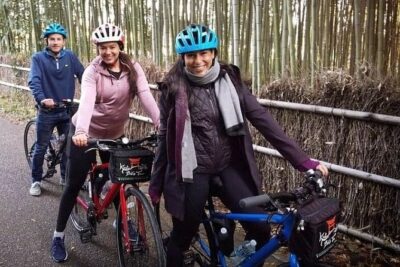
5 Top Highlights of Kyoto Full Day Bike Tour (E-bike option)
Read our review →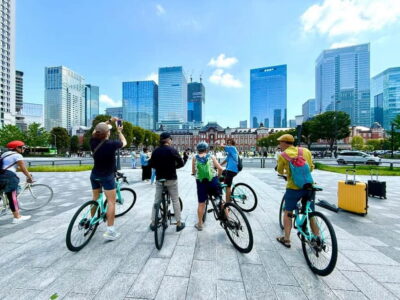
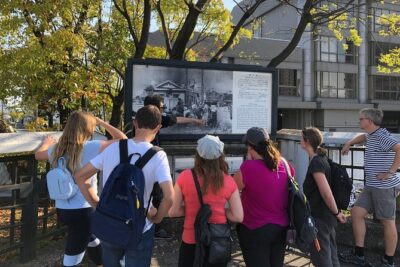
Hiroshima 2hr Peace Cycling Tour with Local Guide
Read our review →Browse the lists this tour appears in